
The RHD 0.5L portable kettle is my top pick for simple, fast camping hot water.
A cold morning at camp can make coffee, tea, oatmeal, and freeze-dried meals feel like hard work. I have learned that a small electric kettle can turn that routine into a calm five-minute task, especially at a campsite with shore power, a portable power station, or a safe inverter. The best electric kettle for camping should be compact, easy to clean, safe near a busy camp table, and sized for one or two people. I reviewed five useful models below, focusing on capacity, power needs, safety, storage, and daily camping comfort.
RHD 0.5L Portable Electric Kettle

The RHD 0.5L kettle is a small travel model made for quick personal servings. Its 600-watt rating is useful for campers who want lower power use than a large home kettle. The stainless steel body also feels more suited to travel than a bulky plastic kitchen appliance. With 0.5 liters of space, it can make a mug of coffee, a cup of tea, or a small serving of hot water for oatmeal.
I like this size for solo trips, car camping, and compact camp kitchens. The small body takes up little room in a tote, and the simple design does not add much weight to a gear box. It is not meant to heat a large pot for a group, but that is also its strength. If I wanted the best electric kettle for camping with a small footprint and modest power demand, this model would be high on my list.
Pros:
- Compact 0.5-liter size suits solo campers
- 600-watt power can be easier on a small power station
- Stainless steel construction is easy to wipe clean
- Useful for coffee, tea, soup, and small meals
- Portable shape fits well in a camping storage bin
- Good choice for short trips and hotel travel
Cons:
- Small capacity may not suit two or more campers
- Lower wattage may take longer than a full-size kettle
- Users must still pack and manage a suitable power source
My Recommendation
I recommend the RHD 0.5L kettle for solo campers, hikers who use a base camp, van travelers, and anyone who values easy storage. It works best when one person needs hot water without draining a power station too quickly. The stainless steel interior is a practical touch for repeated trips, since it does not hold food smells as easily as some low-cost plastic designs.
This is also a sensible pick for campers who drink one cup at a time. I would not choose it for a family breakfast or a group of friends, but I would choose it for a small tent platform or car-camping table. Among these options, it offers one of the clearest balances of size, useful power, and simple travel storage. Always check the product details and your power source before buying, as availability and specifications can change.
WTJMOV 0.6L Small Travel Kettle

The WTJMOV 0.6L kettle gives campers a little more room than the smallest travel kettles. Its 20-ounce capacity is enough for a large mug or two smaller drinks, depending on the fill level. The double-wall design may help the outer surface feel more comfortable to handle than a single-wall metal kettle. It also includes auto shut-off, which is an important convenience when camp chores compete for attention.
This model has a low-clutter look and a useful size for a small office, dorm, camper, or hotel room. The stainless steel water boiler should handle normal hot-water tasks without adding a strong taste to drinks when cleaned well. I would still avoid filling above the marked limit, and I would keep the base and plug away from puddles. For campers who want the best electric kettle for camping with a bit more capacity than a 0.5-liter model, the WTJMOV deserves a close look.
Pros:
- 0.6-liter capacity gives extra room for drinks
- Double-wall body can improve handling comfort
- Auto shut-off adds a useful safety layer
- Stainless steel boiling chamber suits daily use
- Small footprint works well on a camp table
- Good size for one large drink or two small servings
Cons:
- Capacity remains too small for a large group
- Double-wall construction may add some bulk
- It needs a standard 120-volt power supply
My Recommendation
I would steer this kettle toward couples and solo campers who want a little flexibility. The extra capacity matters when I need hot water for a large travel mug, a second cup, or a small pouch of food. The auto shut-off is helpful in a real camp setting, where I may be unpacking food or arranging a stove while the water heats.
The WTJMOV is also a good fit for a camper who prefers a cooler outer wall and a neat, modern body. It does not solve the power problem, so I would pair it with a compatible campsite outlet or a power station that can handle its demand. If the 0.6-liter size matches your routine, this model offers strong everyday value and convenient safety features.
Foldable 600ml Dual-Voltage Kettle
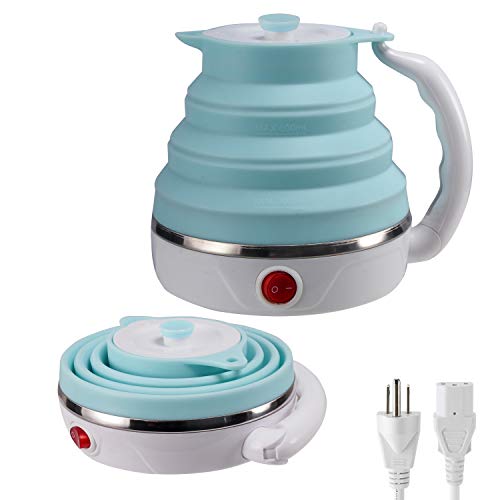
The foldable travel kettle stands out because it can collapse for storage. Its 600ml capacity offers enough water for a generous drink or a modest two-person serving. The food-grade silicone body can be useful when space matters, since the kettle takes less room after it cools and folds. It also lists dual-voltage support, a feature that can help travelers who use compatible power systems outside the United States.
For camping, the main appeal is not only boiling water. It is the way this kettle fits into a crowded bag. I can place it beside a compact stove, cookware, and coffee kit without giving up much storage space. The silicone body needs careful handling around sharp tools and open flames, and I would never place it directly on a fire. Still, it may be the best electric kettle for camping for people who put packability first.
Pros:
- Collapsible design saves storage space
- 600ml capacity works for one or two servings
- Dual-voltage feature suits some international travel
- Food-grade silicone body is light and flexible
- Useful for camping, road trips, and small hotel rooms
- Easy to pack after the kettle has cooled and dried
Cons:
- Silicone may need more care around sharp camp gear
- It is not safe to use over an open flame
- Dual-voltage use requires checking the local plug and power rules
- Flexible sides may feel less firm than stainless steel
My Recommendation
I recommend this foldable model for backpackers with a vehicle nearby, digital nomads, international travelers, and campers with very limited storage. It is especially helpful when a hard-sided kettle would take too much room. The 600ml capacity is large enough for a practical hot drink while still keeping the packed size low.
I would choose it for organized travel, not rough handling. Keep it in a soft pouch, protect it from knives and metal cookware, and let it dry fully before folding it away. The dual-voltage design is useful, but I would verify the voltage selector, plug type, and local outlet before use. In the right setting, it provides excellent space-saving value.
Rzlinn 120V Temperature-Control Kettle

The Rzlinn portable kettle adds temperature control to the basic boiling job. It uses a 316 stainless steel liner and offers four temperature settings, according to its listing. That can help when I want hot water for green tea, instant coffee, baby-related tasks, or a drink that does not need a full boil. The 120V design fits standard US outlets and compatible camping power stations.
This kettle also lists auto shut-off and boil-dry protection. Those features do not replace safe use, but they can reduce the chance of a heating mistake when the water runs out or the task takes longer than expected. Temperature control is the key reason to buy this model, rather than simply choosing the smallest kettle. For campers who want the best electric kettle for camping with more control over heat, the Rzlinn is a strong specialty choice.
Pros:
- Four temperature settings add useful control
- 316 stainless steel liner is designed for frequent use
- Auto shut-off supports safer operation
- Boil-dry protection helps when the kettle lacks water
- Useful for tea, coffee, cocoa, and warm drinks
- 120V format suits US campsites and power stations
Cons:
- Temperature controls may be more than some campers need
- 120V use limits international flexibility
- Higher feature count may make cleaning and packing less simple
- Users still need to monitor the kettle near children or tents
My Recommendation
I recommend the Rzlinn for campers who care about more than boiling water. Tea drinkers, pour-over coffee fans, van travelers, and families with different drink preferences may appreciate the four heat settings. It can reduce guesswork when a full boil would be too hot for a particular drink.
I would pair this kettle with a stable table and a power station with enough continuous output. Temperature control is valuable, but it is not essential for every trip. If your goal is fast, simple water for one instant meal, a smaller kettle may be easier. If you want a more refined camp beverage setup, this model brings useful control in a compact travel form.
WTJMOV 0.8L Low-Power Kettle

The 0.8L WTJMOV kettle is the largest option in this group. Its capacity gives me more room for two drinks, several cups of tea, or hot water for a larger dehydrated meal. The stainless steel body is practical for camping because it wipes clean and does not depend on a soft, collapsible shell. It also includes auto shut-off and is marketed as a low-power hot-water kettle.
This model makes the most sense when capacity matters but a full home kettle feels too large. I would place it in a camp kitchen, RV, office, or cabin rather than a tiny backpack. The larger water load may take more time to heat than a half-liter serving, especially with a low-power design. For a small group searching for the best electric kettle for camping, this is the most useful size of the five.
Pros:
- 0.8-liter capacity suits two or more people
- Stainless steel body is practical for repeated trips
- Low-power design may work well with some power stations
- Auto shut-off adds convenience during camp tasks
- Good for tea, coffee, soup, and dehydrated meals
- Useful for camping, travel, offices, and RVs
Cons:
- Larger body takes more storage space
- A full 0.8-liter load may heat more slowly
- Low-power operation still requires a compatible outlet or inverter
- It may be more kettle than a solo camper needs
My Recommendation
I recommend this kettle for couples, families, RV users, and car campers who often prepare more than one serving. The 0.8-liter capacity reduces repeat heating, which can save time during a busy breakfast. It is also a better match for a fixed camp table than for a hiking pack.
I would choose it when my power source can handle the kettle and when I want fewer heating cycles. The stainless steel build should appeal to campers who prefer a firm, traditional kettle over a collapsible one. It offers strong practical value for group use, though solo campers may save space and energy with the RHD or WTJMOV 0.6L model.
How I Chose the Best Electric Kettle for Camping
A camping kettle must work within limits that do not exist in a home kitchen. At home, I can use a large wall outlet and refill the kettle from a sink. At camp, I may have a small power station, a shared outlet, limited table space, and no easy way to clean a bulky appliance. I judged these kettles by the needs that matter most outdoors.
Capacity
Capacity affects both comfort and power use. A 0.5-liter kettle can suit one person, while a 0.8-liter model works better for two or more campers. I do not recommend filling a kettle beyond its marked maximum line. Hot water needs space to move, and overfilling can cause spills or unsafe steam.
Think about your normal serving size before you buy. A coffee drinker may need less water than someone who makes oatmeal and tea at the same time. If I camp alone, I prefer a small kettle because every extra ounce takes room. If I camp with a partner, the larger WTJMOV model can reduce the need for a second heating cycle.
Wattage and Power Stations
Electric kettles turn electricity into heat, so they can draw more power than small lights or phone chargers. A 600-watt kettle may be easier for some portable power stations than a high-watt home kettle. However, the label on the power station matters. I check its continuous AC output, not just its peak or surge number.
An inverter also needs the right rating and a safe connection. A car outlet may not support an electric kettle, even if the plug seems to fit. I never use a household extension cord in a wet area, and I keep power cables away from puddles, burners, and foot paths. If a campsite has shore power, I use a grounded outlet and follow the campground rules.
Heating Speed
A kettle with more wattage often heats water faster, but speed is not the only factor. Water volume, starting temperature, altitude, and the power source can all change the result. A smaller amount of water usually heats faster than a full kettle. I measure only what I need for the next drink or meal.
Low-power kettles may take longer, yet they can be easier to use with modest power equipment. That trade-off can make sense at a quiet campsite. I would rather wait a little longer than overload an inverter or lose power before the morning coffee is ready.
Safety Features
Auto shut-off is one of the most useful kettle features for camping. It can stop heating after the water reaches a boil. Boil-dry protection can also help if the kettle has too little water, although I still check the water level before switching it on.
Safety features are backup tools, not permission to walk away. I place the kettle on a flat, dry, heat-safe surface. I keep handles and cords away from children, pets, tent fabric, and open flames. I also unplug the unit before packing it, and I wait until it cools before wiping or storing it.
Materials and Cleaning
Stainless steel interiors are common in portable kettles and can be easy to maintain. A silicone collapsible kettle saves space, but it needs protection from knives, hooks, and direct heat. I rinse away loose scale and follow the care instructions instead of using harsh cleaners that may damage seals.
Hard water can leave mineral deposits inside a kettle. A mild descaling routine may help, but I follow the manual for the product. I never immerse the electrical base or plug in water. Good cleaning is not just about looks; it helps prevent stale flavors in coffee and tea.
Portability and Storage
The best electric kettle for camping should fit your actual gear system. A small model may slide into a cooking box, while a foldable model can fit into a narrow side pocket. I measure both the kettle and its cord before packing. A compact body is not useful if the handle or lid catches on every item in the bag.
For car camping, size matters less than for backpacking. For tent camping, I want a kettle that can sit firmly on a small table. For RV use, capacity and easy cleaning often matter more than the smallest packed size. Match the kettle to the trip rather than chasing one feature.
Electric Kettle Safety at Camp
Electricity and water require care in every setting. Outdoor use adds rain, damp ground, uneven tables, and flammable materials. I use an electric kettle only in a dry, sheltered place with a power source designed for the load. I do not operate it inside a closed tent because hot appliances and electrical equipment can create serious hazards.
Before use, I inspect the cord, plug, lid, and body. I stop using the kettle if I see a cracked shell, loose wire, melted plug, or damaged seal. I fill it on a stable surface and move it only by the handle. Steam can burn skin, so I open the lid away from my face and keep the spout pointed away from people.
I also follow the instructions for voltage. The foldable model lists dual voltage, but other kettles in this review are intended for 120V use. A plug adapter changes the shape of a plug; it does not always change voltage. When traveling, I check the local supply and the product rating before connecting anything.
Electric Kettle or Camping Stove?
An electric kettle is clean and simple when I have reliable power. It does not require fuel canisters, soot cleanup, or an open flame. It can also heat water while I prepare food, which makes a small camp kitchen feel less rushed.
A camping stove remains more flexible in remote areas. It can work far from an outlet and may boil water when a power station is empty. A stove also brings flame, fuel, wind, and burn risks. I often carry both on longer trips: the stove as a backup and the kettle for easy coffee at a powered campsite.
The right choice depends on the campsite. Electric kettles suit RV parks, cabins, drive-in sites with outlets, and trips with a charged power station. They do not replace a fuel stove when I plan to camp deep in the backcountry. Think of an electric kettle as a comfort tool, not a universal cooking system.
Which Size Is Right for You?
| Best for | Why |
|---|---|
| Solo campers and small power stations | The RHD 0.5L model uses a compact form and a modest 600-watt rating for one serving. |
| Couples and small camp kitchens | The WTJMOV 0.8L kettle provides more water for two or more drinks with fewer heating cycles. |
| Pack-space focused travelers | The 600ml foldable kettle collapses for easier storage in a tight camping bag. |
Capacity is a personal choice, but the table shows the main pattern. Small kettles are easier to store and may use less energy per session. Larger kettles reduce repeat heating when more than one person needs hot water. A collapsible kettle can solve a storage problem that stainless steel cannot.
The Rzlinn sits in a different group because temperature control matters more than raw capacity. It may be the better match for a camper who makes several types of tea or coffee. The WTJMOV 0.6L model sits in the middle and offers a useful balance for many one- or two-person trips.
Tips for Better Camp Coffee and Tea
Start with fresh water and heat only the amount you need. This keeps the kettle lighter and can reduce the time spent waiting. I pour the water into a mug as soon as it reaches the desired heat, then unplug the kettle.
For tea, temperature control can improve the result. Some delicate teas taste better with water below a full boil, while black tea often suits hotter water. If the kettle has only one boil setting, I can let the water cool briefly before pouring it over delicate leaves.
For instant coffee, I use a clean mug and avoid leaving water inside the kettle for long periods. Coffee oils can create stale odors if they reach the kettle or lid. I rinse the kettle after use and leave the lid open while it dries.
For oatmeal or dehydrated meals, I measure the water from the meal instructions. A kettle is excellent for pouring hot water into a pouch or bowl, but it is not always designed for cooking food inside the boiling chamber. I keep food and powders out of the kettle unless the manufacturer clearly approves that use.
What I Like About Portable Electric Kettles
The biggest benefit is routine. A kettle gives me hot water without setting up a burner each time. On a rainy morning, that small comfort feels like a warm lamp in a dark room. I can make a drink, soften a meal, and start the day with less noise and less mess.
Portable kettles also offer portion control. I do not need to heat a large pot for a single mug. Smaller portions can help conserve power and reduce leftover water. This matters when I rely on a battery station for several days.
Another benefit is indoor convenience in suitable spaces. In an RV, cabin, or campsite shelter with safe power and ventilation, a kettle can be easier than a stove. I still follow the appliance instructions and keep the unit on a dry, stable surface.
Limitations to Keep in Mind
No electric kettle removes the need for power. A product can be compact and efficient, but it still needs a compatible outlet, inverter, or power station. I always plan the power budget before I pack the kettle.
Small capacity can also frustrate a group. If four campers want hot drinks, a 0.5-liter model may require several cycles. That can use more time and energy than expected. In that case, the 0.8-liter WTJMOV kettle may offer a better match, provided the power source supports it.
Finally, portable does not mean waterproof. These kettles should stay dry, and their bases should never sit in standing water. I pack them in a protective bag and keep them away from loose gravel that could damage the bottom.
FAQs Of best electric kettle for camping
Can I use an electric kettle at a campsite?
Yes, if the campsite provides a suitable outlet or you bring a power station that can handle the kettle’s wattage. Keep the kettle dry and use it on a stable, heat-safe surface.
What wattage is best for a camping kettle?
A 600-watt model can be a practical choice for many small power stations, but you must check the station’s continuous AC rating. Lower wattage may save power but can take longer to heat water.
Is a 0.5-liter kettle large enough for camping?
It is usually enough for one person and one drink or small meal. Couples and groups may prefer a 0.6- or 0.8-liter kettle to reduce repeat heating.
Are electric kettles safe inside a tent?
I do not recommend using one inside a tent. Use the kettle in a dry, open, well-ventilated area away from tent fabric, children, and flammable gear.
Can I run a camping kettle from a car outlet?
Do not assume that you can. Many car outlets cannot supply the power an electric kettle needs. Check the vehicle outlet rating and the kettle’s wattage, or use a properly rated power station.
Final Verdict: Which Should You Buy?
For most solo campers, the RHD 0.5L is the best electric kettle for camping because it is compact, practical, and modest in power. Choose the WTJMOV 0.8L for group use, or the foldable model when storage matters most.
Check voltage, wattage, capacity, and safety features before ordering. With the right power source, a portable electric kettle makes camp coffee, tea, and hot meals easier.