
The Chef’n EzSqueeze is the best can opener for one-handed person who needs easy, steady control.
Picture this: dinner is ready, but a tight can sits on the counter and your free hand cannot help. A standard twist opener may slip, pinch, or need too much grip force. The right one-handed can opener can turn that small task into a smooth step. I compared grip design, cutting control, safety, ease of cleaning, and helpful features for seniors, people with arthritis, and anyone recovering from an injury. These picks cover manual, electric, and adaptive kitchen tools, so you can choose the best can opener for one-handed person based on your strength and daily needs.
Chef’n EzSqueeze One-Handed Can Opener

The Chef’n EzSqueeze is built around a long, easy-squeeze handle. That shape matters when a user has limited finger strength or can use only one hand. Instead of relying on a small knob, I prefer this style because the handle gives the palm more room to help with the motion. The black and meringue color also looks clean and easy to spot in a crowded kitchen drawer.
This manual opener still needs a good grip on the can, but it can make the cutting motion feel more controlled. The handle closes in a simple squeeze, which may suit a right-handed or left-handed user who wants a basic tool without batteries. As with any manual opener, the user should keep the can on a stable, flat surface. For many shoppers, this is the best can opener for one-handed person when compact size and simple use matter most.
Pros:
- Long squeeze handle spreads work across the hand
- Useful manual design with no batteries to replace
- Compact enough for a drawer or travel kitchen
- Simple controls reduce setup time
- Suitable for many users with mild hand weakness
- Distinct color makes it easy to find
Cons:
- Still requires some hand strength and control
- Needs the can to stay steady during use
- May not suit users with very limited hand movement
Bangrui One-Touch Electric Can Opener

The Bangrui automatic can opener takes much of the cutting work away from the user. Its one-touch format is helpful when squeezing and turning a manual opener feels hard. The cordless build can also reduce clutter near the stove or counter. I see this as a strong choice for seniors, users with arthritis, and people who want a more hands-off opening method.
The opener moves around the can and stops after the cut, so the user does not need to turn a knob by hand. Its smooth-edge approach is designed to reduce the sharp rim left by many traditional openers, though every new edge still deserves care. The purple finish gives it a clear look, and the electric format can be especially useful for left-handed users. If hand strength is the main concern, this may be the best can opener for one-handed person in this group.
Pros:
- One-touch operation limits hand effort
- Cordless design works without a counter cord
- Helpful for arthritis or weak grip
- Can work for left-handed and right-handed users
- Automatic movement reduces wrist twisting
- Designed to leave a smoother can edge
Cons:
- Needs charged or working batteries, depending on the model setup
- May take more storage space than a small manual opener
- Requires careful placement on the can
EZ Off Under-Cabinet Jar Opener
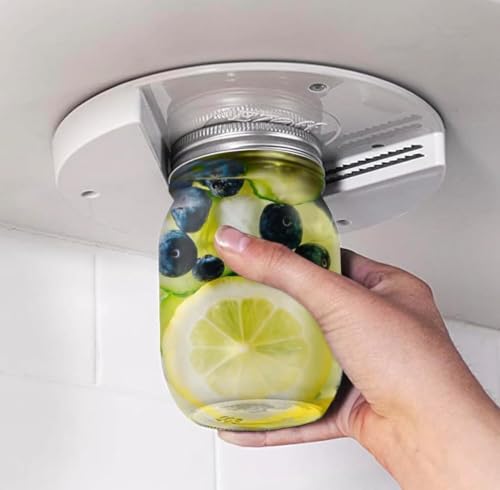
The EZ Off is not a traditional can opener, so I would not buy it as the only tool for opening food cans. It is an under-cabinet jar opener that helps release tight lids with less twisting. That makes it useful for a one-handed kitchen, where holding a jar and turning its lid can be a two-hand task. The fixed mounting position gives the user a steady point of contact.
This tool makes the most sense for shoppers who need broad kitchen support, not just a can cutter. It may help with jars and some bottles, but the cabinet must offer a suitable place for secure installation. The user should check the mounting area and follow the included instructions before relying on it. I would pair it with a true one-touch can opener to build a more complete adaptive setup.
Pros:
- Provides a fixed point for opening tight lids
- Can reduce twisting and pinch force
- Useful for one-handed jar access
- Supports users with weak hands or arthritis
- Can stay mounted and ready to use
- May open more than one type of container
Cons:
- It is not a dedicated can opener
- Needs correct under-cabinet installation
- Not ideal for renters or kitchens with limited mounting space
Bellemain Ergonomic Safe-Cut Can Opener

The Bellemain ergonomic can opener focuses on a familiar manual design with a more comfortable body. It is made for safe-cut use, which can help reduce the exposed sharp rim found with many older openers. I like this style for shoppers who want a classic tool but need a broader grip and a more careful cut. It can also fit well in a busy kitchen that needs a durable, simple opener.
A manual safe-cut opener still asks the user to position the tool and turn its mechanism. That means it may work best for someone with one useful hand and moderate wrist control. A stable cutting board or counter can make the job easier and safer. For a user who dislikes electronics, the Bellemain can be the best can opener for one-handed person when comfort and edge control come before full automation.
Pros:
- Ergonomic body supports a more comfortable grip
- Safe-cut style can reduce sharp lid edges
- No batteries or charging are needed
- Simple design is easy to understand
- Useful for home kitchens and frequent cooking
- Can suit users who prefer manual control
Cons:
- Requires turning force during the cut
- May be difficult for severe hand weakness
- Can still need the second hand to steady the can
Three-Piece One-Handed Kitchen Gadget

This three-piece adaptive gadget set is designed to help secure items while one hand opens jars or bottles. It is not a powered can opener, but it can solve the first half of the problem: keeping a container from sliding. That can be valuable after a stroke, during hand recovery, or when one arm has limited use. The small pieces are easy to store and can give a user more options around the kitchen.
I would view this set as a support tool rather than a complete can-opening system. It works best beside a manual or electric opener that needs the can to remain still. The user should test the grip with an empty container before using it with hot food or glass. For adaptive cooking, it can make a countertop feel more like a reliable extra hand.
Pros:
- Helps hold items in place during kitchen tasks
- Useful for one-handed jar and bottle opening
- Three pieces offer flexible placement
- Small size makes storage simple
- May support stroke recovery and weak-hand use
- Can help with mixing food in a bowl
Cons:
- Does not cut through can lids by itself
- Small pieces may be easy to misplace
- Grip can vary with the size and shape of the container
My Recommendation
Choosing the best can opener for one-handed person starts with an honest look at hand strength, balance, and wrist motion. If you can squeeze and turn a tool, the Chef’n EzSqueeze offers a simple path with no charging. If you cannot apply much force, the Bangrui one-touch electric opener is the better first choice because it limits manual work. The EZ Off and three-piece gadget set are support tools, while the Bellemain is a good manual option for users who value a smooth, controlled cut.
Best-For Comparison
| Best for | Why |
|---|---|
| Very weak grip or arthritis | Bangrui uses one-touch electric operation to reduce squeezing and turning. |
| Moderate strength and simple use | Chef’n EzSqueeze offers a long handle and a compact manual design. |
| Full adaptive kitchen support | EZ Off and the three-piece set help secure jars, bottles, and other items. |
How I Choose the Best Can Opener for One-Handed Person
A can opener for one-handed use must do more than cut metal. It should help the user keep the can steady, control the tool, and avoid sudden slips. I look at the full motion from start to finish. That includes lifting the opener, placing it on the rim, starting the cut, finishing the turn, and removing the lid.
The best design reduces the number of steps. A one-touch electric opener can remove most of the hand motion. A long manual handle can make the remaining squeeze easier. A counter-mounted aid can hold the container while the opener does its work. Each solution helps in a different way, so a product that suits one person may frustrate another.
Grip and Handle Shape
Grip shape is one of the most important details. Small knobs can be hard to pinch, especially for people with arthritis or reduced finger movement. A wide handle gives the palm more contact and may reduce pressure on one joint. Soft, textured surfaces can also help prevent slips.
I also check whether the handle needs a strong closing squeeze. Some users can close their fingers but cannot keep pressure for long. Others have good palm strength but limited thumb movement. The best can opener for one-handed person should match the motion the user can perform with the least strain.
Manual Versus Electric Operation
Manual openers are often light, affordable, and easy to store. They do not need batteries, and there is little to maintain. However, they still require the user to position the tool and create the cutting motion. That can be a poor match for severe weakness or painful joints.
Electric openers cost more and need power from batteries or a charging system. They may also need a little practice during placement. In return, they can reduce squeezing, turning, and wrist movement. For many seniors and people with arthritis, that trade-off is worth considering.
Can Stability
A can that moves on the counter creates trouble. It can make the opener slip, cause uneven cuts, or force the user to chase the can with one hand. A non-slip mat can help. So can a clamp, bowl holder, or adaptive kitchen gadget that keeps the container in place.
I suggest placing the can on a dry, flat surface before starting. Avoid holding a can in the air while operating an opener. If the can contains liquid, keep it upright. Small habits like these can make one-handed cooking feel calmer and safer.
Cutting Edge Safety
Traditional openers can leave a sharp lid and a sharp inner rim. Safe-cut designs aim to cut near the side of the lid rather than slicing through the top in the usual way. Even a smoother edge can still cause injury if handled carelessly. I recommend using a utensil to lift the lid when possible.
The FDA advises care with damaged or bulging cans and recommends keeping food preparation areas clean. A can opener should also stay clean, since food residue can build up around the cutting wheel. Follow the product instructions for washing. Never place a small tool in water or a dishwasher unless the maker says it is safe.
Left-Handed Use
Some manual openers feel natural only when held in one direction. That can be a problem for a left-handed person or someone who has use of only the left hand. A one-touch electric model may offer a more neutral experience. Still, the shape of the can, the placement of the start button, and the direction of travel can affect comfort.
If possible, test the opener with an empty can first. Check whether the user can see the cutting head and press the button without twisting the wrist. The best can opener for one-handed person should work with the stronger or more useful hand, not force an awkward grip.
Cleaning and Storage
Food can collect near the wheel, magnet, or cutting head. That is why I prefer a design that is easy to wipe and inspect. A cordless opener should be kept dry around its battery compartment. A manual model should not sit wet in a drawer.
Storage also affects daily use. If the tool is hard to reach, the user may avoid it or ask for help. Keep it in a low, dry drawer or on a counter where it can be picked up safely. For a mounted tool, check the screws and base from time to time.
Which Type Is Best for Seniors?
Many seniors want a can opener that feels familiar. A wide manual handle may be enough for someone with good arm strength but limited finger control. The Chef’n EzSqueeze is worth a look in that case. It offers a direct action without the setup of an electric device.
For stronger independence, an automatic model may be better. The Bangrui can limit the amount of force needed during the cut. A user may still need to position the opener, but the powered motion can take pressure off the wrist. A caregiver should help test the device at first and watch for safe placement.
Aging affects people in different ways. Some users have stiff fingers, while others have balance or vision limits. Large, clear buttons and simple steps can help. A product should never be chosen by age alone; it should be chosen by the user’s actual movement and comfort.
Which Type Is Best for Arthritis?
Arthritis may make a twist knob painful. It may also reduce the ability to keep a tight grip. For that reason, I usually place one-touch electric models ahead of small manual openers for severe symptoms. The Bangrui is the strongest match among these products for shoppers who want less hand work.
People with mild arthritis may still prefer a manual opener. The Chef’n EzSqueeze and Bellemain offer more room than a narrow, old-style opener. Use slow pressure rather than a fast jerk. Stop if the tool causes pain, and ask a health professional about safer kitchen adaptations when needed.
How to Open a Can With One Hand
First, place the can on a dry, flat counter. Put a non-slip mat under it if the surface is smooth. Keep the cutting area away from the counter edge, and make sure the opener is clean and dry.
With a manual opener, position the cutting wheel on the rim. Use the palm and fingers to close the handle, then turn the mechanism in small, steady motions. Do not rush the final part of the cut, since the lid may release without warning.
With an electric opener, line up the cutting head as the instructions show. Press the start control and keep your hand clear of the moving parts. Wait for the opener to stop before lifting it away.
After opening, check the lid and rim for sharp points. Use tongs or a fork to lift the lid if it is loose but still attached. Empty the food into a bowl before reaching into the can. These steps are simple, but they matter more when one hand must do the whole job.
Common Mistakes to Avoid
The first mistake is buying a jar opener when the main need is a can opener. The EZ Off is useful, but it does not replace a cutting tool. Read the product type before ordering. A mixed adaptive kitchen can need several tools, but each should have a clear role.
The second mistake is choosing the smallest model because it takes less drawer space. Small handles can create more pressure on the fingers. A larger handle may be easier to control even if it uses a little more storage room.
The third mistake is using a can opener on a moving can. Stability often matters as much as the blade. Add a non-slip mat or support gadget when needed. If the user cannot safely keep the can still, an automatic model may be the wiser choice.
Another mistake is ignoring cleaning. A dirty cutting wheel can drag and make the tool harder to use. Wipe the opener after use, remove food bits, and store it where it stays dry. Replace any tool that becomes rusty, loose, or difficult to control.
Manual and Electric Can Opener Safety Tips
Keep fingers away from the cutting wheel and the lid edge. Never test sharpness with a fingertip. If a lid bends, stop and use a safe utensil to remove it.
Do not open cans that are bulging, leaking, badly dented near the seam, or giving off an unusual smell. These signs can point to spoiled food or pressure inside the can. Discard questionable cans rather than trying to rescue the contents.
Keep electric openers away from water unless the maker states that a part is washable. Remove batteries for long storage if the manual recommends it. Store the device where the user can reach it without climbing or stretching.
Children should not operate a can opener without adult supervision. A smooth edge does not mean a lid is harmless. Treat every opened can as a sharp object until the lid and rim are safely covered or discarded.
Value, Durability, and Everyday Use
Price matters, but the cheapest opener is not always the best value. A tool that sits unused because it hurts the hand has no real value. A slightly higher price can make sense if it supports regular, safe cooking.
Manual models often have the lowest running cost. They do not need batteries, and a simple body can last for years if kept dry. Electric models may cost more over time, but their reduced effort can be worth more than a low purchase price.
I also think about replacement. If the user depends on one opener, check whether it is easy to order again. Keep a backup manual opener if a cordless unit needs charging. A small plan can prevent a hard meal-time problem.
Who Should Buy the Chef’n EzSqueeze?
Buy the Chef’n if you have one useful hand and enough strength to squeeze a long handle. It is a good fit for a compact kitchen, a student apartment, or a person who does not want batteries. The design keeps the task familiar while giving the hand more room.
It is not the first pick for someone with severe arthritis or almost no grip. That user may do better with an electric model. Still, the Chef’n remains a strong all-around choice for moderate one-handed needs and may be the best can opener for one-handed person who values simplicity.
Who Should Buy the Bangrui?
The Bangrui is the clearest choice for users who want to reduce squeezing and turning. It may help seniors, people with arthritis, and those recovering from hand or arm injuries. Its cordless, one-touch style can make the opening step feel less like a test of strength.
Buyers should be comfortable with a powered tool and willing to keep it charged or supplied with power. Practice on an empty can first. If the user cannot position the opener safely, ask a caregiver or occupational therapist for help.
Who Should Add the EZ Off or Adaptive Set?
The EZ Off and the three-piece adaptive gadget are best viewed as kitchen helpers. They can hold or open jars and bottles, which are common sources of frustration for one-handed cooks. They can also work beside a can opener to create a more stable setup.
These products are not substitutes for a powered can cutter. If cans are the main problem, start with the Bangrui or Chef’n. Add the other tools when jars, bottles, bowls, or slippery containers also cause trouble.
FAQs Of best can opener for one-handed person
What is the best can opener for one-handed person?
The Chef’n EzSqueeze is the best manual choice for moderate hand strength. The Bangrui one-touch electric opener is better for users who need very low hand effort. The right pick depends on grip, wrist control, and comfort.
Are electric can openers safer for seniors?
They can reduce squeezing and turning, which may help some seniors. However, the user still needs to place the opener correctly and handle the lid with care. Always follow the product instructions.
Can a one-handed person use a manual can opener?
Yes, if the person can stabilize the can and operate the handle safely. A non-slip mat or adaptive holder can help. A powered model may work better when grip strength is very low.
Is the EZ Off a can opener?
No. The EZ Off is an under-cabinet jar and bottle opener. It can support a one-handed kitchen, but it does not cut through can lids.
How do I clean a can opener?
Wipe the cutting area after each use and remove food residue. Keep electric parts dry. Wash only the pieces that the manufacturer lists as washable.
Final Verdict: Which Should You Buy?
The Chef’n EzSqueeze is the best can opener for one-handed person with moderate grip strength. Choose the Bangrui if you need one-touch, low-effort operation. Add the EZ Off or adaptive set for jars and better counter stability.
For safe, simple cooking, match the tool to your hand strength. These are practical options to compare on Amazon in 2026.