
The best toaster oven for roasting vegetables combines even heat, a roomy tray, simple controls, and easy cleanup.
After a long day, roasting vegetables should feel easy, not like a second job. A good toaster oven can turn carrots, broccoli, peppers, and potatoes crisp at the edges while keeping your full-size oven free. I looked at cooking space, heat control, air-fry function, cleanup, and daily use to find the best toaster oven for roasting vegetables. The models below suit different kitchens, from small counters to family meals.
BLACK+DECKER 4-Slice Air Fry Toaster Oven
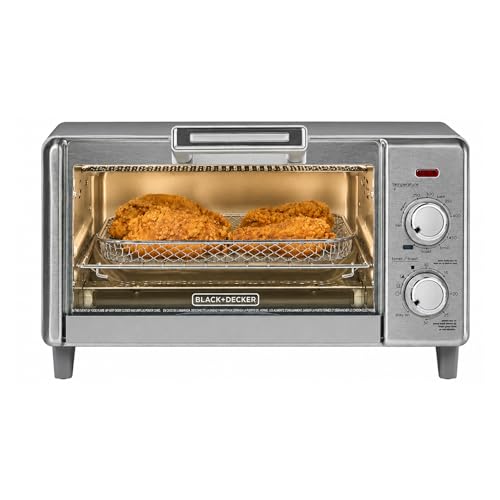
The BLACK+DECKER 4-Slice Air Fry Toaster Oven is a smart pick for small kitchens and light family cooking. Its compact shape takes less counter space than a large countertop oven. The five cooking modes give you useful options for baking, broiling, toasting, warming, and air frying. For roasted vegetables, the air-fry setting can help move hot air around smaller pieces.
I like this size for one or two people who want fresh food without heating a full oven. It works well for a small tray of zucchini, mushrooms, asparagus, or Brussels sprouts. The controls are simple, so you do not need to study a long menu before dinner. Still, you should spread food in one layer and leave room around each piece for better browning.
Pros:
- Compact size suits small counters
- Air-fry mode adds useful crisping power
- Five cooking functions cover daily meals
- Simple controls are easy to learn
- Good choice for one or two servings
- Uses less space than a full-size countertop oven
Cons:
- Small interior limits large vegetable batches
- Manual controls may need close watching
- Air-fry results depend on not overcrowding the tray
For the best toaster oven for roasting vegetables in a compact apartment, this model offers a practical balance. I would use it for quick sides, small sheet-pan meals, and reheating food with less sogginess than a microwave. The air-fry feature is helpful when you want crisp edges with little oil. It also makes a useful backup oven during busy holiday cooking.
BLACK+DECKER 6-Slice Air Fry Toaster Oven

The BLACK+DECKER 6-Slice Air Fry Toaster Oven gives you more room than the four-slice version. That extra space matters when you roast vegetables for several people. You can make a larger tray of potatoes, cauliflower, or mixed peppers without forcing every piece into a tight pile. Its five-in-one design also handles toast, baking, broiling, warming, and air frying.
This model feels more useful for a couple or small family. I find that the wider interior makes it easier to spread food in a single layer, which supports better browning. The air-fry function can reduce the need for a deep pan of oil, while the bake setting works well for softer roasted vegetables. As with any compact oven, results improve when you rotate the tray if the food browns unevenly.
Pros:
- Larger cooking area supports family portions
- Air-fry mode helps create crisp edges
- Five functions support many meal types
- Useful for roasting, baking, and reheating
- Easy manual controls keep operation simple
- More practical than a four-slice oven for shared meals
Cons:
- Takes more counter space than a compact model
- May need tray rotation for even browning
- Large batches still require careful spacing
If you want the best toaster oven for roasting vegetables for two or three diners, this is one of the strongest options in this group. The larger cavity gives food more breathing room, and that can make a clear difference in texture. I would choose it for weeknight dinners, roasted root vegetables, and small sheet-pan meals. It offers good value when you want more capacity without moving to a very large oven.
BLACK+DECKER TO1313SBD Toaster Oven
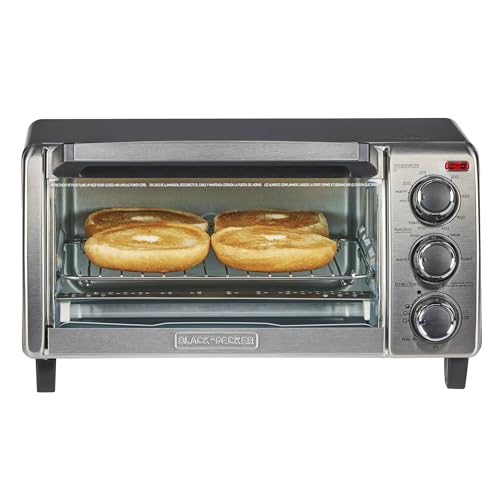
The BLACK+DECKER TO1313SBD is a simple toaster oven for shoppers who want basic heat without extra features. Its compact body works well in a dorm, office, studio, or small kitchen. The silver finish has a plain look that blends into most spaces. It can toast, bake, and broil, which gives you the core tools needed for simple roasted vegetables.
This model does not focus on air frying, so it suits cooks who prefer a traditional roasting method. I would use a shallow metal pan, a light coat of oil, and a single layer of vegetables. The broil function can add color at the end, but stay nearby because small ovens can brown food fast. Its lower price may appeal to anyone who wants a backup oven for basic meals.
Pros:
- Simple design is easy for beginners
- Compact body fits small work areas
- Bake and broil modes support vegetable roasting
- Useful for toast, snacks, and small meals
- Traditional controls allow quick adjustments
- Often a budget-friendly entry point
Cons:
- No dedicated air-fry function
- Small cavity limits batch size
- Basic controls may require more attention
The TO1313SBD can be the best toaster oven for roasting vegetables for a student, renter, or first apartment. It does not try to replace a full kitchen range. Instead, it gives you a low-fuss way to roast a small tray of vegetables and prepare daily snacks. I especially like it for buyers who value simple operation over digital programs and extra accessories.
Breville BOV450XL Mini Smart Oven

The Breville BOV450XL Mini Smart Oven is made for cooks who want a refined small oven with more controlled operation. Its smart heating system adjusts the cooking process to suit the selected function. The mini size saves counter space, yet it offers more cooking control than a very basic toaster oven. It is a strong choice for roasted vegetables when you care about steady heat and repeatable results.
I would choose this model for a small household that cooks often. It works well for trays of carrots, sliced squash, tomatoes, and other vegetables that need gentle roasting. The screen and preset controls make it easier to set the oven with confidence, though the smaller interior still limits how much food you can cook at once. Its stainless-steel finish also gives it a polished look on an open counter.
Pros:
- Smart controls simplify cooking settings
- Compact size suits smaller kitchens
- Useful for roasting, baking, and reheating
- Steady heat supports repeatable results
- Premium build has a clean stainless look
- Good fit for cooks who use an oven often
Cons:
- Higher price than basic toaster ovens
- Mini cavity limits large vegetable trays
- More controls may feel less simple at first
For many careful home cooks, the Breville is a contender for the best toaster oven for roasting vegetables. It gives you the control of a small countertop oven without the footprint of a large appliance. I would recommend it to people who roast food often and want dependable settings. The price is higher, but the extra control and polished design may justify it for daily use.
Granite Ware Round Covered Roaster

The Granite Ware Round Covered Roaster is not a toaster oven. It is a separate roasting vessel, so I include it as a useful companion rather than a direct substitute. Its covered design can help hold moisture during longer cooking jobs. The three-pound size suits small roasts, baked dishes, and vegetables that benefit from a softer texture.
This roaster is most useful when you already own a toaster oven with enough interior space. I would use it for vegetables that can dry out, such as potatoes, onions, or dense root vegetables. The lid changes the cooking style from open roasting to more enclosed cooking, so it will not give the same crisp surface as an uncovered tray. Still, it can expand what a small oven can do.
Pros:
- Covered design helps retain moisture
- Useful companion for compatible toaster ovens
- Good for small roasts and root vegetables
- Round shape suits compact cooking spaces
- Can support softer, tender vegetable dishes
- Simple design has no electrical parts
Cons:
- It is not a toaster oven
- Covered cooking gives less crisp browning
- Must fit safely inside your chosen oven
I would not call this the best toaster oven for roasting vegetables because it is cookware, not an appliance. However, it can help a toaster oven owner prepare tender meals with less moisture loss. Check the product size against your oven cavity before buying. Its value is highest for cooks who want a covered roasting tool as part of a wider setup.
My Recommendation
Each product serves a different type of cook. The four-slice BLACK+DECKER is best for small portions and tight counters. The six-slice BLACK+DECKER is the better all-round choice for families because it gives vegetables more room. The Breville is the premium pick for people who cook often and want more control.
The basic TO1313SBD is a good budget option for simple meals, while the Granite Ware roaster works as an accessory rather than a toaster oven. When I compare capacity, controls, cooking modes, and value, the six-slice BLACK+DECKER stands out for most homes. It gives enough room for a useful tray of vegetables without the cost or size of a much larger countertop oven.
| Best for | Why |
|---|---|
| Small kitchens | The BLACK+DECKER 4-Slice model saves counter space and handles small portions. |
| Family vegetable sides | The BLACK+DECKER 6-Slice model offers more room for a spread-out tray. |
| Frequent, precise cooking | The Breville Mini Smart Oven provides smart controls and a polished build. |
How I Chose the Best Toaster Oven for Roasting Vegetables
Roasting vegetables sounds simple, but the oven matters. A weak oven can leave potatoes pale in the center while burning thin pepper strips. I looked at the features that affect real meals, not just the number of buttons on the front. The best toaster oven for roasting vegetables should make good heat, offer useful space, and let you control the cook without guesswork.
I also considered daily comfort. An oven may have strong heat, but it becomes less useful if the tray is hard to clean or the controls feel confusing. I looked for models that suit different users and budgets. This approach helps you choose based on your kitchen, not on one narrow ranking.
Cooking Space
Space is one of the most important factors. Vegetables roast best when hot air can move around them. If you pack a tray too tightly, the food may steam instead of brown. A four-slice model works for one or two servings, while a six-slice model gives you more freedom.
Measure the inside of the oven, not only the outside. Check the width, depth, and height before buying a pan. Also consider the door and handle area. A pan that fits on paper may feel awkward if you cannot slide it in safely.
Heat Control
Good roasting needs more than high heat. You need enough control to cook delicate vegetables without drying them. A wide temperature range helps you roast, warm, bake, and finish food under the broiler. Manual dials feel direct, while digital controls may offer more exact settings.
I suggest starting with a moderate to high roast setting, then checking the food before the expected finish time. Small ovens can heat food quickly. A quick look and a turn of the tray can prevent dark spots.
Air-Fry Function
An air-fry mode uses fast moving heat to help crisp food. It can work well for cauliflower, potato wedges, green beans, and Brussels sprouts. You still need to avoid crowding the tray. More air does not fix a pile of wet vegetables.
Air frying also does not mean you need no oil. A small amount of oil can help seasoning stick and promote browning. Toss the vegetables first, then spread them on the tray. For very small pieces, use a suitable basket or tray so they do not fall through gaps.
Tray Design and Cleanup
Roasted vegetables leave oil, seasoning, and small bits behind. A removable crumb tray can make cleanup much easier. A tray with a smooth surface also saves time after sticky foods. Let the oven cool before cleaning, and follow the care instructions for the finish and accessories.
Do not cover heating vents with foil unless the manual allows it. Foil can block air flow or create a safety risk. I prefer parchment made for oven use when it is suitable, but keep it away from exposed heating elements. A clean tray helps food brown more evenly over time.
Controls and Timers
Simple controls have a real benefit. You can turn a dial and start cooking without opening an app or reading a long menu. Digital controls can help when you want more exact time and temperature settings. The right choice depends on how much control you prefer.
A timer helps prevent forgotten food, but I never treat it as a complete safety tool. Stay close when using a broil setting or cooking thin vegetables. Check the food early the first few times you use a new oven. Each appliance has its own heat pattern.
Energy and Counter Space
A toaster oven heats a smaller space than a full oven. That can be useful for a small meal, especially when you do not need a large cavity. The exact energy use depends on the appliance, cooking time, temperature, and food amount. I do not assume every toaster oven will always cost less to run.
Leave the clearance required by the manufacturer. Do not push the appliance against a wall or place it under a low cabinet if the manual warns against it. Heat needs a safe path away from the oven. This small step protects both the appliance and your kitchen.
How to Roast Vegetables in a Toaster Oven
Start by cutting vegetables into pieces of a similar size. Similar pieces cook at a similar rate. Hard vegetables, such as carrots and potatoes, may need smaller cuts than soft vegetables, such as zucchini. Dry the vegetables before adding oil because surface water can slow browning.
Toss the pieces with a little oil, salt, and your chosen spices. Use less oil than you might use for pan frying. Spread the vegetables in one layer with space between them. A crowded tray is the most common reason roasted vegetables turn soft.
Preheat the toaster oven if the manual and recipe call for it. Add the tray once the oven reaches the set heat. Turn or stir the vegetables partway through cooking. Check thin pieces early, since they may finish before thick pieces.
For crisp edges, use an air-fry mode when available. For tender vegetables, use bake or roast heat and consider a covered dish when appropriate. The Granite Ware roaster can help with enclosed cooking if it fits safely. Always use heat-safe cookware that matches the oven instructions.
Best Vegetables for a Countertop Oven
- Potatoes and sweet potatoes
- Carrots and parsnips
- Broccoli and cauliflower
- Brussels sprouts
- Bell peppers and onions
- Zucchini and yellow squash
- Asparagus and green beans
- Mushrooms and cherry tomatoes
Dense vegetables need more time than thin ones. If you mix them on one tray, cut the dense items smaller or start them first. Add tender vegetables later when possible. This simple trick keeps the full tray from cooking at different speeds.
Tips for Crisp, Even Roasted Vegetables
Use a light coating of oil. Too much oil can make vegetables greasy, while too little can leave seasoning loose and surfaces dry. Neutral oils work well for many recipes. Choose an oil that matches the heat and flavor you want.
Do not wash vegetables and place them wet on the tray. Pat them dry with a clean towel. Moisture creates steam, and steam softens the outside. Dry surfaces help the heat create a better crust.
Use a shallow tray when you want browning. A deep dish traps more moisture around the food. Dark pans may brown food faster than light pans, so watch the first batch. If you use a covered roaster, expect a softer finish.
Leave room near the sides of the tray. This lets heat reach more of the food. If the tray is small, cook in two rounds instead of forcing everything into one layer. The extra few minutes can make the difference between browned and limp vegetables.
Season sturdy vegetables before cooking. Add delicate herbs after cooking so they do not burn. Lemon juice, fresh herbs, grated cheese, or a small splash of vinegar can brighten the finished dish. Add wet sauces near the end to prevent scorching.
Common Buying Mistakes to Avoid
The first mistake is buying by outside size alone. A compact oven may look large but have a narrow interior. Always check the usable cooking area. Also confirm whether the included tray meets your needs.
The second mistake is choosing the most powerful-looking model without thinking about control. High heat can brown food, but it can also burn thin pieces. A useful toaster oven should let you adjust temperature and time with ease.
The third mistake is assuming air frying removes the need for spacing. It does not. Air needs a path around the vegetables. If you want to cook a large amount, choose a wider model instead of piling food into a small basket.
The fourth mistake is ignoring cleanup. A hard-to-clean oven may sit unused after the first messy meal. Look for removable trays and accessible surfaces. Good cleanup habits also help prevent old oil and crumbs from smoking.
The fifth mistake is overlooking safety. Read the manual before using glass, ceramic, parchment, foil, or covered cookware. Some materials can crack or block heat. Keep handles and cords away from hot surfaces.
Who Should Buy a Toaster Oven for Vegetables?
A toaster oven suits people who cook small meals and want faster heat than a large oven. It can help renters, students, couples, and busy parents. It also works well as a second oven during holidays or dinner parties. You can roast a side dish while the main oven handles a larger item.
Choose a compact four-slice model if you usually cook for one or two people. Choose a six-slice model if you often prepare a full tray. Pick a premium smart model if you cook often and value more exact control. If you only need an occasional small roast, a basic model may offer better value.
A toaster oven cannot replace every full-size oven. Large families may need more space for meal prep. Very large vegetables or multiple pans may require a standard range oven. The best choice depends on the amount of food you make at one time.
Safety and Care Tips
Place the oven on a stable, heat-safe surface. Keep paper towels, curtains, and other items away from the hot exterior. Do not leave cooking food unattended for long periods. This matters even more when using high heat or the broiler.
Clean crumbs from the bottom tray after the oven cools. Wipe grease from the interior with a soft cloth and approved cleaner. Never pour water into a hot oven. Sudden temperature changes can damage parts or cookware.
Inspect the cord from time to time. Stop using the oven if you see damage, sparks, or unusual smoke. A little smoke from old grease may signal the need for cleaning, but repeated smoke deserves attention. When in doubt, unplug the unit and follow the maker’s service guidance.
FAQs Of best toaster oven for roasting vegetables
What temperature is best for roasting vegetables in a toaster oven?
A moderate to high setting often works well, but the best temperature depends on the vegetable and cut size. Start with the recipe’s suggested heat and check the food early. Small toaster ovens may cook faster than a full-size oven.
Can I roast vegetables in an air-fry toaster oven?
Yes. An air-fry toaster oven can create crisp edges with little oil. Spread the vegetables in a single layer and avoid crowding the tray. Stir or turn the food during cooking for more even results.
Do I need to preheat a toaster oven before roasting vegetables?
Preheating helps the vegetables begin cooking at the planned temperature. It can improve browning and timing. Follow the appliance instructions, since some small ovens heat very quickly.
Can I use foil or parchment in a toaster oven?
Only use them when the manual allows it. Keep foil and parchment away from heating elements and vents. Use the correct size so the material cannot lift or touch hot parts.
How do I stop roasted vegetables from becoming soggy?
Dry the vegetables, use a light amount of oil, and leave space between pieces. Choose a shallow tray and avoid covering the food when you want crisp edges. Stirring once during cooking can also improve browning.
Final Verdict: Which Should You Buy?
The BLACK+DECKER 6-Slice Air Fry Toaster Oven is my top pick for the best toaster oven for roasting vegetables. It offers useful space, simple controls, and an air-fry mode for crisp sides.
For small kitchens, choose the four-slice model. For premium control, choose Breville. Any best toaster oven for roasting vegetables should give food room, steady heat, and easy cleanup.