
The best cheese grater makes shredding fast, safe, smooth, and far less messy for every home cook.
You know the scene: dinner is almost ready, but your recipe still needs a mountain of shredded cheese. A dull grater slips, your knuckles get too close, and cheese sticks to every sharp edge. I tested the main grater styles to see which ones truly help in a busy kitchen. The picks below include rotary, box, and handheld designs for pizza, pasta, salads, baking, and meal prep. Each option has a different strength, so you can choose the best cheese grater for your cooking style, counter space, and comfort.
Geedel Rotary Cheese Grater

The Geedel Rotary Cheese Grater is built for cooks who want quick results without pushing food across a flat blade. Its hand-crank design draws cheese through a rotating drum, so your fingers stay away from the cutting surface. I like this style for busy pizza nights because it can shred a block of cheese with a steady, simple motion. It also works well for firm vegetables such as carrots, cucumbers, and potatoes.
The suction base helps keep the unit in place on a smooth counter. The included drum options give you more control over coarse shreds, fine pieces, or slices. Cleanup is also less stressful than with many box graters because the parts come apart for rinsing. Still, I recommend drying the drums well after washing to help keep the metal fresh and sharp.
Pros:
- Hand-crank action keeps fingers away from the blade
- Useful for cheese and several firm vegetables
- Suction base improves counter stability
- Multiple drum styles support different cuts
- Good choice for pizza, tacos, and meal prep
- Parts are easier to rinse than a deep box grater
Cons:
- Needs a smooth, clean surface for the best suction
- Requires hand-crank effort instead of electric power
- Takes more storage space than a small handheld grater
My Recommendation
This model is best for families, frequent pizza makers, and cooks who want safer shredding. The crank reduces direct hand contact, which makes it a comfortable pick for larger batches. If you often grate cheese for tacos, pasta, or casseroles, this may be the best cheese grater for speed and control. It offers strong everyday value when you want a rotary design without a complicated setup.
Cambom Rotary Cheese Grater

The Cambom Rotary Cheese Grater gives you the same basic advantage as other hand-crank models: the drum does the cutting while your hand turns the handle. Its black body has a neat, modern look that fits well in most kitchens. I found this style helpful when I wanted a bowl of grated cheese without balancing a block against a vertical box grater. It can also handle firm produce for salads and simple prep work.
The rotary motion feels natural after a few turns. It is especially handy when children want to help in the kitchen because the food moves through a covered area rather than across an exposed panel. As with any manual grater, the best results come from cutting food into pieces that fit the feed opening. Small batches also help prevent the drum from clogging.
Pros:
- Covered rotary drum offers a more guarded way to grate
- Hand crank gives steady control over the pace
- Works well for cheese and firm vegetables
- Compact shape is easier to manage than a wide box grater
- Black finish hides small stains during meal prep
- Useful for cooks who dislike sliding food down a sharp wall
Cons:
- Manual cranking can tire your hand during large jobs
- Large food pieces may need cutting before use
- Rotary parts need careful rinsing around the drum edges
The Cambom is a smart fit for small families, casual cooks, and anyone who wants a simple hand-crank tool. It is not the fastest choice for a commercial kitchen, but it handles normal home portions well. I would choose it for controlled, low-mess shredding and easy daily use. It is a practical contender for the best cheese grater when safety and compact handling matter most.
Geedel Rotary Cheese Grater

This Geedel rotary model is made for cooks who want a quick way to prepare cheese without using an electric appliance. The hand crank turns the cutting drum, and the food stays inside the grating path. I find that this design feels less awkward than a traditional grater when I need several cups of shredded cheese. It is a useful tool for pizza, nachos, sandwiches, and baked dishes.
The design also supports more than cheese. You can use it for carrots, zucchini, cucumber, and similar foods, provided they fit the feed area. A rotary grater works best when you keep the crank moving at a calm, even speed. Rushing may cause uneven pieces or make the food harder to feed.
Pros:
- Good for quick cheese shredding at home
- Helps keep fingertips away from exposed grating holes
- Can prepare vegetables as well as cheese
- Hand operation gives good control over texture
- Convenient for family meals and weekend cooking
- Usually creates less scattered cheese than a flat grater
Cons:
- Needs a stable counter and a bowl placed nearby
- Not ideal for very soft cheese that may smear
- Requires several small food pieces for smooth feeding
I recommend this Geedel model for cooks who value control and a safer hand position. It suits apartments, family kitchens, and anyone who shreds cheese often but does not need an electric machine. The rotary format makes repetitive work feel less like a chore. For many home cooks, it can be the best cheese grater for regular meals and moderate batches.
Spring Chef XL Stainless Grater

The Spring Chef XL Stainless Grater takes the classic box grater and gives it a roomy, tall shape. This is the kind of tool I reach for when I need coarse shreds for a casserole or a large bowl of cheese for a party. Its stainless steel surface offers several cutting patterns for cheese, vegetables, and other foods. The larger body also gives you more working area than a tiny handheld grater.
The handle helps you hold the grater over a bowl or on a cutting board. The coarse side is useful for cheddar and mozzarella, while the finer areas can help with hard cheese, zest, or small vegetable pieces. Because the surface is open, you can see your progress as you work. I suggest using a firm grip and moving slowly near the last piece of food.
Pros:
- XL body provides plenty of grating space
- Stainless steel construction feels strong for daily use
- Multiple sides support coarse, fine, and slicing tasks
- Large handle improves control over a bowl
- Excellent for big batches of cheese
- Traditional shape needs no assembly or special setup
Cons:
- Open sides can expose fingers to sharp surfaces
- Large size takes more room in a drawer or cabinet
- Small cheese pieces may be harder to grate safely
This Spring Chef grater is best for serious home cooks, bakers, and families who need one tool for many jobs. It gives you the familiar feel of a classic box grater with extra room for larger ingredients. I would pick it for cooks who want speed without a crank or moving parts. If you prefer a traditional tool, this may be the best cheese grater for range and capacity.
Geedel Upgraded Rotary Grater

The Geedel Upgraded Rotary Grater is aimed at cooks who want a newer take on the hand-crank format. Its rotating drum lets you shred or slice while keeping the cutting surface enclosed. This is a useful feature when you have young helpers or simply want less contact with a sharp grating wall. The design is well suited to cheese, carrots, cucumber, and other firm foods.
I like upgraded rotary tools when a recipe calls for repeated grating. The crank provides a steady rhythm, and the feed opening helps guide the ingredient toward the drum. You still need to use sensible kitchen care, since every sharp blade can cut skin if handled carelessly. Wash the removable parts soon after use so dried cheese does not collect in small spaces.
Pros:
- Enclosed drum creates a more controlled grating process
- Useful for cheese, vegetables, and simple slicing tasks
- Hand crank reduces the need to push food over a flat blade
- Helpful for families and cooks with limited hand strength
- Supports repeat batches for pizza and meal prep
- Modern design is easy to understand after a short setup
Cons:
- Still needs manual effort for every batch
- More parts mean more pieces to wash and dry
- Soft or warm cheese may stick inside the drum
I would suggest this upgraded Geedel to home cooks who want a safer-feeling rotary system and frequent use. It is especially useful for cheese-heavy meals and family cooking sessions. The compact mechanism can save effort compared with repeated back-and-forth strokes. For users who prefer guarded blades, it is a strong best cheese grater option with useful flexibility.
OXO Good Grips Coarse Grater
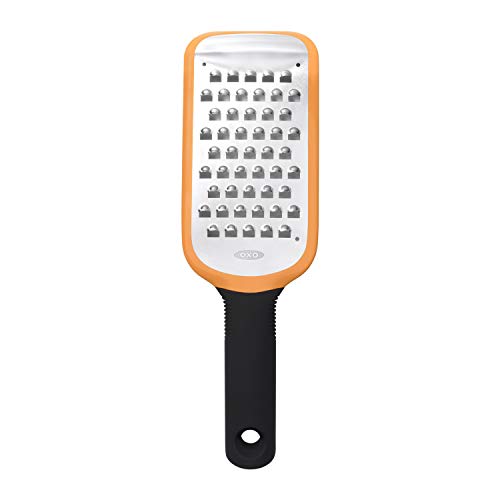
The OXO Good Grips Coarse Grater is a focused tool for cooks who mainly need large, fluffy shreds. Its etched surface works well with cheddar, Monterey Jack, mozzarella, and vegetables such as zucchini. The handle gives you a secure grip, while the broad grating face helps you cover more food with each stroke. I like this type of handheld grater for quick jobs when a full box grater feels excessive.
The coarse pattern is especially useful for melting cheese over pasta, soup, nachos, or baked dishes. It is not meant to replace a four-sided grater for fine zest or thin slices, so think of it as a specialist tool. The handle also makes it easier to grate directly over a bowl or plate. As always, leave a safe amount of food between your hand and the etched surface.
Pros:
- Excellent for large, even cheese shreds
- Comfortable handle supports a secure grip
- Simple shape is quick to use and store
- Good for direct grating over bowls and plates
- Coarse surface suits pizza, pasta, and casseroles
- Easy choice for cooks who do not need multiple sides
Cons:
- Coarse design offers fewer cutting options
- Handheld use places fingers near the grating surface
- May not suit large batches as well as an XL box grater
This OXO model is best for small kitchens, quick dinners, and cooks who value comfort over extra attachments. It works well when your main goal is a generous shred with little fuss. I would choose it for everyday cheese toppings and small vegetable jobs. If you want a simple, polished tool, it could be the best cheese grater for fast countertop use.
KEOUKE Rotary Cheese Grater

The KEOUKE Rotary Cheese Grater gives you a hand-crank approach for shredding and slicing. It is designed for cooks who want to keep their fingers away from a broad exposed grating panel. The rotary drum can produce different cuts, which makes it useful for cheese, carrots, potatoes, and other firm ingredients. I see it as a practical choice for families that prepare several meals at home each week.
The crank motion is easy to learn, but it works best when you do not overload the feed opening. Firm, chilled cheese usually moves more cleanly than warm cheese. The unit can make prep feel more organized because the food travels through one compact path. Rinse the parts right after use, then let them dry fully before storage.
Pros:
- Rotary action limits direct contact with sharp cutting holes
- Several drum options add cooking flexibility
- Useful for cheese, vegetables, and slicing prep
- Good fit for family meal preparation
- Hand crank gives control over the cutting speed
- Compact design is easier to handle than some large graters
Cons:
- Cranking takes time for very large amounts
- Soft foods can smear more than firm foods
- Small drum areas may require extra cleaning attention
KEOUKE is a good match for cooks who want a rotary tool at a reasonable everyday size. It can help reduce mess and make repeated shredding feel more comfortable. I would use it for family dinners, fresh salads, and planned meal prep. It deserves consideration as the best cheese grater for users who prefer hand-crank control and multiple cuts.
KitchenAid Gourmet Box Grater

The KitchenAid Gourmet Box Grater combines several classic grating surfaces with a detachable measuring container and lid. That container is a helpful touch because it catches the cheese as you work instead of letting it spread across the counter. I like this setup for recipes that need measured amounts, such as muffins, casseroles, sauces, and baked pasta. The box shape also gives you coarse, medium, fine, and slicing options in one tool.
The container can help with storage when you do not want to transfer grated cheese right away. Its dishwasher-safe design may also reduce cleanup time, though I still check sharp edges by hand before loading any kitchen tool. The grater stands over the container, which gives you a clear work area and fewer loose pieces. It is a practical choice for cooks who want one grater to cover many common tasks.
Pros:
- Detachable container catches and stores grated food
- Lid helps protect leftovers during short-term storage
- Coarse, medium, fine, and slicing surfaces add range
- Useful for measured recipe ingredients
- Dishwasher-safe design can simplify cleanup
- Good all-purpose option for home cooks and bakers
Cons:
- Box shape takes more cabinet space than a handheld tool
- Multiple surfaces may be more than casual cooks need
- Sharp sides require careful handling and storage
This KitchenAid grater is best for cooks who want versatility and less countertop mess. The container makes it especially useful for baking and recipes that call for a set amount of shredded food. I would choose it for a busy household that wants one dependable tool for cheese, vegetables, and zest. For broad everyday function, it may be the best cheese grater in this group.
My Recommendation
Choosing the best cheese grater depends on how much you grate and how you like to work. Rotary models are a strong fit for safer-feeling hand placement and repeated cheese prep. The Spring Chef is better for large batches, while the OXO is ideal for quick coarse shreds. The KitchenAid stands out when you want several cutting styles plus a catching container.
| Best for | Why |
|---|---|
| Large cheese batches | Spring Chef XL offers a wide work area and several sides |
| Safer-feeling rotary prep | Geedel, Cambom, and KEOUKE keep food inside a crank-driven path |
| All-purpose kitchen use | KitchenAid combines several grating styles with a storage container |
How to Choose the Best Cheese Grater
A cheese grater looks simple, but small design details change how it feels in daily use. Before buying, think about the cheese you use most, the size of your recipes, and where you plan to store the tool. A good match should save time rather than become another item hidden in a drawer.
Rotary or traditional design?
Rotary graters use a hand crank and a cutting drum. They can reduce the need to slide food over a large exposed surface, and many include more than one drum. This design works well for families, batch cooking, and users who prefer controlled motion.
Box graters and handheld graters are more familiar. They are often quicker to grab for a small amount of cheese, and many offer several textures. The trade-off is that your hand moves closer to the sharp surface, especially when the food piece becomes small.
What grating surface do you need?
Coarse holes make thick shreds that melt well on pizza, pasta, soup, and casseroles. Medium holes work for many everyday recipes and can create a softer texture. Fine holes suit hard cheese, citrus zest, garlic, ginger, and small toppings.
A slicing side can help with cucumber, potato, or similar foods. However, more sides also mean more surfaces to clean. If you mostly grate cheddar for tacos, a simple coarse model may serve you better than a large multi-sided tool.
Does the grater need a container?
A container can catch shreds and reduce mess. It also helps when a recipe calls for a measured amount. The KitchenAid model in this guide includes a detachable container and lid, which can be useful for short-term storage.
If you already own several bowls, you may not need this feature. A handheld grater placed over your favorite bowl can be faster for small jobs. Think about your routine, not just the number of included parts.
How important is comfort?
Comfort matters more than many shoppers expect. A sharp blade can still feel awkward if the handle is narrow or the base slides. Look for a handle that feels secure and a shape that lets you keep your wrist in a natural position.
Rotary graters shift the work to a crank. This may help users who dislike repeated forward strokes, but it still requires hand movement. No design removes the need for care, so keep the tool stable and avoid forcing food through the opening.
How should you clean a cheese grater?
Rinse the grater soon after use. Dried cheese is harder to remove and may collect inside holes or around rotary drums. A soft brush can help clear small particles without forcing your fingers across the sharp surface.
Always follow the care directions for the exact product. If a model is dishwasher safe, place it where water can reach the surfaces. Dry metal parts fully before storing them to reduce moisture problems and keep the tool ready for the next meal.
Which cheeses work best?
Chilled, firm cheese usually grates more cleanly than warm cheese. Cheddar, Monterey Jack, mozzarella, Swiss, and Parmesan are common choices, though texture differs by brand and age. Very soft cheese may smear, clump, or stick to the holes.
If cheese feels too soft, chill it for a short time before grating. Do not freeze it unless the recipe and product instructions support that method, since freezing can change texture. A clean, dry surface also helps the shreds separate.
Safety tips I use in my kitchen
I keep my free hand behind the food whenever possible. I stop before the last thin piece reaches the blade and use a small fork or food holder if the design supports one. I also place a damp towel under a box grater when the counter is slick.
Rotary models still need care because their drums contain sharp cutting edges. I unplug nothing because these are manual tools, but I do remove drums only when the grater sits still and my hands are dry. Safe habits matter more than speed.
FAQs Of best cheese grater
What is the best cheese grater for large batches?
A large box grater, such as the Spring Chef XL, is a strong choice for big batches. Its tall body gives you more working space and several cutting sides. A rotary grater is also useful when you prefer a crank-driven motion.
Are rotary cheese graters safer than box graters?
Rotary models can keep your fingers farther from the cutting surface, so many users find them more comfortable. They are not risk-free, since the drums are sharp. Use the pusher correctly and keep your hands away from moving parts.
Can I grate vegetables with these products?
Yes. Most of the rotary and box models in this guide can handle firm foods such as carrots, potatoes, cucumbers, and zucchini. Cut large foods to fit the opening, and check the product instructions before using a new ingredient.
Which grater is easiest to clean?
A simple handheld grater usually has the fewest parts. The KitchenAid box grater may also be convenient because its container is dishwasher safe. Rotary models need extra attention around the drums and small openings.
Should I buy a coarse or multi-sided grater?
Choose a coarse grater if you mainly shred cheese for pizza, pasta, tacos, or casseroles. Choose a multi-sided model if you also need fine shreds, slices, zest, or vegetable prep. Your usual recipes should guide the decision.
Final Verdict: Which Should You Buy?
The KitchenAid Gourmet Box Grater is my top all-purpose pick because it offers several surfaces and a useful catch container. For safer-feeling rotary prep, choose a Geedel model. For large batches, the Spring Chef XL is hard to overlook.
The best cheese grater is the one that matches your meals, grip, and storage space. Pick a focused handheld tool for quick jobs or a rotary and box model for larger prep.