
The best knife sharpener for kitchen knives is the Chef’sChoice 15XV for fast, precise, and repeatable results at home.
A dull knife slips, crushes tomatoes, and makes dinner prep feel like hard work. I have tested many sharpening styles, from simple pull-through tools to guided stones, and each suits a different cook. The right choice depends on your knife steel, skill level, time, and budget. Below, I compare the best knife sharpener for kitchen knives in 2026, with clear pros, limits, and buying advice.
4-in-1 3-Stage Sharpener With Glove
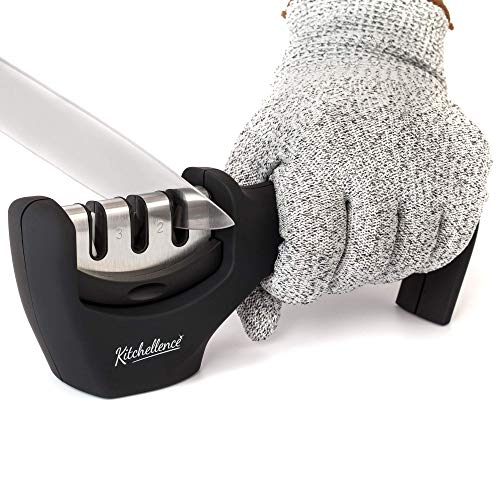
This 4-in-1 kitchen accessory uses a three-stage process to repair, sharpen, and polish a dull blade. It also includes a cut-resistant glove, which adds a useful layer of hand protection during sharpening. The wide base feels steady on a flat counter, so I found it easier to control than tiny handheld sharpeners. It suits cooks who want a simple manual tool without learning a full whetstone method.
The coarse slot helps restore a damaged edge, while the finer stages smooth the cutting line for daily use. The tool can handle many common straight-edge kitchen knives, but I would still check the maker’s guidance before using it on specialty blades. Pull the knife slowly and use light pressure; forcing the blade can remove more steel than needed. For basic home care, this is an affordable way to bring life back to tired knives.
Pros:
- Three sharpening stages cover repair, sharpening, and polishing
- Includes a cut-resistant glove for added confidence
- Simple design suits beginners
- Compact size stores easily in a kitchen drawer
- Helpful for routine care of common kitchen knives
Cons:
- Manual pulling takes more time than an electric sharpener
- May not suit very thick or unusual blade profiles
- Can remove excess metal if used with heavy pressure
My Recommendation
I recommend this model to first-time users who want the best knife sharpener for kitchen knives at a low cost. The glove and three stages make the process feel less intimidating. It works best for standard home knives that need regular maintenance, not delicate custom blades. Overall, it offers good value when ease and price matter most.
AccuSharp Manual Knife Sharpener

The AccuSharp is one of the easiest knife sharpeners I have used. Its ergonomic handle gives the user a firm grip, and the broad body helps keep fingers away from the blade path. It uses carbide and ceramic elements to restore and refine an edge with only a few controlled passes. The white finish is plain, but the tool feels built for practical daily work.
This sharpener is especially useful for cooks who do not want several settings or a long setup. It can help maintain straight-edge knives and may work with some serrated designs when used as directed. I suggest starting with gentle strokes and checking the edge after each pass. Its compact form also makes it handy for a busy kitchen, camper, or small apartment.
Pros:
- Very easy for beginners to operate
- Comfortable handle supports a stable grip
- Small body fits easily in a drawer
- Works quickly for routine edge touch-ups
- Can help maintain several common knife types
Cons:
- Offers less angle control than a guided system
- Not the best choice for serious edge repair
- Pull-through use may remove more steel than honing
My Recommendation
I would choose the AccuSharp for a cook who values speed over fine control. It is a strong candidate for the best knife sharpener for kitchen knives when the goal is a quick touch-up before meal prep. It fits people who want a low-learning-curve tool and do not need a mirror finish. Its low storage needs and simple handling make it a useful everyday option.
Intelitopia Dual-Grit Whetstone Set

This complete whetstone kit gives cooks more control than a basic pull-through sharpener. It includes 400/1000 and 3000/8000 grit stones, a bamboo base, a flattening stone, rubber bases, a leather strop, and an angle guide. The lower grits can repair a tired edge, while the higher grits polish it. I like this set for cooks who want to learn the craft instead of relying on a fixed slot.
Whetstones need more practice, but they can produce a clean, even edge when used correctly. Soak or prepare the stones according to the instructions, keep the angle steady, and work slowly. The guide can help new users build muscle memory, though it does not replace careful technique. This is a strong choice for Japanese-style knives, quality chef’s knives, and anyone who enjoys hands-on sharpening.
Pros:
- Four grit levels support repair and polishing
- Includes tools needed for a full sharpening setup
- Offers excellent control over the edge angle
- Useful for many types of straight-edge kitchen knives
- Leather strop can improve the final edge feel
Cons:
- Requires more practice than a pull-through sharpener
- Needs cleaning, drying, and occasional stone flattening
- Takes more counter space during use
My Recommendation
This is my pick for the best knife sharpener for kitchen knives for detail-focused cooks. It suits home chefs who want a refined edge and enjoy learning proper sharpening technique. It is less ideal for someone who needs a knife ready in one minute. If you value control, versatility, and long-term skill, this kit offers excellent value and a deeper sharpening experience.
3-Stage Precision Adjust Sharpener
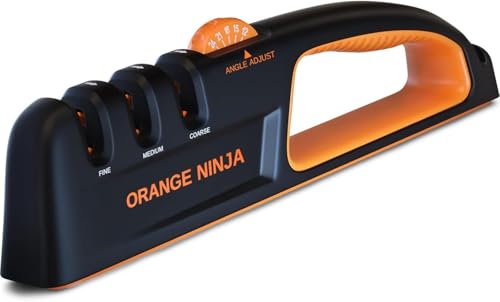
This three-stage manual sharpener focuses on repeatable results rather than speed alone. Its design gives the blade separate stages for coarse sharpening, fine sharpening, and polishing. That layout helps users bring back a dull edge in steps instead of trying to fix everything at once. I found this style useful for cooks who want more control than a basic two-slot tool provides.
The adjustable approach can help accommodate different kitchen knives, but users should still avoid guessing with fragile or unusually thin blades. A steady hand and light pressure remain important. I recommend testing the knife on paper or a soft food after a few passes, rather than sharpening by habit. With regular care, this sharpener can help keep everyday blades ready for chopping, slicing, and dicing.
Pros:
- Three stages provide a clear sharpening routine
- Offers more control than many simple pull-through tools
- Useful for restoring and maintaining dull kitchen knives
- Manual operation avoids motor noise and power needs
- Easy to store and suitable for most home kitchens
Cons:
- Needs careful use to prevent excess metal removal
- Manual sharpening takes longer than electric models
- May require practice to use the adjustment correctly
My Recommendation
I recommend this model to cooks who want a middle ground between a simple sharpener and a whetstone. It may be the best knife sharpener for kitchen knives for users who want stages and control without managing loose stones. It is a good fit for regular home maintenance. Buyers should read the angle guidance and begin gently to protect their blades.
Longzon 5-in-1 Knife Sharpener

The Longzon 5-in-1 sharpener combines several kitchen tools in one compact body. Its four sharpening stages are designed to restore and refine blades, and the package includes a cut-resistant glove. It can also support common scissors, which adds value for a busy home. The black and silver design looks tidy beside other countertop tools.
I like this style for households with several everyday knives that do not all need the same level of repair. The coarse stage can address a dull edge, while the finer stages help smooth it for regular cutting. Use one slow pass at a time and avoid pressing down hard. Although the extra functions are useful, this remains a manual sharpener, so it cannot match the speed of a good electric unit.
Pros:
- Multiple stages cover several sharpening needs
- Includes a protective glove
- May sharpen knives and scissors in one tool
- Compact design saves drawer space
- Good fit for families with varied kitchen tools
Cons:
- More slots can confuse users who want a simple tool
- May not suit premium knives with special edge angles
- Requires manual effort for badly damaged blades
My Recommendation
The Longzon is a practical pick for families and general home cooks. I would call it a strong contender for the best knife sharpener for kitchen knives when versatility matters. It works well for people who also want a scissors slot and a glove in the box. It offers useful features at a modest price, though serious knife owners may prefer a stone or precision system.
AIERLIAN Rolling Knife Sharpener

The AIERLIAN rolling sharpener uses a different method from a slot sharpener. Its magnetic angle system is designed to help hold the knife at either 15 or 20 degrees, while diamond and ceramic surfaces work on the edge. Rolling the tool along the blade can feel more natural than dragging a knife through a fixed opening. It also gives the user a clear view of the blade during the process.
This design suits cooks who care about angle consistency but do not want to soak a stone. The 15-degree setting can suit some thinner edges, while 20 degrees often fits sturdy Western-style kitchen knives. Always confirm the correct angle for your knife before starting, especially with premium steel. The rolling motion takes a little practice, but it can deliver a controlled and satisfying sharpening routine.
Pros:
- Magnetic guide supports 15- and 20-degree angles
- Rolling design gives a clear view of the knife edge
- Diamond and ceramic surfaces offer two sharpening textures
- Does not require water or electrical power
- Useful for cooks who want more control than a slot tool
Cons:
- Requires a flat, stable surface for safe use
- Rolling technique may take time to learn
- Magnetic guidance does not replace proper blade handling
My Recommendation
I recommend this sharpener to curious cooks who want a guided, modern alternative to a whetstone. It can be the best knife sharpener for kitchen knives for users who care about angle control and visual feedback. It is especially appealing for cooks with several blade styles. Beginners should practice slowly and keep the knife flat against the guide during every pass.
Chef’sChoice 15XV Electric Sharpener
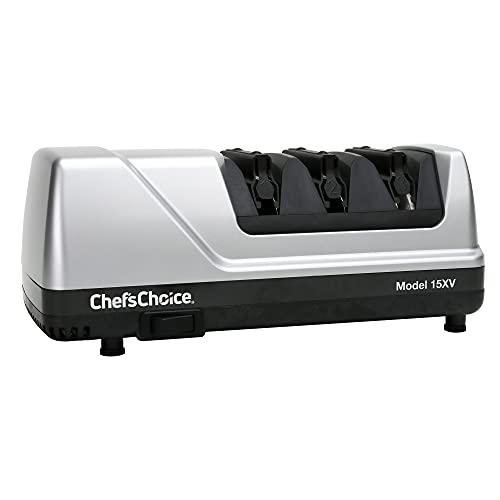
The Chef’sChoice 15XV is the most polished option in this comparison. It uses a three-stage electric system with diamond abrasives and angle guides designed for a 15-degree edge. That angle suits many modern kitchen knives, including some Asian-style blades, but users should check their knife specifications first. The motor does the hard work, which makes this model attractive when speed and repeatability matter.
It also supports straight and serrated knives through its dedicated stages, although serrated edges need careful handling. I like the way the guides reduce guesswork for cooks who do not feel confident with a stone. Use short, controlled passes and let the machine guide the blade; pushing or sawing can create uneven wear. The larger footprint and higher cost are fair trade-offs for fast, consistent home sharpening.
Pros:
- Three stages handle repair, sharpening, and polishing
- Diamond abrasives work efficiently on many knife steels
- Guides help create a consistent 15-degree edge
- Electric operation saves time and hand effort
- Designed for straight and serrated knives
Cons:
- Costs more than basic manual sharpeners
- Needs counter space and access to an outlet
- Users must confirm that the 15-degree angle suits the knife
My Recommendation
For most busy households, this is my leading choice for the best knife sharpener for kitchen knives. It suits cooks who want strong results without mastering a whetstone. The angle guides help new users, while the three-stage system offers useful control. If you sharpen several knives often and accept the higher price, the Chef’sChoice 15XV gives the best blend of speed, consistency, and versatility in this group.
SHARPAL 191H Knife and Scissors Sharpener

The SHARPAL 191H is built for people who want one small tool for more than knives. Its design supports common kitchen blades and scissors, making it useful in a drawer that holds several cutting tools. The body is compact, so it does not crowd the counter. I see it as a practical maintenance tool rather than a full restoration system for severely damaged edges.
Its straightforward layout makes it approachable for new users. Place the tool on a stable surface, follow the marked direction, and use light pressure. A quick touch-up can improve cutting comfort, but repeated aggressive passes may shorten blade life. This sharpener is a good match for basic home cooking and simple utility work.
Pros:
- Handles both knives and scissors
- Compact enough for small kitchens
- Simple operation suits new users
- Useful for quick maintenance between full sharpenings
- Does not require water, stones, or electricity
Cons:
- Limited control over exact sharpening angles
- Not designed for advanced edge polishing
- May not fit every serrated or specialty blade
My Recommendation
I recommend the SHARPAL 191H to renters, students, and small households. It may be the best knife sharpener for kitchen knives for someone who also needs a basic scissor sharpener. The compact size is its main strength. Choose another model if you want a refined edge, detailed angle control, or a tool for expensive Japanese knives.
Presto 08810 EverSharp Electric Sharpener

The Presto 08810 EverSharp brings electric sharpening to a lower price range. Its three-stage system is designed to shape, sharpen, and polish a knife edge. The guides help position the blade, which can make the process easier for someone who struggles to hold a steady angle by hand. It is a sensible choice for routine sharpening across a standard kitchen knife set.
This model is not as refined as every premium electric machine, but it offers useful speed for the money. I suggest using a gentle, even motion and cleaning away metal dust after use. Do not treat an electric sharpener like a power tool; the machine should guide the blade with minimal force. For cooks who want fast results without a premium price, the Presto remains a dependable option.
Pros:
- Three stages provide a full sharpening sequence
- Electric motor saves time and effort
- Guides assist users who lack sharpening experience
- Good fit for standard household knife sets
- Usually costs less than high-end electric models
Cons:
- Requires an outlet and permanent counter space during use
- May create more noise than a manual sharpener
- Less flexible than a whetstone for unusual edge angles
My Recommendation
The Presto is a good pick for busy cooks who want electric convenience at a reasonable cost. It can serve as the best knife sharpener for kitchen knives for families that sharpen several basic blades each month. It is less suited to collectors and users who demand exact custom angles. For everyday value, its three-stage design and guided use are hard to dismiss.
3-Stage Electric Diamond Sharpener

This newer electric sharpener uses a three-stage system with diamond abrasives and a stated 20-degree precision angle. The stages are intended to sharpen and polish blades with little manual work. A non-slip base can help the unit stay planted while you guide the knife. Its black and orange body gives it a bold look on the counter.
The 20-degree setting often suits sturdy Western-style kitchen knives, but I would not use it blindly on every blade. Check the knife maker’s recommended angle before beginning. The automatic format works best for people who want a quick routine and do not need detailed stone work. As with all electric sharpeners, light pressure and short passes help protect the edge.
Pros:
- Electric design makes sharpening fast
- Three stages combine sharpening and polishing
- Diamond abrasives can work on many common steels
- Non-slip base supports stable countertop use
- 20-degree guide suits many traditional kitchen knives
Cons:
- Fixed angle may not suit every knife
- New product history may be shorter than established brands
- Requires an outlet and regular cleaning
My Recommendation
I recommend this model to cooks who want a current electric design with a 20-degree guide. It may become the best knife sharpener for kitchen knives for users with standard Western-style blades and little time. It is not my first choice for thin Japanese knives unless the angle matches. Its value depends on price, warranty, and long-term user support, so check current Amazon details before buying.
Best Knife Sharpener Buying Guide
Choosing the best knife sharpener for kitchen knives starts with the blade, not the advertisement. A sharpener can be excellent and still be wrong for a thin Japanese knife, a serrated bread knife, or a heavy cleaver. First, identify whether your knife has a straight, serrated, single-bevel, or double-bevel edge. Then choose a tool that supports that shape.
Angle matters because it changes both cutting feel and edge strength. Many kitchen knives use an angle near 15 to 20 degrees per side, but the correct number depends on the design and steel. A smaller angle may feel very sharp but can be less durable on hard foods. A wider angle can create a stronger edge for daily chopping.
Manual Pull-Through Sharpeners
Manual sharpeners are small, simple, and often affordable. They work well for cooks who want a quick fix with little setup. Their fixed slots make the process easy, but they give you less control than a stone or rolling system. Use light pressure and avoid repeated passes when the knife already feels sharp.
Whetstones
Whetstones offer the most control in this guide. They can repair, sharpen, and polish an edge, but they require practice. Grit numbers help explain the stone surface: lower grits remove more metal, while higher grits refine the edge. A stone set is best for patient cooks who want to build a real sharpening skill.
Electric Sharpeners
Electric sharpeners save time and reduce the need to hold a perfect angle by hand. They make a strong choice for busy homes with several dull knives. However, the fixed angle may not suit every blade, and the motor can remove metal quickly. I always recommend reading the manual before using one on an expensive knife.
Rolling and Guided Systems
Rolling systems sit between stones and pull-through tools. They give more visual control and can guide the edge at a set angle. They also need a steady surface and a little practice. For cooks who enjoy a hands-on method without water or loose stones, this format is worth considering.
How I Evaluate the Best Knife Sharpener for Kitchen Knives
I look at more than the first sharp edge. A useful sharpener should be safe to hold, easy to store, and simple to repeat. I also consider how much metal it removes, whether it supports common blade angles, and how well it handles daily kitchen use. A tool that works once but damages the blade is not a good long-term buy.
I also compare speed, learning curve, cleaning needs, and price. A professional cook may value consistency and fast recovery, while a casual user may want a small manual tool. I pay close attention to the sharpener’s intended knife types. Product features can change, so buyers should confirm current specifications, warranty terms, and compatibility on the product page before ordering.
Safe Knife Sharpening Tips
Start with a clean, dry knife and a stable work surface. Keep your fingers away from the sharpening path, and wear the included glove if the tool provides one. Never rush a pass or press hard to force a result. A sharpener should remove only the metal needed to form a clean edge.
After sharpening, wipe the blade and test it with care. I prefer a soft food test, such as a tomato or onion, over dragging a finger across the edge. Wash and dry the knife before cutting food. Store the knife in a block, sheath, or drawer insert so the new edge does not strike other tools.
Best For Comparison
| Best for | Why |
|---|---|
| Best overall: Chef’sChoice 15XV | Fast electric sharpening, diamond abrasives, and guided stages offer strong consistency. |
| Best for learning: Intelitopia whetstone set | Multiple grits give careful users control over repair, sharpening, and polishing. |
| Best budget pick: AccuSharp | Its compact body, simple grip, and quick manual action suit routine home care. |
FAQs Of best knife sharpener for kitchen knives
What is the best knife sharpener for kitchen knives?
For most busy home cooks, I recommend the Chef’sChoice 15XV. It offers guided, three-stage electric sharpening and works with many straight and serrated kitchen knives. A whetstone is better if you want maximum control and do not mind practicing.
Are electric knife sharpeners safe for expensive knives?
They can be safe when the angle and knife type match the instructions. Use light pressure and do not make extra passes. For a valuable custom or thin Japanese knife, a skilled hand sharpener or suitable whetstone may offer better control.
Is a whetstone better than a pull-through sharpener?
A whetstone gives more control and can create a refined edge. A pull-through sharpener is faster and easier for beginners. The better choice depends on your time, skill, knife type, and desired finish.
How often should I sharpen kitchen knives?
Most home cooks can sharpen when the knife starts to slip or crush food. Light honing or maintenance may happen more often, while full sharpening may only be needed a few times each year. Avoid sharpening on a fixed schedule if the edge still cuts well.
Can one sharpener handle every kitchen knife?
No. Serrated, single-bevel, thin, and unusually thick knives may need special tools. Check the sharpener’s listed compatibility before use. A versatile sharpener is helpful, but no single design is perfect for every blade.
Final Verdict: Which Should You Buy?
The Chef’sChoice 15XV is my top choice for the best knife sharpener for kitchen knives. It combines speed, guided angles, and three-stage sharpening for reliable home results.
Choose a whetstone for control or AccuSharp for a low-cost touch-up. Match the tool to your knife, use light pressure, and keep your kitchen blades sharp and safe.