
The best cheese grater for hard cheese combines sharp blades, a firm grip, safe use, and easy cleanup.
Grating Parmesan, Pecorino Romano, or aged cheddar can turn dinner into a tiring workout when your grater slips or clogs. A good tool should shave hard cheese with steady pressure, not scrape your knuckles or leave half the wedge stuck behind. I tested these popular styles with real kitchen needs in mind, including speed, control, storage, and cleanup. Whether you cook for one or grate cheese for a family pasta night, this guide can help you find the best cheese grater for hard cheese without wasting money on a weak tool.
Zyliss Classic Rotary Grater

The Zyliss Classic Rotary Grater gives hard cheese a smooth path from block to bowl. Its rotary design lets you hold the cheese inside a drum while turning a hand crank. That setup keeps your fingers away from the cutting surface and makes the grating motion feel controlled. I find this style useful when I need a generous amount of Parmesan for pasta, soup, or a baked dish.
This grater carries NSF certification, which is a useful sign for shoppers who value commercial-style design and food-contact standards. The handle and drum work together to create steady pressure, so the cheese does not need to be forced through the holes. It is also a practical choice for cooks with limited hand strength because the crank does much of the work. The main tradeoff is that a rotary grater needs a few more parts cleaned after use.
Pros:
- Rotary action keeps fingers away from sharp holes
- Good choice for Parmesan and other firm cheeses
- Crank design reduces wrist strain
- NSF-certified construction inspires confidence
- Useful for grating a larger amount of cheese
- Compact enough for most kitchen drawers
Cons:
- More parts need cleaning than a flat grater
- Works best when cheese pieces fit the drum
- Not the fastest option for a very small amount
My experience: I would choose this model for people who want a safe, classic rotary tool and often grate hard cheese in batches. It feels more secure than pushing a wedge across an exposed plane, especially when the cheese becomes small. The crank also gives better control than many low-cost rotary graters that wobble on the counter. For many households, it is a strong candidate for the best cheese grater for hard cheese when safety matters most.
OXO Good Grips Rotary Cheese Grater

The OXO Good Grips Rotary Cheese Grater is built for cooks who prefer a familiar brand and a controlled hand-crank motion. Its white body has a clean look, while the rotary drum helps keep the cheese enclosed during use. I like rotary graters for hard cheese because they can reduce the need for force. They also make it easier to direct freshly grated cheese into a bowl or over a dish.
OXO’s Good Grips approach focuses on comfort, and that matters during repeated turns. The handle is designed to feel secure in the hand, while the drum provides a clear cutting surface for firm cheese. This model suits Parmesan, aged Asiago, and similar cheeses that may be tiring to grate on a standard box grater. As with most rotary designs, you should rinse the drum soon after use so cheese does not dry inside the holes.
Pros:
- Comfortable hand-crank format
- Good control over the grating speed
- Helps protect fingers from the cutting drum
- Suitable for hard cheese and some firm vegetables
- Recognizable OXO ergonomic design
- Easy to aim cheese into a serving bowl
Cons:
- Requires assembly before grating
- Rotary parts take longer to wash than a simple handheld tool
- May feel slower for one small shaving
My experience: This is a good fit for families, older cooks, and anyone who dislikes pressing cheese against a sharp flat surface. The hand crank gives the process a steady rhythm, almost like turning a small mill. I would rank it highly for comfort and daily use, though cooks who want a tool they can grab and rinse in seconds may prefer a handheld model. It remains one of the safest choices in this best cheese grater for hard cheese comparison.
OXO Etched Coarse Grater
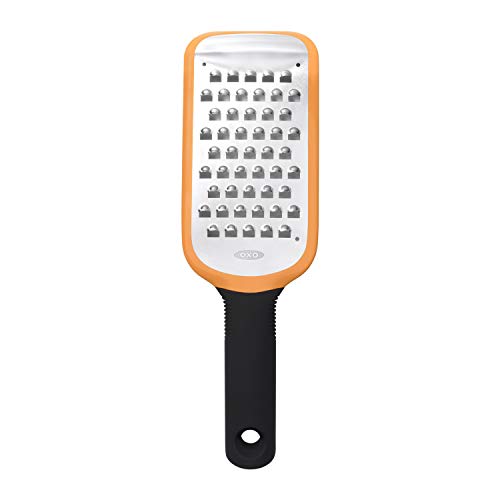
The OXO Good Grips Etched Coarse Grater takes a simpler route. It has a broad coarse surface for turning cheese into useful shreds without a crank or extra drum. The orange handle adds a bright touch and gives the hand a clear place to hold. This style works well when you want to grate cheese directly over a bowl, pan, or cutting board.
Coarse holes are especially useful for hard cheese when you want strands that melt well on pasta, vegetables, or casseroles. The etched surface can produce a consistent shred with fewer passes than a fine zester. I also like the open design because it is easy to see where cheese remains. You still need to use care, since a handheld grater exposes the blade area and can become slippery if your hands or the handle get wet.
Pros:
- Simple design is quick to grab and use
- Coarse holes make useful melting-size shreds
- Comfortable handle supports firm pressure
- Easy to guide over bowls and plates
- Open surface is simple to inspect
- Works for cheese, vegetables, and other firm foods
Cons:
- Exposed holes require careful hand placement
- Coarse texture may not suit fine Parmesan dust
- Cheese can collect on the back if you grate too quickly
My experience: I recommend this grater to cooks who value speed and simple cleanup. It is a better match for shredded cheese than for a delicate powder, so think pizza, tacos, baked pasta, and salads. The handle gives enough control for most blocks, but I would slow down near the end of the cheese. If you want a dependable handheld pick, this model is a practical contender for the best cheese grater for hard cheese.
Deiss PRO Heavy-Duty Grater
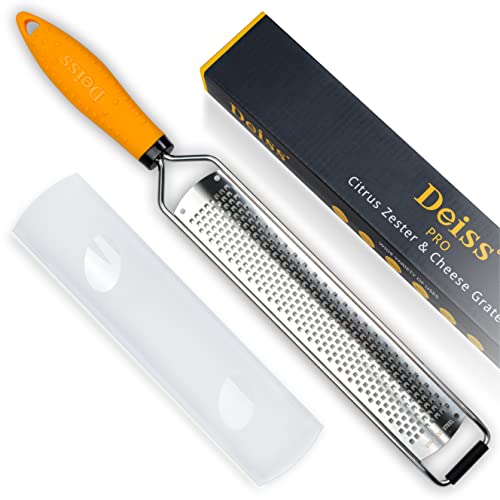
The Deiss PRO Lemon Zester and Heavy-Duty Grater is a long handheld tool made for more than one job. Its narrow shape can grate Parmesan, garlic, ginger, nutmeg, chocolate, and citrus zest. For hard cheese, the long surface gives you room to make smooth strokes instead of stopping after every short pass. That extra length can make meal prep feel less like a chore.
This grater is most useful for cooks who want one multipurpose tool instead of several single-use gadgets. Its fine cutting surface can create a lighter Parmesan texture than a coarse grater, which works well for finishing pasta or adding cheese to a sauce. The handle offers a firm place to grip, but the long body still requires a stable angle over the bowl. I suggest using a light touch at first because very sharp etched surfaces can remove more food than expected.
Pros:
- Long grating surface supports efficient strokes
- Useful for hard cheese, zest, garlic, and spices
- Fine texture suits Parmesan and finishing work
- Lightweight design is easy to hold
- One tool replaces several small kitchen gadgets
- Simple open shape is easy to rinse
Cons:
- Fine holes may clog with soft or warm cheese
- Exposed blade needs careful storage
- Not ideal for producing wide, coarse shreds
My experience: I see this as a strong choice for small kitchens and cooks who enjoy fresh zest and spice work as much as cheese. It handles hard Parmesan with little trouble, but it is not the best option for a large family-size pile of shreds. I would use it for finishing a dish, grating garlic into a dressing, or adding fresh nutmeg to a sauce. Its broad range of uses gives it excellent value for the right cook.
Geedel Rotary Cheese Grater

The Geedel Rotary Cheese Grater is designed for cooks who want a hand-crank tool that can also slice vegetables. Its enclosed rotary format keeps the cutting surface inside the unit while you turn the handle. That design can feel reassuring when children help in the kitchen or when your hands become tired. It also gives you a steady way to process hard cheese without pushing your fingers toward the drum.
The tool is useful for Parmesan, firm cheddar, chocolate, and selected vegetables, depending on the drum and the food size. Rotary graters work best when you cut the cheese into pieces that fit the feeding area without forcing them. I like this approach for meal prep because it can create a larger amount with less wrist pressure. Cleaning takes more attention than a flat grater, especially around the drum and food chamber.
Pros:
- Enclosed design improves hand safety
- Hand crank reduces direct pressure on the wrist
- Useful for hard cheese and some vegetables
- Good option for batch grating
- Can be helpful for family kitchen tasks
- Rotary action produces a steady texture
Cons:
- Parts must be separated for thorough cleaning
- Large cheese blocks need to be cut down first
- Needs a stable grip during faster cranking
My experience: The Geedel is best for home cooks who grate often and prefer a covered cutting system. It feels more relaxed than a flat grater when I need several servings of cheese. I would not buy it for a tiny apartment drawer if I rarely cook, but frequent pasta and pizza makers can get real use from it. It offers a nice balance between safety, speed, and versatility.
BOSKA Copenhagen Stainless Steel Grater

The BOSKA Copenhagen Stainless Steel Grater has a slim, lightweight design that suits direct serving. It is made for cooks who want to grate cheese at the table or finish a dish without bringing out a large box grater. The stainless steel body gives it a clean, modern look and a firm feel in the hand. Its shape is easy to store, even in a crowded utensil drawer.
This type of cheese grater works especially well with hard varieties such as Parmesan and aged Pecorino. I can hold it over a bowl, plate, or board and make short, controlled strokes. The lightweight body feels comfortable during quick tasks, though it does not provide the same enclosed hand protection as a rotary model. Wiping or rinsing it soon after use helps prevent cheese from drying across the metal holes.
Pros:
- Lightweight and easy to handle
- Stainless steel construction has a clean appearance
- Compact shape stores in small spaces
- Works well for table-side Parmesan
- Simple design has no moving parts
- Fast to use for small portions
Cons:
- Less protective than an enclosed rotary grater
- Small size may not suit large batches
- Needs careful handling around the sharp surface
My experience: I would pick the BOSKA for a minimalist kitchen or anyone who likes to finish dishes at the table. It is a quiet, simple tool that does not demand much storage space. The main limit is capacity, so it is better for a few servings than for a large Sunday meal. For direct Parmesan grating, it is one of the neatest options in this guide.
White Rotary Cheese Grater

This white rotary cheese grater offers an enclosed way to grate cheese, chocolate, vegetables, and other firm foods. The hand crank gives the user control without placing fingers directly against the blade. That makes it appealing for busy homes where several people may help with meal preparation. It is also a practical shape for grating hard cheese over a bowl.
The rotary format can make firm Parmesan feel easier to handle because the drum does the cutting while the user turns the handle. It is best to use smaller cheese pieces and avoid pressing too hard into the feed area. The white finish gives the tool a simple look, though food marks may show more than they would on a darker body. As with other rotary graters, prompt washing helps keep the drum fresh and clear.
Pros:
- Enclosed drum helps protect fingers
- Hand crank supports controlled grating
- Useful for hard cheese and firm foods
- Suitable for serving cheese directly into a dish
- Comfortable option for repeated use
- Clean white design fits many kitchens
Cons:
- White plastic may show food stains
- Cleaning the drum takes extra time
- Small feed openings require prepared cheese pieces
My experience: This model makes sense for cooks who want rotary safety without paying for a more specialized design. It is a helpful choice for families, beginners, and anyone who finds a flat grater hard to control. I would keep the cheese cold and cut it into manageable pieces for smoother results. Its value comes from simple operation and reduced hand contact with the cutting surface.
UHIYEE Handheld Parmesan Grater

The UHIYEE Handheld Parmesan Grater uses a compact rotary format with two drums. That design gives you more than one texture option while keeping the tool small enough for quick kitchen work. It is aimed at Parmesan, hard cheese, chocolate, and other firm ingredients. I like this type of tool when drawer space matters but I still want more control than a flat plane grater provides.
The two-drum setup can help you switch between a finer finish and a more substantial shred, depending on the drum in use. A hand crank reduces the need to press cheese across an exposed blade. The compact body is convenient for a single plate of pasta, although it may feel slower for a very large batch. As with any small rotary tool, cut the cheese into pieces that fit comfortably and clean each drum soon after use.
Pros:
- Compact size suits small kitchens
- Two rotary drums offer texture flexibility
- Enclosed action keeps fingers away from sharp holes
- Good for Parmesan and other hard cheeses
- Hand crank gives controlled movement
- Easy to bring to the table or store in a drawer
Cons:
- Small capacity is not ideal for large meals
- Drum changes add an extra step
- Requires careful washing around the rotary parts
My experience: I would suggest the UHIYEE to apartment dwellers, students, and cooks who grate cheese in small portions. It takes up less room than many box and rotary graters, yet it offers useful control. The dual-drum design adds flexibility for pasta toppings and chocolate desserts. If you want the best cheese grater for hard cheese in a compact format, this model deserves a close look.
How to Choose the Best Cheese Grater for Hard Cheese
Hard cheese is dense, dry, and often crumbly. A weak grater can drag across the surface instead of cutting it. The right model should remove cheese with a steady stroke and leave a texture that suits the dish. Before you buy, think about how often you grate, how much cheese you need, and where you will store the tool.
Choose the right grater style
A rotary grater is often the safest style for hard cheese. It holds the cheese inside a drum and uses a crank to move it across the cutting surface. This style can reduce finger contact and wrist strain. It also works well when you need several servings for pasta or a family meal.
A handheld grater is faster to grab and easier to store. It works well for small amounts and direct grating over a plate. However, the cutting holes remain exposed, so you must keep your fingers on the handle and slow down as the cheese gets small. A box grater offers more surfaces and more capacity, but it takes more counter space and can be harder to clean.
Look for sharp, stable holes
Sharp holes matter more than a flashy body. When the cutting edges are dull, hard cheese can skid, crumble, or require too much pressure. Etched stainless steel surfaces often cut cleanly, but the exact texture depends on the hole size and design. A sturdy frame also matters because flex can make a grater feel unsafe.
Match the hole size to your recipe
Fine holes create a light texture that blends into sauces and melts quickly. They are useful for Parmesan on pasta, risotto, and soups. Coarse holes make larger shreds that work well on pizza, baked dishes, salads, and tacos. Some rotary tools include more than one drum, which can be helpful if you cook many types of meals.
Think about comfort and hand strength
Hard cheese asks for pressure. If your wrist, fingers, or grip tire quickly, a rotary grater may be a better fit. A soft-touch handle can reduce slipping, but you still need a stable counter or bowl below the tool. I also suggest holding the cheese with a dry hand because moisture makes both the cheese and the grater harder to control.
Check cleaning and storage needs
Cheese dries fast in small holes. Rinse the grater soon after use, then wash it according to the product instructions. A small brush can help clear food from a rotary drum or fine etched surface. Dry the tool fully before storage to reduce odor and protect metal parts.
Rotary vs. Handheld Graters for Parmesan
Both styles can produce good results, but they serve different cooks. A handheld grater is like a quick kitchen brush: simple, direct, and ready in seconds. A rotary model is more like a small machine: it takes a bit more setup but can feel safer and easier during repeated use.
For a few shavings over soup, I prefer a compact handheld model. For a full block of Parmesan before a family dinner, I usually favor a rotary grater. People with weak grip strength may also prefer the rotary design because the crank replaces some of the pushing force. The best cheese grater for hard cheese depends on your hands, recipes, and patience with cleanup.
Safety Tips for Grating Hard Cheese
Keep the grater on a stable surface when possible. Do not rush the final piece of cheese, since fingers often move closer to the holes at that point. Use a protective holder, a rotary drum, or a small piece of cheese that you can grip safely. If the tool slips, stop and reset it rather than adding more force.
Keep the grater dry and clean. A wet handle can turn a controlled motion into a sudden slip. Store sharp graters where children cannot reach them. For rotary models, make sure the drum and cover sit correctly before use.
Best For Table
| Best for | Why |
|---|---|
| Safest repeated grating | A rotary grater keeps fingers away from the cutting drum and reduces wrist pressure. |
| Fast small portions | A handheld grater is simple to grab and works well over pasta, soup, or a plate. |
| Small kitchens and varied recipes | A compact multipurpose grater can handle cheese, zest, garlic, chocolate, and spices. |
My Recommendation
For most homes, I recommend the Zyliss Classic Rotary Grater as the best cheese grater for hard cheese. Its enclosed rotary action feels safe, its crank helps reduce effort, and its restaurant-style design suits frequent use. The OXO rotary model is a close alternative for shoppers who place extra value on a comfortable grip and familiar ergonomic design.
If you want a quick handheld tool, choose the OXO Etched Coarse Grater or BOSKA Copenhagen. The Deiss PRO is the better multipurpose pick for cooks who also grate zest, garlic, ginger, and spices. The Geedel, White Rotary, and UHIYEE models are useful for buyers who prefer rotary safety at different sizes and price points.
FAQs Of best cheese grater for hard cheese
What is the best cheese grater for hard cheese?
The Zyliss Classic Rotary Grater is my top overall choice for hard cheese. It offers enclosed grating, a controlled crank, and a design that suits Parmesan and other firm cheeses. Your ideal choice may differ if you need a fine handheld texture or a very compact tool.
Is a rotary grater better than a box grater for Parmesan?
A rotary grater is often better for comfort and finger safety. It can also make repeated grating easier because the crank moves the drum. A box grater may offer more texture options, but it usually needs more counter space and careful hand control.
What hole size is best for hard cheese?
Choose fine holes for a light Parmesan finish that blends into sauces. Choose coarse holes for pizza, pasta toppings, salads, and baked dishes. A model with two drums or several surfaces gives you more flexibility.
How do I stop hard cheese from sticking to the grater?
Keep the cheese cold and use steady, light pressure. Clean the grater soon after use before the cheese dries. If the cheese becomes soft or oily, place it in the refrigerator for a short time before grating.
Are handheld cheese graters safe?
They can be safe when you use the handle, keep the tool stable, and slow down near the end of the cheese. Rotary models offer more protection because the cheese stays inside the drum. Always keep fingers away from the cutting surface.
Final Verdict: Which Should You Buy?
The Zyliss Classic Rotary Grater is my top choice and the best cheese grater for hard cheese for most home cooks. It combines safe handling, steady cranking, and good performance with Parmesan and firm cheeses.
Choose a handheld model for quick portions or a compact kitchen. With the right grater, hard cheese becomes a simple finishing touch instead of a tiring kitchen task.