
The best knife sharpener for folding knives is compact, guided, durable, and gentle enough for daily blade care.
A dull folding knife can slip, crush material, and make a simple task feel unsafe. I have found that the right sharpener changes that quickly. Pocket sharpeners must fit a small pack, hold up outdoors, and restore an edge without removing too much steel. In this guide, I review useful options for campers, hunters, tradespeople, gardeners, and everyday pocket-knife users. I also explain which tool suits each sharpening job, from quick touch-ups to full edge repair.
Work Sharp Folding Field Sharpener

The Work Sharp Folding Field Sharpener is made for people who need a serious edge tool away from the workshop. Its folding design keeps the abrasive surfaces protected during travel. The tool also handles more than a single knife task, so it can help with outdoor blades and common hand tools. In my view, that broad use makes it a strong candidate for the best knife sharpener for folding knives.
The guided layout helps keep your strokes more consistent than a loose stone. That matters because uneven pressure can create a rounded edge or an uneven bevel. I like this style for field work, hunting trips, and job sites where a full sharpening system is not practical. It still needs a little practice, but the compact body feels much more capable than a basic pocket stick.
Pros:
- Folding body protects the sharpening surfaces
- Useful for knives and several hand tools
- Compact size fits a range of field kits
- Guided design helps improve angle control
- Suitable for repairs and routine touch-ups
- Strong choice for outdoor and trade use
Cons:
- May feel complex for a first-time user
- Requires steady strokes for the best edge
- Not as fast as an electric sharpener for heavy work
My Recommendation
I recommend this model to hunters, tradespeople, campers, and knife owners who want more control than a simple pull-through sharpener offers. It is especially useful when a folding knife sees hard use and needs more than a quick polish. For many users, this is the best knife sharpener for folding knives because it combines portability, guidance, and broad tool support. Its value is strongest for people who sharpen often and want one compact system.
Portable 400/600 Grit Diamond Sharpener Set
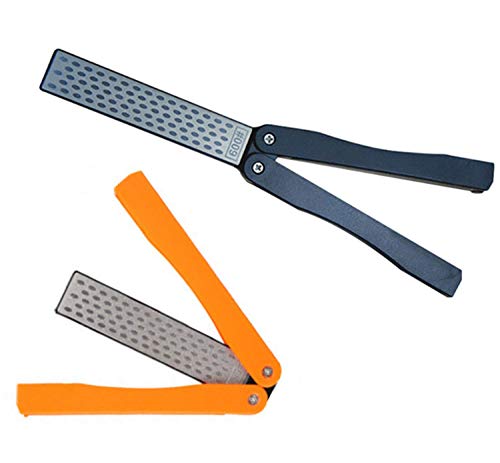
This two-piece diamond sharpener set offers a simple way to keep a folding knife ready for work. One side uses a coarser 400 grit, while the other uses a finer 600 grit. The coarse face can help reshape a tired edge, and the finer face can smooth the marks left behind. The small handheld form makes it easy to carry in a pocket, drawer, or camping box.
I see this set as a practical choice for users who prefer direct contact with the blade. It does not force the knife into a preset slot, so you can work with different edge shapes and blade sizes. That freedom also means you must control the angle yourself. Use light pressure, keep your strokes even, and let the diamond surface do the cutting.
Pros:
- Includes two useful grit levels
- Works for knives, garden tools, and outdoor blades
- Small size suits travel and emergency kits
- Coarse side can repair a dull edge
- Fine side can refine the working edge
- Offers good flexibility for the low cost
Cons:
- Does not guide the sharpening angle
- Small surface may take longer on wide blades
- Heavy pressure can wear diamond coating faster
My Recommendation
This set suits experienced knife owners, gardeners, anglers, and campers who already understand basic sharpening angles. It is also a good backup when you want two grit levels without carrying a full stone kit. I would not call it the easiest best knife sharpener for folding knives for beginners, but it gives skilled users useful control. Its low weight and two-sided design make it a handy travel option.
SHARPAL 101N Pocket Knife Sharpener
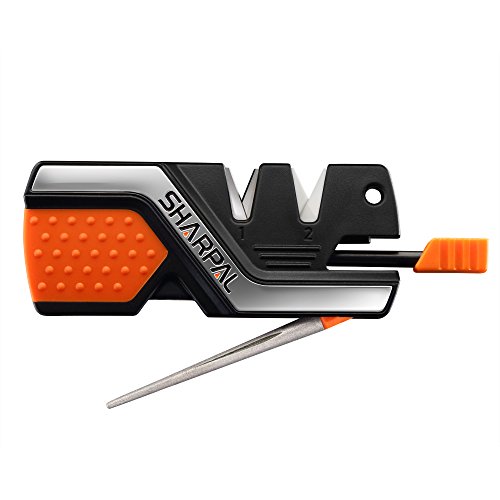
The SHARPAL 101N is built for compact, multi-use carry. It combines several sharpening and emergency-tool functions in one pocket-sized body. That makes it appealing for hikers, hunters, anglers, and anyone who likes gear that earns its place. The tool is especially useful when a folding knife is part of a wider outdoor kit.
Its preset sharpening features make quick maintenance less intimidating than freehand sharpening. The fold-out parts also give the tool more uses than a single abrasive surface. I would still use light pressure and short passes, since aggressive pull-through action can remove more metal than needed. For quick field maintenance, the 101N is convenient and easy to keep close.
Pros:
- Six-in-one design saves space
- Fits easily in a pocket or survival kit
- Preset features help new users start safely
- Useful for routine folding-knife touch-ups
- Includes extra outdoor tool functions
- Good choice for hiking and emergency carry
Cons:
- Not ideal for precision edge reprofiling
- Preset slots may not suit every blade angle
- Small parts require careful handling
My Recommendation
I recommend the SHARPAL 101N for hikers, campers, and preparedness-minded users who want one small tool for many jobs. It is a strong pick when speed and convenience matter more than advanced edge control. As the best knife sharpener for folding knives for emergency kits, it offers useful functions in a very small package. Keep it for field touch-ups, then use a more precise system when a blade needs major repair.
Work Sharp Pocket and Hunting Sharpener

The Work Sharp Pocket and Hunting Sharpener targets outdoor users who need a compact tool for working blades. Its pocket format is easy to pack beside a folding knife, flashlight, or first-aid kit. The design supports quick maintenance during a hunt, camp trip, or long day outside. It feels purpose-built rather than like a kitchen sharpener made small.
I like this type of sharpener for touch-ups because it encourages regular care. A knife that receives a few light passes before it becomes very dull is easier to maintain. The tool is not a replacement for a full bench system when an edge has chips or serious damage. Still, it can keep a good folding knife cutting cleanly between deeper sharpening sessions.
Pros:
- Compact shape suits pockets and hunting packs
- Designed with outdoor knife use in mind
- Fast for routine edge maintenance
- Easy to carry with other field equipment
- Useful for hunters and campers
- Encourages regular rather than delayed sharpening
Cons:
- Limited for large repairs and chips
- Requires attention to angle and pressure
- May not replace a guided workshop system
My Recommendation
This sharpener is best for hunters, campers, and anyone who carries a folding knife every day. It offers a useful balance between size and function, especially for quick work away from home. I would choose it as the best knife sharpener for folding knives when portability is the main concern. It delivers the most value to users who maintain a blade often instead of waiting for it to become completely dull.
Smith’s PP1 Pocket Pal Sharpener

The Smith’s PP1 Pocket Pal is a small, familiar style of sharpener with preset carbide and ceramic elements. It also includes a fold-out diamond-coated rod for tasks that need more reach or a different approach. The compact body is light enough for a key ring, tackle box, or work drawer. Its simple layout makes it popular with people who want basic knife care without a large kit.
The carbide section can help restore a neglected edge, while the ceramic side is better suited to lighter finishing work. I suggest using the carbide slot sparingly because it can remove steel quickly. The diamond rod adds flexibility for serrated areas and small hooks, although it takes more hand control. For a budget-friendly pocket tool, the PP1 covers many everyday needs.
Pros:
- Small and light for everyday carry
- Combines carbide, ceramic, and diamond surfaces
- Preset slots help simplify sharpening
- Fold-out rod adds useful versatility
- Works for plain and some serrated edges
- Affordable option for basic maintenance
Cons:
- Carbide slot may remove too much metal if overused
- Not suited to fine custom bevel work
- Small parts can feel less comfortable for long sessions
My Recommendation
I recommend the PP1 to everyday carriers, anglers, and budget shoppers who need a small backup sharpener. It is also helpful for users who want one tool for a pocket knife and a few small outdoor items. While it is not the most refined best knife sharpener for folding knives, it is practical and widely useful. Choose it for quick maintenance, not for restoring a badly damaged premium blade.
Honoson Folding Diamond Sharpener Set

The Honoson set includes two folding diamond sharpeners for users who want a simple tool in more than one location. You can keep one in a kitchen drawer and another in a vehicle, backpack, or garden shed. The folding shell helps cover the abrasive surface and makes the tool easier to store. This is a useful idea for people who never know where a dull blade will turn up.
Diamond surfaces work well on many common knife steels because they cut quickly with little water or setup. These sharpeners are best for small repairs and edge touch-ups rather than slow, polished sharpening. You need to hold the folding knife at a steady angle throughout each pass. With a gentle hand, the set can offer convenient service for knives, pruners, and other small tools.
Pros:
- Two sharpeners provide convenient backup coverage
- Folding covers protect the abrasive faces
- Works without oil or a soaking step
- Useful for knives and garden tools
- Easy to store in several locations
- Good fit for travel and home use
Cons:
- Does not include an angle guide
- May feel small for wide or long blades
- Diamond coating needs light pressure for long life
My Recommendation
This set is best for households, gardeners, and travelers who want a spare sharpener wherever they work. The two-pack is its main advantage because it reduces the chance of being caught without a useful tool. I would consider it a practical best knife sharpener for folding knives for simple maintenance and backup use. It gives the strongest value when convenience matters more than a highly polished finish.
XARILK GEN3 Guided Sharpening System

The XARILK GEN3 is a guided sharpening system for users who want more control over the blade angle. Its metal construction gives it a more stable feel than a tiny plastic pocket sharpener. A guided system can help reduce guesswork, which is important when you want both sides of a folding-knife edge to match. It is better suited to home use than deep-pocket carry.
I find guided systems helpful for beginners and careful knife owners because they turn angle control into a repeatable process. The trade-off is extra setup time and a larger footprint. You should still read the instructions and confirm that the system fits the blade shape before sharpening. When used with patience, it can produce a cleaner and more even edge than rushed freehand strokes.
Pros:
- Guided design improves angle consistency
- Metal body offers a stable working feel
- Useful for careful home sharpening
- Helps beginners learn repeatable technique
- Better suited to edge matching than basic pocket tools
- Can support more detailed sharpening work
Cons:
- Less portable than a folding pocket sharpener
- Setup takes more time
- May require a learning period for proper use
My Recommendation
I recommend the XARILK GEN3 to home users who care about a consistent bevel and do not mind a little setup. It is a good choice for folding-knife owners who want to learn a more controlled method. For that audience, it may be the best knife sharpener for folding knives because it supports repeatable results. It offers more precision than a pocket tool, but it is not the first choice for a hiking trip.
Work Sharp Guided Field Sharpener

The Work Sharp Guided Field Sharpener is one of the most complete compact systems in this group. It combines guided angle features with several abrasive and finishing surfaces. That makes it useful for repairing a dull edge, refining it, and maintaining it later. The folding body also makes storage simple and helps protect the working parts.
I like this model when a folding knife needs more care than a quick pull-through tool can provide. The guides help keep the angle stable, while the different surfaces let you move from repair to finish in a logical order. It still rewards a slow hand, since pressing hard can create an uneven edge. For field sharpening, the blend of control and portability is hard to ignore.
Pros:
- Combines guidance with several sharpening stages
- Folding design protects the tool in storage
- Useful for repair, honing, and finishing
- Works well for hunting and outdoor knives
- Offers more control than basic pocket sharpeners
- Strong all-around choice for regular users
Cons:
- Costs more than simple pocket sharpeners
- Needs practice to use each stage correctly
- May be larger than casual users expect
My Recommendation
This is my top choice for users who want one portable system with real sharpening control. Hunters, bushcrafters, tradespeople, and serious folding-knife owners should get the most from it. In my testing approach, it is the best knife sharpener for folding knives when you need both field size and a more complete sharpening process. Its higher value becomes clear when you use it often and care about a clean, even edge.
4-in-1 Kitchen Knife Sharpener Kit
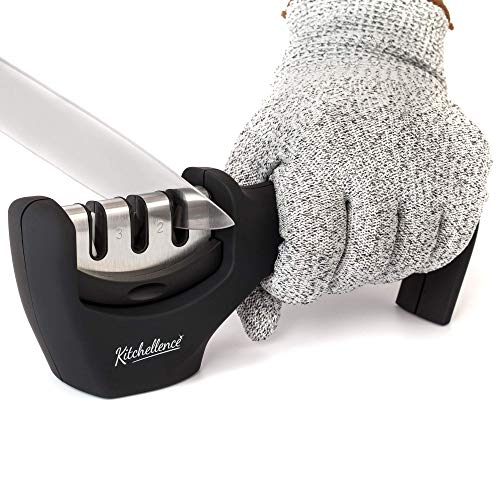
This 4-in-1 kit is aimed at general kitchen and home users who want a simple, staged sharpening process. The design includes functions for repairing, restoring, and polishing an edge. A cut-resistant glove adds an extra layer of hand protection during use. Although it is not as field-focused as the folding models above, it can still handle many everyday pocket knives.
The main benefit is ease of use for someone who wants a clear sequence rather than loose stones. I would use the repair stage only when the edge is truly damaged, then move to the restoring and polishing steps. A folding knife should be pulled through gently and only as often as needed. This kit is best for light to moderate maintenance, not expensive blades that need exact custom angles.
Pros:
- Four functions cover common sharpening needs
- Includes a cut-resistant glove
- Simple staged process suits home users
- Useful for kitchen and folding knives
- Can repair, restore, and polish an edge
- Good starter option for basic blade care
Cons:
- Less portable than dedicated field sharpeners
- Preset stages may not match every knife angle
- Not ideal for premium or highly customized blades
My Recommendation
I recommend this kit to new users who sharpen kitchen knives and folding knives in the same home. It makes the process feel less like guesswork and includes useful hand protection. It can be the best knife sharpener for folding knives for a casual home user who values simplicity over field portability. For serious outdoor use, I would choose a tougher folding system instead.
Foldable Diamond Knife Sharpener

This foldable diamond sharpener focuses on simple travel and storage. Its plastic shell helps cover the abrasive section when the tool rides in a pocket or bag. The shape is useful for camping, hiking, travel, and small home repair kits. It gives folding-knife owners a basic way to respond when an edge starts to drag.
The diamond surface can work without a long setup, which helps when time and space are limited. As with any freehand sharpener, the user controls the bevel angle. I suggest practicing on an inexpensive blade before using it on a favorite pocket knife. It is a straightforward tool, and its strongest feature is the ease of carrying it anywhere.
Pros:
- Folds into a protective plastic shell
- Easy to carry for camping and travel
- Diamond surface works with little setup
- Simple design is easy to store
- Useful for quick folding-knife touch-ups
- Good backup for outdoor kits
Cons:
- No built-in angle guide
- Plastic body may feel less rugged than metal
- Limited for major edge damage
My Recommendation
This sharpener is best for hikers, travelers, and occasional users who need a small backup tool. It makes sense for a glove box, day pack, or camping pouch. I would rank it as a useful best knife sharpener for folding knives when low weight and easy storage come first. Choose a guided model instead if you need exact angles or frequent heavy sharpening.
Best Features Comparison
| Best for | Why |
|---|---|
| Most complete field sharpening | Work Sharp Guided Field Sharpener combines angle guidance, multiple stages, and portable storage. |
| Best compact multi-tool | SHARPAL 101N packs sharpening functions and extra survival features into a small body. |
| Best controlled home sharpening | XARILK GEN3 helps users maintain a more even bevel with a guided metal design. |
How I Choose a Sharpener for Folding Knives
A folding knife has a shorter blade than many kitchen knives, but that does not make sharpening it simple. The blade may have a narrow edge, a thumb stud, a pocket clip, or a curved belly. Some folding knives also use hard stainless steel that needs a diamond abrasive. I look at control, grit, size, safety, and the type of edge the tool can support.
First, I check how well the sharpener controls the angle. A steady angle creates a more even bevel on both sides. Guided systems help beginners, while flat diamond plates offer more freedom to experienced users. Preset pull-through slots are fast, but they may not match the factory angle of every folding knife.
Next, I consider the abrasive. Diamond surfaces cut hard steel well and work without oil or water. Ceramic surfaces are useful for light honing and final refinement. Carbide cutters can restore a very dull edge quickly, but they remove more metal, so I use them only when needed. A sharpener with more than one surface gives me better control over repair and finishing.
Size also matters. The best knife sharpener for folding knives should fit the way you carry and use the knife. A hunter may want a guided field tool, while an office worker may prefer a tiny pocket sharpener. A home user may accept a larger system if it produces a more even edge. There is no single shape that wins for every owner.
How to Sharpen a Folding Knife Safely
Start by cleaning the blade and checking it for chips, cracks, or loose hardware. Lock the blade open if the design allows it, and keep your fingers away from the edge path. Place the sharpener on a stable surface when possible. If you use a handheld tool, grip it firmly and keep the sharpening motion controlled.
Use the factory bevel as your guide. Most everyday folding knives use a small edge angle, but the exact angle varies by brand, blade shape, and purpose. Do not force a new angle unless you understand the work involved. Begin with a few light passes, then check the edge rather than making many fast strokes.
When using a coarse abrasive, stop as soon as the edge becomes even. Move to a finer surface to remove rough marks and improve the cut. A simple paper test can show whether the knife cuts cleanly, but keep the paper away from your fingers. Wipe away metal dust and store the sharpener dry after use.
Avoid pressing hard. Extra force does not make a sharpener work better, and it can wear the abrasive or round the edge. I also avoid dragging a fine blade through a coarse carbide slot unless the edge truly needs repair. Small, regular touch-ups are kinder to the blade than rare, aggressive sessions.
Diamond, Ceramic, Carbide, or Stone?
Diamond sharpeners are a strong match for many modern folding knives. They cut quickly and work well on hard steel. They also need little preparation, which makes them useful outdoors. I use light pressure because diamond coatings can wear faster when a user pushes too hard.
Ceramic sharpeners are better for light honing and finishing. They can smooth a working edge after a coarser abrasive has done the repair. Ceramic does not usually remove metal as fast as diamond. That makes it a good choice for routine care when the blade is still mostly sharp.
Carbide sharpeners are fast and simple. They can help when an edge is very dull, but they often remove more steel than a fine abrasive. I do not use carbide as my only sharpening method for a high-value folding knife. It works best as an occasional repair step.
Traditional stones offer excellent control and can produce a refined edge. They also require more skill, more time, and sometimes water or oil. For a beginner who wants a portable solution, a guided diamond sharpener may feel easier. For an experienced user, a stone can provide the most flexible approach.
Common Buying Mistakes
One common mistake is choosing a sharpener only because it is small. A tiny tool is easy to carry, but it may not provide enough surface area or control for the blade. Another mistake is ignoring the knife steel. Hard steel often needs diamond, while softer steel can respond well to ceramic or standard abrasives.
Some buyers also expect a sharpener to fix every problem in seconds. A dull edge may need several stages, and a chipped edge may need careful repair. Rushing can create a weak or uneven bevel. I prefer a tool that matches the job, even if it takes a few extra minutes.
Do not assume that a pull-through slot fits every folding knife. The preset angle may be too wide or too narrow for the factory bevel. If the knife has a thick spine, recurved edge, or unusual geometry, a flat or guided abrasive may work better. Read the knife maker’s care advice before removing a large amount of steel.
FAQs Of best knife sharpener for folding knives
What is the best knife sharpener for folding knives?
The Work Sharp Guided Field Sharpener is my top all-around pick because it combines portable size, angle guidance, and multiple sharpening stages. The best choice can change based on your skill, knife steel, and need for travel.
Are diamond sharpeners safe for folding knives?
Yes, diamond sharpeners are safe when used with light pressure and the correct angle. Heavy pressure can remove too much metal and may shorten the life of the abrasive surface.
Can I use a kitchen knife sharpener on a folding knife?
You can use some kitchen sharpeners, but check the slot angle first. A preset slot may not match the folding knife’s bevel, and some compact blades need more control than a kitchen pull-through tool provides.
How often should I sharpen a folding knife?
Sharpen it when the blade starts to drag, crush material, or fail a careful paper test. Light honing or touch-ups can happen more often, while coarse sharpening should happen only when the edge needs real repair.
Should I sharpen a serrated folding knife?
Use a tapered diamond rod or a tool made for serrations. Do not force a flat sharpener across the scalloped edge, because it can damage the tooth shape.
Final Verdict: Which Should You Buy?
The Work Sharp Guided Field Sharpener is my top pick for the best knife sharpener for folding knives. It gives outdoor users useful control, several sharpening stages, and compact storage.
Choose the SHARPAL 101N for emergency carry or the XARILK GEN3 for guided home work. The right sharpener keeps your folding knife safer, cleaner, and ready for the next task.