
The best flat cheese grater should be sharp, safe, easy to clean, and comfortable for daily kitchen use.
Have you ever reached for a grater, only to find a dull blade, a loose handle, or cheese stuck in every tiny hole? I have, and it can turn a quick pasta dinner into a messy chore. A good flat cheese grater solves that problem with sharp stainless-steel teeth, a steady grip, and simple storage. I reviewed these popular handheld models for cheese, vegetables, citrus, chocolate, garlic, and spices. My goal is to help you find the best flat cheese grater for your cooking style, budget, and counter space.
OXO Good Grips Coarse Grater
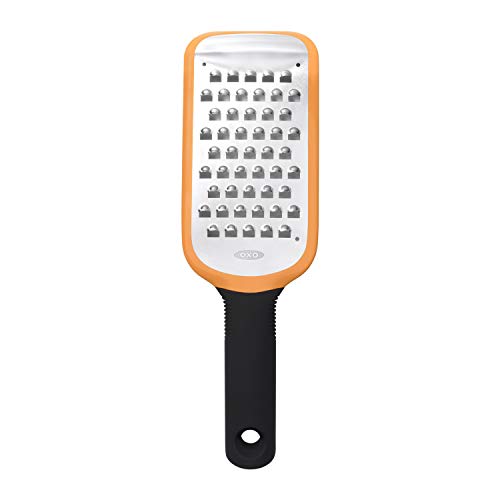
The OXO Good Grips Coarse Grater feels made for cooks who want fast, even shreds. Its broad etched surface handles blocks of cheddar, mozzarella, Monterey Jack, and other firm cheeses with little effort. The bright orange handle is easy to spot in a crowded utensil drawer. I also like the way the handle gives my hand a soft, secure place to rest while I work.
This flat grater has a useful balance of speed and control. The coarse holes create larger shreds that melt well on pizza, casseroles, tacos, and baked potatoes. The grater also works on butter, firm vegetables, and chocolate when you need a quick topping. It is not a tiny zester, but it is a strong everyday tool for cooks who grate cheese often.
Pros:
- Sharp etched surface moves through firm cheese quickly
- Soft OXO handle feels secure during long tasks
- Coarse holes make fluffy, even cheese shreds
- Orange color is easy to find in a drawer
- Flat shape stores more easily than a box grater
- Useful for cheese, butter, vegetables, and chocolate
Cons:
- Coarse surface is not ideal for fine zesting
- Wide design may need extra care near fingertips
- Large shreds may not suit delicate recipes
My Recommendation
I recommend this model to home cooks who want a dependable best flat cheese grater for pizza night, pasta, and meal prep. The handle is its strongest feature because it helps reduce hand strain and keeps the tool steady. It is also a good pick for anyone who dislikes the hard-to-clean corners of a box grater. For fast coarse shredding, this OXO model offers strong everyday value and broad kitchen use.
Zulay Kitchen Stainless Steel Grater

The Zulay Kitchen Professional Grater is a versatile flat tool for cooks who want more than cheese shredding. Its stainless-steel surface works well with Parmesan, chocolate, garlic, ginger, nutmeg, and citrus peel. The black handle gives it a neat look and provides a firm place to hold. I found this style especially useful for small jobs where a large box grater feels excessive.
The grater’s flat body slides into a utensil drawer without taking much room. Its rust-resistant metal is suited to busy kitchens, though I still recommend drying it soon after washing. The coarse holes are helpful for cheese and vegetables, while the design can also support light zesting. It is a practical choice for anyone building a compact kitchen tool collection.
Pros:
- Versatile surface handles cheese, spices, and citrus
- Stainless-steel construction suits frequent kitchen use
- Flat shape takes little storage space
- Comfortable handle supports controlled grating
- Useful for Parmesan, chocolate, garlic, and ginger
- Black finish gives the tool a clean, simple look
Cons:
- Some foods may cling to the etched surface
- It may feel less heavy than a professional restaurant grater
- Hand washing may help preserve the finish
My Recommendation
This Zulay model suits cooks who want one tool for several small tasks. I would choose it as a best flat cheese grater for apartments, starter kitchens, and anyone who values drawer-friendly storage. It is especially helpful when a recipe calls for a little Parmesan, lemon zest, or grated garlic. Its wide use makes it a good value, although cooks who shred large amounts at once may prefer a wider coarse model.
Oster Helmsdale Flat Cheese Grater

The Oster Helmsdale flat grater focuses on comfort and control. Its anti-slip handle helps the tool stay in place as you grate cheese, zest, or other foods. The stainless-steel surface gives it a clean, simple look that fits most kitchen tools. I like this kind of design for cooks who want a familiar handheld grater without extra parts.
The flat shape works well over a bowl, plate, or cutting board. It can handle cheese for sandwiches and pasta, as well as zest for sauces and desserts. The handle is also useful when your hands are wet or when you need a little more pressure. Like most flat graters, it performs best when you use smooth strokes and keep your fingers above the grating area.
Pros:
- Anti-slip handle improves control during use
- Stainless steel resists everyday kitchen wear
- Flat shape works over bowls and plates
- Useful for cheese, zest, and basic food prep
- Simple design has no moving parts to maintain
- Easy to store in a drawer or utensil holder
Cons:
- It may not replace a box grater for large batches
- Flat surface offers less grip on soft foods
- Very fine zesting may take extra passes
My Recommendation
I suggest the Oster Helmsdale to people who place handle comfort near the top of their list. It can be a best flat cheese grater for everyday cooks, older users, and anyone who wants a steady grip. The anti-slip design adds confidence without making the tool bulky. Its value is strongest for light to medium kitchen work and simple storage.
HIA Flat Coarse Stainless Steel Grater

The HIA flat coarse grater is built for simple, useful work. Its large grating surface is suited to potato, butter, vegetables, and Parmesan cheese. The anti-slip handle gives the tool a steady feel, which matters when you grate over a bowl. I see it as a practical choice for home cooks who want coarse shreds without the bulk of a four-sided grater.
Coarse holes are useful when you want food to shred quickly and stay light. They work well for hash browns, cheese on tacos, and vegetables for soups or salads. The stainless-steel body should resist common kitchen stains, but drying it after cleaning remains a smart habit. The tool is simple, and that simplicity makes it easy to reach for every day.
Pros:
- Coarse holes make quick work of cheese and potatoes
- Anti-slip handle supports safer food preparation
- Large surface helps cover more food per stroke
- Flat body stores easily in small kitchens
- Stainless steel suits regular cooking tasks
- Useful for butter, vegetables, and Parmesan
Cons:
- Coarse holes are not made for fine zest
- Large shreds may need chopping for some recipes
- The handle may feel basic compared with premium models
My Recommendation
The HIA grater is a good match for families and meal-prep cooks who often shred cheese or vegetables. I would call it a best flat cheese grater for coarse tasks because it focuses on speed and a steady hold. It works well for potatoes, butter, and cheese without demanding much storage space. If you need a fine zester too, pair it with a small dedicated zester.
OXO Good Grips Multi Grater
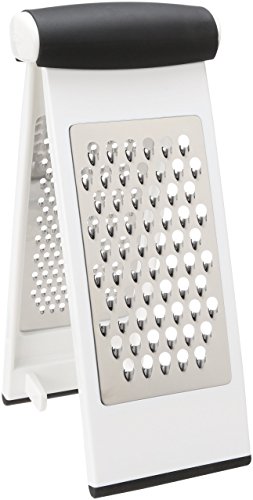
The OXO Good Grips Multi Grater is for cooks who want more than one grating texture. A multi-surface tool can save drawer space because it handles coarse and finer jobs in one piece. OXO’s familiar grip style adds comfort during repeated strokes. This makes it useful when one recipe needs shredded cheese and another needs a finer ingredient.
I find multi graters helpful for households with mixed cooking habits. You can use the larger surface for cheese and vegetables, then switch to a finer side for small ingredients. It offers more flexibility than a single-purpose flat tool, but it may take a little more care to clean. For cooks who dislike owning many separate utensils, that tradeoff makes sense.
Pros:
- Multiple surfaces support different food textures
- Comfortable grip helps during repeated grating
- Useful for cheese, vegetables, and smaller ingredients
- Can reduce the need for several separate tools
- OXO design feels familiar and easy to use
- Good option for varied home cooking
Cons:
- More surfaces can take longer to clean
- It may need more storage room than a single flat grater
- Not every side may suit large blocks of cheese
My Recommendation
I recommend the OXO Multi Grater for cooks who want versatility from one kitchen tool. It may be the best flat cheese grater for people who prepare many kinds of recipes and dislike clutter. The different textures add value for cheese, vegetables, and fine ingredients. Choose it when flexibility matters more than the smallest possible drawer footprint.
Deiss PRO Lemon Zester and Grater
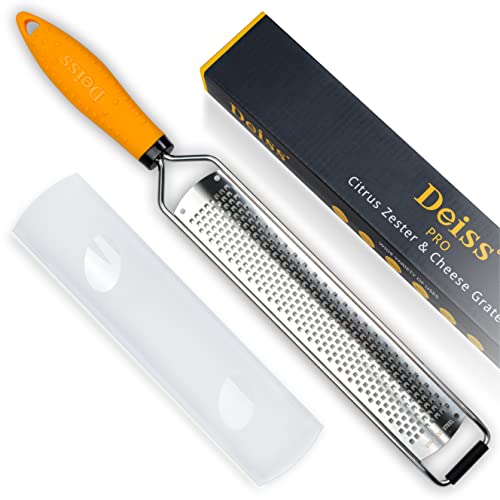
The Deiss PRO combines a zester-style surface with a heavy-duty grating design. It is a strong option for cooks who often use lemon, lime, ginger, garlic, nutmeg, chocolate, or Parmesan. The narrow flat shape gives good control and lets you work directly over a bowl or plate. I especially like this style for sauces, desserts, and recipes that need small amounts of bold flavor.
Fine grating can release the aroma of citrus and spices without adding large pieces to a dish. This tool also works when you need a small amount of hard cheese for pasta or soup. Because the teeth are sharp, I recommend a light touch and slow strokes near the end of each ingredient. It is a focused tool rather than a high-volume cheese shredder, but it earns its place through versatility.
Pros:
- Excellent for lemon, lime, ginger, and garlic
- Handles Parmesan, chocolate, and hard spices
- Fine teeth help create smooth, small shreds
- Narrow shape offers strong control over a bowl
- Useful for both sweet and savory recipes
- Good fit for cooks who enjoy fresh flavor
Cons:
- Fine surface is slower for large cheese blocks
- Sharp teeth require careful handling and cleaning
- Small shreds may cling between the holes
My Recommendation
The Deiss PRO is best for cooks who think of a grater as a flavor tool, not only a cheese shredder. It can be the best flat cheese grater for citrus fans, bakers, and people who cook with fresh ginger or spices. Its fine surface gives you detail that coarse graters cannot provide. For big cheese jobs, I would use it beside a wider coarse grater rather than alone.
Handheld Stainless Steel Cheese Grater

This handheld stainless-steel grater takes a straightforward approach. It gives you a flat surface for cheese and other foods without adding a box, container, or extra frame. The rust-resistant steel is useful for regular kitchen work, and the compact shape is simple to store. I see it as a sensible tool for quick toppings and small portions.
A handheld grater works best when you place it across a stable bowl or hold it at a comfortable angle. It can shred cheese for one or two servings without making a larger grater dirty. The design may also help with vegetables, chocolate, and butter, depending on the texture of the food. Since it has fewer parts, rinsing and drying are usually simple.
Pros:
- Compact shape suits small kitchens and apartments
- Stainless steel supports regular kitchen use
- Simple design has no container to empty
- Good for quick cheese toppings and small servings
- Easy to store in a drawer or utensil cup
- Works with several common grating tasks
Cons:
- Small size may slow down large-batch shredding
- Hand position matters for safe, steady use
- It may not offer several grating textures
My Recommendation
I would choose this model for students, apartment owners, and cooks who prepare modest portions. It is a useful best flat cheese grater when storage space and quick cleanup matter most. The simple body makes it easy to grab for a sandwich, salad, or bowl of pasta. Its value is practical, but large families may want a wider grating surface.
Two-Pack Coarse and Fine Grater Set

This two-pack gives you both coarse and fine grating options. That split can be useful because a fluffy cheese shred and a fine citrus zest need very different surfaces. Having two tools also lets you prepare ingredients for separate parts of a meal without stopping to wash one grater. The stainless-steel construction keeps the set simple and familiar.
The coarse grater is suited to cheese, vegetables, and butter, while the fine grater can help with zest, garlic, ginger, and hard spices. I like this setup for cooks who want flexibility without buying a large multi-sided gadget. Two flat tools can still fit neatly in a drawer. As with any sharp grater, use a stable surface and slow strokes as the food becomes small.
Pros:
- Coarse and fine surfaces cover more recipe needs
- Two tools allow separate prep tasks at once
- Useful for cheese, zest, garlic, and vegetables
- Flat shapes are easy to store in a drawer
- Stainless steel suits daily food preparation
- Good value for cooks who need varied textures
Cons:
- Two pieces take more space than one tool
- Fine teeth need careful cleaning
- Neither piece may replace a large box grater
My Recommendation
This set is a strong pick for cooks who want one coarse tool and one fine tool. It can be the best flat cheese grater solution for a varied kitchen because you can match the surface to the food. The pair is also helpful for bakers, meal-prep cooks, and families who cook many types of recipes. Choose it when flexibility matters more than owning a single all-purpose grater.
How I Chose the Best Flat Cheese Grater
I looked at the features that matter after the first few uses, not just the way a grater looks in a product photo. A shiny tool may look impressive, but a sharp surface and a safe handle matter more. I considered the type of food each grater can handle, its likely storage needs, and how easy it should be to clean. I also compared single-surface designs with multi-use and two-piece options.
Blade Sharpness and Hole Design
A sharp grater should cut food with light pressure. If you must push hard, the task takes longer and your hand may slip. Coarse holes create larger shreds for pizza, potatoes, and casseroles. Fine holes work better for zest, garlic, ginger, nutmeg, and small amounts of hard cheese.
There is no single perfect hole size for every recipe. The best flat cheese grater for melting cheese may not be the best tool for lemon zest. Before buying, think about what you make most often. A coarse model suits family meals, while a fine model helps bakers and cooks who use fresh aromatics.
Handle Comfort and Control
A handle should feel secure without forcing your wrist into an odd angle. Soft grips can make repeated grating more pleasant. Anti-slip material can also help when the handle or your hands are damp. I prefer a handle that gives enough room for the whole hand, especially when grating a firm block of Parmesan or cheddar.
Control also depends on the way you hold the tool. Place the lower end over a bowl or cutting board when possible. Keep your fingers behind the food and slow down when the piece becomes small. A finger guard can add protection, but careful technique still matters.
Material and Rust Resistance
Stainless steel is a common choice because it is strong, food-safe, and suited to wet ingredients. It can still develop spots if food remains on the surface or if the tool stays wet for a long time. For that reason, rinse the grater soon after use. Dry it fully before placing it in a drawer.
Do not assume every stainless-steel grater has the same finish or strength. A thin surface may flex more than a thicker one. A flexible grater can still work well, but it may feel less stable over a bowl. If you often grate hard foods, look for a firm body and a handle that does not twist.
Cleaning and Food Safety
Cheese, garlic, and ginger can dry inside grater holes. A quick rinse right after use helps prevent that sticky buildup. A soft brush can reach areas that a sponge misses. Always move the brush in the direction of the teeth, not against them.
Check the product care instructions before using a dishwasher. High heat and strong detergent may affect handles or finishes over time. Even when a grater is dishwasher safe, hand rinsing first can help remove trapped food. Clean tools support safer cooking and help the grater stay sharp.
Flat Grater Versus Box Grater
A flat grater stores easily and works well over a bowl or plate. It is often lighter and faster to rinse than a box grater. It also lets you see the food as you grate, which helps you judge the shred size. The tradeoff is that you must hold it or rest it on a surface.
A box grater can stand by itself and often gives you several sides. However, its corners can trap food, and it may take more cabinet space. For a small kitchen, the best flat cheese grater may offer the right mix of function and storage. For large family batches, a box design may still be more comfortable.
Coarse Versus Fine Grating
Use coarse holes for foods that need volume and a soft texture after cooking. Shredded cheddar, potatoes, zucchini, and carrots are common examples. Coarse cheese melts in a loose layer and spreads well across a dish. It is also faster when you have a lot to prepare.
Fine holes produce smaller pieces and can release strong flavors. Lemon zest, fresh ginger, garlic, nutmeg, and hard cheese work well on a fine surface. The food may cling more, so clean the tool soon after use. A two-pack set can be useful when you need both textures often.
How to Use a Flat Cheese Grater Safely
Start with a firm ingredient and a stable bowl. Hold the handle with one hand and move the food down the grating surface with the other. Use short, smooth strokes rather than forcing the ingredient. Keep your fingertips away from the teeth at all times.
Stop before the last small piece reaches the blade. It is better to waste a tiny piece than to risk a cut. For soft cheese, chill the block for a short time before grating. A colder block often holds its shape better and makes cleaner shreds.
Care Tips for Longer Use
Rinse the grater as soon as you finish. For dried cheese, soak the surface briefly in warm water, then use a brush. Avoid scraping the teeth with a knife because that can damage the blade or create a sharp hazard. Dry the tool before storage.
Store a flat grater where the sharp face will not rub against delicate utensils. A utensil holder, drawer divider, or protective sleeve can help. Keep it away from loose plastic bags and soft kitchen cloths that may catch on the teeth. Small habits like these can help preserve the grater’s cutting edge.
Best Flat Cheese Grater Buying Guide
Start by choosing the texture you need most. If you prepare pizza, tacos, baked dishes, and hash browns, choose a coarse model. If you bake often or add lemon, ginger, and garlic to meals, choose a fine model. If your recipes vary, a multi grater or two-piece set may offer better long-term value.
Next, think about your hand comfort. A soft, broad handle can make a major difference when you grate a large block. An anti-slip grip is helpful if you work near a sink or often cook with wet hands. The best flat cheese grater should feel like a tool you want to use, not one you avoid because it causes strain.
Finally, consider storage and cleanup. A flat design normally takes less space than a box grater, but a two-pack needs room for both pieces. If you dislike scrubbing, choose a simple surface and rinse it right away. For most homes, the right grater is the one that matches the foods you prepare each week.
Best For Comparison
| Best for | Why |
|---|---|
| Fast coarse cheese shredding | The OXO Good Grips Coarse Grater offers a sharp surface and a comfortable handle for pizza, pasta, and casseroles. |
| Fine zest and strong flavors | The Deiss PRO handles citrus, garlic, ginger, spices, chocolate, and small amounts of hard cheese. |
| Mixed kitchen tasks | The OXO Multi Grater and two-pack set give cooks more than one texture for varied recipes. |
FAQs Of best flat cheese grater
What is the best flat cheese grater for everyday use?
The OXO Good Grips Coarse Grater is a strong everyday choice for cooks who mainly shred cheese and vegetables. Its coarse surface works quickly, and its comfortable handle supports steady strokes. For fine zest, a dedicated fine grater may work better.
Are flat cheese graters safe to use?
Yes, but the teeth are sharp and require care. Use a firm grip, keep your fingers behind the food, and stop before the final small piece reaches the blade. A stable bowl or cutting board can improve control.
Can I use a flat grater for more than cheese?
Yes. Many models can grate butter, chocolate, vegetables, garlic, ginger, citrus peel, and hard spices. Always match the food to the hole size. Coarse holes suit vegetables and cheese, while fine teeth suit zest and aromatics.
How do I clean a handheld cheese grater?
Rinse it soon after use so cheese does not dry in the holes. Use warm water and a soft brush when needed. Dry the grater fully before storage, and follow the care instructions before placing it in a dishwasher.
Is a flat grater better than a box grater?
A flat grater is often easier to store and clean. It works well for small and medium portions over a bowl or plate. A box grater may be better for large batches because it stands on its own and often offers several textures.
Final Verdict: Which Should You Buy?
For most home cooks, the OXO Good Grips Coarse Grater is the best flat cheese grater. It offers sharp coarse teeth, a comfortable handle, and useful daily performance.
Choose a fine Deiss model for zest or the two-pack for more flexibility. The best flat cheese grater is the one that fits your recipes, grip, and storage space.