
A refrigerator ice maker freezes measured water, then ejects the ice into a storage bin.
Understanding how does a refrigerator ice maker work can help you fix small problems before they become costly repairs. This guide explains each step, from the water valve and ice mold to the thermostat, motor, sensors, and harvest cycle. You will also learn why ice makers stop working and what you can safely check at home.
How Does a Refrigerator Ice Maker Work?
A refrigerator ice maker is a small automatic machine inside the freezer. It uses water, cold air, a temperature sensor, and a motor to make ice without help from you.
The full cycle usually follows these steps:
- The ice maker calls for water.
- A water inlet valve opens.
- Water fills the ice mold.
- The water freezes into cubes.
- A thermostat or sensor confirms that the ice is ready.
- A small heater loosens the cubes.
- Motor-driven ejector fingers push the ice out.
- The cubes fall into the storage bin.
- The cycle starts again when the bin needs more ice.
Think of the process like a tiny factory. Water is the raw material, the mold gives it shape, the freezer provides the cold, and the motor moves the finished product.
Most household ice makers work in the same basic way. However, the shape of the ice mold, control board, sensor system, and water-fill method can vary by brand and model.

The Main Parts of a Refrigerator Ice Maker
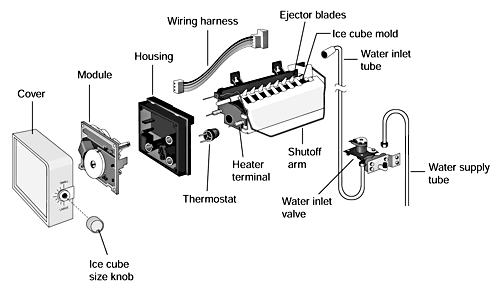
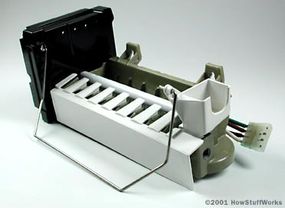
To understand how does a refrigerator ice maker work, it helps to know what each part does. A failure in one small part can stop the entire cycle.
Ice mold
The ice mold is the tray that holds the water while it freezes. It often has several small sections that form crescent, half-moon, or square-shaped cubes.
Many molds use a coated surface. This helps the cubes release during the harvest cycle. If the coating wears away, ice may stick to the mold.
Water inlet valve
The water inlet valve controls the flow of water into the ice maker. It opens for a short time when the control system sends it power.
The valve connects to the home water supply. A clogged filter, low water pressure, or blocked valve can reduce the amount of water entering the mold.
Fill tube
The fill tube directs water from the inlet valve into the ice mold. It is usually a narrow plastic tube near the top or back of the ice maker.
If the freezer is too cold, water can freeze inside this tube. A frozen fill tube is a common cause of an ice maker that makes no ice.
Thermostat or temperature sensor
The thermostat checks whether the water has frozen. Older models often use a mechanical thermostat. Newer models may use an electronic temperature sensor.
The ice maker should not harvest too soon. If it did, the cubes would be soft or partly liquid. The sensor helps the machine wait until the ice is ready.
Mold heater
A small heater warms the bottom of the mold during the harvest cycle. It does not melt the entire cube.
Its job is to create a thin layer of water between the ice and the mold. This lets the ejector fingers push the cubes out with less force.
Motor and ejector fingers
A small motor turns a gear or shaft. Attached ejector fingers move through the mold and push the cubes into the bin.
If the motor is weak or the gears break, the ice may freeze normally but remain trapped in the mold.
Shutoff arm or bin sensor
Many ice makers have a wire shutoff arm. When the bin fills, the ice lifts the arm and stops production.
Newer models may use an infrared beam or electronic sensor instead. This prevents the ice maker from overflowing the storage bin.
Control board
The control board manages timing and power. It may control the water valve, heater, motor, and sensors.
A failed control board can create confusing symptoms. The ice maker may receive water but fail to eject ice, or it may run at the wrong time.

The Ice-Making Cycle Step by Step
The best way to explain how does a refrigerator ice maker work is to follow one batch of cubes from start to finish.
1. The ice maker checks the bin
The system first checks whether it should make more ice. A full bin raises the shutoff arm or blocks the sensor beam.
If the bin is low, the control system allows a new cycle. Some models also use timed cycles based on freezer temperature and recent ice use.
2. The mold fills with water
The control sends power to the water inlet valve. The valve opens for a few seconds, and water travels through the fill tube.
The amount of water must be carefully controlled. Too little water creates small cubes. Too much water can cause joined cubes, overflow, or a frozen fill tube.
3. The water freezes
Cold air in the freezer removes heat from the water. The water slowly turns to ice inside the mold.
A freezer should generally stay near 0°F, according to food safety guidance. If the freezer is warmer than recommended, ice production may slow or stop.
4. The sensor confirms frozen ice
Once the ice reaches the right temperature, the thermostat changes state or the sensor sends a signal to the control board.
The exact timing depends on freezer temperature, water volume, and the design of the ice maker. A warm freezer often creates longer cycles.
5. The heater loosens the cubes
The mold heater turns on for a short period. It warms the mold surface, not the whole ice batch.
This step is easy to misunderstand. The cubes do not need to become wet or soft. A small amount of heat is enough to release them.
6. The ejector motor turns
The motor rotates the ejector fingers. The fingers sweep through the mold and push the cubes into the storage bin.
The motor may also reset an internal gear or switch. This prepares the ice maker for the next fill cycle.
7. The valve fills the mold again
After the cubes drop, the water valve opens again. A new batch begins if the shutoff system still calls for ice.
This repeating cycle is why a working refrigerator ice maker can produce ice several times a day. Production speed varies by model and freezer conditions.

Why Is My Refrigerator Ice Maker Not Working?
When an ice maker stops producing ice, start with simple causes. Many service calls involve a blocked water supply or incorrect freezer settings rather than a major mechanical failure.
Check these common problems:
• The ice maker is switched off. Look for a shutoff arm, power switch, or display setting.
• The freezer is too warm. Ice makers usually need a freezer near 0°F to work well.
• The water filter is clogged. An old filter can reduce water flow or stop it completely.
• The fill tube is frozen. Ice inside the tube prevents fresh water from reaching the mold.
• The water line is kinked. A crushed line can lower water pressure.
• The storage bin is full. Move the ice around and confirm that the shutoff arm can move freely.
• The refrigerator has just been installed. A new unit may need several hours to cool before ice production begins.
• The door is not sealing. Warm air can raise the freezer temperature and slow freezing.
• The inlet valve is faulty. A failed valve may make a humming sound without allowing water to enter.
• The ice maker motor or control board has failed. This usually requires testing with a meter or help from a trained technician.
A useful test is to listen during the cycle. A hum without water may point to a blocked line or bad valve. A silent ice maker may have a control, sensor, or power problem.
Never use a sharp tool to chip ice from the fill tube. You may puncture the tube or damage nearby parts. Instead, unplug the refrigerator when appropriate and allow the ice to thaw, or follow the repair instructions for your exact model.
How Much Ice Should a Refrigerator Ice Maker Make?
Most standard ice makers produce several pounds of ice per day under normal conditions. The exact amount depends on the refrigerator design, room temperature, freezer temperature, water pressure, and how often the door opens.
A busy household may use ice faster than the machine can replace it. Opening the freezer often lets warm air inside, which adds extra work for the cooling system.
New ice makers may also need time to reach full output. After installation or a long shutdown, discard the first few batches. This helps clear dust, manufacturing residue, or water that has been sitting in the lines.
Production can slow during hot weather. It can also drop when the condenser is dirty or when the freezer is packed so tightly that air cannot move well.
For accurate output figures, check the owner’s manual. Advertising numbers often reflect ideal test conditions, not everyday family use.
How to Improve Ice Maker Performance
Simple care can help a refrigerator ice maker run longer and make better ice.
Keep the freezer at the right temperature
Set the freezer close to 0°F unless your manufacturer recommends another setting. Use an appliance thermometer if the built-in display is not reliable.
A freezer that is too warm may make soft ice. A freezer that is extremely cold can freeze the fill tube or create other airflow problems.
Replace the water filter on time
Follow the filter replacement schedule in your manual. Many filters need replacement about every six months, but water quality and usage can change that schedule.
A clogged filter may reduce cube size, slow production, and make the water dispenser weak.
Keep the ice bin clean
Empty and wash the bin from time to time. Dry it fully before replacing it.
Old ice can absorb odors from food. It can also fuse into a large mass when the freezer experiences temperature changes.
Do not force stuck ice
If cubes are stuck in the mold, do not twist the ejector arm by hand. The plastic parts and gears can break.
Use the model’s reset or harvest feature if it has one. If the ice does not release, unplug the appliance and seek model-specific guidance.
Check the door seal
Close a dollar bill in the door gasket. If it slides out with little resistance, the seal may be weak.
Clean the gasket with mild soap and water. Replace a torn or badly warped seal, because warm air can affect both ice production and food safety.
Leave room for airflow
Do not block freezer vents with bags or boxes. Good airflow helps the freezer hold a steady temperature.
This small habit often improves freezing speed. It also reduces the chance of frost buildup.
Common Refrigerator Ice Maker Problems and Their Clues
Different symptoms can point toward different parts. These clues are not a final diagnosis, but they can guide your next step.
| Symptom | Possible cause |
|---|---|
| No ice and no sound | Ice maker off, power issue, control problem, or sensor fault |
| Water enters but does not freeze | Freezer too warm or cooling problem |
| Small or hollow cubes | Low water pressure, clogged filter, or short fill time |
| Ice stuck in the mold | Mold heater, motor, or ejector problem |
| Ice maker overflows | Faulty valve, control, or fill adjustment |
| Ice clumps in the bin | Moisture, infrequent use, or temperature changes |
| Water leaks into the freezer | Cracked fill tube, misaligned tube, or valve problem |
| Ice tastes bad | Old ice, dirty bin, filter issue, or food odor |
One important lesson is to avoid replacing parts based only on a guess. For example, a frozen fill tube may result from low freezer temperature, a leaking valve, or poor insulation. Fixing only the ice in the tube may not solve the root cause.
If electrical testing is needed, disconnect power and follow the manufacturer’s safety instructions. A qualified appliance technician is the safer choice when live voltage, sealed refrigeration parts, or wiring is involved.
Does a Refrigerator Ice Maker Use a Lot of Energy?
A refrigerator ice maker uses some energy for its motor, heater, valve, and control system. However, the ice maker is usually a small part of the appliance’s total energy use.
The freezer must remove heat from the water. That adds a modest cooling load, especially when the machine makes large amounts of ice.
Energy use rises when the freezer door opens often, the room is hot, the condenser is dirty, or the door gasket leaks. Keeping the freezer stable can help both ice production and efficiency.
Built-in ice makers also use more energy than an empty freezer compartment because they add another heating and motor cycle. If you rarely use ice, turning off the ice maker may reduce a small amount of energy use and prevent old ice from sitting in the bin.
Built-In Ice Makers Versus Portable Ice Makers
A built-in refrigerator ice maker freezes water inside the freezer. It usually creates harder, slower-melting ice and stores the cubes in an insulated bin.
A portable ice maker does not usually freeze ice in a cold freezer. It pumps water over cold metal fingers or a chilled surface, then drops the ice into an open basket.
Portable units can make ice quickly, but the ice may melt if it is not moved to a freezer. They also need regular cleaning because melted water returns to the reservoir.
A built-in unit is convenient for daily use. A portable model may be useful for parties, offices, RVs, or refrigerators without an ice maker.
Safety and Maintenance Tips
Ice makers combine water and electricity. Use care when inspecting or cleaning one.
• Do not remove electrical covers while the refrigerator is plugged in.
• Do not place hands near moving ejector fingers during a harvest cycle.
• Do not use knives, screwdrivers, or metal tools to remove frozen parts.
• Use only the filter type approved for your refrigerator.
• Clean the ice bin with mild soap, then rinse and dry it well.
• Discard ice after a long power outage or when the water supply has been contaminated.
• Call a qualified technician for refrigerant leaks, damaged wiring, repeated electrical trips, or major water leaks.
Food safety matters too. Ice can pick up odors and contaminants just like food. Keep the freezer clean, store strong-smelling foods in sealed packages, and follow the appliance maker’s cleaning instructions.
Frequently Asked Questions About How Does a Refrigerator Ice Maker Work
How does a refrigerator ice maker know when the ice is ready?
A thermostat or electronic temperature sensor checks the ice mold. When the cubes reach a low enough temperature, the control system starts the harvest cycle.
How long does a refrigerator ice maker take to make ice?
A normal cycle may take about 60 to 120 minutes, but the time varies by model and freezer temperature. A newly installed refrigerator may need several hours before it produces its first batch.
Why does my refrigerator ice maker fill with water but not make ice?
The freezer may be too warm, or the ice maker may have a faulty thermostat, heater, motor, or control board. Check the freezer temperature first, because warm conditions are a common cause.
Why is the ice from my refrigerator cloudy?
Cloudy ice often contains trapped air or minerals from the water. It is usually harmless, but a dirty filter or poor water quality can affect taste and appearance.
Can a refrigerator ice maker work without a water filter?
Some models can work without a filter or with a bypass plug. Other models require a filter or bypass device, so check the owner’s manual before removing it.
Why does my refrigerator ice maker make small cubes?
Small cubes often result from low water pressure, a clogged filter, a partly blocked fill tube, or a short valve-fill time. Confirm that the water line is open and the filter is not overdue for replacement.
Should I turn off the ice maker when the bin is full?
Most modern ice makers stop automatically when the shutoff arm or sensor detects a full bin. Turning the unit off is still useful when you will not use ice for a long time or when cleaning the bin.
Conclusion
A refrigerator ice maker works through a simple chain of actions: it fills a mold, freezes the water, loosens the cubes with gentle heat, and ejects them into a bin. The thermostat, water valve, motor, heater, sensor, and control board must work together for the cycle to run smoothly.
When problems appear, start with the freezer temperature, water filter, shutoff arm, fill tube, and water line. Small checks can solve many issues, while electrical or sealed-system faults need professional service.
Now that you understand how does a refrigerator ice maker work, you can troubleshoot it with more confidence and avoid common repair mistakes. Check your appliance manual for model-specific instructions, and share your own ice maker tips or questions in the comments.