
The best knife sharpener for skinning knives is a guided sharpener that restores a clean edge without removing too much steel.
A dull skinning knife can drag, slip, and tear meat when you need smooth cuts. I know how frustrating that feels after a long hunt or during game prep. The right sharpener brings back a fine, controlled edge and helps your knife work like a trusted tool again. In this guide, I compare compact pull-through models, guided systems, rolling sharpeners, and hunting kits to help you choose the best knife sharpener for skinning knives.
Kitchen Accessories 3-Stage Knife Sharpener
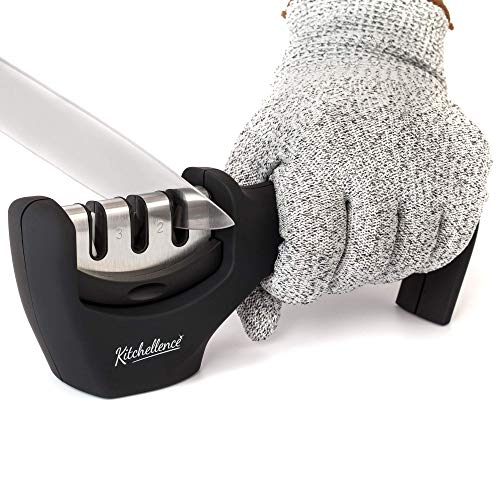
This 4-in-1 kit offers a simple way to maintain a hunting or kitchen knife. Its three-stage design is made for repair, sharpening, and polishing, so you can move from a damaged edge to a smoother cutting edge. The included cut-resistant glove adds a useful layer of hand protection during sharpening. For many users, that combination makes this a practical entry-level choice.
I like this style of sharpener for people who want one small tool for several tasks. The coarse stage can help reshape a tired edge, while the finer stages help smooth it for cleaner skinning cuts. It is not a substitute for a careful guided system on a high-end knife, but it can work well for common stainless-steel blades. Use light pressure and make even passes to avoid taking off more metal than needed.
Pros:
- Three sharpening stages for repair, honing, and polishing
- Includes a cut-resistant glove for added safety
- Compact size suits a kitchen drawer or hunting pack
- Simple design works well for beginners
- Useful for both kitchen and outdoor blades
Cons:
- Preset angles may not match every skinning knife
- Pull-through sharpeners can remove more steel than careful hand sharpening
- Not ideal for blades with unusual grinds
My Recommendation
I recommend this kit for a new knife owner, a home game processor, or anyone who wants a low-cost sharpening setup with safety gear included. It is a strong choice when ease matters more than exact angle control. For a basic best knife sharpener for skinning knives, it gives you several useful stages in one package. The value is especially good when you need a simple tool that is easy to find and easy to store.
Outdoor Edge Wild Roll Pack Hunting Kit

The Outdoor Edge Wild Roll Pack is more than a sharpener. It is a five-piece game-processing kit with a gut hook skinning knife, caping knife, boning blade, and two-stage sharpener. That makes it useful for hunters who want matching tools in one roll. The storage case also helps keep sharp blades covered and organized between trips.
The two-stage sharpener is best viewed as a maintenance tool within the kit. It can help restore a working edge in the field, but it may not offer the fine angle control of a bench system. I find the full set appealing because each knife has a clear job during game processing. If you are buying your first hunting set, this package can save time and reduce the need to select each tool separately.
Pros:
- Includes knives for skinning, caping, and boning
- Two-stage sharpener supports quick field maintenance
- Roll case keeps tools together and protected
- Useful all-in-one option for hunters
- Gut hook design adds function during game processing
Cons:
- Costs more than a sharpener alone
- Two-stage sharpener offers limited angle adjustment
- May be more gear than casual users need
My Recommendation
This kit is best for hunters who need a complete field setup rather than only a sharpening tool. It makes sense for a first hunting kit, a backup set, or anyone who processes game away from home. The included sharpener is convenient, while the knives cover several common tasks. As a complete package, it may be the best knife sharpener for skinning knives for buyers who also need reliable dressing tools and organized storage.
AccuSharp Ergonomic Knife Sharpener

The AccuSharp is a compact handheld sharpener with a comfortable handle. Its design lets you hold the tool firmly while drawing the knife through the sharpening slot. That control can feel helpful when your hands are wet, cold, or tired after a day outdoors. It is made for straight and serrated knives, which adds flexibility around the home or camp.
This sharpener is a good fit for quick touch-ups rather than detailed edge work. I would use it when a skinning knife has lost some bite but does not need a full repair. The compact body fits in a tackle box, tool drawer, or hunting pack. As with any handheld pull-through sharpener, I suggest using gentle pressure and checking the edge often instead of making many fast passes.
Pros:
- Comfortable handle supports a steady grip
- Small and easy to carry outdoors
- Can sharpen straight and serrated knife types
- Fast to use for routine edge maintenance
- Simple operation suits beginners
Cons:
- Does not provide adjustable angle control
- May not repair a badly chipped or bent edge
- Requires care to avoid over-sharpening thin blades
My Recommendation
I would choose the AccuSharp for a hunter who wants a portable backup sharpener with almost no learning curve. It works best for quick touch-ups before or during light game processing. It is not the most precise option, but its grip and small size make it easy to keep close. For an affordable best knife sharpener for skinning knives, it is a useful pick when speed and portability come first.
AIERLIAN Rolling Knife Sharpener Kit

The AIERLIAN rolling sharpener uses a guided rolling format rather than a fixed pull-through slot. Its diamond and ceramic surfaces are designed to handle steel blades with different hardness levels. The magnetic angle system offers 15- and 20-degree settings, which gives you more control over the edge. That matters when you want a repeatable bevel on a skinning knife.
Rolling systems take a little practice, but they can feel natural once you learn the motion. I like the way the knife stays on a stable surface while the sharpening wheel moves along the blade. The coarse diamond side can help restore an edge, while the ceramic side can refine it. Keep the blade clean, use steady strokes, and confirm the knife’s existing angle before choosing a setting.
Pros:
- Guided 15- and 20-degree angle options
- Diamond and ceramic surfaces cover repair and refinement
- Rolling motion can produce a consistent bevel
- Works with many steel knife types
- Good choice for users who want more control than a slot sharpener
Cons:
- Needs practice for smooth, even strokes
- Rolling systems may not suit very short or flexible blades
- Requires a flat, stable work surface
My Recommendation
The AIERLIAN is best for a careful home user who wants guided sharpening without investing in a large professional system. It is a strong match for fixed-blade skinning knives with a clear bevel. The angle choices and two abrasive types give it more flexibility than a basic handheld model. If repeatable results matter to you, this could be the best knife sharpener for skinning knives in the rolling category.
Maxam Fixed Blade Knife Set

The Maxam set includes several stainless-steel dressing tools, including a skinning and caping knife, a boning knife, a storage case, and a double-sided sharpener. It is designed around game processing, so the tool mix feels more focused than a general kitchen set. The case also gives each piece a place to stay when it is not in use. That can help reduce damage from loose blades in a gear bag.
The double-sided sharpener is convenient for basic maintenance between uses. I would use it to keep the included knives working, then move to a more precise system if an edge needed careful reshaping. The set may appeal to beginners because it provides several tools at once. It also works as a practical backup for a cabin, camp, or hunting vehicle.
Pros:
- Includes skinning, caping, and boning tools
- Double-sided sharpener supports routine upkeep
- Storage case improves organization and transport
- Useful set for new hunters and game processors
- Stainless-steel tools are easy to clean after use
Cons:
- Sharpener has less precision than a guided angle system
- Complete set may be unnecessary if you already own knives
- Storage case adds bulk compared with a single sharpener
My Recommendation
I recommend the Maxam set for someone who needs both game-processing knives and a basic way to maintain them. It is not aimed at advanced sharpening enthusiasts, but it covers the key tools for common field work. The case makes it simple to keep the set ready for the next trip. For a buyer starting from scratch, it can be a practical alternative to purchasing the best knife sharpener for skinning knives and separate dressing blades.
Smith’s CCKS 2-Step Knife Sharpener

The Smith’s CCKS is a small two-step sharpener with preset coarse and fine slots. It is made for outdoor use and can fit in a pocket, tackle box, or keychain setup. The bright yellow body is easy to see in grass, leaves, or a dark gear bag. Its simple layout helps you remember which slot to use first and which one to use for finishing.
This is the sort of sharpener I would pack for a short trip when every ounce matters. It can restore a working edge on many pocket, fishing, and hunting knives without taking up room. The compact format also makes it useful as an emergency backup. It has fewer controls than a guided sharpener, so I would not use it as my only tool for an expensive knife that needs exact angle work.
Pros:
- Very compact for hunting and fishing packs
- Two preset stages simplify the sharpening process
- Bright color helps prevent loss outdoors
- Useful for quick field touch-ups
- Lightweight design suits emergency gear
Cons:
- Limited control over sharpening angle
- Small body may feel less stable for large blades
- Not designed for major edge repair
My Recommendation
The Smith’s CCKS is best for hunters, anglers, and hikers who need a backup sharpener that takes almost no space. It is a handy field companion, not a full workshop system. I would pair it with a more controlled sharpener at home and use this one for quick maintenance outdoors. If portability defines your search for the best knife sharpener for skinning knives, this compact model deserves attention.
VYKTRIY Premium 3-Stage Sharpener

The VYKTRIY Premium 3-Stage Sharpener is built for users who prefer a clear step-by-step process. A three-stage layout can help repair a dull edge, sharpen it, and smooth the final burr. This type of design is easy to understand because each stage has a distinct purpose. It may suit both household knives and a basic skinning knife.
I see this model as a middle-ground choice between a tiny field sharpener and a more advanced guided system. It should be used with steady pressure and a clean blade. The final stage is important because a rough edge can feel sharp but still pull through hide or meat. Buyers should check the instructions for the correct use of each slot and avoid repeated passes once the edge is restored.
Pros:
- Three-step process is easy for beginners to follow
- Supports repair, sharpening, and edge finishing
- Useful for common household and outdoor knives
- Compact enough for simple storage
- Offers more stages than a basic two-slot tool
Cons:
- Preset design limits angle customization
- May not suit thick, thin, or unusual blade grinds
- Users must avoid heavy pressure during sharpening
My Recommendation
I recommend the VYKTRIY for beginners who want a structured routine and more than one sharpening stage. It can help maintain an everyday skinning knife when used carefully and sparingly. It is less suitable for collectors or professionals who need exact bevel control. For general home use, it may be a sensible best knife sharpener for skinning knives when simple operation and a polished finish are the main goals.
Work Sharp Precision Adjust Elite

The Work Sharp Precision Adjust Elite is the most control-focused option in this comparison. It uses a fixed-angle guided system for kitchen and pocket knives, which can help users maintain a consistent bevel. The guided format reduces the guesswork that often comes with freehand sharpening. That makes it especially interesting for a skinning knife that needs a clean, repeatable edge.
This system takes more time to set up than a pull-through model, but the extra control can reward patient users. I would choose it for a quality hunting knife, a thin blade, or a tool that needs careful edge repair. Work in stages and stop when the knife cuts cleanly; more sharpening is not always better. The design is less convenient for a quick field touch-up, but it is well suited to a home bench or workshop.
Pros:
- Guided system supports consistent sharpening angles
- Better control than most handheld slot sharpeners
- Suitable for users who care about edge geometry
- Useful for kitchen, pocket, and hunting knives
- Good choice for restoring an edge with care
Cons:
- Takes longer to learn and use than a pull-through model
- Less portable for field sharpening
- May cost more than a basic outdoor sharpener
My Recommendation
The Work Sharp Precision Adjust Elite is my top choice for users who want the most repeatable results from this group. It is best for serious hunters, knife owners, and home sharpeners who value angle control over speed. Its guided design can help protect a quality blade from uneven freehand work. For many experienced users, it is the best knife sharpener for skinning knives because it balances control, versatility, and practical home use.
Amazon Basics 4-in-1 Knife Sharpener

The Amazon Basics 4-in-1 sharpener gives home users several functions in one compact body. It includes a nonslip base and a safety glove, both of which can make the sharpening process feel more controlled. Multiple slots help separate rough sharpening from finishing work. This layout is useful for people who want a simple kitchen tool that can also handle occasional outdoor blades.
The nonslip base is an important detail because a stable sharpener is easier to use safely. I would place it on a dry, level counter and keep my fingers away from the blade path. The tool is convenient for normal maintenance, but it is not a replacement for a guided system when you need exact angles. For a low-cost household sharpener, the included glove and four-in-one format add practical value.
Pros:
- Nonslip base improves stability during use
- Includes a safety glove for added protection
- Four-in-one design handles several maintenance tasks
- Simple option for kitchens and casual hunters
- Easy to store in a drawer or cabinet
Cons:
- May not match the factory angle of every knife
- Less portable than a small outdoor sharpener
- Not the best choice for damaged or specialty blades
My Recommendation
This model is best for households that want a stable, simple sharpener with basic safety accessories. It can help maintain an inexpensive or mid-range skinning knife without a steep learning curve. I would choose it over a tiny field sharpener when most sharpening happens at home. It is a practical best knife sharpener for skinning knives for buyers who want broad everyday use at a modest price.
Narcissus 2-Stage Electric Knife Sharpener
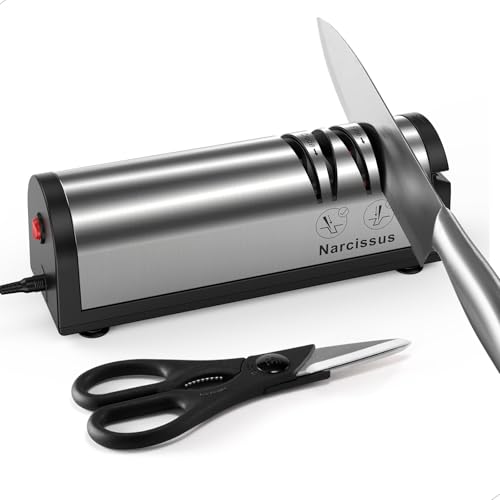
The Narcissus is a two-stage electric sharpener designed for quick sharpening and polishing. It also includes a scissors slot and a metal dust collection box, which may help keep the work area cleaner. Electric sharpening can save time when several kitchen or hunting knives need attention. Its stainless-steel body gives it a more permanent place on a counter than a small pocket tool.
Speed is the main appeal here, but speed requires care. I would use short, controlled passes and follow the maker’s instructions rather than holding the knife in the slot for too long. An electric sharpener can remove material quickly, so it may not be the first choice for a thin or valuable skinning blade. For routine maintenance on common steel, however, it can be convenient for users who prefer push-button operation.
Pros:
- Electric operation speeds up routine sharpening
- Two stages provide sharpening and polishing
- Scissors slot adds another useful function
- Dust collection box may reduce metal debris
- Stainless-steel body suits regular home use
Cons:
- Electric action may remove steel quickly
- Less suitable for field use or remote camps
- Requires access to a power outlet
My Recommendation
The Narcissus is best for home users who sharpen several knives and want speed. It can work well for everyday blades, but I would use extra caution with a thin skinning knife or a premium blade. The dust box and scissors function add convenience for general household use. If quick indoor maintenance matters most, this can be the best knife sharpener for skinning knives for a busy kitchen or workshop.
How I Choose the Best Knife Sharpener for Skinning Knives
A skinning knife needs a keen edge, but “sharp” alone does not tell the whole story. The edge should also be even, smooth, and suited to the knife’s grind. A rough or uneven edge may catch in hide and make the cut harder to control. I look at angle control, abrasive type, ease of use, portability, and the risk of removing too much metal.
I also consider where a person will sharpen. A hunter at camp may need a small two-stage tool that works in seconds. A home user with a premium fixed blade may prefer a guided system that takes more time but gives better control. Neither style wins every situation. The best knife sharpener for skinning knives is the one that fits the blade, the user, and the place where sharpening happens.
What Angle Is Best for a Skinning Knife?
Many outdoor knives use a bevel in the general range of about 15 to 20 degrees per side, but the correct angle depends on the maker and the blade’s intended use. A thinner edge may slice well, while a slightly stronger edge may hold up better during rough work. I do not change the angle without a reason. If possible, I follow the knife maker’s guidance or match the existing bevel.
Angle consistency matters more than chasing a perfect number. A guided sharpener can help keep both sides even. With a pull-through model, use gentle pressure and avoid tilting the blade. If the knife has a convex, serrated, or unusual edge, check the manufacturer’s instructions before using a standard slot sharpener.
Diamond, Ceramic, or Carbide: Which Is Better?
Diamond abrasives cut steel quickly and can help repair a dull edge. They work well when a knife needs more than a small touch-up, but too much pressure can remove metal fast. Ceramic surfaces are finer and often suit honing or finishing. They help smooth the edge after a coarser stage.
Carbide pull-through slots are simple and fast, but they can be aggressive. They may work well on common outdoor knives, yet they offer less control than a guided abrasive. I prefer a diamond-and-ceramic system for users who want more control, while a carbide slot can be fine for quick maintenance on a budget knife. Always clean the blade and remove any burr before judging the result.
How to Sharpen a Skinning Knife Safely
Start by placing the sharpener on a stable, dry surface. Wear the supplied glove if one comes with the product, and keep the free hand behind the cutting path. Wipe the knife clean before sharpening so dirt does not interfere with the abrasive. Good light helps you see the edge and notice damage.
Use the coarse stage only when the edge is truly dull or damaged. Make a small number of even passes, then check the blade. Move to the fine stage when the edge begins to form, and finish with light pressure. Afterward, wipe away metal dust and test the knife on a safe material, never on your hand.
Pull-Through Versus Guided Sharpeners
Pull-through sharpeners win on speed and ease. They are small, affordable, and simple enough for a first-time user. They can be useful in a hunting pack or kitchen drawer. Their main weakness is limited angle control, which may matter on a thin or expensive skinning knife.
Guided sharpeners take longer, but they let you repeat the same angle across the blade. This can protect edge geometry and improve consistency. They are better suited to users who enjoy careful maintenance at home. If you own one main knife and want to keep it in excellent shape, a guided model may offer better long-term value.
Best For Table
| Best for | Why |
|---|---|
| Most precise home sharpening | Work Sharp Precision Adjust Elite offers guided angle control and repeatable results. |
| Field portability | Smith’s CCKS is compact, light, and quick to use during hunting or fishing trips. |
| Complete game-processing setup | Outdoor Edge Wild Roll Pack includes useful knives, a sharpener, and organized storage. |
Care Tips for a Skinning Knife Edge
Clean the blade soon after use, especially after working with animal tissue. Follow the knife maker’s care instructions for washing and drying. Do not leave moisture on the edge or store the knife loose with other metal tools. A sheath or case helps protect both the blade and your hands.
Touch up the knife before it becomes completely dull. Small, regular maintenance sessions usually require less metal removal than a major repair. If you see chips, a bent tip, or a damaged bevel, slow down and use a controlled system. In some cases, professional sharpening is safer than trying to fix severe damage with a fast electric or pull-through tool.
FAQs Of best knife sharpener for skinning knives
What is the best knife sharpener for skinning knives?
The Work Sharp Precision Adjust Elite is my top choice for controlled home sharpening. It guides the blade and helps maintain a repeatable angle. For field use, the Smith’s CCKS is easier to carry.
Can I use a kitchen sharpener on a skinning knife?
Yes, if the sharpener suits the blade’s angle and steel. Use light pressure and confirm that the slots accept the knife. Avoid using a rough electric or carbide stage too often on a thin blade.
Should I use a coarse or fine sharpening stage?
Use coarse abrasives only when the knife is very dull or damaged. Use the fine stage for routine touch-ups and finishing. Too many coarse passes can remove useful blade material.
Are electric knife sharpeners safe for hunting knives?
They can be safe when used as directed, but they remove steel quickly. Keep the blade moving, use light control, and stop after the edge is restored. A guided manual sharpener gives more control over delicate blades.
How often should I sharpen a skinning knife?
Sharpen it when it begins to drag, slip, or require extra force. Light touch-ups after several uses may prevent the need for a large repair. The exact schedule depends on the blade steel, workload, and cutting surface.
Final Verdict: Which Should You Buy?
For most serious users, the Work Sharp Precision Adjust Elite is the best knife sharpener for skinning knives because it offers strong angle control and repeatable results. Choose Smith’s CCKS for a compact field backup or Outdoor Edge for a complete hunting kit.
The right sharpener keeps skinning cleaner, safer, and easier. Match the tool to your blade, use light pressure, and maintain the edge before it becomes dull.