
The best knife sharpener for hard steel is a diamond or ceramic tool that removes metal with control and care.
Have you ever used a knife that once glided through food but now crushes tomatoes and slips on onions? Hard steel can hold an edge for a long time, yet it also resists weak sharpeners. A basic pull-through tool may skate over the blade or remove too much metal. I tested the key features that matter most, including abrasive type, angle control, rod feel, safety, and ease of use. The picks below cover diamond rods, ceramic steels, rolling systems, and guided sharpeners for cooks, hunters, and home users.
Kota Japan Diamond Sharpening Rod
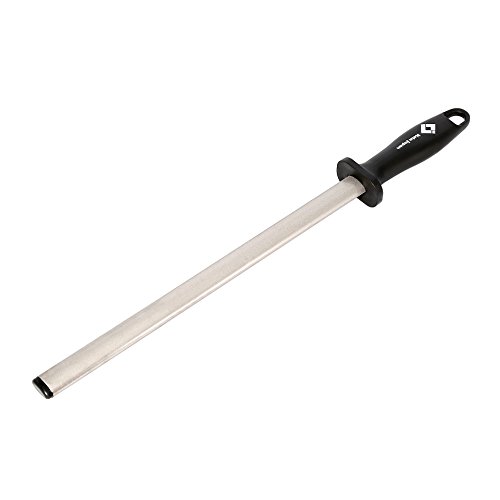
The Kota Japan rod uses a diamond-coated surface, so it can work on steels that feel too hard for plain honing steel. Its 12-inch length gives me enough room to sharpen long chef knives in steady passes. The rod format feels familiar, much like a classic butcher’s steel. I like that it can touch up a working edge without needing a large bench setup.
Diamond is an abrasive, not just a straightening surface. That difference matters when a hard blade has lost real bite. I use light pressure because heavy force can create a rough edge or wear the coating faster. The handle and guard also help keep my fingers away from the blade during use.
Pros:
- Diamond surface suits many hard knife steels
- Long 12-inch format handles larger blades
- Compact design stores easily in a drawer or block
- Useful for quick touch-ups at the counter
- Familiar rod shape helps experienced users work fast
- Works well for kitchen, outdoor, and hunting knives
Cons:
- It can remove metal faster than a smooth honing steel
- Freehand use requires practice and angle control
- Heavy pressure may shorten abrasive life
My Recommendation: I recommend this rod to cooks who already understand freehand sharpening and want a strong abrasive for hard steel. It is also a practical choice for hunters who need a slim tool in a kit. This may be the best knife sharpener for hard steel if you value speed, reach, and a familiar rod shape. Use light strokes and check the edge often for the best value and longest service.
Utopia Kitchen 12-Inch Honing Rod

The Utopia Kitchen rod offers a simple way to maintain a knife between full sharpening sessions. Its 12-inch size gives a good balance of reach and control for most home kitchen knives. A honing rod mainly helps realign a slightly bent edge rather than rebuild a badly worn one. That makes it useful for regular care after chopping or slicing.
I would choose this style for someone who wants a low-cost tool with no setup. It takes only a few slow passes, but the user must keep the blade angle steady. Hard powdered or high-carbon steel may need a diamond plate when the edge becomes dull. For light maintenance, this rod can help a good knife feel smoother and more precise.
Pros:
- Simple design suits daily knife care
- 12-inch length fits many chef knives
- Easy to keep near a kitchen work area
- Helps realign minor edge bends
- Needs no electricity or special parts
- Good entry point for learning rod technique
Cons:
- May not sharpen a very dull hard-steel blade
- Freehand angle errors can harm the edge
- Less aggressive than a diamond sharpening surface
My Recommendation: I suggest this rod for home cooks who maintain knives often and let them go dull only a little. It is best for routine honing, not major edge repair. If your blade is made from very hard steel, pair this rod with a diamond stone or guided tool for deeper work. It can still be the best knife sharpener for hard steel for a budget-minded user who wants simple upkeep.
F. DICK Rapid Steel Action Set

The F. DICK Rapid Steel Action Set takes a different path from a loose honing rod. Its stand gives the sharpener a stable base, while the action system helps guide the blade through the sharpening area. I find this design useful when I want repeatable results without balancing a rod in one hand. The black body also looks at home in a busy kitchen.
This type of sharpener is made for fast maintenance, especially when several knives need attention. It is not a substitute for a full stone progression on a damaged edge. Still, guided movement can reduce one common mistake: changing the angle from stroke to stroke. The stainless sharpening elements should be used with modest force so the edge stays clean.
Pros:
- Stable stand improves control and safety
- Guided action helps keep strokes consistent
- Fast for routine kitchen maintenance
- Professional-style design feels durable
- Useful when sharpening several knives in a row
- Made in Germany according to the product listing
Cons:
- Stand takes more storage space than a plain rod
- May not suit highly polished or delicate edges
- Users still need to avoid excess pressure
My Recommendation: This set is a strong choice for cooks who want a stable, repeatable method and do not enjoy freehand rod work. It suits home kitchens, small food businesses, and anyone who values speed. I would call it a leading best knife sharpener for hard steel when ease of use matters more than portability. Check the current Amazon package details because sets and availability can change.
4-in-1 Three-Stage Knife Sharpener
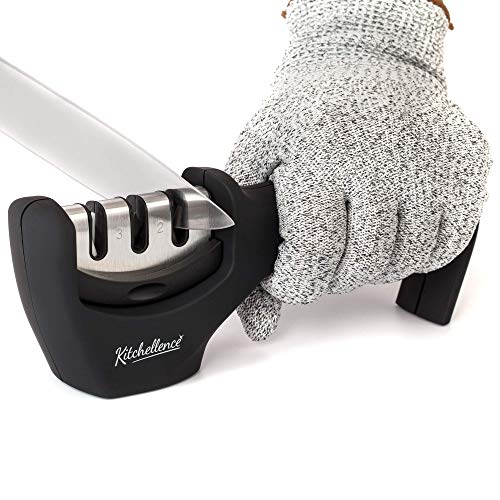
This 4-in-1 kit combines several functions in one compact kitchen tool. Its three-stage layout is designed to repair, sharpen, and polish an edge, while the included cut-resistant glove adds a useful safety layer. I like this format for a shared kitchen where not every user knows stone sharpening. It gives beginners a clear order to follow.
Multiple stages can help a dull knife, but they also make pressure control important. I would start with the repair slot only when the edge has chips, bends, or serious loss of bite. For normal upkeep, the finer stages should be enough. Hard steel may respond better than soft steel, but always confirm the maker’s instructions before using a pull-through slot on a valuable blade.
Pros:
- Combines repair, sharpening, and polishing steps
- Compact size saves counter and drawer space
- Clear stages help beginners follow a process
- Included glove adds hand protection
- Useful for common kitchen knife shapes
- Offers more functions than a basic honing rod
Cons:
- Pull-through slots can remove more steel than needed
- Less precise than a guided stone for premium knives
- May not fit specialty blades or unusual edge angles
My Recommendation: I recommend this model for new cooks who want an all-in-one answer to dull kitchen knives. It is best for low-cost and midrange blades that need quick repair and polish. I would not use it first on a thin Japanese knife or a prized custom blade. For general home use, it may be the best knife sharpener for hard steel when simple stages and added safety matter most.
12-Inch Fine Carbon Honing Steel
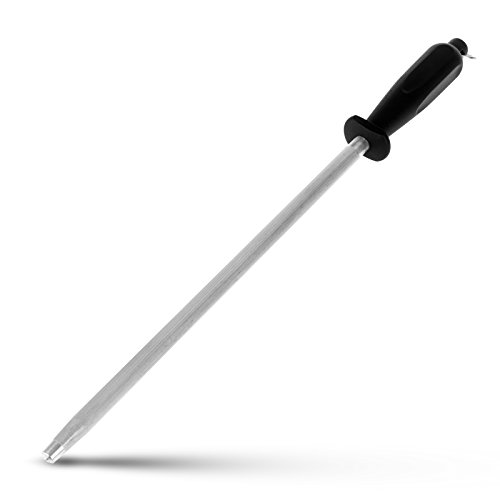
A fine carbon honing steel is meant for gentle edge maintenance. This 12-inch rod provides useful reach for chef knives, carving knives, and other long blades. Its fine surface is less aggressive than a coarse diamond tool. That makes it a reasonable choice when the knife still cuts but feels slightly rough.
I treat a honing steel like a comb for the edge: it can put a small bend back in line, but it cannot replace missing metal. Hard steel often keeps its shape well, so a fine rod may maintain it for many sessions. I use five or fewer light passes per side and test the blade on paper or a soft food. Regular care can delay the need for a full sharpening session.
Pros:
- Fine surface supports gentle maintenance
- 12-inch length handles longer kitchen blades
- Lightweight and easy to store
- Good for frequent pre-cooking touch-ups
- Helps reduce the need for aggressive sharpening
- Simple tool with no power cord or setup
Cons:
- Cannot repair chips or a badly rounded edge
- Requires a steady freehand angle
- May feel too mild for extremely hard steel
My Recommendation: Choose this rod if your knives are already in fair shape and you want to protect that edge. It is best for cooks who prefer gentle, regular care over occasional heavy sharpening. I would pair it with a diamond plate for serious edge repair on hard steel. Used that way, it can support a complete best knife sharpener for hard steel setup at a modest cost.
13-Inch Carbon Steel Honing Rod

The 13-inch carbon steel rod gives a little more working length than many standard kitchen steels. That extra reach can make long slicing and chef knives easier to maintain in one smooth motion. Its plain rod design keeps the tool light and easy to handle. It also fits users who like traditional sharpening habits.
Carbon steel honing rods are best for alignment and light maintenance rather than full stock removal. On a hard blade, I use a low angle only if the knife maker supports it, then keep each pass slow. A longer rod can improve rhythm, but it does not remove the need for care. I would keep the rod dry and clean after use to protect its finish and the knife edge.
Pros:
- Extra-long 13-inch working surface
- Traditional rod design feels familiar
- Good reach for slicing and chef knives
- Light enough for frequent use
- Does not require batteries or a power supply
- Useful as part of a larger knife care routine
Cons:
- Not intended for major edge repair
- Freehand work can produce uneven results
- Hard powdered steel may need a diamond abrasive
My Recommendation: This rod suits cooks with long blades and a preference for traditional honing. It is best for preserving an edge that still has a sound bevel. If your knife has become truly dull, use a more abrasive system first, then use this rod for upkeep. It is not my single best knife sharpener for hard steel, but it can be a useful and affordable partner.
AIERLIAN Rolling Diamond Sharpener

The AIERLIAN rolling sharpener uses a guided rolling format with diamond and ceramic surfaces. It also offers 15- and 20-degree magnetic angle positions, which can make repeatable sharpening easier for a new user. I like rolling systems because the tool moves along the blade instead of forcing the user to balance a loose rod. The magnetic guide can help keep the bevel steady during each pass.
Diamond can address hard steel, while ceramic can refine the edge after the coarser work. I would begin with very light pressure and a few passes, then inspect the edge before doing more. Guided tools still need a flat, stable surface and a clean blade. The magnetic angle options are useful, but the right setting should match the knife’s original bevel as closely as possible.
Pros:
- Diamond abrasive works well on many hard steels
- Ceramic side helps refine and polish the edge
- 15- and 20-degree guides improve angle control
- Rolling design is approachable for beginners
- Compact kit fits small kitchens
- Magnetic positioning helps support repeatable passes
Cons:
- Guide angles may not match every knife
- Rolling motion needs a flat and clear work surface
- Pressure that is too high can remove excess metal
My Recommendation: For most home users, this is one of the strongest candidates for the best knife sharpener for hard steel. It combines an abrasive that can cut hard metal with guides that reduce user error. I especially like it for cooks who have struggled with freehand rods or stones. It offers a helpful blend of control, speed, and edge refinement, subject to current Amazon availability.
Shenzhen Knives Ceramic Honing Rod
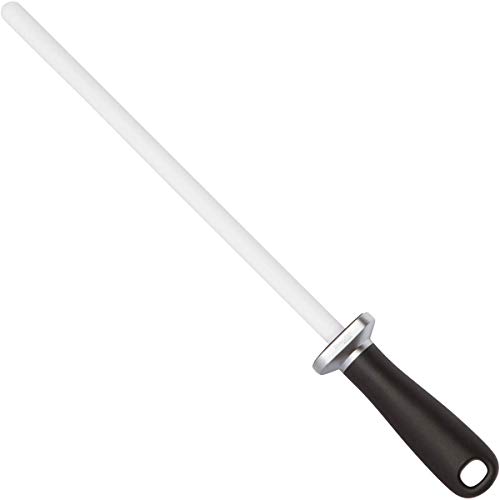
The Shenzhen Knives ceramic rod has a 12-inch length and a listed 1000-grit surface. Ceramic sits between a plain honing steel and a very aggressive diamond tool in many knife care routines. It can lightly abrade the edge while also helping refine it. That makes this rod appealing to cooks who want more than alignment but less bite than coarse diamond.
The listed HRC 68 rating refers to the rod’s hardness, not a promise that every knife will sharpen the same way. Ceramic can be brittle, so I handle it with care and never tap it against a sink or counter. I use light, even strokes and clean ceramic dust from the surface as directed. On a hard kitchen knife, it can refresh a tired edge when used before the blade becomes completely dull.
Pros:
- Fine ceramic surface offers controlled abrasion
- 1000-grit rating suits edge refinement
- 12-inch length works with many kitchen knives
- Can polish while it lightly sharpens
- Good choice for users who find steel rods too mild
- Useful for regular edge maintenance
Cons:
- Ceramic can break if dropped
- It may not fix chips or severe damage
- Needs careful cleaning and storage
My Recommendation: I recommend this rod for cooks who want a smooth, refined edge and already know basic freehand technique. It is particularly useful for hard knives that need light work between stone sessions. It may be the best knife sharpener for hard steel for a careful user who values finish and control. Select a diamond tool instead if the blade has deep damage or needs fast metal removal.
F. DICK Rapid Steel Action Sharpener

This F. DICK Rapid Steel model focuses on fast, guided knife maintenance. Its ergonomic design gives the user a firm grip, while the stainless sharpening rods support a repeatable motion. Unlike a loose steel, it does not require the same level of wrist balance. I see that as a real benefit when several people share one kitchen.
The tool is designed for simple application, but simple does not mean careless. I still recommend cleaning the blade, using light pressure, and checking the edge after a few passes. It is best at restoring a working feel rather than reshaping a damaged bevel. Hard steel may need a diamond stone or plate if the edge has lost too much material.
Pros:
- Ergonomic body supports a steady grip
- Guided rods reduce angle changes
- Fast for daily or weekly maintenance
- Stainless elements are suited to kitchen use
- Compact design is easy to place near a prep area
- Simple method helps new users gain confidence
Cons:
- Not a full replacement for stone sharpening
- May not handle chips or severely blunt edges
- Guided systems can limit unusual blade angles
My Recommendation: This model is best for busy cooks who want fast care with less technique than a freehand rod requires. I would choose it for daily kitchen knives and shared workspaces. It is a practical best knife sharpener for hard steel option when ease and speed rank above fine custom bevel work. Compare the stand version if you want extra stability during use.
Cutluxe 10-Inch Honing Rod

The Cutluxe 10-inch honing rod is a compact option for everyday knife care. Its shorter length can feel nimble on small and medium kitchen knives. It is easy to hold near a cutting board and simple to store in a knife block or drawer. For many cooks, that convenience encourages more frequent maintenance.
A honing rod works best when the knife still has a recognizable edge. I use the Cutluxe rod to smooth a slight rough feel before cooking, not to rebuild a completely dull blade. Hard steel can benefit from frequent light care because it often keeps its shape for a long time. If the edge stops responding, I would move to a diamond or ceramic sharpener rather than adding force.
Pros:
- Compact 10-inch size is easy to control
- Stores well in small kitchens
- Useful for small and medium blades
- Encourages frequent light maintenance
- Simple operation needs no power
- Good companion to a dedicated hard-steel sharpener
Cons:
- Shorter reach may not suit long slicing knives
- Cannot repair chips or a badly dull edge
- Freehand technique still affects the result
My Recommendation: I recommend this rod for apartment kitchens, new cooks, and anyone who mostly uses smaller blades. It is a maintenance tool, so I would not buy it as the only sharpener for very hard steel. Used often and gently, it helps preserve a clean working edge. Its low storage demand gives it good practical value for everyday cooking.
My Recommendation
After comparing the abrasive types and handling styles, I would choose the AIERLIAN rolling sharpener for most home users. Its diamond surface can work on hard steel, and its guided 15- and 20-degree settings make angle control less stressful. Experienced users may prefer the Kota Japan diamond rod for speed and reach. Cooks who only need light upkeep can choose a ceramic or carbon honing rod.
| Best for | Why |
|---|---|
| Most home cooks | AIERLIAN offers diamond cutting power, ceramic finishing, and guided angles. |
| Experienced freehand users | Kota Japan gives a long diamond surface for quick work on hard blades. |
| Gentle daily upkeep | Shenzhen ceramic and fine carbon rods refresh an edge with less abrasion. |
How to Choose the Best Knife Sharpener for Hard Steel
Hard steel needs the right abrasive. A soft, smooth steel may realign an edge, but it may not remove enough metal when the knife is truly dull. Diamond is usually the fastest choice for hard steel because diamond particles cut very hard materials. Ceramic is slower and smoother, so it works well for refining and light touch-ups.
Before buying, identify the knife’s edge type. Most Western kitchen knives use a double bevel. Many traditional Japanese knives use a thinner bevel, and some blades have one bevel only. A fixed-angle pull-through sharpener may not suit every design. When in doubt, match the original angle instead of forcing a new one.
Angle control matters as much as abrasive strength. A 15-degree setting often suits thinner edges, while 20 degrees can offer a stronger working edge. These numbers are general guides, not universal rules. The knife maker’s instructions should take priority, especially for premium or unusual blades.
Diamond, Ceramic, or Honing Steel?
Diamond tools are best when the edge needs real sharpening. They remove metal quickly, so I use them with light pressure and short sessions. A diamond rod can be useful in a professional kitchen, but freehand control remains vital. A guided diamond system is often easier for beginners.
Ceramic tools remove less metal and can leave a cleaner feel. They suit knives that are dull but not damaged. Ceramic rods also work well after a coarse diamond stage. Store them with care because ceramic can chip or snap if dropped.
A honing steel mostly realigns the edge. It does not magically recreate metal that has worn away. I use one often, but I do not expect it to fix a knife that will not slice paper or food. This simple distinction helps shoppers avoid disappointment and protects thin blades from needless passes.
How I Use a Sharpener on Hard Steel
First, I wash and dry the knife. Oil, food, and metal dust can affect the sharpening surface. I place a rolling or guided tool on a stable counter. For a rod, I keep the tip on a board when learning because that position gives my hand a clear reference.
I use the knife’s existing bevel as my guide. I make slow passes from heel to tip, rather than stopping at the middle. I use almost no force; the abrasive should do the work. After a few passes, I test the edge on paper or a soft vegetable.
I stop as soon as the knife improves. More strokes do not always mean a sharper knife. Too much work can create a thick burr, remove useful steel, or change the bevel. I clean the sharpener based on its care instructions and store it where the abrasive will not hit other tools.
Common Mistakes to Avoid
The most common error is using too much pressure. Many people press harder when a knife feels dull, but this can bend the edge and wear the tool. Light, even contact usually gives a better result. Patience is the quiet advantage of good sharpening.
Another mistake is using a honing rod on a fully blunt blade. A rod can maintain an edge, but it cannot repair every problem. If the knife has chips, a rounded bevel, or no bite at all, use a suitable abrasive sharpener or seek professional service.
I also avoid dragging a blade backward through a sharpener unless the maker says that method is safe. I keep fingers behind the guard and work away from my body. A sharp knife and a stable counter are safer than a rushed motion over an unsupported sink.
Care Tips for Hard-Steel Knives
Sharpening is only one part of edge care. I hand-wash quality knives and dry them at once. A dishwasher can expose the blade to heat, harsh detergent, and contact with other tools. Those conditions may damage the edge even when the steel itself is hard.
I use a wood, soft plastic, or rubber cutting board. Glass, stone, and ceramic boards can dull an edge quickly. I also store knives so the cutting edge does not rub against loose forks or other blades. A sheath, block, or magnetic strip can help.
Hard steel often benefits from less frequent sharpening and more careful use. I hone or lightly refine the blade when it starts to feel rough, not on a fixed schedule. This approach saves metal and keeps the knife’s original profile for longer.
FAQs Of best knife sharpener for hard steel
What type of sharpener works best on hard steel?
Diamond sharpeners usually work best when hard steel needs real metal removal. Ceramic tools are useful for fine work and light touch-ups. A guided diamond system can help beginners keep a steady angle.
Can a honing steel sharpen a hard-steel knife?
A honing steel can realign a slightly bent edge, but it may not sharpen a very dull blade. Use a diamond or ceramic abrasive when the knife has lost significant bite.
Is a 15-degree or 20-degree angle better?
A 15-degree angle can create a thin, keen edge. A 20-degree angle often gives more support for heavy kitchen use. Always follow the knife maker’s recommended angle when possible.
Are pull-through sharpeners safe for expensive knives?
They can work, but they may remove more metal than needed and may not match the blade’s bevel. I prefer a guided system or sharpening stone for thin, premium, or unusual knives.
How often should I sharpen hard-steel knives?
Sharpen when the knife starts to slip or feels rough during a cut. Frequent light maintenance is better than waiting until the edge is badly dull. Use a full sharpening session only when simple honing no longer helps.
Final Verdict: Which Should You Buy?
The AIERLIAN rolling sharpener is my top pick for the best knife sharpener for hard steel. Its diamond and ceramic surfaces cover repair and finish, while magnetic angles help new users.
Choose the Kota Japan rod for fast freehand work, or a ceramic and carbon rod for light care. Match the tool to your knife, use gentle pressure, and protect the edge.