
The best knife sharpener whetstone offers steady control, useful grit choices, and a safer path to a truly sharp edge.
A dull knife can turn a quick dinner into hard work. It slips on tomato skin, crushes herbs, and makes every cut feel less safe. A good whetstone fixes the edge instead of only polishing it. I reviewed these popular Amazon options for grit range, stability, ease of use, accessories, and value. Whether you are new to sharpening or already know your way around a stone, this guide can help you choose with less guesswork.
Sharp Pebble 1000/6000 Whetstone

The Sharp Pebble 1000/6000 stone is a simple choice for routine kitchen knife care. The 1000 side helps repair a dull working edge, while the 6000 side refines it for smoother cuts. This two-sided design covers the most common needs in a home kitchen. It also gives beginners a clear order to follow.
I like this grit pairing because it feels useful rather than excessive. Most cooks do not need a very coarse stone every week or a mirror finish on every blade. The stone needs water before use, and a steady angle still matters more than the brand name. Used with light pressure, it can turn a tired chef’s knife into a much more pleasant tool.
Pros:
- Useful 1000/6000 grit combination
- Works well for common kitchen knives
- Fine side leaves a smooth cutting edge
- Beginner-friendly sharpening progression
- Good fit for cooks who want one main stone
- Compact enough for easy cabinet storage
Cons:
- Requires careful soaking and drying
- May need flattening after repeated use
- 6000 grit is not ideal for repairing badly damaged edges
My Recommendation
I recommend this stone for home cooks who want a balanced, low-cost sharpening setup. It is especially suitable for chef’s knives, paring knives, and utility blades that have lost their bite but do not have deep chips. The best knife sharpener whetstone for a new user should not overwhelm the process, and this one keeps the routine easy to understand. Its main value comes from doing two important jobs in one stone.
Intelitopia Complete Whetstone Set

The Intelitopia set is made for shoppers who want more than a single double-sided stone. It includes 400/1000 and 3000/8000 grit options, so you can move from edge repair to final polishing. The kit also includes a leather strop, flattening stone, bamboo base, rubber bases, and an angle guide. That broad package makes it one of the most complete choices in this group.
The 400 grit side can remove metal faster when a knife has a blunt or damaged edge. The 1000 grit side then creates a working edge, while 3000 and 8000 refine it. I find the included accessories helpful for a first-time user because they reduce the number of extra items to buy. Still, a guide can help with consistency, but practice remains the best teacher.
Pros:
- Four useful grit levels for many knife jobs
- Includes both coarse repair and fine finishing stones
- Flattening stone helps maintain a level surface
- Leather strop can remove fine burrs
- Multiple rubber bases improve setup flexibility
- Angle guide can help new sharpeners build good habits
Cons:
- Larger kit takes more storage space
- More parts can feel confusing at first
- 8000 grit needs careful use and a clean surface
My Recommendation
This kit is best for serious home cooks, hobby sharpeners, and anyone who wants room to grow. It suits people with several knives that need different levels of care. If you are comparing the best knife sharpener whetstone options for long-term use, the broad grit range is a strong advantage. The set offers high practical value when you plan to sharpen often and want the main accessories included.
KEENBEST 400/1000 Whetstone Set
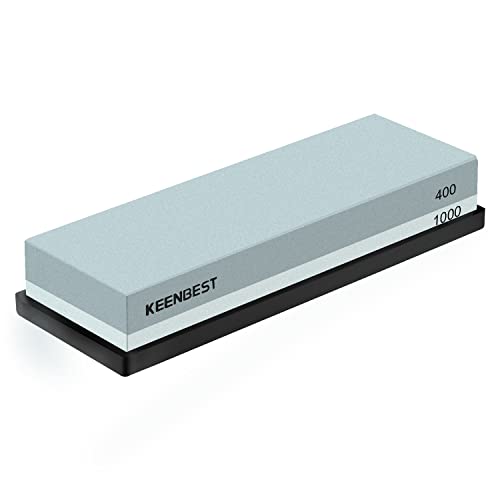
The KEENBEST 400/1000 stone focuses on the two grits that do the heavy lifting in basic sharpening. Its 400 side is useful for restoring a neglected edge, while the 1000 side prepares that edge for normal kitchen work. The set uses a two-sided format, so it stays fairly simple to manage. A non-slip rubber base helps keep the stone more stable during strokes.
This is a practical pick for knives that have gone too long without care. I would use the coarse side with patience rather than pressing hard, since aggressive pressure can remove more metal than needed. The 1000 side leaves a toothy edge that works well on vegetables, meat, and daily prep. For a very polished edge, you may want a separate fine stone or strop.
Pros:
- 400 grit helps repair dull and worn edges
- 1000 grit suits everyday kitchen sharpening
- Simple two-sided design is easy to learn
- Rubber base helps limit movement
- Useful for kitchen, pocket, and work knives
- Good choice for buyers on a modest budget
Cons:
- Does not include a high finishing grit
- Coarse side can wear faster with heavy use
- Users must control the sharpening angle themselves
My Recommendation
I suggest this set for budget-minded cooks and owners of very dull knives. It is also a good starting point if you want to learn the basic motion without managing four separate grits. Among best knife sharpener whetstone choices, the KEENBEST set stands out for direct, no-frills edge repair. It gives you the core tools, but advanced users may eventually add a polishing stone.
HMPLL Four-Side Whetstone Set
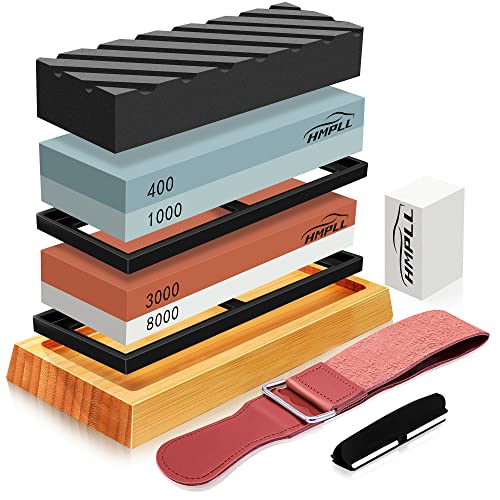
The HMPLL set uses four grit surfaces in one sharpening system. That gives you more control than a basic 1000/6000 stone. You can use a coarse surface for repair, a medium surface for shaping, and finer surfaces for a cleaner finish. It is designed for users who want a wider sharpening path without buying several loose stones.
A four-side setup can feel like having a small tool kit in your hand. It works best when you label your routine and move through the grits in order. I would not jump from the coarsest surface straight to the finest one, because the finer side may not remove the scratches left by rough work. With clean water, light pressure, and a stable base, this set can support regular maintenance.
Pros:
- Four grit surfaces offer flexible edge control
- Can handle repair, sharpening, and finishing tasks
- Useful for users with mixed knife collections
- Reduces the need to buy separate stones
- Supports gradual improvement in sharpening skill
- Fine surfaces can improve edge smoothness
Cons:
- Requires more setup knowledge than a single stone
- Small grit surfaces may take longer on wide blades
- Cleaning and drying all sides takes extra time
My Recommendation
The HMPLL set is best for learners who want to move beyond basic sharpening. It can also suit a careful hobbyist who works on kitchen knives, pocket knives, and other small blades. When I look for the best knife sharpener whetstone for skill building, I value a system that shows how grit changes the edge, and this set does that well. Choose it if variety matters more to you than the simplest possible setup.
Sharp Pebble Complete 1000/6000 Kit

This Sharp Pebble kit combines the familiar 1000/6000 grit pairing with accessories aimed at easier setup. The medium side can restore a normal dull edge, and the fine side can smooth the burr left after sharpening. It is a sensible format for cooks who want a complete kit rather than only a loose stone. The included base and supporting pieces make the process feel more organized.
I see this as a friendly entry point for someone who wants to sharpen at home but does not need a large professional system. The 1000 grit is forgiving enough for routine work, while the 6000 grit gives the edge a cleaner feel. Like all water stones, it needs proper drying after use to help prevent damage. The best results come from holding a repeatable angle and using several light passes.
Pros:
- Balanced grit range for everyday knife care
- Complete format helps new users get started
- Fine side improves edge polish and smoothness
- Useful for common Western and Japanese-style knives
- Accessories make storage and setup easier
- Good option for routine household maintenance
Cons:
- Not the best choice for deep chips
- Fine stone needs a clean, even surface
- Requires water preparation before sharpening
My Recommendation
I recommend this kit for new cooks, gift buyers, and families that want one dependable sharpening station. It gives enough range for normal knife care without adding a coarse repair stone that may confuse a beginner. If you want the best knife sharpener whetstone for simple home use, this complete Sharp Pebble kit is a strong candidate. Its value is highest when your knives are dull from use but still in sound shape.
Amazon Basics 1000/6000 Whetstone

The Amazon Basics whetstone offers a familiar dual-grit layout with a 1000 side and a 6000 side. It also includes an angle guide and a non-slip bamboo base. That combination targets the two biggest beginner problems: choosing a grit and keeping the stone steady. The design is straightforward, so you can spend more time learning the stroke.
The angle guide may help a new user keep the blade closer to a repeatable position. I still advise learning to feel the bevel, since a guide may not fit every knife or preferred angle. The 1000 side works for routine sharpening, and the 6000 side can refine the edge after a burr forms. This is not a repair stone for severely damaged blades, but it is well matched to normal kitchen care.
Pros:
- Easy-to-understand 1000/6000 grit layout
- Angle guide supports beginner confidence
- Bamboo base helps keep the stone in place
- Suitable for regular kitchen knife maintenance
- Simple design requires little planning
- Accessible option for first-time buyers
Cons:
- Angle guide may not suit every blade angle
- No coarse grit for major edge repair
- Bamboo should be kept dry between uses
My Recommendation
This stone is best for casual cooks who want a clear, guided way to maintain their knives. It is also a sensible pick for a first sharpening purchase or a housewarming gift. In a search for the best knife sharpener whetstone, the Amazon Basics model earns attention for its simple layout and helpful guide. Pick it when ease and basic value matter more than advanced grit options.
Professional 1000/6000 Whetstone Kit

This double-sided kit keeps the sharpening task focused. Its 1000 grit surface handles the main sharpening stage, while the 6000 grit surface refines the edge. A slip-resistant bamboo base supports the stone, and an angle guide can make the first few sessions less stressful. It is built around the classic setup many home cooks expect from a water stone.
I like this style for users who do not want a crowded box of accessories. The medium grit can maintain a knife that still has a clear bevel, and the fine side can reduce the rough feel left by the first stage. A stone cannot replace good technique, so start with a clean blade and gentle pressure. Take your time, because rushing can create an uneven edge.
Pros:
- Practical grit pairing for daily knife care
- Slip-resistant base improves stability
- Angle guide helps beginners start evenly
- Simple kit is easy to store
- Fine side gives a smoother final edge
- Good match for standard kitchen knives
Cons:
- Limited for badly chipped or very blunt knives
- Two grits may not satisfy advanced sharpeners
- Needs careful water care and drying
My Recommendation
I would choose this kit for an apartment cook, student, or beginner who wants a compact sharpening setup. It covers the basic stages without taking over a small kitchen drawer. It may be the best knife sharpener whetstone for someone who wants a useful base, angle help, and no needless extras. Overall value is strongest when the product is available at its usual budget-friendly price.
Knife Sharpener 1000/6000 Dual-Sided Stone

This dual-sided whetstone follows the standard 1000/6000 sharpening path. The 1000 grit side is meant to shape a usable edge, and the 6000 grit side helps refine it. Its straightforward design makes it approachable for someone who has never used a water stone. It is a basic tool, but basic can be useful when the goal is steady knife maintenance.
I would use this stone on everyday chef’s knives, slicing knives, and smaller kitchen blades. It is not the right first step for a blade with large chips, because a 400 grit surface would work faster for that repair. Keep the blade angle consistent and use light strokes on both sides. After sharpening, wash and dry the knife, then clean and dry the stone according to its care instructions.
Pros:
- Classic two-grit sharpening arrangement
- Suitable for common household knives
- Easy for beginners to understand
- Fine side helps improve cutting smoothness
- Compact design saves storage space
- Useful for basic edge touch-ups
Cons:
- Does not offer a coarse repair grit
- May need a separate flattening solution over time
- Requires practice for consistent results
My Recommendation
This stone suits a shopper who wants a simple and affordable way to learn hand sharpening. It works best for sound blades that feel dull, not blades with serious damage. For a buyer comparing the best knife sharpener whetstone on a tight budget, the 1000/6000 range offers a sensible starting point. Its value depends on your willingness to learn the correct angle and stroke.
MIDO Professional 400/1000 Whetstone
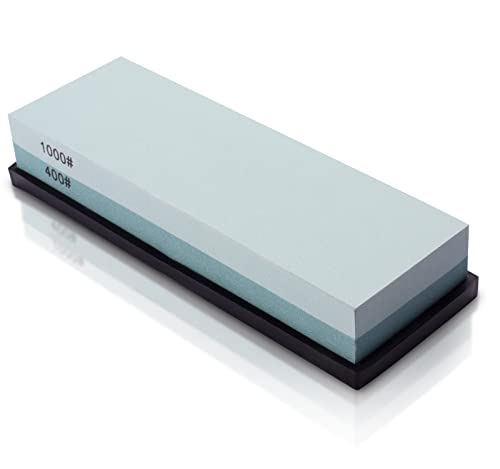
The MIDO stone uses 400 and 1000 grits, making it a repair-focused option. The coarse side can remove metal when a knife has become very dull, while the 1000 side brings the edge toward normal working sharpness. A non-slip rubber base helps support the stone during use. This setup is more about restoring an edge than creating a polished finish.
I would reach for this stone when a neglected knife needs more than a quick touch-up. The 400 grit can save time, but it also demands a gentle hand because coarse abrasives remove metal quickly. Once the 1000 side has formed a clean burr, you may want a fine stone or honing step to improve the final feel. That makes this a useful first stage in a larger sharpening routine.
Pros:
- 400 grit handles dull and worn edges well
- 1000 grit creates a practical working edge
- Rubber base improves grip on the work surface
- Useful for kitchen, hunting, and pocket knives
- Good choice for repair before fine polishing
- Simple two-stage process is easy to follow
Cons:
- No fine grit for final polishing
- Coarse side can remove too much metal with hard pressure
- May need another stone for a smoother edge
My Recommendation
The MIDO stone is best for owners of neglected knives and users who already understand basic sharpening. It is also a good partner for a separate fine finishing stone. If your search for the best knife sharpener whetstone centers on edge repair, the 400/1000 format deserves a close look. I would not choose it as the only stone for someone who wants a polished, refined finish.
Sharp Pebble 400/1000 Whetstone Kit

This Sharp Pebble kit offers 400 and 1000 grit surfaces for basic repair and sharpening. It is aimed at users who need to bring a dull knife back to a useful working edge. The two-sided format keeps the process direct and avoids unnecessary parts. It can work well as a first stone for someone who plans to add a polishing stone later.
The 400 side is helpful when a blade has lost its shape or has a small amount of wear. The 1000 side then removes the rough marks and builds a practical edge for daily tasks. I would use slow strokes and check the edge often, since coarse stones can change a bevel quickly. For a smoother cut, finish with a finer whetstone or strop after the main work.
Pros:
- Coarse 400 grit supports edge repair
- 1000 grit is useful for working sharpness
- Good stepping stone for new sharpeners
- Two-sided design keeps the routine simple
- Works with many kitchen and utility knives
- Useful base for a larger sharpening system
Cons:
- No fine finishing grit is included
- Coarse grit needs careful pressure control
- May require extra equipment for polishing
My Recommendation
I recommend this kit for practical repair work and for users who want to learn how a coarse stone changes an edge. It is a good fit for cooks with very dull knives, gardeners with utility blades, or hobbyists building a stone collection. In the best knife sharpener whetstone category, this model is strongest as a repair-first choice. Add a 3000 grit or finer stone if you want a smoother final cut.
Best For Comparison
| Best for | Why |
|---|---|
| Best overall home use | Sharp Pebble 1000/6000 offers a useful balance of sharpening and finishing. |
| Best complete system | Intelitopia includes four grits, a strop, a flattening stone, and support pieces. |
| Best for dull or damaged edges | MIDO or Sharp Pebble 400/1000 provides a coarse repair stage before normal sharpening. |
How I Chose These Whetstones
I focused on the details that matter during real knife care. Grit range came first, because a stone should match the condition of the blade. I also looked at stability, included accessories, storage needs, and how easy each setup is for a new user. A low price means little if the stone slides or leaves the user unsure where to begin.
Water stones work by exposing abrasive material as the surface wears. That action helps them cut steel, but it also means they need care. Many stones need soaking or wetting before use, and most should dry fully after sharpening. I also favor a flat stone, since a hollow surface can make it hard to keep a steady bevel.
Knife makers and sharpening educators commonly stress three habits: use a repeatable angle, create a burr along the edge, and remove that burr with lighter finishing strokes. I agree with that method. The exact angle depends on the knife, its edge design, and the maker’s guidance. When that information is not available, a moderate angle and light pressure offer a safer starting point than forcing a steep or shallow angle.
How to Use the Best Knife Sharpener Whetstone
Start by reading the care directions for the stone. Some water stones need a short soak, while others only need water on the surface. Do not assume every stone should sit underwater for hours. If the maker gives no clear soaking advice, wet the surface well and watch how it behaves before beginning.
Place the stone on a stable base or a damp towel. The stone should not slide when you push the blade. Hold the knife at a steady angle and place the heel near one end of the abrasive surface. Move the blade across the stone as if you are trying to slice a thin layer from the top.
Work along the full edge, from heel to tip. Use light, even pressure and keep the same motion on both sides. After several passes, feel for a small burr on the opposite side of the edge. The burr shows that the abrasive has reached the apex, but use care when feeling for it.
Once the first side has a consistent burr, switch sides. Match the number of passes at first, then use lighter strokes to reduce the burr. Move to the finer side only after the edge is shaped. A fine grit cannot fix a bevel that the medium grit never formed.
When you finish, rinse the blade and dry it right away. Clean the stone as directed and let it dry in open air. Avoid storing a damp stone in a closed box. A little care after each session can help protect both the stone and the knife.
What Grit Should You Choose?
A 400 grit stone is coarse. It is useful for repairs, very dull edges, and changes to the bevel. It removes steel quickly, so I use low pressure and short checks. Beginners should avoid using coarse grit as a casual daily sharpener.
Around 1000 grit is the common middle ground for kitchen knives. It can restore a dull edge and leave enough tooth for food prep. Many home cooks can stop here if they like a bite that grips tomato skin and meat. This is why 1000 grit appears in many of the best knife sharpener whetstone kits.
Grits from about 3000 to 6000 refine the edge. They can make slicing feel smoother and reduce the rough marks left by a 1000 grit stone. A 6000 grit finish is often enough for home kitchens. Higher grits can polish more, but polish alone does not guarantee better cutting.
An 8000 grit surface is usually for a very fine finish. It can suit users who enjoy detailed sharpening or work with blades that benefit from a polished edge. It takes more time and demands better control. For most daily cooking, a good 1000 grit edge followed by a moderate fine grit is more practical.
Whetstone Safety and Care Tips
A sharp knife is safer when you control it, but it still needs respect. Keep fingers behind the edge and use a stable surface. Do not hold the stone in one hand while sharpening with the other. If water pools around the setup, wipe it away so the base does not slide.
Do not press hard just to speed up the process. Pressure can dig into a soft stone and may create an uneven bevel. It can also make the knife jump. Let the abrasive do the work, especially on a 400 or 1000 grit surface.
Watch for dishing. A stone that wears lower in the center can make the blade touch only in certain areas. Use a flattening stone or another approved method when the surface loses its level. A flat stone helps you sharpen from heel to tip with more even contact.
Store knives in a block, sheath, or magnetic system that protects the edge. Do not toss a freshly sharpened knife into a drawer with loose tools. Wash food knives by hand when possible and dry them before storage. These simple habits help the new edge last longer.
FAQs Of best knife sharpener whetstone
Is a whetstone better than a pull-through sharpener?
A whetstone offers more control over the angle and the amount of metal removed. It takes more practice, but it can support better edge care. A pull-through sharpener is faster, yet it gives you less control and may not suit every blade.
What is the best grit for kitchen knives?
A 1000 grit stone is a strong starting point for most dull kitchen knives. A 3000 to 6000 grit side can refine the edge afterward. Use 400 grit only when the knife needs notable repair or bevel work.
How long should I soak a whetstone?
Follow the product directions first. Some stones need soaking, while others only need surface water. Avoid long soaking unless the maker clearly recommends it, and always dry the stone fully after use.
Can beginners use the best knife sharpener whetstone?
Yes. Beginners should start with a stable base, a moderate angle, and light pressure. A 1000/6000 stone or an included angle guide can make the first lessons easier.
How often should I sharpen a kitchen knife?
Sharpen when the knife no longer cuts cleanly with light pressure. Many home cooks may need a full sharpening only a few times each year. A honing rod or careful touch-up can help maintain the edge between stone sessions.
Final Verdict: Which Should You Buy?
For most home cooks, the Sharp Pebble 1000/6000 kit is the best knife sharpener whetstone because it balances useful grits, ease, and value. Choose Intelitopia if you want a full system with repair and polishing options.
Pick a 400/1000 set for damaged or very dull blades. With light pressure and good care, any of these stones can make daily cutting safer, smoother, and far less frustrating.