
Olive oil supports heart health, adds healthy fats, and brings rich flavor to everyday meals.
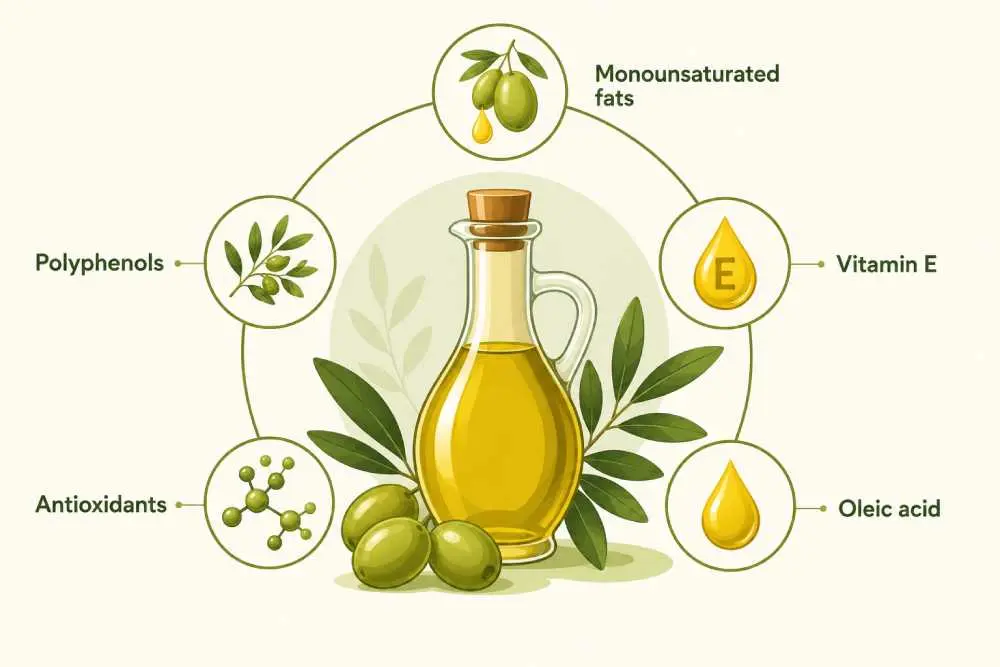
Olive oil is more than a cooking fat. It is a central food in the Mediterranean diet and contains monounsaturated fat, vitamin E, and plant compounds called polyphenols. This guide explains olive oil and benefits, the best types to buy, safe ways to use it, and the limits of current research.

What Is Olive Oil?
Olive oil is made by pressing whole olives. The oil’s taste, color, aroma, and nutrient content can vary based on the olive variety, growing region, harvest time, and production method.
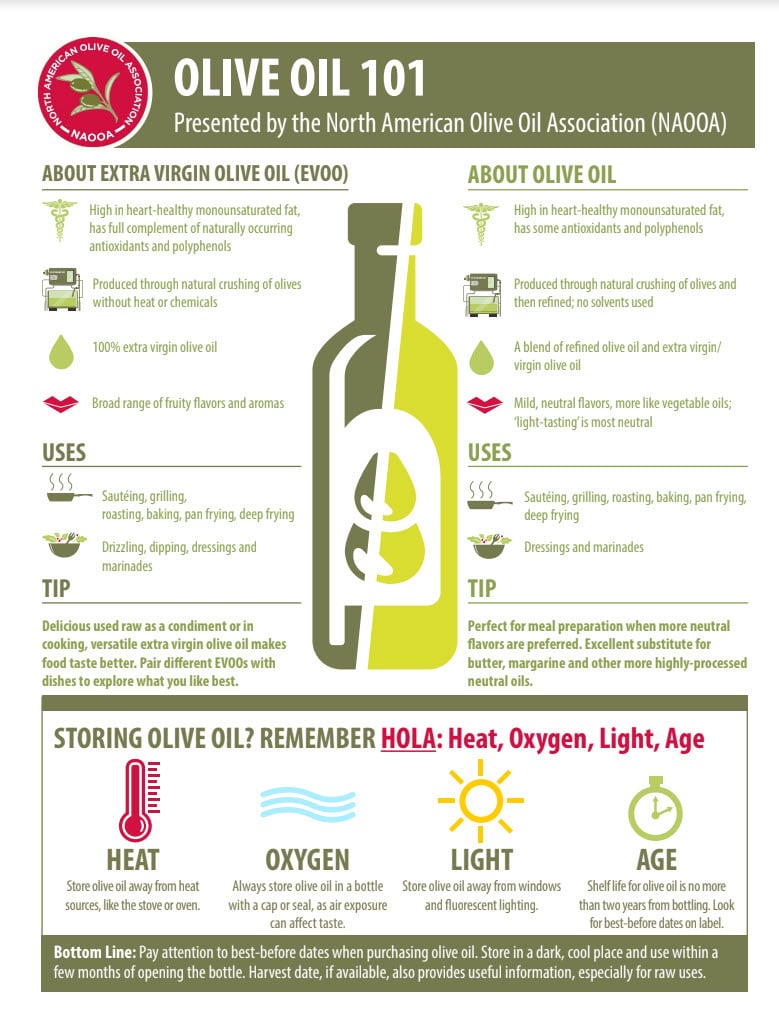
Extra virgin olive oil is the least processed common type. It comes from mechanical methods and must meet standards for taste and chemical quality. Virgin olive oil also comes from mechanical processing, but it may have more flavor defects or higher acidity.
Refined olive oil goes through processing that removes much of its flavor. Light olive oil is not lower in calories. The word “light” usually refers to its mild taste and lighter color.
The main types include:
• Extra virgin olive oil: Best for dressings, dips, finishing, and gentle to medium cooking.
• Virgin olive oil: Less common and more strongly flavored than refined types.
• Regular or pure olive oil: Often a blend of refined olive oil and virgin olive oil.
• Light olive oil: Mild in flavor but still contains about the same calories as other olive oils.
The strongest olive oil and benefits are usually linked with extra virgin olive oil because it keeps more natural plant compounds. Still, all olive oil contains mostly heart-friendly monounsaturated fat.

Olive Oil and Benefits for Heart Health
One of the best-known olive oil and benefits is its possible role in heart health. Olive oil is rich in oleic acid, a monounsaturated fat. Replacing butter, shortening, or fatty animal fats with olive oil can help improve the overall fat balance in the diet.
Research on Mediterranean-style eating patterns links regular olive oil use with a lower risk of heart disease. The benefit may come from several factors working together:
• Monounsaturated fat may help lower LDL cholesterol when it replaces saturated fat.
• Polyphenols may help protect cells from oxidative stress.
• Olive oil can support a diet rich in vegetables, beans, whole grains, fish, and nuts.
• Its flavor may make healthy foods more enjoyable, which can help people eat them more often.
The U.S. Food and Drug Administration allows a qualified health claim that consuming oleic acid from oils such as olive oil may reduce the risk of coronary heart disease when it replaces fats higher in saturated fat. The claim also notes that the evidence is supportive but not conclusive.
A key lesson is that olive oil works best as a replacement, not an addition. Pouring olive oil over a diet already high in calories will not automatically improve heart health.
Olive Oil and Benefits for Inflammation
Chronic inflammation can play a role in many health problems. Extra virgin olive oil contains polyphenols, including oleocanthal and oleuropein. These compounds have antioxidant and anti-inflammatory effects in laboratory and human research.
Oleocanthal has been studied because it may act in a way that resembles part of the effect of some anti-inflammatory medicines. However, the amount in a normal serving of olive oil is not the same as a medicine dose. Olive oil should not replace prescribed treatment.
The practical value of these compounds is simple: extra virgin olive oil can add helpful plant chemicals to meals. Use it in salad dressing, bean dishes, roasted vegetables, or whole-grain bowls.
Scientists are still studying how much olive oil is needed for specific effects. Factors such as the oil’s freshness, polyphenol level, diet quality, and a person’s overall health can change the outcome.
:max_bytes(150000):strip_icc()/VWH_Illustration_How-to-Use-Olive-Oil-for-Moisturizing_Illustrator_Jessica-Olah_Final-72d4c83116a04197ba8706887ef572d5.jpg)
Olive Oil and Benefits for Blood Sugar
Olive oil may also support better blood sugar control when used as part of a balanced eating pattern. Replacing refined carbohydrates or saturated fats with olive oil may help create meals that digest more slowly and feel more satisfying.
A meal with vegetables, lentils, whole grains, and olive oil contains fiber, healthy fat, and plant nutrients. This combination may lead to a steadier rise in blood sugar than a meal built around sugary drinks, white bread, and processed snacks.
Some studies of Mediterranean diets have found improvements in insulin sensitivity and blood sugar markers. Yet olive oil alone is not a treatment for diabetes. People with diabetes should follow advice from their health care team and consider total carbohydrate intake, portions, and medication effects.
Try these simple combinations:
• Drizzle extra virgin olive oil over beans and greens.
• Add a small amount to a whole-grain salad.
• Use it in a homemade dressing with vinegar, lemon, and herbs.
• Pair it with fish, vegetables, or lentils instead of a creamy sauce.
Olive Oil and Benefits for Brain Health
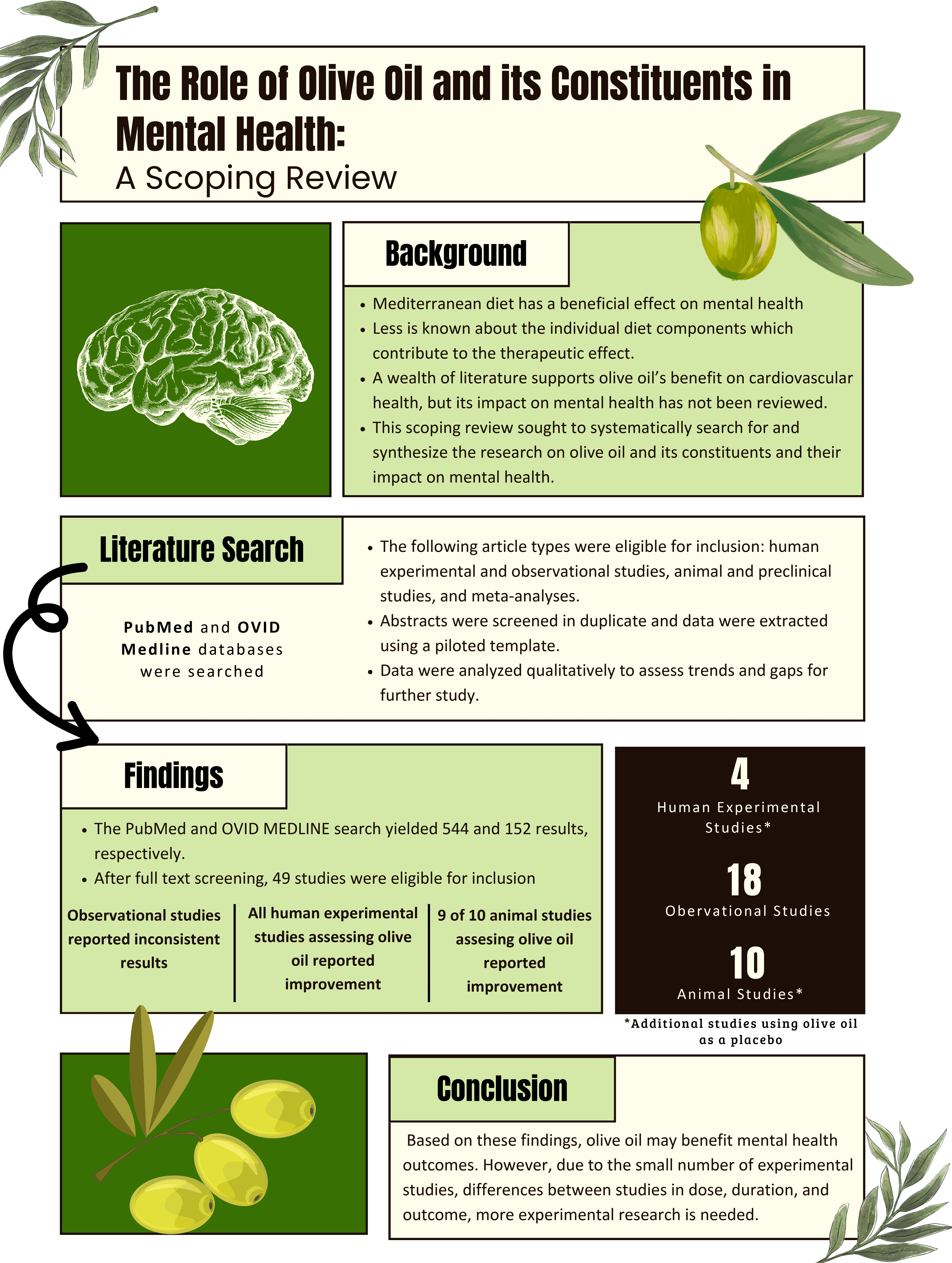
The brain needs fat to function, and the type of fat in the diet matters. Olive oil provides monounsaturated fat and plant compounds that may help protect cells from oxidative stress.
Research on Mediterranean-style diets has found links with better cognitive health and a lower risk of cognitive decline. Some studies have also examined extra virgin olive oil in relation to memory and brain aging.
These findings are encouraging, but they do not prove that olive oil prevents dementia. Brain health depends on many factors, including sleep, exercise, blood pressure, social connection, education, and overall diet.
Think of olive oil as one small piece of a larger puzzle. A daily meal pattern rich in plants and fish is likely more important than any single ingredient.
Olive Oil and Benefits for Digestion
Olive oil may help make meals easier to enjoy and digest. Its fat can stimulate the release of bile, which helps the body digest dietary fat. It may also support regular bowel movements for some people.
Extra virgin olive oil contains no fiber, so it cannot replace fruits, vegetables, beans, or whole grains. These foods provide the fiber that helps feed beneficial gut bacteria and supports bowel health.
Some people find that a small amount of olive oil helps with mild constipation. Large amounts may cause loose stools, nausea, or stomach discomfort. If constipation is severe, painful, or ongoing, speak with a health professional.
Olive Oil and Benefits for Skin and Hair
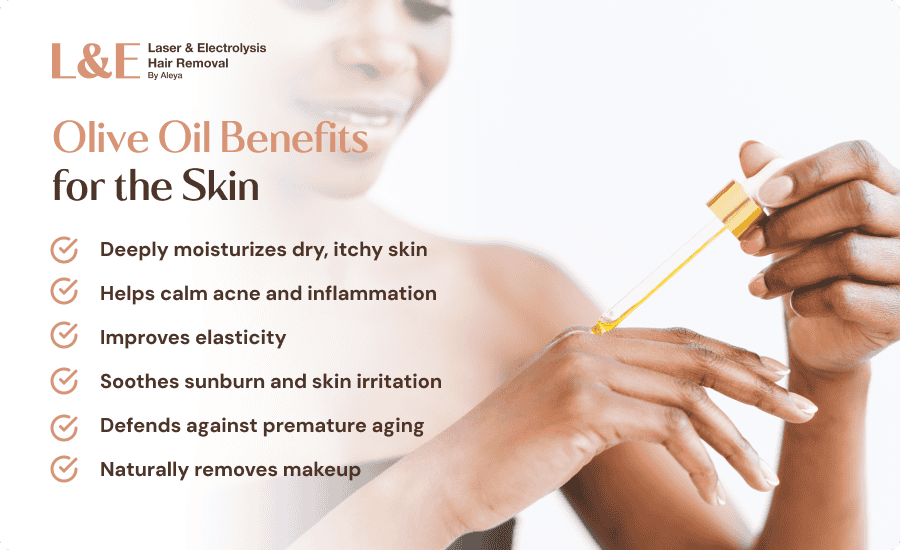
Olive oil contains vitamin E and other antioxidants. When used on the skin, it can help reduce dryness by forming a barrier that slows water loss.
However, olive oil is not ideal for every skin type. Some people may find it too heavy, and it may worsen irritation or acne-prone skin. Test a small area first, especially if you have sensitive skin.
For hair, olive oil can add softness and shine to dry strands. It does not permanently repair split ends. A small amount applied to the hair lengths may work better than applying a large amount to the scalp.
These uses are cosmetic, not medical cures. Avoid putting olive oil on open wounds or using it as a replacement for tested skin treatments.
Extra Virgin Olive Oil vs. Regular Olive Oil
Extra virgin olive oil usually has more flavor and more natural antioxidants than refined olive oil. It may taste grassy, peppery, fruity, or slightly bitter. These flavors can signal natural plant compounds, although taste alone does not prove quality.
Regular olive oil has a milder taste and may be useful when you do not want a strong olive flavor. It is also suitable for many cooking tasks.
Choose based on both quality and use:
• Choose extra virgin olive oil for salad dressing, dipping, finishing, and gentle cooking.
• Choose regular olive oil for recipes that need a neutral flavor.
• Avoid assuming that darker color means higher quality.
• Look for a harvest date when available.
• Buy a size you can use within a reasonable time.
• Select a dark glass bottle or a metal container when possible.
Color is not a reliable quality test. Some producers use tinted bottles to protect the oil from light, and some oils are naturally green while others are golden.
Is Olive Oil Good for Cooking?
Yes, olive oil can be used for cooking. Extra virgin olive oil is suitable for many everyday methods, including sautéing, roasting, baking, and pan cooking.
Every oil has a smoke point, which is the temperature at which it begins to smoke. Smoke point varies by oil quality, age, and free fatty acid level. A smoking pan is a sign that the heat is too high, no matter which oil you use.
For best results:
-
Heat the pan gently.
-
Add olive oil before the pan becomes very hot.
-
Lower the heat if the oil begins to smoke.
-
Keep the oil away from direct sunlight and high heat during storage.
-
Use fresh oil for raw dishes so its flavor remains clear.
Cooking may reduce some delicate plant compounds, but cooked olive oil can still provide monounsaturated fat. The best oil is often the one you will use instead of less helpful fats.
How Much Olive Oil Should You Use?
Olive oil is nutritious, but it is energy dense. One tablespoon contains about 120 calories, so portions matter if you are trying to lose weight or manage calorie intake.
There is no single perfect amount for everyone. Your needs depend on your age, activity level, health goals, and total diet.
A practical serving may be:
• One teaspoon for a small dish or toast.
• One tablespoon for a salad dressing or cooked meal.
• Two tablespoons when shared across a larger recipe.
Use a measuring spoon when calories matter. Free-pouring can turn one tablespoon into several without you noticing.
The goal is not to fear olive oil. It is to use it with awareness and let it replace butter, creamy sauces, or highly processed fats when appropriate.
Possible Side Effects and Limitations
Olive oil is safe for most people when eaten in normal food amounts. Still, it can cause problems in certain situations.
Possible concerns include:
• Extra calories that may contribute to weight gain when added without replacing another food.
• Loose stools or stomach discomfort after eating large amounts.
• Allergic reactions, although true olive allergy is uncommon.
• Skin irritation when applied to sensitive or acne-prone skin.
• Lower smoke quality if the oil is old, overheated, or poorly stored.
Olive oil also does not provide protein, fiber, vitamin C, or many other nutrients found in whole foods. It should support a varied diet, not replace one.
People with gallbladder problems, digestive symptoms, or specific medical conditions should ask a health professional how much dietary fat is suitable. Use caution with health claims that promise detoxes, rapid weight loss, or disease cures.
How to Store Olive Oil Correctly
Light, heat, air, and time can damage olive oil. Good storage helps protect its flavor and quality.
Follow these steps:
• Store the bottle in a cool, dark cupboard.
• Keep it away from the stove, oven, and sunny windows.
• Close the cap tightly after every use.
• Choose a smaller bottle if you use oil slowly.
• Do not store olive oil in clear containers for long periods.
Fresh olive oil should smell pleasant. It may smell grassy, fruity, or peppery. A stale oil may smell like crayons, old nuts, cardboard, or wax. If it smells flat or unpleasant, it may be past its best quality.
A harvest date is often more useful than a vague “best by” date. Once opened, use the oil within a few months when possible, especially if the bottle sits in a warm kitchen.
Practical Ways to Add Olive Oil to Your Diet
You do not need complicated recipes to enjoy olive oil and benefits. Small changes can make healthy meals taste better.
Try these ideas:
• Whisk olive oil with lemon juice, garlic, and herbs for a quick dressing.
• Drizzle it over tomato, cucumber, and chickpea salad.
• Add a teaspoon to cooked lentils or beans.
• Brush vegetables lightly before roasting.
• Use it to sauté onions, mushrooms, or leafy greens.
• Dip whole-grain bread in olive oil with herbs.
• Add it to homemade hummus.
• Finish soup with a small drizzle for extra flavor.
One mistake I often see in home cooking advice is treating olive oil as a magic ingredient. The better approach is to use it as a bridge to healthier foods. A little oil can make vegetables, beans, and whole grains more appealing, which makes a balanced diet easier to follow.
What to Look for When Buying Olive Oil
A high price does not always guarantee high quality. Read the label and consider how you plan to use the oil.
Look for:
• “Extra virgin” when you want less processing and stronger flavor.
• A harvest date when available.
• A clear producer, region, or origin.
• Dark glass, a tin, or another container that limits light.
• A bottle size that matches your use.
Be careful with labels that use vague words such as “premium” without clear details. Olive oil quality can decline during shipping and storage, so buy from a retailer with good product turnover.
Taste matters, too. A good extra virgin olive oil may have a fresh smell, a fruity taste, and a mild peppery finish. A bitter note is not always a flaw. It can come from natural polyphenols.
Frequently Asked Questions About Olive Oil and Benefits
Is olive oil healthy to eat every day?
For most people, olive oil can fit well into a healthy daily diet. It is especially useful when it replaces butter, shortening, or other fats higher in saturated fat.
Is extra virgin olive oil better than regular olive oil?
Extra virgin olive oil usually contains more natural flavor compounds and polyphenols because it is less processed. Regular olive oil has a milder taste and can still provide monounsaturated fat.
Can olive oil help with weight loss?
Olive oil does not cause weight loss by itself. It may help meals feel satisfying, but it still contains about 120 calories per tablespoon, so portion size matters.
Can you fry with olive oil?
Yes, olive oil can be used for pan-frying and other cooking methods when the heat is controlled. Do not let the oil smoke, and avoid repeatedly heating the same oil.
Does olive oil expire?
Olive oil does not become dangerous immediately after its best-by date, but it can lose flavor and quality. Store it away from heat and light, and replace it if it smells stale or unpleasant.
Is olive oil good for the skin?
Olive oil may reduce dryness for some people by helping seal in moisture. It can irritate sensitive or acne-prone skin, so test a small area first.
Conclusion
Olive oil and benefits are best understood as part of a complete eating pattern. Extra virgin olive oil provides monounsaturated fat and plant compounds, and it may support heart health when used instead of fats higher in saturated fat.
Use it with vegetables, beans, whole grains, fish, nuts, and other minimally processed foods. Store it in a cool, dark place, measure portions when needed, and be cautious of claims that sound too good to be true.
Choose a fresh oil you enjoy, use it in simple meals, and let flavor make healthy eating easier. Explore more evidence-based nutrition guides, and share your favorite olive oil recipe in the comments.