
Most adults can enjoy one to two tablespoons of olive oil per day as part of a balanced eating plan.
Knowing how much olive oil per day fits your needs can help you enjoy its flavor without adding more calories than you need. The best amount depends on your total diet, health goals, cooking habits, and the other fats you eat. This guide explains serving sizes, possible benefits, common mistakes, and easy ways to use olive oil wisely.
How much olive oil per day is healthy?
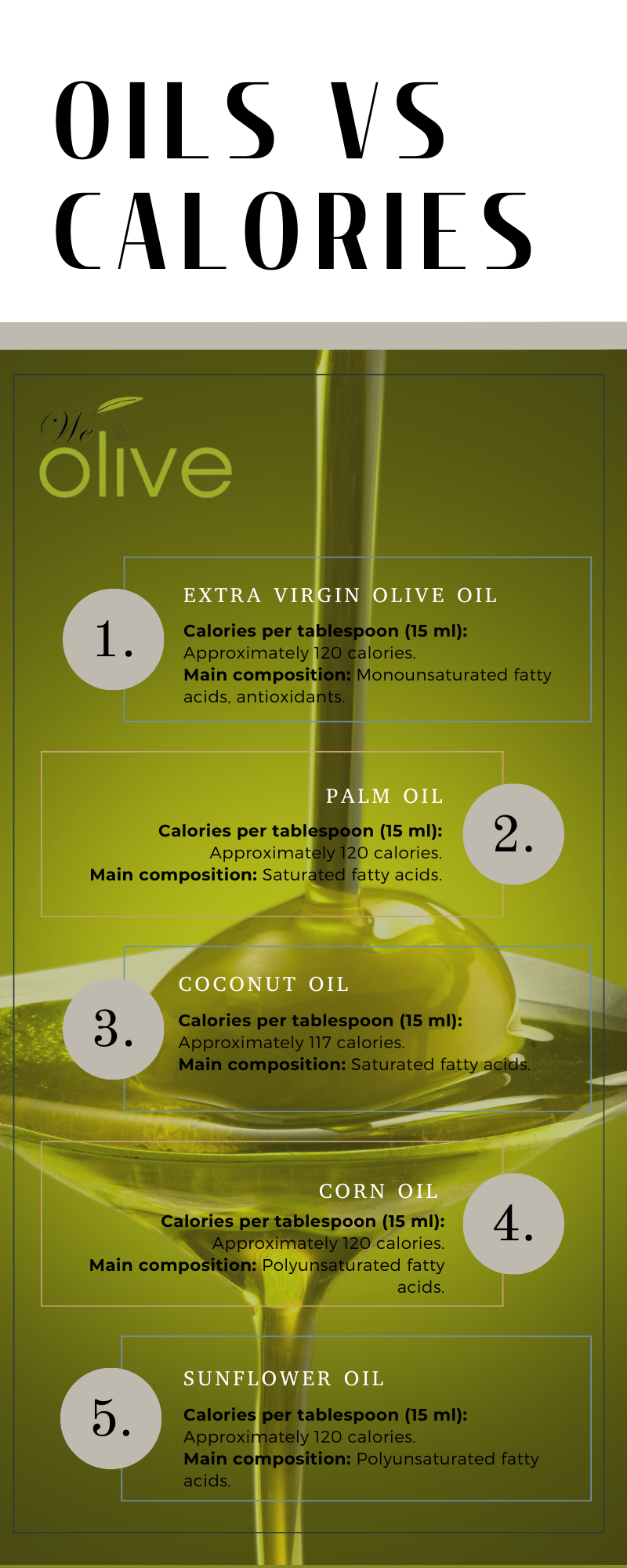
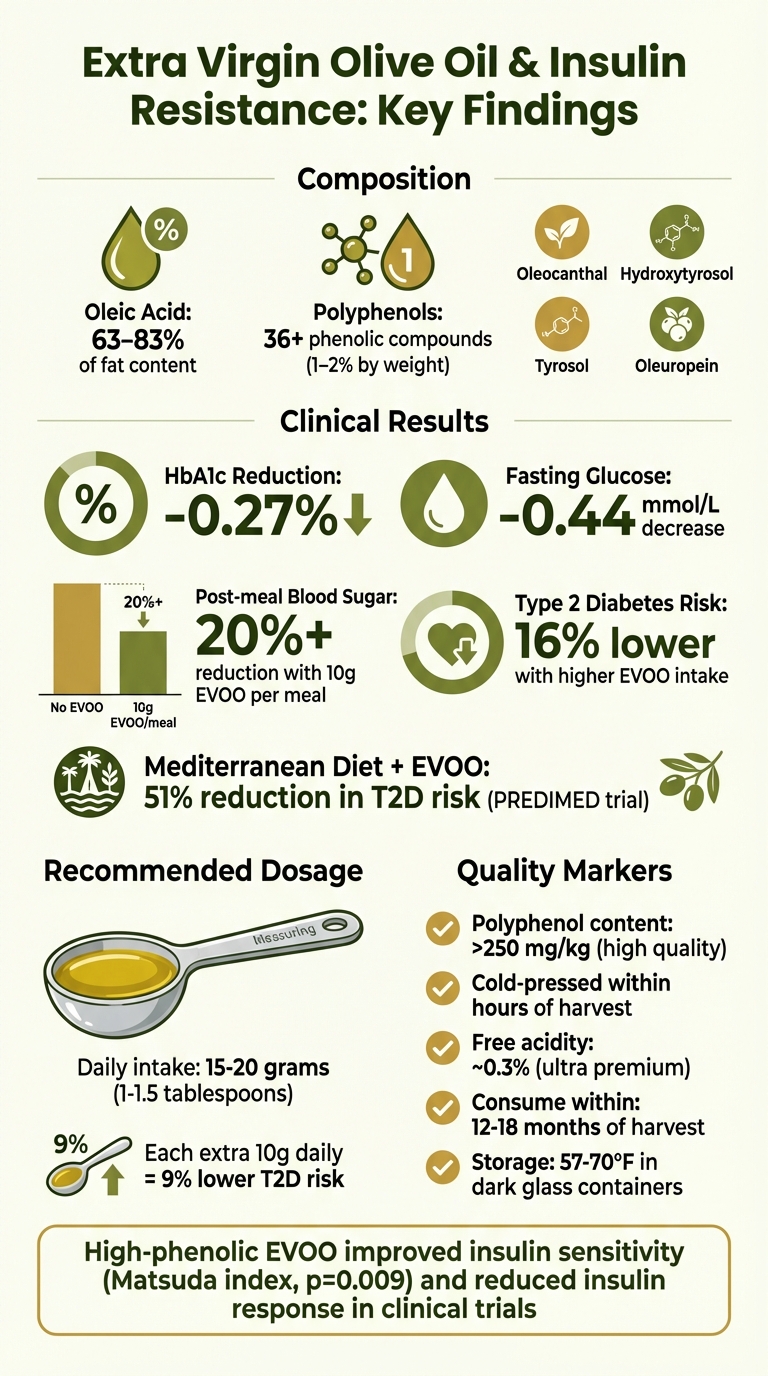
For most healthy adults, 1 to 2 tablespoons of olive oil per day is a practical amount. This equals about 15 to 30 milliliters, or 120 to 240 calories.
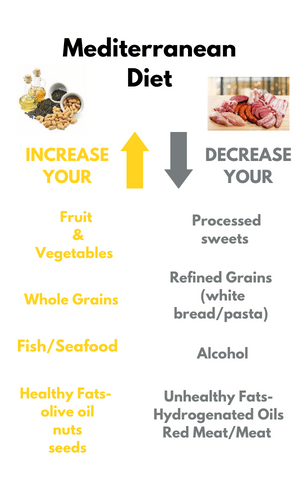
That amount can fit well into a Mediterranean-style diet. It may include oil used for cooking, salad dressing, dipping, or drizzling. The key is to use olive oil in place of less healthy fats, not simply add it to your usual meals.
How much olive oil per day is right for you may be lower or higher. A person who needs more calories may use more, while someone trying to lose weight may prefer 1 tablespoon or less.
A tablespoon contains about:
• 119 calories
• 13.5 grams of fat
• About 2 grams of saturated fat
• Mostly monounsaturated fat
Olive oil is nutritious, but it is still a calorie-dense fat. Think of it like a small fuel tank: a little goes a long way.
What does one serving of olive oil look like?
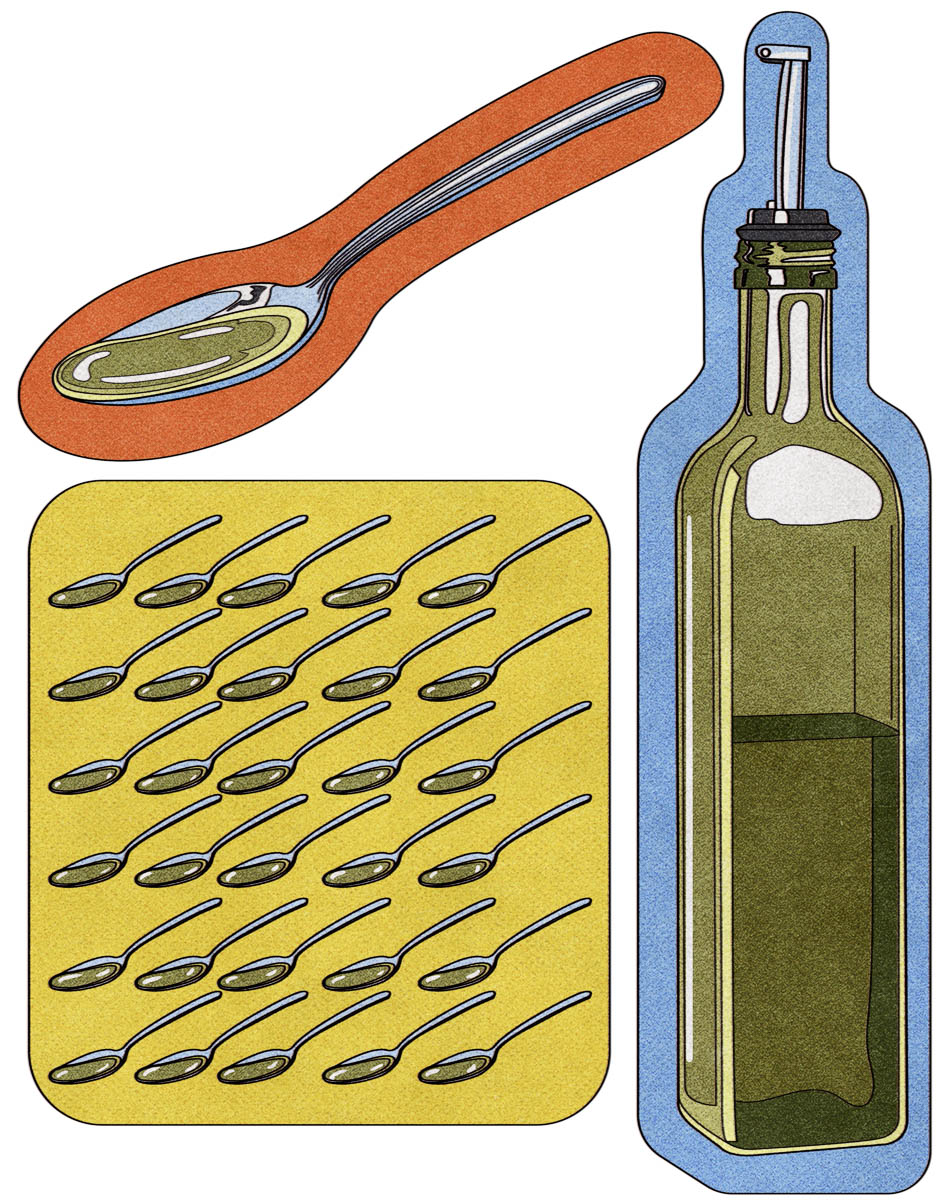
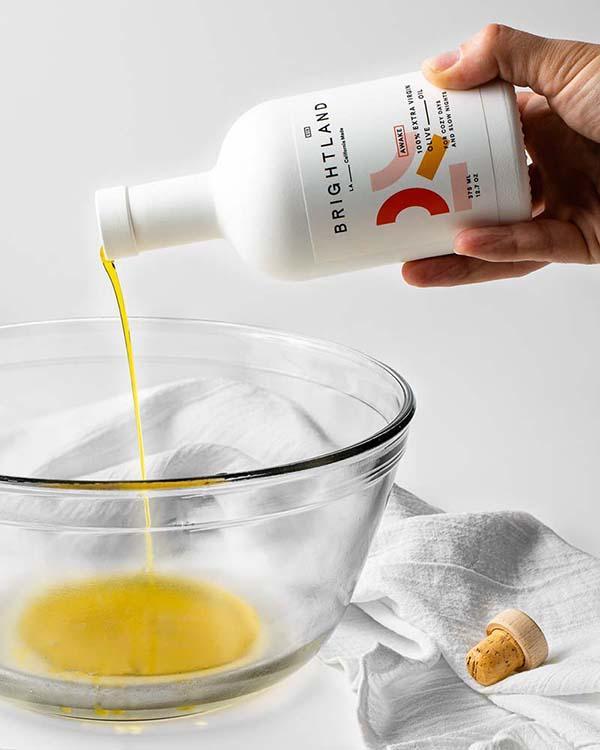
Many people pour olive oil directly from the bottle. This makes it easy to use more than planned. Measuring it once or twice can help you learn what a real serving looks like.
Common serving sizes include:
• 1 teaspoon: About 5 milliliters and 40 calories
• 1 tablespoon: About 15 milliliters and 119 calories
• 2 tablespoons: About 30 milliliters and 238 calories
• ¼ cup: About 60 milliliters and nearly 480 calories
A teaspoon works well for sautéing one serving of vegetables. One tablespoon may be enough for a large salad. Two tablespoons can cover a family meal, depending on the recipe.
When considering how much olive oil per day, count all uses. This includes oil in cooking, dressings, marinades, restaurant meals, and packaged foods.
A simple kitchen test is to pour your usual amount into a measuring spoon. You may discover that your “small drizzle” is actually two or three tablespoons.
Best amount for different health goals
For general health
One to two tablespoons daily can be a reasonable target for many adults. Use it to replace butter, shortening, or other fats high in saturated fat.
This does not mean olive oil makes an unhealthy diet healthy. Vegetables, fruit, beans, whole grains, fish, nuts, and lean proteins still matter most.
For weight loss
If you are trying to lose weight, start with 1 tablespoon per day or divide that amount across meals. Olive oil can support satisfying meals, but extra calories can slow weight loss.
Try measuring oil instead of pouring freely. Add flavor with lemon juice, vinegar, garlic, herbs, pepper, and spices.
The right answer to how much olive oil per day for weight loss depends on your calorie needs. Some people do well with 1 tablespoon, while others can fit 2 tablespoons into a calorie-controlled plan.
For heart health
Replacing butter, lard, or coconut oil with olive oil may support a heart-friendly eating pattern. The benefit comes largely from the type of fat and the overall food pattern.
Some research links Mediterranean-style eating with lower risks of cardiovascular disease. However, olive oil is not a medicine, and more is not always better.
For heart health, focus on replacing saturated fats rather than adding extra oil to meals.
For cooking
One teaspoon to one tablespoon is often enough for a pan of vegetables, eggs, chicken, or fish. A good nonstick pan can reduce the amount you need.
Extra-virgin olive oil works well for low to medium heat cooking, roasting, sauces, and finishing. Refined olive oil has a milder flavor and may work better when a neutral taste is preferred.
:max_bytes(150000):strip_icc()/olive-oil_annotated32-d35d3a7953dc4ca998c326ace6df630c.jpg)
Potential benefits of olive oil
Olive oil contains mostly monounsaturated fat. Extra-virgin olive oil also contains plant compounds called polyphenols.
Possible benefits of using olive oil in place of less healthy fats include:
• Supporting a heart-healthy eating pattern
• Helping improve the quality of dietary fat
• Adding flavor without added sugar
• Helping the body absorb fat-soluble vitamins
• Providing antioxidant compounds, especially in extra-virgin oil
• Making vegetables and other healthy foods more enjoyable
Olive oil also helps the body absorb vitamins A, D, E, and K. For example, a small amount of olive oil on a tomato and spinach salad may help your body use some of the nutrients in those foods.
Still, benefits depend on the full diet. A spoonful of olive oil cannot cancel out a diet high in sugary drinks, processed meat, refined grains, and excess calories.
Researchers also study whether extra-virgin olive oil may help lower inflammation and support brain health. These areas are promising, but they do not prove that olive oil prevents every chronic disease.
Extra-virgin olive oil versus regular olive oil
Extra-virgin olive oil is made with limited processing. It usually has a stronger taste and more natural plant compounds.
Regular or “pure” olive oil is often more refined. It has a lighter flavor and may have fewer polyphenols, but it still provides mostly monounsaturated fat.
Choose extra-virgin olive oil when you want:
• A peppery or fruity flavor
• A finishing oil for salads and soups
• More naturally occurring plant compounds
• A less processed option
Choose regular olive oil when you want:
• A mild flavor
• A more neutral cooking oil
• A lower-cost option for everyday cooking
Both types contain about the same number of calories per tablespoon. The answer to how much olive oil per day does not change much based on the type.
Look for a dark bottle or tin, a clear harvest date when available, and proper storage. Keep the bottle tightly closed in a cool, dark place.

When is the best time to take olive oil?
There is no proven best time to consume olive oil. You can use it with breakfast, lunch, dinner, or snacks.
Some people drink olive oil in the morning. This is not necessary, and drinking it does not create a special health effect. It may also cause nausea, loose stools, or stomach discomfort in some people.
Using olive oil with food is usually more pleasant and practical. Try these options:
• Drizzle it over cooked vegetables
• Mix it with vinegar for salad dressing
• Use it in a bean or lentil soup
• Add a teaspoon to whole-grain toast
• Toss it with roasted potatoes
• Use it to marinate fish or chicken
How much olive oil per day matters more than the time of day. Consistency and total calorie balance matter most.
How to add olive oil without overdoing it
You do not need to change your entire diet at once. Small changes can make the habit easy to maintain.
-
Start with 1 teaspoon per meal.
-
Measure your oil for one week.
-
Replace butter or creamy dressings with olive oil when suitable.
-
Pair olive oil with vegetables, beans, whole grains, fish, or lean protein.
-
Taste your food before adding more.
-
Store the bottle away from heat and sunlight.
A useful method is to make a simple dressing with 1 tablespoon of olive oil, 1 tablespoon of vinegar, lemon juice, and herbs. This can dress several cups of salad without making the meal too heavy.
In everyday meal planning, the most common mistake is treating olive oil as “free calories.” It is healthy fat, but the calories still count.
Common mistakes to avoid
Drinking large amounts of olive oil
Drinking several tablespoons may add hundreds of calories and can upset your stomach. There is no strong evidence that large amounts provide extra benefits.
Adding olive oil instead of replacing another fat
If you add olive oil to a meal that already contains butter, cheese, nuts, avocado, and fatty meat, calories can rise quickly.
Assuming extra-virgin olive oil cannot burn
All cooking oils can smoke if heated too much. Use moderate heat and avoid letting oil smoke for a long time.
Storing oil near the stove
Heat, light, and air reduce quality over time. Store olive oil in a closed cabinet rather than beside a hot burner.
Ignoring the bottle date
Olive oil is best when fresh. A stale smell, waxy taste, or crayon-like flavor may indicate that the oil has lost freshness.
Thinking more means healthier
The goal is not to consume the highest possible amount. The goal is to use enough to improve flavor and replace less beneficial fats.

Who may need to limit olive oil?
Most people tolerate olive oil well. Some people may need to adjust the amount based on medical needs or dietary goals.
Speak with a doctor or registered dietitian if you have:
• A medically prescribed low-fat diet
• Trouble absorbing fat
• A condition affecting the gallbladder or pancreas
• Ongoing diarrhea after eating fatty foods
• A food allergy or unusual reaction
• A calorie target that requires careful tracking
People taking medication should not assume olive oil replaces medical treatment. Olive oil is a food, not a cure for high cholesterol, diabetes, high blood pressure, or heart disease.
If you have a health condition, ask a qualified professional how much olive oil per day fits your treatment plan.

How olive oil fits into a Mediterranean diet
A Mediterranean eating pattern uses olive oil as a main source of added fat. It also includes many plant foods, fish, beans, nuts, whole grains, and modest amounts of dairy and poultry.
The strength of this pattern comes from the combination of foods. Olive oil works as the “glue” that makes vegetables, beans, grains, and fish more appealing.
A sample day might include:
• Breakfast: Whole-grain toast with 1 teaspoon of olive oil and tomatoes
• Lunch: Bean salad with 1 tablespoon of olive oil and lemon
• Dinner: Roasted vegetables cooked with 1 tablespoon of olive oil
• Snack: Fruit or plain yogurt with a small handful of nuts
This example uses about 2 to 2½ tablespoons, depending on portions. Someone with lower calorie needs could reduce the amount.
When people ask how much olive oil per day is used in Mediterranean eating, the best answer is that it varies. The oil is used regularly, but portions still matter.
A practical way to choose your daily amount
Use your goal, meal pattern, and body signals to choose a starting amount.
• Choose 1 teaspoon daily if you are new to olive oil or closely watching calories.
• Choose 1 tablespoon daily for a simple, moderate serving.
• Choose 2 tablespoons daily if it replaces other fats and fits your calorie needs.
• Use less if you already eat many high-fat foods.
• Use a dietitian’s guidance if you have a medical condition or strict calorie plan.
A helpful personal lesson from meal planning is that measuring oil is not about restriction. It is about awareness. Once you know what a tablespoon looks like, you can often use oil more confidently without guessing.
Frequently Asked Questions About How Much Olive Oil Per Day
Is two tablespoons of olive oil per day too much?
For many healthy adults, two tablespoons can fit into a balanced diet. It provides about 238 calories, so it should replace other fats or fit within your daily calorie needs.
Can I drink olive oil every day?
You can consume olive oil daily, but drinking it is not required for health. Using it with meals is usually more enjoyable and may reduce the chance of stomach discomfort.
How much olive oil per day is good for weight loss?
There is no single amount for everyone, but 1 tablespoon can be a practical starting point. Weight loss depends on total calorie intake, food quality, activity, sleep, and other factors.
Is olive oil good to take on an empty stomach?
Olive oil is safe for many people on an empty stomach, but it has no proven special benefit when taken this way. Some people may experience nausea, cramps, or loose stools.
Can I cook with extra-virgin olive oil every day?
Yes, extra-virgin olive oil can be used for many everyday cooking methods, including sautéing, roasting, and baking. Use moderate heat and avoid heating it until it smokes.
Does olive oil help lower cholesterol?
Replacing butter and other sources of saturated fat with olive oil may improve the overall fat quality of your diet. It should support, not replace, medical care or prescribed cholesterol treatment.
How much olive oil per day should older adults use?
Many older adults can use 1 to 2 tablespoons daily if it fits their calorie and medical needs. People with swallowing issues, digestive conditions, or prescribed diets should ask a health professional for personalized advice.
Conclusion
For most adults, 1 to 2 tablespoons of olive oil per day is a sensible range. Use it in place of butter and other less healthy fats, measure portions when needed, and pair it with vegetables, beans, whole grains, fish, and other nutritious foods.
The best amount is the one that supports your health goals without pushing your calories too high. Start with one tablespoon, notice how it fits your meals, and adjust as needed. Try measuring your oil this week, then share your favorite olive oil recipe or explore more practical nutrition guides.