
Olive oil supports heart health, healthy eating, digestion, and overall wellness when used in moderation.
For centuries, olive oil has been a trusted part of Mediterranean cooking and traditional wellness. Modern research also links extra virgin olive oil with heart-friendly fats, antioxidant compounds, and better eating patterns. This guide explains the uses of olive oil for health, the best ways to use it, possible limits, and simple mistakes to avoid.

What Makes Olive Oil Good for Your Health?
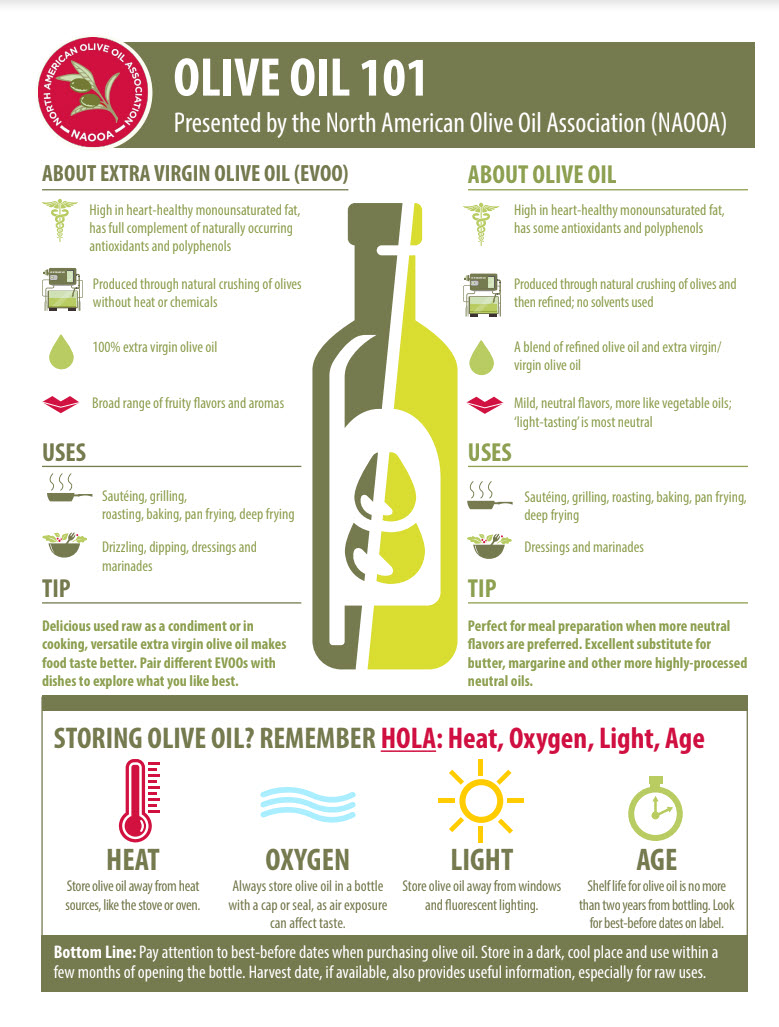
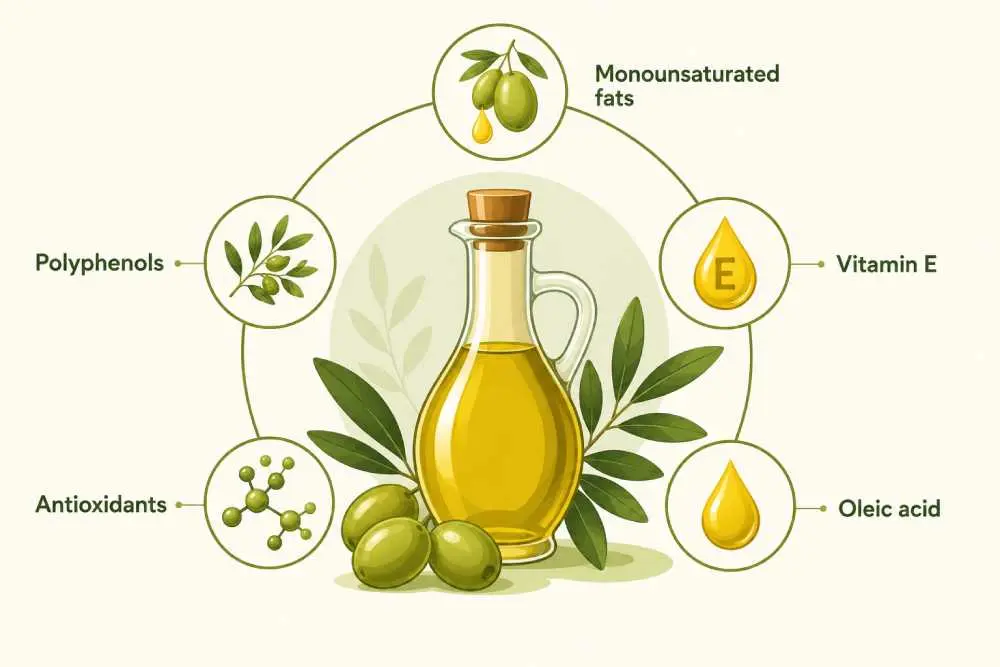
Olive oil comes from pressed olives. Extra virgin olive oil is the least processed type. It keeps more natural plant compounds, including polyphenols and vitamin E.
The main fat in olive oil is monounsaturated fat, especially oleic acid. This fat can fit well into a heart-healthy diet when it replaces butter, shortening, or other fats high in saturated fat.
The uses of olive oil for health are not based on one magic nutrient. They come from the way olive oil combines healthy fat, antioxidants, and flavor. That flavor may also help people eat more vegetables, beans, whole grains, and fish.
Research on Mediterranean-style diets has linked regular olive oil use with better heart health and a lower risk of some chronic conditions. Still, olive oil is not a cure, and a healthy diet matters more than any single food.
Main Uses of Olive Oil for Health
1. Supports Heart Health
One of the best-known uses of olive oil for health is supporting cardiovascular wellness. Replacing butter or other saturated fats with olive oil may help improve the overall fat quality of your diet.
Extra virgin olive oil also contains polyphenols. These natural compounds help protect cells from oxidative stress. Some studies suggest that olive oil may support healthy blood vessel function and help reduce inflammation.
For heart health, try using olive oil in place of:
• Butter on vegetables or whole-grain bread
• Creamy dressings
• Shortening in selected recipes
• Highly processed sauces
• Fatty spreads high in saturated fat
Olive oil works best as part of a wider plan. Include vegetables, fruits, beans, nuts, fish, and whole grains as well.
2. May Help Support Healthy Cholesterol Levels
Olive oil does not simply add fat to your diet. When it replaces fats high in saturated fat, it may help support a healthier cholesterol pattern.
Monounsaturated fat can help maintain healthy levels of low-density lipoprotein cholesterol when used in place of less healthy fats. Some research also suggests that extra virgin olive oil may help protect high-density lipoprotein function.
Your total diet still matters. Adding olive oil to a diet rich in fried foods and refined sugar will not create the same benefit as using it within a balanced eating pattern.
3. Provides Antioxidants
Another important use of olive oil for health is providing antioxidant compounds. Extra virgin olive oil contains polyphenols, vitamin E, and other plant chemicals.
Antioxidants help the body manage oxidative stress. Oxidative stress occurs when unstable molecules affect cells faster than the body can control them.
The amount of these compounds can vary. Fresh, high-quality extra virgin olive oil often contains more polyphenols than refined olive oil. Taste can offer a clue. A fresh oil may taste fruity, slightly bitter, or mildly peppery.
4. May Support a Lower-Inflammation Eating Pattern
Inflammation is a normal body response. It helps the body respond to injury or infection. Long-term, low-level inflammation may play a role in several chronic health problems.
Olive oil contains oleocanthal and other plant compounds that have shown anti-inflammatory activity in laboratory and human research. However, olive oil should not be treated like an anti-inflammatory drug.
A practical approach is to use olive oil with other foods linked to a healthy eating pattern:
• Leafy greens
• Tomatoes and peppers
• Beans and lentils
• Berries and citrus fruit
• Fatty fish
• Walnuts and almonds
5. May Support Blood Sugar Management
Olive oil has little direct effect on blood sugar because it contains almost no carbohydrate. When used with a meal, its fat may help slow digestion and support fullness.
Some studies of Mediterranean-style diets have found better blood sugar control among people who use olive oil regularly. These results likely reflect the whole diet, not olive oil alone.
Try drizzling olive oil over beans, vegetables, or a whole-grain meal. Avoid using it as an excuse to eat large portions of refined carbohydrates.
6. Helps the Body Absorb Some Vitamins
Some vitamins need fat for absorption. These include vitamins A, D, E, and K. A small amount of olive oil with vegetables may help your body use these nutrients.
For example, add olive oil to:
• Spinach or kale
• Carrots or sweet potatoes
• Tomatoes
• Broccoli
• A mixed salad
This is one of the simplest uses of olive oil for health. A light dressing can make vegetables taste better and improve the meal without adding complex ingredients.
7. May Support Digestive Comfort
Olive oil can help make meals easier to eat and may support regular bowel movements for some people. Its smooth texture also works well in simple foods such as cooked vegetables, beans, and whole grains.
However, too much olive oil may cause loose stools, cramps, or nausea. People with digestive disorders should notice how their body responds.
Olive oil is not a proven treatment for constipation or digestive disease. If you have ongoing pain, bleeding, vomiting, or major changes in bowel habits, speak with a health professional.
8. May Support Brain Health as Part of a Healthy Diet
The brain needs fat to work well. Olive oil may support brain health because it provides monounsaturated fat and antioxidant compounds.
Studies of Mediterranean-style eating patterns have found possible links with healthy cognitive aging. More research is needed to prove how much olive oil alone contributes.
The strongest approach is to pair olive oil with regular movement, good sleep, social connection, blood pressure control, and nutrient-rich foods.
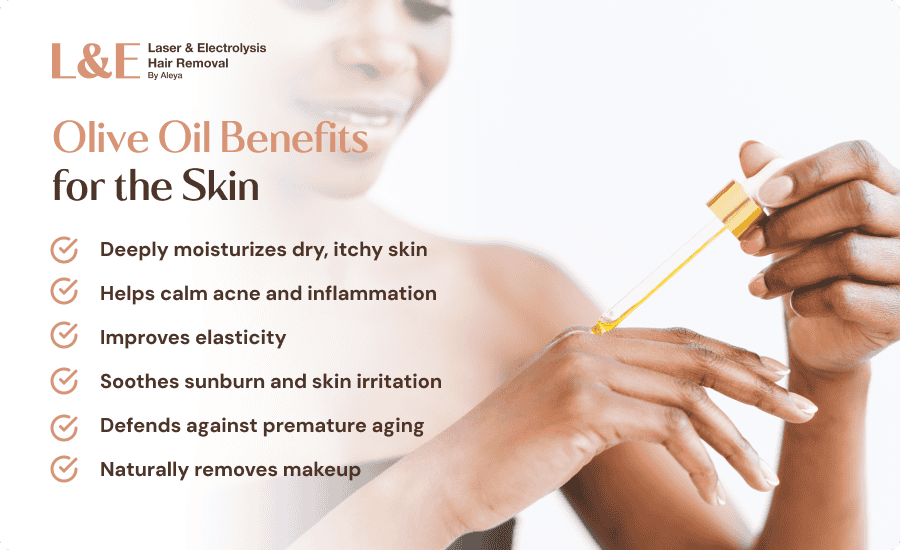
9. Can Support Healthy Skin
Olive oil contains vitamin E and other compounds that may help protect the skin from dryness and environmental stress. Eating it may support skin health as part of a balanced diet.
Some people also apply olive oil to dry skin. This can feel soothing, but it may clog pores or irritate sensitive skin in some users. Test a small area first, and avoid using it on broken skin unless a clinician advises you to do so.
:max_bytes(150000):strip_icc()/VWH_Illustration_How-to-Use-Olive-Oil-for-Moisturizing_Illustrator_Jessica-Olah_Final-72d4c83116a04197ba8706887ef572d5.jpg)
Extra Virgin Olive Oil vs. Regular Olive Oil
The type of olive oil matters. Here is a simple comparison:
• Extra virgin olive oil: Made through mechanical pressing and tested for quality. It usually has the most flavor and more natural plant compounds.
• Virgin olive oil: Also mechanically produced but may have a milder flavor and slightly different quality standards.
• Regular or refined olive oil: Processed to create a mild taste. It may have fewer polyphenols than extra virgin olive oil.
• Olive pomace oil: Extracted from olive pulp left after the first pressing. It is more processed and has a different nutrition profile.
Extra virgin olive oil is often the best choice for dressings, dips, and gentle cooking. Regular olive oil may work well when you want a neutral taste or a higher smoke point.
How to Use Olive Oil in Everyday Meals
The uses of olive oil for health become practical when the oil replaces less helpful choices. You do not need to drink it by the spoonful or add it to every meal.
Try these simple ideas:
-
Whisk olive oil with lemon juice, vinegar, garlic, and herbs for a salad dressing.
-
Drizzle a small amount over roasted vegetables, beans, or lentils.
-
Use olive oil to sauté onions, mushrooms, peppers, or greens.
-
Add it to hummus, bean dip, or homemade pesto.
-
Brush a light layer over fish or chicken before baking.
-
Use it instead of butter on whole-grain toast.
-
Mix it with herbs as a dip for vegetables or whole-grain bread.
A useful starting amount is 1 to 2 teaspoons for a small meal. You can adjust it based on your calorie needs and the rest of your diet.

Is Olive Oil Safe for Cooking?
Yes, olive oil can be used for many cooking methods, including sautéing, roasting, baking, and pan cooking. Extra virgin olive oil is suitable for normal home cooking temperatures.
The smoke point is only one part of cooking safety. Repeated overheating can damage flavor and reduce some beneficial compounds. Avoid letting the oil smoke heavily.
Follow these tips:
• Use medium or medium-high heat for most home cooking.
• Do not reuse oil many times.
• Store oil away from heat, light, and air.
• Choose a smaller bottle if you use oil slowly.
• Discard oil if it smells stale, waxy, or like crayons.
Research suggests that extra virgin olive oil remains fairly stable during common cooking methods. Still, gentle cooking helps preserve its fresh taste and delicate compounds.
How Much Olive Oil Should You Use?
Olive oil is nutritious, but it is also calorie-dense. One tablespoon contains about 120 calories. More is not always better.
A reasonable amount depends on your total diet, activity level, health goals, and medical needs. Many people can enjoy 1 to 2 tablespoons per day within a balanced eating plan, but there is no universal rule.
If you are trying to lose weight, measure the oil instead of pouring freely from the bottle. A spoon can prevent a healthy food from quietly becoming a large source of extra calories.
The most valuable uses of olive oil for health usually involve substitution. Use olive oil instead of butter or other less healthy fats rather than simply adding it to your usual meals.
Possible Risks and Mistakes to Avoid
Olive oil is safe for most people, but it has limits. Knowing them helps you use it wisely.
• Eating too much can increase calorie intake and lead to unwanted weight gain.
• Drinking large amounts may cause nausea, diarrhea, or stomach discomfort.
• Some people may have an olive allergy, although it is uncommon.
• Applying olive oil to acne-prone skin may worsen clogged pores.
• Olive oil cannot replace prescribed medicine for cholesterol, blood pressure, or diabetes.
• Poor storage can cause the oil to become rancid.
• A bottle labeled “light” usually means lighter flavor, not fewer calories.
Do not rely on health claims printed on a bottle alone. Look for a reputable producer, a harvest or best-by date, a dark container, and a fresh smell.
How to Store Olive Oil
Light, heat, and oxygen slowly reduce olive oil quality. Store your bottle in a cool, dark cupboard with the cap closed tightly.
Do not keep it beside the stove, oven, or sunny window. Heat may speed up oxidation.
Use the oil within a reasonable time after opening. Freshness matters more than buying the largest bottle. If the oil smells musty, sour, or like old nuts, it may be past its best.
A small dark glass bottle is often a practical choice for home use. Clean the bottle opening if oil builds up, since residue can affect the cap and invite air into the bottle.
Olive Oil and Weight Management
Olive oil can fit into a weight-management plan because fat may help meals feel more satisfying. It also adds flavor, which can make vegetables and other nutritious foods easier to enjoy.
But olive oil still contains calories. The best strategy is portion control and food quality.
For a lighter meal, combine:
• A teaspoon of olive oil
• Plenty of vegetables
• A source of protein
• Beans or a small portion of whole grains
• Lemon juice, vinegar, garlic, or herbs
This creates flavor without depending on a large amount of oil. A common mistake is to view olive oil as “free calories” because it is healthy.
What Research Says About the Uses of Olive Oil for Health
Large dietary studies often show that people who follow Mediterranean-style diets have better heart outcomes. These diets usually include olive oil, vegetables, fruits, beans, whole grains, nuts, fish, and moderate portions of dairy and meat.
Clinical research also suggests that extra virgin olive oil may support blood vessel function and reduce some markers of inflammation. However, studies can have limits. People who use olive oil may also exercise more, eat fewer processed foods, or have better access to health care.
That is why it is more accurate to say olive oil may support health rather than claiming it prevents or cures disease. The strongest evidence supports replacing saturated fats with unsaturated fats and following an overall balanced eating pattern.
Practical Lessons for Choosing and Using Olive Oil
A simple kitchen test can make healthy habits easier. Pour your usual amount into a spoon before adding it to the pan. This small step shows how much you use and helps control portions.
Another useful lesson is to buy oil for its purpose. Use a flavorful extra virgin oil for salads and finishing. Use a mild olive oil for cooking when you do not want a strong taste.
Do not feel pressured to drink olive oil. There is no strong reason for most people to do this, and it may cause stomach trouble. Food-based use is safer, more enjoyable, and easier to fit into daily meals.
The uses of olive oil for health are most helpful when they improve your whole routine. A spoonful over vegetables is useful. A spoonful added to an otherwise poor diet is much less meaningful.
Frequently Asked Questions About the Uses of Olive Oil for Health
Is olive oil good for your heart?
Olive oil may support heart health when it replaces butter, shortening, or other fats high in saturated fat. Extra virgin olive oil also provides polyphenols that may support healthy blood vessels.
Is it healthy to drink olive oil every day?
Most people do not need to drink olive oil to gain its benefits. Use it with meals instead, because large amounts may cause stomach upset and add unnecessary calories.
Is extra virgin olive oil better than regular olive oil?
Extra virgin olive oil is less processed and usually contains more natural plant compounds. Regular olive oil still works for cooking, but it often has a milder flavor and fewer polyphenols.
Can olive oil help with constipation?
Olive oil may help some people have softer, more regular stools, but it is not a proven treatment for ongoing constipation. Drink enough water, eat fiber-rich foods, and seek medical advice for persistent symptoms.
Can olive oil help lower cholesterol?
Replacing saturated fats with olive oil may support healthier LDL cholesterol levels. It should be part of a complete heart-healthy plan and should not replace cholesterol medicine prescribed by a clinician.
Is olive oil safe for people with diabetes?
Olive oil contains very little carbohydrate and can fit well into a diabetes-friendly eating plan. Portion size still matters, and people with diabetes should follow advice from their health care team.
Does olive oil help your skin?
Eating olive oil may support skin health through monounsaturated fat and vitamin E. Applying it to the skin may help dryness for some people, but it can irritate or clog pores in others.
Conclusion
The uses of olive oil for health include supporting heart-friendly eating, providing antioxidants, helping absorb fat-soluble vitamins, and adding satisfying flavor to nutritious meals. Extra virgin olive oil offers the most natural plant compounds, while regular olive oil can also be useful for everyday cooking.
Use olive oil in sensible portions, store it away from heat and light, and treat it as one part of a balanced diet. Start by replacing one less healthy fat with a small amount of olive oil this week, then explore trusted nutrition resources and share your favorite healthy recipe.