
Yes, olive oil is heart healthy when used in place of butter and other saturated fats.
Is olive oil heart healthy for everyday use? For most people, the answer is yes. Extra-virgin olive oil contains monounsaturated fat and plant compounds that may support healthier cholesterol levels, blood vessels, and overall heart health. Still, the amount and the foods you eat with it matter. This guide explains the research, benefits, limits, and simple ways to use olive oil wisely.
Is olive oil heart healthy?
Yes, olive oil can be part of a heart-healthy diet. Its main fat is oleic acid, a monounsaturated fat linked with better heart health when it replaces saturated fat.
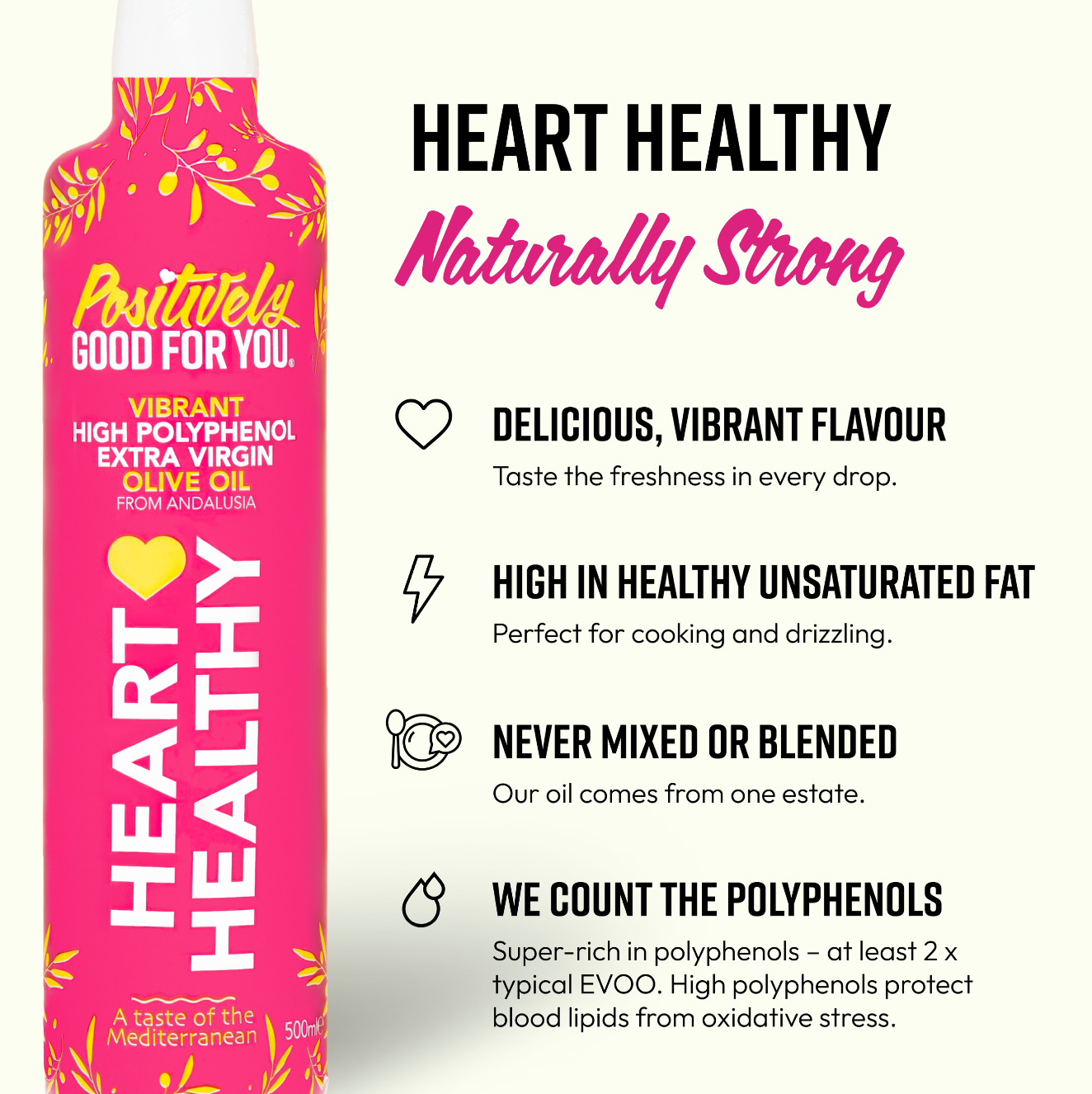
Olive oil also contains polyphenols. These natural plant compounds may help protect cells from oxidative stress and support healthy blood vessel function. Extra-virgin olive oil has more of these compounds because it receives less processing.
The strongest benefit comes from substitution. Drizzling olive oil over vegetables instead of adding butter is helpful. Adding olive oil to an already high-calorie diet may not offer the same advantage.
Research on Mediterranean-style eating patterns also supports olive oil’s role. These eating patterns include vegetables, beans, fruit, whole grains, fish, nuts, and olive oil. Together, these foods are linked with a lower risk of heart disease.
So, is olive oil heart healthy on its own? It can help, but no single food prevents heart disease. Your overall eating pattern, activity level, sleep, blood pressure, cholesterol, and medical history all matter.
How olive oil may support your heart
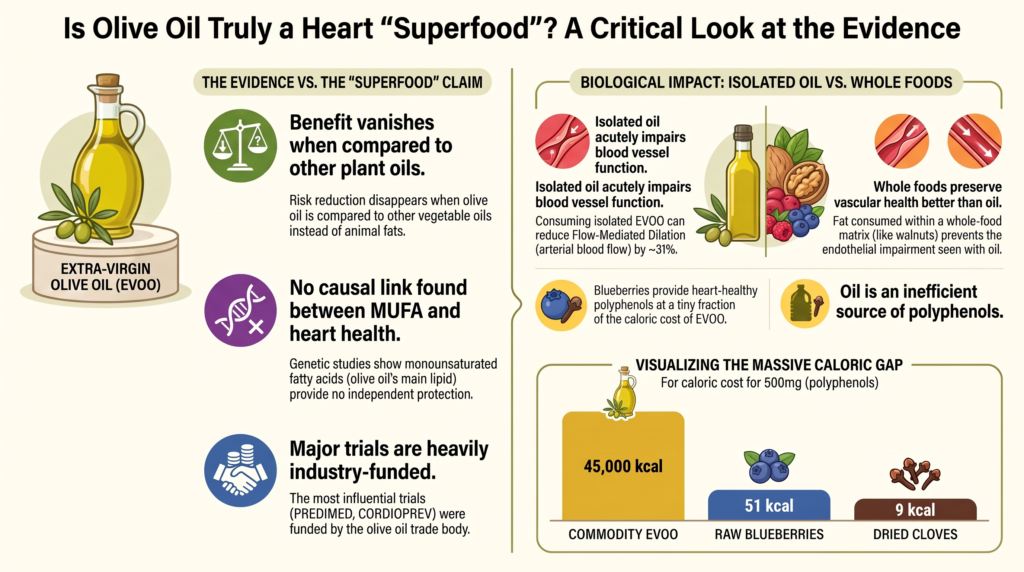
Olive oil may help the heart in several ways. These effects are not magic, but they can add up when olive oil replaces less healthy fats.
It may improve cholesterol balance
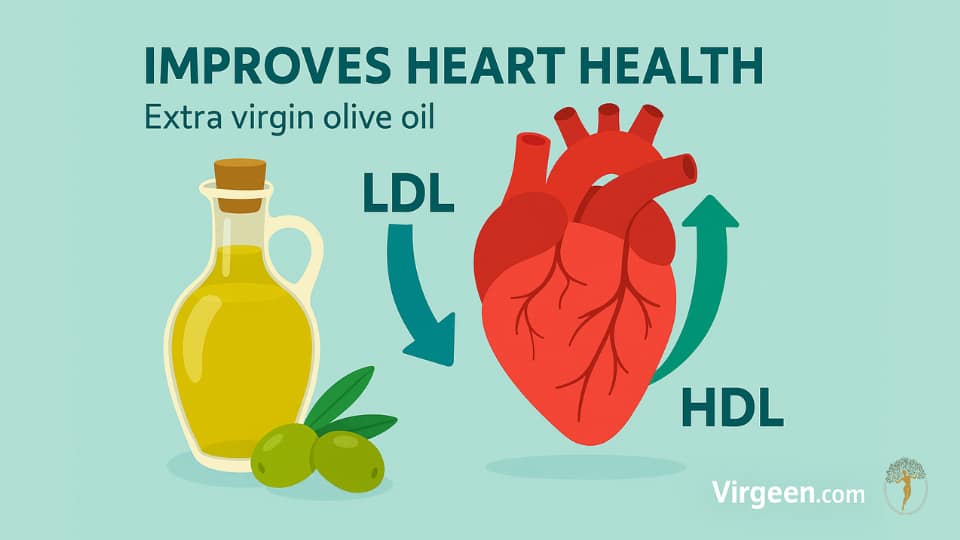
Your body needs cholesterol, but too much low-density lipoprotein, or LDL, can raise the risk of plaque buildup in the arteries. High-density lipoprotein, or HDL, helps carry some cholesterol away from the arteries.
Replacing butter, lard, or shortening with olive oil can reduce saturated fat intake. This change may help lower LDL cholesterol. Some studies also find that olive oil supports HDL function, not only the HDL number.
The key point is simple: olive oil works best as a replacement. A meal with butter and olive oil has more total fat than a meal using one of them alone.
It may support healthy blood vessels
Healthy arteries need to expand and relax as blood moves through them. Olive oil polyphenols may support this process by helping reduce oxidative stress and inflammation.
Extra-virgin olive oil usually has more polyphenols than refined olive oil. A peppery or slightly bitter taste often signals the presence of these natural compounds. That taste is not a flaw; it can be a sign of freshness and plant nutrients.
It may help lower inflammation
Long-term, low-level inflammation is linked with many health problems, including heart disease. Olive oil contains compounds that may help regulate inflammatory processes in the body.
However, olive oil should not be treated as an anti-inflammatory medicine. A diet rich in vegetables, fruit, legumes, fish, and whole grains has a much greater effect than one ingredient alone.
It may help with blood pressure
Some research links Mediterranean-style diets that include olive oil with lower blood pressure. The benefit may come from several parts of the diet, such as potassium-rich vegetables, beans, nuts, and lower sodium intake.
Olive oil may support blood vessel flexibility, but it cannot cancel out a high-sodium diet. If you have high blood pressure, follow your clinician’s advice and check your readings regularly.
Extra-virgin olive oil versus regular olive oil
Not all olive oil is the same. The main types differ in how they are made and how many plant compounds they contain.
Extra-virgin olive oil
Extra-virgin olive oil is made from olives using mechanical methods. It must meet standards for flavor, acidity, and production quality.
It usually has:
• More polyphenols
• A stronger olive flavor
• A green, fruity, bitter, or peppery taste
• Less processing
Extra-virgin olive oil is a good choice for salad dressing, dipping, roasted vegetables, and many low- to medium-heat recipes.
Virgin olive oil
Virgin olive oil is also made without extensive chemical processing, but it may have more flavor defects or a different acidity level than extra-virgin oil. It can still be a useful cooking fat.
Refined olive oil
Refined olive oil goes through more processing. It often has a mild taste and a higher smoke point than many extra-virgin oils.
It may contain fewer polyphenols because some natural compounds are removed during processing. Still, it is mostly unsaturated fat and can be a better choice than butter or shortening.
Olive oil blends
Some products labeled “olive oil” may contain refined olive oil mixed with virgin olive oil. Read the label if you want a stronger flavor and more natural plant compounds.
A practical approach is to keep extra-virgin olive oil for dressings and finishing. Use a mild olive oil for cooking when you prefer a lighter taste.
Olive oil and the Mediterranean diet
The Mediterranean diet is one of the best-known eating patterns for heart health. Olive oil is a central fat in this style of eating, but it is not the only reason the diet works.
A typical Mediterranean-style plate may include:
• Half vegetables or fruit
• Beans, lentils, or whole grains
• Fish, poultry, eggs, or yogurt in moderate amounts
• A small amount of nuts or seeds
• Extra-virgin olive oil instead of butter
• Water as the main drink
This pattern is high in fiber, potassium, vitamins, minerals, and plant compounds. It is also often lower in processed meat, refined carbohydrates, and added sugar.
Large dietary studies have found that a Mediterranean eating pattern can reduce cardiovascular risk in people at high risk. These findings support olive oil as part of a larger lifestyle, not as a stand-alone cure.
Think of the diet as a team. Olive oil is one strong player, but vegetables, beans, fish, movement, and sleep are on the same team.
How much olive oil should you use?
Olive oil is healthy, but it is still calorie-dense. One tablespoon contains about 120 calories. Using large amounts can lead to unwanted weight gain, especially if you add it without reducing other fats.
There is no single perfect amount for everyone. Your needs depend on your calorie intake, health goals, activity, and the rest of your diet.
Try these simple methods:
• Use one teaspoon for a small pan of vegetables.
• Measure oil for salad dressing instead of pouring freely.
• Mix olive oil with lemon juice, vinegar, herbs, or mustard.
• Use a spray bottle carefully, but remember that sprays still contain calories.
• Replace butter with a similar amount of olive oil rather than adding both.
A useful kitchen lesson is to taste before adding more. Many people pour extra oil because they assume more must be healthier. Usually, a small amount is enough to add flavor and help vegetables feel satisfying.
Is olive oil better than butter?
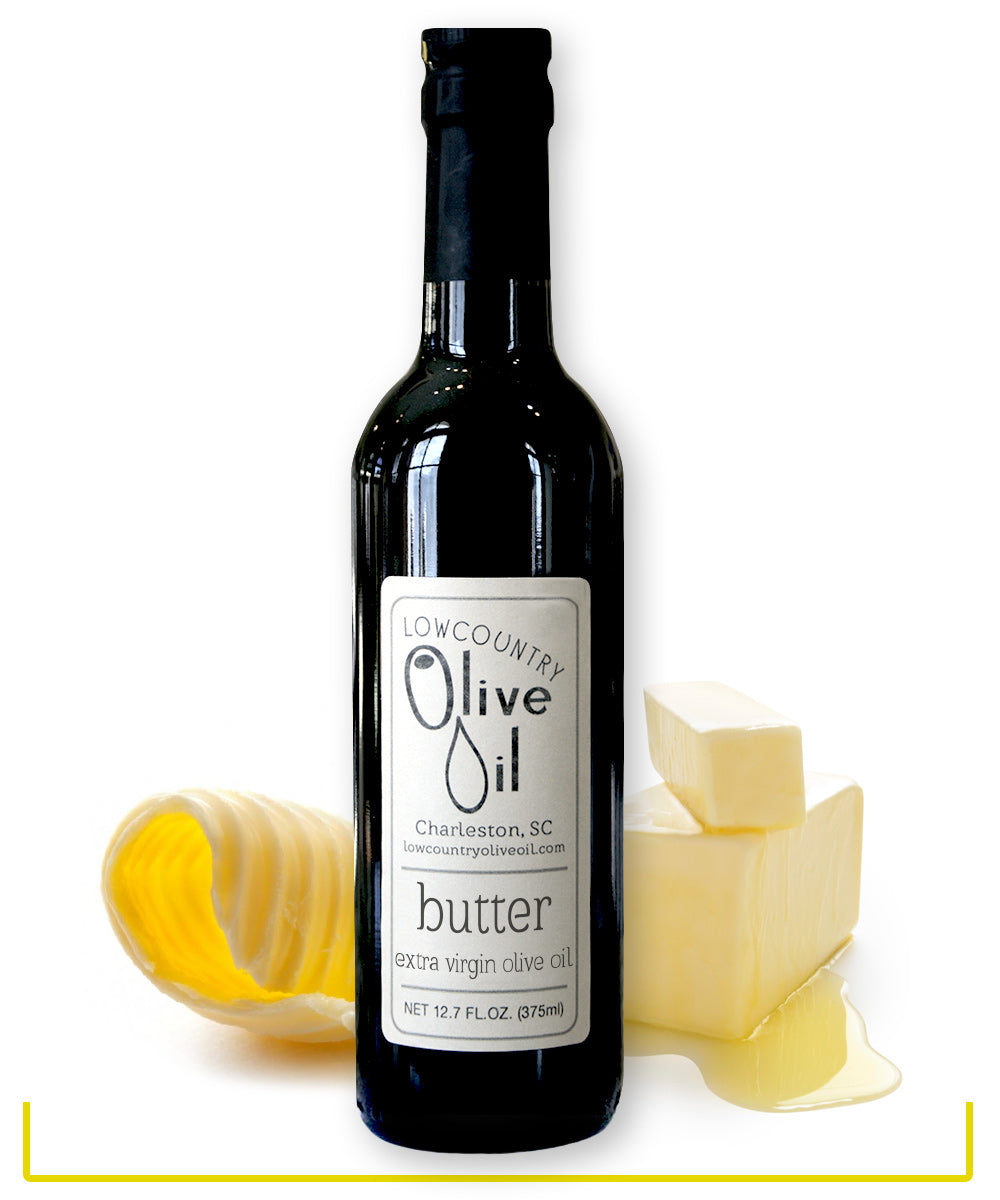
For heart health, olive oil is generally a better everyday choice than butter. Butter contains more saturated fat, while olive oil contains mostly monounsaturated fat.
Replacing saturated fat with unsaturated fat may improve blood cholesterol levels. This does not mean butter is dangerous in every small amount. It means olive oil is often the better default for cooking, dressings, and spreads.
The comparison also depends on the food. Olive oil on a plate of vegetables is different from olive oil poured over refined bread, salty meat, and cheese. The whole meal still matters.
Try these swaps:
• Olive oil instead of butter on cooked vegetables
• Olive oil and garlic instead of butter sauce for pasta
• Olive oil vinaigrette instead of creamy dressing
• Olive oil instead of shortening in selected recipes
If you enjoy butter, you do not need to remove it completely. Use it less often and choose olive oil more often.
Is olive oil safe for cooking?
Yes, olive oil can be used for cooking. It is suitable for sautéing, roasting, baking, and many forms of pan cooking.
People often worry about the smoke point. Smoke point refers to the temperature at which an oil begins to smoke visibly. The exact point varies by oil quality, age, and cooking conditions.
Avoid heating any oil until it smokes. Smoking can damage flavor and create irritating compounds. For most home cooking, moderate heat is enough.
Helpful tips include:
• Keep the pan at low or medium heat.
• Add food before the oil becomes very hot.
• Do not reuse oil that has smoked.
• Store oil away from heat and sunlight.
• Use refined olive oil when you want a mild flavor for higher-heat cooking.
Extra-virgin olive oil is also suitable for many cooked dishes. Some beneficial compounds may decrease with heat, but cooking does not make it suddenly unhealthy.
Potential limits and concerns
The question “is olive oil heart healthy?” needs a balanced answer. Olive oil has benefits, but it also has limits.
It is high in calories
All oils contain about the same number of calories per tablespoon. Olive oil does not become a low-calorie food because it is plant-based.
Large portions may make weight control harder. Extra weight can raise the risk of high blood pressure, diabetes, and heart disease.
It cannot fix an unhealthy diet
Olive oil does not erase the effects of smoking, inactivity, high sodium intake, or a diet high in processed meat and added sugar. It should support healthy habits, not replace them.
Quality can vary
Olive oil can lose flavor and freshness over time. Some bottles may also be mislabeled or blended. Buy from reliable sellers and check the harvest or best-by date when available.
Some people need individual advice
People with gallbladder problems, digestive conditions, or specific calorie needs may need personalized guidance. If you have heart disease, high cholesterol, or diabetes, ask a qualified health professional how olive oil fits your eating plan.
Supplements are not the same as food
Olive leaf products and olive oil capsules may not provide the same benefits as using olive oil in meals. Supplements can also interact with medicines. Food-first choices are usually the safer starting point.
How to choose and store olive oil
Good storage helps preserve olive oil’s flavor and plant compounds.
Look for:
• A dark glass bottle or metal container
• A clear product name, such as extra-virgin olive oil
• A harvest date when available
• A reasonable best-by date
• A trusted producer or retailer
Avoid bottles that sit under bright store lights for long periods. Light, heat, air, and time can reduce quality.
At home, store olive oil in a cool, dark cabinet. Keep it away from the stove, oven, and sunny windows. Close the cap after each use.
Fresh olive oil may smell fruity, grassy, or slightly peppery. A stale oil may smell like crayons, old nuts, or paint. If it tastes flat or unpleasant, replace it.
You do not need to buy the most expensive bottle. A fresh, well-stored oil from a reliable seller can be an excellent choice.
Simple heart-healthy ways to use olive oil
Small food changes are easier to keep than strict rules. Try one or two of these ideas this week:
-
Make a quick dressing with olive oil, lemon juice, black pepper, and herbs.
-
Roast carrots, broccoli, or potatoes with a measured amount of olive oil.
-
Drizzle olive oil over beans, lentils, or whole-grain toast.
-
Use olive oil to sauté onions, mushrooms, or greens.
-
Mix olive oil with vinegar instead of using a heavy bottled dressing.
-
Brush a small amount on fish before baking.
-
Add olive oil to homemade hummus or bean dip.
-
Replace some butter in savory recipes with olive oil.
A balanced meal might include grilled fish, lentils, roasted vegetables, and a small olive oil dressing. That meal gives you healthy fat, protein, fiber, and many important nutrients.
Common mistakes to avoid
Using olive oil well is simple, but a few mistakes are common.
• Treating olive oil as a free food: Measure it when calories matter.
• Adding it without replacing another fat: The benefit is strongest when olive oil replaces butter or shortening.
• Storing it near heat: Heat speeds up rancidity.
• Buying a huge bottle: A smaller bottle may stay fresher if you use oil slowly.
• Believing “light” means low calorie: Light olive oil usually refers to flavor or processing, not calories.
• Choosing fried foods because they contain olive oil: Deep-fried food can still be high in calories and may contain excess salt.
• Expecting one food to lower heart risk: Heart health depends on your full pattern of eating and living.
These lessons are easy to apply. Use olive oil with vegetables, beans, fish, and whole grains more often, and keep portions sensible.
What the research says
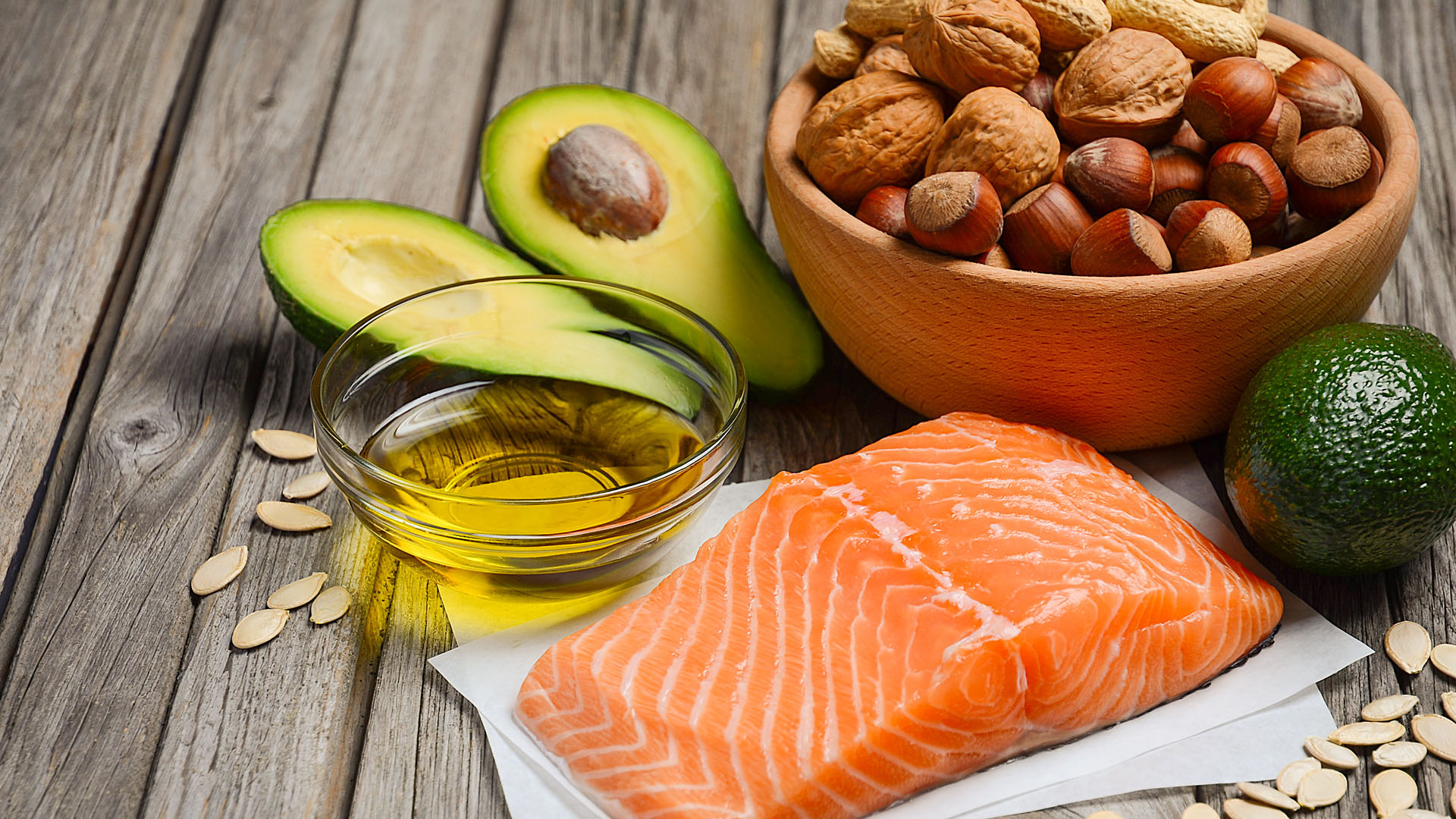
Evidence from dietary studies, clinical trials, and long-term population research generally supports replacing saturated fat with unsaturated fat. Olive oil is one source of monounsaturated fat, along with avocados, nuts, and some seeds.
Research on extra-virgin olive oil also suggests that its polyphenols may support blood vessel function and reduce oxidative stress. However, study results can vary because olive oil quality, diet patterns, serving sizes, and participant health differ.
It is also important to separate association from proof. People who use olive oil often may also eat more vegetables, exercise more, or avoid smoking. These lifestyle factors can influence study results.
The most reliable message is practical: use olive oil in place of butter and other solid fats, eat more whole plant foods, and keep portions appropriate.
Is olive oil heart healthy for people with high cholesterol?
Olive oil may help people with high cholesterol when it replaces butter, shortening, or other fats high in saturated fat. It should be part of a broader plan that includes fiber-rich foods, exercise, and medical care.
Do not stop cholesterol medicine or change treatment without speaking with your clinician. A lipid panel can show whether your lifestyle changes are working.
Can olive oil lower blood pressure?
Olive oil may support blood pressure as part of a Mediterranean-style diet. Its effect is likely linked with the full pattern, including vegetables, fruit, beans, nuts, whole grains, and lower sodium intake.
Olive oil alone will not reliably treat high blood pressure. Continue checking your blood pressure and follow your health professional’s advice.
Is extra-virgin olive oil healthier than regular olive oil?
Extra-virgin olive oil usually contains more natural polyphenols and has a stronger flavor. Regular olive oil is more processed but still contains mostly unsaturated fat and can be a useful replacement for butter.
Choose the type that fits your taste, budget, and cooking method. Freshness and proper storage matter for both.
Is olive oil good for people with diabetes?
Olive oil can fit well into a diabetes-friendly eating pattern because it contains little to no carbohydrate. It may also improve meal satisfaction when used with vegetables, beans, fish, and whole grains.
Portion size still matters because olive oil is high in calories. Talk with a dietitian or clinician for advice based on your blood sugar goals.
Can you drink olive oil for heart health?
There is no strong need to drink olive oil. You can receive its healthy fats by using a measured amount in meals, dressings, vegetables, beans, and fish.
Drinking it adds calories and may cause stomach discomfort for some people. Food-based use is usually more enjoyable and easier to balance.
Is olive oil safe every day?
For most people, olive oil is safe to use every day in moderate amounts. It is best used as part of a varied diet rather than as the only source of fat.
Choose fresh oil, store it away from heat and light, and replace other less healthy fats when possible.
Is olive oil heart healthy?
Yes, olive oil is heart healthy when it replaces saturated fats and fits within a balanced diet. Extra-virgin olive oil may offer added plant compounds, but portion size and overall food quality remain important.
Conclusion
So, is olive oil heart healthy? Yes, especially when you use it instead of butter, shortening, and other fats high in saturated fat. Its monounsaturated fat and natural plant compounds may support cholesterol balance, blood vessel health, and a Mediterranean-style eating pattern.
Use a measured amount with vegetables, beans, fish, whole grains, and salads. Store it in a cool, dark place, and remember that olive oil works best as part of a healthy lifestyle—not as a cure by itself.
Start with one simple swap this week, such as olive oil instead of butter for roasted vegetables. Explore more heart-health resources, and share your favorite olive oil meal in the comments.