
In most U.S. homes, you should not put a slow cooker pot in the oven unless the manufacturer says the removable insert is oven-safe. Some ceramic or stoneware inserts can handle oven heat, but others may crack, shatter, or suffer damage. The cooker’s heating base, electrical cord, plastic parts, and most lids should never go in the oven.
Check the owner’s manual or the markings on the insert before using it. If you cannot confirm the oven rating, use an oven-safe Dutch oven or baking dish instead.
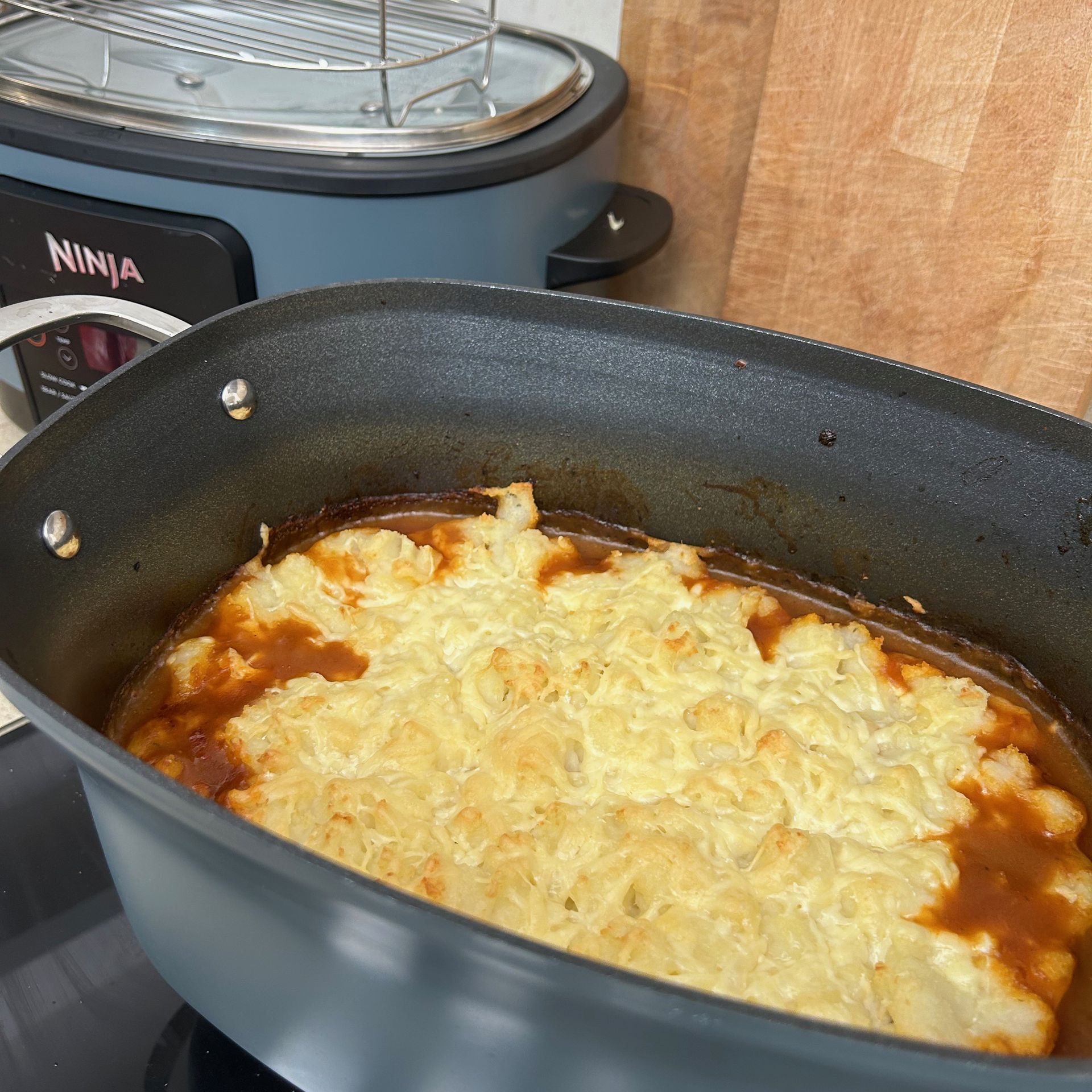
Can You Put a Slow Cooker Pot in the Oven?
You can put a slow cooker insert in the oven only when the manufacturer approves it for oven use and lists a safe temperature.
A slow cooker has several separate parts:
- Removable insert: Often made from ceramic, stoneware, aluminum, or metal.
- Heating base: The electrical unit that warms the insert.
- Lid: Usually made from glass, plastic, or a combination of materials.
- Handles and controls: These may contain plastic or electronic parts.
Only the insert may be oven-safe. The full slow cooker is not an oven pan.
For example, some Crock-Pot stoneware inserts are labeled for oven use up to a stated temperature. Other models may be approved only for the slow cooker base, stovetop, or microwave. Hamilton Beach, Instant, and other brands also use different materials and limits across their product lines.
The brand name alone does not prove that every pot is oven-safe. The model number and manual control the answer.
A simple safety rule
Use this rule:
If the manual does not clearly list oven use and a temperature limit, do not place the insert in the oven.
Do not assume that a removable insert is safe because it feels heavy, looks like a casserole dish, or has a ceramic finish.

Why Can a Slow Cooker Insert Crack in the Oven?
Slow cooker inserts can crack because of thermal shock. This happens when a ceramic or stoneware dish faces a sudden or uneven temperature change.
A cold insert placed in a hot oven may expand too quickly on the outside while the inside remains cold. That stress can cause the insert to crack or break. The same risk exists when you place a hot insert on a cold, wet, or stone countertop.
Common causes of damage include:
- Moving an insert directly from the refrigerator to a hot oven.
- Placing a hot insert on a cold surface.
- Adding cold liquid to a very hot insert.
- Using the broiler or a direct heating element.
- Heating an empty stoneware insert.
- Exceeding the manufacturer’s temperature limit.
- Using an insert with a hairline crack or chip.
- Putting a non-oven-safe lid in the oven.
A slow cooker warms food slowly and gently. An oven can heat the surface of a pot much faster. The change in heating speed is one reason a pot that works well in a slow cooker may still fail in an oven.
Stoneware is not the same as ovenware
“Stoneware” describes a type of fired ceramic. It does not automatically mean that the item is safe at every oven temperature.
Some stoneware is designed for baking. Some is designed only for slow cooking. The safe temperature depends on the clay, glaze, thickness, shape, and manufacturing process.
The same warning applies to glass lids. A lid may tolerate slow-cooker heat but fail under dry oven heat. Some lids have plastic knobs or seals that can melt.

How to Use an Oven-Safe Slow Cooker Insert
If the manual confirms that your insert is oven-safe, follow these steps.
1. Confirm the exact oven rating
Find the model number on the slow cooker base, insert, packaging, or manual. Then check the manufacturer’s instructions.
Look for details such as:
- Maximum oven temperature.
- Whether the lid may go in the oven.
- Whether preheating is allowed.
- Whether the insert can go under a broiler.
- Whether the insert can move from a refrigerator to an oven.
- Whether stovetop use is allowed.
- Whether the insert must contain food or liquid.
A statement such as “oven-safe” is helpful, but a temperature limit is better. Oven temperatures can range from moderate baking heat to very high broiling heat.
2. Inspect the insert
Do not use the insert if you see:
- Cracks.
- Chips on the rim.
- Deep scratches.
- A loose or damaged handle.
- A damaged glaze.
- Warping.
- Any sign of earlier heat damage.
A small crack can spread when the pot heats. A broken insert can spill hot food and create a serious burn hazard.
3. Let a cold insert warm gradually
If the insert has been refrigerated, allow it to come closer to room temperature before placing it in the oven, unless the manufacturer specifically allows a cold-to-hot transfer.
Do not place a frozen insert in a hot oven. Do not pour boiling liquid into a cold ceramic insert. Avoid sudden temperature changes at every stage.
4. Use the approved temperature
Set the oven below the manufacturer’s stated maximum. Do not use the broiler unless the manual clearly permits broiling.
Broilers expose cookware to intense direct heat. Many slow cooker inserts that tolerate regular oven heat cannot tolerate a broiler.
5. Keep the insert away from direct heat
Place the insert on the oven rack. Do not set it on the oven floor, burner, grill, or heating element.
If the manufacturer allows oven use only for baking or roasting, follow that limit. “Oven-safe” does not always mean “safe for every oven function.”
6. Remove it with care
Use dry oven mitts and support the insert from the bottom. Stoneware is heavy, especially when filled with food.
Place the hot insert on a dry, heat-resistant trivet or wooden board. Never place it directly on a cold countertop, wet towel, or cold sink.

Which Slow Cooker Parts Can Go in the Oven?
The removable insert may be oven-safe, but the rest of the appliance usually is not.
| Slow cooker part | Oven use | Main concern |
|---|---|---|
| Removable ceramic or stoneware insert | Sometimes | Confirm the model and temperature rating |
| Removable metal insert | Sometimes | Check the manual; handles or coatings may limit use |
| Glass lid | Sometimes | Confirm the lid rating and avoid sudden temperature changes |
| Plastic lid | Usually no | Plastic may melt or release odors |
| Heating base | No | Electrical parts can melt, burn, or create a fire risk |
| Power cord | No | Electrical and heat hazard |
| Control panel | No | Electronics are not designed for oven heat |
| Silicone gasket or seal | Only if approved | Heat limits vary by material and model |
Can the slow cooker lid go in the oven?
Do not assume the lid is oven-safe. Some slow cooker glass lids can handle limited oven temperatures, while others have plastic rims, knobs, or seals that cannot.
A lid can also trap steam. When you remove it, hot steam may burn your hands or face. Use oven mitts and lift the lid away from your body.
If the manual does not approve the lid for oven use, leave it off. You can cover the dish with an oven-safe lid or foil only when that method is suitable for the recipe and cookware.
Can the slow cooker base go in the oven?
No. The heating base should never go in an oven.
The base contains electrical wiring, heating components, controls, and often plastic. Oven heat can damage these parts and create a fire or electric shock hazard. Remove the insert from the base before using an approved oven method.

Slow Cooker Oven-Safety Guide by Material
The material can provide a clue, but it cannot replace the manual.
Ceramic or stoneware insert
Ceramic and stoneware inserts are common in slow cookers. Some are approved for conventional ovens, but they can be sensitive to thermal shock.
Use extra care with:
- Cold-to-hot transfers.
- Hot-to-cold transfers.
- Empty heating.
- Sudden liquid changes.
- Temperatures above the listed limit.
Do not use a ceramic insert on a stovetop unless the manufacturer specifically says it is stovetop-safe. A conventional stoneware insert can crack over a gas flame, electric coil, or glass cooktop.
Aluminum insert
Some modern slow cookers use aluminum or cast-aluminum cooking pots. These may be oven-safe, but handles, coatings, and lids can reduce the safe temperature.
An aluminum insert that is safe for the oven may not be safe for induction cooking. Again, the model instructions matter.
Nonstick-coated insert
A nonstick insert may have an oven rating, but the coating can be damaged by excessive heat. Metal tools, broilers, and high temperatures may shorten its useful life.
Do not use a coated insert above its listed limit. Avoid metal utensils unless the manufacturer permits them.
Glass lid
A glass lid may break from thermal shock. Never place a cold glass lid on a hot pot or expose it to a sudden temperature change.
If the lid has a plastic knob or rim, check those parts as well. The glass itself may tolerate more heat than the attached hardware.
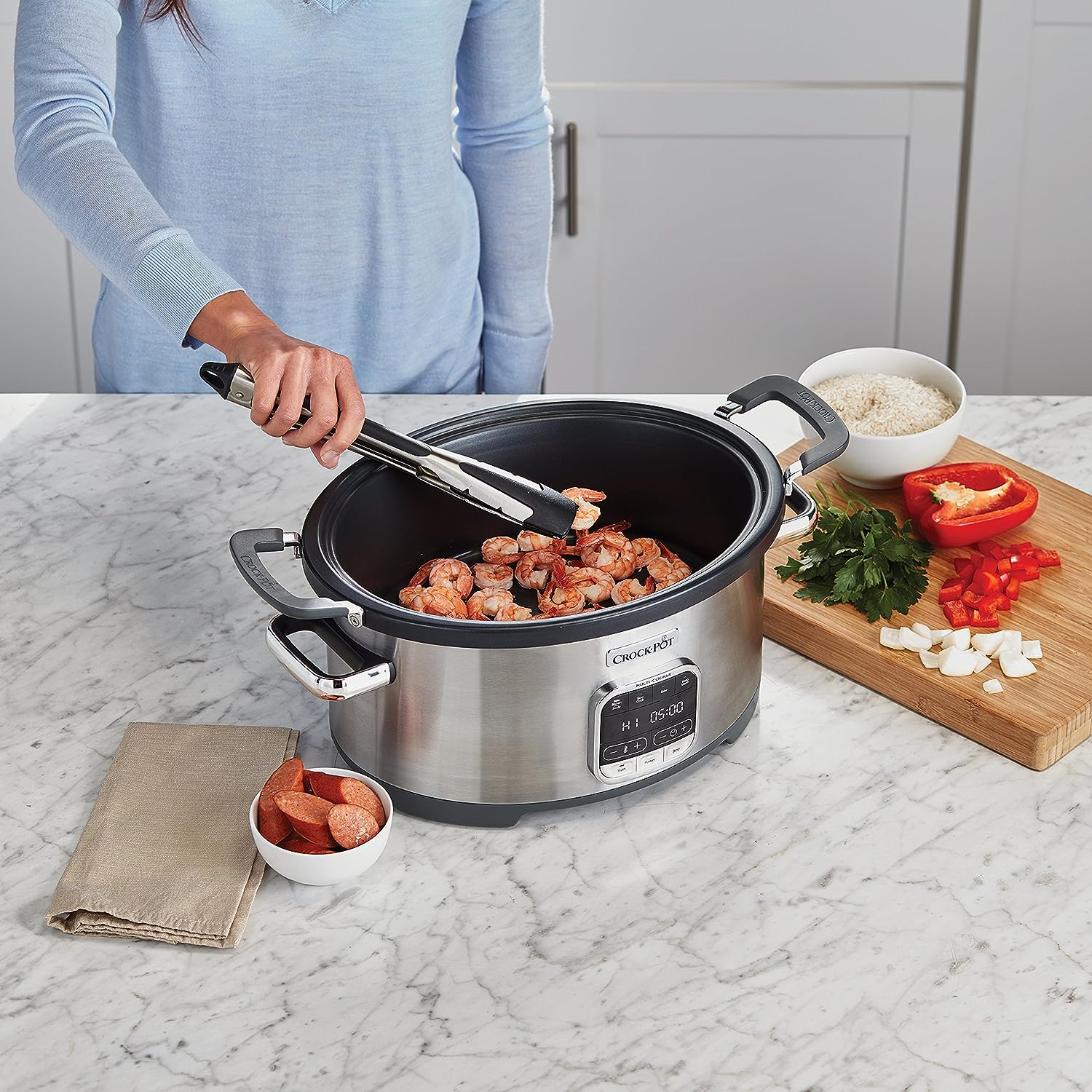
What Temperature Is Safe for a Slow Cooker Pot in the Oven?
There is no single safe oven temperature for every slow cooker insert.
A manufacturer may set a limit such as 300°F, 350°F, or 400°F, but the correct limit depends on the exact model and part. The temperature may also differ for the insert, lid, handles, and accessories.
Use this decision table:
| Situation | What to do |
|---|---|
| Manual lists an oven rating | Stay at or below that limit |
| Insert says “oven-safe” but gives no temperature | Check the manufacturer before using it |
| No manual or markings are available | Do not use it in the oven |
| Insert is cracked or chipped | Replace it |
| Insert is cold from the refrigerator | Warm it gradually unless the manual permits direct transfer |
| You want to broil the food | Use a broiler-safe pan instead |
| You want to use the stovetop | Confirm stovetop approval separately |
| You want to use the full cooker | Do not do it |
A lower oven temperature is not automatically safe if the insert was never designed for oven use. The issue is not only the number on the oven dial. It is also the material, construction, and rate of heating.
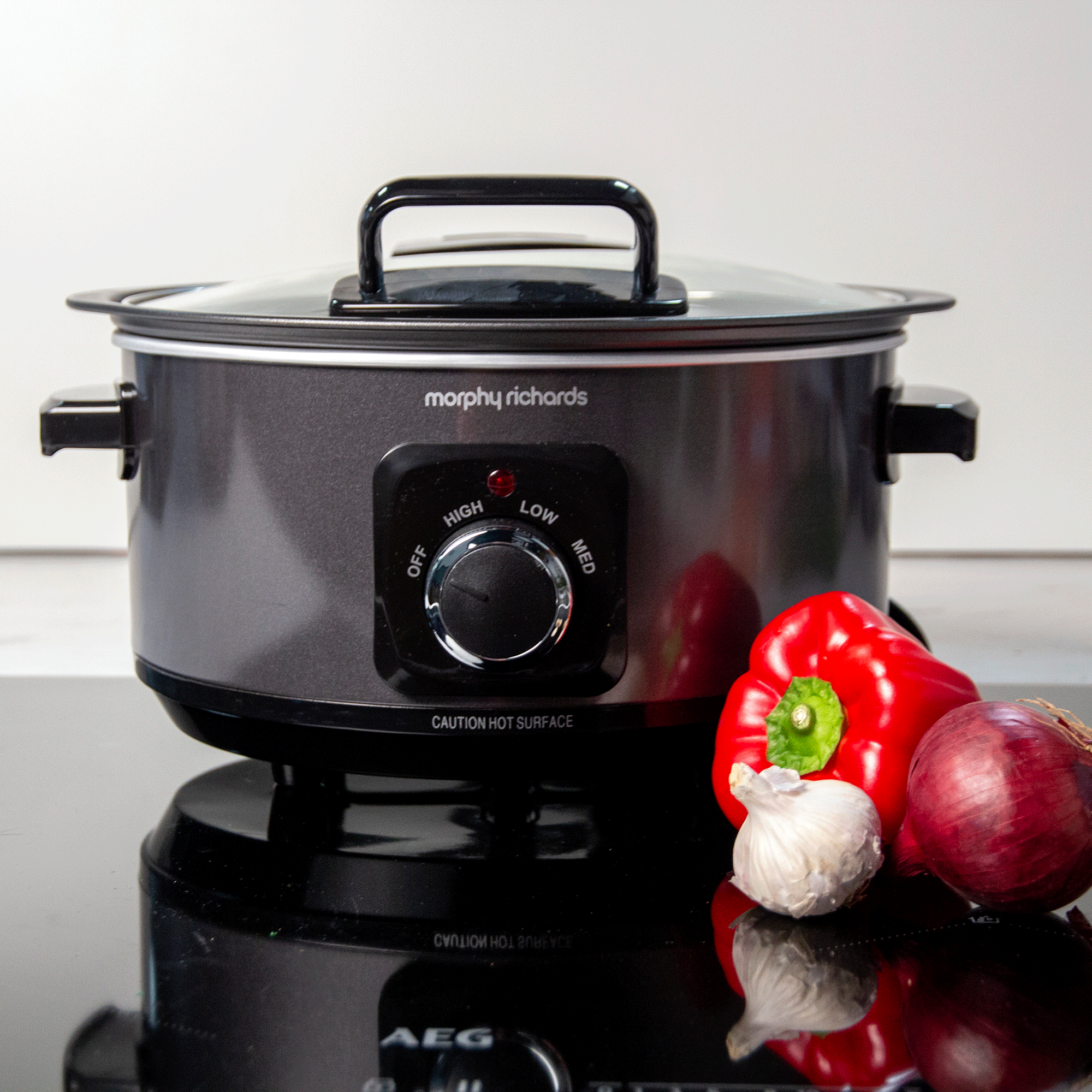
What Should You Do If the Pot Cracks in the Oven?
If the insert cracks, turn off the oven and keep people away until the cookware cools. Do not touch hot fragments with bare hands.
After it cools:
- Remove the food only if it can be done safely and without glass or ceramic pieces.
- Check the oven for fragments.
- Do not use the damaged insert again.
- Contact the manufacturer about a replacement insert.
- Do not try to repair the pot with glue or sealant.
If the crack caused food to spill onto an oven heating element, turn off the oven and allow it to cool fully. Follow the oven manufacturer’s cleaning instructions. If there is smoke, a burning smell, or an electrical concern, stop using the appliance and seek qualified service.
Signs that the insert should be replaced
Replace the insert when you notice:
- A visible crack.
- A sharp chip.
- A loose handle.
- A bulge or warped base.
- A change in the glaze.
- Repeated leaking.
- Damage after a thermal shock event.
A damaged insert can fail later, even if it appears to work during one more cooking cycle.

Safer Alternatives to Putting a Slow Cooker Pot in the Oven
If your slow cooker insert is not approved for oven use, transfer the food to cookware made for the oven.
Good options include:
- A Dutch oven.
- A covered casserole dish.
- An oven-safe glass baking dish.
- A stainless-steel roasting pan.
- A cast-iron pot with an oven-safe lid.
Transfer the food with a heat-safe spoon or ladle. Add enough cooking liquid to prevent drying, when the recipe requires it. The cooking time may change because an oven and slow cooker heat food in different ways.
A slow cooker usually cooks at a low, steady temperature with moisture trapped inside. An oven can brown food, reduce liquid, and heat the surface more quickly. Treat the transfer as a change in cooking method, not just a change in container.
If you want to brown meat before slow cooking, use a separate skillet unless your specific insert is approved for stovetop use. This avoids damage from direct burner heat.

Common Mistakes to Avoid
The most common mistake is treating the removable insert like a universal baking dish. It is not. Follow the product instructions for the exact model.
Avoid these errors:
- Putting the complete slow cooker in the oven.
- Assuming every Crock-Pot or slow cooker insert has the same rating.
- Using a cracked or chipped pot.
- Moving the insert from the refrigerator to a hot oven.
- Using the broiler without written approval.
- Placing the insert on a stovetop burner.
- Heating an empty ceramic insert.
- Putting a plastic lid in the oven.
- Cooling a hot insert with water.
- Placing a hot insert on a cold stone countertop.
- Using oven mitts that are wet.
- Filling the insert so much that hot liquid can spill.
Wet fabric transfers heat quickly. Dry, heat-resistant oven mitts provide better protection when moving a heavy pot.

Frequently Asked Questions
Can I put a Crock-Pot insert in the oven?
Some Crock-Pot inserts are oven-safe, but not all models have the same rating. Check the model’s manual or product markings. Do not place the Crock-Pot heating base in the oven.
Can I put a Hamilton Beach slow cooker pot in the oven?
Some Hamilton Beach models allow oven use for the removable crock, while others may have different limits. Check the instructions for your exact model before using it in an oven.
Can I put a cold slow cooker insert in a hot oven?
Usually, you should avoid this unless the manufacturer clearly permits it. A sudden temperature change can cause ceramic or stoneware to crack. Let the insert warm gradually.
Can I put a slow cooker pot on the stove?
Only if the manufacturer specifically says that the insert is stovetop-safe. Many ceramic and stoneware slow cooker pots are not designed for direct burner heat.
Can I broil food in a slow cooker insert?
Do not broil in a slow cooker insert unless the manufacturer expressly approves broiler use. Broiling creates intense direct heat and can damage the insert, lid, handles, or coating.
Can I use a slow cooker insert in the microwave?
Some inserts are microwave-safe, but this varies by model and material. Check the manual. Never put the slow cooker base, metal insert, or metal-trimmed parts in a microwave.
Key Takeaways
- The removable pot may be oven-safe, but the full slow cooker is not.
- Check the exact model’s manual before using the insert in an oven.
- Follow the listed temperature limit.
- Keep the heating base, cord, controls, and plastic parts out of the oven.
- Avoid thermal shock, direct heat, and broiling unless specifically approved.
- If you cannot verify the rating, transfer the food to a known oven-safe dish.
Conclusion
You can put a slow cooker pot in the oven only when the manufacturer confirms that the specific insert is oven-safe. The safe temperature, lid rules, and stovetop limits can vary by model.
When in doubt, do not test the pot with heat. Use a Dutch oven or another clearly labeled oven-safe dish instead. That small extra step can prevent a cracked insert, ruined meal, or serious burn.