
For home cooks in the United States, the Instant Pot slow cooker setting lets you cook food at a low temperature over several hours, much like a traditional Crock-Pot. To use it, add the ingredients, lock or cover the pot, press Slow Cook, choose Low or High, set the cooking time, and press Start if your model requires it.
The most important detail is that an Instant Pot may heat food differently from a traditional slow cooker. Cooking times can vary by model, recipe size, starting temperature, and the type of lid you use. Always check that meat reaches a safe internal temperature with a food thermometer.
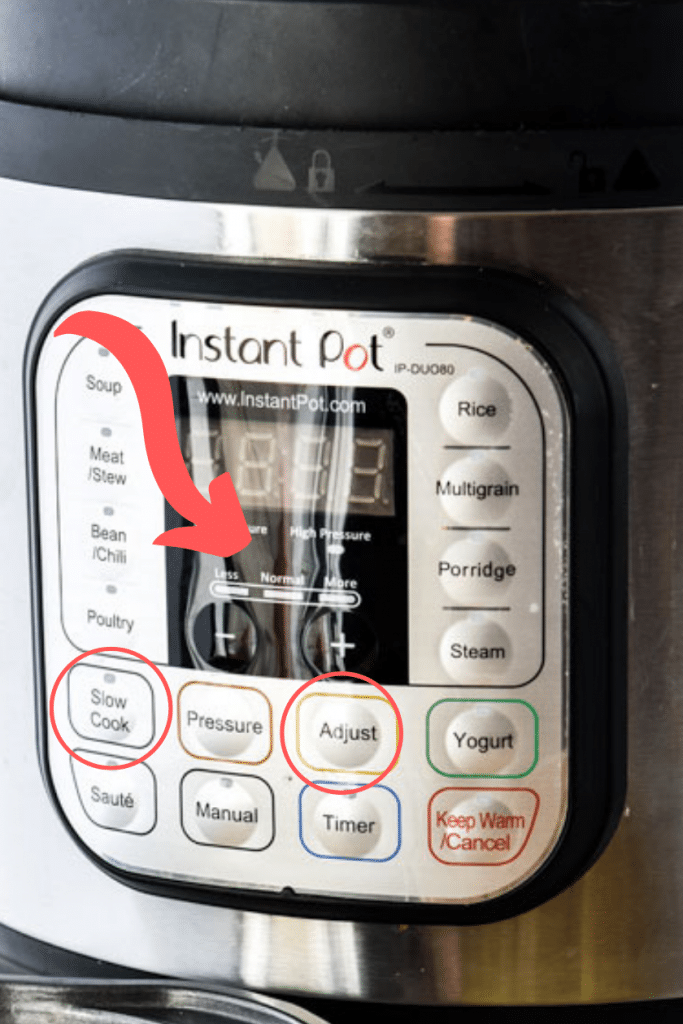
What the Instant Pot Slow Cooker Setting Does
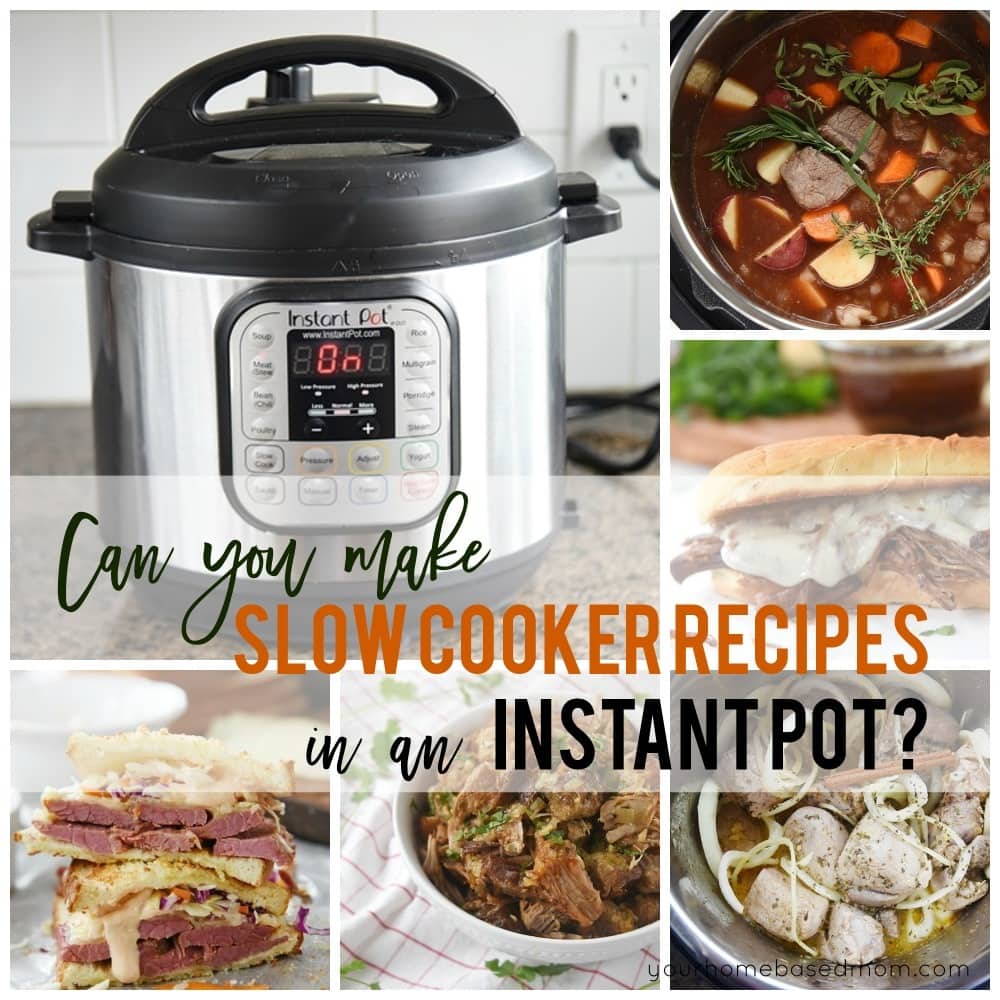
The Slow Cook function uses low, steady heat to cook food over a long period. It is designed for meals such as chili, soup, stew, pulled pork, pot roast, beans, and braised vegetables.
This function does not use pressure. The steam release handle does not build pressure during slow cooking. If you use the pressure-cooking lid, set the steam release handle to Venting.
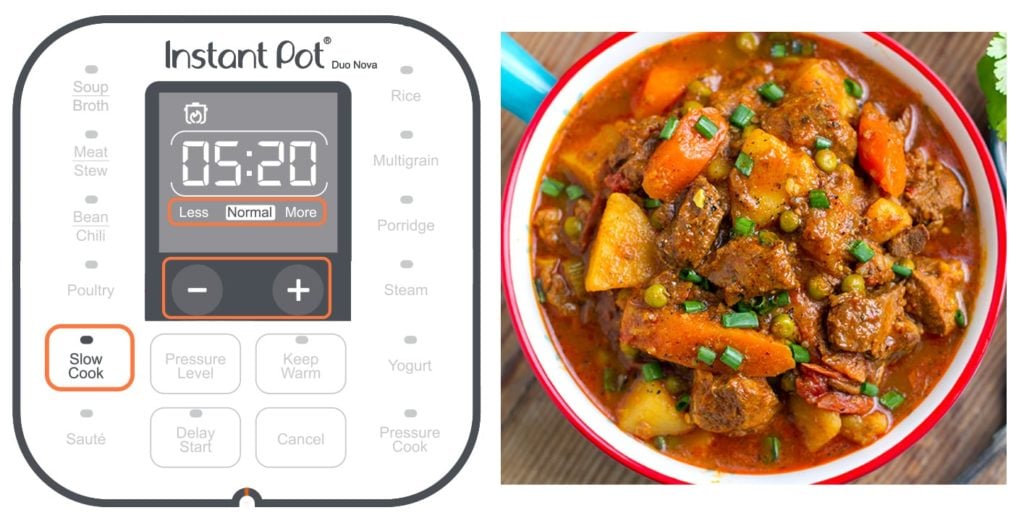
Most Instant Pot models offer at least two slow-cook heat levels:
- Low: Best for long cooking and tender cuts of meat.
- High: Best when you need a shorter cooking time.
- More or Medium: Available on some models and useful for recipes that need heat between Low and High.
The names and temperatures can differ by model. An Instant Pot Duo, Rio, Pro, Max, and other models may use different control layouts. Check your model’s manual if the buttons or heat settings do not match these instructions.
What You Need Before You Start
You need the following:
- An Instant Pot with a Slow Cook function
- A suitable lid
- Ingredients prepared according to the recipe
- Enough liquid for the food and recipe
- A food thermometer for meat and poultry
- A heat-safe utensil for stirring
An Instant Pot stainless-steel inner pot is the usual cooking vessel. Do not place the removable inner pot directly on a stove burner or in an oven unless the manufacturer specifically allows it.
Which lid should you use?
You can usually use either:
- The Instant Pot pressure-cooking lid, with the steam release handle set to Venting
- An Instant Pot-compatible glass lid made for slow cooking
A glass lid makes it easier to check the food. If you use the pressure lid, make sure it is seated correctly but not set to pressure-seal the pot.
Do not force the lid closed. If the lid does not fit easily, remove it and check that the sealing ring, float valve, and lid position are correct.
How to Use the Instant Pot Slow Cooker Setting
Follow these steps for most Instant Pot models.
1. Add the ingredients
Place the meat, vegetables, seasonings, and liquid in the inner pot. Cut ingredients into similar sizes so they cook at a similar rate.
Put dense foods, such as potatoes and carrots, near the bottom. Place meat on top or in the center. This arrangement helps the food cook more evenly.
Do not fill the pot above the maximum fill line. For foods that expand, foam, or produce a lot of liquid, leave more room.
2. Add the right amount of liquid
slow cooking needs moisture, but the food does not need to be submerged.
Use broth, stock, water, crushed tomatoes, sauce, or another recipe-approved liquid. A recipe written for a traditional slow cooker may need less liquid in an Instant Pot because the lid may not collect steam in exactly the same way.
Do not reduce liquid too much when cooking beans, grains, or foods that can scorch. Use the recipe’s instructions as your starting point.
3. Cover the pot
Place the glass lid on the Instant Pot, or use the pressure lid with the steam release handle set to Venting.
The lid should sit securely. Avoid lifting it often because heat escapes each time you open the pot. Repeated lid removal may extend the cooking time.
4. Select Slow Cook
Press the Slow Cook button. On some models, you may need to press it more than once to cycle through the heat levels.
Choose Low, High, or another available setting. The display may show a default cooking time. Adjust the time with the + and − buttons or the model’s time controls.
5. Set the cooking time
Set the time based on the recipe and the size of the ingredients.
As a general starting point:
| Recipe type | Common slow-cook range |
|---|---|
| Soup or chili | 4–8 hours |
| Chicken pieces | 3–6 hours |
| Beef stew | 6–10 hours |
| Pork shoulder | 8–10 hours |
| Firm vegetables | 4–8 hours |
These are broad planning ranges, not guarantees. A large roast takes longer than small pieces. Frozen meat also changes the cooking time and may not thaw safely during slow cooking.
6. Start the program
Press Start if your model has a Start button. Other models begin after a short pause.
The display may show a preheating message before the timer begins to count down. This is normal. The timer usually starts after the pot reaches its operating heat.
7. Check doneness safely
When the cooking time ends, check the food before serving.
For meat and poultry, measure the thickest part with a food thermometer. The USDA lists these minimum internal temperatures:
- Poultry: 165°F
- Ground meats: 160°F
- Whole cuts of beef, pork, lamb, and veal: 145°F, followed by a three-minute rest
Check the current USDA guidance for special cases, such as reheated leftovers or stuffed foods.

How to Choose Low or High
Use Low when you have more time and want gentle cooking. It works well for tough cuts of beef, pork shoulder, dried beans, and stews.
Use High when the recipe needs to finish sooner. It is useful for soup, chili, chicken pieces, and vegetables.
Do not assume that High is exactly twice as hot as Low. Slow cooker settings control a range of heating behavior, not a simple oven-style temperature. Cooking time also depends on how much food is in the pot and how cold the ingredients were when you started.
Can you switch from Low to High?
Usually, yes. Press Slow Cook and select the new setting according to your model’s controls. However, changing settings does not instantly change the temperature of the food.
If food has spent several hours on Low and remains firm, switching to High can help finish the meal. Use a thermometer for meat, and do not rely only on the display time.
How to Convert a Crock-Pot Recipe for an Instant Pot
A traditional slow cooker recipe often works in an Instant Pot, but you may need to adjust the liquid, lid, and cooking time.
Use these practical guidelines:
- Keep the main ingredients and seasonings the same.
- Avoid adding more liquid than the recipe needs.
- Cut large pieces of meat and vegetables into even pieces.
- Brown meat first if you want a deeper flavor.
- Use the Instant Pot’s Slow Cook function, not the pressure-cook function.
- Start checking the food near the recipe’s shortest suggested time.
- Confirm doneness with texture and temperature.
A slow cooker recipe may say to cook on Low for 8 hours or High for 4 hours. Treat that as a starting point, not a fixed conversion. Instant Pot slow cooking may take longer for some recipes because the inner pot and heating pattern differ from those of a traditional slow cooker.
Why can an Instant Pot slow cooker take longer?
A traditional slow cooker often heats around the sides of a ceramic crock. An Instant Pot mainly heats through the base of its metal inner pot. This can change how heat spreads through the food.
The result may be:
- Longer cooking for a large roast
- Softer or firmer vegetables than expected
- A different amount of evaporation
- More browning at the bottom in some recipes
A recipe may need one or two trial adjustments. Change only one factor at a time, such as the cooking time or liquid amount, so you know what improved the result.

How to Brown Meat Before Slow Cooking
Browning meat can improve flavor, although it is not required for safe slow cooking.
To brown meat in the Instant Pot:
- Press Sauté.
- Add a small amount of cooking oil.
- Brown the meat in batches.
- Remove the meat.
- Add a little broth or water.
- Scrape up browned bits from the bottom.
- Press Cancel.
- Add the meat and remaining ingredients.
- Select Slow Cook.
The liquid used to loosen browned bits helps reduce the chance of stuck food. Do not leave the pot on Sauté while using the slow cooker function.
Some models become very hot during Sauté. Watch the oil and food closely, and use oven mitts when handling the inner pot.
Food Safety Rules for Slow Cooking
Slow cooking is safe when you control time, temperature, and storage.
Do not slow-cook frozen meat
Frozen meat can spend too long in the temperature range where bacteria multiply quickly. Thaw meat in the refrigerator before placing it in the Instant Pot.
Do not use the slow cooker setting to thaw food.
Keep perishable food cold before cooking
Store raw meat, poultry, seafood, and dairy in the refrigerator until you are ready to cook. Prepare ingredients just before starting the appliance.
Do not use a delay timer for raw meat
A delay start can leave raw meat at an unsafe temperature before cooking begins. Avoid delayed cooking for meat, poultry, seafood, eggs, and dairy-based foods.
Refrigerate leftovers promptly
Move leftovers into shallow containers and refrigerate them within two hours. If the room temperature is above 90°F, refrigerate them within one hour.
Use refrigerated leftovers within the time recommended by the USDA or your local food safety authority. Reheat leftovers to 165°F unless a specific food-safety instruction says otherwise.
Do not rely on “warm” for long storage
The Keep Warm function is meant to hold cooked food, not to cook raw ingredients or replace safe refrigeration. Check that food remains hot before serving, and refrigerate leftovers promptly.
Common Instant Pot Slow Cooker Problems
The food is still hard
Possible causes include:
- The cooking time was too short.
- The pot was very full.
- The ingredients were cut into large pieces.
- The food started cold.
- The Low setting did not provide enough heat for the recipe.
- The lid was removed often.
Continue cooking if the food has remained hot and has not been left at an unsafe temperature. For meat, use a thermometer. For beans, check that they are fully tender before serving.
The food is watery
Slow cooking may not reduce liquid as much as an uncovered pot on the stove.
To thicken the food:
- Remove the lid near the end of cooking.
- Use Sauté briefly after slow cooking.
- Stir in a cornstarch slurry.
- Add a thickener that matches the recipe, such as mashed potato or tomato paste.
Never leave the appliance unattended while using Sauté.
The food is too dry
The lid may not have been seated well, the cooking time may have been too long, or the recipe may not have contained enough liquid.
Add broth or another suitable liquid after checking the food. For future batches, use a tighter-fitting lid and avoid opening the pot repeatedly.
The bottom is sticking
Sticking may result from too little liquid, sugary sauce, browning residue, or a very full pot.
Before slow cooking, scrape browned bits from the bottom after using Sauté. Put thick sauces and sugary ingredients above a thin layer of broth when possible. If food smells burned, turn off the appliance and inspect the inner pot before continuing.
The Instant Pot does not start
Check the following:
- The power cord is fully connected.
- The inner pot is seated correctly.
- The lid is placed properly.
- The correct Slow Cook function is selected.
- The time and heat level are set.
- The display is not showing an error code.
If the appliance shows a recurring error, unplug it and consult the manual or the manufacturer’s support service. Do not bypass a safety feature.

What You Should Not Do
Avoid these common mistakes:
- Do not use the pressure-cooking setting when you mean to slow cook.
- Do not set the steam release handle to Sealing for a normal slow-cook cycle unless your model manual specifically instructs it.
- Do not fill the pot past the maximum line.
- Do not cook frozen meat on Slow Cook.
- Do not leave the lid open for long periods.
- Do not use a damaged sealing ring or cracked lid.
- Do not place the inner pot on a stovetop unless the manual allows it.
- Do not use the Keep Warm setting to cook raw food.
- Do not serve meat based only on its appearance.
The Slow Cook function should be treated as a cooking method, not as a pressure-cooking shortcut.
Instant Pot Slow Cooker vs. Pressure Cooking
The two functions use different methods.
| Feature | Slow Cook | Pressure Cook |
|---|---|---|
| Main method | Gentle heat over time | Steam pressure and high heat |
| Lid setting | Venting or glass lid | Sealing |
| Typical time | Several hours | Often much shorter |
| Liquid need | Depends on the recipe | Requires enough liquid to create steam |
| Texture | Gradual, tender cooking | Fast cooking with pressure |
| Best for | Stews, chili, roasts, beans | Fast meats, grains, beans, and soups |
A pressure-cook recipe cannot always be moved directly to the Slow Cook setting. The liquid, lid position, cooking time, and ingredient order may all need to change.
Choose Slow Cook when you want a hands-off meal and have several hours. Choose Pressure Cook when speed matters and the recipe is designed for pressure.

Quick Takeaways
- Press Slow Cook, select Low or High, set the time, and start the program.
- Use a glass lid or the pressure lid with the steam release handle set to Venting.
- Thaw meat in the refrigerator before slow cooking.
- Use a thermometer to verify safe internal temperatures.
- Expect some recipes to take longer than they do in a traditional slow cooker.
- Adjust liquid carefully, especially for thick sauces and recipes with sugary ingredients.
- Refrigerate leftovers promptly.
Frequently Asked Questions
Can I use the Instant Pot without the lid while slow cooking?
Some recipes can be cooked with the lid off, but an open pot loses heat and moisture. Use the lid recommended by your model and recipe unless you need to reduce liquid near the end.
Should the Instant Pot steam release handle be on Sealing or Venting?
For standard slow cooking with the pressure lid, set the handle to Venting. Slow cooking does not require pressure. Always follow the instructions for your exact model if they differ.
Can I put raw chicken in the Instant Pot slow cooker?
Yes, provided the chicken is fully thawed, kept refrigerated before cooking, cooked thoroughly, and reaches 165°F in the thickest part. Do not use frozen chicken on the Slow Cook setting.
Can I leave the Instant Pot slow cooker unattended?
The appliance is designed for unattended cooking, but keep it on a stable, heat-safe surface away from water, children, and flammable items. Inspect the cord, lid, and inner pot before use. Do not leave the appliance unattended while using Sauté.
Why does my Instant Pot slow cooker say “On” for a long time?
The display may show a preheating message before the cooking timer starts. A large amount of cold food, a loose lid, or a low heat setting can lengthen preheating. If the timer never begins, check the lid, inner pot, power connection, and error messages.
Final Answer
To use the Instant Pot slow cooker setting, add prepared ingredients and enough liquid, cover the pot, select Slow Cook, choose Low or High, set the cooking time, and start the program. Use a food thermometer for meat, avoid frozen ingredients, and expect some recipes to need longer than they would in a traditional slow cooker.
For your next meal, begin with a tested slow-cooker recipe, use thawed ingredients, and write down any changes you make to the time or liquid. That simple record will help you fine-tune the recipe for your Instant Pot model.