
Introduction
You can cook rice in a slow cooker with little hands-on work. For most white rice, use 1 cup of rinsed rice with 1½ cups of water, cover, and cook on HIGH for about 1½ to 2½ hours. The exact time depends on the slow cooker, rice type, and batch size.
This method works well in U.S. kitchens when you need rice for chili, beans, chicken, meal prep, or a family dinner. It is also useful when your stovetop is full. The key is to use the right liquid ratio, keep the lid closed, and check the rice before it becomes soft and wet.

What You Need to Cook Rice in a Slow Cooker
You need only a few basic items:
- A slow cooker with a working lid
- Long-grain white rice, jasmine rice, basmati rice, or brown rice
- Water or broth
- A measuring cup
- A fork for fluffing
- Salt, if desired
- A small amount of butter or oil, if desired
A slow cooker with a 3- to 6-quart capacity works well for common home batches. The rice and liquid should cover the bottom in an even layer. Avoid filling the cooker with a very small amount of rice if the insert is wide and shallow. The rice may cook unevenly.
Should You Rinse Rice First?
Rinsing is helpful for most white rice. It removes loose surface starch, which can make rice sticky or gummy. Place the rice in a fine-mesh strainer and rinse under cool water until the water looks less cloudy.
Rinsing is less important for enriched white rice if the package says not to rinse. Some rice has added vitamins on the surface. Follow the package directions when they conflict with general cooking advice.
Water, Broth, or Stock?
Water gives rice a clean taste. Low-sodium chicken or vegetable broth adds flavor, but it can also add salt. If you use regular broth, taste the finished dish before adding more salt.
A small amount of butter or oil can help separate the grains. It is optional and does not fix an incorrect water ratio.
Slow Cooker Rice Water Ratios
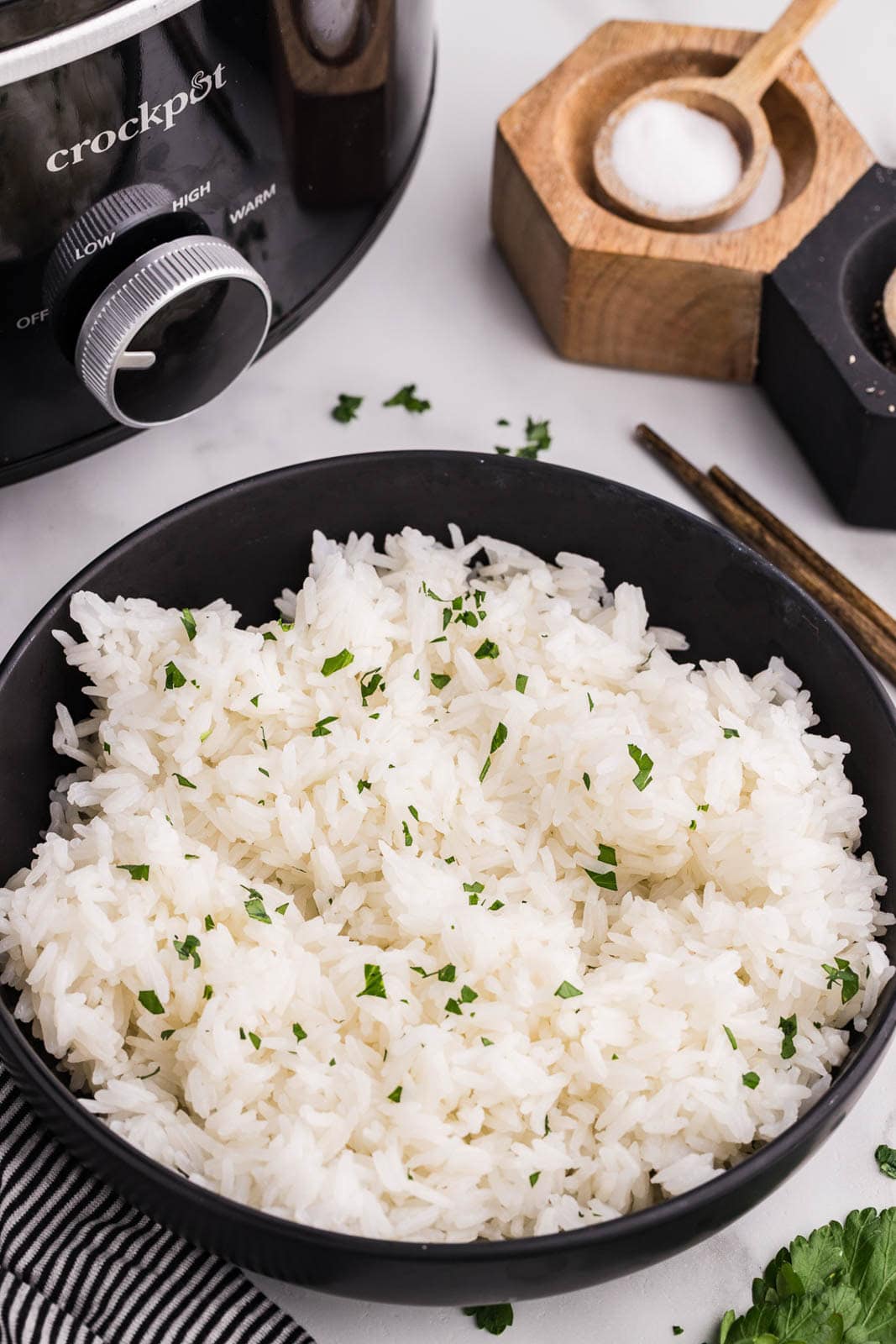
The correct liquid amount depends on the rice variety. Use the table below as a starting point, then adjust based on your slow cooker and the package instructions.
| Rice type | Rice | Liquid | Approximate HIGH cooking time |
|---|---|---|---|
| Long-grain white rice | 1 cup | 1½ cups | 1½–2½ hours |
| Jasmine rice | 1 cup | 1¼–1½ cups | 1½–2 hours |
| Basmati rice | 1 cup | 1½ cups | 1½–2½ hours |
| Medium-grain white rice | 1 cup | 1½ cups | 1½–2½ hours |
| Brown rice | 1 cup | 2 cups | 2½–3½ hours |
| Wild rice blend | 1 cup | Follow package directions | About 3–4 hours |
These amounts refer to dry rice. Do not use the small plastic cup that comes with some electric rice cookers unless it has standard U.S. cup markings. A standard measuring cup holds 8 fluid ounces.
Slow cookers vary. Some run hotter than others, and some lids seal better. Treat the times as ranges, not fixed rules. The rice is ready when the grains are tender and the liquid has been absorbed.
A Simple Scaling formula
for white rice, start with:
1 part rice to 1½ parts liquid
For brown rice, start with:
1 part rice to 2 parts liquid
For example, to cook 2 cups of white rice, use about 3 cups of liquid. To cook 2 cups of brown rice, use about 4 cups of liquid.
Do not keep scaling up until the slow cooker is full. Leave room for heat to circulate, and check the slow cooker manual for its recommended fill level.

How to Cook White Rice in a Slow Cooker
Follow these steps for long-grain white rice, jasmine rice, or basmati rice.
1. Rinse and Drain the Rice
Measure 1 cup of dry rice. Rinse it in a fine-mesh strainer. Let it drain for a minute so extra rinse water does not change the ratio too much.
2. Add the Ingredients
Place the rice in the slow cooker. Add:
- 1½ cups water or broth
- ¼ to ½ teaspoon salt, if desired
- 1 teaspoon butter or oil, if desired
Spread the rice into a level layer. Make sure all of the grains are covered by liquid.
3. Cover and Cook on HIGH
Put the lid on the slow cooker. Cook on HIGH for about 1½ to 2½ hours.
Keep the lid closed during cooking. Each time you lift the lid, heat escapes and the cooking time increases. Begin checking near the early end of the time range if your slow cooker runs hot.
4. Check for Doneness
The rice is done when:
- The grains are tender in the center.
- Most or all of the liquid is absorbed.
- The rice does not feel crunchy.
- The surface looks cooked rather than wet.
If the rice is still firm and the slow cooker is dry, add 2 to 4 tablespoons of hot water. Cover and cook for another 15 to 30 minutes.
5. Rest and Fluff
Turn off the slow cooker when the rice is tender. Let it rest with the lid on for 5 to 10 minutes. Then fluff it gently with a fork.
Do not stir the rice hard. Rough stirring can break the grains and release starch, making the texture pasty.
How to Cook Brown Rice in a Slow Cooker
Brown rice takes longer because its outer bran layer remains on the grain. It needs more water and more cooking time than white rice.
Use 1 cup of rinsed brown rice with about 2 cups of water or broth. Cook on HIGH for about 2½ to 3½ hours, or until the grains are tender. Some slow cookers may need longer.
Check the rice near the lower end of the time range. If it is firm but the liquid is gone, add a small amount of hot water and continue cooking. If the rice is tender but a little wet, leave the lid off for a few minutes while the slow cooker is switched off.
Brown rice can remain slightly chewy even when fully cooked. It should not be hard in the center, but it may not have the soft texture of white rice.

How to Cook Rice and Other Foods Together
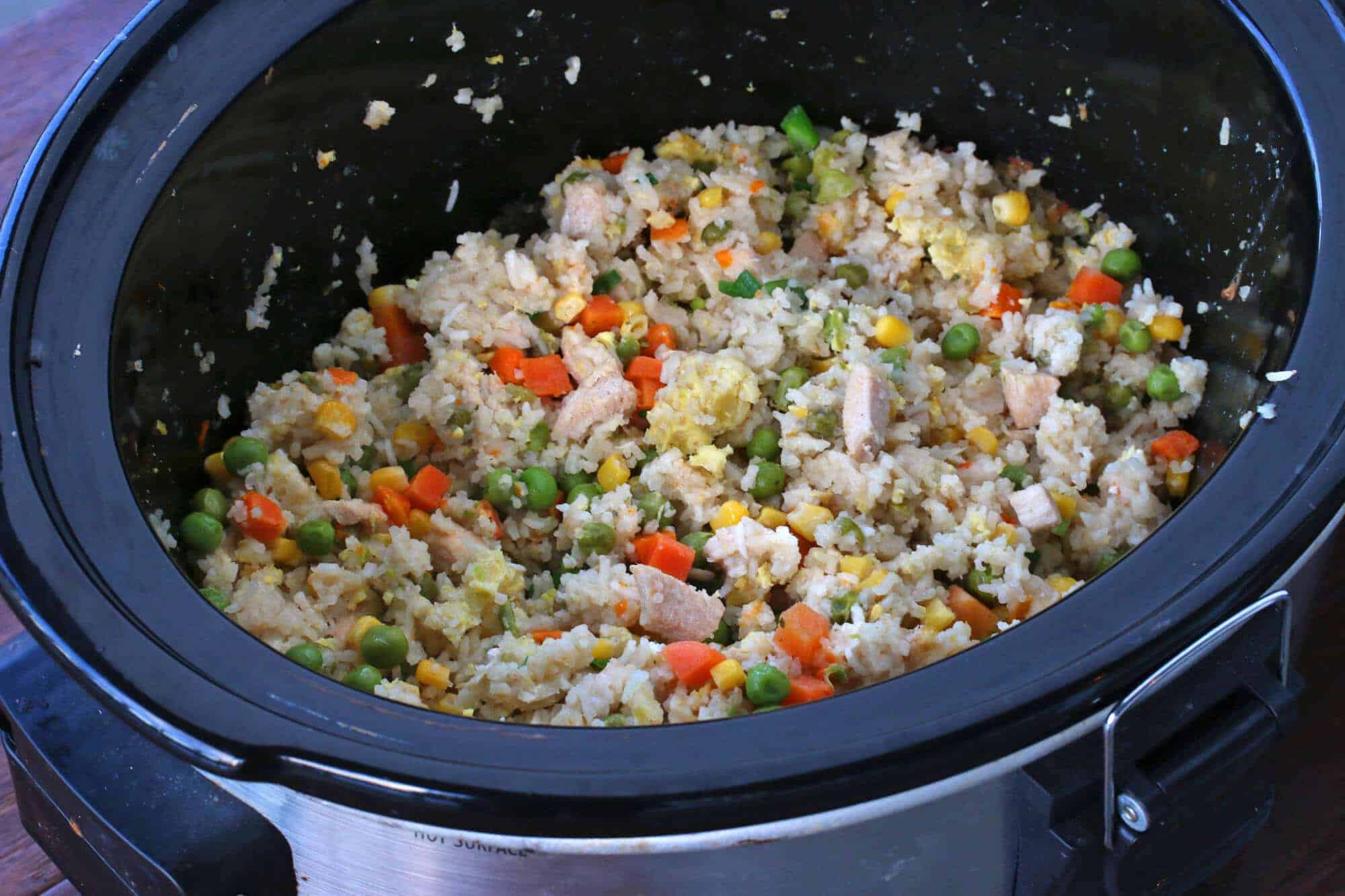
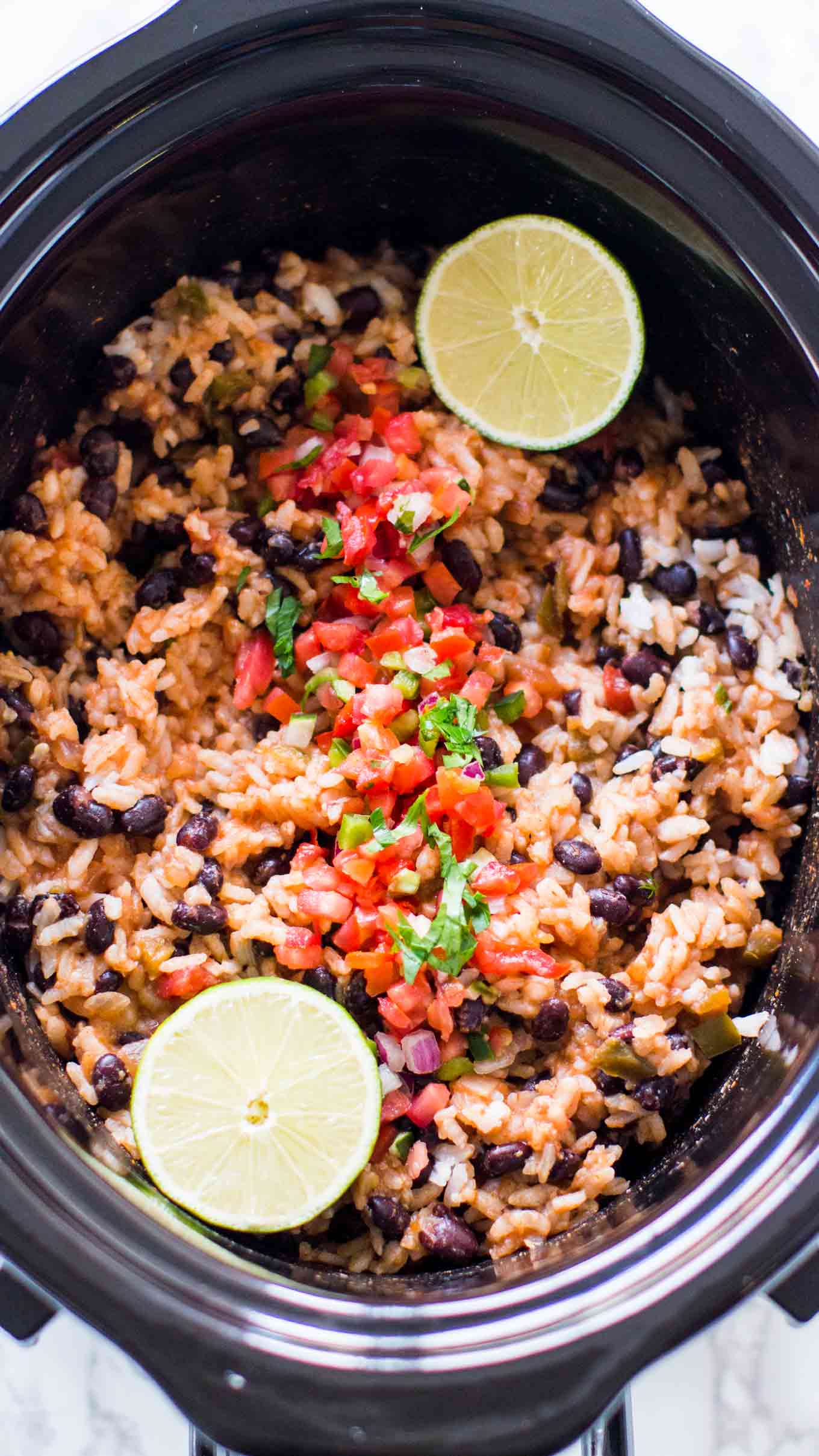
Rice can cook with meat, vegetables, beans, and sauces, but the liquid balance becomes harder to predict. Ingredients such as tomatoes, frozen vegetables, and meat release water as they cook. Thick sauces may not provide enough free liquid for the rice.
For the most reliable result, cook the rice separately when:
- The main dish has an unknown amount of liquid.
- The recipe contains acidic tomato sauce.
- The meat needs a different cooking time.
- You need firm, separate rice.
- You are cooking a large batch for meal prep.
If you add rice to a slow-cooker meal, add it late unless the recipe was designed for rice from the start. Many recipes add white rice during the final 1½ to 2½ hours. Brown rice may need more time.
Do not add raw rice to a slow cooker without checking the recipe’s liquid level. Rice absorbs liquid as it cooks. If there is not enough liquid, the rice may stay crunchy while the rest of the dish becomes too thick.

Common Slow Cooker Rice Problems
Rice Is Mushy
Mushy rice usually means there was too much liquid, the rice cooked too long, or the lid allowed little evaporation.
Next time, reduce the liquid by 2 to 4 tablespoons. Rinse the rice well, keep the lid closed, and begin checking earlier. You can also spread cooked rice on a shallow baking sheet for a few minutes to release steam, but this will not restore firm grains.
Rice Is Crunchy
Crunchy rice usually means the rice needs more time or more liquid. Check that the lid was on and that the slow cooker was set correctly.
Add 2 to 4 tablespoons of hot water. Cover the cooker and continue cooking for 15 to 30 minutes. Avoid adding a large amount of cold water, which can lower the cooking temperature.
Rice Is Burned on the Bottom
Burning can happen when the slow cooker runs hot, the batch is too small for the insert, or the rice stays against a hot surface after the liquid is absorbed.
Use a little more liquid next time and check the rice sooner. Do not scrape burned rice into the rest of the batch. The scorched flavor will spread.
Rice Is Unevenly Cooked
Uneven rice may result from an oversized slow cooker, an uneven layer, or frequent lid lifting. Spread the rice flat before cooking. Use a batch size that covers the bottom without making a deep mound.
If your slow cooker has a hot spot, rotate the insert only if the manufacturer allows it and only while the cooker is switched off. Never move a hot ceramic insert onto a cold or wet surface, because sudden temperature changes can cause cracking.
Rice Tastes Bland
Rice cooked in water may taste plain. Use broth, salt, herbs, garlic, or a small amount of butter. Add strong flavors after cooking if you are unsure how they will combine with the main dish.
If you use salted broth, taste before adding more salt.

Slow Cooker Rice Safety and Storage
Cooked rice can support the growth of harmful bacteria if it stays warm or at room temperature for too long. The U.S. Department of Agriculture advises refrigerating perishable foods within 2 hours, or within 1 hour when the temperature is above 90°F.
For safer storage:
- Transfer cooked rice to shallow containers.
- Refrigerate it promptly.
- Keep the refrigerator at 40°F or below.
- Use refrigerated rice within 3 to 4 days.
- Reheat it until it is steaming hot throughout.
- Discard rice that sat out too long or smells and looks unsafe.
A slow cooker set to WARM is not the same as safe long-term storage. If you plan to serve rice later, chill it promptly rather than leaving it on the counter.
For detailed food-storage guidance, consult the U.S. Department of Agriculture’s Food Safety and Inspection Service.

Slow Cooker Rice vs. Stovetop Rice
A slow cooker can make rice while you prepare other food, but it is not always the fastest method.
| Method | Main benefit | Main limitation |
|---|---|---|
| Slow cooker | Frees the stovetop and needs little attention | Timing and texture vary by cooker |
| Stovetop | Usually faster and easy to control | Needs closer attention |
| Electric rice cooker | Consistent for repeated rice batches | Requires another appliance |
Use a slow cooker when convenience matters more than speed. Use a stovetop pot when you need rice quickly. If you cook rice several times a week, a rice cooker may offer more consistent results, but it is not required.

Best Tips for Reliable Slow Cooker Rice
- Start with the rice package directions when they differ from a general ratio.
- Rinse rice to reduce excess surface starch.
- Use standard measuring cups.
- Keep the lid closed while the rice cooks.
- Begin checking early because slow cookers vary.
- Use hot water when correcting undercooked rice.
- Rest the rice before fluffing.
- Cook brown rice separately from white rice.
- Avoid very small batches in a large, wide slow cooker.
- Do not leave cooked rice at room temperature for extended periods.
The most useful adjustment is usually small. Change the liquid by a few tablespoons rather than adding or removing a full cup.
Frequently Asked Questions
Can you cook rice on LOW in a slow cooker?
Yes, but LOW cooking takes longer and can produce less predictable results. For most rice, HIGH is easier to monitor. If you use LOW, follow the slow cooker manual and check the rice well before serving time.
Can you put uncooked rice directly in a slow cooker?
Yes. Add dry rice with the required liquid and cook it until tender. Do not add dry rice to a dish unless the recipe provides enough liquid and the timing supports complete cooking.
How long does rice take in a slow cooker?
White rice often takes about 1½ to 2½ hours on HIGH. Brown rice commonly takes about 2½ to 3½ hours. Slow cookers differ, so use tenderness and liquid absorption as the final tests.
Can you cook rice in chicken broth?
Yes. Chicken broth adds flavor. Choose low-sodium broth if you want more control over salt, and reduce added salt when needed.
Can you keep rice warm in a slow cooker?
You can keep rice warm for serving for a short period if the slow cooker maintains a safe hot temperature. Do not use the WARM setting as a substitute for rapid refrigeration or long-term storage.
Conclusion
To make rice in a slow cooker, rinse the rice, add the correct amount of liquid, cover the cooker, and cook on HIGH until the grains are tender. Start with 1 cup white rice to 1½ cups liquid or 1 cup brown rice to 2 cups liquid, then adjust in small amounts for your appliance.
Check the rice early, let it rest before fluffing, and refrigerate leftovers promptly. Once you learn how your slow cooker runs, this method can provide tender rice with very little active work.