
A Stainless Steel Table with Cabinet delivers tough prep space plus clean, secure storage.
If you need a work surface that is easy to clean and built to last, this is it. A Stainless Steel Table with Cabinet combines a sturdy prep top with enclosed storage that protects tools and supplies. I’ve specified, installed, and used these in busy kitchens, labs, and shops. In this guide, I’ll show you how to choose the right Stainless Steel Table with Cabinet and get more value from it for years.

What Is a Stainless Steel Table with Cabinet?
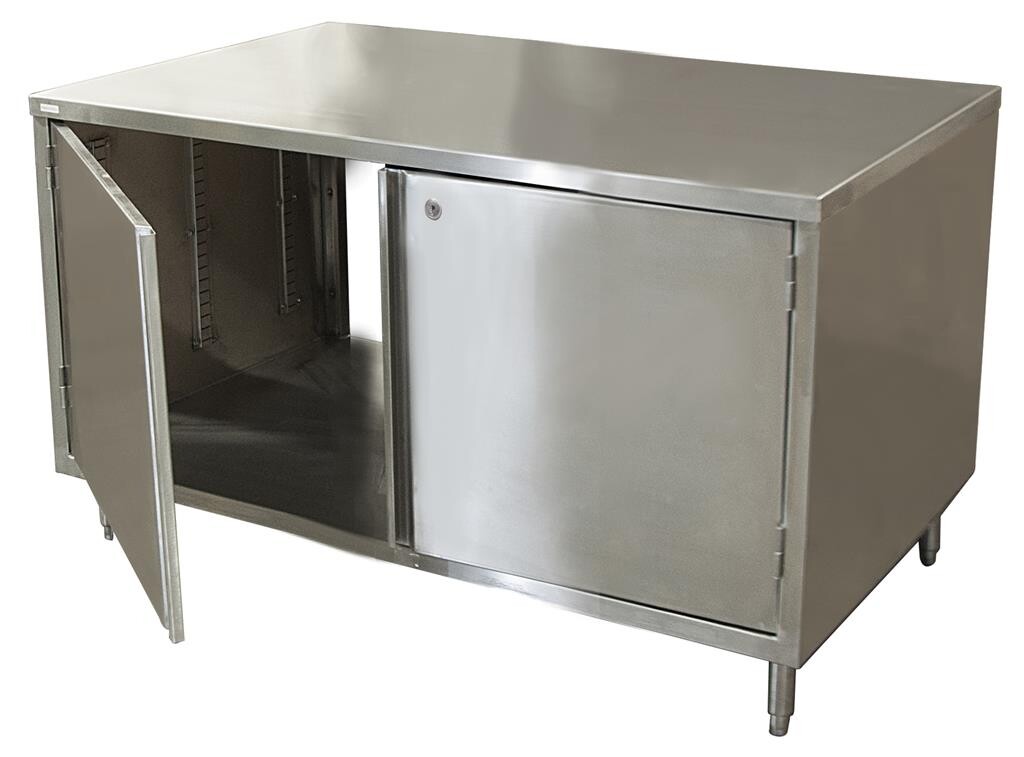
A Stainless Steel Table with Cabinet is a workbench with a stainless top and an enclosed base. The cabinet can have doors, shelves, and drawers for storage. It keeps supplies clean and close to your work area. It is common in food service, healthcare, labs, and light industry.
You can find many sizes and builds. Some units are open in the back for pass-through use. Others are sealed to keep out dust and splashes. A Stainless Steel Table with Cabinet often includes levelers or casters, a backsplash, and a reinforced top for heavy loads.
People choose a Stainless Steel Table with Cabinet for hygiene, strength, and simple care. It looks clean, resists rust, and works well in wet or hot spaces. It also helps with workflow because storage sits right under the work zone.

Key Benefits
A Stainless Steel Table with Cabinet offers real, daily gains. These are the ones I see most often:
- Hygiene and safety: Stainless steel is non-porous, easy to sanitize, and NSF-ready when built to standard.
- Long service life: It resists heat, water, impact, and common chemicals when cleaned right.
- Smart storage: Doors and shelves keep tools protected and within reach.
- Better workflow: Less walking and searching means faster prep and safer work.
- Strong load capacity: Reinforced tops and shelves handle mixers, slicers, and heavy bins.
- Clean look: A brushed finish makes a space feel pro and tidy.
- Simple care: Wipe, rinse, dry. That is most of the routine.
For most teams, the Stainless Steel Table with Cabinet pays off by saving time and replacing fewer damaged items. It reduces clutter and protects your gear in busy work zones.

Common Applications and Industries
A Stainless Steel Table with Cabinet fits many settings. I have placed them in the following:
- Restaurants and bakeries: Prep, plating, pastry stations, and storage for smallwares.
- Hospitals and clinics: Clean processing, instrument staging, and medication prep.
- Laboratories: Sample prep, chemical handling, and secure storage of tools and media.
- Schools and cafeterias: High-volume prep with safe, quick cleaning between shifts.
- Food manufacturing: HACCP zones, allergen control, and ingredient staging.
- Garages and makerspaces: Tool storage, parts sorting, and assembly lines.
- Outdoor kitchens: Weather-ready surfaces with closed storage for gear.
In each case, a Stainless Steel Table with Cabinet boosts sanitation and efficiency. Pick the right grade and features for the task and environment.

Material and Build: Grades, Gauges, and Finishes
Material choice is the backbone of performance. The grade and thickness affect cost, durability, and corrosion resistance.
- 304 stainless steel: The go-to for most kitchens and labs. It resists corrosion well in most indoor settings.
- 316 stainless steel: Best for high salt or chemical exposure. Ideal near the sea or in harsh processing.
- 430 stainless steel: Budget-friendly for dry areas. Avoid it for wet zones, as it can rust sooner.
Gauge and reinforcement matter. Thicker metal means less flex and noise.
- Tops: 14 or 16 gauge is common for heavy use. 18 gauge is fine for light duty.
- Cabinets and doors: Often 18 or 20 gauge. Look for stiffeners and solid welds.
- Welds: TIG welds are clean and strong. Smooth seams reduce bacteria traps.
Finish and details improve use and cleaning.
- Finish: No. 4 brushed hides scratches better than a bright 2B finish.
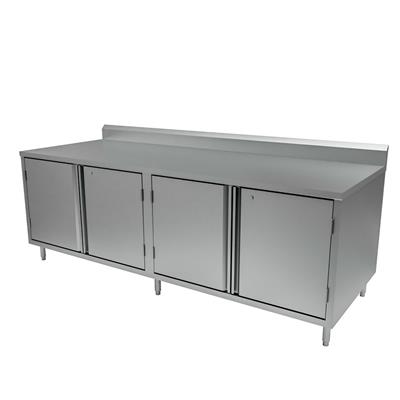
- Backsplash: A 4 to 6 inch backsplash protects walls and helps meet health codes.
- Reinforcement: Hat channels under the top reduce flex and dampen sound.
- Corners: Coved or radiused corners clean faster and are safer to the touch.
A Stainless Steel Table with Cabinet built with 304 or 316, a 16-gauge top, and smooth welds will serve hard, daily use for years.
Design Features to Consider
The right features can make or break your setup. Use this list to shape your choice.
- Doors: Sliding doors save aisle space. Hinged doors give a wider opening.
- Drawers: Keep tools sorted. Check the slide rating and easy-clean design.
- Shelves: Adjustable shelves fit tall items. Check load ratings per shelf.
- Locks: Add locks for chemicals, knives, or meds. Choose keyed alike if you manage many units.
- Backsplash and marine edge: Manage splashes and stop spills at the rim.
- Pass-through style: Open both sides to serve line and prep area at once.
- Vent or louvered doors: Help airflow for warm gear. Do not enclose heat without venting.
- Casters vs levelers: Casters add mobility. Levelers lock in a steady setup on uneven floors.
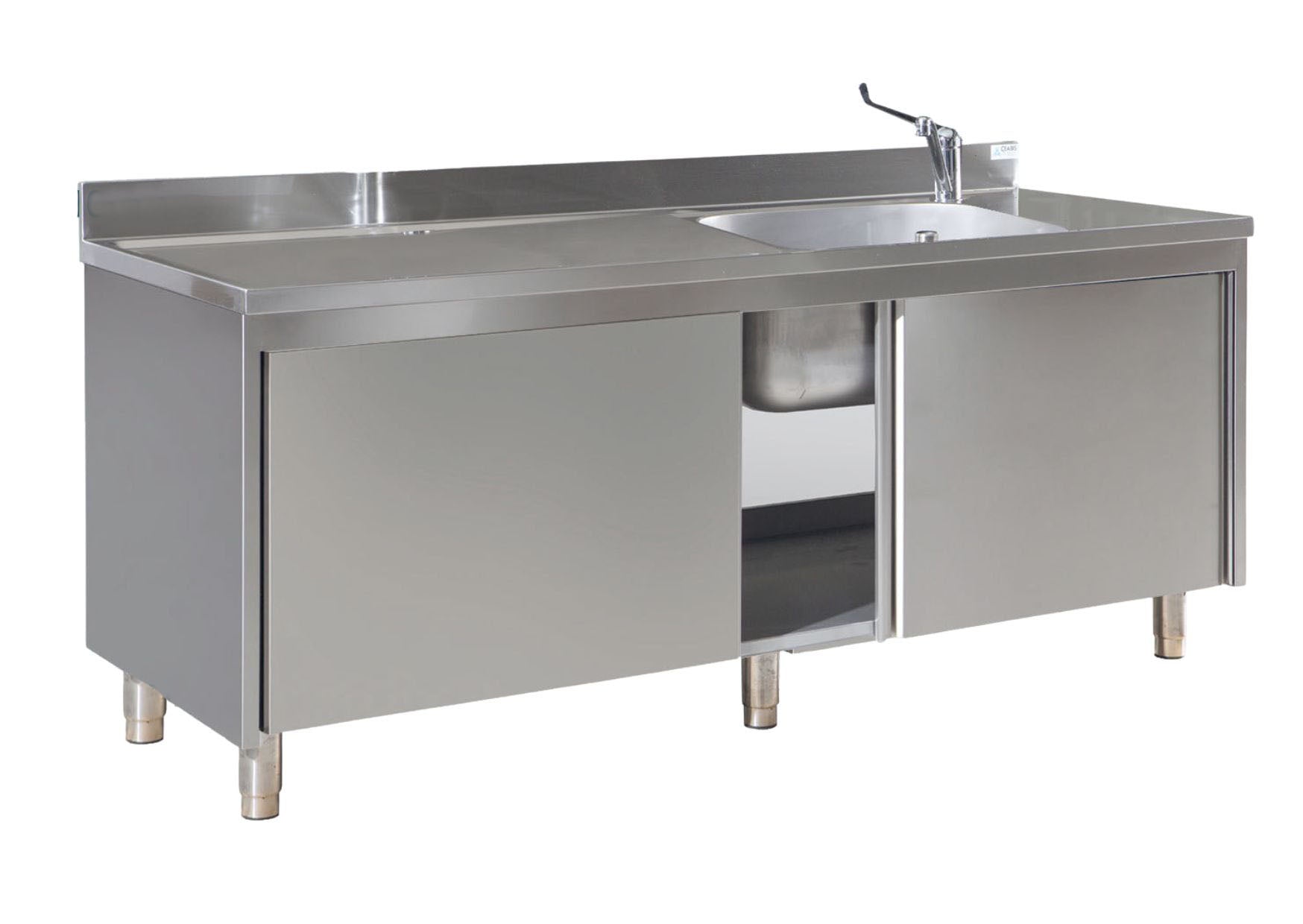
- Integrated sink or cutouts: Plan faucet holes, drains, or drop-in equipment ahead.
- Electrical options: Some custom units include power strips with GFCI. Check local codes.
Each feature should support a clear task. Keep the Stainless Steel Table with Cabinet simple if you need a rugged, easy-clean station. Add options only when they solve real issues.

Sizing, Layout, and Ergonomics
Right-size the station to the room and to your team. A good fit saves steps and stress.
- Size fundamentals: Common depths are 24 and 30 inches. Heights are 34 to 36 inches. ADA work height is 34 inches.
- Workflow zones: Place the table where items flow in one direction. Avoid crossing paths with hot or raw items.
- Door clearance: Leave space to open doors or slide panels fully. Check for nearby walls and equipment.
- Reach and posture: Keep the most used tools in the top cabinet area. Set heavy items waist-high to reduce strain.
- Weight capacity: Confirm the top and shelf load ratings. Heavy mixers and bins need solid reinforcement.
Measure twice. Tape the footprint on the floor before you buy. This simple step avoids many layout mistakes with a Stainless Steel Table with Cabinet.
Installation and Compliance
A proper install protects your investment and meets health and safety rules.
- Level and secure: Use levelers or shims. Tighten all fasteners. Lock casters before use.
- Seal to wall where required: Some codes want a sealed joint or a 1-inch cleanable gap. Ask your inspector.
- Drainage and splash control: Add a backsplash or side splashes near sinks or dish areas.
- Certifications: Look for NSF-listed units for food zones. Check metal and weld quality against industry norms.
- HACCP and allergen control: Use clear labeling in the cabinet. Store allergen tools in a separate, closed section.
- Heat and fire safety: Keep safe clearance from open flames and hot equipment as per local code.
When in doubt, ask your local authority or a licensed installer. A compliant Stainless Steel Table with Cabinet keeps inspections smooth and protects staff and guests.
Maintenance and Cleaning
Care is simple and fast. A few habits extend life and shine.
Daily routine
- Wipe with warm water and mild detergent. Rinse and dry to prevent spots.
- Wipe with the grain to reduce swirl marks.
- Avoid bleach and harsh chlorides. These can pit the surface.
Weekly and monthly
- Use a non-abrasive stainless cleaner or a mild oxalic-acid cleanser for stains.
- Inspect hinges, slides, and casters. Tighten loose screws. Lubricate slides with food-grade grease.
- Check for scratches or gouges. Smooth sharp edges to reduce risk.
Do not use steel wool or strong abrasives. They leave particles that can rust. A well-kept Stainless Steel Table with Cabinet will look good and work hard for many years.

Cost, ROI, and Buying Guide
Prices vary with size, grade, and options. Think total cost of ownership, not just the price tag.
What affects price
- Grade: 316 costs more than 304, which costs more than 430.
- Gauge: Thicker tops and doors raise cost but boost life and stability.
- Features: Drawers, locks, backsplashes, and casters add cost.
- Custom work: Cutouts, special sizes, and pass-through builds increase lead time and price.
Typical ranges
- Light-duty 430 units: Lower cost for dry storage or office support.
- Mid-duty 304 units: Most common in kitchens and labs.
- Heavy-duty 304 or 316: Premium builds for harsh use or coastal sites.
Buying tips
- Request spec sheets with grade, gauge, weld type, and load ratings.
- Confirm NSF listing if you are in food service.
- Ask about warranty and parts availability.
- Measure doorways and paths for delivery.
- Plan for lead time on custom Stainless Steel Table with Cabinet builds.
A quality Stainless Steel Table with Cabinet may cost more up front but pays back with fewer repairs, faster work, and improved safety.
Real-World Scenarios and Mistakes to Avoid
From my time outfitting kitchens and labs, a few patterns stand out.
Personal lessons
- Coastal site rust: A client chose 430 for a seaside cafe. Surface rust showed in months. We swapped to 316 and the problem stopped.
- Gauge regret: A bakery picked an 18-gauge top. The mixer made it flex and hum. A 16-gauge top solved the issue.
- Door clearance: A hinged door hit a nearby prep sink. Sliding doors fixed the tight aisle.
Common mistakes to avoid
- Picking the wrong grade for wet or salty areas.
- Skipping NSF when inspectors will require it.
- Forgetting enough space for doors and drawers.
- Ignoring load ratings for shelves and tops.
- Missing the need for vents when storing warm gear.
- Not planning a marine edge near messy stations.
Treat the Stainless Steel Table with Cabinet as part of your workflow map. Plan the flow, then pick the features. It saves money and headaches.
How to Choose the Right Supplier
The right partner matters as much as the product.
- Ask for drawings and cut sheets: Confirm dimensions, gauge, grade, and reinforcements.
- Check certifications: NSF for food areas and documented quality control.
- Review weld samples: Smooth, continuous welds with clean finishing.
- Verify service support: Spare parts, fast responses, and clear warranty terms.
- Read reviews and request references: Talk to similar customers about real-world use.
- Confirm delivery and installation: White-glove service can save time and prevent damage.
A solid supplier will help you size, spec, and care for your Stainless Steel Table with Cabinet. They should answer questions fast and stand behind the product.
Frequently Asked Questions of Stainless Steel Table with Cabinet
What grade of stainless is best for a kitchen?
304 is the standard for most kitchens. Choose 316 if you are near the sea or use harsh chemicals.
How do I stop rust and stains on stainless?
Clean with mild soap, rinse, and dry daily. Avoid bleach and use a non-abrasive stainless cleaner for tough spots.
Are sliding doors better than hinged doors?
Sliding doors save aisle space and avoid door swing. Hinged doors give a wider opening and full access to shelves.
What gauge should I pick for heavy use?
A 16-gauge top handles heavy mixers and impacts better than 18 gauge. Pair it with reinforced hat channels for less flex.
Do I need NSF certification?
If you work in food service or healthcare, inspectors often require NSF-listed equipment. It helps prove cleanability and safety.
Can I add casters later?
Yes, many units accept caster kits. Check thread size or plate style and confirm load ratings before adding wheels.
How tall should the backsplash be?
A 4 to 6 inch backsplash is common. Your local code or workflow may favor one over the other.
Is a Stainless Steel Table with Cabinet noisy?
A well-reinforced top with sound-dampening channels is quiet in use. Thicker gauge and rubber bumpers help reduce clatter.
Conclusion
A Stainless Steel Table with Cabinet gives you a strong work surface and clean, secure storage in one. It boosts hygiene, saves steps, and stands up to daily use. The right grade, gauge, and features will match your space and workload.
Start by mapping your workflow, then pick size, doors, and accessories that solve real problems. If you are unsure, ask for spec sheets and get help from a trusted supplier. Ready to upgrade? Compare a few models side by side, bookmark this guide, and make a clear, confident choice today.