
The best stand mixer for beginners is simple to use, steady on the counter, and versatile enough for daily baking.
Starting with a stand mixer can feel a bit like learning to drive a new car. You want enough power for bread dough, but not a huge machine that takes over your kitchen. A good beginner mixer should offer clear speed controls, useful attachments, easy cleanup, and a bowl size that fits your recipes. I reviewed these options with those needs in mind, so you can choose the best stand mixer for beginners with more confidence and less guesswork.
Kitchen in the Box 3.2-Qt Stand Mixer

The Kitchen in the Box 3.2-quart mixer is a friendly starting point for small kitchens and new bakers. Its compact bowl suits cookies, cupcakes, whipped cream, and small cake batters. Six speeds give beginners a simple path from slow mixing to faster whipping. The black finish also gives it a neat look without making the mixer feel too large.
This model includes an egg whisk, dough hook, and flat beater, so it covers the three main mixing jobs. The tilt-head design should make it easier to add ingredients and remove the bowl between steps. Its smaller size is helpful when counter space is tight or when you do not bake every day. For light home use, it offers the kind of basic control many people want from the best stand mixer for beginners.
Pros:
- Compact 3.2-quart bowl fits small kitchens
- Six speeds are easy for new users to understand
- Includes a whisk, dough hook, and flat beater
- Lightweight design is easier to move and store
- Useful for cookies, cakes, cream, and small dough batches
- Black finish blends with many kitchen styles
Cons:
- Small bowl may not suit large family-size recipes
- Lightweight mixers can move during thick dough mixing
- Not the best choice for frequent heavy bread baking
My Recommendation
I recommend this mixer for students, apartment cooks, first-time bakers, and anyone who makes small batches. It keeps the controls simple and does not demand much storage space. The included attachments let beginners try cakes, cookies, whipped toppings, and basic dough without buying extra tools at once. If you need the best stand mixer for beginners for light daily baking, this is a practical and approachable pick.
Its main value comes from its small footprint and simple setup. I would choose a larger model for regular bread baking or big holiday batches. Still, for a new baker with modest needs, this Kitchen in the Box model can be a sensible and affordable entry point when available.
Kitchen in the Box 3.2-Qt Mixer
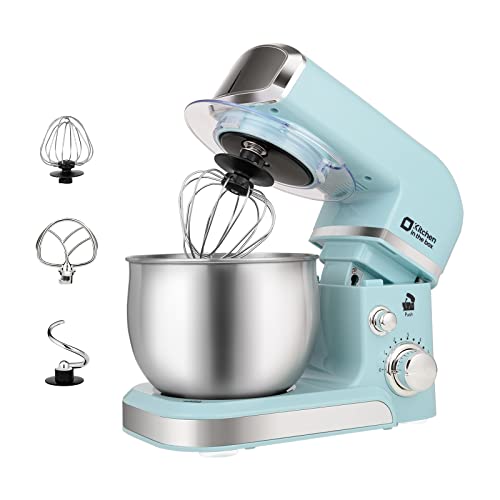
This second Kitchen in the Box option also uses a 3.2-quart bowl and six-speed control. That size works well for small cakes, muffins, cookie dough, and whipped egg whites. Beginners often benefit from a smaller mixer because the bowl feels easier to manage. You can see and reach the ingredients without dealing with a deep, oversized container.
The included flat beater, whisk, and dough hook give this mixer useful range for everyday recipes. A small stand mixer can also help reduce arm strain when a recipe calls for several minutes of mixing. I like this type of setup for people who want more consistency than a hand mixer can provide. It may be one of the best stand mixer for beginners choices for a cook who values easy storage over large capacity.
Pros:
- Small bowl size suits single and double portions
- Six speed settings support gradual mixing
- Three core attachments cover common recipes
- Portable size works well in apartments and dorms
- Stand design frees both hands during mixing
- Simple format helps reduce the learning curve
Cons:
- Capacity is limited for large cookie or bread batches
- May need pauses when working with thick dough
- Small mixers may not reach every ingredient in a very large recipe
My Recommendation
This mixer suits a beginner who wants a basic appliance for weekend baking. It is a good fit for small households, occasional dessert makers, and cooks who want to leave a hand mixer behind. The three attachments give it more flexibility than a single-purpose appliance. I would place it high on a shortlist for the best stand mixer for beginners when space and budget matter most.
Before ordering, I would compare the current price, color, warranty, and included parts on the product page. Product bundles can change over time. When the price is attractive, this model offers useful everyday function in a small package.
OLIXIS 4.2-Qt 10-Speed Stand Mixer

The OLIXIS stand mixer steps up to a 4.2-quart bowl and ten speeds. That extra room gives beginners more freedom to make larger cookie batches, cake batter, frosting, and some bread dough. More speed levels can help you start slowly, then increase power as the mixture becomes smooth. The tilt-head design should also make bowl access and attachment changes less awkward.
I see this model as a middle ground between a small starter mixer and a full-size family machine. The 4.2-quart capacity is still manageable on a home counter, while the ten-speed control offers finer adjustment. This can be helpful when a recipe calls for gentle mixing or careful whipping. For someone seeking the best stand mixer for beginners with room to grow, this size may offer a better long-term fit than a compact 3.2-quart unit.
Pros:
- 4.2-quart bowl offers more working space
- Ten speeds give better control over mixing texture
- Tilt-head design makes ingredient access easier
- Works for a broad range of baking tasks
- Suitable for beginners who expect to bake more often
- Offers a useful balance of size and versatility
Cons:
- Larger than compact mixers for storage
- More speed choices may feel less simple at first
- Very heavy dough may still challenge a home mixer
My Recommendation
I would suggest the OLIXIS to a beginner who plans to bake several times a month. Its 4.2-quart bowl gives you more room without moving into an oversized appliance. Ten speeds also leave space to improve as your skills grow. If you want the best stand mixer for beginners that can handle more than small starter batches, this is a strong option to consider.
This mixer offers the most balanced design among the smaller models in this review. It should appeal to families, hobby bakers, and anyone who wants one mixer for cakes, cookies, icing, and occasional dough. Check the current listing for exact attachment details and availability before buying.
NEWBULIG 6.3-Qt Stand Mixer

The NEWBULIG stand mixer has a 6.3-quart bowl, making it the largest option in this group. That capacity can help when you bake for a family, prepare several dozen cookies, or mix larger cake recipes. A large bowl also gives ingredients more room to combine without spilling over the sides. It is a more ambitious choice for a beginner who already knows that baking will become a regular hobby.
A bigger mixer can feel like a helpful workhorse, but it also needs more counter and cabinet space. Beginners should think about where the machine will live before choosing this size. The large bowl may be excessive for a person who mostly makes one small cake at a time. Still, for the best stand mixer for beginners who want high capacity from the start, this model deserves attention.
Pros:
- 6.3-quart bowl supports large baking batches
- Useful for family recipes and holiday preparation
- More space can reduce flour and batter splashes
- Good choice for people planning frequent baking
- Can handle a wider range of batch sizes than compact models
- May reduce the need to mix recipes in separate rounds
Cons:
- Takes more counter and storage space
- May be too large for small households
- Large bowls can make tiny batches harder to mix well
- Beginners may not need this much capacity
My Recommendation
I recommend the NEWBULIG for a beginner who bakes for several people or plans to make bread and large dessert batches. It is also a reasonable choice for someone starting a home baking hobby with future growth in mind. The 6.3-quart capacity is its main advantage, not its compactness. Choose it if you have a stable counter space and want the best stand mixer for beginners with room for large recipes.
I would not buy this size only because a larger number sounds better. A large mixer costs more space and can be less convenient for tiny batches. If its capacity matches your real baking habits, however, it may provide strong long-term value. Review the listing for current specifications, attachments, and warranty information.
Martha Stewart 5.3-Qt Tilt-Head Mixer

The Martha Stewart stand mixer offers a 5.3-quart bowl, twelve speeds, and a tilt-head design. That combination gives a beginner generous capacity without going as large as the 6.3-quart model. Twelve speeds provide fine control for slow starts, smooth batters, whipped cream, and other mixing tasks. The stainless steel bowl should also feel durable and easy to inspect while you work.
This mixer may appeal to cooks who want a polished appliance that can stay on the counter. Its size works well for family baking and larger cake or cookie recipes. The tilt head helps you add ingredients and scrape the bowl with less effort. For many home cooks, it could be the best stand mixer for beginners because it combines clear controls, useful capacity, and a familiar home-kitchen design.
Pros:
- 5.3-quart bowl fits many family-size recipes
- Twelve speeds allow detailed mixing control
- Stainless steel bowl is practical for regular use
- Tilt-head design improves access to the bowl
- Good capacity for cakes, cookies, frosting, and dough
- Suitable for beginners who want a mixer to grow with them
Cons:
- Needs more storage space than a 3.2-quart mixer
- More speed settings may take a little practice
- Large batches may be too much for occasional bakers
My Recommendation
I would choose this model for a beginner who wants a full-featured mixer without immediately moving to a very large bowl. It is a strong fit for families, serious hobby bakers, and people who expect to make bread or desserts often. The 5.3-quart bowl gives useful flexibility, while twelve speeds leave room for better control as your skills improve. It is one of the most complete candidates for the best stand mixer for beginners in this group.
The Martha Stewart model makes the most sense when you have room to keep it ready on the counter. Its larger size may feel unnecessary for a person who only makes small batches. If the current price fits your budget, the combination of capacity and speed range offers good everyday value.
How to Choose the Best Stand Mixer for Beginners
A stand mixer is more than a motor and a bowl. The right model should match your recipes, kitchen space, and comfort level. I tell new bakers to focus on a few simple points instead of chasing the highest speed count or biggest bowl. A mixer should make baking feel easier, not turn a small recipe into a kitchen project.
Choose the Right Bowl Size
Bowl size affects both capacity and ease of use. A 3.2-quart bowl works well for small batches, cupcakes, frosting, and cookies for one or two people. A 4.2- to 5.3-quart bowl offers more room for families and larger recipes. A 6.3-quart bowl suits frequent batch baking, but it may take more space than a new baker expects.
Do not judge capacity by the bowl number alone. You still need room for ingredients to move and rise without spilling. Very small recipes may also mix better in a smaller bowl because the beaters can reach the ingredients more easily. The best stand mixer for beginners is the one that fits your most common recipes, not the one with the largest label.
Understand Mixer Speeds
Speed numbers do not tell the whole story, but they still matter. Low speed helps combine flour without sending it across the counter. Medium speed works well for creaming butter and sugar or mixing cake batter. High speed helps whip cream and egg whites.
Six speeds can be enough for a new baker. Ten or twelve speeds offer more control, but they may require more trial and error. I recommend starting low and moving up only when the mixture needs it. This habit protects your counters and helps prevent overmixing.
Look for Useful Attachments
Most beginner stand mixers should include three basic tools. A flat beater handles cookie dough, cake batter, mashed potatoes, and frosting. A wire whisk works for cream, egg whites, and light mixtures. A dough hook helps with yeast dough, although mixer size and motor strength still affect how well it handles thick dough.
Check the product listing before you buy. Some bundles may include the bowl and three attachments, while others may offer extra tools or different materials. Attachment names can also vary. If a recipe uses a special tool, confirm that the mixer includes it instead of assuming every package is the same.
Consider Counter Space and Weight
A stand mixer works best when it is easy to reach. If you must lift a heavy machine from a low cabinet every time, you may use it less often. Compact mixers fit small kitchens, but they can be less steady during thick dough work. Larger models often feel more planted, yet they need a permanent home.
Measure your counter before ordering. Check the width, depth, and height under cabinets. Remember that a tilt-head mixer needs extra room above or behind the bowl when you lift the head. This small step can prevent a frustrating return.
Think About Mixer Stability
Thick dough puts more stress on a mixer than a light cake batter. A lightweight model may shift if you push it too hard or use a high speed with heavy ingredients. Keep the mixer on a flat, dry surface and use the lowest suitable speed for dough. Never force the machine through a mixture that looks too stiff.
For occasional bread, a compact or medium mixer may be enough. For frequent bread baking, a larger model usually makes more sense. Even then, follow the maker’s instructions about maximum flour or dough amounts. More capacity does not always mean unlimited dough power.
Check Bowl and Beater Clearance
The beater should mix the ingredients without scraping the bowl. If it sits too high, some butter or flour may remain underneath. If it sits too low, it may strike the bowl and create damage. Many mixers allow small height adjustments, but the process varies by model.
I suggest checking the manual after setup. Do not bend an attachment or guess at a repair. Correct clearance helps the mixer work more evenly and can make cleanup easier. It also supports more consistent results, which matters when a beginner is still learning how batter should look.
Think About Cleaning
Simple cleanup keeps a new baking habit alive. Stainless steel bowls are common because they resist stains and let you see the mixture clearly. Attachments may need hand washing, even when a listing gives different care details. Always check the care instructions before placing parts in a dishwasher.
Wipe the mixer body with a damp cloth after the motor cools. Keep flour away from the control area and do not pour liquid near the motor housing. Remove stuck batter soon after use. Dried dough can become a small job that turns into a large annoyance.
Stand Mixer Features Beginners Can Skip
Some features look impressive but may not help a new baker. A very high speed count does not guarantee a stronger motor. A huge bowl does not improve a small batch. Extra attachments can also raise the cost before you know which recipes you enjoy.
I would first pay for stability, simple controls, a useful bowl, and solid basic attachments. These features affect daily results more than decorative extras. Once you bake often, you can decide whether pasta rollers, meat grinders, or specialty tools fit your routine. Start with the tools that help you make the food you already want to eat.
Stand Mixer Safety Tips for New Bakers
Always turn the mixer off before scraping the bowl or changing an attachment. Keep hands, spatulas, and loose clothing away from moving beaters. Add dry ingredients slowly when possible, especially flour and powdered sugar. This reduces dust and gives the motor a smoother load.
Use the speed recommended by the recipe and mixer manual. Do not leave a mixer running while you walk away for a long time. If the motor smells hot, the machine stalls, or the mixer makes an unusual sound, stop and let it cool. These simple habits help protect both you and the appliance.
What Can You Make With a Beginner Stand Mixer?
A beginner stand mixer can handle much more than birthday cake. Use the flat beater for cookies, muffins, brownies, buttercream, and mashed potatoes. Use the whisk for whipped cream, meringue, and beaten eggs. Use the dough hook for pizza dough, dinner rolls, and some sandwich bread.
Start with forgiving recipes. Cookies and muffins teach you how speed changes texture. Whipped cream teaches you how quickly a mixture can change. Bread dough teaches you how to watch the machine and feel the difference between sticky, smooth, and overworked dough.
Stand Mixer vs. Hand Mixer for Beginners
A hand mixer costs less and stores easily. It works well for light cake batter, eggs, whipped cream, and occasional cookies. You must hold it during the whole process, though, and thick dough can make your hand tired.
A stand mixer costs more and takes more room, but it leaves both hands free. That makes it easier to add ingredients, prepare pans, or clean as the machine runs. For a person who bakes often, the best stand mixer for beginners can quickly feel like a second pair of hands.
How I Compared These Beginner Stand Mixers
I focused on features that affect real home baking. These include bowl size, speed control, tilt-head access, attachment range, storage needs, and the type of recipes each model appears suited to handle. I also considered the learning curve because a beginner should not need advanced skills just to operate the machine.
I did not treat the largest bowl or highest speed count as an automatic win. Product specifications and package contents can change, so I recommend checking the current Amazon listing before placing an order. I also encourage buyers to read the manual for capacity limits and care instructions. That is the safest way to match published details with your own kitchen needs.
Best Features at a Glance
| Best for | Why |
|---|---|
| Small kitchens and light baking | The 3.2-quart Kitchen in the Box models take less space and suit small batches. |
| Growing hobby bakers | The OLIXIS 4.2-quart and Martha Stewart 5.3-quart models offer useful room to improve. |
| Large family batches | The NEWBULIG 6.3-quart mixer gives more space for bigger recipes. |
Common Beginner Mistakes to Avoid
Starting at High Speed
High speed can splash milk, scatter flour, and overwork a batter. Start low, then increase the speed in small steps. This keeps the mixture under control and gives you time to watch its texture.
Overfilling the Bowl
A full bowl can strain the motor and make mixing uneven. Follow the recipe size and mixer instructions. If you need a large amount, divide it into two batches rather than forcing the machine.
Overmixing Cake Batter
Once flour goes into a cake batter, mix only until the ingredients combine. Too much mixing can create a dense cake. A stand mixer makes mixing easy, so beginners must learn when to stop.
Using the Whisk for Heavy Dough
The whisk is for light mixtures. Use the flat beater for thick batter and the dough hook for yeast dough. The correct attachment helps the mixer work with less strain.
Ignoring the Manual
The manual lists important limits for speed, cleaning, and ingredient load. Read it before making your first heavy recipe. A few minutes of reading can protect the motor and prevent a poor first experience.
FAQs Of best stand mixer for beginners
What size stand mixer is best for a beginner?
A 3.2- to 4.2-quart mixer is a good starting point for small homes and light baking. Choose 5.3 quarts or more if you often bake for a family.
Is a stand mixer hard to use?
No. Most beginner models use a simple speed dial or switch. Start on low speed, add ingredients slowly, and use the attachment that matches the recipe.
Can a beginner stand mixer make bread dough?
Many can make small amounts of bread or pizza dough with a dough hook. Follow the manual’s dough limit and stop if the motor strains or the mixer moves.
How many speeds should a beginner mixer have?
Six speeds are enough for most basic recipes. Ten or twelve speeds offer finer control but may take a little more practice.
Should I choose a tilt-head mixer?
A tilt-head design makes it easier to add ingredients, scrape the bowl, and change attachments. It is a convenient feature for most first-time users.
Final Verdict: Which Should You Buy?
For most new bakers, the OLIXIS 4.2-quart mixer offers the best balance of size, speed control, and growth. Choose a 3.2-quart Kitchen in the Box model for small spaces, or the NEWBULIG for large batches.
The best stand mixer for beginners should make baking calmer and more fun. Match the bowl to your recipes, check the current listing, and start with simple treats.