
The best stand mixer for cakes blends smooth batter, whips airy frosting, and handles daily baking with ease.
If your cake batter turns lumpy, your frosting feels flat, or your hand mixer leaves your arm tired, a stand mixer can change your baking routine. The right model keeps a steady speed while you measure, fold, and clean. I reviewed five useful options for home bakers, from a small 3.2-quart mixer to a roomy 6.3-quart model. My focus is simple: mixing power, bowl size, speed control, ease of use, and value for cake baking.
Kitchen in the Box 3.2-Qt Stand Mixer
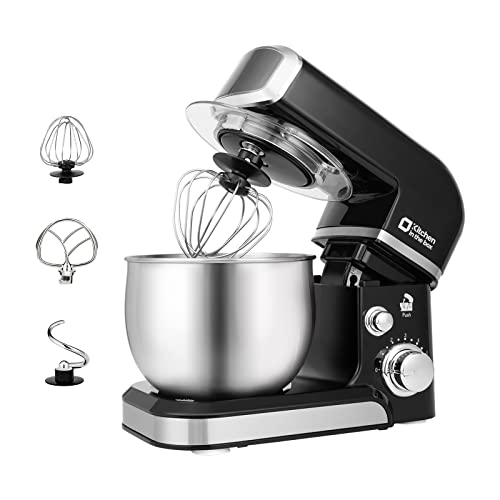
The Kitchen in the Box 3.2-quart mixer is a compact choice for small kitchens, apartments, and light cake baking. Its six speed settings give you room to start slowly and build speed as the batter comes together. The listed set includes an egg whisk, dough hook, and flat beater, so it covers the main jobs most home bakers need. Its smaller body may also fit well under a cabinet when you are short on counter space.
This mixer makes the most sense for cupcakes, small layer cakes, muffins, cookies, and simple frosting. The flat beater can mix cake batter, while the whisk helps add air to egg whites and cream. A small bowl is not a weakness for every baker; it can help you avoid making too much batter for a small household. Still, I would use short mixing cycles and watch the texture when working with thick mixtures.
Pros:
- Compact size suits small counters and apartments
- Six speeds support slow starts and gentle mixing
- Includes a whisk, dough hook, and flat beater
- Light weight makes it easier to move and store
- Useful for cupcakes, small cakes, and daily baking
- Smaller bowl helps limit waste in small batches
Cons:
- 3.2-quart capacity may feel small for large layer cakes
- Lightweight designs can move during very thick mixing
- Not the first choice for frequent heavy bread dough
My Recommendation
I recommend this model to a beginner who wants a simple cake mixer without giving up half the kitchen counter. It is also a good match for students, renters, and bakers who usually make one small cake at a time. The six speeds offer useful control for cake batter, whipped cream, and buttercream. If your batches stay modest, this may be the best stand mixer for cakes when space and price matter most.
The main trade-off is capacity. You may need to divide a large recipe, and thick dough can ask more from a small mixer. For light and medium cake work, though, the included tools and small footprint offer strong value. Check the current Amazon listing for the latest price, color, and availability before buying.
OLIXIS 4.2-Qt 10-Speed Stand Mixer

The OLIXIS 4.2-quart stand mixer offers a useful middle ground for home cake bakers. Its ten speed settings give you more fine control than a basic low-cost mixer. The tilt-head design can make it easier to add flour, scrape the bowl, or change the attachment. Its size should suit many standard cake recipes without taking up the room of a large commercial-style mixer.
I like the way this kind of speed range matches the needs of cake work. Low speed helps reduce flour clouds, medium speed blends butter and sugar, and higher speed can whip cream or egg whites. A 4.2-quart bowl gives you more working room than a compact 3.2-quart bowl, but it still fits the needs of most small families. You should pause to scrape the sides because no mixer reaches every spot in every bowl.
Pros:
- Ten speeds provide precise control for cake recipes
- 4.2-quart bowl suits many home-size batches
- Tilt-head design supports easier bowl access
- Useful range for batter, frosting, cream, and meringue
- Good balance between compact size and capacity
- Beginner-friendly controls do not feel complicated
Cons:
- May need bowl scraping during thick or low-volume mixes
- Not as roomy as a 5.3- or 6.3-quart model
- Large family baking may require more than one batch
My Recommendation
The OLIXIS is best for a home baker who wants more control than a six-speed model offers. It suits people who bake cakes often but do not need a huge bowl. I would place it near the top of my list for bakers who make cupcakes, birthday cakes, frosting, and cookies in regular home quantities. Its 10-speed control makes it a strong contender for the best stand mixer for cakes in the mid-size class.
This model gives you a practical mix of capacity and control. It may not be the right tool for very large wedding cakes or repeated bread batches, but that is not its main role. For ordinary cake days, it offers the kind of flexibility that helps a new baker learn speed and texture. Always review the current product details, warranty terms, and customer feedback on Amazon.
Martha Stewart 5.3-Qt Tilt-Head Mixer

The Martha Stewart 5.3-quart tilt-head stand mixer is made for bakers who want extra bowl space and a classic kitchen look. It lists 12 speeds, which can help you move from slow blending to fast whipping with small adjustments. The stainless steel bowl offers a durable mixing surface and gives you room for larger cake recipes. This capacity can feel especially useful during holidays, birthdays, and busy baking seasons.
A 5.3-quart bowl gives you a comfortable buffer when a recipe rises, splashes, or needs more ingredients. You can mix buttercream, cake batter, cookie dough, and whipped toppings without working at the edge of the bowl. The tilt head can also make it easier to lift the beater and remove the bowl. As with any stand mixer, I would start on low speed when adding dry ingredients and avoid overmixing the flour.
Pros:
- 5.3-quart capacity suits medium and larger cake batches
- Twelve speeds offer detailed mixing control
- Tilt-head design makes bowl access simple
- Stainless steel bowl is practical for frequent use
- Roomy bowl helps reduce spills during mixing
- Works well for batter, frosting, dough, and whipped cream
Cons:
- Larger body needs more storage and counter space
- May be more mixer than a small household needs
- Very thick dough can still challenge a home mixer
My Recommendation
I recommend this mixer to serious home bakers who make full-size cakes and several desserts each week. It is a good fit for parents, holiday bakers, and anyone who dislikes splitting recipes into small batches. The 12 speeds and 5.3-quart bowl make it a versatile tool for cake batter, icing, and other baking tasks. For many households, this is the best stand mixer for cakes when capacity and control matter more than a tiny footprint.
The extra room can save time and reduce mess, especially when you make a double batch. You will need a stable place to keep it, since a larger mixer is less convenient to lift after every use. Overall, the feature set looks well matched to regular home baking. Check Amazon for current stock, price, colors, and any included accessory details.
Martha Stewart 5.3-Qt Stainless Steel Mixer
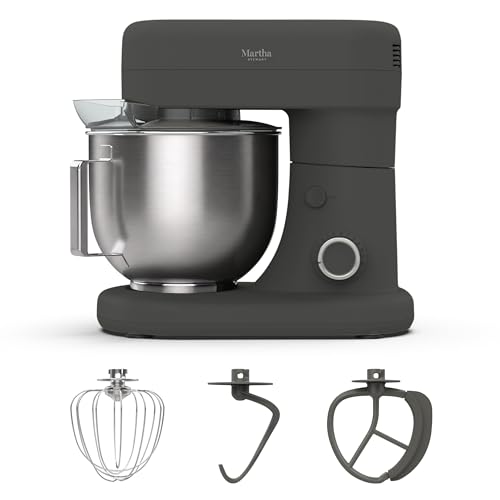
This second Martha Stewart 5.3-quart listing offers the same core type of design: a tilt head, 12 speeds, and a stainless steel bowl. It may appeal to shoppers who are comparing a different finish, bundle, or listing option. The spacious bowl is useful when you need to mix cake batter with less chance of flour or sugar jumping out. Twelve settings also let you make smaller speed changes as the mixture changes.
For cakes, control matters more than raw speed. You want low speed for dry ingredients, medium speed for creaming, and a higher setting for whipped mixtures when the recipe calls for it. The tilt head gives you a clear view of the bowl and helps you add ingredients in stages. I would still read the exact Amazon listing carefully because included tools, finish, and seller details can vary between product pages.
Pros:
- Generous 5.3-quart bowl for family-size recipes
- Twelve speeds support careful cake mixing
- Stainless steel bowl is easy to pair with many recipes
- Tilt head improves access while adding ingredients
- Useful for cakes, frosting, cookies, and whipped cream
- Different listing option may provide more finish choices
Cons:
- Needs more counter space than a compact mixer
- Large bowl may not be ideal for very small portions
- Buyers should confirm the exact accessory bundle
My Recommendation
This Martha Stewart listing is best for bakers who want a roomy bowl with a polished look and detailed speed control. It fits a household that makes regular cakes, cupcakes, and party desserts. The 5.3-quart size gives you useful space without moving into the largest mixer class. If the finish or bundle suits your kitchen, it can be the best stand mixer for cakes for medium-to-large home batches.
I suggest comparing this listing with the other Martha Stewart option before ordering. Look at the current price, color, seller, warranty, and included attachments. Those details can affect the value more than a small design change. When the listing offers the features you need, it is a flexible choice for a busy home baker.
NEWBULIG 6.3-Qt Stand Mixer

The NEWBULIG 6.3-quart stand mixer is the largest option in this group. Its roomy bowl is designed for bakers who often make large cake batches, several dozen cupcakes, or multiple desserts in one session. More capacity can make holiday baking feel less like a traffic jam in a small bowl. It may also appeal to users who want one mixer for cakes, cookies, frosting, and dough.
A large bowl gives you freedom, but it also brings more weight and takes more room. I would choose this size when you bake for a family, run a small home baking routine, or often double recipes. For small amounts, the beater may not always reach the mixture as well as it would in a smaller bowl, so bowl shape and minimum batch size matter. Check the product details and user reviews for the exact speed system, included attachments, and care instructions before purchase.
Pros:
- 6.3-quart capacity supports large cake batches
- Useful for families and frequent holiday baking
- Helps reduce the need to split double recipes
- Can handle a broad range of baking tasks
- Good choice for users who want extra bowl room
- Large capacity leaves more space for mixing and expansion
Cons:
- Large footprint may crowd a small counter
- Heavier size makes storage less convenient
- Small recipes may need scraping or careful bowl placement
My Recommendation
I recommend the NEWBULIG to high-volume home bakers who value bowl space above compact storage. It is a sensible choice for large birthday cakes, holiday desserts, family events, and repeated batches. The 6.3-quart capacity gives you a helpful cushion when a recipe grows or splashes. For big jobs, it may be the best stand mixer for cakes in this group.
This is not the best match for a baker who only makes a few cupcakes now and then. Its larger body needs a permanent spot, and you should confirm that the mixer’s power and attachments fit your recipes. If you bake often and have the space, the extra capacity can save time. Check Amazon for the latest listing information and availability.
How to Choose the Best Stand Mixer for Cakes
Buying a cake mixer looks simple until you compare bowl sizes, speed controls, attachments, and counter space. A mixer can look powerful in a product photo but still feel awkward if the bowl is too large for your usual recipe. I always begin with the way I bake, not with the biggest number on the box. The best stand mixer for cakes should fit your recipes, kitchen, and habits.
Choose the Right Bowl Capacity
Bowl size affects both comfort and output. A 3.2-quart mixer works well for small cakes, cupcakes, and modest batches of frosting. A 4.2-quart bowl gives you more room for everyday recipes without feeling too large. A 5.3- or 6.3-quart mixer suits larger batches and frequent baking.
More capacity is not always better. If you often make one small cake, a very large bowl may leave the beater too high above the mixture. That can force you to stop and scrape the bowl. Match the bowl to your normal recipe size, then leave some room for growth and splashes.
Look for Useful Speed Control
Cake batter needs more than one speed. Start slowly when you add flour, cocoa, or powdered sugar. A medium speed can cream butter and sugar, while a fast setting may help whip egg whites or cream.
Six speeds can handle many home tasks. Ten or 12 speeds give you smaller steps between slow and fast. Those extra settings do not automatically mean a better motor, but they can make it easier to control texture. I value a smooth low speed because it keeps dry ingredients in the bowl rather than on the counter.
Understand the Main Attachments
A flat beater is the main tool for most cakes. It blends butter, sugar, eggs, and dry ingredients into a smooth batter. It also works well for buttercream, cookie dough, and some soft fillings.
A whisk adds air to egg whites, cream, and light frostings. A dough hook helps with yeast dough, although a stand mixer designed for home use still has limits. Before you buy, confirm which attachments come in the box. Product names can look similar while bundles differ.
Check the Tilt-Head Design
A tilt-head mixer lets you raise the motor section to remove the bowl or change the beater. This design is easy to understand and useful in a home kitchen. It also gives you a clear view while you add ingredients.
Make sure you have enough vertical clearance if you plan to store the mixer under a cabinet. Some users prefer to leave the head unlocked while adding ingredients, but I suggest following the manual. Never place your hands near a moving beater, even when the mixer runs at a low speed.
Consider Weight and Stability
A heavy mixer often stays steadier during thick mixing. A light mixer is easier to move but may need more care on a smooth counter. Stability matters when you mix dense batter, chilled butter, or dough.
Small mixers can still work well for cakes because cake batter is usually softer than bread dough. If the mixer walks across the counter, stop the machine and check the surface, bowl fit, and load. Do not hold the mixer down while the beater runs unless the manufacturer says it is safe.
Think About Noise
Every electric stand mixer makes some noise. A louder sound may be normal at high speed, but grinding, sharp clicking, or a burning smell deserves attention. I suggest reading recent customer feedback for comments about sound during whisking and thick mixing.
A quiet mixer is pleasant when you bake early in the morning or share a small home. Still, noise should not be your only buying test. Speed control, bowl access, stability, and support matter just as much.
Review Cleaning and Care
Most cake mess comes from butter, sugar, egg, and powdered sugar. A removable bowl and simple attachments make cleanup easier. Stainless steel bowls can be practical because they do not hold food smells as easily as some other materials.
Always check the care instructions before placing an attachment in a dishwasher. Wipe the mixer body with a damp cloth and keep the motor housing away from water. Dry the bowl and tools well before storage. Good care protects the finish and helps the mixer stay ready for the next cake.
How I Compare Stand Mixers for Cake Baking
I compare a stand mixer by looking at the complete baking experience. Capacity tells me how much batter I can make, but it does not tell me how easy the mixer is to use. I also look at speed range, attachment value, access to the bowl, storage needs, and the type of baker who will use it.
I give extra weight to low-speed control because flour can make a mess when the mixer starts too fast. I also consider whether the mixer seems suited to small or large batches. A compact model should serve compact needs, while a large model should justify its space with useful capacity.
Online product listings can change over time. Prices, colors, bundles, sellers, and warranty details may differ by date. For that reason, I treat the product page as the final place to confirm current information. This is especially important when two listings share a similar name but show different images or accessories.
Tips for Better Cakes With a Stand Mixer
Use the Flat Beater for Most Batter
The flat beater is usually the right tool for butter cakes, pound cakes, and many cupcake recipes. It combines fat and sugar well and then blends in the eggs and dry ingredients. Stop the mixer before scraping the bowl with a spatula.
Start on Low Speed
Low speed keeps flour from flying out of the bowl. It also gives ingredients time to join without overworking the batter. Increase the speed only when the recipe calls for it.
Do Not Overmix After Adding Flour
Flour develops gluten when it mixes with liquid. Too much mixing can make a cake dense or chewy. Once the flour disappears, stop and fold by hand if the recipe needs a final blend.
Use Room-Temperature Ingredients When Required
Soft butter and room-temperature eggs often blend more smoothly. Cold ingredients can make the batter look curdled or uneven. Follow the recipe because some cakes use cold butter or cold cream on purpose.
Watch the Bowl During Small Batches
A large mixer may not mix a very small amount well. Scrape the sides and bottom when needed. The beater should contact enough mixture to combine it, but it should never touch the metal bowl with force.
Measure Flour With Care
Too much flour can make a cake dry and heavy. A kitchen scale gives the most repeatable result. If you use cups, spoon flour into the cup and level it instead of packing it down.
Stand Mixer Safety and Care
Read the manual before your first batch. Keep the mixer on a dry, level counter and secure the bowl before turning it on. Do not lift the head while the motor runs.
Keep loose sleeves, hair, and fingers away from the beater. Unplug the mixer before changing attachments or cleaning near the moving parts. If the motor becomes unusually hot, smells burnt, or struggles, stop and let it cool before checking the load.
Do not force a mixer through a recipe it cannot handle. Dense dough puts more strain on the motor than soft cake batter. A pause can help, but repeated overload may shorten the life of the machine. Use the correct attachment and stay within the maker’s stated limits.
Best For Comparison
| Best for | Why |
|---|---|
| Small kitchens and light batches | The Kitchen in the Box model uses a compact 3.2-quart format and includes the basic tools for cakes, frosting, and cream. |
| Everyday cake baking | The OLIXIS 4.2-quart mixer balances useful bowl space with 10 speed settings for better control. |
| Large family batches | The NEWBULIG 6.3-quart mixer gives frequent bakers more room for large recipes and repeated dessert work. |
Common Buying Mistakes to Avoid
Buying Only for Appearance
A pretty mixer can brighten a kitchen, but looks do not mix batter. Check bowl size, speeds, attachments, care instructions, and support first. Choose a color you like after the practical needs are clear.
Choosing the Largest Bowl Without a Plan
A large bowl helps with big batches, but it can be awkward for a small recipe. Think about your normal cake size and how often you bake. A medium mixer may give you better results for everyday portions.
Ignoring Counter Space
Measure the space before ordering. Check both width and height, including the room needed to tilt the head. A mixer that stays on the counter is often more useful than one that is too hard to store.
Expecting a Stand Mixer to Do Every Job
A stand mixer can mix, whip, and knead, but it does not replace every kitchen tool. You still need a spatula to scrape the bowl and a scale or measuring cups for accurate ingredients. The mixer helps with motion; it does not replace good baking habits.
Failing to Compare the Exact Listing
Check the title, pictures, included tools, color, seller, and return policy. Similar product names may represent different bundles. Confirm the details at checkout because Amazon listings and prices can change.
FAQs Of best stand mixer for cakes
What size stand mixer is best for cakes?
A 4.2- to 5.3-quart bowl works well for many home cake recipes. Choose a 3.2-quart model for small batches and a 6.3-quart model for large or frequent baking.
What attachment should I use for cake batter?
Use the flat beater for most butter cakes, cupcakes, and many frostings. Use the whisk for cream or egg whites, and use the dough hook for yeast dough.
How many speeds does a cake mixer need?
Six speeds can handle basic cake work. Ten or 12 speeds give you finer control, especially when you move from slow flour mixing to medium creaming or fast whipping.
Can a small stand mixer make a large cake?
It may, but you might need to divide the recipe. Never fill the bowl too high, and check the mixer’s instructions for maximum capacity.
Is a stand mixer better than a hand mixer for cakes?
A stand mixer saves your hands and keeps a steady speed. A hand mixer costs less and stores more easily, but it requires you to hold and guide it throughout the recipe.
Final Verdict: Which Should You Buy?
The Martha Stewart 5.3-quart mixer is my top pick for many home bakers. It offers useful capacity, 12 speeds, and easy bowl access. For small kitchens, choose Kitchen in the Box; for large batches, choose NEWBULIG.
The best stand mixer for cakes is the one that matches your batch size and space. Compare the latest Amazon price, bundle, warranty, and availability before ordering.