
The best meat thermometer for steak gives fast, accurate readings so every cut reaches your ideal level of doneness.
You know the feeling: the steak looks perfect outside, yet you hesitate before slicing it. Cut too soon, and the juices run out. Wait too long, and a costly ribeye turns gray in the middle. I tested the key features that matter most, including speed, probe design, screen clarity, handling, and cleaning. These digital thermometers help remove the guesswork from grilling, pan-searing, broiling, and reverse-searing steak.
Alpha Grillers Instant-Read Thermometer

The Alpha Grillers Instant Read Meat Thermometer is a simple tool for cooks who want a quick answer without a long setup. Its digital display makes it easy to check steak, burgers, chicken, pork, and candy. I like this style for busy grill sessions because I can open the probe, take a reading, and close it again with little fuss. The design also feels more familiar than a multi-part wireless system.
For steak, probe placement matters as much as speed. I insert the tip into the thickest part of the meat and avoid touching the pan, grill grate, or bone. A quick reading helps me pull the steak at the right point, then carryover heat finishes the job during the rest. This is a strong choice for anyone seeking the best meat thermometer for steak without paying for features they may never use.
Pros:
- Fast digital readings for everyday cooking
- Simple controls that are easy to learn
- Useful for steak, meat, poultry, and baked foods
- Compact design fits well in a kitchen drawer
- Easy-to-read screen supports quick checks
- Good fit for grilling and pan-searing
Cons:
- It does not provide remote wireless monitoring
- It is less useful when you need several temperature zones at once
- You must open the grill or oven to take a reading
0.5-Second Instant-Read Thermometer

This red instant-read thermometer focuses on speed. The listed 0.5-second reading time is helpful when heat is rising fast and you want to keep the grill lid closed. I find that quick readings reduce the chance of overcooking a thin steak while I check several pieces in one batch. The bright color also makes the tool easier to spot among tongs, brushes, and pans.
The biggest benefit is control. Instead of guessing from color or cutting into the meat, I can check the internal temperature near the center. That keeps the outside crust intact and makes it easier to cook steaks to different preferences. If speed sits at the top of your list, this may be the best meat thermometer for steak for weeknight cooks and weekend grill fans.
Pros:
- Very fast listed 0.5-second response
- Bright red body is easy to find
- Helpful for checking several steaks in a row
- Reduces time spent with the grill or oven open
- Digital display gives a clear temperature reading
- Works well for cooks who value simple operation
Cons:
- Fast readings still depend on correct probe placement
- It does not replace a leave-in probe for long cooks
- Extra care is needed to keep the electronic body away from water
TempPro TP19H Digital Meat Thermometer

The TempPro TP19H is built around the kind of direct use most home cooks want. It provides a digital reading in about one second, so you do not need to hold a hot steak over the pan for long. The folding probe makes storage easier and adds a layer of protection when the thermometer sits in a drawer. Its shape also feels natural for quick checks at the stove or grill.
I see this model as a practical middle ground. It offers more convenience than a basic dial thermometer but avoids the app work and charging routine of a wireless kit. Use it on the thickest section of a steak, wait for the number to settle, and compare that reading with your target temperature. For many households, the TP19H can serve as the best meat thermometer for steak and a useful all-purpose kitchen thermometer.
Pros:
- Quick one-second digital response
- Folding probe helps with storage and safety
- Useful for grilling, frying, roasting, and baking
- Simple design suits new and experienced cooks
- Easy way to check steaks without cutting them open
- Good everyday option for a home kitchen
Cons:
- It does not offer wireless alerts or remote viewing
- It cannot track a roast without repeated manual checks
- The cook must open the grill or oven to use it
ThermoMaven 0.5-Second Professional Thermometer
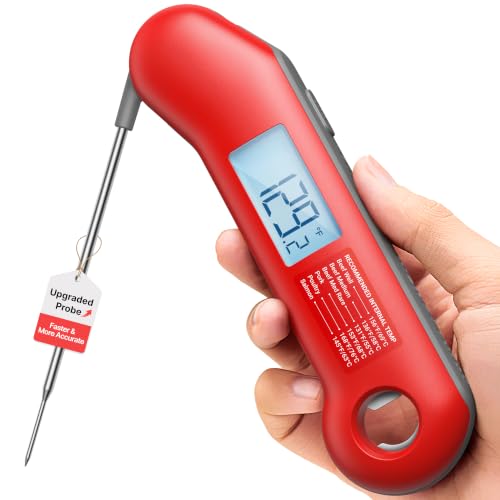
The ThermoMaven professional digital thermometer stands out with a listed 0.5-second response and ±0.5°F accuracy. Those numbers matter when you cook expensive steaks and want a narrow margin of error. A fast, precise probe lets me check several spots without leaving the meat in a hot pan for too long. It is also useful when two steaks have different thicknesses or when guests want different levels of doneness.
Accuracy does not mean much if a thermometer is hard to use. I look for a clean screen, a probe that enters the meat smoothly, and controls that make sense while my hands are busy. This model is a strong pick for cooks who pay close attention to temperature and want a professional-style tool for a reasonable home setup. It is one of the most compelling choices for the best meat thermometer for steak when precision comes before extra smart features.
Pros:
- Listed 0.5-second response time
- Listed ±0.5°F accuracy supports precise cooking
- Useful for thick cuts and high-value steaks
- Fast checks help limit heat loss from the grill
- Suitable for home cooks who want professional-style control
- Helpful when cooking steaks to different temperatures
Cons:
- It is still a manual instant-read thermometer
- It does not give remote alerts during a long cook
- Users should verify calibration from time to time
ThermoMaven Sub-1G Wireless Thermometer

The ThermoMaven Sub-1G wireless thermometer takes a different approach from the instant-read models above. Its wireless probe and standalone base allow you to monitor a cook without repeatedly lifting a grill lid or opening an oven door. That can help with thick steaks, reverse searing, brisket, roasts, and other foods that need time. The standalone base is especially useful for cooks who prefer not to depend on a phone for every temperature check.
I would choose this style when convenience matters more than a quick spot check. Insert the probe into the center of the steak, set the cooking process, and watch the temperature as it rises. Wireless tools cannot fix a poorly placed probe, so I still confirm that the tip sits in the thickest part and away from bone or the cooking surface. For long cooks, this could be the best meat thermometer for steak because it keeps the information close while you work.
Pros:
- Wireless monitoring reduces the need to open the grill
- Standalone base offers convenient viewing
- Useful for thick steaks and reverse-sear cooking
- Better suited to long cooks than a basic instant-read tool
- Helps protect steady oven and grill temperatures
- Useful for roasts, poultry, and barbecue as well as steak
Cons:
- Wireless systems cost more than basic instant-read models
- The probe and base need charging or battery care
- It may feel like too much equipment for a fast weeknight steak
My Recommendation
For most steak cooks, I would start with the ThermoMaven 0.5-Second Professional Thermometer. Its listed speed and ±0.5°F accuracy give you strong control at the moment that matters most: just before the steak leaves the heat. Choose the Alpha Grillers or TempPro TP19H if you want a simpler, practical tool for everyday meals. Pick the red 0.5-second model if a very fast reading and easy visibility are your top needs.
The ThermoMaven Sub-1G is the better fit for reverse searing, thick cuts, and long cooks. It costs more and needs more setup, but wireless monitoring can make the process calmer. In short, the best meat thermometer for steak depends on your cooking style: instant-read models win for speed, while wireless models win for hands-off control.
| Best for | Why |
|---|---|
| Fast everyday steak checks | Instant-read models give quick readings with little setup. |
| Precision-focused cooks | The ThermoMaven professional model lists ±0.5°F accuracy. |
| Reverse searing and long cooks | The Sub-1G wireless design lets you monitor temperature from a distance. |
How I Choose the Best Meat Thermometer for Steak
A thermometer should do more than show a number. It should help you make a better decision at the grill. I judge each model by the parts that affect real cooking, not just the claims printed on the package. Speed, accuracy, probe shape, screen quality, and ease of cleaning all matter.
I also consider how a thermometer fits the type of steak you cook. A thin strip steak needs a quick check because its temperature can rise fast. A thick ribeye or filet may benefit from a leave-in wireless probe. The best meat thermometer for steak should match the cut, the heat source, and the way you like to cook.
Accuracy Comes First
A thermometer can be fast and still be wrong. If it reads too high, you may pull the steak too early. If it reads too low, you may turn a medium-rare steak into medium or well done. That is why I place accuracy above extra lights, colors, and smart features.
Many cooks test a thermometer in ice water. A well-made ice bath should read close to 32°F when prepared with crushed ice and a little water. Boiling water can also provide a rough test, but the result changes with altitude. The USDA advises using a food thermometer to check safe internal temperatures, and I follow that advice rather than relying on touch or appearance.
Do not expect every part of the steak to have the same reading. Heat moves from the surface toward the center. The center is usually the coolest point, so I place the probe tip there. For a thin cut, insert the probe from the side so the tip reaches the middle instead of stopping near the top.
What Speed Means in Real Use
A fast thermometer is helpful, but speed is not the whole story. A reading in half a second sounds impressive, yet the number must still settle and remain stable. I prefer a tool that gives a quick reading I can trust rather than one that flashes a number that keeps changing.
Fast response helps in three ways. It limits heat loss when you open a grill. It reduces the chance of overcooking thin meat while you check it. It also lets you test several steaks without holding your hand near a hot pan for too long.
For most home cooks, one second is already fast enough. A model with a slightly slower response may still be an excellent choice if it has a good probe, a clear display, and reliable readings. This is one reason the TempPro TP19H remains a sensible everyday option.
Probe Length and Shape
The probe should reach the center of the steak without forcing your fingers close to the heat. A long probe is useful for thick cuts, cast-iron pans, and deep roasts. A slim probe can create a smaller hole and often works well for smaller steaks.
Probe shape also affects comfort. A folding probe protects the point during storage. A fixed probe may feel ready for use at any moment. Wireless probes need enough length to reach the center of the meat while leaving the transmitter or base outside the grill or oven.
Never push a probe through the steak and out the other side. The tip should sit in the center. If the probe touches the pan or grate, it may show the temperature of the hot metal rather than the meat.
Screen and Controls
A bright screen matters when smoke fills the air or the kitchen has low light. Large numbers help when you glance at the thermometer from a short distance. Auto-rotate screens can help left-handed and right-handed users, but they are not essential.
Controls should be easy to use with one hand. I like simple buttons and a clear power function. Too many modes can slow you down when the steak is already at the edge of your target temperature.
A wireless model adds more controls. You may set alarms, select a probe, or choose a temperature scale. Those features can be helpful, but I suggest practicing before cooking an expensive steak. A short test run removes stress when dinner is on the line.
Instant-Read or Wireless?
An instant-read thermometer is best for a steak that cooks in a few minutes. Sear the first side, flip it, then check the center near the end. This method gives you direct control and creates little cleanup.
A wireless thermometer is better for a thick steak that starts in a low oven or on the cool side of a grill. It lets you track the inside while the surface slowly warms. You can then move the steak to high heat for the final sear.
Neither style is automatically better. An instant-read model is like a quick snapshot. A wireless thermometer is more like a movie. The right choice depends on whether you need one reading or a steady view of the entire cook.
Steak Temperature Guide
Steak doneness is personal, but temperature gives you a repeatable way to reach the result you want. The numbers below are general pull targets, not rigid rules. The steak may continue to rise a few degrees while it rests, especially after a hot sear.
| Doneness | Approximate final temperature |
|---|---|
| Rare | About 120–125°F |
| Medium rare | About 130–135°F |
| Medium | About 140–145°F |
| Medium well | About 150–155°F |
| Well done | About 160°F and above |
For food safety, the USDA recommends a minimum internal temperature of 145°F for whole cuts of beef, pork, veal, and lamb, followed by a three-minute rest. That guideline is important, especially when serving children, older adults, pregnant people, or anyone with a weak immune system. If you prefer a lower steak temperature, understand that it does not meet that general safety recommendation.
For a traditional medium-rare steak, many cooks pull the meat a few degrees before the final target. Carryover cooking then raises the temperature as the steak rests. The exact rise depends on thickness, starting temperature, cooking heat, and the length of the rest.
How to Use a Meat Thermometer for Steak
First, dry the steak with paper towels. A dry surface browns better and makes it easier to hold the steak with tongs. Season it as you prefer, then cook with a method that suits the cut.
When the steak nears your expected finish, insert the thermometer into the side. Aim for the center of the thickest section. If the steak is very thick, take readings from more than one spot and use the lowest stable reading.
Pull the steak from the heat when it reaches your chosen pull temperature. Place it on a clean plate or board and let it rest. Clean the probe before using it again, especially if you check raw meat and then cooked food.
Where Should the Probe Go?
The tip must reach the center of the thickest part. The center usually takes the longest to cook, so it gives the most useful reading. Insert from the side for thin steaks and from the top for thick steaks when that path reaches the middle.
Avoid bones, fat pockets, and the cooking surface. Bone can conduct heat and create a false high reading. Fat may not reflect the temperature of the lean center. If the first reading seems unusual, move the probe slightly and check again.
Should You Check Steak While It Cooks?
Yes, but do not check too often. Every opening lets heat escape and can slow the cook. I usually wait until the steak looks close to finished, then take one or two careful readings.
A wireless probe changes this routine. You can watch the temperature rise without opening the lid. Even then, check the probe position if the reading seems far from what you expect.
How Long Should Steak Rest?
Most steaks benefit from a rest of about five minutes. Very thick cuts may need longer. Resting allows juices to move back through the meat and gives carryover heat time to finish the center.
Do not wrap every steak tightly in foil. A tight wrap can soften the crust. A loose piece of foil can help in some cases, but a clean plate is often enough for a short rest.
Accuracy and Calibration Tips
Even a good thermometer needs care. Drops, steam, grease, and harsh cleaning can affect its life. Store it where the probe will not bend or hit a drawer wall.
To test it, prepare an ice bath with plenty of ice and a small amount of water. Stir the bath, place the probe tip in the center, and wait for the reading to settle. The display should be close to 32°F. Do not let the probe touch the glass or the ice itself.
Some thermometers allow calibration. Follow the manual if your model includes that function. If the reading stays far from the expected result, replace the battery or contact the maker before trusting it with expensive food.
Cleaning and Care Tips
Clean the metal probe after every use. Soap, warm water, and a clean cloth usually work well. Dry the probe before folding or storing it.
Keep the digital body away from running water unless the product instructions clearly state that it is waterproof. Many thermometers resist splashes but are not designed for soaking. A damp cloth can remove grease from the handle without risking the electronics.
Do not leave an instant-read thermometer in a hot pan or on a grill grate. It is designed for short checks. Use a rated leave-in probe when you need continuous monitoring.
Common Steak Thermometer Mistakes
Checking the Surface Instead of the Center
The crust can be far hotter than the inside. A surface reading tells you little about doneness. Push the probe deep enough to reach the coolest center.
Using the Thermometer Too Early
Checking again and again can slow the cook. It also creates more holes in the steak. Wait until the meat looks close to your target, then take a careful reading.
Touching the Pan or Bone
Metal heats faster than meat. If the tip touches a hot pan or bone, the reading may rise sharply. Move the probe and check the center again.
Ignoring Carryover Cooking
A steak can keep cooking after you remove it from the heat. Thick cuts often rise more than thin cuts. Pulling the steak a few degrees early can help you reach the final temperature you want.
Trusting Color Alone
Lighting can change how meat looks. Marinades and smoke can also alter the outside color. A thermometer gives you a better guide than appearance alone.
Which Thermometer Fits Your Cooking Style?
Choose an instant-read thermometer if you mostly cook steaks in a skillet, on a hot grill, or under a broiler. It is quick, affordable, and easy to store. The Alpha Grillers, red 0.5-second model, and TempPro TP19H all fit this basic need.
Choose a precision-focused model if you often buy thick or costly steaks. The ThermoMaven professional thermometer lists ±0.5°F accuracy and a fast response. That makes it appealing when a small temperature change affects your final result.
Choose wireless monitoring if you enjoy reverse searing or cooking on a two-zone grill. The ThermoMaven Sub-1G helps you watch the internal temperature without lifting the lid. It may be more than you need for a thin steak, but it can save effort during long cooks.
FAQs Of best meat thermometer for steak
What is the best meat thermometer for steak?
The best choice depends on your cooking style. For most people, a fast and accurate instant-read model is the easiest option. The ThermoMaven professional thermometer is a strong pick when precision matters, while the Sub-1G suits long and wireless cooks.
What temperature should steak reach?
Many cooks prefer medium rare at about 130–135°F. The USDA recommends 145°F for whole cuts of beef, followed by a three-minute rest. Use your preferred target while keeping food safety needs in mind.
Are instant-read thermometers accurate?
Good instant-read thermometers can be accurate when used correctly. Test the tool in an ice bath from time to time. Also place the probe tip in the center of the steak and keep it away from bone and metal.
Can I leave an instant-read thermometer in the steak?
Usually, no. Instant-read models are made for short checks, not continuous exposure to high heat. Use a leave-in probe, such as a wireless model, for long cooking periods.
Should I measure steak before or after resting?
Measure near the end of cooking to decide when to remove the steak. Check again after resting if you want to learn how much carryover heat affected the final result. The first reading controls the cook, while the second reading helps you improve next time.
Final Verdict: Which Should You Buy?
The ThermoMaven professional model is my top pick for the best meat thermometer for steak because it combines a fast listed response with ±0.5°F accuracy. Choose the Sub-1G wireless model for reverse searing and long cooks.
A reliable steak thermometer turns guesswork into repeatable results. Pick the style that matches your grill, cut, and budget, then check current availability and price before buying.