
The best can opener for left-handed cooks is a smooth, sharp manual model built for natural left-hand turning.
Opening a can should take seconds, not a wrestling match. Yet many standard can openers feel backward for left-handed users, force the wrist into an awkward angle, or leave a sharp rim behind. I reviewed these left-handed kitchen tools for grip, turning comfort, blade action, safety, and daily value. The goal is simple: find a can opener for left-handed cooks that feels natural from the first turn.
Lefty’s Premium Left-Handed Can Opener

Lefty’s Left Handed Can Opener is made for people who turn a can opener with the left hand. Its black body and stainless steel parts give it a solid feel without making it look bulky. The sharp cutting wheel aims to bite into the lid with less effort. For many users, that left-hand layout can feel more natural than a standard right-handed opener.
The handle design also matters when you open several cans for soup, chili, or pet food. A smooth turn can help reduce wrist strain and hand fatigue. The smooth-edge cutting style is useful when you want to lower the chance of touching a jagged metal rim. As the best can opener for left-handed shoppers, this model stands out for its focused design and gift-ready appeal.
Pros:
- Designed for comfortable left-hand use
- Sharp stainless steel cutting wheel
- Smooth-edge design helps reduce rough rims
- Strong black body suits daily kitchen use
- Easy-turn action for common food cans
- Good gift choice for left-handed adults
Cons:
- Manual turning still requires some hand effort
- Black surfaces may show food marks over time
- It may need careful placement on very small cans
Left Handed Manual Can Opener With Red Handle
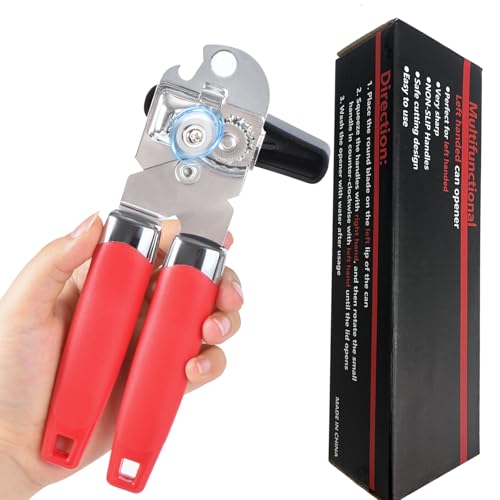
This red-handle manual can opener keeps the design simple and easy to understand. The bright handle is easy to spot in a crowded utensil drawer. Its left-handed layout helps the user turn the knob in a more natural direction. That small change can make a big difference for cooks who often find right-handed tools uncomfortable.
I like this type of opener for kitchens that need a basic tool without extra parts or batteries. The red handle gives the fingers a clear place to grip, while the manual design keeps operation quiet. It can suit a student kitchen, first apartment, or family home. If you want the best can opener for left-handed use at a practical price, this red model deserves a close look.
Pros:
- Left-handed design supports a natural grip
- Bright red handle is easy to find
- Simple manual action needs no batteries
- Useful for apartments, dorms, and home kitchens
- Lightweight form fits most utensil drawers
- Simple controls help new users learn quickly
Cons:
- Red plastic may not feel as premium as metal
- Manual use can be slower than an electric opener
- Users with weak grip strength may prefer a larger handle
King Mills Left-Handed Stainless Steel Opener

The King Mills manual left-handed can opener uses stainless steel in a classic kitchen-tool design. Its red finish adds a clear visual cue and makes it simple to grab from a drawer. The opener is aimed at adults who want a direct tool with no motor, charging cable, or setup step. For regular cans, the left-side operation may help the hand and wrist work in a steadier path.
Stainless steel is a useful choice for a tool that often meets food moisture. Still, I recommend drying any manual can opener after washing to help keep its moving parts working well. This model may appeal to users who value a traditional feel and a firm build. It is also a strong candidate for the best can opener for left-handed adults who want a dependable spare for a second kitchen.
Pros:
- Left-handed layout supports easier turning
- Stainless steel parts offer a sturdy feel
- Red finish makes the tool easy to spot
- No batteries or electrical parts to maintain
- Suitable for regular home food cans
- Traditional design feels familiar to many users
Cons:
- It needs hand pressure and repeated turning
- Metal parts should be dried after cleaning
- The classic shape may feel less comfortable for very small hands
Left-Handed Can Opener and Bottle Opener

This purple left-handed opener adds a bottle-opening function to its main can-opening job. That two-in-one layout can save drawer space in a small kitchen. The bright purple color gives it a playful look and helps it stand out from silver utensils. Its left-hand format is the key feature for users who want the handle and turning action to match their dominant hand.
A combined tool can be helpful at picnics, parties, and casual family meals. You can keep one tool nearby instead of searching for a separate bottle opener. Like any manual opener, it works best when you set the cutting wheel firmly on the can rim before turning. This may be the best can opener for left-handed buyers who want extra function in a compact kitchen tool.
Pros:
- Made for left-handed kitchen use
- Combines a can opener and bottle opener
- Bright purple color is easy to locate
- Saves space in a small utensil drawer
- Useful for meals, parties, and outdoor use
- Simple manual design does not need power
Cons:
- Two-in-one tools can be harder to clean around joints
- Bright color may not match every kitchen style
- It may need more practice than a single-purpose opener
KYDLLF Left-Handed Can and Bottle Opener

The KYDLLF opener pairs left-handed can opening with bottle opening in one black tool. Its dark finish looks neat and works well with many kitchen styles. The multi-use shape can help reduce clutter, especially when drawer space is limited. It is aimed at users who want a simple utensil for common kitchen and drink tasks.
The main benefit is convenience rather than a complex feature set. A left-handed user can keep the tool close to the cooking area and use it for cans, bottles, and quick meal prep. I would choose it for a home that wants a useful backup tool or a compact option for a camper. It is a practical pick when the best can opener for left-handed use must also open bottles.
Pros:
- Supports left-handed operation
- Includes a bottle opener function
- Black finish looks clean and simple
- Can reduce the need for two separate tools
- Useful for kitchens, RVs, and camping kits
- Manual design works without batteries
Cons:
- Multi-use construction may have more areas to clean
- Black color can make food residue harder to see
- It still requires hand strength and steady control
How to Choose the Best Can Opener for Left-Handed Use
A left-handed can opener should do more than claim to be “lefty friendly.” The handle, knob, cutting wheel, and direction of motion should work together. When those parts match your natural movement, the task feels smooth instead of forced. I look at the full design, not just the label on the package.
Check the Turning Direction
The first thing to check is how the handle turns. A right-handed opener may make a left-handed cook twist the wrist inward or reach across the lid. That position can feel awkward after only one can. A true left-handed design should let you hold the opener in the left hand and turn it with a clear, natural motion.
Direction matters most for people who use a can opener often. It also matters for older adults, users with arthritis, and anyone with limited wrist movement. A tool that fits the hand can feel like a small bridge over a daily problem. Before you buy, study the product photos and user notes for signs of left-side operation.
Look for a Sharp Cutting Wheel
A sharp wheel should pierce the lid with steady pressure. A dull wheel may skid, crush the rim, or force you to squeeze the handles too hard. It can also make the job take longer. Stainless steel cutting parts are common because they can offer strength and resist normal kitchen moisture.
Sharp does not mean careless. Keep fingers away from the lid and rim during use. Even a smooth-edge opener can leave a metal edge, and the lid may be sharp after removal. Use a spoon or utensil when lifting the lid if it does not release cleanly.
Consider Smooth-Edge Cutting
Some openers cut through the top of the lid, while others cut near the side and aim to leave a smoother rim. A smooth edge can improve comfort when you handle the can after opening. It may also help reduce the chance of a sharp lip catching a finger.
No can opener removes every safety concern. Inspect the rim before touching it, and throw away the lid at once. For homes with children, store the tool and the used lid out of reach. These simple habits matter as much as the opener design.
Choose a Comfortable Handle
The handle should give the fingers enough room to grip. Thin handles may work well for some people but can press into the palm during repeated use. A wider handle can spread the force across more of the hand. Soft-touch areas may add comfort, but a basic shaped handle can still work well.
Left-handed shoppers with weak grip strength should pay close attention here. A tool that needs less squeezing may be easier to use each day. If you cook for a large family, choose a design that feels stable after several turns. Comfort is not a luxury when the opener serves as a daily kitchen tool.
Think About Size and Storage
Most manual can openers fit in a drawer, but their shapes vary. A compact model suits a small apartment or travel kit. A larger model may offer more space for the fingers and more control. The right choice depends on your hand size and storage space.
Color can help, too. A red or purple handle is easy to see in a deep drawer. A black body may look more subtle on a countertop. Pick the style that makes you want to keep the tool in an easy-to-reach place.
Review Cleaning Needs
Food can collect near the cutting wheel and gears. Wipe the opener after use and follow the care directions from the maker. If the tool is not marked as dishwasher safe, hand washing is the safer choice. Dry the metal parts well before putting the opener away.
Never leave a wet opener in a closed drawer. Moisture can lead to rust or stiff movement over time. A clean, dry tool is also less likely to transfer old food smells. Good care can help a manual opener last longer.
Manual or Electric?
Manual openers are small, quiet, and ready whenever you need them. They do not require an outlet, batteries, or a counter spot. That makes them useful for power cuts, camping, dorm rooms, and simple kitchens. They also cost less in many cases.
Electric openers can help users who cannot turn a knob. Yet they take more space and need power. They may also add noise and cleaning steps. For most left-handed users who can turn a handle, a well-built manual model remains the easiest place to start.
Why Left-Handed Design Matters
Many kitchen tools look neutral but are not. The handle may sit at an angle that favors the right hand. The turning knob may pull the wrist into a bend. After one can, the issue may seem small. After many cans, that small issue can become a source of real frustration.
A left-handed opener changes the movement. It lets the dominant hand guide the tool instead of working around it. This can improve control and make the opening motion feel more direct. The best can opener for left-handed users should feel almost boring to operate, because the design stays out of the way.
This does not mean every left-handed person needs the same tool. Some users can use a standard opener with no issue. Others need a wide handle, low turning force, or a smooth rim. Your hand size, grip strength, and cooking habits should guide the final choice.
Safe Can Opener Use
Place the cutting wheel on the can rim before you turn the handle. Keep the can on a flat surface so it does not slide. If the opener slips, stop and reset it rather than adding more force. A steady start often prevents a rough cut.
After the lid separates, lift it with care. Do not run a finger around the rim to test it. Put the lid in the trash or recycling container right away, based on local rules. Rinse the can before recycling it if your local program asks you to do so.
Check the opener from time to time. If the wheel becomes dull, rusty, or hard to turn, replace the tool. A low-cost kitchen tool is not worth a hand injury. These steps help every user, whether the opener is manual, electric, right-handed, or left-handed.
My Recommendation
For most shoppers, Lefty’s Premium Left-Handed Can Opener is the strongest overall choice. It combines a clear left-hand design, a sharp stainless steel cutting wheel, smooth-edge intent, and an easy-turn body. I would choose it for a left-handed home cook who opens cans often and wants a focused tool rather than a multi-use gadget. It also makes a thoughtful gift for a left-handed parent, partner, student, or friend.
The red-handled manual model is a good fit for shoppers who want a simple and visible kitchen tool. King Mills is better for users who prefer a more traditional stainless steel feel. The purple and KYDLLF models suit people who want a can opener and bottle opener together. All five are worth considering, but the best can opener for left-handed use depends on grip comfort, storage, and how often you open cans.
| Best for | Why |
|---|---|
| Overall left-handed use | Lefty’s offers a focused design, sharp wheel, and smooth turning action. |
| Small kitchens and mixed tasks | The purple and KYDLLF models add a bottle opener in a compact form. |
| Traditional stainless steel feel | King Mills suits adults who prefer a classic manual kitchen tool. |
Tips for Getting Better Results
Start with a clean, dry can. A wet or oily rim can make the tool slide. Set the wheel close to the outer edge, then close the handles with firm but gentle pressure. Once the wheel bites, keep a steady rhythm instead of turning too fast.
If the opener stops, do not force the knob. Move back a short distance and check the wheel. The lid may have a dent, or the opener may not sit straight. Small adjustments often solve the problem without bending the can.
For very large cans, take short breaks if your hand feels tired. A manual tool works through repeated motion, so comfort matters. If you feel pain, stop using the opener and consider a larger-grip or electric design. Kitchen tools should make work easier, not test your limits.
FAQs Of best can opener for left-handed
What makes a can opener left-handed?
A left-handed can opener places its handle and cutting action for use with the left hand. The turning direction should feel natural instead of forcing the wrist into an awkward angle. Product photos and user reviews can help confirm the layout.
Is a left-handed can opener safer?
It can improve control because the tool matches the user’s dominant hand. Some models also aim to create a smoother rim. However, every opened can may have sharp metal, so handle the lid with care.
Can a left-handed person use a regular can opener?
Yes, some left-handed people can use a standard model. The issue is comfort and control, not ability. A left-handed design may feel easier for users who experience wrist strain or poor grip with a right-handed opener.
Are manual can openers better than electric models?
Manual models are small, quiet, and do not need power. Electric models can help people with limited hand strength but need batteries or an outlet. Choose the type that matches your grip, space, and daily use.
How should I clean a left-handed can opener?
Wipe away food after each use and follow the maker’s care directions. Hand wash it when the package does not confirm dishwasher safety. Dry the wheel and joints before storage to help prevent rust and stiff movement.
Final Verdict: Which Should You Buy?
Lefty’s Premium Left-Handed Can Opener is my top pick. Its left-hand layout, sharp wheel, smooth-edge focus, and solid feel make it the best can opener for left-handed daily use.
Choose a two-in-one model for bottle opening, or King Mills for a classic stainless steel style. Compare grip, care, and current Amazon availability before ordering.