
A coarse knife sharpener removes damaged metal, while a fine sharpener refines and polishes the edge.
Choosing between a coarse vs fine knife sharpener can feel confusing, especially when both tools look similar. The right choice depends on how dull or damaged your knife is, the type of sharpener you own, and the edge finish you want. This guide explains the difference in simple terms, with practical tips for safer, sharper, and longer-lasting results.
Coarse vs Fine Knife Sharpener: The Basic Difference
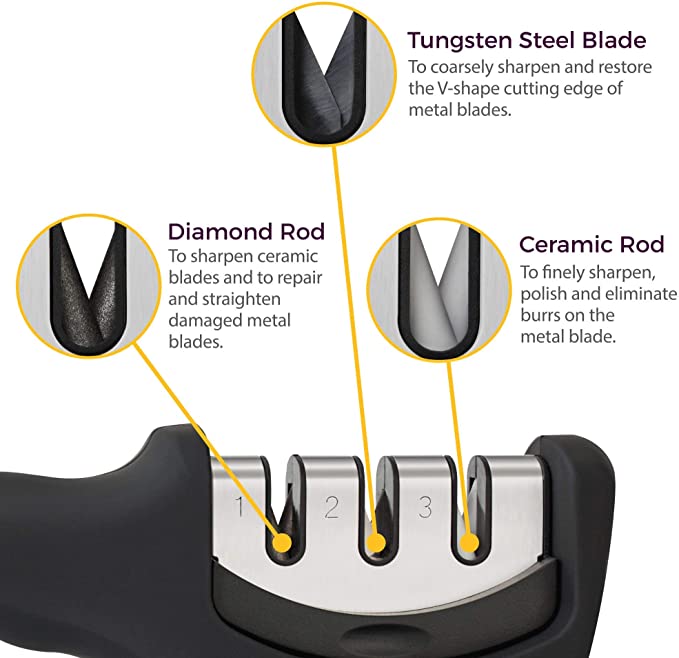
A coarse knife sharpener uses a rough abrasive surface to remove more steel from the blade. It is made for very dull knives, small chips, rounded edges, or blades that have not been sharpened for a long time.
A fine knife sharpener uses a smoother abrasive surface. It removes less metal and refines the edge after coarse sharpening. It can also help maintain a knife that is already fairly sharp.
Think of the process like repairing a scratched table. A coarse tool removes deep damage. A fine tool smooths the surface and gives it a clean finish. This is the key idea behind coarse vs fine knife sharpener use.
| Feature | Coarse sharpener | Fine sharpener |
|---|---|---|
| Abrasive action | Removes more metal | Removes less metal |
| Best for | Very dull or damaged knives | Maintenance and polishing |
| Edge result | Creates a new bevel | Smooths and refines the bevel |
| Frequency of use | Occasional | More regular |
| Main risk | Over-sharpening | Not strong enough for major damage |
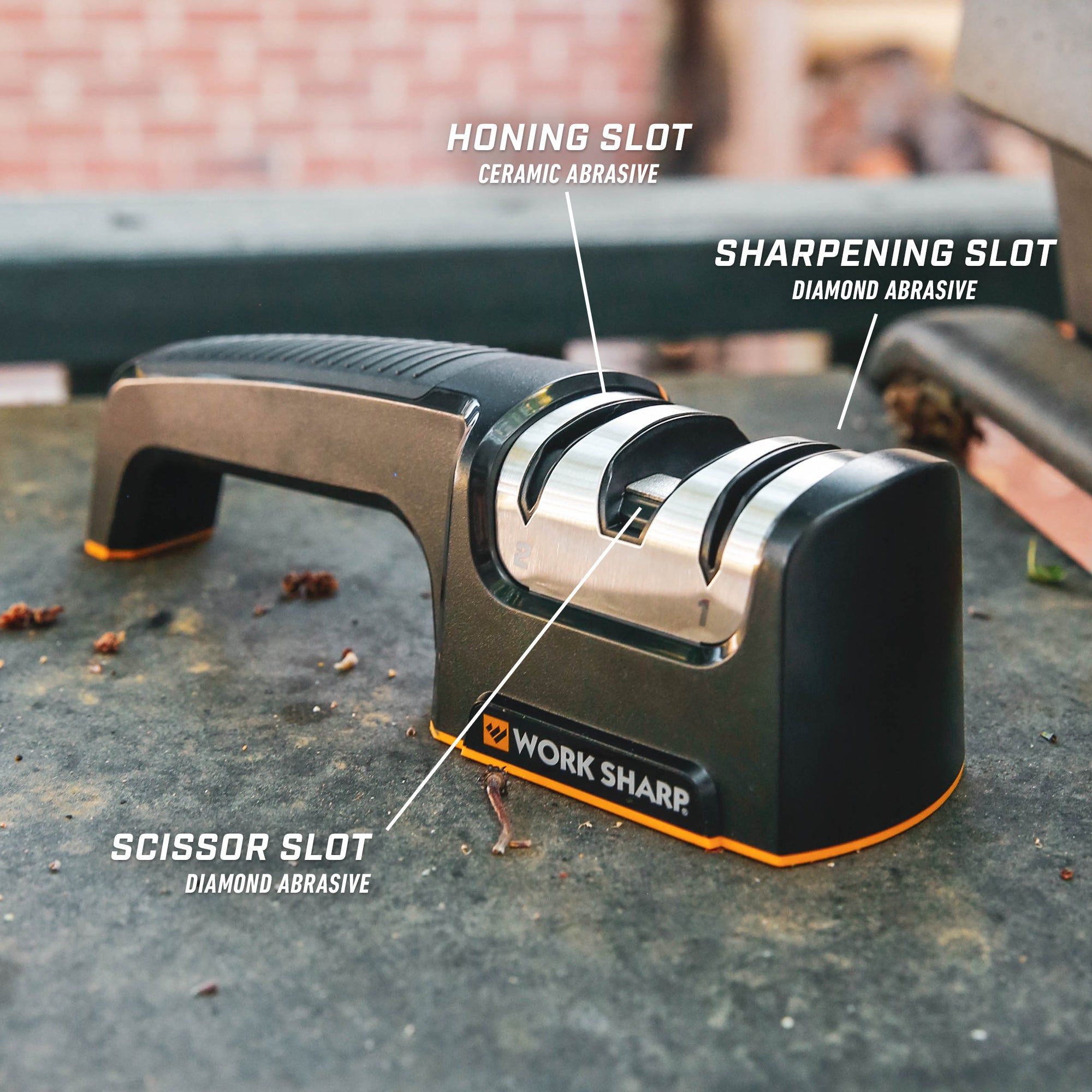
Most multi-stage knife sharpeners place the coarse slot first and the fine slot second. This order is important. Starting with the fine slot on a badly dull knife may take a long time and may not restore the correct edge shape.
What Does a Coarse Knife Sharpener Do?
A coarse knife sharpener has a rough abrasive surface, often made from diamond, ceramic, tungsten carbide, or sharpening stone material. Its job is to remove enough metal to rebuild the knife’s cutting bevel.
The bevel is the angled surface that meets at the cutting edge. With use, this edge becomes rounded instead of pointed. A coarse sharpener cuts away the rounded section and creates two fresh surfaces that meet more cleanly.
Use a coarse sharpener when:
• The knife slides across food instead of cutting.
• The blade has visible chips or small nicks.
• The cutting edge feels rounded.
• The knife has not been sharpened for several months or years.
• A fine sharpener does not improve the blade after several passes.
A coarse abrasive works quickly, but that power requires care. Holding the knife at the wrong angle or making too many passes can remove more steel than needed. For that reason, coarse sharpening should be a repair step, not a daily habit.
In my own kitchen testing, the most common mistake was using the coarse slot every time a knife felt slightly dull. The knife became thinner near the edge faster than necessary. Once I used the coarse stage only when needed, the blades kept their shape much longer.

What Does a Fine Knife Sharpener Do?
A fine knife sharpener smooths and polishes the edge created by coarse sharpening. It may use fine ceramic, fine diamond, fine abrasive wheels, or a high-grit water stone.
The fine stage removes small burrs and rough marks left by a coarse abrasive. A burr is a thin flap of metal that forms along one side of the edge during sharpening. You may feel it by lightly moving a fingertip from the spine toward the edge, but never slide your finger along the sharp edge.
Use a fine sharpener when:
• The knife is still sharp but needs a light touch-up.
• You have just used a coarse sharpening stage.
• The blade has a small burr.
• You want a smoother cutting feel.
• You are sharpening a delicate kitchen knife.
A fine sharpener usually does not repair a large chip or a badly rounded edge. It is more like a finishing tool than a rescue tool. This difference is central to understanding coarse vs fine knife sharpener performance.
A polished edge can feel very smooth when slicing soft foods. However, a slightly toothy edge may grip foods such as tomatoes and bread better. The finest possible finish is not always the best finish for every knife.

When Should You Use Coarse or Fine?
The best choice depends on the condition of the blade. Look at the edge, test it safely, and consider how often you use the knife.
Choose coarse sharpening for major dullness
A coarse stage is suitable when the knife fails simple cutting tests. For example, a chef’s knife should cut through a sheet of paper with little force. It should also slice a tomato without crushing the skin.
Do not press your finger against the edge to test sharpness. Instead, try a controlled paper test or slice a soft food on a stable cutting board.
Choose fine sharpening for light maintenance
A fine stage works well when the knife still cuts but feels less efficient. It can restore some bite and remove a small burr without reshaping the entire edge.
Many home cooks need the fine stage more often than the coarse stage. A few careful passes every several weeks may be enough, depending on use, storage, and cutting-board material.
Use both stages for a badly dull knife
If the blade is very dull, start with coarse sharpening. Stop when the bevel reaches the edge and a small burr forms along the full length of one side. Then move to the fine stage to smooth the edge.
This two-step method is the most useful answer to the coarse vs fine knife sharpener question for severely dull knives.

Coarse vs Fine Knife Sharpener for Different Blade Types
Not every knife should receive the same treatment. Blade steel, edge angle, thickness, and purpose all affect the best sharpening method.
Chef’s knives
Most Western chef’s knives work well with a medium or fine sharpening stage for routine care. Use coarse sharpening only when the blade is very dull or damaged.
Many chef’s knives have an edge angle of about 15 to 20 degrees per side. Always follow the sharpener’s instructions because preset slots may use a fixed angle.
Japanese kitchen knives
Japanese knives often use harder steel and thinner edges. They can become extremely sharp, but they may also chip if pushed through a rough pull-through sharpener.
A fine ceramic sharpener or whetstone is often safer for routine maintenance. Use a coarse abrasive only when you understand the steel and the damage involved.
Serrated knives
Standard coarse and fine slots are usually not suitable for serrated blades. The abrasive may flatten the teeth and reduce cutting performance.
Use a tapered serrated knife rod that fits inside each gullet. Sharpen one side at a time and follow the existing tooth angle.
Pocket and outdoor knives
Outdoor knives may benefit from a slightly toothy finish. A fine sharpener can polish the edge, but stopping at a medium finish may provide better grip on rope, cardboard, or fibrous food.
The best coarse vs fine knife sharpener choice depends on the job, not just the appearance of the edge.
Ceramic knives
Ceramic blades are hard but brittle. Some sharpeners made for steel knives can damage them. Use a sharpener specifically labeled for ceramic blades or have the knife serviced by a qualified professional.

How to Use a Coarse and Fine Sharpener Correctly
A good technique matters as much as the abrasive grade. Even a high-quality sharpener can damage a knife if you use too much force or the wrong angle.
Follow these steps for a manual two-stage sharpener:
-
Place the sharpener on a stable, flat surface.
-
Hold the handle firmly and keep your fingers behind the guard.
-
Check which slot is coarse and which is fine.
-
Place the heel of the blade into the coarse slot if the knife is very dull.
-
Pull the blade toward you in one smooth motion.
-
Do not push the blade back and forth unless the manufacturer allows it.
-
Use light, even pressure. Let the abrasive do the work.
-
Make one or two passes, then inspect the edge.
-
Move to the fine slot when the coarse stage has restored the bevel.
-
Finish with a few gentle passes in the fine slot.
-
Wipe the blade with a clean, damp cloth.
-
Dry the knife before storing it.
The number of passes varies by sharpener and blade condition. Some pull-through models need only a few passes, while stones require more time and skill. Follow the product instructions rather than using a fixed number as a rule.
Never sharpen a dirty blade. Food particles can interfere with the abrasive and may scratch the knife. Also, avoid using a sharpener over an unstable counter, since slipping is a serious safety risk.

Common Mistakes to Avoid
Understanding the coarse vs fine knife sharpener difference helps prevent several common errors.
Using coarse sharpening too often
Coarse abrasives remove metal quickly. Repeated use can shorten the life of a knife and make the edge more fragile.
Use the fine stage for regular maintenance whenever possible. Reserve the coarse stage for real dullness, damage, or major edge repair.
Applying too much pressure
Heavy pressure does not always create a sharper edge. It can increase scratches, create an uneven bevel, and remove too much material.
Use steady control instead. A light touch usually gives a cleaner result.
Skipping the fine stage
Stopping after coarse sharpening may leave a rough burr on the edge. The knife may feel sharp at first but lose performance quickly.
A few fine passes can remove that burr and improve the edge’s stability.
Sharpening at the wrong angle
An angle that is too low can make the edge weak. An angle that is too high can make the knife feel thick and less effective.
Preset sharpeners reduce this problem, but freehand stones require practice. A simple angle guide can help beginners build consistency.
Using a pull-through sharpener on the wrong knife
Some aggressive carbide sharpeners are not suitable for thin Japanese knives, premium blades, or serrated edges. Check the manufacturer’s instructions before use.
Ignoring the cutting board
Glass, stone, ceramic, and metal cutting surfaces can dull a knife quickly. Wood and quality plastic boards are generally kinder to the edge.
Even the best coarse vs fine knife sharpener cannot compensate for a cutting surface that repeatedly damages the blade.

Manual, Electric, and Stone Sharpeners
The sharpener type affects how coarse and fine stages behave.
Manual pull-through sharpeners
Manual sharpeners are simple and fast. Many use preset angles, which makes them useful for beginners and busy home kitchens.
Their main limitation is control. You cannot always adjust the pressure, angle, or amount of metal removed. Use a model designed for your knife type.
Electric sharpeners
Electric sharpeners use powered abrasive wheels. They can restore an edge quickly and often include coarse, medium, and fine stages.
They are convenient, but they may remove metal faster than expected. Keep the blade moving and use the lightest pressure recommended by the manufacturer.
Whetstones
Whetstones offer the most control. They come in different grits, such as coarse, medium, and fine. A low grit repairs damage, while a high grit polishes the edge.
Stones require practice because you must control the angle yourself. They are a strong choice for people who want precise sharpening and are willing to learn.
Honing rods
A honing rod does not work exactly like a coarse or fine sharpener. It usually realigns a slightly rolled edge rather than removing significant metal.
A steel rod may straighten an edge, while a ceramic rod can remove a small amount of metal and provide light sharpening. A honing rod cannot repair a large chip or a severely dull blade.
How Fine Should a Knife Edge Be?
There is no single perfect finish for every knife. The ideal edge depends on the food, the steel, and your cutting style.
A coarse or medium finish may work well for:
• Tomatoes
• Bread
• Steak
• Fibrous vegetables
• Rope and cardboard
A fine finish may work well for:
• Slicing boneless meat
• Preparing herbs
• Cutting soft fruit
• Fine vegetable work
• General kitchen prep
A very polished edge can glide through food, but it may not grip slippery skins as well as a slightly toothy edge. This is why experienced cooks often choose function over shine.
For most home kitchens, a medium to fine finish is a practical balance. The blade should cut cleanly without feeling fragile.

How to Know When Your Knife Is Sharp
A sharp knife should cut with control, not force. You can use several safe tests.
• Paper test: Hold a sheet of paper away from your body and slice from the edge. A sharp knife should cut without catching.
• Tomato test: Place the knife on the skin and use a gentle forward motion. A sharp edge should begin the cut without crushing the tomato.
• Onion test: A sharp knife should pass through an onion with less slipping and tearing.
• Visual test: Hold the blade under a bright light. A dull, rounded edge may reflect light, while a sharp edge usually reflects less along the cutting line.
Do not use the thumb test. Running a finger along a blade can cause a deep cut, even when the edge seems dull.
After using a coarse and fine knife sharpener, test the blade carefully and wash away any fine metal particles before preparing food.
Maintenance Tips for Longer-Lasting Sharpness
Sharpening is only one part of knife care. Good habits help the edge stay sharp longer.
• Cut only on wood or suitable plastic boards.
• Store knives in a block, sheath, or magnetic strip.
• Do not place sharp knives loose in a drawer.
• Wash knives by hand when possible.
• Dry the blade soon after washing.
• Avoid cutting bones, frozen food, glass, or metal.
• Use a honing rod for light edge alignment.
• Sharpen before the blade becomes completely dull.
In a busy kitchen, I found that storage made a bigger difference than expected. A knife kept loose in a drawer hit other tools and lost its edge quickly. A simple blade guard solved much of the problem.
Remember that sharpening removes steel. Maintenance protects the steel you already have.
When to Replace or Professionally Sharpen a Knife
A coarse vs fine knife sharpener can solve many problems, but not every problem. Consider professional sharpening when the blade has a large chip, a bent tip, deep rust, or an uneven bevel.
Professional service may also be wise for expensive Japanese knives or unusual blade profiles. A trained sharpener can inspect the steel and choose an appropriate abrasive and angle.
Replace a knife when the blade is cracked, badly warped, or too thin to use safely. A sharp knife should be easier to control than a dull one. If the handle is loose or damaged, repair or replace it before sharpening.
Some factory edges are uneven, and some budget sharpeners use aggressive abrasives. Results can vary by tool, steel, and technique. Being clear about these limits is part of making a safe choice.
Coarse vs Fine Knife Sharpener: Best Choice by Situation
Here is a simple guide for common situations:
• Very dull chef’s knife: Start with coarse, then finish with fine.
• Slightly dull daily-use knife: Use fine or a ceramic honing rod.
• Knife with a small chip: Use coarse carefully, then fine.
• Thin Japanese knife: Prefer a suitable whetstone or fine ceramic system.
• Serrated knife: Use a serrated sharpening rod.
• Ceramic knife: Use a ceramic-specific sharpener.
• New knife with a good factory edge: Maintain it with a fine stage or honing tool.
• Outdoor knife for rope: Consider a medium or lightly coarse finish.
If you are unsure, begin with the least aggressive option. You can always remove more metal later, but you cannot quickly put removed steel back.
Frequently Asked Questions About Coarse vs Fine Knife Sharpener
Is a coarse or fine knife sharpener better?
Neither is always better. A coarse sharpener repairs very dull or damaged edges, while a fine sharpener maintains and polishes edges that are already in fair condition.
Can I use a fine sharpener on a dull knife?
You can, but it may not remove enough metal to rebuild a badly rounded edge. Fine sharpening works best when the knife has only light dullness or needs final polishing.
How often should I use a coarse knife sharpener?
Use a coarse sharpener only when the knife is very dull, chipped, or no longer responds to fine sharpening. Frequent coarse use can remove unnecessary steel and shorten the blade’s useful life.
Should I use the coarse stage before the fine stage?
Yes, when the knife needs major sharpening. The coarse stage restores the bevel first, and the fine stage then smooths the burr and refines the cutting edge.
Does a honing rod replace a fine sharpener?
Not always. A smooth steel rod mainly realigns a rolled edge, while a fine ceramic sharpener removes a small amount of metal and can sharpen the edge.
Is a fine edge best for every kitchen knife?
No. A polished edge is excellent for some slicing tasks, but a slightly toothy edge may grip tomato skins, bread, and fibrous foods better. Choose the finish based on how you use the knife.
[CodeImg?] Wait instruction says don't CodeImg after FAQ. Must not.
Conclusion
The coarse vs fine knife sharpener choice is simple once you understand the job of each stage. Coarse sharpening rebuilds a badly dull or damaged edge, while fine sharpening smooths, polishes, and maintains an edge with less metal removal.
Start with the least aggressive option that solves the problem. Use light pressure, keep the blade angle steady, and protect the edge with proper storage and a suitable cutting board. Try these steps on one knife, compare the results, and share your sharpening experience or questions in the comments.