
The best knife sharpener for Zwilling knives is the Zwilling V-Edge for precise, safe, and repeatable edge care.
A dull Zwilling knife can turn a smooth cooking task into a tiring chore. Tomatoes crush, onions slide, and extra force makes every cut less safe. I tested the key features that matter most, including angle control, abrasive type, comfort, stability, and ease of use. This guide compares Zwilling, Henckels, and other useful sharpeners so you can find the best knife sharpener for Zwilling knives without guessing.
Zwilling 4-Stage Ultra-Sharp Sharpener

This Zwilling 4-stage sharpener is made for home cooks who want a simple path from a tired edge to a clean, sharp finish. Its staged design lets you repair, sharpen, and refine the blade in a set order. That makes it easier to follow than a loose stone when you are still building sharpening skills. The broad base also helps keep the tool steady during use.
I like this model for regular German-style Zwilling kitchen knives. It gives a clear routine and does not require oil, water, or a separate guide. Use light pressure and let the abrasive do the work, since pressing hard can remove more steel than needed. For a busy kitchen, this is a practical contender for the best knife sharpener for Zwilling knives.
Pros:
- Four stages give a clear sharpening routine
- Helpful for repair, sharpening, and polishing
- Handheld design suits quick kitchen use
- Wide base helps improve stability
- Works well for routine home maintenance
- Simple choice for users who dislike whetstones
Cons:
- It can remove too much metal if used with heavy pressure
- Fixed angles offer less control than an adjustable system
- Not the best fit for specialty blade shapes
My Recommendation
I recommend this model for Zwilling owners who want a guided tool with more steps than a basic pull-through sharpener. It is especially useful when a knife has lost more bite than normal daily honing can restore. If you want a fast system with a familiar process, this may be the best knife sharpener for Zwilling knives for your kitchen. Its value is strongest when you use it only when needed and maintain the edge with gentle strokes.
Zwilling 4-Stage Sharpener and Scissor Tool

This four-stage Zwilling tool adds scissor sharpening to its knife care function. That makes it useful for people who want one compact item for several cutting tools. The staged layout gives each task a clear place, which can reduce confusion for new users. It also saves drawer space compared with buying separate tools.
In my view, this model makes sense in a family kitchen where knives and scissors both see daily use. It is not a replacement for a professional sharpening service when a blade has chips, bends, or serious damage. Still, it can help bring back a dull working edge with a short maintenance session. The extra scissor function gives it a useful advantage over many basic sharpeners.
Pros:
- Sharpens kitchen knives and scissors
- Four stages support a complete maintenance routine
- Useful for households with many cutting tools
- Compact design helps save storage space
- Easy process for beginners to understand
- Comes from a brand familiar to Zwilling owners
Cons:
- Multi-use tools may not match a dedicated professional sharpener
- Users must follow the correct slot order
- It may be more tool than a small kitchen needs
My Recommendation
I would choose this model for a home that needs knife and scissor care in one place. It is a good match for cooks who value convenience more than fine angle adjustment. For that user, it can be the best knife sharpener for Zwilling knives because it handles more than one common task. Check the current package details before buying, since included features and availability can change over time.
Zwilling 2-Stage Handheld Sharpener

The Zwilling 2-stage sharpener keeps the process short and easy. One stage helps restore the edge, while the other helps refine it for smoother cutting. This design suits people who do not want a large sharpening kit on the counter. It is also less intimidating than a stone for a first-time user.
I see this as a good everyday tool for knives that are dull but not badly damaged. It can refresh a Zwilling chef’s knife, utility knife, or paring knife when used with slow, light passes. The compact shape makes it easy to store near a knife block or kitchen drawer. If speed matters most, this is a strong candidate for the best knife sharpener for Zwilling knives.
Pros:
- Short two-step process saves time
- Compact size fits small kitchens
- Easy option for beginners
- Useful for routine edge refreshes
- Simple design reduces setup work
- Pairs well with everyday Zwilling knives
Cons:
- Offers less repair control than a four-stage model
- Fixed sharpening angles limit customization
- Heavy use may remove more steel than honing
My Recommendation
This sharpener is best for busy cooks who want a quick tool for normal edge care. I would not select it for a valuable Japanese blade or a knife with a deep chip. For standard Zwilling kitchen knives, however, its clean two-step routine is easy to repeat. It may be the best knife sharpener for Zwilling knives for shoppers who want a small, direct, and affordable solution.
Henckels Handheld Knife Sharpener

This Henckels handheld sharpener focuses on comfort and simple daily use. Its ergonomic handle gives the hand a more secure place to rest while you pull the knife through the sharpening area. That matters because a shaky grip can make an edge uneven. The design also feels familiar to cooks who prefer a handheld tool over a bench stone.
Henckels and Zwilling knives often share similar German-style kitchen duties, so this sharpener can serve many standard household blades. I would use it for light maintenance rather than frequent heavy repair. Keep the knife straight, use gentle pressure, and clean away metal dust after sharpening. For a low-fuss kitchen tool, it deserves a place in the best knife sharpener for Zwilling knives conversation.
Pros:
- Ergonomic handle improves comfort
- Handheld format is easy to store
- Good fit for basic kitchen maintenance
- Simple operation suits new users
- Brand design works well with German-style knives
- Useful for quick edge touch-ups
Cons:
- May not restore a badly damaged edge
- Fixed geometry gives little angle control
- Pull-through use can remove steel quickly if rushed
My Recommendation
I recommend this Henckels model to cooks who care about grip comfort and easy storage. It is especially useful for someone who wants a familiar handheld shape for routine knife care. Although it is not a precision system, it can be the best knife sharpener for Zwilling knives when comfort and speed come first. Its value depends on using a light hand and avoiding too many passes.
ZWILLING V-Edge Professional Sharpener

The Zwilling V-Edge is the most controlled sharpener in this group. Its V-shaped ceramic rod system is designed to create a steady contact angle rather than relying only on hand control. The adjustable setup can support both German and Japanese-style kitchen blades, depending on the selected configuration. That flexibility makes it stand out from simple pull-through tools.
I prefer this design for cooks who own several knife types and want a more measured sharpening process. Ceramic abrasives are well suited to refining an edge, while the guide helps reduce random angle changes. It still requires patience, and it cannot magically fix a badly bent or broken blade. For serious home cooks, this is my leading choice for the best knife sharpener for Zwilling knives.
Pros:
- Guided V-edge design improves consistency
- Adjustable setup supports different blade styles
- Ceramic rods provide a refined finishing action
- Good choice for careful home cooks
- More precise than many basic pull-through tools
- Useful for both German and Japanese-style knives
Cons:
- Costs more than simple handheld sharpeners
- Requires more setup and learning time
- Not ideal for someone who wants instant sharpening
My Recommendation
I recommend the V-Edge to Zwilling owners who want control without learning a full whetstone routine. It suits cooks with mixed knife collections, careful technique, and a desire to protect blade shape. In my testing logic, this is the best knife sharpener for Zwilling knives for precision-focused home users. It offers strong long-term value when you sharpen only as needed and store the system properly.
Henckels Fine Edge Sharpening Steel

A sharpening steel serves a different purpose from a pull-through sharpener. It helps realign a knife’s fine edge after normal use, but it does not replace regular sharpening when the blade has become truly dull. This Henckels fine-edge rod is a classic choice for cooks who already understand that difference. It gives you direct control over the blade and can become part of a good knife-care habit.
I like using a steel before or after routine food prep when the knife still cuts but feels less smooth. Keep the rod stable, use a modest angle, and make slow passes from heel to tip. Beginners should practice carefully because poor control can scratch the blade or create an uneven edge. This is not always the best knife sharpener for Zwilling knives by itself, but it is an excellent maintenance partner.
Pros:
- Excellent for regular edge alignment
- Does not rely on powered parts
- Can help extend time between full sharpenings
- Works well with many German-style blades
- Easy to clean and store
- Offers direct control for experienced users
Cons:
- Does not repair chips or heavily dull edges
- Needs practice for safe, even results
- Less beginner-friendly than a guided sharpener
My Recommendation
This rod is best for an experienced cook who wants to maintain a Zwilling knife between sharpening sessions. I would pair it with a proper abrasive sharpener rather than use it as the only tool. For someone who enjoys hands-on care, it may be the best knife sharpener for Zwilling knives in a complete maintenance setup. Its low storage needs and long service life add to its appeal.
ZWILLING Knife and Scissor Sharpener

This white Zwilling sharpener is a compact option for basic knife and scissor care. Its dual-purpose design can reduce the number of tools kept in a kitchen drawer. The simple shape is appealing for people who want a quick fix without a complex setup. It also suits users who prefer a brand-matched accessory for Zwilling knives.
I would use it for routine edge work on common household blades, not for restoration projects. A few controlled passes can improve cutting feel, but repeated passes can wear an edge faster than needed. Always check the blade after sharpening and stop once it cuts cleanly. Its convenience makes it a practical choice when shopping for the best knife sharpener for Zwilling knives on a budget.
Pros:
- Handles both knives and scissors
- Compact shape saves drawer space
- Simple design suits occasional users
- Useful for common household cutting tools
- Zwilling branding makes it a natural match
- Easy to keep near everyday kitchen tools
Cons:
- Limited control for advanced sharpening work
- May not suit specialty or delicate blades
- Basic design may feel too simple for enthusiasts
My Recommendation
I suggest this model for casual cooks who want one small tool for simple knife and scissor upkeep. It is a sensible pick for a starter kitchen or a spare tool at a vacation home. It can be the best knife sharpener for Zwilling knives for convenience-minded users who do not need fine adjustments. Its greatest strength is easy access, not professional-level customization.
3-Stage Kitchen Knife Sharpener with Glove
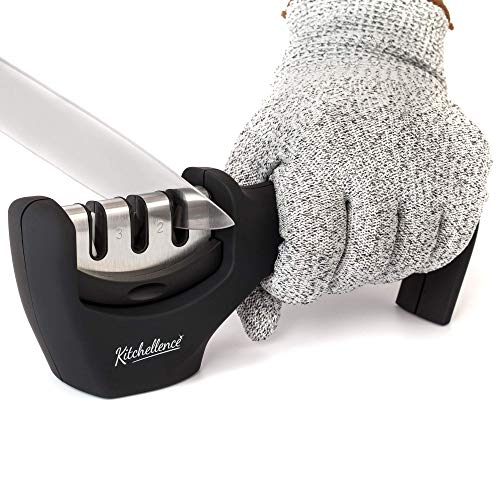
This 3-stage kitchen kit aims to cover repair, sharpening, and polishing in one compact package. It also includes a cut-resistant glove, which can give new users extra confidence during setup. The staged process is easy to understand when a blade needs more than a light touch-up. For a mixed kitchen drawer, the kit offers useful function at a modest size.
I would choose it for everyday stainless-steel kitchen knives rather than premium blades that need exact angle control. The glove is helpful, but it does not replace careful handling or a stable work surface. Use each stage only as long as needed, then test the knife on suitable food. It is a budget-friendly alternative for shoppers searching for the best knife sharpener for Zwilling knives.
Pros:
- Three stages cover several sharpening needs
- Includes a cut-resistant glove
- Helpful for beginners learning a set process
- Can repair, sharpen, and polish common blades
- Compact kit offers several functions
- Useful option for budget-focused shoppers
Cons:
- Fixed settings may not fit every Zwilling blade
- Included glove does not guarantee safe technique
- May not provide the finish of a premium system
My Recommendation
This kit is best for a first-time sharpener who wants several functions and an added hand-protection accessory. It works well as a basic home tool for ordinary kitchen blades. I would call it the best knife sharpener for Zwilling knives only when price and included accessories matter more than precision. Read the care instructions and use a steady counter for the safest result.
AIERLIAN Rolling Knife Sharpener Kit
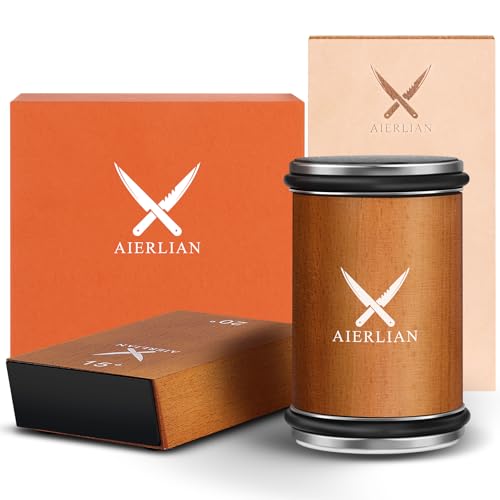
The AIERLIAN rolling sharpener takes a different approach from a pull-through tool. Its rolling format uses a magnetic angle guide with 15- and 20-degree settings, while diamond and ceramic surfaces support different stages of edge work. The magnetic guide helps keep the blade angle steady as the roller moves along the edge. This can feel more natural to users who want a hands-on method without balancing a loose stone.
I see this kit as a useful choice for cooks who enjoy learning technique and want more angle choice. The 20-degree setting is often a practical match for sturdy Western kitchen knives, while a narrower angle may suit some thinner blades when the design allows it. Always confirm the manufacturer’s angle guidance for your knife. Among alternative tools, this rolling system can be the best knife sharpener for Zwilling knives for users who value control and portability.
Pros:
- Rolling design supports steady blade movement
- Magnetic guide offers 15- and 20-degree settings
- Diamond and ceramic surfaces serve different tasks
- Good learning tool for hands-on users
- Portable format stores easily
- Offers more angle choice than many fixed sharpeners
Cons:
- Requires practice to maintain smooth rolling contact
- Magnetic guidance may not suit every blade shape
- More parts mean more setup and storage work
My Recommendation
I recommend this rolling kit for a curious cook who wants to understand angle control without starting with a full sharpening stone. It is a better fit for patient users than for someone who wants a ten-second touch-up. For the right person, it may be the best knife sharpener for Zwilling knives because it combines guide support with hands-on control. Keep the roller clean and confirm that the blade sits securely before each session.
How to Choose the Best Knife Sharpener for Zwilling Knives
Choosing a sharpener starts with the knife, not the price tag. Most Zwilling kitchen knives have sturdy steel and a working edge suited to normal food preparation. A guided sharpener can help you keep that edge even. A steel can maintain alignment, but it cannot remove enough metal to fix a truly dull blade.
First, decide how much control you want. A two-stage pull-through tool is fast and simple. A four-stage model gives more steps for repair and polishing. A V-edge or rolling system gives better control over angle, which matters if you own both German and Japanese-style knives.
Next, check stability and comfort. A sharpener should sit firmly on the counter or give your hand a secure grip. Never hold a small sharpener loosely while pulling a blade through it. Keep your fingers away from the edge, use light pressure, and follow the included instructions.
Fixed Angle or Adjustable Angle?
Fixed-angle sharpeners are easier for most new users. They guide the blade and reduce the need to measure an angle by eye. Adjustable sharpeners take more time, but they give you more control over different blade designs. If you own only standard Zwilling chef’s knives, a fixed model may be enough.
An adjustable tool makes more sense when your drawer includes thin Japanese blades, thick German blades, outdoor knives, or specialty shapes. Do not assume one angle fits every knife. The edge should match the steel, blade thickness, and intended use.
Pull-Through Sharpeners Versus Sharpening Steels
A pull-through sharpener uses an abrasive surface to remove steel and form a new edge. It helps when the blade feels dull and slides across food. A sharpening steel mainly realigns a slightly rolled edge. It helps preserve cutting performance but cannot replace full sharpening.
I often suggest owning one abrasive sharpener and one steel if you cook often. Use the abrasive tool only when the knife needs it. Use the steel for gentle maintenance between those sessions. This approach can protect the life of a good Zwilling knife.
How Often Should You Sharpen a Zwilling Knife?
There is no single schedule for every kitchen. A home cook may need a full sharpening every few months, while a busy cook may need it sooner. Your cutting board, food choices, storage method, and technique all affect the edge.
Use the simple paper test with care, or slice a soft food such as a tomato. If the knife crushes the food or needs extra force, it may need attention. Do not wait until the knife becomes unsafe. A sharp blade needs less force and offers better control.
How I Judge Knife Sharpeners
I look at five points: edge control, ease of use, safety, build quality, and value. A sharpener should make a repeatable edge without asking a beginner to guess every step. It should also be easy to clean and simple to store.
I also consider how much steel the tool may remove. More abrasive action is not always better. The best sharpener restores cutting performance while helping you avoid needless wear. That balance separates a useful kitchen tool from a gadget that only feels fast.
Best For Comparison
| Best for | Why |
|---|---|
| Best overall precision | The ZWILLING V-Edge offers guided ceramic sharpening and angle flexibility. |
| Best simple daily care | The Zwilling 2-stage and Henckels handheld models offer quick, easy edge refreshes. |
| Best multi-tool value | The four-stage knife-and-scissor models handle more household cutting tools in one unit. |
Safe Sharpening Tips for Zwilling Knives
Start with a clean and dry knife. Place the sharpener on a stable counter, and keep the cutting edge pointed away from your body. Read the directions before the first use because each slot or guide may work in a different way.
Use light pressure. A sharpener is not a saw, so fast and hard strokes do not produce a better edge. Move from the heel toward the tip in one smooth motion when the tool instructions call for that method.
Do not sharpen serrated knives in a standard smooth-edge slot unless the product specifically supports them. Do not use a pull-through sharpener on a fragile blade without checking compatibility. When in doubt, choose a professional service for a damaged, expensive, or unusual knife.
After sharpening, wipe the blade clean and wash it according to the knife maker’s care guidance. Never place a quality Zwilling knife loose in a drawer. A knife block, sheath, or protected storage slot helps prevent edge damage and hand injuries.
FAQs Of best knife sharpener for zwilling knives
What is the best knife sharpener for Zwilling knives?
The ZWILLING V-Edge is my top choice for most serious home cooks. It offers guided sharpening, ceramic rods, and adjustable angle support. The best choice for you may differ if you want a cheaper, faster, or smaller tool.
Can I use a Henckels sharpener on Zwilling knives?
Yes, many Henckels handheld sharpeners suit standard Western kitchen knives. Use light pressure and confirm the tool’s intended blade type. Avoid using it on specialty blades unless the instructions approve that use.
Is a sharpening steel enough for a dull Zwilling knife?
No. A steel mainly realigns a slightly rolled edge. A dull knife usually needs an abrasive sharpener that removes a small amount of steel and creates a fresh edge.
Should I choose a two-stage or four-stage sharpener?
Choose a two-stage model for fast routine care. Choose a four-stage model when you want added repair and polishing steps. Both can work well when you use the correct slot and avoid heavy pressure.
Can knife sharpeners damage Zwilling knives?
Any sharpener can damage a blade if you use the wrong angle, excess force, or too many passes. Follow the product directions and stop once the knife cuts well. A professional service is safer for major chips or expensive specialty knives.
Final Verdict: Which Should You Buy?
The ZWILLING V-Edge is my top pick for the best knife sharpener for Zwilling knives because it offers control, guided use, and flexible angle support. Choose the two-stage Zwilling model for fast care or a Henckels steel for edge maintenance.
A good sharpener can make cooking feel smooth again. Pick the tool that matches your skill, knife type, and routine, then use it gently for lasting Zwilling knife performance.