
The easiest way to thicken stew in a slow cooker is to stir in a cornstarch slurry during the last 20 to 30 minutes of cooking. Mix 1 tablespoon of cornstarch with 1 tablespoon of cold water for every cup of thin liquid, then stir it into the hot stew. Keep the slow cooker on HIGH until the broth thickens.
This method works well for beef stew, chicken stew, pork stew, and vegetable stew made in U.S. kitchens. Use standard U.S. cups and tablespoons, and check that meat reaches a safe internal temperature with a food thermometer.
Why Slow-Cooker Stew Can Turn Out Thin
Slow-cooker stew often has more liquid than expected because the lid traps steam. On the stovetop, water escapes as the stew simmers. In a slow cooker, much of that moisture stays in the pot.
Other common causes include:
- Adding too much broth, stock, wine, or water
- Using frozen vegetables that release extra water
- Adding a large amount of liquid to cover the meat
- Opening the lid often during cooking
- Using a slow cooker that runs at a lower heat
- Adding flour or cornstarch too early
- Expecting the broth to thicken without a final cooking step
A stew does not need to be as thick as gravy. The finished broth should lightly coat a spoon and cling to the meat and vegetables. If it pours like soup, it needs more reduction or a thickener.

The Best Way to Thicken Stew in a Slow Cooker
A cornstarch slurry is usually the fastest and most reliable method. It adds little flavor and can thicken the broth without making the stew heavy.
How to make a cornstarch slurry
- Measure 1 tablespoon of cornstarch into a small bowl.
- Add 1 tablespoon of cold water.
- Stir until the mixture is smooth.
- Pour the slurry into the hot stew.
- Stir gently to distribute it.
- Cover and cook on HIGH for 20 to 30 minutes.
- Check the texture. Add more slurry only if needed.
Always mix cornstarch with cold liquid first. Adding dry cornstarch directly to hot stew can create lumps.
How much cornstarch should you use?
Use this as a starting guide:
| Amount of thin liquid | Cornstarch | Cold water |
|---|---|---|
| 2 cups | 2 tablespoons | 2 tablespoons |
| 3 cups | 3 tablespoons | 3 tablespoons |
| 4 cups | 4 tablespoons | 4 tablespoons |
The actual amount may vary. Meat, vegetables, and other ingredients also affect the final texture. It is safer to start with less. You can add more, but you cannot easily remove an overly thick sauce.
If the stew is already finished
If the stew has completed its cooking time, stir in the slurry and set the slow cooker to HIGH. Leave the lid on while the starch cooks.
If your slow cooker does not heat strongly on HIGH, transfer the stew to a saucepan. Bring it to a gentle simmer on the stovetop, then cook for several minutes while stirring. Do not boil hard, since that can break up tender meat and vegetables.

Other Ways to Thicken Slow-Cooker stew
cornstarch is not the only choice. The best method depends on the flavor, texture, and ingredients in your stew.
Use flour and water
Flour can thicken stew, but it needs more cooking time than cornstarch.
Mix:
- 2 tablespoons of all-purpose flour
- 3 to 4 tablespoons of cold water
Whisk the mixture until smooth. Stir it into the stew during the final 30 to 45 minutes of cooking on HIGH.
Flour can leave a raw taste if it does not cook long enough. It also makes a softer, more opaque sauce than cornstarch.
Use flour and fat
A mixture of equal parts flour and softened butter is called a beurre manié. It works well when the stew is already cooked and needs a gradual thickening method.
For a small batch:
- Mash 1 tablespoon of softened butter with 1 tablespoon of flour.
- Roll the mixture into small pieces.
- Stir one piece into the hot stew.
- Cook for 15 to 20 minutes.
- Add more only if the broth remains thin.
This method adds richness, so it suits beef stew and creamy chicken stew better than a light vegetable stew.
Add instant mashed potato flakes
Plain instant potato flakes can thicken stew quickly. Add 1 tablespoon at a time, stir, and wait several minutes before adding more.
This method works best for beef, sausage, and vegetable stews. It can make the broth taste like potato and may turn it pasty if you use too much.
Avoid flavored potato flakes with added cheese, garlic, or herbs unless those flavors fit the recipe.
Mash some of the vegetables
For a naturally thick stew, mash part of the cooked vegetables against the side of the slow-cooker insert. Potatoes, beans, carrots, squash, and peas can all add body.
You can also remove 1 to 2 cups of vegetables and broth, blend them carefully, and stir the purée back into the stew. Take care with hot liquids, especially if using a countertop blender. Steam can build pressure and force off the lid.
Reduce the liquid
Reduction means allowing water to evaporate so the remaining broth becomes more concentrated.
To reduce stew:
- Remove the slow-cooker lid.
- Set the cooker to HIGH.
- Let the stew cook for 30 to 60 minutes.
- Stir from time to time.
- Check the salt before serving.
This can work, but slow cookers are not designed for fast evaporation. A stovetop saucepan usually reduces liquid more quickly. Do not reduce the stew too far, or the sauce may become salty.

Which Thickener Should You Choose?
Use the method that matches the stew’s texture and flavor.
| Method | Best for | Main benefit | Main limitation |
|---|---|---|---|
| Cornstarch slurry | Most meat and vegetable stews | Fast, smooth, neutral flavor | Can become glossy or gel-like |
| Flour slurry | Rustic beef or pork stew | Traditional, hearty texture | Needs longer cooking |
| Beurre manié | Rich meat stews | Adds body and richness | Adds butter and calories |
| Potato flakes | Thick, hearty stew | Very fast and easy | Can add potato flavor |
| Mashed vegetables | Vegetable-rich stew | Natural thickness | Changes the texture and flavor |
| Reduction | Strong, concentrated broth | No added starch | Takes time and may increase saltiness |
For most home cooks, start with cornstarch. Choose mashed vegetables or potato flakes if you want to avoid added starch. Choose flour if you want a more traditional, cloudy gravy.
How to Thicken Stew Without Making Lumps
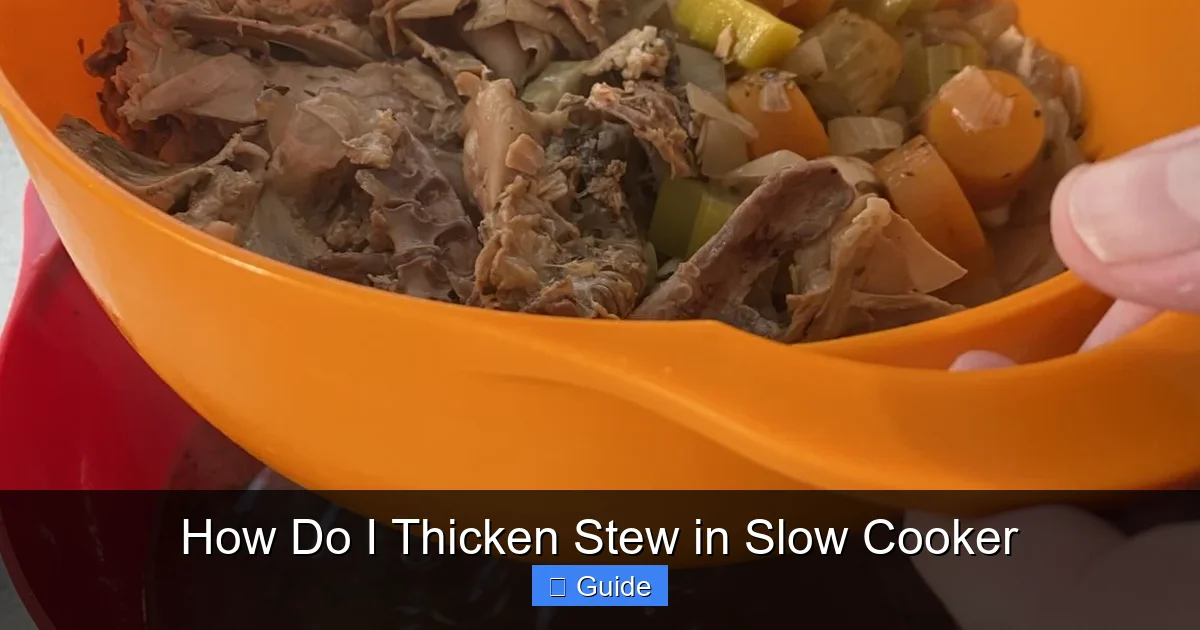
Lumps usually form when dry flour or cornstarch touches hot liquid. Prevent them with these steps:
- Mix starch with cold water before adding it.
- Use a small whisk or fork to make a smooth slurry.
- Add the slurry slowly while stirring.
- Stir around the edges and through the center of the stew.
- Do not add all the thickener at once if the stew is very hot.
- Wait at least 10 to 15 minutes before judging the final thickness.
If lumps already formed, remove them with a spoon if possible. You can also strain the broth, whisk it smooth in a saucepan, and return it to the stew. A stick blender may break down vegetables, but it can also make potatoes gluey if used too much.
When Should You Thicken Stew in a Slow Cooker?
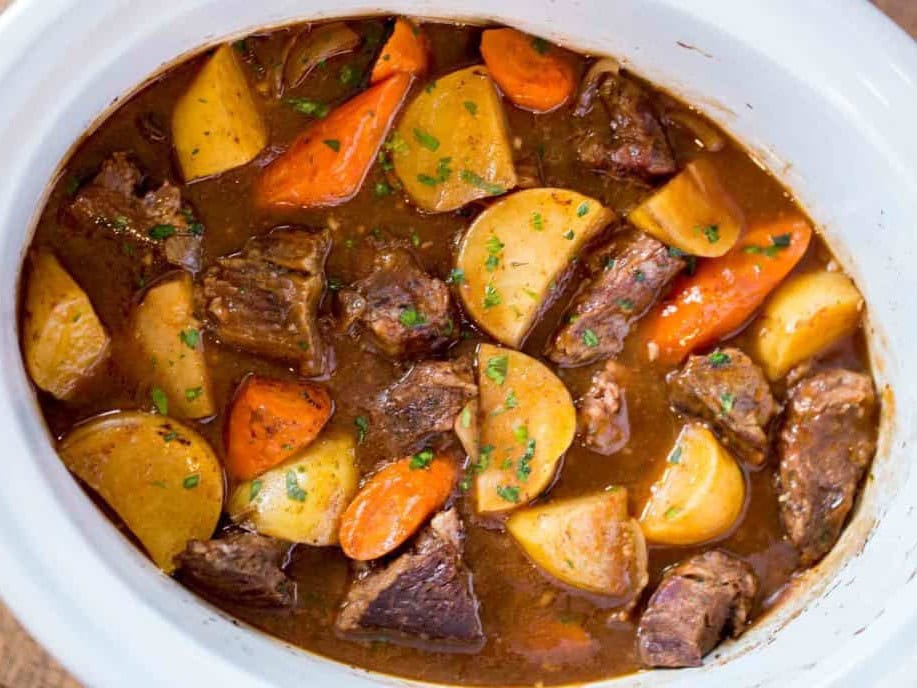
Add most thickeners near the end of cooking. Long cooking can weaken the effect of cornstarch and flour, especially when the stew contains acidic ingredients such as tomatoes or wine.
A useful schedule is:
- Cornstarch: Last 20 to 30 minutes
- Flour slurry: Last 30 to 45 minutes
- Beurre manié: Last 15 to 30 minutes
- Potato flakes: Last 5 to 10 minutes
- Mashed vegetables: During the final 20 to 30 minutes
- Reduction: Final 30 to 60 minutes with the lid removed
Do not thicken too early if you still plan to add broth, wine, or vegetables. Wait until the liquid level is close to the amount you want.

What to Do if Your Stew Is Still Too Thin
If the first thickening attempt fails, check the cause before adding more starch.
The stew did not thicken
Possible reasons include:
- The slow cooker was set to LOW
- The lid was removed and the stew lost heat
- The slurry was too diluted
- The stew did not cook long enough after adding the slurry
- Too much liquid remains in the pot
Set the slow cooker to HIGH and cook for another 15 to 20 minutes. If there is still no change, prepare a second, smaller slurry. Add it gradually.
The stew became too thick
Stir in warm broth, stock, or water one tablespoon at a time. Taste after each addition. Add liquid slowly because a thin stew is easier to correct than a thick, pasty one.
The stew tastes starchy
The thickener may not have cooked long enough. Keep the stew on HIGH for another 10 to 15 minutes. If the flavor remains strong, thin the broth with a small amount of unsalted stock.
The stew tastes too salty
Thickening does not remove salt. If the stew is salty, add unsalted broth, water, or extra cooked vegetables. Avoid reducing the liquid further, because evaporation will make the salt taste stronger.
Common Mistakes to Avoid
Adding dry cornstarch directly
Dry cornstarch clumps when it hits hot liquid. Always make a cold-water slurry first.
Using too much thickener
Excess starch can create a gluey or rubbery texture. Begin with a small amount and wait for it to work.
Opening the lid repeatedly
Each lid lift releases heat and extends cooking time. Keep the lid closed while the stew thickens.
Thickening before the meat is tender
A thick broth does not mean the stew is done. Continue cooking until the meat and vegetables reach the texture you want.
Relying on raw flour
Raw flour needs time to cook. If you add a flour slurry at the very end, the stew may taste dusty or raw.
Forgetting carryover thickening
Some stews thicken slightly as they cool. Let the stew rest for about 5 to 10 minutes before making a final adjustment.
Adding dairy without checking the heat
Cream, sour cream, and yogurt can split when exposed to high heat. If using dairy to enrich a stew, lower the heat and add it near the end. Dairy does not replace a starch thickener in every recipe.
Food Safety When Thickening Slow-Cooker Stew
Thickening should not replace safe cooking and cooling practices.
Use a food thermometer to check meat. The U.S. Department of Agriculture recommends cooking beef, pork, lamb, and veal steaks, chops, and roasts to at least 145°F, followed by a three-minute rest. Ground meats should reach 160°F, and poultry should reach 165°F.
Keep the slow cooker covered during cooking when possible. Refrigerate leftovers within 2 hours, or within 1 hour if the food is exposed to temperatures above 90°F. Store leftovers in shallow containers so they cool more quickly.
Do not leave finished stew sitting at room temperature while waiting for it to thicken. If the slow cooker cannot maintain a safe hot temperature, transfer the stew to a suitable container and refrigerate it promptly.

Frequently Asked Questions
Can you thicken stew with flour in a slow cooker?
Yes. Mix flour with cold water, stir it into the stew, and cook on HIGH for about 30 to 45 minutes. Flour needs more cooking time than cornstarch and may produce a cloudier, more rustic sauce.
Can you add cornstarch at the beginning of slow cooking?
You can, but it usually works better near the end. Extended cooking may reduce cornstarch’s thickening effect. A slurry added during the final 20 to 30 minutes gives you more control.
Will stew thicken as it cools?
Yes, it may thicken slightly as the starch, gelatin, and fats settle. Let it rest for 5 to 10 minutes before adding more thickener.
Can you thicken stew without flour or cornstarch?
Yes. Reduce the liquid, mash some vegetables, blend part of the stew, or add plain potato flakes. These methods change the flavor or texture more than cornstarch does.
Why is my slow-cooker stew watery even after adding a slurry?
The slow cooker may not be hot enough, the slurry may be too weak, or the stew may contain too much liquid. Cook on HIGH with the lid on for another 15 to 20 minutes, then add a small amount of fresh slurry if needed.
Conclusion
For most slow-cooker stews, use a 1-to-1 cornstarch slurry and add it during the final 20 to 30 minutes. Start with 1 tablespoon each of cornstarch and cold water per cup of thin liquid, then adjust slowly.
If you want a rustic sauce, use flour. For a naturally thick broth, mash vegetables or use plain potato flakes. Keep the lid closed, give the thickener time to work, and correct the final texture with small adjustments rather than adding a large amount at once.