
A knife sharpener removes worn metal and rebuilds a clean, thin edge for safer, smoother cutting.
Understanding how does a knife sharpener work helps you choose the right tool and avoid damaging your favorite blades. Whether you use a whetstone, pull-through sharpener, honing rod, or electric model, each method shapes the edge in a different way. This guide explains the process in simple terms, with practical tips for better results.
What Does a Knife Sharpener Do?
A knife sharpener restores a knife’s cutting edge by removing a small amount of metal. Over time, the edge becomes dull, bent, or uneven through regular use. Sharpening corrects that damage and creates two clean surfaces that meet at a fine point.
The key idea behind how does a knife sharpener work is friction. An abrasive surface rubs against the blade and wears away tiny metal particles. The sharpener must remove metal at the correct angle, or it may create a weak edge instead of a durable one.
Think of the knife edge like the peak of a small mountain. Cutting, chopping, and contact with hard surfaces slowly flatten or bend that peak. A sharpener reshapes it into a narrow ridge that can slice through food with less effort.

How Does a Knife Sharpener Work Step by Step?
Most sharpening tools follow the same basic process, even when their designs look different. They guide an abrasive material along the knife edge and remove enough steel to form a new bevel.
1. The sharpener holds or guides the angle
A knife edge has two sloping sides called bevels. These bevels meet at the apex, which is the very tip of the cutting edge.
Most kitchen knives use an angle between about 15 and 20 degrees per side. Some heavy outdoor knives use a wider angle for strength. A sharpener may control this angle with slots, guides, rails, or your hand.
2. The abrasive removes damaged steel
The abrasive may be made from:
• Steel or ceramic
• Diamond particles
• Aluminum oxide
• Silicon carbide
• Natural sharpening stone material
As the blade moves across the abrasive, small amounts of steel wear away. Coarse abrasives remove metal quickly and repair damage. Fine abrasives polish and refine the edge.
3. A new bevel forms
The sharpener removes steel from both sides of the blade. This creates two flat, angled surfaces that meet at the edge.
If you sharpen only one side of a double-beveled knife, the edge may become uneven. A single-bevel knife, such as some Japanese slicers, needs a different method.
4. A burr develops
A burr is a tiny ridge of metal that folds over the opposite side of the edge. It often feels like a slight wire or rough spot when you carefully move a finger from the spine toward the edge.
Never test a burr by sliding your finger along the blade. That can cause a cut. Instead, look for a slight change in texture or use careful visual inspection under good light.
5. The burr is removed
After sharpening, the burr must be reduced or removed. Light passes on a fine stone, ceramic rod, or leather strop can clean the edge.
This final step matters because a loose burr may make the knife feel sharp for a short time. It can then fold over during cutting and make the edge seem dull again.

How Different Knife Sharpeners Work
The phrase how does a knife sharpener work can describe several tools. Each one uses a different balance of control, speed, and metal removal.
Whetstones
A whetstone, also called a sharpening stone, gives you the most control. You place the blade on the stone and move it while keeping a steady angle.
Stone types include:
• Coarse stones for repairing chips and very dull edges
• Medium stones for regular sharpening
• Fine stones for polishing and refining
• Water stones that need soaking or wetting
• Oil stones that use sharpening oil
Whetstones can produce excellent edges, but they require practice. Beginners often change the angle during each stroke, which creates a rounded or uneven edge.
A simple method is to use a consistent motion from the heel of the knife to the tip. Keep the pressure light as the edge becomes sharper. Heavy pressure can remove too much steel and leave deep scratches.
Pull-through sharpeners
Pull-through sharpeners have one or more slots. Each slot contains fixed abrasive surfaces that meet the blade at a set angle.
They are easy to use because the guides control the angle. Many models include a coarse stage and a fine stage. The coarse slot reshapes the edge, while the fine slot smooths it.
The main limitation is metal removal. Some inexpensive pull-through sharpeners use aggressive carbide plates. These can remove more steel than necessary and may leave a rough edge.
Use a pull-through sharpener with gentle pressure. The tool should do the work. Pressing hard does not usually make the knife sharper.
Electric knife sharpeners
Electric sharpeners use spinning abrasive wheels or belts. They guide the knife through one or more stages and remove metal quickly.
Electric models are useful when you want speed or need to sharpen several knives. Many have separate stages for grinding, sharpening, and polishing.
However, electric sharpeners can damage a blade if you hold it in the slot too long. They may also remove more metal than a fine whetstone. Follow the instructions and use short, controlled passes.
Honing rods
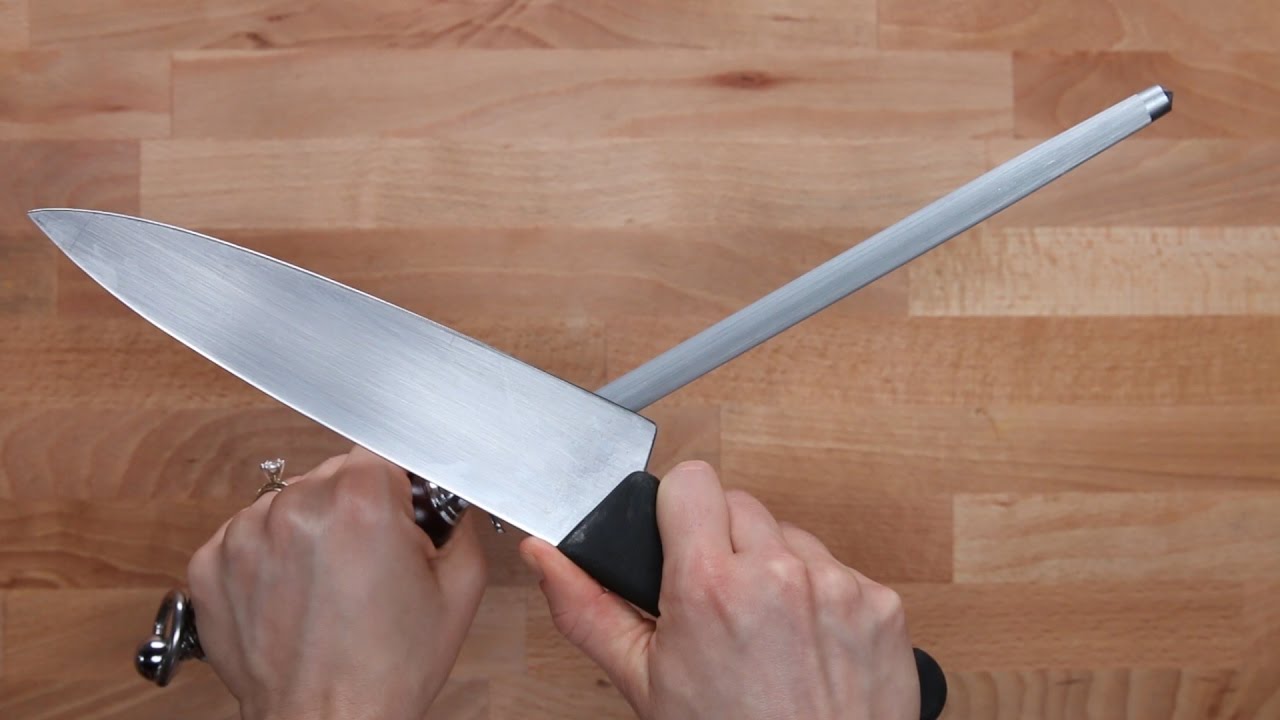
A honing rod does not usually sharpen a badly dull knife. Instead, it helps realign a slightly bent edge.
Traditional steel rods push the edge back toward the center. Ceramic rods remove a very small amount of metal while also realigning the edge. Diamond-coated rods act more like fine sharpeners because their surface is abrasive.
This difference explains why a honing rod may make a knife feel better without truly rebuilding a worn edge. If the blade stays dull after honing, it likely needs a stone or other abrasive sharpener.
Diamond plates
Diamond plates contain small industrial diamonds fixed to a metal surface. They cut steel quickly and work well on hard knife materials.
They do not need soaking, and they are often thinner and easier to store than water stones. Use light pressure because diamond abrasives can remove metal fast.
Sharpening Versus Honing
Many people use the words sharpening and honing as if they mean the same thing. They are related, but they solve different problems.
Sharpening removes metal to create a new edge. Honing mainly straightens or lightly refines an existing edge.
Here is a simple comparison:
• Sharpening repairs a dull or damaged edge
• Honing maintains an edge between sharpening sessions
• Sharpening uses a stronger abrasive action
• Honing usually removes little or no metal
• Sharpening may be needed every few weeks or months
• Honing may help after several cooking sessions
How does a knife sharpener work when compared with a honing rod? A sharpener changes the shape of the edge. A honing rod usually adjusts the edge without changing its overall shape.
A knife that slides over a tomato skin or crushes an onion may need sharpening. A knife that still cuts well but feels slightly less smooth may only need honing.
What Are Knife Bevels and Sharpening Angles?
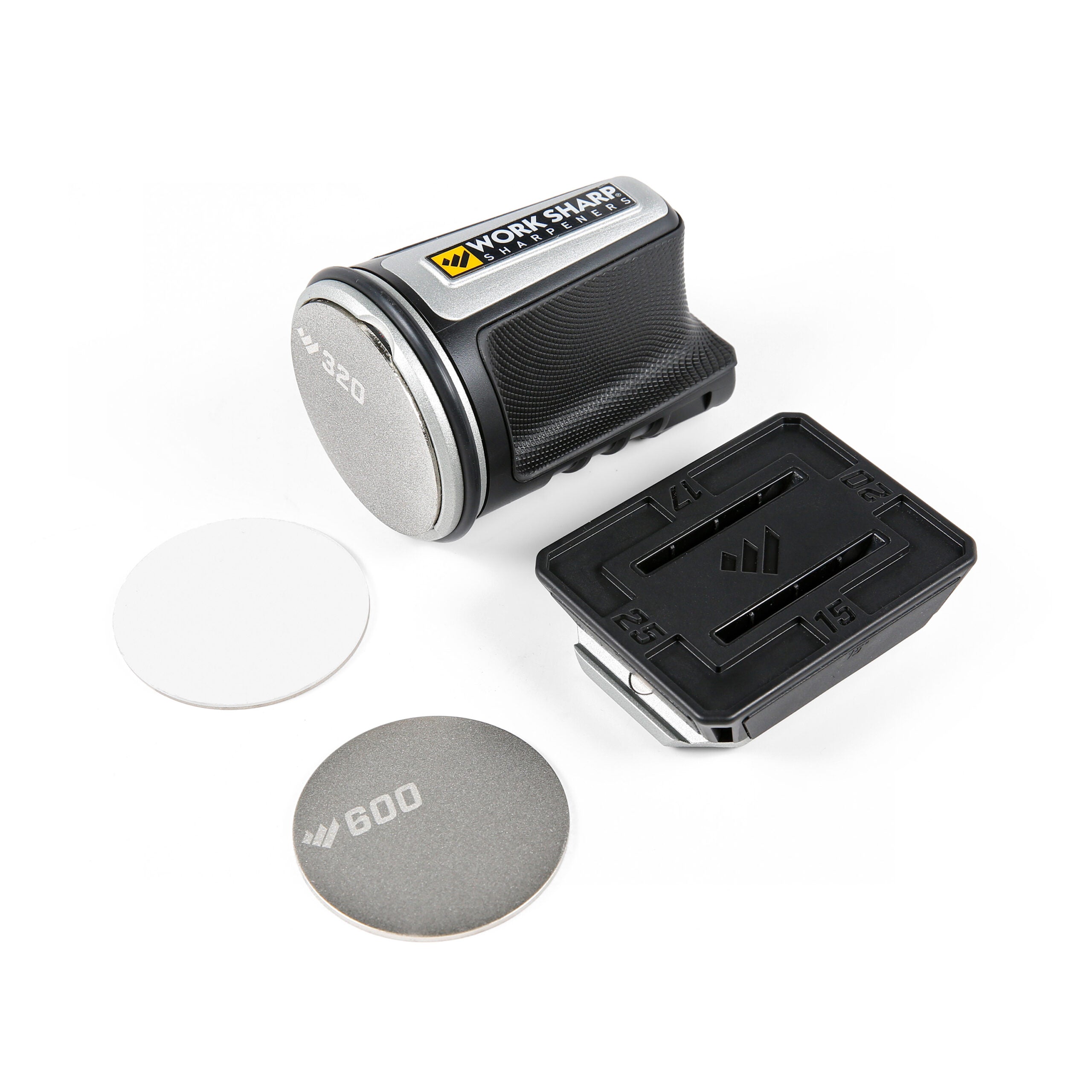
The bevel is the angled section that leads to the cutting edge. Its angle affects sharpness, strength, and cutting performance.
A narrow angle creates a thinner, sharper edge. It may slice foods easily, but it can be more fragile. A wider angle creates a stronger edge that handles harder tasks better.
Common ranges include:
• 10 to 15 degrees per side for delicate slicing knives
• 15 to 20 degrees per side for many kitchen knives
• 20 to 25 degrees per side for outdoor and heavy-use knives
These numbers are general guides, not strict rules. The correct angle depends on the knife’s design, steel, thickness, and intended use.
When learning how does a knife sharpener work, angle control is one of the most important ideas. A sharpener that holds the angle can help beginners get consistent results. With a whetstone, use a small guide or practice with a less valuable knife first.
Avoid changing the angle in the middle of a sharpening session. If the angle is too low, the edge may become thin and chip. If it is too high, the knife may feel strong but cut less smoothly.

How to Use a Knife Sharpener Safely
A sharp knife is often safer than a dull one because it needs less force. Still, every sharpening tool can cause injury if used carelessly.
Follow these safety steps:
- Read the sharpener’s instructions before using it.
- Place a whetstone on a stable, non-slip surface.
- Keep your fingers behind the blade edge.
- Move the knife in a controlled direction.
- Wear cut-resistant gloves if you need extra protection.
- Clean metal filings from the work area.
- Wash and dry the knife before using it with food.
- Store the sharpener where children cannot reach it.
Never hold a knife in the air while using a pull-through sharpener. Keep the tool stable on a counter or table. Stop if the handle, stone, or guide feels loose.
A useful safety lesson from hands-on sharpening is to slow down. Fast strokes often create poor angle control and increase the chance of slipping. Gentle, steady passes usually give better results.

How to Sharpen a Knife With a Whetstone
A whetstone takes more practice, but it offers excellent control. The following method works for many double-beveled kitchen knives.
Prepare the stone
Check whether the stone needs water or oil. Water stones often need soaking, while some splash-and-go stones only need a wet surface. Oil stones require the correct sharpening oil.
Place the stone on a stable base. A wet towel under the stone can help prevent movement.
Find the correct angle
Hold the knife at the angle recommended by the manufacturer. If you do not know the angle, around 15 to 20 degrees per side is a common starting point for kitchen knives.
You can estimate 20 degrees by holding the knife at 90 degrees, lowering it halfway to 45 degrees, and lowering it halfway again.
Make steady passes
Start with the heel near one end of the stone. Move the blade across the stone toward the tip while keeping the same angle.
Use light to moderate pressure. Repeat the same number of passes on each side, unless the edge needs more work on one side.
Check for a burr
After several passes, check for a burr along the opposite side. Use care, and never drag your finger along the cutting edge.
Once a burr forms from heel to tip, switch sides. Use fewer and lighter passes as the edge improves.
Finish with light strokes
Use a finer section of the stone if needed. Finish with alternating strokes and very light pressure.
Rinse and dry the knife. Test it on paper or a soft food, not on your skin. A properly sharpened knife should cut with little pressure.

Common Knife Sharpening Mistakes
Even when you understand how does a knife sharpener work, small mistakes can reduce the quality of the edge.
Using too much pressure
Heavy pressure can dig into the stone, remove excess steel, and create deep scratches. It can also make it harder to hold a steady angle.
Use enough pressure to keep the blade in contact with the abrasive. Reduce pressure during the final passes.
Sharpening at the wrong angle
If the angle changes with each stroke, the edge becomes rounded. It may look polished but still fail to cut well.
Angle guides help beginners. With practice, your hand can learn to repeat the same position.
Using a coarse sharpener too often
Coarse abrasives are useful for repairs, but they should not be your everyday tool. They remove steel quickly and may shorten the life of the knife.
Use a fine abrasive for routine maintenance when possible.
Ignoring the knife’s design
Not every knife uses the same edge style. A single-bevel Japanese knife, serrated knife, or thick outdoor blade needs special care.
Serrated knives are especially different. Their teeth should be sharpened one at a time with a tapered rod or a tool designed for serrations.
Testing sharpness with your finger
This is dangerous and unnecessary. Test the knife on paper, a tomato, or another suitable material instead.

How Often Should You Sharpen a Knife?
There is no single schedule for every kitchen. Sharpening frequency depends on how often you cook, what you cut, the knife steel, and the cutting board surface.
Many home cooks may need true sharpening every one to three months. A busy professional kitchen may need it more often. Honing can help maintain the edge between sharpening sessions.
Sharpen your knife when you notice these signs:
• The blade slips off tomato skin
• You need more force to cut food
• The knife crushes onions instead of slicing them
• The edge has visible flat spots
• Honing no longer improves performance
• The blade catches or skips during cutting
Avoid sharpening on glass, stone, ceramic plates, or other hard surfaces. These materials can damage the edge quickly.
Wood and quality plastic cutting boards are generally kinder to knife edges than glass or stone boards. Good storage also matters. A knife block, blade guard, or magnetic strip can prevent contact damage.

Benefits and Limits of Knife Sharpeners
A good sharpener can make cooking easier, faster, and safer. It can also extend the useful life of a quality knife.
Key benefits include:
• Cleaner and more controlled cuts
• Less force during chopping
• Better food texture and presentation
• Lower risk of slipping from excessive pressure
• Longer service life for the blade
• Improved confidence while cooking
Still, sharpening cannot fix every problem. A deeply chipped blade, bent tip, cracked handle, or badly damaged edge may need professional repair.
The sharpener also cannot replace good knife care. Cutting technique, storage, cleaning, and the cutting board all affect edge life.
How does a knife sharpener work on very hard steel? It depends on the abrasive. Diamond and ceramic abrasives often handle hard modern steels better than soft traditional stones. Check the sharpener’s specifications before use.
How to Choose the Best Knife Sharpener
The best sharpener depends on your skill, knife collection, and available time.
Choose a whetstone if:
• You want maximum control
• You enjoy learning a hands-on skill
• You own high-quality knives
• You want to control the finish and angle
Choose a pull-through model if:
• You want simple operation
• You need basic kitchen maintenance
• You prefer a fixed angle
• You will use gentle pressure
Choose an electric model if:
• You need speed
• You sharpen several knives often
• You want guided stages
• You are willing to follow instructions closely
Choose a ceramic or fine honing rod if:
• Your knife is only slightly dull
• You want regular maintenance
• You already have a properly shaped edge
Look for stable construction, clear angle guidance, replaceable parts, and abrasives suited to your knife steel. A cheap tool that removes too much metal may cost more in damaged knives over time.
Frequently Asked Questions: How Does a Knife Sharpener Work?
How does a knife sharpener work on a dull blade?
A knife sharpener uses an abrasive surface to remove worn metal from both sides of the blade. This forms new bevels that meet at a clean cutting edge.
Does a knife sharpener remove metal?
Yes, most true sharpeners remove a small amount of metal. Coarse sharpeners remove more metal for repairs, while fine stones and ceramic tools remove less during finishing.
Is a honing rod the same as a knife sharpener?
Not exactly. A steel honing rod mainly realigns a slightly bent edge, while an abrasive sharpener reshapes the edge by removing metal.
Can a knife sharpener damage a knife?
Yes, especially if you use too much pressure, the wrong angle, or a coarse sharpener too often. Electric and carbide tools can remove metal quickly, so careful technique matters.
What angle should I use when sharpening a kitchen knife?
Many kitchen knives work well at about 15 to 20 degrees per side. Always check the manufacturer’s guidance when available, because the best angle depends on the blade design and intended use.
How do I know when a knife is sharp?
A sharp knife should cut paper, soft vegetables, or tomato skin with little pressure. Do not test sharpness by touching or sliding your finger across the edge.
Can I sharpen a serrated knife with a regular sharpener?
A regular flat sharpener may damage the teeth of a serrated knife. Use a tapered sharpening rod or a tool made specifically for serrated edges.
Conclusion
A knife sharpener works by using friction and abrasive material to reshape a worn cutting edge. Whetstones offer control, pull-through tools provide convenience, electric sharpeners add speed, and honing rods help maintain an existing edge.
The best results come from the right angle, light pressure, steady movement, and a sharpener suited to your knife. Start with a less valuable blade, practice slowly, and check the edge safely. Choose the method that fits your skills and knives, then explore more sharpening techniques or share your experience in the comments.