
You can make tender, juicy pulled pork in an American oven, Dutch oven, grill, or pressure cooker. The most dependable method is low-and-slow oven roasting: season a pork shoulder, cover it, cook it at 300°F, and roast until it is tender enough to shred. For the best texture, cook the pork to about 195°F to 205°F, then rest it before pulling.
This method works well for a Boston butt or picnic shoulder, two common cuts sold in U.S. grocery stores. You do not need a slow cooker. A covered roasting pan or Dutch oven can hold moisture just as well while the oven provides steady heat.
Introduction
Pulled pork is not defined by the appliance used to cook it. It is defined by the result: pork that is tender enough to separate into strands, with softened connective tissue and rich flavor.
The key is time, gentle heat, and moisture control. A pork shoulder may reach a safe temperature before it becomes tender, so do not rely on temperature alone. Cook until the meat is both safe and easy to pull apart with a fork.

The Best Cut for Pulled Pork
Use a boneless or bone-in pork shoulder for the most reliable pulled pork. In the United States, this cut may appear under several names:
- Boston butt
- Pork butt
- Pork shoulder
- Picnic shoulder
A Boston butt is often easier to cook and shred because it has good marbling and a fairly even shape. A picnic shoulder comes from lower on the leg and may have more skin or connective tissue. It can still make excellent pulled pork, but it may need more trimming and a little more cooking time.
Avoid very lean cuts such as pork loin or tenderloin. They can become dry before enough connective tissue breaks down to create the soft texture expected from pulled pork.
Bone-in or boneless pork shoulder?
Both work well.
- Bone-in shoulder: Often has strong flavor and gives you a simple doneness test. The bone should loosen easily when the meat is ready.
- Boneless shoulder: Easier to portion and carve. It may cook a little more evenly.
- Skin-on picnic shoulder: Can protect the meat, but the skin will not become crisp in a covered braise. Remove it if you want more seasoning on the meat.
A practical serving estimate is about ⅓ to ½ pound of raw pork per person, depending on appetites, side dishes, and leftovers. A 6-pound shoulder may yield roughly 3½ to 4 pounds of cooked meat after moisture and fat loss.
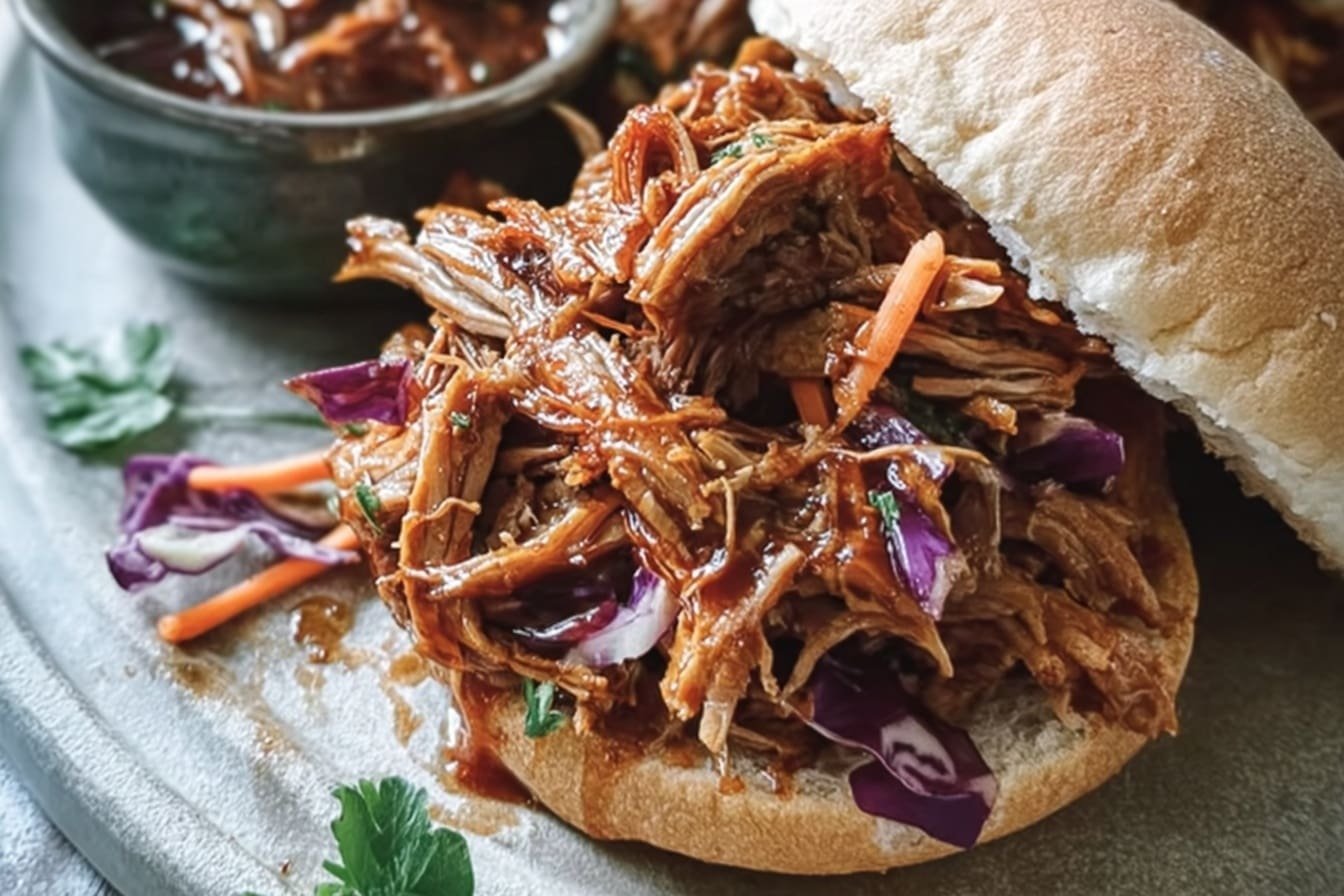
Ingredients
For about 8 to 10 servings, use:
- 5 to 6 pounds pork shoulder
- 2 tablespoons brown sugar
- 2 tablespoons paprika
- 1 tablespoon kosher salt
- 2 teaspoons black pepper
- 2 teaspoons garlic powder
- 2 teaspoons onion powder
- 1 teaspoon chili powder
- 1 teaspoon ground cumin
- 1 cup low-sodium chicken broth, apple juice, or water
- 2 tablespoons apple cider vinegar
- 1 tablespoon yellow mustard or Worcestershire sauce, optional
- ½ cup barbecue sauce, plus more for serving, optional
The liquid does not need to cover the pork. It should create a moist cooking environment without turning the meat into soup.
How to Make Pulled Pork in the Oven
An oven is the best slow-cooker substitute for most home cooks because it provides steady, even heat and works with a Dutch oven or covered roasting pan.
1. Trim the pork shoulder
Remove thick, hard pieces of surface fat and any loose flaps of meat. Leave a thin layer of fat in place. Fat can protect the meat and add flavor, but a very thick cap can block the rub from reaching the pork.
If the shoulder has skin, remove it unless you plan to crisp it separately. Skin does not soften like marbled fat, and it can prevent seasoning from reaching the meat.
2. Apply the dry rub
Mix the brown sugar, paprika, salt, pepper, garlic powder, onion powder, chili powder, and cumin in a small bowl.
Pat the pork dry with paper towels. Coat every surface with the rub. Press the seasoning into the meat so it sticks.
For deeper flavor, refrigerate the seasoned pork for at least 1 hour. Overnight is useful when your schedule allows, but it is not required. If you season the pork ahead of time, keep it covered in the refrigerator.
3. Heat the oven
Set the oven to 300°F.
Place the pork in a Dutch oven or a roasting pan. Add the broth, juice, or water and the apple cider vinegar around the pork. Do not pour the liquid directly over the rub unless necessary, because it can wash away the seasoning.
Cover the pot or pan tightly with a lid or heavy-duty aluminum foil. A tight seal helps hold in steam and keeps the surface from drying out.
4. Roast until tender
Cook the pork at 300°F until it reaches about 195°F to 205°F and a fork or probe slides into the thickest part with little resistance.
Approximate cooking times are:
| Pork shoulder size | Approximate oven time at 300°F |
|---|---|
| 3 to 4 pounds | 4 to 5 hours |
| 5 to 6 pounds | 5 to 7 hours |
| 7 to 8 pounds | 7 to 9 hours |
These are planning estimates, not guarantees. Shape, bone structure, starting temperature, pan type, and oven accuracy can change the timing.
Start checking the pork near the early end of the range. If the meat is still firm, cover it again and continue cooking in 30-minute intervals.
5. Rest the pork
Remove the pan from the oven and leave the pork covered for 30 to 60 minutes.
Resting lets the juices settle and gives the connective tissue time to relax. It also makes the pork safer and easier to handle. If you need to hold it longer, keep it hot rather than leaving it at room temperature.
6. Pull the pork
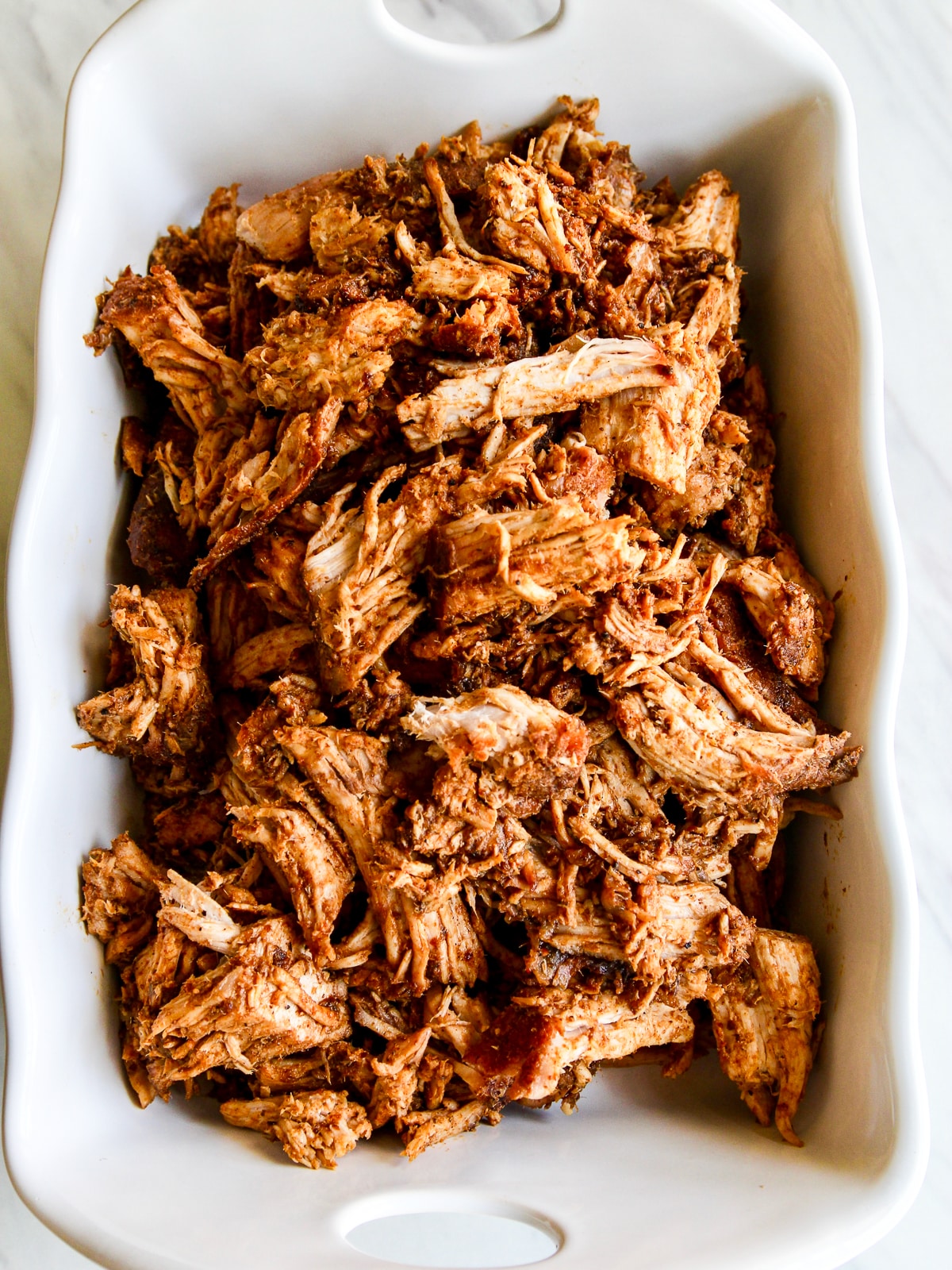
Transfer the pork to a large cutting board or wide bowl. Remove the bone, large pieces of fat, and any tough sections.
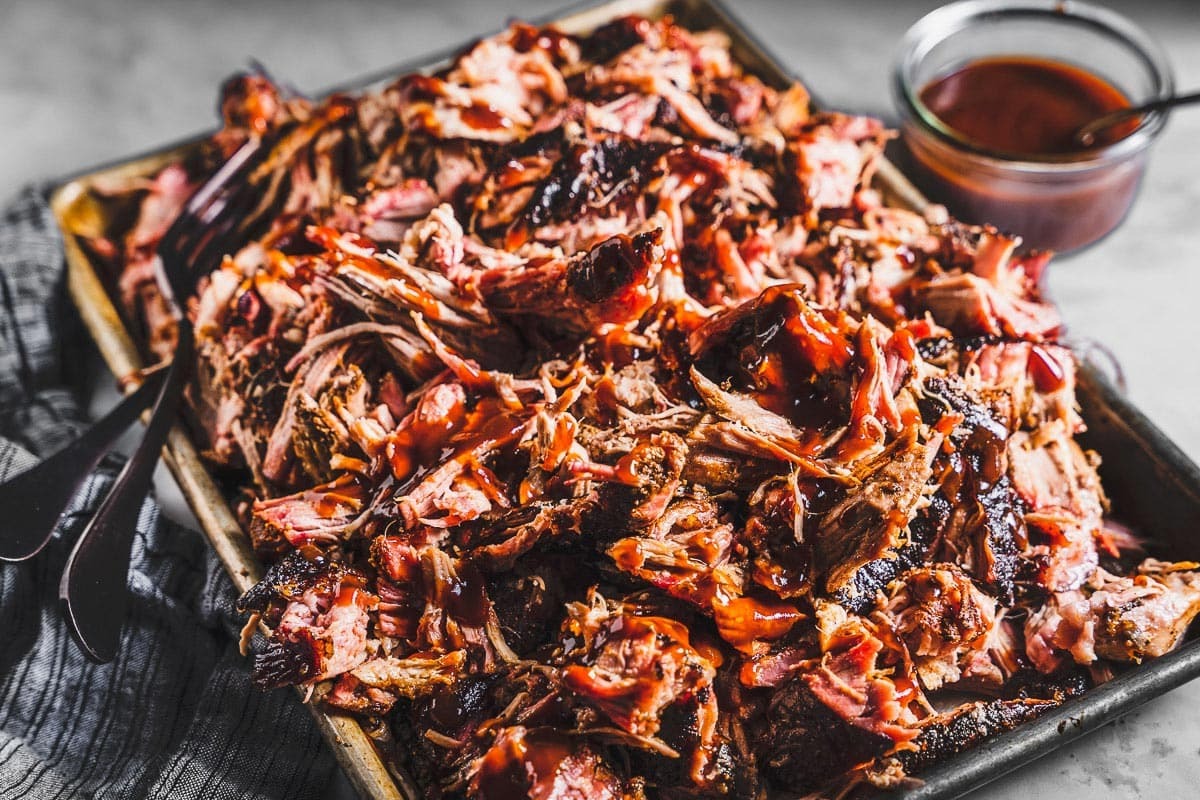
Use two forks, meat claws, or clean gloved hands to pull the meat into strands. Mix some of the cooking juices back into the pork. Add barbecue sauce a little at a time so the meat stays moist without becoming overly sweet or wet.
Taste before adding more salt. The cooking liquid may already contain enough seasoning.
Alternative Methods Without a Slow Cooker
An oven is the simplest option, but other cooking methods can also produce pulled pork.
Dutch oven on the stovetop
A heavy Dutch oven can cook pork on the stovetop. Brown the pork first, add a small amount of liquid, cover it, and keep the heat very low.
This method needs close attention. The bottom can scorch if the burner runs too hot. Check the liquid from time to time and add more if the pan becomes dry.
Pressure cooker
A pressure cooker can make pulled pork much faster. Cut the pork into large chunks, season it, add about 1 to 1½ cups of liquid, and cook under high pressure according to the appliance instructions.
For a 4- to 5-pound shoulder cut into chunks, many electric pressure cookers need roughly 60 to 75 minutes of high-pressure cooking, followed by a natural pressure release. Exact time varies by appliance and piece size, so use the manual for your model.
Pressure-cooked pork may have less roasted surface flavor than oven-cooked pork. To improve the flavor, broil the shredded pork for a few minutes or reduce the cooking liquid and mix it back into the meat.
Gas or charcoal grill
A grill can create smoky pulled pork without a slow cooker. Set up a two-zone fire and cook the pork over indirect heat at about 250°F to 300°F. Keep the lid closed as much as possible.
Use a drip pan if needed. Wrap the pork when the exterior has the color and smoke level you want. Continue cooking until it is tender, then rest and shred it.
Grill temperatures can change quickly, so this method requires more monitoring than an oven.

How to Know When Pulled Pork Is Done
Temperature gives you a useful guide, but tenderness is the final test.
The pork is ready when:
- A fork slides into the thickest part with little push.
- The meat pulls apart easily.
- The bone twists or slides out with little resistance, if the shoulder is bone-in.
- The center is around 195°F to 205°F.
- The meat does not feel rubbery or tight when you probe it.
The USDA states that whole cuts of pork should reach at least 145°F, followed by a three-minute rest, for food safety. That minimum temperature does not mean the pork is ready to shred. Shoulder needs more cooking for its collagen and connective tissue to soften.
Use a digital food thermometer in the thickest part of the meat. Avoid touching the bone, since the bone can give a misleading reading.
Why pork can stall
Pork shoulder may appear to stop rising in temperature around 150°F to 170°F. Evaporation from the surface can cool the meat as quickly as the oven heats it. This is commonly called the stall.
You can wait through the stall, or wrap the pork tightly in foil or butcher paper to speed up cooking. Wrapping can soften the crust and reduce surface drying, so choose based on the texture you want.

What to Do If the Pork Is Tough or Dry
Tough pork usually needs more time, not less.
If the pork is tough
Return it to the pan, add a few tablespoons of liquid, cover it tightly, and continue cooking at 300°F. Check it again after 30 to 45 minutes.
A pork shoulder can be safe to eat while still too firm to pull. This happens when it reaches the food-safe temperature before the connective tissue has fully broken down.
If the pork is dry
Shred the meat and mix in small amounts of:
- Reserved cooking liquid
- Unsalted chicken broth
- Barbecue sauce
- Apple cider vinegar mixed with broth
- Rendered pork juices
Do not pour in a large amount at once. Add liquid gradually so the pork stays moist without becoming soupy.
Dry pork may result from cooking uncovered, using a lean cut, trimming away too much fat, or cooking the meat well beyond tenderness.
If the outside is too dark
Cover the pork with foil and continue cooking. If the rub contains sugar, it can darken quickly at high heat. A lower oven temperature or a tightly sealed cover can protect the crust.
If the cooking liquid tastes weak
Remove the pork when it is tender. Strain the liquid, skim excess fat, and simmer the liquid in a saucepan until its flavor becomes more concentrated. Add it to the shredded pork in small amounts.

How to Serve Pulled Pork
Serve pulled pork in a way that balances its rich, soft texture with something crisp or acidic.
Common options include:
- Soft sandwich rolls with coleslaw
- Cornbread and baked beans
- Rice and beans
- Tacos with pickled onions
- Nachos with cheese and jalapeños
- Baked potatoes
- Macaroni and cheese
- Vinegar-based slaw
For sandwiches, add sauce after shredding rather than coating the whole shoulder before cooking. This lets guests choose the sauce level and keeps the pork from becoming overly sweet.
A small amount of vinegar, mustard, or pickled vegetables can brighten the meat. Taste the pork after adding the cooking juices, then adjust salt, pepper, sauce, or acid.
How to Store and Reheat Pulled Pork Safely
Refrigerate pulled pork within 2 hours of cooking. If the room or outdoor temperature is above 90°F, refrigerate it within 1 hour. Divide large amounts into shallow containers so the meat cools faster.
Store the pork in a sealed container in the refrigerator and use it within 3 to 4 days. For longer storage, freeze it with some cooking juices or sauce in an airtight container or freezer bag.
When reheating leftovers, heat them to 165°F. A covered saucepan, oven-safe dish, or microwave-safe container can work. Add a little broth or cooking liquid to prevent the meat from drying out.
Do not repeatedly cool and reheat the same batch. Reheat only the amount you plan to serve.

Oven Pulled Pork Timing Guide
Use this guide for planning, but rely on tenderness and internal temperature for the final decision.
| Cooking method | Typical temperature | Approximate time | Main advantage |
|---|---|---|---|
| Covered oven roast | 300°F | 4 to 9 hours | Simple and consistent |
| Low oven roast | 250°F to 275°F | 6 to 10 hours | More gradual cooking |
| Stovetop Dutch oven | Very low heat | 4 to 7 hours | No oven required |
| Pressure cooker | High pressure | About 60 to 75 minutes for chunks | Fastest method |
| Two-zone grill | 250°F to 300°F | 5 to 9 hours | Adds smoke flavor |
A larger roast does not always take exactly twice as long as a smaller one. Thickness matters more than total weight. A long, narrow shoulder may cook sooner than a heavier, compact shoulder.
Common Mistakes to Avoid
Cooking by time alone
Time estimates help with meal planning, but they cannot confirm doneness. Check temperature and tenderness.
Using too much liquid
The pork should braise in a moist environment, not boil in a large pot of liquid. About 1 cup is usually enough for a covered 5- to 6-pound roast.
Leaving the pan uncovered
An uncovered roast can lose too much moisture during a long cook. Use a tight lid or seal the pan with foil.
Pulling the pork too soon
A shoulder that is safe but tough needs more time. Continue cooking until the probe slides in easily.
Adding barbecue sauce too early
Many barbecue sauces contain sugar. Long cooking can cause the sauce to burn or become bitter. Add most of the sauce after shredding.
Skipping the rest
Resting makes the pork easier to pull and helps preserve moisture. Plan the rest into your cooking time.
Frequently Asked Questions
Can I make pulled pork with pork loin?
You can shred pork loin, but it is not the best cut for traditional pulled pork. Pork loin is lean and can dry out before it develops the soft texture of pork shoulder. If you use it, cook it only until safe and slice or shred it carefully with added sauce.
Can I cook pulled pork at 350°F?
Yes, but the pork may lose moisture more quickly and the exterior may darken faster. At 350°F, keep the pork covered and begin checking it earlier. A temperature of 300°F offers a better balance of speed, tenderness, and moisture for a typical shoulder.
Should I wrap pork shoulder in foil?
Wrapping is optional. It can speed up cooking and reduce moisture loss during the stall, but it can also soften the crust. Cook uncovered until the surface has the color you want, then wrap if the pork needs protection or faster cooking.
Can I make pulled pork ahead of time?
Yes. Cook and shred the pork up to 3 or 4 days ahead, then refrigerate it with some cooking liquid. Reheat it covered to 165°F, adding broth or sauce if needed.
Why is my pulled pork pink?
A pink color does not always mean undercooked pork. Smoke, seasoning, and chemical changes during cooking can leave a pink ring or pink areas. Use a thermometer and tenderness test rather than color alone. If the pork has an unusual odor, slimy texture, or has been held at unsafe temperatures, discard it.
Key Takeaways
- Use a pork shoulder or Boston butt for the best texture.
- Roast it covered at 300°F with a small amount of liquid.
- Cook until it reaches about 195°F to 205°F and feels very tender.
- Rest the pork for 30 to 60 minutes before shredding.
- Add cooking juices or sauce after pulling the meat.
- Refrigerate leftovers within the USDA time limits and reheat them to 165°F.
Conclusion
The easiest way to make pulled pork without a slow cooker is to use a covered Dutch oven or roasting pan in a 300°F oven. Season the pork shoulder, add a little liquid, cook it until fork-tender, and let it rest before shredding.
The most useful rule is simple: temperature tells you when the pork is close, but tenderness tells you when it is ready. Once the meat pulls apart easily, mix in the juices, adjust the seasoning, and serve it on sandwiches, tacos, plates, or any other way your meal calls for.