
Unplug the ice maker, wash removable parts, run diluted white vinegar through it, then rinse until no odor remains.
Learning how to clean an ice maker with vinegar is simple, affordable, and useful for removing scale, old water film, and mild odors. This guide explains the safest method for countertop, freezer, and portable ice makers, with clear steps, common mistakes, and tips for keeping your ice fresh.
Why Clean an Ice Maker With Vinegar?
Ice makers sit in a damp space, so mineral deposits and slimy residue can build up over time. Hard water makes this worse. Small flakes may appear in the ice, or the ice may taste stale even when the water looks clean.
Cleaning an ice maker with vinegar helps dissolve light mineral scale. White distilled vinegar contains acetic acid, which can loosen calcium deposits and some food residue. It is also inexpensive and easy to find.
However, vinegar is not a complete disinfectant for every germ. It should not replace proper sanitizing when your appliance manual calls for an approved cleaner. Always follow the maker’s instructions first, especially for machines with water filters, pumps, or special coatings.

What You Need Before You Start
Gather your supplies before cleaning. This makes the job faster and helps prevent dirty water from sitting in the machine.
• White distilled vinegar
• A measuring cup
• A soft cloth or microfiber towel
• A soft toothbrush or small cleaning brush
• A bowl or bucket
• A clean sponge
• A mild dish soap
• Clean, dry towels
Use white distilled vinegar rather than apple cider vinegar or malt vinegar. Dark or flavored vinegar may leave color, sugar, or extra residue inside the ice maker.
For most home machines, a mixture of one part vinegar and one part water is a good starting point. If the machine has heavy scale, some manufacturers may allow a stronger mix. Check the care guide before increasing the strength.
How to Clean an Ice Maker With Vinegar: Step-by-Step
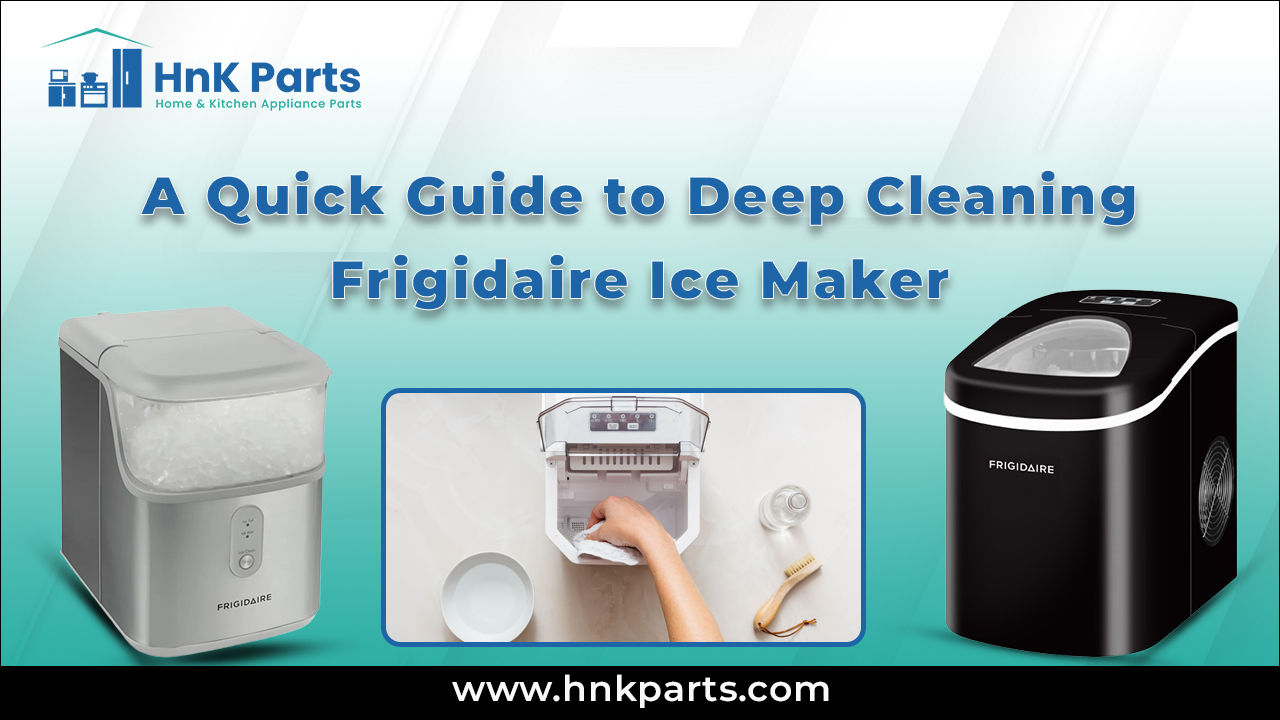
The best way to clean an ice maker with vinegar is to work from the outside in. Remove loose parts first, clean the water path next, and rinse well at the end.
1. Read the Manufacturer’s Instructions
Look for cleaning directions in the owner’s manual or on the maker’s website. Some machines need a special cleaning cycle. Others may warn against vinegar because of rubber seals, aluminum parts, or internal coatings.
If the manual says not to use vinegar, use the recommended cleaner instead. A natural cleaner is not automatically safe for every appliance.
2. Turn Off and Unplug the Machine
Switch off the ice maker and unplug it from the wall. If it is built into a refrigerator, turn off the ice-making function before removing the ice bin.
Never pour liquid into a running electrical appliance. Unplugging the unit protects you and allows the machine to drain without starting a cycle.
3. Empty the Ice Bin
Throw away all ice in the bin. Do not use old ice for drinks, even if it looks clean. Ice can absorb odors and collect residue from the bin or chute.
If the ice bin has stuck cubes, let them melt naturally. Avoid using sharp tools to pry them loose because they can scratch plastic or damage the mechanism.
4. Remove Washable Parts
Take out the ice bin, scoop, basket, water reservoir cover, and other removable parts. Place them near the sink.
Wash each part with warm water and a small amount of dish soap. Rinse away all soap before applying vinegar. Soap and vinegar can work against each other and may leave a film if they are mixed together.
5. Wipe the Interior
Dip a soft cloth into the vinegar and water solution. Wring it out well, then wipe the walls, corners, water tray, and ice chute.
Use a soft toothbrush for narrow grooves. Do not use steel wool, abrasive powder, or a sharp blade. These tools can damage the surface and create tiny scratches where residue can collect.
6. Add the Vinegar Solution
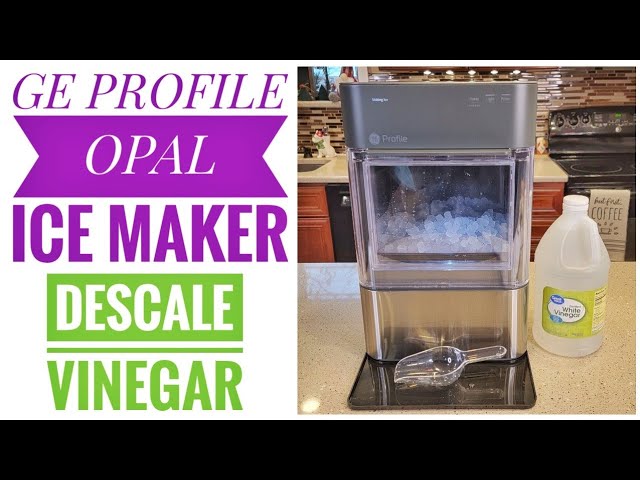
Mix equal parts white vinegar and water in a clean container. For example, use 2 cups of vinegar and 2 cups of water for a larger reservoir, unless the manufacturer gives different directions.
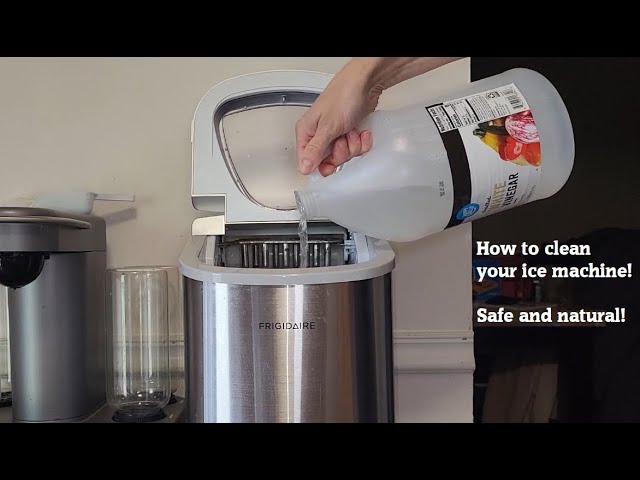
Pour the solution into the water reservoir. Do not fill past the maximum line. A smaller portable machine may need only 1 cup of solution.
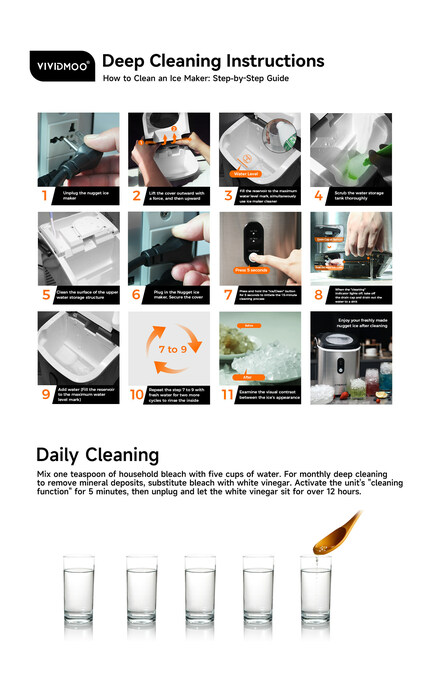
7. Run the Cleaning or Ice Cycle
If your machine has a cleaning cycle, select it. If it does not, turn the machine on and allow it to run one normal cycle.
Discard the first ice made during cleaning. Do not eat it. The vinegar solution needs to travel through the water lines and ice-making area, where it can loosen light scale.
For a very dirty machine, turn it off after the solution has circulated and let the solution sit for about 10 to 15 minutes. Do not leave vinegar inside overnight unless the manual specifically allows it.
8. Scrub Remaining Deposits
Turn the machine off and unplug it again. Use a soft brush or cloth to remove loosened white flakes and film.
Do not force deposits off delicate parts. If scale remains, repeat the cleaning process rather than using a harsh tool. Patience is safer than pressure.
9. Rinse the Ice Maker
Empty the vinegar solution. Rinse the reservoir with clean water, then wipe the inside with a damp cloth.
Fill the reservoir with fresh water and run one or two cycles. Discard every ice batch made during rinsing. Continue until the vinegar smell and taste are gone.
This rinse step is the part many people skip. A machine can look clean but still leave a sour taste if vinegar remains in the water lines.
10. Wash, Dry, and Reassemble
Wash the ice bin and removable parts again with clean water. Dry them with a soft towel or let them air-dry fully.
Reassemble the machine only when the parts are dry. Plug it in, add fresh drinking water, and make a new batch of ice. If the ice still smells like vinegar, run another water-only cycle and discard the ice.

How to Clean Different Types of Ice Makers
The cleaning method changes slightly based on the type of ice maker you own. The basic rule stays the same: protect electrical parts and rinse thoroughly.
Countertop Ice Makers
Countertop models often have a built-in water reservoir and drain plug. Remove the drain cap over a sink or bowl before cleaning.
When cleaning a countertop ice maker with vinegar, keep liquid away from the control panel, fan vents, and power connection. These machines are compact, so a cloth and soft toothbrush can usually reach most areas.
Refrigerator Ice Makers
For a refrigerator ice maker, turn off the ice-making feature and remove the ice bin. Clean the bin with warm soapy water, then wipe the ice chute and surrounding area with a damp vinegar solution.
Do not pour vinegar directly into the refrigerator’s ice-making mechanism unless the manual says to do so. Many refrigerator ice makers are not designed for liquid to be poured over their internal parts.
Built-In or Commercial Ice Makers
Built-in and commercial machines may have pumps, filters, sensors, and dedicated cleaning programs. Use the cleaning chemical and dilution listed by the manufacturer.
Vinegar may help with exterior scale, but it may not meet the cleaning or sanitation needs of a commercial unit. Follow local food safety rules if the machine serves customers or a workplace.

Common Mistakes to Avoid
Cleaning an ice maker with vinegar is safe for many machines, but the wrong approach can cause damage or poor results.
• Do not mix vinegar with bleach. The combination can create dangerous chlorine gas.
• Do not use vinegar on a machine that the manufacturer says must use another cleaner.
• Do not run vinegar through an active water filter unless the instructions approve it.
• Do not use boiling water. Sudden heat can warp plastic parts or damage seals.
• Do not scrape scale with a knife or metal tool.
• Do not keep the first ice made after cleaning.
• Do not ignore the drain plug or water tray, where dirty water may collect.
• Do not assume vinegar kills every harmful germ. Cleaning removes soil, but sanitizing requires the right product and method.
One mistake seen often is rinsing only once. If the machine has long water lines, one rinse may not remove all the acid. When in doubt, use two or three fresh-water cycles.

How Often Should You Clean an Ice Maker?
Most home ice makers benefit from a light cleaning about once a month. Clean sooner if you notice an odor, cloudy ice, visible scale, slow production, or a change in taste.
Homes with hard water may need more frequent cleaning. A water filter can reduce mineral buildup, but it does not remove the need to clean the ice bin and water path.
A simple schedule can help:
• Every few days: Wipe spills and check the ice bin.
• Once a week: Wash the scoop and inspect the water reservoir.
• Once a month: Clean the machine with the approved method.
• Every few months: Replace the water filter when required.
• After a long period of nonuse: Empty, wash, rinse, and dry the machine before making ice again.
Does Vinegar Remove Mold and Slime?
Vinegar can loosen some residue and may reduce certain odors. It can also help remove light mineral film that traps dirt.
Still, vinegar is not a guaranteed treatment for mold, biofilm, or serious contamination. If you see black growth, thick slime, a strong rotten smell, or repeated contamination, stop using the machine and follow the manufacturer’s sanitation instructions.
For severe buildup, a food-safe ice machine cleaner may be more suitable. Some products are made to dissolve scale and help clean internal water systems without damaging machine parts when used correctly.
When Vinegar Is Not the Best Choice
Vinegar has limits. It may not remove heavy scale as well as a dedicated descaler, and it may damage certain materials after repeated or extended contact.
Avoid vinegar when:
• The owner’s manual prohibits acidic cleaners.
• The machine contains sensitive metal parts that may corrode.
• A water filter or cleaning cartridge must remain in place.
• The machine has a serious mold or sanitation problem.
• You operate a commercial ice maker with strict health requirements.
When the manual is unclear, contact the manufacturer. This small step can prevent damage and protect your warranty.
Practical Tips for Better-Tasting Ice
Clean water and a clean bin are only part of the solution. Ice can absorb smells from nearby foods, especially in a crowded freezer.
Try these habits:
• Store strong-smelling foods in sealed containers.
• Replace old or expired water in a countertop ice maker.
• Keep the ice scoop clean and outside the ice when possible.
• Never touch ice with dirty hands.
• Keep the ice bin dry between cleanings.
• Replace filters on the schedule listed by the manufacturer.
• Discard ice that has a strange taste, smell, or color.
In hands-on cleaning, one lesson stands out: the bin often causes the odor, not the ice-making mechanism. A clean machine can still make bad-tasting ice if the bin is greasy, damp, or stored beside uncovered food.
What to Do if the Ice Still Smells Like Vinegar
A lingering vinegar odor usually means the machine needs more rinsing. Empty the ice, wipe the reservoir with clean water, and run two or more water-only cycles.
Check the drain area as well. A small amount of vinegar solution can remain in a low section or drain hose. Follow the manual’s draining instructions and make sure the hose is not blocked.
If the smell remains after thorough rinsing, stop using the machine and contact the manufacturer. The odor may come from an old filter, trapped residue, or a part that needs replacement.
How to Keep an Ice Maker Clean Longer
Regular care reduces the need for deep cleaning. Start with fresh drinking water and avoid letting melted ice sit in the bin.
After a cleaning session, dry removable parts completely. Moisture left in dark corners can create odors over time.
You can also:
• Wipe the exterior and handle often.
• Clean the ice scoop once a week.
• Keep the air vents clear.
• Avoid overfilling the ice bin.
• Empty the machine before vacations or long storage.
• Follow the cleaning schedule in the owner’s manual.
These small actions work like brushing your teeth. They do not replace a deeper clean, but they make buildup much less likely.
Frequently Asked Questions About How to Clean an Ice Maker With Vinegar
Can I put straight vinegar in my ice maker?
Usually, diluted vinegar is a safer choice than straight vinegar. Use a one-to-one mixture unless the manufacturer gives different instructions, and rinse the machine well afterward.
How long should vinegar sit in an ice maker?
Let diluted vinegar sit for about 10 to 15 minutes after it has circulated, unless the manual says otherwise. Do not leave it overnight because prolonged acid contact may harm seals or metal parts.
How many times should I rinse an ice maker after using vinegar?
Run at least one full water-only cycle and discard the ice. Use two or three rinse cycles if you still notice a sour smell or taste.
Can vinegar sanitize an ice maker?
Vinegar can clean light scale and some residue, but it is not a reliable sanitizer for every harmful microorganism. Use an approved food-safe sanitizer or ice machine cleaner when sanitation is required.
Can I clean a refrigerator ice maker with vinegar?
You can often use a damp vinegar solution on the ice bin and accessible surfaces. Do not pour liquid into the internal mechanism unless the refrigerator’s instructions specifically allow it.
Is apple cider vinegar safe for cleaning an ice maker?
Apple cider vinegar is not ideal because it can contain color, sugars, and extra residue. White distilled vinegar is the better choice for cleaning.
Why does my ice taste bad after cleaning?
The machine may still contain vinegar, soap, old water, or residue from a dirty filter. Discard the ice, rinse the reservoir, and run fresh-water cycles until the taste returns to normal.
Conclusion
Cleaning an ice maker with vinegar can remove light scale, odors, and water residue when the appliance manual allows it. Use diluted white vinegar, protect electrical parts, clean removable pieces, discard the first ice, and rinse until the smell is completely gone.
Remember that vinegar cleans but does not guarantee full sanitation. For heavy buildup, mold, commercial equipment, or uncertain materials, choose the manufacturer-approved cleaner instead. Set a monthly cleaning reminder, give these steps a try, and share your best ice maker care tips in the comments.