
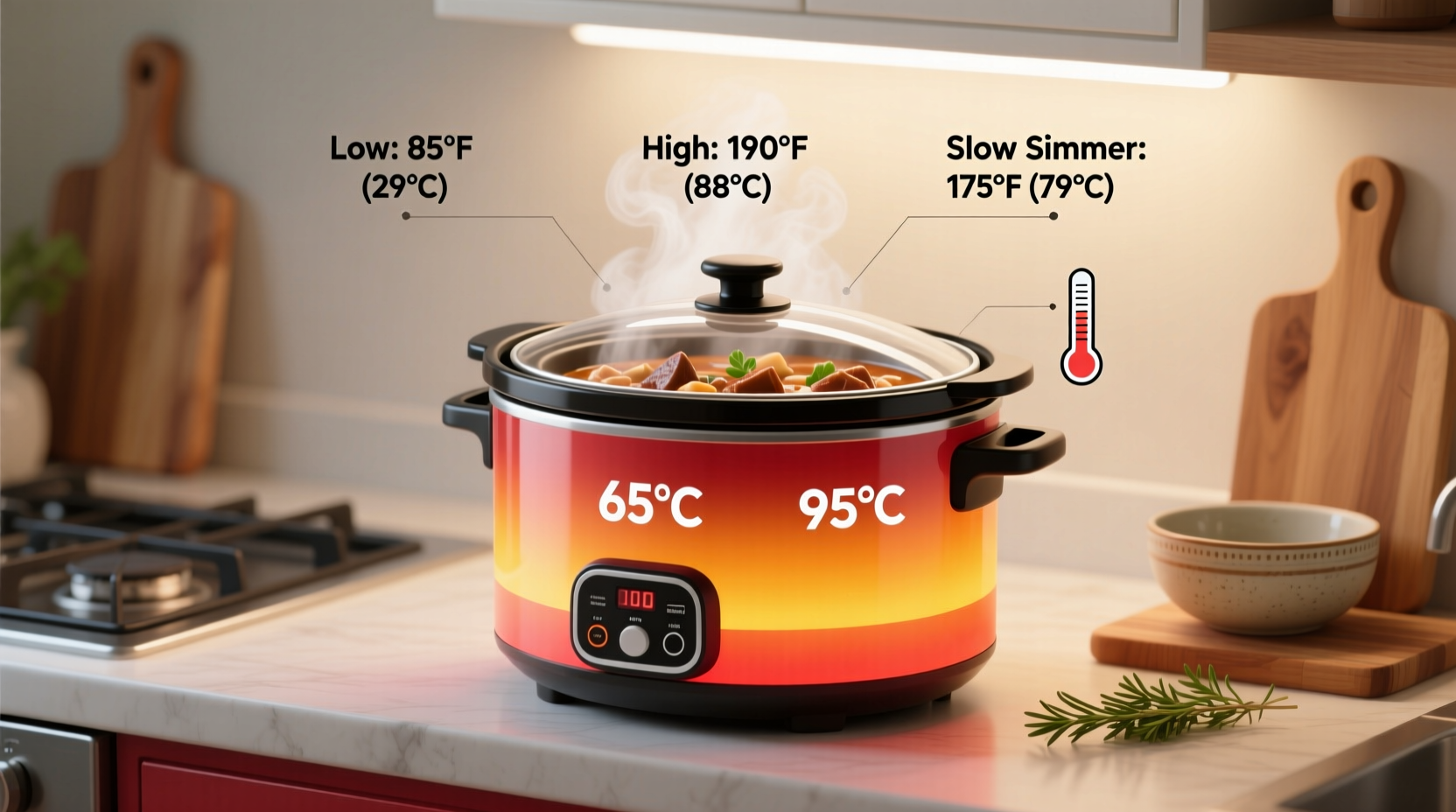
In the United States, a slow cooker on High usually cooks at about 300°F, while the food itself often reaches a gentle simmer near 200°F to 212°F. The exact temperature varies by brand, model, food amount, and room temperature.
“High” does not mean the food instantly reaches 300°F. It means the cooker uses more heat than the Low setting. Most slow cookers warm food gradually, then cycle the heating element on and off to hold a safe cooking range.

What Temperature Does “High” Mean on a Slow Cooker?
A slow cooker set to High commonly creates a cooking environment of roughly 300°F. However, this number usually describes the heat supplied by the appliance or the area near the crock, not the exact temperature of every piece of food.
The liquid in the pot cannot stay much above its boiling point for long. At sea level in the United States, water boils at about 212°F. As a result, soups, stews, and sauces may simmer gently even though the cooker is producing more heat.
Most slow cookers have no precise temperature dial. Instead, the High and Low settings control how quickly the cooker heats and how often the heating element cycles.
Typical slow cooker temperature ranges
| Setting | Common cooking range | What you may see |
|---|---|---|
| Low | About 190°F to 210°F | Slow simmer after several hours |
| High | About 250°F to 300°F | Faster simmer and shorter cooking time |
| Warm | Often below 200°F | Holds cooked food, but may not cook raw food safely |
These figures are general ranges, not universal specifications. A slow cooker’s design, size, lid fit, food volume, and ingredients can change the result.
The USDA explains that slow cookers cook food gradually at a low temperature. Its guidance also recommends using a slow cooker according to the manufacturer’s instructions and checking food with a food thermometer when safety matters.

Does High Mean the Food Reaches 300°F?
No. The food in a slow cooker usually does not reach 300°F.
Water-based foods, such as chili or pot roast with broth, normally remain close to the boiling point of water once they begin to simmer. The cooker may produce heat near 300°F, but moisture keeps the food temperature lower.
Dry foods can behave differently. For example, the outside of a roast may become hotter than the center. Food touching the crock may also heat more than food in the middle.
This difference explains why a slow cooker can cook food thoroughly without frying or scorching it under normal conditions. The moist, enclosed environment transfers heat slowly and evenly.
Why the temperature varies
Several factors affect the temperature inside a slow cooker:
- Amount of food: A full crock heats more slowly than a partly filled one.
- Food temperature: Frozen or chilled ingredients take longer to heat.
- Lid position: Removing the lid releases heat and can extend cooking time.
- Crock size: A wide, shallow crock may heat differently from a narrow, deep one.
- Ingredient type: Thick sauces heat differently from clear broth.
- Altitude: Water boils at a lower temperature at higher elevations.
- Appliance design: Digital and older manual models may use different heat cycles.
For that reason, a statement such as “High is exactly 300°F” should be treated as a useful estimate, not a guaranteed measurement.
How Long Does a Slow Cooker Take to Heat on High?
A slow cooker may take several hours to bring a large meal to a steady simmer. Smaller portions can heat sooner.
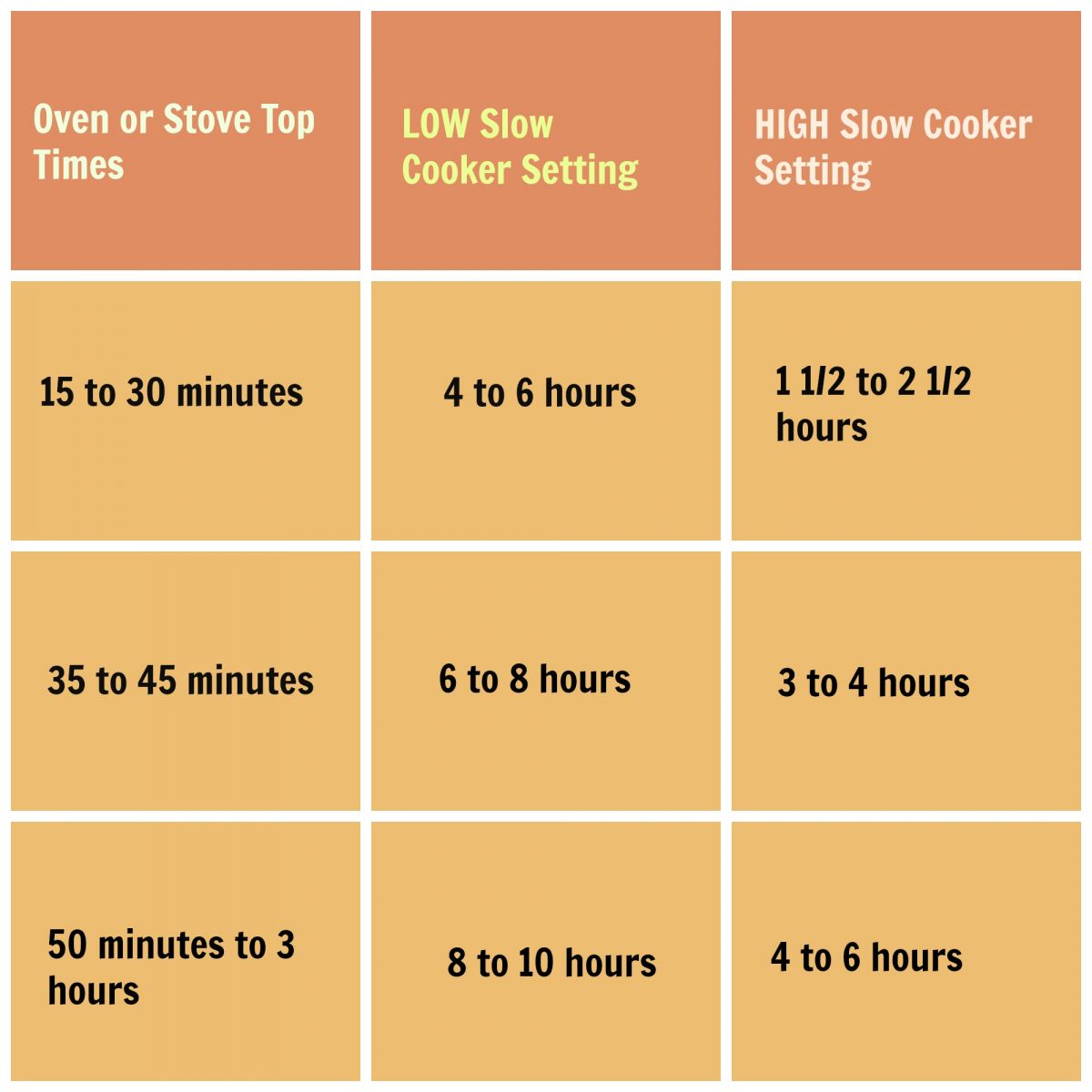
As a practical guide, many recipes use these approximate conversions:
| Recipe instruction | Approximate High-setting equivalent |
|---|---|
| 8 hours on Low | 4 hours on High |
| 6 hours on Low | 3 to 4 hours on High |
| 4 hours on Low | 2 to 3 hours on High |
These are recipe estimates, not strict rules. The cooking time depends on the food and the appliance. Meat may become tender only after collagen breaks down, even after it reaches a safe internal temperature.
Do not use the time conversion for every recipe without checking the food. A delicate dish, dairy-based sauce, seafood meal, or small batch can overcook on High.
Signs that the slow cooker is working correctly
A slow cooker on High is likely heating normally when:
- The food becomes hot throughout.
- Liquid begins to produce small bubbles.
- Steam forms beneath the lid.
- Meat reaches a safe internal temperature.
- Vegetables soften within the recipe’s expected time.
Do not remove the lid often to check progress. Each opening lets heat escape and may add time to the cooking process.

Is High or Low Better for Cooking?
High is useful when you need dinner ready sooner. Low is often better when you want a longer cooking window or more gradual softening.
The best setting depends on the recipe:
- Use High for shorter cooking times, soups, beans that have been prepared correctly, and recipes written for that setting.
- Use Low for tough cuts of meat, long braises, overnight meals, and recipes where gradual cooking helps texture.
- Use Warm only to hold fully cooked food for a limited time, unless the manufacturer gives different instructions.
High heat does not always produce the same texture as Low heat. A roast may reach a safe temperature quickly on High but still need more time to become tender. Conversely, vegetables may become soft or mushy if left too long.
The deciding factor is not only temperature. It is also time, moisture, food size, and texture.

What Temperature Should Food Reach in a Slow Cooker?
Use the food’s safe internal temperature as the final check. The cooker setting alone cannot confirm that the center of the food is safe.
The USDA lists these common minimum internal temperatures:
| Food | Minimum internal temperature |
|---|---|
| Poultry, including chicken and turkey | 165°F |
| Ground meats | 160°F |
| Beef, pork, lamb, and veal steaks, chops, and roasts | 145°F, followed by a 3-minute rest |
| Leftovers and casseroles | 165°F |
Measure the thickest part of the food with a clean food thermometer. For poultry, avoid touching bone because it can affect the reading.
A thermometer reading confirms temperature, but it does not always confirm tenderness. A beef roast may be safe at 145°F yet still be chewy. Tough cuts often need more cooking time so connective tissue can soften.
For official food-safety guidance, see the USDA slow cooker recommendations and the USDA safe minimum internal temperature chart.
How to Use a Slow Cooker on High Safely
Use these steps when cooking a meal on High:
- Thaw meat before slow cooking it. Frozen meat may spend too long in the bacterial growth zone while the center warms.
- Cut large pieces into smaller, even pieces. Uniform pieces cook at a more similar rate.
- Fill the crock correctly. Follow the manual’s guidance, but many manufacturers advise filling it about one-half to two-thirds full.
- Keep the lid closed. Check only when needed.
- Add enough liquid for the recipe. Slow cookers lose little moisture, so you often need less liquid than in an oven or stovetop recipe.
- Use a food thermometer. Check thick meat and poultry before serving.
- Refrigerate leftovers promptly. Divide large amounts into shallow containers so they cool faster.
- Clean the crock and lid well. Wash parts according to the manufacturer’s instructions.
Never put a cracked ceramic insert on a hot surface unless the manufacturer specifically allows it. A sudden temperature change can damage the crock.
Do not use the Warm setting to cook raw meat. Warm is intended to hold food that has already reached a safe temperature.

Can You Make a Slow Cooker Hotter Than High?
Do not try to increase a slow cooker’s heat with an unsafe modification.
A slow cooker is designed to work with its built-in heating element and controls. Placing the crock in an oven, using an external heating device, or changing the electrical parts can damage the appliance and create a fire or shock hazard.
If High does not seem hot enough, first check simple causes:
- The lid fits correctly.
- The cooker is plugged directly into a suitable outlet.
- The crock sits fully inside the heating base.
- The food is not frozen.
- The cooker is not overfilled.
- The cooking time matches the recipe.
- The appliance has not been placed in a cold location or near a draft.
You can test the cooker with water, but a home water test is only a rough check. Different models cycle heat in different ways. If food remains lukewarm after several hours on High, stop using the appliance for food safety and contact the manufacturer.

What Should You Do If a Slow Cooker Is Not Hot Enough?
If the food is still cool or barely warm, treat it as a possible food-safety problem.
Check the temperature of the food with a thermometer. If it has stayed lukewarm for an extended period, do not taste it to decide whether it is safe. Bacteria can grow without changing the food’s smell or appearance.
For a meal that has only recently started heating, correct the setup and continue cooking according to the manufacturer’s directions. If the food has been sitting at an unsafe temperature for too long, discard it rather than trying to rescue it.
A faulty cooker may show these signs:
- The crock never becomes warm.
- Food does not heat after several hours.
- The heating is uneven or stops.
- The power cord or plug becomes unusually hot.
- The appliance smells like burning plastic or electrical parts.
Unplug the appliance if it shows electrical problems. Do not open the base or attempt a repair unless a qualified professional and the manufacturer’s instructions support it.

Slow Cooker High vs. Oven Temperature
A slow cooker on High is not the same as setting an oven to 300°F.
An oven surrounds food with hot air. A slow cooker uses a heated crock, a lid, moisture, and a slower transfer of heat. Even if both appliances use a similar number on a label, they do not cook in the same way.
This is why a recipe cannot always move directly from a slow cooker to an oven by copying the temperature. Oven recipes may need different liquid amounts, cooking times, and covered or uncovered directions.
As a broad guide:
- A slow cooker creates a moist, enclosed cooking space.
- An oven can brown and dry food.
- A slow cooker usually does not brown meat well.
- An oven can roast food at a controlled air temperature.
- A slow cooker needs more time to heat the center of large, dense foods.
If you want browned meat, sear it in a skillet before adding it to the slow cooker. Searing improves color and flavor, but it does not replace safe slow cooking.

Common Mistakes When Cooking on High
The most common errors involve assuming that High is an exact temperature or that faster heating makes every recipe better.
Treating High as a fixed 300°F setting
High is a control setting, not a laboratory temperature. Use the manufacturer’s manual and the food’s internal temperature as better guides.
Starting with frozen meat
A slow cooker may not heat frozen meat quickly enough. Thaw meat in the refrigerator before adding it.
Overfilling the crock
Too much food can slow heating and cause uneven cooking. Follow the fill limits in the manual.
Lifting the lid repeatedly
Every lid opening releases heat and moisture. It can make the meal take longer.
Using too much liquid
Slow cookers hold moisture well. Excess broth can make food watery and reduce flavor.
Cooking delicate foods for too long
Pasta, seafood, dairy, and some vegetables may need to go in near the end of cooking. Follow a recipe tested for slow cooking.
Assuming a safe temperature means the food is tender
Temperature and texture are different checks. Meat may need more time after reaching a safe temperature.
Frequently Asked Questions
Is 300°F the same as High on every slow cooker?
No. About 300°F is a common estimate for the High setting, but slow cookers vary. The number may describe the heating environment rather than the temperature of the food.
Is Low or High better for meat?
Low often gives tough meat more time to soften, but High can work when the recipe allows it. Use the cooking time and method provided for the specific cut.
Can a slow cooker boil on High?
Yes. Liquid may reach a gentle simmer or, in some models, a stronger boil. A full rolling boil is not required for safe slow cooking and may make food break apart or dry out.
Can I use a slow cooker on High to cook frozen chicken?
It is safer to thaw chicken first. Frozen poultry can heat too slowly in a slow cooker, allowing unsafe bacterial growth before the center reaches 165°F.
How can I tell if my slow cooker is hot enough?
Check whether the food is heating and use a food thermometer. If the cooker stays lukewarm after several hours on High, follow the manufacturer’s troubleshooting advice and consider replacing or servicing the appliance.

Conclusion
A slow cooker on High commonly produces a cooking environment near 300°F, but the food itself usually simmers closer to 200°F to 212°F when it contains water-based liquid. The setting is not an exact temperature, and performance varies by appliance.
For safe results, thaw meat first, keep the lid closed, avoid overfilling, follow the recipe’s timing, and check the thickest part of the food with a thermometer. When in doubt, use the manual for your specific model rather than relying on a universal temperature chart.