
Introduction
In a typical U.S. kitchen, a slow cooker takes about 15 to 30 minutes to feel warm after you turn it on. But reaching a stable cooking temperature can take 1 to 2 hours, especially when the crock is full of cold food.
The exact time depends on the cooker’s size, setting, food volume, starting temperature, and lid seal. A slow cooker does not heat like a stove. It warms the crock and food slowly, so the center of a large meal may stay cool long after the outside feels hot.
For food safety, do not judge the food by the warmth of the crock alone. Keep the lid closed, use the correct setting, and check the food with a food thermometer when needed.

Quick Answer: How Long Does a Slow Cooker Take to Heat Up?
A slow cooker usually takes:
- 15 to 30 minutes to feel warm on the outside
- 30 to 60 minutes to warm an empty ceramic crock
- 1 to 2 hours to heat a small amount of food
- 2 to 4 hours to heat a large amount of cold food
- 6 to 8 hours on Low to cook many common meals
- 3 to 4 hours on High to cook many common meals
These are practical estimates, not fixed times. Slow cookers vary by brand, model, size, and age.
A slow cooker set to High does not heat instantly. It often reaches cooking temperature faster than Low, but the food still needs time to heat through. A full 6-quart cooker filled with cold ingredients will take much longer than a half-full 3-quart cooker.
What “Heated Up” Means in a Slow Cooker
“Heated up” can mean three different things:
- The outside feels warm.
- The crock has reached a hot cooking temperature.
- The food is hot and safe to eat.
These are not the same point.
The outside of the cooker may feel warm within minutes. However, the food in the center may still be cold. A thick stew, roast, or large batch of beans needs time for heat to move from the crock into the food.
Most slow cookers cook at a low, steady heat. They are designed to heat food over several hours, not to bring food to a boil quickly. The heating element sits around the crock, so heat moves inward at a gradual pace.
The U.S. Department of Agriculture advises using a slow cooker according to the manufacturer’s instructions. It also recommends thawing meat and poultry before slow cooking, keeping the lid in place, and using a food thermometer to confirm safe temperatures. See the USDA’s slow cooker food safety guidance.

How Long Does a Slow Cooker Take on Low or High?
The High setting usually heats food faster, but it does not always cut the cooking time in half. Low and High settings may reach similar final temperatures, while High gets there sooner.
| Slow cooker condition | Approximate time to become hot |
|---|---|
| Empty crock on Low | 30 to 60 minutes |
| Empty crock on High | 15 to 30 minutes |
| Small amount of room-temperature food | 30 to 90 minutes |
| Small amount of refrigerated food | 1 to 2 hours |
| Full cooker of refrigerated food | 2 to 4 hours |
| Large roast or dense meal | Several hours |
These ranges assume the lid stays closed and the cooker works properly.
Low setting
Low is best for long cooking. It is useful for:
- Tough cuts of meat
- Dried beans that have been prepared correctly
- Soups and stews
- Pulled pork
- Large meals that need several hours
A meal may take 6 to 8 hours on Low, though some recipes need 8 to 10 hours. The size of the food matters as much as the clock. A whole roast takes longer to heat through than sliced meat.
High setting
High is useful when you have less time. Many recipes take 3 to 4 hours on High, but this varies widely.
High may work well for:
- Soup
- Chili
- Small pieces of meat
- Warm dips
- Pre-cooked ingredients
Do not switch every recipe from Low to High without checking the recipe or appliance instructions. The food may cook faster, but it may also become dry or overcooked around the edges.

What Affects Slow Cooker Heating Time?
The largest factors are food temperature, food volume, crock size, ingredient density, and the lid seal.
Starting temperature
Cold food from a refrigerator takes longer to heat than room-temperature ingredients. Frozen food takes longer still and may heat too slowly for safe cooking.
Do not place a large frozen roast or block of frozen meat into a slow cooker. The center may remain in the food safety “danger zone”—between 40°F and 140°F—for too long.
Thaw meat and poultry in the refrigerator before adding them to a slow cooker. Never use the slow cooker as a method for thawing food.
Amount of food
A fuller cooker usually takes longer to heat. A half-full crock may become hot much sooner than a full crock.
For best results, many slow cooker instructions advise filling the crock within a recommended range, often about one-half to two-thirds full. Check your model’s manual because the correct range can differ.
An overfilled crock may heat slowly and cook unevenly. An underfilled crock may heat too quickly and cause food to dry out.
Food thickness and density
Liquid soup heats more evenly than a thick mass of meat, mashed food, or dense casserole.
Large pieces of meat also slow heat transfer. Cutting food into similar-sized pieces can help it cook more evenly. Do not pack ingredients tightly if the recipe calls for space between pieces.
Crock material and size
A thick ceramic crock holds heat well, but it also takes time to warm. A large 8-quart cooker usually needs more time than a small 2-quart cooker.
Some modern models use metal cooking pots or different heating systems. Their warm-up time may not match that of a traditional ceramic slow cooker.
Lid position
Keep the lid closed as much as possible. Each time you lift it, heat escapes and the cooker must recover.
A loose, cracked, or poorly fitted lid also slows heating. Steam may escape, liquids may reduce too much, and the food may cook unevenly.
Room temperature
A cold kitchen, a cold countertop, or a cold crock can add to the warm-up time. Never place a hot crock on a cold or wet surface if the manufacturer warns that thermal shock may crack it.

Should You Preheat a Slow Cooker Before Adding Food?
Most slow cookers do not need a long preheat period before you add ingredients. Follow the instructions for your specific model.
Some manufacturers allow food to go into a cold crock before the cooker is turned on. Others may recommend preheating for certain recipes. A recipe may also tell you to heat the crock first to improve texture or reduce the cooking time.
If you choose to preheat:
- Place the empty crock in the heating base.
- Put the lid on.
- Set the cooker to High for about 15 to 30 minutes.
- Add ingredients carefully.
- Reset the cooker to the recipe’s required setting.
Do not preheat an empty slow cooker for hours. Extended empty heating may stress the crock or waste energy. Do not put a cold ceramic insert on a hot burner unless the manufacturer specifically says it is safe.
Some recipes call for browning meat or sautéing vegetables first. Use a skillet unless your model is designed for stovetop use. Browning improves flavor, but it does not replace slow cooker heating.

How to Tell Whether a Slow Cooker Is Heating Properly
A working slow cooker should gradually warm the crock and food. The lid should become warm, and liquids should eventually produce steam or gentle bubbling around the edges.
Use these checks:
- Confirm the power cord is fully inserted.
- Make sure the cooker is plugged directly into a working outlet.
- Check that the control is set to Low, High, or another active cooking mode.
- Confirm that the crock sits correctly inside the heating base.
- Keep the lid closed for at least 30 to 60 minutes.
- Check the food temperature with a clean food thermometer.
A slow cooker may not visibly bubble on Low. Gentle bubbling on High is more common. The absence of a rolling boil does not automatically mean the appliance is broken.
Signs of a possible problem
Stop using the cooker and inspect it if you notice:
- No warmth after about 60 minutes on High
- A damaged cord or plug
- Sparks, smoke, or a burning electrical smell
- A cracked ceramic insert
- A control that will not stay on
- Food that remains cold after several hours
- A base that becomes unusually hot in one small area
Do not repair an electrical slow cooker yourself unless you are qualified to do so. Contact the manufacturer or replace the appliance if it is unsafe.
What to Do If Your Slow Cooker Is Heating Too Slowly
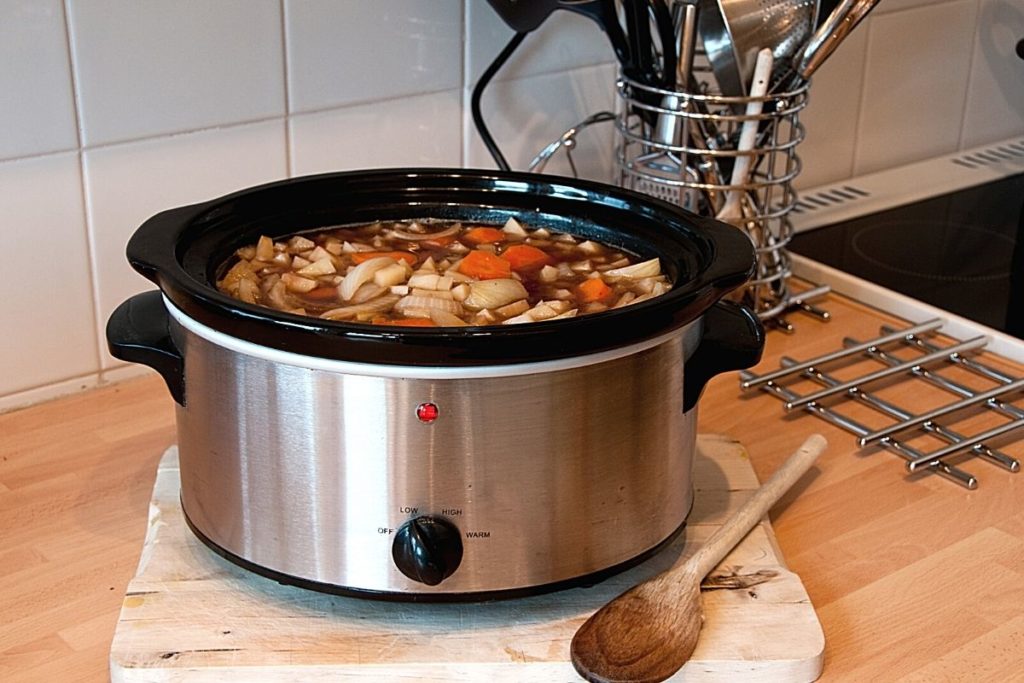
If the food is still cold after the expected time, first check the simple causes.
1. Confirm the setting
The cooker may be on Warm instead of Low or High. The Warm setting is designed to hold already-cooked food. It is not intended to cook raw ingredients or heat cold food quickly.
2. Check the lid
Make sure the lid sits evenly. A warped lid or damaged seal can let heat escape.
3. Check the fill level
An overfilled crock takes longer to heat. If the food is crowded near the top, the cooker may also cook unevenly.
4. Check ingredient temperature
Large amounts of refrigerated food take time to warm. Frozen ingredients can take too long and may create a safety risk.
5. Use a thermometer
Measure the thickest part of meat without touching the bone. For other foods, stir carefully and measure several areas. Follow USDA temperature guidance for the food being prepared.
If the food has stayed below 140°F for too long, do not assume that turning the cooker to High will make it safe. When in doubt, discard food that has been held in unsafe conditions. The cost of the ingredients is lower than the risk of foodborne illness.
Slow Cooker Heating Times: Practical Examples
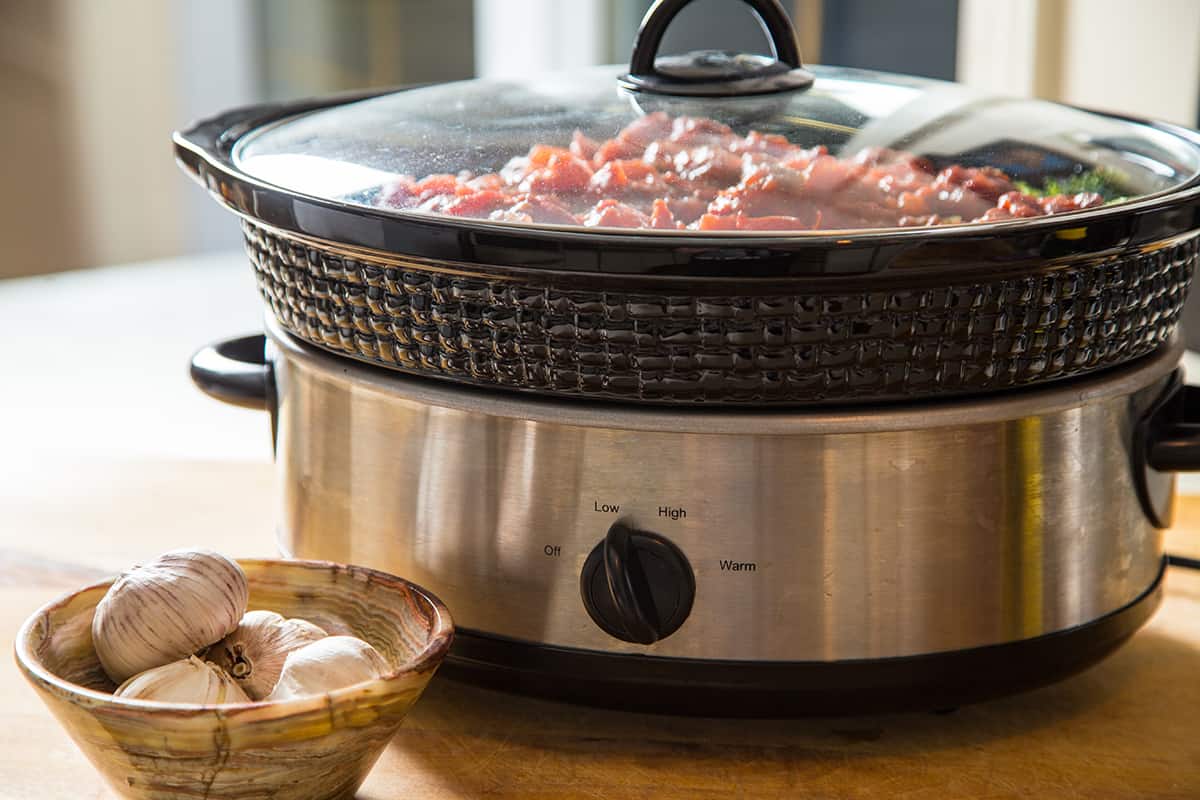
These examples show why one fixed answer does not work for every slow cooker.
Example 1: A small soup
A 3-quart cooker filled with room-temperature soup may feel warm within 20 minutes. It may become hot enough for serving after 1 to 2 hours on High.
Example 2: Refrigerated chili
A full 6-quart cooker of cold chili may take 2 to 3 hours to become fully hot. Stirring once, if the recipe allows it, can help distribute heat. Keep the lid closed the rest of the time.
Example 3: A large roast
A refrigerated roast may take several hours to heat through. Cooking time depends on the roast’s weight, shape, cut, and the cooker’s setting. Use the recipe’s time as a starting point, then confirm doneness with a thermometer.
Example 4: A dip for a party
A small amount of cheese dip or bean dip may heat in 30 to 90 minutes on High. Stir it as directed to prevent scorching at the edges.
Common Mistakes That Slow Heating
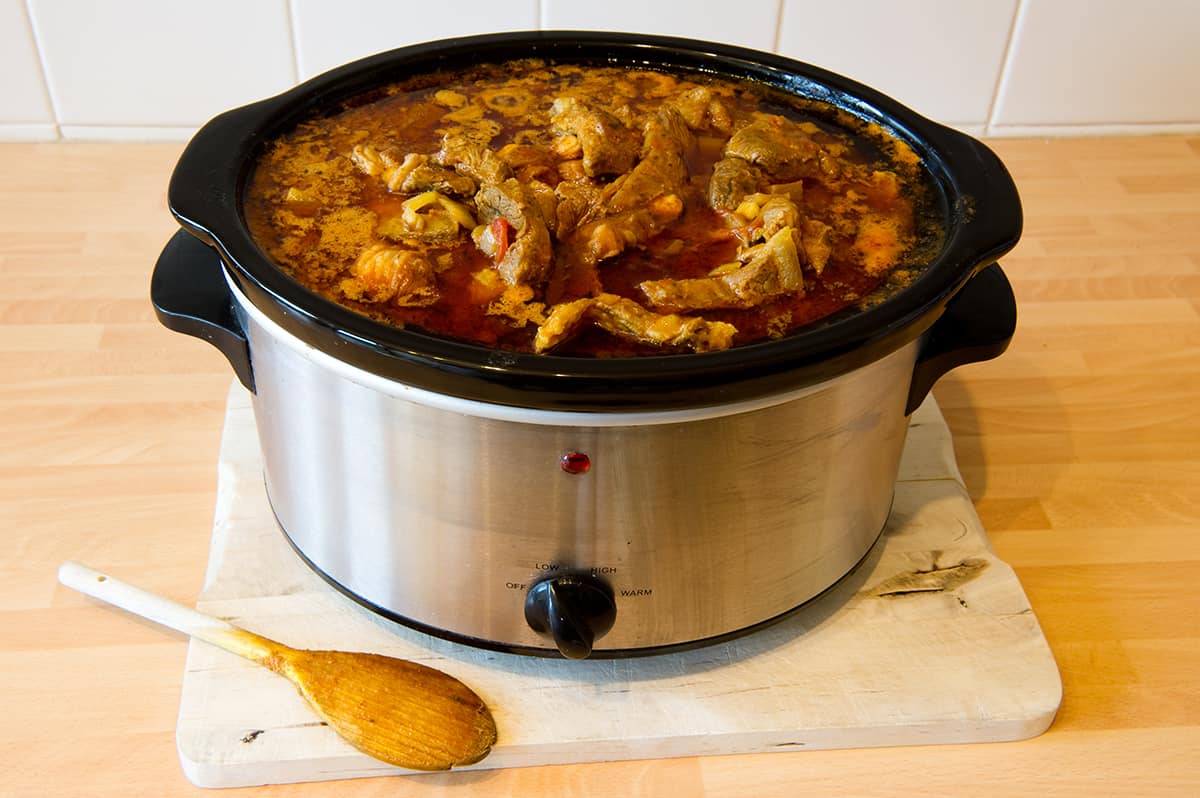
Avoid these mistakes when using a slow cooker:
- Lifting the lid often
- Adding frozen meat
- Filling the crock above its recommended limit
- Using Warm to cook raw food
- Placing the crock on a burner
- Using a cracked ceramic insert
- Starting with food that is too cold for the recipe
- Cooking a large solid piece when the recipe calls for smaller pieces
- Relying on the outside temperature of the crock
- Leaving a slow cooker unattended when the cord or base is damaged
The best approach is simple: prepare the food as directed, use the correct setting, leave the lid closed, and verify the result with a thermometer when safety or doneness matters.
Frequently Asked Questions
Can I put food in a slow cooker before it heats up?
Yes, in most cases. Many slow cooker recipes begin with cold ingredients placed in a cold crock. Follow the instructions for your model and recipe. Do not add large frozen cuts of meat.
Is a slow cooker supposed to boil?
Not always. A slow cooker may show gentle bubbling on High, but Low may produce little visible bubbling. The food can still be cooking. A rolling boil is not required for every recipe.
How long does a slow cooker take to heat on High?
It may feel warm in 15 to 30 minutes. Food often takes 1 to 3 hours to become fully hot, depending on the amount, starting temperature, and thickness.
Can I speed up a slow cooker?
Use room-temperature ingredients when the recipe permits, cut food into even pieces, avoid overfilling, and keep the lid closed. You can also use High instead of Low when the recipe supports it. Do not use a burner or unsafe heating method with the crock.
Can I leave a slow cooker on Warm overnight?
Warm is meant to hold already-cooked food, not cook raw food. Holding times and safety depend on the appliance and food. Follow the manufacturer’s instructions and USDA food safety guidance. Discard food that may have stayed below 140°F for an unsafe period.

Conclusion
A slow cooker usually takes 15 to 30 minutes to feel warm and 1 to 4 hours to heat food fully, depending on the cooker and ingredients. A full crock of cold food needs far more time than a small amount of room-temperature food.
For reliable results, use the correct setting, keep the lid closed, thaw meat before cooking, and avoid using Warm for raw food. When the timing matters, check the food itself with a thermometer rather than judging the cooker by touch.
The next step is to check your slow cooker’s manual for its fill limits and heating instructions, then use the recipe’s cooking time as a guide—not a guarantee.