
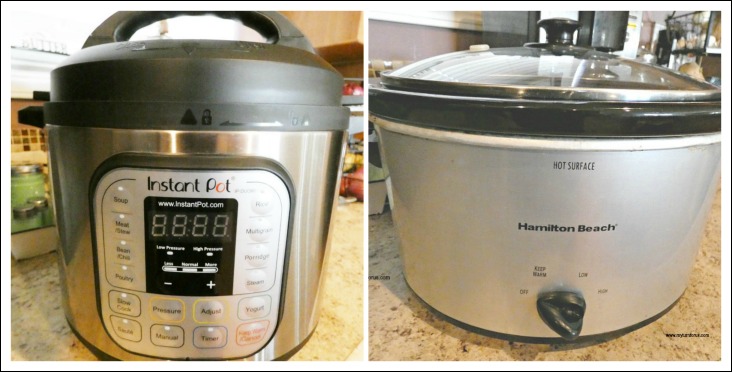
For cooks in the United States, the main difference is simple: a slow cooker cooks food gently for several hours, while an Instant Pot can cook under pressure in much less time. A slow cooker is best for set-it-and-forget-it meals. An Instant Pot is better when you want speed, pressure cooking, sautéing, rice cooking, steaming, or several functions in one appliance.
The two appliances can make similar foods, such as chili, pulled pork, beans, soups, and stews. However, they use different methods. That changes cooking time, texture, liquid needs, cleanup, and how much attention each meal requires.

Slow Cooker vs. Instant Pot at a Glance
A slow cooker uses steady, low heat over many hours. An Instant Pot is an electric multicooker that can use high heat, steam, and pressure to cook food quickly.
| Feature | Slow cooker | Instant Pot |
|---|---|---|
| Main cooking method | Low, moist heat | Pressure cooking, plus other modes |
| Typical cooking time | About 4–10 hours | Often 20–90 minutes, plus time to pressurize |
| Best use | Long, unattended cooking | Fast meals and many cooking methods |
| Liquid needs | Usually more liquid | Needs enough thin liquid to create steam |
| Browning | Usually limited or unavailable | Many models can sauté in the inner pot |
| Ease of use | Very simple | More settings and steps |
| Texture | Soft, tender, and gradual | Fast and tender, but less forgiving |
| Meal planning | Start in the morning | Cook closer to mealtime |
| Energy use | Low heat for a long time | Higher heat for a shorter time |
| Main drawback | Takes much longer | Requires a learning curve |
The best choice depends on your routine. A slow cooker favors planning and convenience. An Instant Pot favors speed and flexibility.
How Each Appliance Works
How a slow cooker cooks food
A slow cooker warms food in a ceramic or metal insert. The heat moves slowly through the pot and keeps the food at a low simmer or near-simmer. The lid holds in heat and moisture.
This method helps tough cuts of meat soften over time. It also lets flavors blend during a long cook. Most slow cooker recipes use settings labeled LOW and HIGH. The exact temperature and cooking time can vary by model, recipe, and food volume.
A slow cooker does not usually brown meat well. Browning meat before slow cooking can add flavor, but it often requires a separate skillet. Some newer models include a stovetop-safe insert, but you should check the manufacturer’s instructions before using one on a burner.
The U.S. Department of Agriculture recommends keeping perishable food cold before cooking and using safe handling practices with slow cookers. Food should reach a safe internal temperature, measured with a food thermometer, rather than being judged by time alone.
How an Instant Pot cooks food
An Instant Pot is a brand of electric multicooker. Many models offer pressure cooking, slow cooking, sautéing, steaming, rice cooking, yogurt making, and other programs. The available functions depend on the model.
In pressure-cook mode, the sealed pot traps steam. Pressure raises the boiling point of water, so food cooks at a higher temperature than it would in an open pot. This can shorten cooking time for foods such as beans, dried grains, tough meat, and stews.
The listed cooking time is not always the total time. The pot also needs time to heat, build pressure, and release pressure. A recipe that lists 30 minutes of pressure cooking may take 45 to 70 minutes from start to finish, depending on the food, starting temperature, volume, and release method.
An Instant Pot needs enough thin liquid to create steam. The required amount varies by model and recipe. Thick sauces, large amounts of food, or too little liquid can prevent proper pressurization or cause a burn warning.
Cooking Time: Which One Is Faster?
An Instant Pot is usually faster, but the difference depends on the food and the full cooking process.
A slow cooker may need:
- 6 to 10 hours on LOW
- 3 to 5 hours on HIGH
- Extra time if the food starts very cold or the cooker is heavily filled
An Instant Pot may need:
- Time to sauté ingredients
- Time to build pressure
- The programmed pressure-cooking time
- Time to release pressure
- Extra time for thick foods or a full pot
For example, a beef stew may take most of a workday in a slow cooker. A pressure cooker may finish the same general type of meal in about an hour, but preparation and pressure release add to the total time.
Do not convert slow cooker time to Instant Pot time by simply dividing by two or three. Pressure-cooking times depend on the ingredient. Potatoes, dried beans, rice, chicken, and beef each need different treatment.
When a slow cooker is faster in practice
A slow cooker can be the faster choice for your schedule if you prepare it before work and eat later. It requires little active cooking. You can add the ingredients, set the heat, and leave the food to cook within the recipe’s safe limits.
An Instant Pot often requires more active steps. You may need to chop food, brown meat, deglaze the pot, select a program, manage pressure release, and clean several parts.
So, the Instant Pot often wins on clock time. The slow cooker can win on hands-off time.
Food Quality, Texture, and Flavor
The cooking method changes the final texture more than many recipes suggest.
Slow cooker results
Slow cooking works well for:
- Pot roast
- Pulled pork
- Chicken thighs
- Beef stew
- Chili
- Lentil soup
- Beans
- Braised vegetables
The long, gentle heat can make connective tissue in tough meat soften. It can also make some vegetables very tender. Root vegetables usually hold their shape better than delicate vegetables.
Slow cookers retain moisture well, but they can produce thinner sauces because food releases liquid during the long cook. You may need to thicken the sauce near the end with a starch slurry or another approved method.
Dairy products can curdle during long cooking. Add cream, milk, sour cream, or soft cheese near the end unless the recipe is designed for extended cooking.
Instant Pot results
Pressure cooking is useful for:
- Dried beans
- Tough cuts of beef
- Shredded chicken
- Rice and grains
- Steamed vegetables
- Brothy soups
- Stock
- Hard-boiled eggs
Pressure cooking can make meat tender quickly, but it can also overcook lean meat. Chicken breast, fish, and delicate vegetables need careful timing. A few extra minutes can change firm food into soft or mushy food.
Pressure cooking also reduces evaporation. A stew may finish with more liquid than expected. You can use the sauté function after pressure cooking to reduce a sauce, or thicken it according to the recipe.
Which one makes better food?
Neither appliance produces better food in every case.
Choose a slow cooker when you want:
- Soft, slow-braised texture
- A meal that cooks while you are away
- Simple preparation
- A thick, blended flavor from long cooking
Choose an Instant Pot when you want:
- A shorter cooking process
- Fast beans or grains
- Quick stock or stew
- One pot for browning and pressure cooking
- More control over different cooking methods
The recipe matters as much as the appliance. A well-designed recipe gives better results than a poor conversion from another cooking method.

Liquid Requirements and Recipe Conversion
Liquid is one of the biggest differences between the two appliances.
A slow cooker traps much of the steam created during cooking. It can often handle recipes with a relatively small amount of broth, sauce, or other liquid, although the food still needs enough moisture to cook safely and avoid burning.
An Instant Pot needs liquid that can produce steam. Water, broth, and thin sauces usually work. Very thick foods, such as dense tomato sauce, may cause a burn warning if placed directly against the heating surface.
When converting a slow cooker recipe to an Instant Pot:
- Check the Instant Pot manual for the minimum liquid amount.
- Use a thin liquid to create steam.
- Reduce liquid only when the recipe and model allow it.
- Avoid filling the pot above its maximum line.
- Keep beans, rice, grains, and foods that expand below the marked limit.
- Add delicate dairy ingredients after pressure cooking when appropriate.
- Use sauté mode after cooking if the sauce needs to thicken.
When converting an Instant Pot recipe to a slow cooker, do not assume the same liquid amount or cooking time will work. A slow cooker needs a longer cooking period. Meat may need a different cut, and rice or pasta may need to be added later so it does not turn mushy.
Which Is Easier to Use?
A slow cooker is usually easier for beginners. Most meals require a few preparation steps and one heat setting. There is no pressure release to manage, and the lid is not locked under pressure.
An Instant Pot is not difficult, but it has more steps:
- Choose the cooking mode.
- Add the right amount of liquid.
- Lock the lid.
- Confirm that the steam release is set correctly.
- Wait for the pot to pressurize.
- Follow the recipe’s natural or quick-release instructions.
- Open the lid only when the pressure has fully released.
The display can also confuse new users. A programmed 20-minute cook time does not mean the meal will be ready in exactly 20 minutes.
For a person who values simple routines, a slow cooker may feel easier. For someone who wants one appliance to replace a pressure cooker, rice cooker, steamer, and sauté pan, the Instant Pot may offer more value despite the learning curve.

Energy Use and Cost
Both appliances use electricity, but their patterns differ.
A slow cooker uses low heat for a long period. An Instant Pot uses more heat while it comes to pressure and cooks, then often switches to a lower-power holding mode. The total energy cost depends on wattage, cooking time, food quantity, and local electricity rates.
You can estimate electricity cost with this formula:
Cost = watts ÷ 1,000 × hours used × electricity price per kilowatt-hour
Hypothetical example
Suppose a slow cooker averages 200 watts for 8 hours:
- 200 ÷ 1,000 × 8 = 1.6 kilowatt-hours
Suppose an Instant Pot averages 1,000 watts for 1 hour of active use:
- 1,000 ÷ 1,000 × 1 = 1 kilowatt-hour
This example does not predict actual use. Appliances cycle their heating elements, and the Instant Pot may spend time warming or releasing pressure. Check the product label and your utility rate for a closer estimate.
The purchase price also varies by size and features. A basic slow cooker often costs less than a multicooker with pressure, sauté, steam, and specialty programs. Accessories, replacement sealing rings, and extra inner pots can add to the long-term cost of an Instant Pot.
Safety Differences
Both appliances are generally safe when used as directed, but an Instant Pot has additional pressure-related risks.
Slow cooker safety
Use these habits:
- Keep refrigerated ingredients cold until cooking begins.
- Do not use a slow cooker to reheat leftovers.
- Reheat leftovers on the stove, in the oven, or by another rapid method, then transfer them to the slow cooker if needed for serving.
- Use a food thermometer to check meat and leftovers.
- Keep the lid on during cooking unless the recipe says otherwise.
- Follow the manufacturer’s instructions for filling and cleaning.
- Do not place a cracked ceramic insert into use.
The USDA advises safe handling and temperature control for slow-cooked foods. Food safety depends on the food, temperature, time, and handling—not just the appliance name.
Instant Pot safety
Use these habits:
- Inspect the sealing ring, steam-release parts, and lid before use.
- Never force the lid open.
- Do not cover or block the steam-release valve.
- Keep your face, hands, and arms away from escaping steam.
- Follow the manufacturer’s maximum fill lines.
- Use extra care with foods that foam or expand, such as beans, grains, and pasta.
- Use the correct release method for the recipe.
- Unplug and clean the appliance according to the manual.
Pressure can remain inside the pot after the cook cycle ends. The float valve must drop, or the model must otherwise indicate that pressure has released, before you open the lid.
At higher elevations, boiling points and cooking times can change. Follow the recipe and manufacturer guidance for your location. For unusual ingredients, large batches, or uncertain pressure-release instructions, use a tested recipe from a reliable source.

What Can You Cook in Each Appliance?
Foods that suit a slow cooker
A slow cooker is a strong choice for:
- Beef chuck roast
- Pork shoulder
- Chicken thighs
- Chili
- Bean soup
- Stews
- Meatballs
- Dips
- Warm breakfast grains
- Mulled beverages
It is less suitable for foods that need crisp surfaces. A slow cooker will not give chicken skin, potatoes, or bread the same crisp finish as an oven or air fryer.
Foods that suit an Instant Pot
An Instant Pot is a strong choice for:
- Dried beans
- Rice
- Steel-cut oats
- Hard-boiled eggs
- Steamed vegetables
- Chicken stock
- Short ribs
- Beef stew
- Shredded meat
- Fast soups
It can also slow-cook, but the slow-cook mode may not behave exactly like a separate slow cooker. Heating patterns, lid design, and temperature control vary by model. If slow cooking is your main goal, a dedicated slow cooker may provide a more predictable fit.
Which One Should You Buy?
Choose a slow cooker if:
- You want the simplest operation.
- You plan meals several hours ahead.
- You prefer tender, braised food.
- You cook large batches of chili, stew, or pulled meat.
- You do not need many cooking modes.
- You want a lower-cost appliance.
Choose an Instant Pot if:
- You often need dinner quickly.
- You cook dried beans or grains.
- You want sautéing and pressure cooking in one pot.
- You have limited kitchen space.
- You enjoy learning appliance settings.
- You want one multicooker for several tasks.
Choose both if your household often cooks in two different ways. A slow cooker can handle a meal during the day, while an Instant Pot can prepare rice, beans, vegetables, or another dish quickly.
The strongest deciding question is not “Which appliance is better?” It is “How do I usually cook?” If you plan meals early, the slow cooker may fit better. If you decide late or cook foods that benefit from pressure, the Instant Pot may save more time.

Common Mistakes to Avoid
Treating pressure-cooking time as total time
The timer starts only after the Instant Pot reaches pressure. Include heating and release time in your meal plan.
Using a thick sauce as the only pressure-cooking liquid
Thick sauces may not create steam well and can trigger a burn warning. Add a thin liquid when the recipe requires it.
Overfilling either appliance
Overfilling can affect cooking and safety. Follow the fill lines in the manual. Be especially careful with food that expands or foams.
Opening the Instant Pot too soon
Never force the lid. Wait for the pressure indicator to show that the pot is safe to open.
Adding dairy too early
Milk, cream, and soft cheese can split during long cooking or pressure cooking. Add them at the stage the recipe specifies.
Expecting crisp food from either appliance
Moist cooking does not create a crisp crust. Finish food under a broiler, in an oven, or in an air fryer only when the recipe and cookware allow it.
Assuming every Instant Pot model works the same way
Programs, pressure levels, temperature controls, and minimum liquid requirements can differ. Use the manual for your exact model.
Frequently Asked Questions
Is an Instant Pot the same as a slow cooker?
No. An Instant Pot is a multicooker that may include a slow-cook function. A dedicated slow cooker is designed mainly for low-temperature, long-duration cooking. Their heating patterns and results can differ.
Can I use an Instant Pot as a slow cooker?
Usually, yes, if your model includes a slow-cook program. Check the manual first. You may need a compatible lid, a different setting, or a recipe written for that model.
Is an Instant Pot healthier than a slow cooker?
Neither appliance is automatically healthier. Nutrition depends on the ingredients, portion size, added salt, added fat, and cooking method. Both can prepare nutritious meals.
Does pressure cooking destroy more nutrients?
Cooking can reduce some heat-sensitive nutrients, but the effect depends on the food, temperature, time, and amount of water. Pressure cooking often uses a short cooking time and little water, but it is not correct to say that it always preserves or always destroys more nutrients than slow cooking.
Can I leave a slow cooker on while I am away?
Many people use slow cookers while away, but the appliance must be in good condition and placed on a stable, heat-safe surface. Follow the manufacturer’s directions, keep the cord and appliance away from water, and use safe food-handling practices.
Which is better for meal prep?
A slow cooker is useful for large batches that can cook while you work. An Instant Pot is useful when you need beans, grains, shredded meat, or a complete meal in less time. Your schedule should decide the choice.
Can I convert any slow cooker recipe for an Instant Pot?
No. Many recipes need changes to liquid, timing, ingredient order, and pressure release. Use a tested pressure-cooker conversion when possible. Be cautious with dairy, pasta, thickeners, seafood, and foods that expand.
Research Notes and Reliable Sources
This comparison uses documented guidance from the USDA and manufacturer-style operating principles for electric pressure cookers. Product functions vary by model, so the exact manual should control when it conflicts with general advice.
Useful U.S. sources include:
- USDA: Slow Cookers and Food Safety
- USDA: Safe Minimum Internal Temperatures
- USDA: Leftovers and Food Safety
- Instant Pot Support and Manuals
These sources support food-safety practices and documented appliance operation. They do not establish that one appliance always produces better flavor, uses less energy, or costs less to own.
Conclusion
A slow cooker and an Instant Pot solve different kitchen problems. The slow cooker is slower but simpler. The Instant Pot is faster and more flexible but requires more steps.
Buy a slow cooker if your priority is easy, long, unattended cooking. Choose an Instant Pot if you want pressure cooking, faster meals, and several functions in one appliance. If you regularly cook both planned and last-minute meals, owning both may be practical—but neither is essential for every kitchen.