
A stainless steel table with cabinets gives strong prep space plus clean, secure storage.
If you need a work surface that lasts, cleans fast, and hides clutter, this guide is for you. I’ve installed, used, and specified stainless steel table with cabinets in busy kitchens, labs, and garages. Here’s the complete playbook to pick, set up, and care for a stainless steel table with cabinets that fits your space, budget, and code needs.

What is a stainless steel table with cabinets?
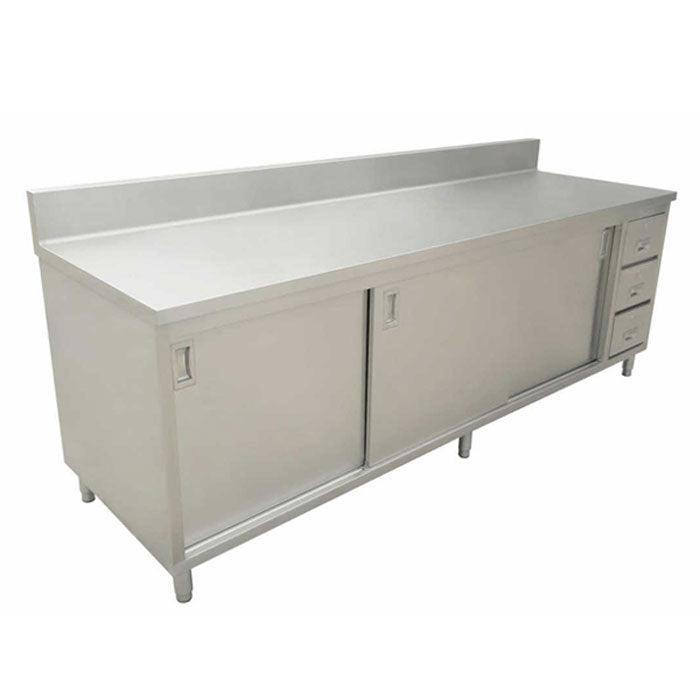
A stainless steel table with cabinets combines a metal worktop with enclosed storage below. It keeps tools, pans, and supplies close, while the top stays open for prep or assembly. This setup saves floor space and boosts workflow.
Typical parts include:
- Tabletop with reinforced underside for load support
- Enclosed base with doors or drawers
- Adjustable shelves for flexible storage
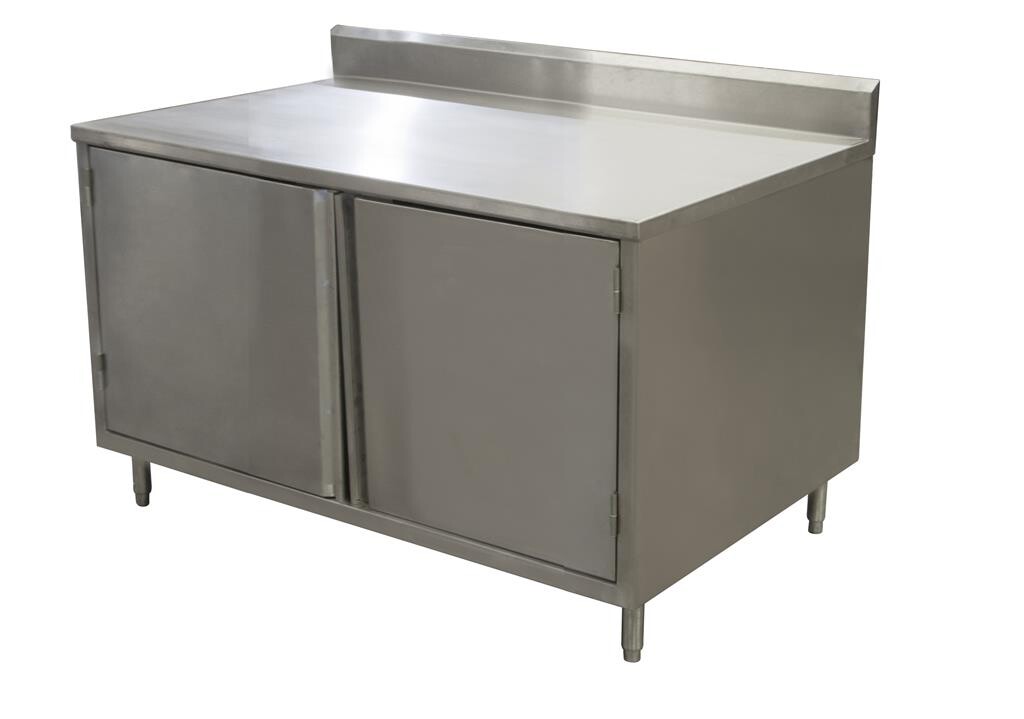
- Backsplash to protect walls and stop spills
- Leveling feet or casters for mobility
- Sound-deadening and corner bracing for stability
You will see this in commercial kitchens, bakeries, labs, vet clinics, and home workshops. A stainless steel table with cabinets also works in pack stations, coffee bars, and maker spaces.

Key benefits and use cases
Why choose a stainless steel table with cabinets? It delivers strength, hygiene, and smart storage in one unit. It also stands up to heat, moisture, and heavy daily use.
Top benefits:
- Strong and stable surface for prep or assembly
- Easy to sanitize and quick to dry
- Storage that reduces clutter and saves steps
- Long life, even with spills, oils, and heat
- Works with many layouts and add-ons
Popular use cases:
- Restaurant and bakery prep lines
- Coffee bars and cocktail stations
- Labs and healthcare rooms
- School and hotel catering
- Garages and DIY shops

Material and build quality
The heart of a stainless steel table with cabinets is the grade and gauge. These two specs drive durability and corrosion resistance.
-
Grades
- 304 (18-8): Best for food zones and high moisture. Great corrosion resistance thanks to chromium and nickel.
- 430: Good for dry areas and budget builds. Less corrosion resistance. Avoid for salty and wet zones.
- 201: Budget choice with lower nickel. Use with care in damp spaces.
-
Gauge (thickness)
- 14-gauge: Very strong for heavy loads and daily pounding.
- 16-gauge: A sweet spot for most kitchens and shops.
- 18-gauge: Light duty, fine for low-impact tasks.
-
Finish and welds
- Brushed or satin hides scratches and cleans well.
- TIG-welded seams and coved corners improve hygiene.
- Reinforced hat channels reduce flex and noise.
-
Load capacity
- Light duty: 300 to 500 pounds, even spread
- Medium duty: 500 to 800 pounds
- Heavy duty: 800 pounds and up, with bracing
An NSF-listed stainless steel table with cabinets signals food-safe design and cleanable seams. Look for sealed gaps, tight door fit, and solid slides on drawers.

Choosing the right size and configuration
Match the unit to your tasks, tools, and space. Measure twice, order once.
-
Size and footprint
- Common tops: 48 by 24 inches, 60 by 30 inches, 72 by 30 inches
- Height: 34 to 36 inches for standing work
- Check door swings and aisle widths before you buy
-
Cabinet layout
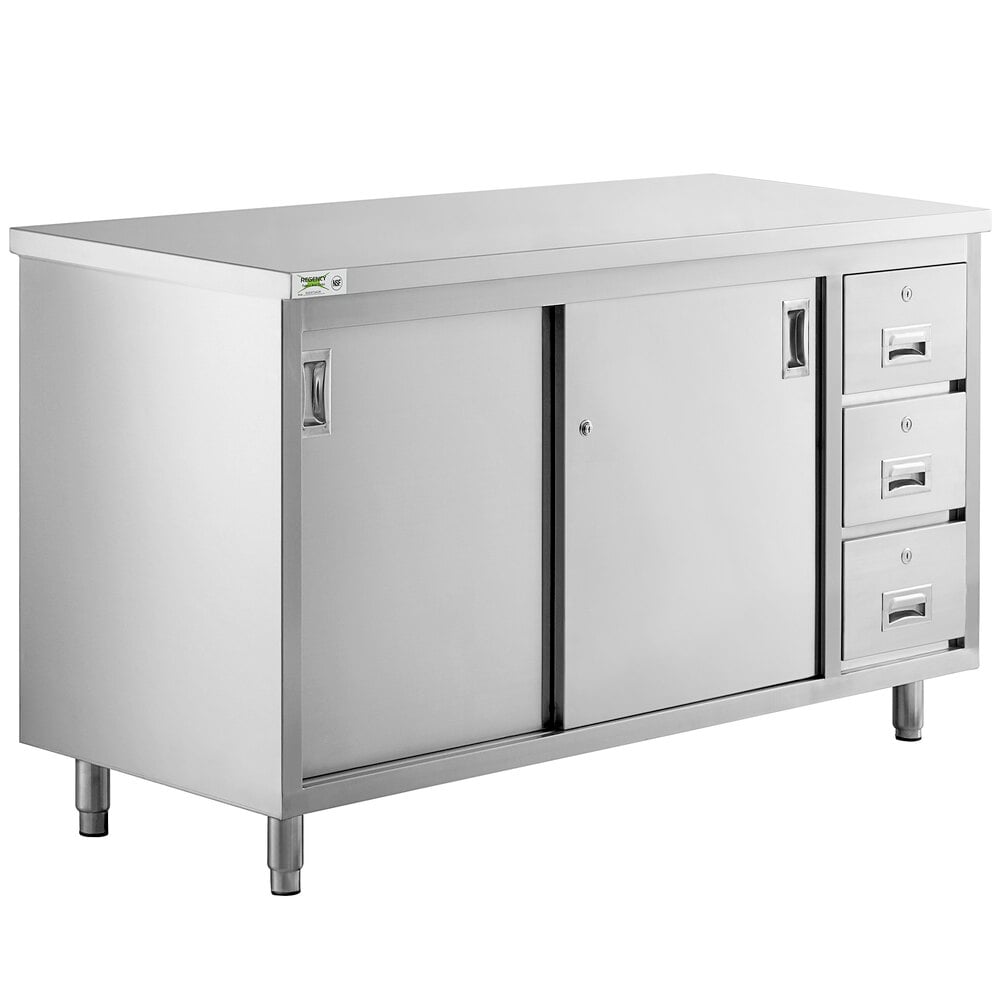
- Sliding doors save space in tight aisles
- Hinged doors allow full access to wide items
- Drawers fit tools, small wares, and labels
- Adjustable shelves handle tall containers
-
Add-ons
- Backsplash for splash control
- Casters with brakes for mobile zones
- Marine edge top to catch spills
- Cutouts for sinks, faucets, or bins
- Locks for controlled storage
Plan for growth. If your team or menu will expand, pick a stainless steel table with cabinets with extra shelf space or a drawer bank.

Installation and space planning tips
A smooth install saves time and stress. Small choices here pay off fast.
-
Site prep
- Ensure flat floors and power nearby for any tools
- Protect walls and floors during move-in
- Pre-mark final position with tape
-
Fit and access
- Keep 36 inches of clear aisle space where possible
- Align tops with nearby equipment for clean runs
- Check door swing paths or use sliding doors
-
Setup
- Level the feet so drawers glide true
- Anchor if heavy loads or frequent movement
- Seal small gaps at walls to block spills
I also test-run the workflow. I place key tools in the cabinets, then practice a few tasks. If I reach or bend too much, I adjust shelves or swap drawer positions.
Care, cleaning, and maintenance
Good care keeps steel bright and safe. It also protects the long-term finish.
Daily steps:
- Wipe with warm water and mild soap
- Rinse, then dry to avoid water spots
- Wipe with the grain for a clean look
Weekly or as needed:
- Use a food-safe stainless cleaner
- Remove scale or “tea staining” with a baking soda paste
- Avoid chlorine bleach and steel wool
If you scratch the surface, blend lightly with a non-scratch pad. Work with the grain only. For a high-moisture site, pick a 304 stainless steel table with cabinets, and dry the top after heavy washdowns.
Safety, hygiene, and compliance
A stainless steel table with cabinets supports food safety and clean work. Smooth seams, tight doors, and coved corners reduce soil traps. That lowers cross-contact risk.
Key points:
- NSF listing shows cleanable design
- HACCP plans favor non-porous surfaces
- Label cabinets to separate allergens and chemicals
- Use bumpers or guards where carts pass
For healthcare or lab zones, confirm chemical compatibility. 304 steel handles many agents, but check your specific disinfectants.

Cost, ROI, and a buying checklist
Costs vary by size, grade, and options. The right pick lasts for years and reduces rebuys.
Typical price ranges:
- Compact 430, 18-gauge, basic doors: about $400 to $800
- Mid-size 304, 16-gauge, drawers and shelves: about $1,000 to $3,000
- Custom 304 or 316, heavy duty, sinks or cutouts: $3,000 to $10,000+
Buying checklist:
- Grade and gauge fit the site and load
- NSF listing for food or healthcare use
- Quality slides, hinges, and door tracks
- Smooth welds and sealed corners
- Levelers or casters with locks
- Warranty length and parts support
- Lead time and delivery path to your room
A stainless steel table with cabinets saves labor by cutting steps and cleaning time. That is real ROI over its long life.
Real-world lessons learned
I learned to favor sliding doors in narrow lines. Hinged doors once blocked my cooks during rush. Sliding doors kept traffic moving.
I also learned to spec 304 in dish areas. A 430 unit near a steamy washer showed spots within months. After we moved to 304 and dried the top daily, the finish stayed bright.
Three more tips:
- Level the unit before loading. Drawers ride smooth and do not drift.
- Label shelves by task. Staff restock faster and waste less time.
- Keep a spare door roller on hand. It is a cheap part that stops downtime.
When I help a small cafe, I start with a 60 by 30 stainless steel table with cabinets with two drawers and sliding doors. It fits pans, a scale, towels, and labels. The top stays clear for prep, and the line stays calm.
Frequently Asked Questions of stainless steel table with cabinets
What grade of stainless steel is best?
304 is best for wet or food zones due to strong corrosion resistance. 430 works for dry, budget areas with lighter use.
Can I use it outdoors?
Yes, but protect it from salt spray and harsh cleaners. Cover it when not in use and wipe dry after rain.
How do I clean rust-like spots?
Use a baking soda paste or a stainless cleaner. Rub with the grain, rinse, and dry well.
Do the cabinets lock?
Many models offer keyed locks or hasps. Check the spec sheet or add aftermarket locks.
What load can the top handle?
Most hold 300 to 800 pounds when weight is even. Heavy-duty builds go higher with added bracing.
Is NSF certification required?
For food service and many health sites, NSF is expected or required. It signals cleanable design and safer seams.
Should I choose sliding or hinged doors?
Use sliding doors in tight aisles to avoid door swing. Use hinged doors for full-width access to large items.
Conclusion
A stainless steel table with cabinets gives you a tough worktop and tidy storage in one. Choose the right grade, gauge, and layout, and it will serve for years. Set it level, keep it dry, and clean with simple steps.
Pick one model from this guide and map it to your space today. Measure, select the layout, and plan the install. Want more tips and setups? Subscribe for updates or drop your questions in the comments.