
A stainless steel prep table with cabinet gives sturdy, sanitary workspace plus secure storage.
If you prep food, run a café, or need a clean work zone, this guide is for you. I have bought, installed, and used many versions of a stainless steel prep table with cabinet across busy kitchens and small shops. Below, I break down features, sizing, materials, budgets, and real tips. By the end, you will know exactly how to pick the right stainless steel prep table with cabinet for your space.

What is a stainless steel prep table with cabinet and why it matters
A stainless steel prep table with cabinet combines a smooth worktop with enclosed storage. It keeps tools close and shields supplies from dust and splashes. The material resists corrosion, cleans fast, and stands up to daily use.
In commercial kitchens, it supports food safety and speed. In home garages and labs, it gives order and strength. This one piece can boost workflow, hygiene, and storage all at once.

Core benefits you will notice daily
A stainless steel prep table with cabinet earns its keep in small ways every day. Fewer trips across the room. Fewer spills on open shelves. Faster cleanup between tasks.
You also lower risk. Enclosed doors reduce cross-contamination from traffic or splatter. A backsplash stops crumbs and liquids from falling behind the table. The right table feels like a calm station in a busy room.

Key features and specifications to compare
When you shop for a stainless steel prep table with cabinet, check these details first.
- Worktop grade and gauge: 304 stainless for better corrosion resistance; thicker gauge means stronger top
- Cabinet style: hinged or sliding doors for your aisle space
- Shelving: adjustable interior shelves, load rating, and shelf clips
- Backsplash: 4-inch or higher to meet health code and keep walls clean
- Edges and corners: welded seams and radius corners for easy wipe-down
- Base: sealed cabinet, levelers, or 5-inch locking casters for mobility
- Reinforcement: hat channels or sound-deadening under the top for sturdiness
- Certifications: NSF/ANSI 2 listing, and food-contact approval where needed
- Hardware: stainless or corrosion-resistant hinges, handles, and locks
A strong pick checks most of these boxes for your exact setting and code needs.

Types and configurations
You can find a stainless steel prep table with cabinet in many layouts. Pick based on space and task flow.
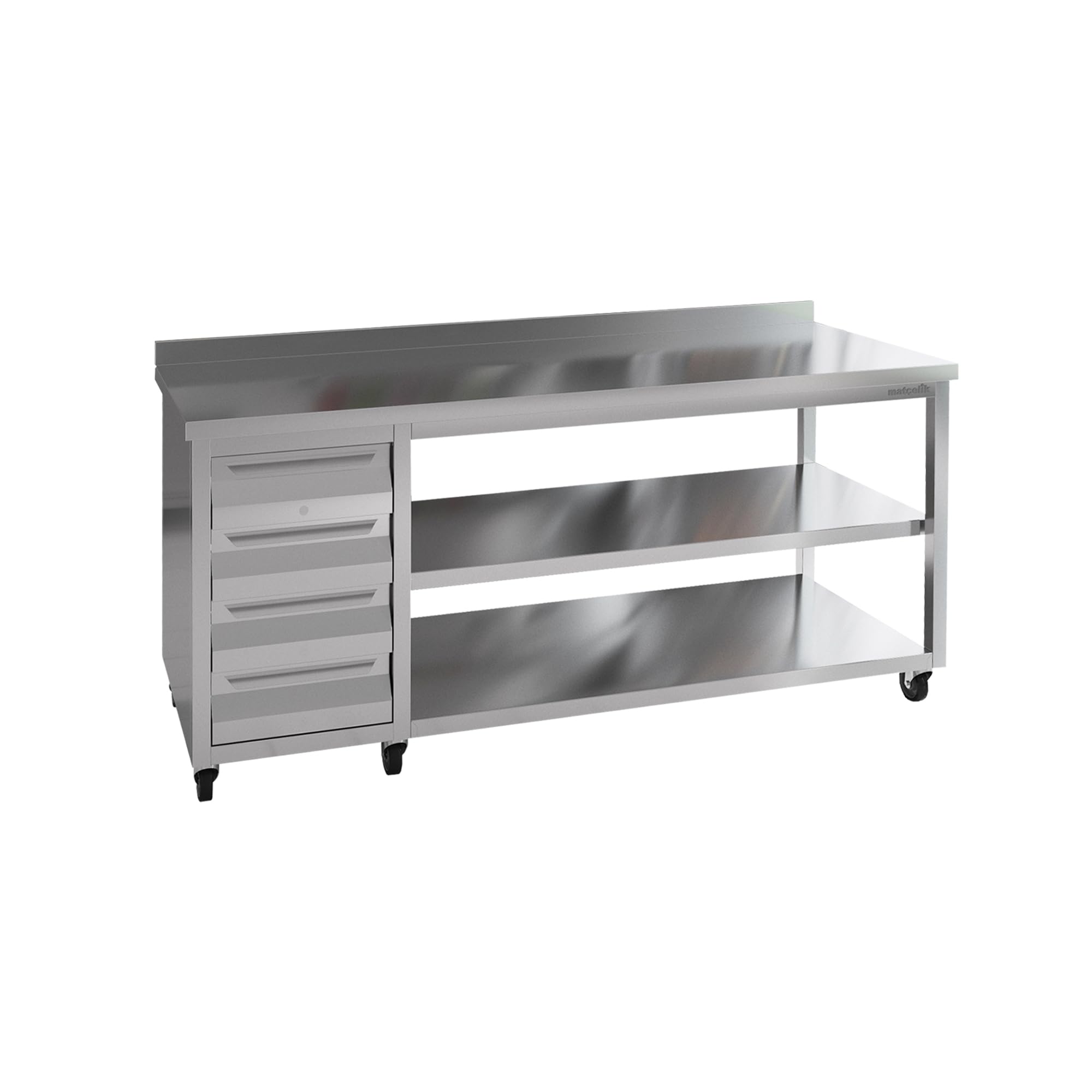
- Enclosed base with hinged doors: easy access, best for wider aisles
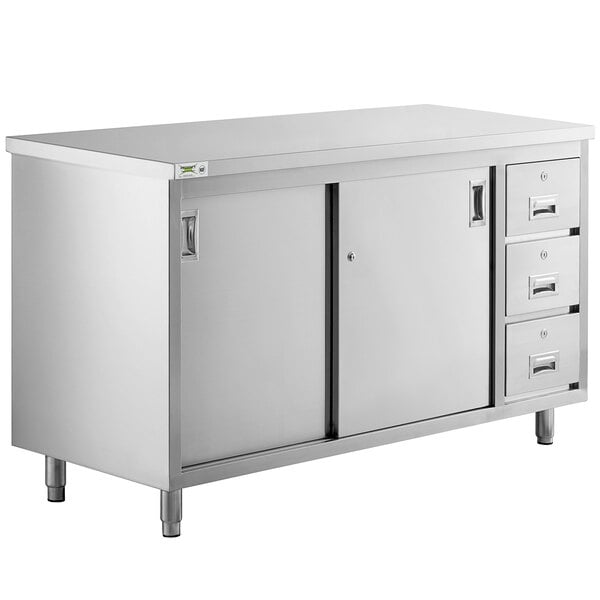
- Enclosed base with sliding doors: saves aisle space, good for tight kitchens
- Drawer and door combo: small tools in drawers, bulk items behind doors
- With sink bay: rinse produce or tools without leaving the station
- Corner unit: uses dead space and keeps paths clear
- Mobile unit: lockable casters for flexible lines or pop-ups
Match the configuration to your menu and daily routine. The right setup saves steps and stress.

Sizing and layout planning
Measure the spot twice before you buy a stainless steel prep table with cabinet. Standard depths are 24 or 30 inches. Widths run from 36 to 96 inches. Most tops sit 34 to 36 inches high.
Give 36 inches of aisle clearance for safe movement. Choose sliding doors if the aisle is tight. Place the table where ingredients flow in one direction: storage to sink to prep to cook. That simple line cuts backtracking and mess.

Materials and build quality
Material and build determine how long your stainless steel prep table with cabinet will last.
- 304 stainless: austenitic, nickel-bearing, great against corrosion and acids
- 430 stainless: ferritic, magnetic, lower cost, okay for dry areas
- Gauge: lower number is thicker; 14–16 gauge is heavy duty, 18 is light duty
- Welds: continuous, smooth welds resist bacteria traps
- Underside: hat-channel bracing stops sag and vibration
For wet prep or salt-heavy foods, choose 304 stainless. For dry storage or light duty, 430 may be fine. Ask for documentation on alloy, gauge, and weld method before purchase.
Durability, sanitation, and compliance
Health departments often look for NSF/ANSI 2 on a stainless steel prep table with cabinet. That label signals sanitary design. Rounded corners, sealed seams, and smooth interiors matter in inspections.
Follow food safety plans that align with HACCP. Avoid abrasive pads that scratch the grain. Use non-chloride cleaners to prevent pitting. Safe design plus good care keeps your surface clean and compliant.
Real-world uses and lessons learned
In one high-volume café, we replaced an open shelf with a stainless steel prep table with cabinet. Ticket times dropped because knives, deli containers, and wraps lived right under the board. Staff spent less time hunting and more time plating.
At home, I use a 48-inch model for canning. The enclosed base keeps jars dust free. The backsplash stops sticky splatter from hitting the wall. Small change, big relief.

Buying guide and quick checklist
Use this checklist before you order a stainless steel prep table with cabinet.
- Space and clearance: width, depth, height, backsplash, door swing
- Load needs: weight rating and bracing for mixers or heavy bins
- Interior layout: adjustable shelves, drawers, and dividers
- Mobility: legs with levelers or 5-inch locking casters
- Water needs: sink bay or faucet knockout if rinsing is common
- Code items: NSF/ANSI 2, splash zones, and local rules
- Warranty and parts: door hardware, glides, and shelf clips availability
Check all boxes now to avoid swaps later.
Price ranges, ROI, and total cost of ownership
You can expect a stainless steel prep table with cabinet to land in a wide price band. Small 18-gauge units start lower. Heavy-duty 304 stainless with drawers and casters cost more. Brands with full welding and strong bracing sit at the top tier.
Budget for delivery, liftgate, and installation. Add door locks, drawer inserts, and cutting boards if needed. Over five years, good tables pay for themselves with speed, fewer repairs, and easier cleaning.
Installation, safety, and maintenance
Set your stainless steel prep table with cabinet level and secure. Use shims or levelers to remove wobble. Lock casters during use. Anchor to a wall if local code asks for it.
Clean daily with warm water and a mild, non-chloride detergent. Wipe with the grain, rinse, and dry to avoid water spots. Weekly, remove shelves, clean inside, and check gaskets and hinges. Never use steel wool. A food-safe stainless polish can add a thin protective layer.
Accessories and upgrades worth adding
Small upgrades can transform a stainless steel prep table with cabinet.
- Cutting board or work mat: protects the top and your knives
- Utensil rail or magnetic strip: tools are visible but off the surface
- Drawer inserts: hold small wares and labels in order
- Shelf liners: keep bins from sliding
- Over-shelf or pass-through shelf: adds vertical storage and speed
- Locks: secure high-value items or allergen tools
Add only what supports your workflow. Less clutter means faster work.
Common mistakes and expert tips
I see the same errors when people buy a stainless steel prep table with cabinet. Most are easy to avoid.
- Buying 430 stainless for a wet zone: pick 304 for long life
- Ignoring door swing: switch to sliding doors in narrow aisles
- Skipping bracing: mixers need thicker gauge and strong channels
- Forgetting casters: mobility helps for deep cleaning
- Not checking code: ask your inspector about splash zones and backsplashes
A few smart choices at checkout lead to years of low-hassle use.
Frequently Asked Questions of stainless steel prep table with cabinet
What size stainless steel prep table with cabinet should I get?
Choose the largest size that fits with at least 36 inches of aisle space. Common widths are 48, 60, and 72 inches with 24 or 30 inches depth.
Is 304 or 430 better for a stainless steel prep table with cabinet?
304 resists corrosion better, especially in wet or salty areas. 430 can work in dry zones and costs less.
Do I need NSF for a stainless steel prep table with cabinet?
For most commercial kitchens, NSF/ANSI 2 is expected by health inspectors. It shows the table meets sanitation design standards.
How much weight can a stainless steel prep table with cabinet hold?
Many units support 600 to 1,000 pounds when the load is spread out. Always check the specific rating from the maker.
How do I clean a stainless steel prep table with cabinet safely?
Use warm water, mild non-chloride detergent, and a soft cloth. Wipe with the grain, rinse, dry, and avoid steel wool.
Conclusion
A stainless steel prep table with cabinet is a smart blend of clean space and protected storage. Pick the right size, alloy, and bracing, and it will serve you for years. Keep it clean and level, and your team will move faster and safer.
Use the checklist above, measure your space, and choose features that match your daily flow. Ready to find your fit? Compare two or three models, note the specs that matter, and make the upgrade today. If you found this helpful, share it or leave a question so I can help you dial in the perfect setup.