
Finding the best can opener for disabled users means choosing safe, simple control with less hand strain.
Opening a can should not feel like a daily test of strength. Arthritis, Parkinson’s, weak grip, tremors, or limited reach can make a small kitchen task hard. I looked at grip shape, force, balance, lid safety, and ease of cleaning when comparing these models. Some users need a simple ring-pull aid, while others need a fully automatic tool. The right best can opener for disabled users should make meal prep feel calm, steady, and more independent.
Dext Ring Pull Can Opener

The Dext Ring Pull Can Opener is made for cans with pull tabs. Instead of asking you to pinch and lift a small metal ring, it gives you a longer handle with a more comfortable grip. That design can help users with arthritis, reduced finger strength, or stiff joints. It is also useful when a tab sits flat against the lid and feels hard to catch.
I like this style because it keeps the motion simple. You place the opener under the ring, lift the handle, and use steady leverage rather than a hard pinch. It does not cut a sealed can, so it works best for soda, pet food, soup, and other cans that already have pull tabs. For many users, this can be the best can opener for disabled adults who mainly struggle with ring-pull lids.
Pros:
- Requires less finger pinch than opening a tab by hand
- Long handle helps improve leverage
- Comfortable grip supports users with sore joints
- Lightweight design is easy to store and carry
- Useful for cans, drinks, pet food, and other pull-tab items
- Simple manual action needs no batteries or charging
Cons:
- Only works with pull-tab cans
- Does not replace a standard cutter for sealed cans
- Users with very limited wrist control may still need help
KitchenAid Classic Can and Bottle Opener

The KitchenAid Classic is a traditional manual can opener with soft handles and a stainless steel cutting wheel. Its familiar shape may suit users who want a basic tool without a motor, charging dock, or electronic controls. The handles provide more surface area than thin metal handles found on some low-cost openers. That extra space can make the tool easier to hold for people with mild to moderate hand weakness.
This opener still needs the user to squeeze, position, and turn the knob. For that reason, it may not suit someone with severe arthritis or strong tremors. However, it offers a reliable option for users who can make a slow turning motion but dislike sharp, narrow grips. I would consider it a good best can opener for disabled users who want a normal manual opener with a softer, more stable feel.
Pros:
- Soft ergonomic handles feel more comfortable during use
- Stainless steel cutting wheel is designed for regular kitchen work
- Manual design does not need batteries or an outlet
- Built-in bottle opener adds useful kitchen value
- Familiar controls are easy to understand
- Compact size fits most drawers
Cons:
- Still requires hand pressure and wrist turning
- May be difficult for severe arthritis or weak grip
- Correct placement takes some practice
Zoomsnail Automatic Rechargeable Can Opener
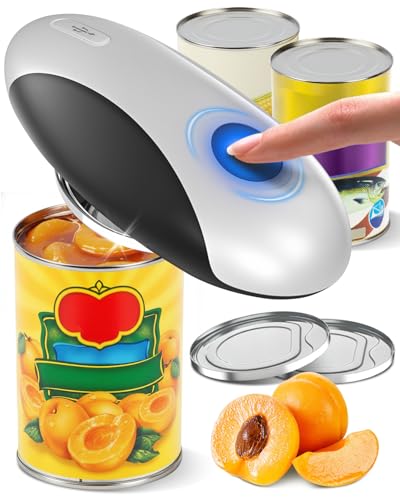
The Zoomsnail automatic can opener is the strongest match here for users who want hands-free help. Its one-touch operation is designed to move around the can while cutting the lid. A rechargeable battery removes the need to keep disposable batteries nearby. The magnetic lid feature can also reduce the need to pry a loose lid up with your fingers.
Automatic openers can be a major comfort for people with arthritis, Parkinson’s disease, limited grip, or hand fatigue. The user still needs to place the unit correctly and press the control, but the motor handles the main cutting motion. I would choose this model when independence matters more than having the smallest possible tool. It has the clearest claim to the best can opener for disabled users who cannot comfortably turn a manual knob.
Pros:
- One-touch operation reduces hand and wrist effort
- Rechargeable design avoids frequent battery purchases
- Magnetic lid feature may make lid removal easier
- Hands-free cutting supports users with low grip strength
- Useful for many common can sizes
- Smooth-edge cutting design can help reduce sharp exposed edges
Cons:
- Needs regular charging before use
- Costs more than a basic manual opener
- Motorized parts may need more care than a simple hand tool
- Users must learn correct placement on the can
UHIYEE Heavy-Duty Hand Crank Opener

The UHIYEE Heavy-Duty Hand Crank Opener is built for large cans and demanding kitchen use. Its design focuses on strength and stability rather than one-handed convenience. The long crank can provide useful leverage when opening bulk cans in a home kitchen, pantry, care home, or small food service setting. It is a better fit for a fixed work area than for a small kitchen drawer.
This model can help when a user has enough arm movement to turn a crank but needs a sturdy base and a larger handle. It is not the first choice for a person with severe hand weakness, since the crank still needs repeated motion. I see it as the best can opener for disabled users who prepare large amounts of food and prefer a heavy-duty tool over a compact automatic model.
Pros:
- Heavy-duty build suits large cans and frequent use
- Long hand crank may improve leverage
- Stable format can feel safer than a small handheld opener
- Useful for bulk food preparation
- No charging or battery replacement is required
- Black finish looks practical in a busy kitchen
Cons:
- Hand cranking may tire users with weak wrists
- Large design needs more storage space
- Less convenient for quick opening of one small can
Mudder Easy Open Ring Pull Can Opener
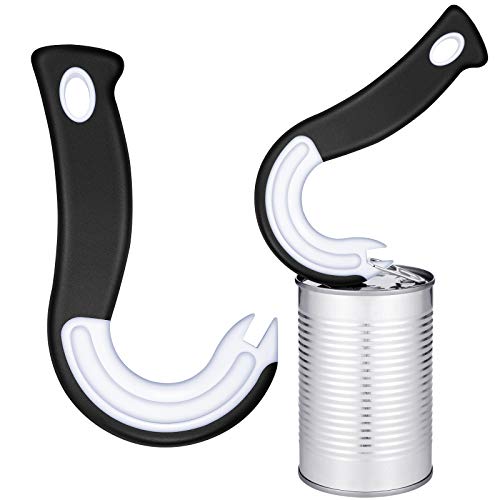
The Mudder set includes two small helpers for opening ring-pull cans. The tool gives the tab more lift and creates a larger place to hold than the thin ring on a can lid. Having two pieces can be handy in a kitchen where more than one person needs help. It can also work as a low-cost backup in a travel bag, pantry drawer, or emergency food kit.
This is a simple aid, so it does not solve every can-opening problem. It works only when the can has a pull tab, and the user must still move the tool with some control. Still, it may be the best can opener for disabled users who need a basic, affordable tab helper rather than a full electric appliance. Its small size makes it easy to keep within reach.
Pros:
- Two-piece set provides a spare or shared option
- Helps lift pull tabs with less direct finger contact
- Small size is easy to store and carry
- Simple manual design needs no power
- Low-cost way to improve access to pull-tab cans
- Useful for travel, camping, and emergency supplies
Cons:
- Works only with pull-tab lids
- Small size may be hard to hold for some users
- Does not cut standard sealed cans
How I Chose the Best Can Opener for Disabled Users
A can opener for disabled users should do more than cut metal. It should reduce strain, support safe control, and match the person’s real hand movement. A tool that works well for mild arthritis may fail for someone with tremors or very limited grip. I therefore looked at the task from the user’s side, not just from the product label.
I also separated pull-tab openers from standard can cutters. A pull-tab helper can be excellent for one type of lid but useless on a sealed can. An electric model may offer more independence, yet it needs charging and correct placement. Good buying advice must explain these trade-offs in plain language.
Grip and Handle Comfort
Grip comfort is often the first thing a user notices. Thin handles can press into sore fingers, while smooth handles may slip when the hand is weak. A wide, soft handle gives the fingers more room and may reduce pressure at one point. Textured surfaces can also help, but they should not feel rough or painful.
Look for a handle that fits the user’s hand. A very large grip is not always better for a person with small hands or limited finger reach. If possible, test the tool with the same hand that will use it most often. The goal is a relaxed hold, not a tight squeeze.
Required Force
Force is more important than weight alone. A lightweight manual tool may still demand a strong pinch and wrist turn. A heavier tool may feel stable, but it can be hard to lift or position. The best can opener for disabled users uses leverage, motor power, or a steady base to reduce the force needed from the user.
For pull tabs, a long lever often helps. For sealed cans, a motor can remove most of the repeated hand work. Users with weak muscles should avoid buying a tool based only on a low price or attractive shape. Check how much movement the product needs from start to finish.
Control and Balance
A good opener should not rock or twist as the user works. Poor balance can make a lid slip, which creates frustration and may lead to a sharp edge. Automatic openers should sit securely on the lid before the user starts the motor. Manual openers should have a knob or crank that turns without sudden jumps.
People with tremors may prefer a tool that stays on the can rather than one that must be held in the air. People with limited reach may prefer a countertop model. A stable work surface can act like a second pair of hands.
Safety at the Lid Edge
Freshly cut metal can be sharp. Always handle the lid and can with care, even when an opener claims to create a smooth edge. A magnetic lid lift can reduce finger contact, but it does not remove the need for caution. After opening, check the rim for rough spots before pouring food or washing the can.
For safety, keep the opener and opened cans away from children. Do not use a damaged tool with a loose cutting wheel, cracked handle, or worn power cord. If the can is swollen, leaking, badly dented, or rusty, discard it instead of trying to open it. Food safety guidance treats damaged or bulging cans as a possible warning sign.
Cleaning and Hygiene
Can openers touch food residue, oil, and metal dust. Clean the cutting area after use and dry it well. A washable manual opener is often easier to maintain than a motorized model with enclosed parts. Never place an electric opener under running water unless the instructions clearly allow it.
For a person who receives care, the opener should be easy for another person to inspect. A simple cleaning routine prevents sticky buildup and helps the cutting wheel work smoothly. If the opener starts to drag, stop and clean it rather than pushing harder.
Power and Charging Needs
Electric openers can reduce hand strain, but they add a new task: charging. A rechargeable unit should live in one known place, with its charger easy to reach. A low battery at mealtime can be frustrating, especially for someone who depends on the tool for daily meals.
If the user has memory problems, a caregiver may want to check the charge on a set schedule. A manual opener remains useful during a power outage. Some homes keep one electric tool for everyday use and one simple pull-tab aid as a backup.
Which Type of Can Opener Is Easiest to Use?
The easiest type depends on the lid and the user’s abilities. A ring-pull opener is often easiest for someone who can move the arm but cannot pinch a small tab. A standard manual opener may work for mild hand weakness if it has wide handles. An automatic opener usually requires the least repeated hand effort.
There is no single tool for every disability. Arthritis may call for soft grips and low resistance. Parkinson’s symptoms may make a stable automatic tool more appealing. A user with limited reach may need a countertop opener or help with placement. The best can opener for disabled users is the one that removes the hardest part of the task.
Manual Versus Electric Can Openers
Manual openers are simple, affordable, and ready whenever needed. They do not make noise, need charging, or contain a motor that can fail. Their weak point is the force needed to grip, turn, or hold the tool in place.
Electric openers can improve independence for many users. They often need only placement and a button press. Their drawbacks include charging, cleaning limits, added cost, and the need to learn the correct position. I would favor electric power when hand strength is the main barrier, not simply because the product looks modern.
Tips for Safer and Easier Can Opening
Place the can on a flat, dry counter before opening it. A damp counter can let the can slide, while a soft surface can make the tool wobble. If the can moves, use a non-slip mat or ask for help with setup.
Read the controls before the first use. Practice with an empty or low-cost can when the user has time and feels calm. For a pull-tab tool, position the lever under the ring instead of pulling the ring with bare fingers. For an electric model, keep fingers away from the lid while the motor runs.
Do not force an opener when it jams. Stop, remove the tool if it is safe to do so, and inspect the rim. A bent can, thick lid, or damaged cutting wheel may cause the problem. Pushing harder can make the tool slip.
After opening, wipe the can rim before serving. If the lid has a sharp edge, use tongs or ask a caregiver to remove it. Transfer leftovers to a clean container and refrigerate them promptly. These small steps make the whole task safer, not just the cutting step.
Best Can Opener for Arthritis, Parkinson’s, and Weak Grip
For arthritis, I would first consider the Dext or Mudder pull-tab helpers if the user mostly buys easy-open cans. They reduce the need to pinch a thin metal ring. If the home uses many standard cans, the Zoomsnail automatic model is more practical because it handles the cutting motion.
For Parkinson’s symptoms or hand tremors, a tool that stays on the can may offer better control than a small handheld aid. The Zoomsnail requires less repeated turning, but the user should practice placing it. A caregiver can help set the can on a stable surface before the user presses the control.
For mild weakness, the KitchenAid Classic may be enough. Its broad handles feel more familiar than an electric appliance, and it works without charging. For large cans and heavy kitchen use, the UHIYEE model offers a sturdy format, but it demands more arm motion. Match the opener to the user, not to the largest possible can.
My Recommendation
My top pick is the Zoomsnail Automatic Rechargeable Can Opener for users with arthritis, weak grip, hand fatigue, or limited wrist motion. Its one-touch design removes much of the turning and squeezing that makes manual openers hard to use. The Dext is my favorite simple choice for pull-tab cans, while the KitchenAid suits users who still have fair hand control.
| Best for | Why |
|---|---|
| Lowest hand effort | Zoomsnail uses automatic movement and one-touch control. |
| Pull-tab cans | Dext gives the tab a larger grip and better leverage. |
| Simple manual use | KitchenAid offers soft handles and a familiar design. |
The Dext and Mudder models offer good value when pull-tab cans are common. They are small, easy to store, and do not need power. The KitchenAid is a sensible middle option for people who want one tool for standard cans and bottles. The UHIYEE makes more sense for large cans, bulk cooking, or a fixed kitchen station.
Before buying, think about the user’s strongest and weakest movements. Can they press a button? Can they turn a crank? Can they lift a tab but not pinch it? That answer will usually reveal the best can opener for disabled users more clearly than a star rating alone.
FAQs Of best can opener for disabled
What is the best can opener for disabled users with arthritis?
An automatic opener such as the Zoomsnail is often the easiest choice because it reduces squeezing and wrist turning. For pull-tab cans, the Dext or Mudder can provide simple leverage with less finger pinch.
Are electric can openers safer than manual models?
They can reduce hand strain, but users still need to place the tool correctly and handle the lid with care. A smooth-edge feature may help, but no opener removes every sharp-metal risk.
What can opener works for weak grip strength?
Choose a model with a wide handle, stable balance, or automatic action. The Zoomsnail needs the least repeated hand work, while the Dext helps with pull tabs. Avoid thin handles and tools that need strong squeezing.
Can a ring-pull opener open regular sealed cans?
No. Ring-pull helpers only lift tabs that are already attached to the lid. Use a standard manual or electric can opener for sealed cans without tabs.
How should I clean a can opener?
Wipe and wash the food-contact parts after use, then dry them fully. Keep electric parts away from water unless the instructions say they are washable. Regular cleaning helps prevent sticky buildup and poor cutting.
Final Verdict: Which Should You Buy?
For most users with limited hand strength, the Zoomsnail is the best can opener for disabled adults because one-touch operation reduces strain. Choose Dext for pull-tab cans and KitchenAid for mild weakness.
Think about grip, control, and lid type before you buy. The right best can opener for disabled users can turn a stressful kitchen task into a safe, simple step toward independence.