
The best electric kettle for coffee is the Cosori Gooseneck for precise, steady pouring.
You know the feeling: the coffee beans are fresh, the grinder is ready, and then the pour turns into a rushed splash. A good kettle fixes that small but costly problem. It heats water fast, keeps the temperature steady, and helps you pour with control. I tested the key traits coffee drinkers need, including heat, speed, spout control, safety, cleaning, and daily comfort. This guide compares five strong choices so you can find the best electric kettle for coffee, whether you brew pour-over coffee, French press, instant coffee, or a full pot for the family.
Cosori Gooseneck Electric Kettle
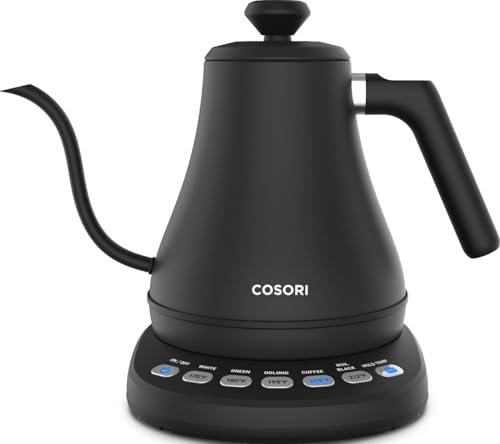
The Cosori Gooseneck Electric Kettle is the most coffee-focused kettle in this guide. Its long, narrow spout gives me better control over flow speed and direction than a standard wide-mouth kettle. That control matters when I brew pour-over coffee, because a slow, even pour helps wet the grounds without making a deep hole in the coffee bed. The compact 0.8-liter size also fits well beside a grinder and dripper.
This kettle includes temperature control, which makes it more useful than a basic boil-only model. I can choose a lower setting for delicate drinks or a hotter setting for coffee, then avoid guessing with a kitchen thermometer. The gooseneck design feels balanced in the hand, and the black finish gives it a clean look on the counter. For anyone who sees brewing as a daily ritual, this is a strong candidate for the best electric kettle for coffee.
Pros:
- Gooseneck spout supports a slow, controlled pour
- Temperature control helps match water to different coffee styles
- Compact 0.8-liter size suits one or two cups
- Useful for pour-over, AeroPress, and manual coffee brewing
- Clean black design takes little counter space
- More control than a standard wide-spout kettle
Cons:
- Smaller capacity may not suit large households
- Gooseneck pouring takes a little practice
- Special features may cost more than a basic kettle
Cosori 1.7L Plastic-Free Electric Kettle
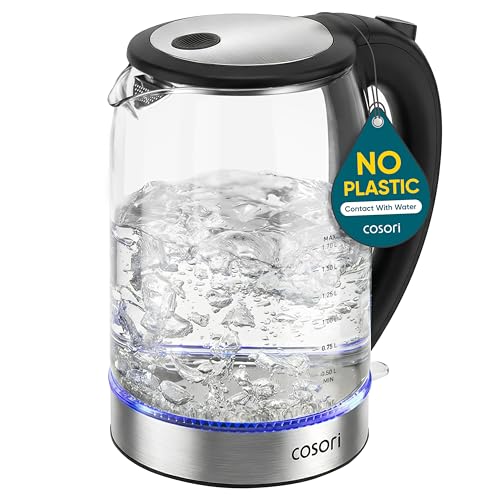
The Cosori 1.7L Electric Kettle is a practical pick for people who want plenty of hot water without plastic touching the water. Its large capacity works well for a full French press, several mugs, or a busy morning with more than one coffee drinker. The black body looks modern, while the simple kettle shape is easy to understand. I like this style when speed and capacity matter more than precise pour-over technique.
The stainless steel interior offers a clean contact surface, and the kettle includes the core safety features I expect from a modern electric model. It can help reduce the work of boiling water on a stove, and its cordless base makes serving easier. The wide opening should also make routine filling less annoying than using a narrow container. If you need the best electric kettle for coffee in a family kitchen, this Cosori model has a useful balance of volume and convenience.
Pros:
- No plastic contact with the water inside the kettle
- Large 1.7-liter capacity suits families and office use
- Fast electric heating saves time compared with stovetop boiling
- Cordless design makes pouring and serving easier
- Stainless steel interior supports a clean taste
- Good choice for French press and batch coffee
Cons:
- Wide spout offers less pour control than a gooseneck model
- Large body may feel bulky in a small kitchen
- It may be more kettle than a single coffee drinker needs
COMFEE’ 1.7L Stainless Steel Electric Kettle
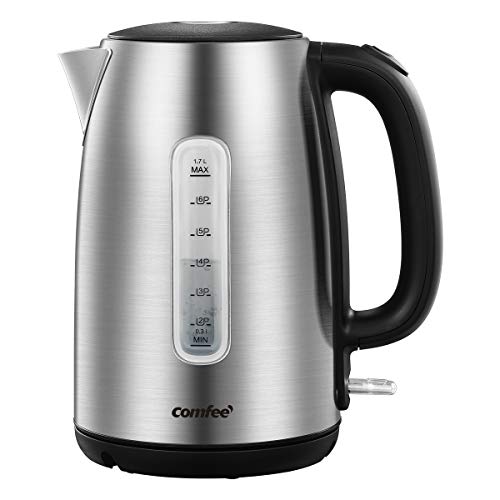
The COMFEE’ Stainless Steel Electric Kettle focuses on the basics that most coffee drinkers use every day. Its 1.7-liter size can heat enough water for several cups, and the 1500-watt design aims to shorten the wait before breakfast. An LED light shows when the kettle is working, which is helpful in a dim kitchen or early in the morning. The stainless steel build also gives it a sturdy feel without making the controls complicated.
This kettle includes automatic shut-off and boil-dry protection, two features I consider essential rather than optional. The first helps stop heating after the water boils, while the second helps protect the kettle if it runs with too little water. It is a sensible fit for drip coffee, French press, tea, and quick hot water for instant drinks. Although it does not offer the fine flow control of a gooseneck kettle, it can be the best electric kettle for coffee for shoppers who want value and useful daily performance.
Pros:
- 1500-watt heating helps reduce waiting time
- Large 1.7-liter capacity serves several people
- LED light gives a clear visual heating signal
- Automatic shut-off improves everyday safety
- Boil-dry protection helps protect the heating system
- Stainless steel construction feels solid and practical
Cons:
- No exact temperature control for specialty coffee recipes
- Standard spout is not ideal for delicate pour-over work
- Large capacity can encourage heating more water than needed
Amazon Basics 1L Glass Electric Kettle

The Amazon Basics Glass Electric Kettle is a compact option for a person who usually makes one or two cups. Its 1-liter carafe holds enough water for a modest coffee routine without taking over the counter. The glass body lets me see the water level and watch the boil, which is useful when I want to avoid filling the kettle too far. It also has a simple look that fits many kitchen styles.
Temperature control gives this model an advantage over a basic boil-only kettle. The removable filter can help catch small particles, while auto shut-off and boil-dry protection add peace of mind. The glass carafe may also make it easier to notice mineral buildup before it becomes a hidden problem. For a small home, dorm room, or office, this could be the best electric kettle for coffee when size and price matter most.
Pros:
- Compact 1-liter capacity suits one or two coffee drinkers
- Glass carafe makes the water level easy to see
- Temperature control supports different coffee and tea needs
- Removable filter helps reduce small particles in the pour
- Auto shut-off adds a useful layer of safety
- BPA-free parts support a more comfortable buying choice
Cons:
- Smaller capacity is not ideal for a large family
- Glass needs careful handling during cleaning and use
- It offers less pour precision than a gooseneck kettle
Chefman 1.8L Glass Electric Kettle

The Chefman 1.8L Electric Kettle is built for high-volume use. Its large glass carafe can handle multiple mugs, a generous French press, or hot water for a group. The 1500-watt heating system is suited to busy mornings when nobody wants to stand by the stove. I also appreciate the removable lid because it can make filling and cleaning easier than a small fixed opening.
A stainless steel filter, automatic shut-off, and boil-dry protection give this kettle a useful set of everyday features. The glass design keeps the water level visible and lets me spot scale or residue during routine care. It is not a specialist pour-over kettle, but it works well for coffee drinkers who value volume and simple maintenance. If your household needs a large electric kettle for coffee, this Chefman model deserves a close look.
Pros:
- Large 1.8-liter capacity works well for groups
- 1500-watt power supports quick heating
- Removable lid makes filling and cleaning more convenient
- Glass carafe shows the water level at a glance
- Stainless steel filter helps keep the pour cleaner
- Automatic shut-off and boil-dry protection improve safety
Cons:
- Large carafe takes more counter and storage space
- Glass can be heavier and more fragile than steel
- No gooseneck spout for slow, precise coffee pouring
My Recommendation
I recommend the Cosori Gooseneck Electric Kettle to coffee fans who brew pour-over coffee and care about control. Its narrow spout helps me guide water around the coffee bed instead of flooding one spot. Temperature control adds another layer of repeatable brewing, which is helpful when I switch between light and dark roasts. The 0.8-liter capacity is also a good match for a single cup or a small morning brew.
For families, offices, and French press users, I would choose the Cosori 1.7L model or the Chefman 1.8L model. The Cosori is the better choice when keeping plastic away from the water is a high priority. The Chefman is attractive if you want a visible glass carafe, removable lid, and extra capacity. Both are better suited to batch heating than to detailed pour-over work.
The COMFEE’ kettle is a strong value choice for shoppers who want fast heating, a large tank, and simple safety features. The Amazon Basics glass kettle fits small spaces and smaller coffee habits. In my view, the best electric kettle for coffee depends on your brew style, not just its boil speed. A gooseneck kettle wins for control, while a large standard kettle wins for volume.
| Best for | Why |
|---|---|
| Pour-over coffee | Cosori Gooseneck offers controlled flow and temperature settings. |
| Families and French press | Chefman and Cosori 1.7L models provide large capacities for several cups. |
| Small kitchens and low budgets | Amazon Basics uses less space while still offering temperature control. |
How I Chose the Best Electric Kettle for Coffee
A kettle can boil water, but coffee brewing asks for more than a hot drink. I looked at how each model fits real kitchen habits, from a rushed weekday to a slow weekend pour-over. I also considered the details that often decide whether a kettle feels useful after the first week. These details include the spout, capacity, controls, materials, cleaning needs, and safety design.
Pour Control
Pour control is the main reason coffee drinkers often prefer a gooseneck kettle. The narrow spout helps create a thin stream, so I can add water slowly and move in small circles. This makes it easier to follow a pour-over recipe and keep the coffee bed level. A standard kettle spout works for French press and drip coffee, but it may release water too quickly for careful manual brewing.
Good control does not require a complicated technique. I start with a small wetting pour, pause briefly, and then add the rest in a calm stream. A stable spout helps me repeat that motion each morning. That repeatability can matter more than a long list of extra buttons.
Temperature Control
Water that is too cool may produce a weak and flat cup. Water that is too hot may pull harsh flavors from some coffee grounds. Many coffee guides place a typical brewing range near 195 to 205 degrees Fahrenheit, although the best setting depends on the roast, grind, and recipe. A kettle with temperature control lets me make small changes without using a separate thermometer.
Temperature control also helps when I brew more than coffee. Green tea often needs cooler water, while black tea usually needs hotter water. Even if you mainly drink coffee, this feature can make the kettle more useful throughout the day. I still check the manual because the displayed temperature and actual water temperature can vary by design.
Capacity
Capacity should match the amount of coffee you make. A 0.8-liter kettle is often enough for one large pour-over or two smaller cups. A 1-liter kettle suits a couple, dorm room, or home office. Models near 1.7 or 1.8 liters make more sense for families, guests, and large French press brews.
Do not fill a large kettle for a single mug unless you need to. Heating only the water you plan to use can reduce waste and may shorten the wait. Check the minimum and maximum fill lines before use. Too little water can trigger boil-dry protection, while too much water can spill during boiling.
Heating Speed
Wattage gives a general idea of heating power, but it does not tell the whole story. The starting water temperature, water amount, altitude, and kettle design also affect the result. The models in this guide use power levels suited to normal home use, with 1500 watts common among the larger choices. In daily use, I value a kettle that heats quickly without making the controls hard to use.
Speed helps most on busy mornings. Still, I would not choose a kettle on speed alone. A fast kettle with a poor spout may frustrate a pour-over brewer, while a slower kettle with a steady flow may produce better coffee. The best electric kettle for coffee should fit your full routine.
Materials and Water Contact
The inside of a kettle matters because it touches the water you drink. Stainless steel gives a durable interior and can resist daily wear. Glass lets you see the water and mineral buildup. Some shoppers prefer a model that limits plastic contact with water, while others prefer a lighter body or lower price.
No material removes the need for cleaning. Hard water can leave mineral scale on steel, glass, and heating plates. That scale may affect appearance and performance over time. I suggest checking the care instructions and descaling the kettle when you see buildup or notice a change in heating.
Safety Features
Automatic shut-off is one of the most helpful kettle features. It should stop the heating cycle after the water boils, though I still avoid leaving any appliance unattended for long periods. Boil-dry protection is also valuable because it can stop the heater when the kettle has too little water. A cool-touch handle and a stable base can make pouring more comfortable.
Place the kettle on a dry, level surface. Keep the base and power connection away from water. Never immerse the electrical base or rinse it under a tap. These simple habits help protect both the appliance and the person using it.
Cleaning and Maintenance
Mineral scale is common in areas with hard tap water. It may appear as white flakes, cloudy patches, or a rough layer near the bottom. I usually follow the manual and use a suitable descaling method rather than guessing. After descaling, I rinse the kettle well and run fresh water through one heating cycle if the instructions allow it.
Do not use abrasive tools on glass or polished steel. A soft cloth and gentle cleaning method can protect the finish. Emptying leftover water after use may also reduce stale smells. A removable filter or lid can make routine care less of a chore, especially when you use the kettle several times each day.
Which Kettle Is Best for Different Coffee Methods?
Best for Pour-Over Coffee
A gooseneck kettle is usually the best match for pour-over coffee. Its spout gives you control over flow rate, placement, and movement. This helps with bloom pours and even saturation. The Cosori Gooseneck is the clear choice in this group for that reason.
Pour-over coffee also benefits from temperature control. You can use a consistent setting, then adjust it when a coffee tastes too sharp, dull, or bitter. The kettle does not replace a good grinder or scale, but it gives you a more stable part of the process.
Best for French Press
French press coffee does not need a thin stream. You can pour hot water over the grounds from a standard kettle, then stir and steep. A large kettle can be useful because a French press often needs more water than a single pour-over cup.
The Cosori 1.7L, COMFEE’, and Chefman models all suit this use. Choose the size that matches your household. If you make one French press each morning, the Amazon Basics model may be enough.
Best for Drip Coffee
Automatic drip coffee makers heat and distribute water on their own, so an electric kettle is not essential for that method. Still, a kettle helps when you use a manual dripper, travel brewer, or coffee machine with a separate water tank. A standard spout is usually fine for filling a machine.
For this use, capacity and easy filling may matter more than a gooseneck. The COMFEE’ model offers a practical large size, while the Amazon Basics kettle suits a smaller setup. I would spend extra on a gooseneck only if you also plan to brew manually.
Best for Instant Coffee
Instant coffee needs hot water, not a complex pour. Any safe, reliable electric kettle can handle the job. A quick 1500-watt model may be the most convenient for repeated mugs during the workday.
The COMFEE’ kettle is a strong fit because its LED light and large capacity keep the process simple. The Cosori 1.7L model is also useful when several people need hot water. If you only make one cup, a smaller kettle can save space.
Common Buying Mistakes to Avoid
Buying the Largest Kettle Automatically
A large kettle sounds useful, but it may take more room and tempt you to heat extra water. Extra water can mean extra waiting and energy use. Choose a capacity that matches your normal brew. Large families need volume, but one coffee drinker may prefer a compact model.
Ignoring the Spout
Many buyers focus on wattage and overlook the spout. That is fine if you only make French press coffee. It is a mistake if you want to learn pour-over brewing. A narrow, balanced spout can make the process feel calm instead of messy.
Assuming All Temperature Displays Are Exact
A temperature setting is useful, but it is not always a laboratory measurement. Water temperature can change as it travels from the kettle to the coffee bed. Use the same method each time and adjust based on taste. Consistency is often more useful than chasing a perfect number.
Forgetting the Water Quality
A great kettle cannot fix poor water. Strong odors, heavy mineral content, or an unpleasant taste can affect the cup. If your tap water tastes bad, consider filtered water that still contains enough minerals for balanced coffee. Do not use carbonated water or heavily flavored water in the kettle.
Skipping Care
Even the best electric kettle for coffee needs basic care. Wipe the outside, empty old water, and remove scale when needed. Avoid putting the base in water. A few minutes of care can keep the kettle working well for a much longer time.
Tips for Better Coffee With an Electric Kettle
Use the Right Amount of Water
Measure water before heating when possible. This keeps your coffee recipe more consistent and reduces waste. If you brew a 12-ounce cup, do not heat a full tank unless you plan to use it. A scale can help, but a marked measuring cup also works.
Preheat the Brewer
Rinsing a paper filter and warming the dripper can help reduce heat loss. It also removes the dry-paper smell from some filters. Pour the rinse water out before adding coffee grounds. This small step can make the brew feel more polished.
Let the Coffee Bloom
Fresh grounds often release gas when hot water first touches them. A short bloom can help the water reach more of the coffee. Pour enough water to wet the grounds, wait a little, and then continue. The exact time depends on the coffee and recipe.
Pour Slowly and Evenly
Move the spout in small circles and avoid pouring directly onto the paper filter. Keep the water stream steady. A gooseneck kettle makes this easier, but practice matters too. Think of the pour as watering a small garden rather than flooding a cup.
Taste Before You Change Everything
If the coffee tastes sour, you may need more extraction through a finer grind, hotter water, or a longer brew. If it tastes bitter, try cooler water, a coarser grind, or a shorter brew. Change one thing at a time. This helps you learn what the kettle and coffee are doing together.
Electric Kettle Safety and Care Guide
Read the instruction manual before the first use. Confirm the maximum fill line and place the kettle on its proper base. Keep the cord away from hot surfaces and keep children away from the handle during heating.
Do not operate the kettle with an empty chamber unless the manual specifically describes a test procedure. Do not open the lid while boiling water is moving or steaming. Steam can burn skin quickly, even when the outside handle feels comfortable.
When cleaning, unplug the base first. Let the kettle cool before wiping it. Use the maker’s recommended descaler and rinse all treated water away. If you notice a damaged cord, cracked glass, loose handle, or unusual smell, stop using the kettle until it receives proper attention.
FAQs Of best electric kettle for coffee
What is the best electric kettle for coffee?
The Cosori Gooseneck Electric Kettle is the best overall choice for pour-over coffee. Its narrow spout gives better flow control, and temperature control supports repeatable brewing. For large groups, a 1.7L or 1.8L kettle may be more practical.
Is a gooseneck kettle worth it for coffee?
Yes, if you make pour-over coffee or want more control over your water flow. It is less important for French press or instant coffee. The narrow spout helps you pour slowly and place water more accurately.
What temperature should water reach for coffee?
Many coffee recipes use water near 195 to 205 degrees Fahrenheit. The best setting can vary with the roast, grind, and brew method. Start with a consistent temperature, then adjust based on flavor.
Is stainless steel or glass better for an electric kettle?
Stainless steel is durable and often provides a solid interior. Glass lets you see the water and spot mineral buildup more easily. Both can work well, so choose based on your handling habits, cleaning routine, and design preference.
How often should I descale a coffee kettle?
Descale it when mineral buildup appears or when heating becomes slower. Homes with hard water may need more frequent cleaning. Always follow the product manual and rinse the kettle well after descaling.
Final Verdict: Which Should You Buy?
The Cosori Gooseneck is the best electric kettle for coffee if you brew pour-over and want precise control. Choose the larger Cosori, COMFEE’, or Chefman models for several cups and French press coffee.
For small spaces, the Amazon Basics glass kettle offers useful control at a practical size. Match the kettle to your coffee style, capacity needs, and cleaning habits for the best long-term value.