
The best electric kettle for pour-over gives you precise flow, steady heat, and better coffee with less effort.
You know the feeling: the coffee bed looks perfect, but your old kettle sends water out in a wild stream. One second you are brewing; the next, you are flooding the grounds. A good gooseneck kettle fixes that problem. It lets you pour slowly, guide the flow, and control the water temperature with ease. I reviewed five popular electric models for home brewers, tea drinkers, and anyone who wants café-style control without using a stovetop. Each kettle has a different strength, so the right choice depends on your budget, batch size, and brewing habits.
ELTRIKO 1L Gooseneck Kettle

The ELTRIKO 1L Gooseneck Electric Kettle is a practical pick for brewers who want more room than a small travel kettle offers. Its long, narrow spout helps direct water onto the coffee bed instead of spraying the edges of the dripper. That control matters when you use a V60, Kalita Wave, Chemex, or another manual brewer. The 1-liter size also gives you enough water for a large mug or more than one serving.
I like the balance between capacity and counter space here. A kettle this size feels useful for both pour-over coffee and tea, yet it should not dominate a small kitchen. The gooseneck design supports a slow bloom and a steady circular pour. If you want the best electric kettle for pour-over with a useful everyday capacity, the ELTRIKO deserves a close look.
Pros:
- Large 1-liter capacity suits one or more cups
- Gooseneck spout supports a slow, controlled pour
- Useful for coffee, tea, and other hot-water tasks
- Good choice for home brewers who dislike small kettles
- Supports better control during blooming and pulse pours
- Simple shape should fit many coffee stations
Cons:
- A full 1-liter kettle may feel heavy during a slow pour
- Large capacity can take more time to empty and clean
- Buyers should confirm the exact temperature-control features before ordering
My Take
The ELTRIKO suits people who brew more than one cup or want extra water for tea. I would choose it for a shared kitchen, a small office, or a home coffee bar where capacity matters. The longer spout can also help new brewers learn how to pour with patience. It gives you a wider margin for error than a standard fast-flow kettle.
Its main trade-off is weight when filled near the top. Pour-over brewing rewards a light hand, so I suggest filling only the amount you need. That small habit makes the kettle easier to control and reduces wasted water. Overall, it offers strong value for anyone who wants a larger gooseneck kettle without moving to a bulky commercial brewer.
Bodum Bistro 27-Ounce Gooseneck Kettle

The Bodum Bistro Gooseneck Electric Water Kettle has a compact 27-ounce capacity and a stainless steel body with a matte black finish. It targets coffee drinkers who want a focused tool for one or two servings. The gooseneck spout helps you place water exactly where you want it. That feature makes a clear difference when you move from a basic kitchen kettle to manual brewing.
I see this kettle as a neat fit for a small coffee corner. Its smaller size means you do not have to lift a large tank during every brew. It also encourages a useful habit: heat only the water your recipe calls for. For a solo drinker who wants a compact best electric kettle for pour-over, the Bodum Bistro is an appealing option.
Pros:
- Compact 27-ounce size works well for one or two cups
- Gooseneck spout improves pour direction and control
- Stainless steel construction gives the kettle a solid feel
- Matte black finish looks clean on a modern coffee bar
- Small footprint suits apartments, dorms, and offices
- Lower fill volume makes the kettle easier to handle
Cons:
- Capacity may not satisfy families or large-batch brewers
- Small kettles require more frequent refills for tea or guests
- It may offer fewer advanced settings than temperature-control models
My Take
I recommend the Bodum Bistro to the solo brewer who values space and simple daily use. It is also a smart choice for someone who makes one pour-over before work and does not need a large reservoir. The stainless steel body adds a sturdy feel, while the gooseneck spout gives you the control that manual coffee demands. It feels less like a general appliance and more like a dedicated coffee tool.
The capacity sets the limit. A 27-ounce kettle can handle many standard recipes, but it is not the best match for a large Chemex or several mugs in a row. I would not buy it for a busy family kitchen. For small servings, though, its compact design can be a benefit rather than a compromise.
Cosori 0.8L Gooseneck Kettle
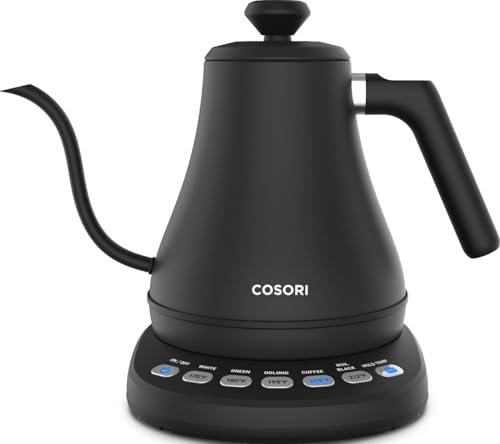
The Cosori Gooseneck Electric Kettle combines a 0.8-liter capacity with temperature control. That combination makes it one of the more versatile options in this group. Different coffees respond well to different water temperatures, and a built-in control system can make repeatable brewing easier. Instead of guessing with a thermometer, you can set the heat closer to your recipe.
The narrow spout gives you the other half of the pour-over equation: control over water speed. Temperature alone cannot fix a poor pour, and a perfect spout cannot correct water that is too hot for a delicate coffee. Cosori brings both concerns into one appliance. For many people searching for the best electric kettle for pour-over, that balance is the main reason to consider this model.
Pros:
- Temperature control supports more repeatable recipes
- 0.8-liter capacity suits most single-cup and two-cup brews
- Gooseneck spout helps create a smooth, narrow stream
- Useful for light, medium, and dark coffee preferences
- Compact size fits most home coffee stations
- Good bridge between basic kettles and advanced coffee gear
Cons:
- Temperature controls add more buttons and settings to learn
- 0.8 liters may feel small for large groups
- Electronic parts require careful cleaning and dry handling
My Take
I would point most serious home brewers toward the Cosori when temperature control matters. It gives you a better chance of repeating a recipe from one morning to the next. That repeatability helps when you compare beans, adjust grind size, or learn how extraction changes with heat. It is especially useful for lighter roasted coffee, which often benefits from hotter water than darker roasts.
The kettle does not replace good technique. You still need a suitable grind, a level coffee bed, and a steady pour. Yet it removes one large variable from the process. If you want a capable best electric kettle for pour-over that supports both precision and daily convenience, this Cosori model is one of the strongest all-around choices.
INTASTING Gooseneck Kettle With Temperature Control

The INTASTING Gooseneck Electric Kettle focuses on controlled brewing with temperature adjustment. That feature helps coffee drinkers move beyond boiling water and use a more deliberate brewing plan. A gooseneck spout then lets you spread water across the grounds in small, even pulses. Together, these features can make your morning routine feel less like guesswork.
I like temperature control most when I brew several coffees with different roast levels. A darker roast may taste smoother with slightly cooler water, while a light roast may need more heat to bring out its flavor. The INTASTING gives you a practical way to test those changes. It is a good match for curious brewers who enjoy small improvements and careful comparisons.
Pros:
- Temperature control supports more precise brewing experiments
- Gooseneck spout encourages a gentle, even water flow
- Useful for pour-over coffee and temperature-sensitive tea
- Helps reduce guesswork for new manual brewers
- Suitable for users who like repeatable morning routines
- Can support recipe testing across different roast levels
Cons:
- More controls may feel less simple than a one-button kettle
- Capacity and heating performance should be checked against your batch size
- Digital features can increase the need for careful upkeep
My Take
The INTASTING is best for the brewer who wants control without building a full café setup. If you enjoy tracking brew time, water temperature, and coffee dose, this kettle can become a useful part of that process. The gooseneck spout gives you a calm stream, while temperature settings help you repeat your preferred method. It can also make tea preparation more consistent.
I suggest checking the product listing for the exact temperature range and capacity before purchase. Those details matter when you follow a specific brewing guide. The kettle offers the most value when you will actually use its settings. If you only want boiling water for a quick morning cup, a simpler model may serve you just as well.
Chefman 0.8L Gooseneck Electric Kettle

The Chefman Gooseneck Electric Kettle offers a compact 0.8-liter design with one-touch operation. It also lists useful safety features, including boil-dry protection and auto shut-off. Those details matter when you are still waking up and your attention is split between the coffee grinder and the rest of breakfast. The narrow spout supports the slow pour needed for a balanced pour-over.
This model appeals to the practical buyer who wants fewer steps. You can focus on your recipe instead of managing a stovetop flame or watching a separate pot. Its 0.8-liter size should work for many normal home brewing sessions. If you want the best electric kettle for pour-over with a simple control style and basic safety support, Chefman is worth considering.
Pros:
- One-touch operation keeps the routine simple
- Boil-dry protection adds a useful safety layer
- Auto shut-off helps protect against unattended heating
- 0.8-liter capacity fits many single and double servings
- Gooseneck spout improves flow control over standard kettles
- Compact black design suits small coffee stations
Cons:
- Simple operation may provide less temperature flexibility
- 0.8 liters may not cover several large servings
- Users who want advanced recipe presets may prefer another model
My Take
I recommend the Chefman to beginners and busy coffee drinkers. It gives you the main physical advantage of a pour-over kettle without turning the process into a technical project. The one-touch design feels approachable, and the safety features add peace of mind. It is also a sensible option for an office where several users may not want to learn a complicated control panel.
The trade-off is customization. If you want to test many water temperatures, look at the Cosori or INTASTING models first. Chefman makes more sense when ease and routine matter most. It delivers the steady spout and straightforward use that many people need from a best electric kettle for pour-over.
How to Choose the Best Electric Kettle for Pour-Over
A gooseneck spout is the first feature I look for. It narrows the water stream and gives your hand time to guide the pour. That control helps you wet the grounds evenly during the bloom. It also lets you avoid the outer paper edge, where water can slip past the coffee without extracting much flavor.
Capacity comes next. A 27-ounce kettle works well for a solo drinker, while a 0.8-liter model gives you more room for a larger mug or two small cups. A 1-liter kettle offers the most flexibility, but extra water also adds weight. I suggest choosing a size that matches your normal recipe rather than buying the largest kettle by default.
Temperature control can improve consistency. Coffee brewing guides often list a target range, and different beans may taste better at different heat levels. A kettle with controls helps you repeat that target with less guesswork. Still, do not pay for settings you will never use. A simple kettle can make excellent coffee when your grind, dose, and pour are sound.
Safety features deserve attention too. Auto shut-off can stop heating after the water reaches its target, while boil-dry protection can help prevent damage if the kettle runs without enough water. These features do not replace good habits. I still recommend placing the kettle on a dry, stable surface and unplugging it when you finish brewing.
Why a Gooseneck Spout Matters
Pour-over coffee depends on contact between water and ground coffee. A regular kettle often sends out too much water too fast. That can disturb the coffee bed, cause uneven channels, and make the brew taste thin or harsh. A gooseneck spout acts like a small watering can. It gives you a thin stream that is easier to aim.
The spout also helps with the bloom. Many recipes start with a small amount of water to release trapped gas from fresh coffee. I can pour that first dose slowly and cover the grounds without washing them into a pile. After the bloom, I can add water in controlled circles or pulses. This simple control makes brewing feel calmer and more repeatable.
A gooseneck kettle does not guarantee great coffee. It only gives you better control over one key part of the process. You still need fresh beans, a suitable grinder, clean water, and a dripper that fits your recipe. Think of the kettle as a steering wheel. It helps guide the brew, but it does not drive the whole car.
Electric Kettle Versus Stovetop Kettle
An electric kettle usually wins on speed and convenience. You fill it, press the control, and wait for the water to heat. Many electric models also provide auto shut-off or temperature settings. That makes them useful for people who brew before work or want fewer items on the stove.
A stovetop kettle can last for years and may cost less at the start. It also works without an outlet, which helps in some kitchens or while traveling. However, you may need a separate thermometer to check the water temperature. You also need to watch the heat and turn off the burner yourself.
For most home pour-over setups, I prefer electric. The combination of a gooseneck spout, stable heating, and simple controls makes the daily routine easier. A stovetop kettle remains a good choice for people who value manual control or already own one they enjoy. The best electric kettle for pour-over should fit your habits, not force you into a new ritual.
Temperature Tips for Better Pour-Over Coffee
Water that is too cool may leave coffee tasting flat or sour. Water that is too hot may pull too much bitterness from some beans. The right temperature depends on the roast, grind, dose, and brewing time. As a starting point, many home brewers use water around 195 to 205 degrees Fahrenheit, then adjust by taste.
Light roasts often need more heat and a longer brew to show their sweet notes. Dark roasts can taste more balanced with slightly cooler water. These are starting points, not strict laws. I suggest changing one factor at a time so you can understand what improved or harmed the cup.
If your kettle does not include temperature control, you can still brew well. Let boiling water rest for a short time before pouring, or use a reliable thermometer. The method may take more attention, but it can work. A temperature-control kettle simply makes the process faster and easier to repeat.
Cleaning and Care Tips
Mineral buildup can affect heating and leave flakes in the water. The problem appears sooner in areas with hard tap water. I recommend emptying the kettle after use instead of letting old water sit inside overnight. A quick rinse and a dry lid can help keep the interior fresh.
For scale, follow the care instructions supplied with your kettle. Many manufacturers allow a descaling solution or a mild vinegar-and-water method, but the manual should guide you first. Do not submerge the electrical base. Keep water away from buttons, connectors, and the outside control panel.
Clean the spout and lid with care. Coffee oils and mineral residue can collect in small areas over time. A soft cloth works better than an abrasive pad on finished metal. Regular care helps the kettle heat properly and keeps the water tasting clean.
Best For Comparison
| Best for | Why |
|---|---|
| Best overall control | Cosori combines a gooseneck spout with temperature control and a useful 0.8-liter size. |
| Best for small spaces | Bodum Bistro uses a compact 27-ounce design that suits solo brewers and small coffee bars. |
| Best for larger batches | ELTRIKO offers a 1-liter capacity for households that need more water in one heating cycle. |
My Recommendation
After comparing these five kettles, I see the Cosori as the strongest all-around choice for most serious home brewers. Its 0.8-liter capacity fits common pour-over recipes, and temperature control makes repeatable brewing easier. I would choose the Bodum Bistro for a solo brewer with limited counter space. It keeps the process compact and avoids the weight of a larger kettle.
The ELTRIKO is better for people who want a full 1-liter capacity, especially in a shared home or office. INTASTING fits curious users who want to explore temperature-based recipes and compare different coffees. Chefman is the most approachable option for beginners who value one-touch use and basic safety features over advanced settings.
When choosing the best electric kettle for pour-over, focus on the way you brew each day. A large kettle is not automatically better, and more buttons do not always mean better coffee. Match the capacity, controls, and spout style to your routine. Prices and availability can change, so check the current Amazon listing for the latest details before ordering.
FAQs Of best electric kettle for pour-over
What makes an electric kettle good for pour-over coffee?
A good pour-over kettle has a narrow gooseneck spout, steady water flow, and enough capacity for your recipe. Temperature control is helpful but not required. Safety features such as auto shut-off and boil-dry protection also add daily convenience.
Do I need temperature control for pour-over coffee?
No. You can use a kettle without temperature control and check the water with a thermometer or let boiling water cool briefly. Temperature control makes the process easier to repeat, especially when you brew different roast levels.
What size kettle should I buy?
A 27-ounce kettle works for many single-cup brews. A 0.8-liter model offers more room for one large cup or two smaller servings. Choose a 1-liter kettle if you often brew for several people or want extra water for tea.
Is a gooseneck kettle better than a regular electric kettle?
For pour-over coffee, yes. A gooseneck spout gives you better control over the speed and location of the water. A regular kettle can heat water well, but its wider stream may disturb the coffee bed.
How often should I descale my electric kettle?
The timing depends on your water hardness and use. Check the inside often for white mineral marks. Many homes need descaling every few weeks or months, but the manufacturer’s care instructions should come first.
Final Verdict: Which Should You Buy?
The Cosori is my top pick because it blends temperature control, a useful 0.8-liter size, and a controlled gooseneck pour. The Bodum suits small spaces, while ELTRIKO suits larger batches. Chefman favors ease, and INTASTING favors recipe testing.
The best electric kettle for pour-over is the one that matches your brew size and habits. Choose a controlled spout, clean water, and reliable safety features for better coffee each morning.