
The best ice maker with water line delivers steady ice, less refilling, and simple daily use.
You know the scene: guests arrive, drinks need ice, and the freezer tray is empty again. A countertop ice maker with a water line can end that small but annoying chore. It can draw water from a connected supply instead of relying only on a small tank. I compared output, storage, ease of cleaning, water options, size, and daily comfort to help you find the best ice maker with water line for your kitchen, office, RV, or entertainment space.
Ice and Water Dispenser With 44-Lb Ice Output

This three-in-one unit combines an ice maker with hot and cold water dispensing. Its listed ice output reaches up to 44 pounds in 24 hours, which gives it a strong place in a busy kitchen or break room. The water line inlet can reduce the need to lift a tank and refill it throughout the day. That matters most when several people use the machine.
I like the idea of having chilled water, hot water, and ice in one footprint. It can help clear counter space because you may not need a separate cooler or water dispenser. Still, daily output depends on room temperature, water temperature, ventilation, and use. Before buying, I would measure the counter and confirm the required hose and connection setup.
Pros:
- Combines ice, hot water, and cold water functions
- High listed output of up to 44 pounds per day
- Water line inlet may reduce manual refills
- Useful for family kitchens, offices, and parties
- One appliance can save counter space
- Cold water and ice are convenient during warm weather
Cons:
- Three-in-one design may take more counter space than a basic ice maker
- Users must check plumbing fittings before installation
- High daily output does not mean all ice stays frozen in the bin
This model is a strong choice when convenience matters more than a very small footprint. The water line feature makes it more appealing for homes that use ice often. It may also fit a small office where people want drinks ready without constant trips to a refrigerator.
Like any countertop ice maker, it still needs care. I would wipe the dispenser area often, follow the cleaning cycle in the manual, and use clean drinking water. A connected water supply can make refilling easier, but it does not remove the need for sanitation. Ice is food, so clean water and a clean interior are essential.
My Recommendation
I recommend this unit for households that want an all-in-one water station. It is especially suited to people who use both hot and cold water and want a larger ice supply. If you are searching for the best ice maker with water line for a busy shared space, its combination of features is attractive. Check clearance, power needs, and the line connection before ordering.
NUNET 3-in-1 Water Dispenser Ice Maker
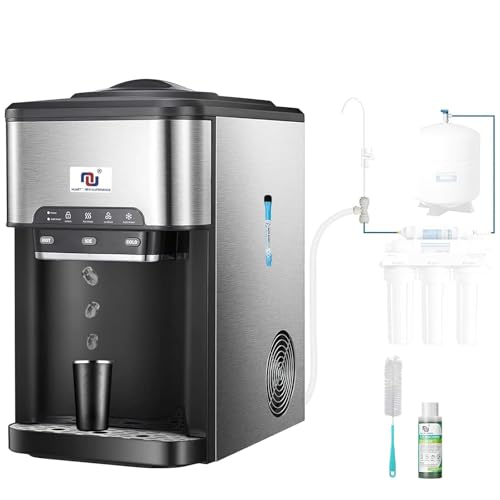
The NUNET 3-in-1 countertop appliance is made for users who want ice and water service in one place. Its listed ice-making capacity is up to 44 pounds per 24 hours. The design includes hot and cold water functions, so it can serve more than one need during the day. This can be useful in a kitchen, home gym, office, or family room.
The main appeal is simple access. You can keep the appliance near a work area instead of opening the freezer every time you need a cold drink. If the model supports a direct water setup as described by the seller, that can make high-use days easier. I would still verify the included parts, inlet details, and exact water connection method on the current Amazon listing.
Pros:
- Three-in-one design offers ice, hot water, and cold water
- Up to 44 pounds of listed daily ice production
- Convenient for homes with frequent drink service
- Can work well in an office or shared room
- Reduces the need for separate water equipment
- Countertop format is easier to place than a full-size appliance
Cons:
- May be too large for a narrow counter
- More functions can mean more parts to clean
- Buyers should confirm whether the needed water-line hardware is included
I see this as a practical middle ground for people who want more than a single-purpose ice machine. The high listed output gives it room for busy days, though actual production can vary. Ice machines usually make less ice in a hot room or when they lack space around the vents.
For the best results, leave open space around the unit and place it on a level, dry surface. Do not push it tightly against a wall. I also suggest checking the water temperature and using fresh water. These small habits can improve taste and help reduce scale inside the water system.
My Recommendation
The NUNET is best for users who want a versatile countertop station rather than a basic ice-only appliance. It suits families, small teams, and people who like hot and cold water close at hand. For shoppers comparing the best ice maker with water line options, this model is worth considering when multifunction use is a priority. Review the current listing for connection details and warranty terms.
VEVOR 3-in-1 Water Dispenser and Ice Maker

The VEVOR 3-in-1 unit offers ice making, hot water, and cold water in a countertop format. Its listed production rate is 35 pounds of ice in 24 hours, with storage for up to 4 pounds. That balance can work well for a small family or office that wants regular ice without buying a large machine. The built-in water functions add daily convenience.
The 4-pound storage figure is important because production and storage are not the same thing. The machine may make ice through the day, but the bin has a limited amount at one time. I would choose this model for steady use rather than a large party that needs a huge reserve at once. Its smaller output may also use less space than a bigger 44-pound model.
Pros:
- Combines ice making with hot and cold water dispensing
- Listed output reaches 35 pounds per 24 hours
- Four-pound ice storage suits normal daily use
- May fit smaller homes and work areas
- Offers a useful alternative to repeated freezer trips
- Three functions add value in one countertop appliance
Cons:
- Lower listed output than the 44-pound models
- Four-pound storage may not meet large-party demand
- Buyers should confirm direct water-line compatibility before purchase
I think the VEVOR is a sensible pick for moderate ice needs. It does not promise the largest production rate in this group, but that can be a benefit when counter space is limited. A smaller machine may be easier to place near a sink, coffee station, or office table.
Remember that countertop ice makers do not usually keep ice frozen like a freezer. Melted water often returns to the reservoir and may be used again, depending on the machine design. If you need hard-frozen storage for many hours, move extra ice to a freezer or insulated cooler.
My Recommendation
The VEVOR is best for small households, home offices, and moderate daily use. I would choose it when you want hot and cold water with ice but do not need the highest possible output. For anyone seeking the best ice maker with water line on a smaller scale, it offers a practical feature mix. Confirm the water setup and available clearance before buying.
INOVIVA Nugget Ice Maker With Auto Refill

The INOVIVA focuses on soft, chewable nugget ice. Its listed output reaches 40 pounds in 24 hours, and it uses a 1.2-gallon water tank. Automatic water refill, a preset timer, and self-cleaning add useful convenience for daily use. This is a different kind of choice from a water-line dispenser because it centers on ice texture and simple countertop operation.
Nugget ice is popular in sodas, iced tea, lemonade, and blended drinks because it feels soft and easy to chew. The timer can help users plan ice for a morning routine or evening gathering. I would not assume that automatic refill means a permanent plumbing connection, so check the product instructions if a true water line is essential to your setup.
Pros:
- Makes soft and chewable nugget-style ice
- Listed output reaches up to 40 pounds per day
- Large 1.2-gallon water tank reduces frequent filling
- Automatic water refill adds daily convenience
- Preset timer helps plan ice production
- Self-cleaning feature can simplify routine care
Cons:
- Tank-based design may not replace a direct water line
- Nugget ice may melt faster than dense traditional cubes
- Storage capacity and actual output should be checked before hosting a large event
I would pick this machine for people who care most about ice texture. Soft nugget ice can make a plain drink feel more special, like adding a small cushion of comfort to every sip. The controls and timer may also appeal to users who want a more hands-off routine.
Self-cleaning is helpful, but it does not mean the machine needs no care. I would still rinse the tank, wipe the ice chute, and follow the cleaning schedule. Water quality also matters. Hard water can leave mineral scale, so filtered water may help when the manufacturer permits it.
My Recommendation
The INOVIVA is best for nugget-ice fans, families, and drink lovers who value soft ice over plumbing. It is a good option when a large reservoir and automatic features matter more than a connected supply. If you want the best ice maker with water line specifically, this is not the first model I would choose without confirming the connection. If texture is your top goal, it deserves a close look.
Refrigerator Ice Maker Water Line Kit

This water line kit is different from the countertop machines above. It is designed to help connect a refrigerator ice maker to a water supply. The package is listed with a hose, fittings, and a piercing valve. For a refrigerator with a compatible inlet, a kit like this may provide the basic parts needed for installation.
Water-line work deserves care because a small leak can damage flooring or cabinets. I would shut off the water supply before starting and compare every fitting with the refrigerator manual. Some homes may require a plumber or a different valve type. Never force a connection that does not match the appliance or household plumbing.
Pros:
- Provides common parts for a refrigerator ice-maker connection
- Includes a hose and fittings in one package
- May reduce the need to source parts separately
- Useful for a refrigerator installation or replacement project
- Can support automatic ice production after proper setup
- Compact kit is easy to store before installation
Cons:
- Not a standalone ice maker
- Compatibility must be checked before installation
- A piercing valve may not suit every plumbing system or local code
This kit is best viewed as an installation accessory, not the best ice maker with water line itself. It can make sense when your refrigerator already has an ice maker but lacks a connected supply. The right kit can turn manual filling into automatic operation, but only when the fittings match.
I recommend checking tubing size, valve style, inlet location, and route length first. Keep the line away from sharp edges and areas where it can bend tightly. After installation, turn the water on slowly and watch the connections for several minutes. Dry paper towels can make small leaks easier to spot.
My Recommendation
Choose this kit for a compatible refrigerator installation, not for a countertop ice machine. It suits careful DIY users who have confirmed the parts match their appliance. If your goal is the best ice maker with water line, pair this only with a refrigerator that supports this type of connection. Its value comes from solving a plumbing gap, not from making ice by itself.
25-Foot Refrigerator Ice Maker Water Line Kit

This 25-foot water line kit gives refrigerator owners extra reach when the water source is not close to the appliance. Its quick fittings are intended to make the connection process more straightforward. The extra length can help in a kitchen where the refrigerator sits across the room from the sink or supply point.
Long tubing is useful, but it needs a safe route. I would avoid sharp bends, hot surfaces, door paths, and places where the line could be crushed. Measure the real route rather than relying only on room-to-room distance. Extra tubing should not sit in a loose loop where it can snag or collect dust.
Pros:
- 25-foot length supports longer installation routes
- Quick fittings may simplify setup
- Useful for refrigerators placed away from a sink
- Can help replace an old or damaged water line
- May support automatic refrigerator ice production
- Gives homeowners more layout flexibility
Cons:
- Extra tubing may be difficult to hide neatly
- Compatibility depends on the refrigerator and supply valve
- Not intended to function as an independent ice maker
I would consider this kit when distance is the main problem. A short line can pull tight or force an unsafe route, while 25 feet gives more room to plan. Still, longer is not always better. A clean, protected route matters more than having unused tubing behind the appliance.
Before ordering, compare the kit fittings with your refrigerator inlet and water shutoff valve. Product photos can help, but the appliance manual is the better guide. If your home has unusual plumbing, consult a qualified professional. A neat installation should stay dry, secure, and easy to inspect.
My Recommendation
This kit is best for refrigerator owners who need a longer water connection. It is a practical accessory for a remote appliance location, but it does not replace a countertop ice machine. Shoppers building the best ice maker with water line setup should use it only after confirming size and compatibility. Its main advantage is reach and installation flexibility.
How to Choose the Best Ice Maker With Water Line
Start with the water setup. Some machines use a built-in reservoir, some accept a direct inlet, and some offer automatic refill without acting like a permanent plumbing appliance. Those terms can sound alike, but they are not always the same. If a water line is essential, read the connection details and confirm what parts come in the box.
Next, consider ice output. A listing may show a daily production number, but that figure often comes from controlled conditions. Warm rooms, warm water, poor ventilation, and frequent opening can lower real output. I treat daily capacity as a guide, not a promise. Storage size also matters because a machine may make lots of ice but hold only a small amount at one time.
Ice shape changes the experience. Nugget ice feels soft and chewable, while bullet or traditional-style ice may suit coolers and long drinks better. Small, soft pieces can melt more quickly. Dense ice may last longer but may not offer the same pleasant texture. Think about what you drink most often before you focus only on pounds per day.
Counter space is another key point. Measure the width, depth, and height of the location. Then leave room around the vents and water connections. A machine that fits exactly between two cabinets may still overheat or become hard to service. I prefer a little breathing room because it makes cleaning and maintenance easier.
Noise can matter in a bedroom, office, or open kitchen. Compressors and fans make sound as they run. Product listings may not always provide a reliable decibel number, so read current customer feedback and consider when you plan to run the machine. A timer can help if you want ice ready before guests arrive.
Cleaning should never be an afterthought. Look for a clear cleaning cycle, a removable basket, easy access to the reservoir, and a smooth ice chute. The Centers for Disease Control and Prevention recommends safe handling and clean equipment for food and drinks. I treat an ice maker like a small food appliance, not like a simple plastic bin.
Water quality can affect taste and scale. If your tap water is hard, mineral buildup may occur sooner. Use the water type recommended by the manufacturer. Avoid adding anything to the reservoir unless the instructions allow it. A clean filter can improve taste, but a filter does not replace regular cleaning.
Finally, consider what happens when the ice melts. Many countertop machines are not freezers. Melted ice may return to the water reservoir, and the machine may make more ice from it. That is convenient, but it means the ice may not remain hard for hours. Move extra ice to an insulated cooler when you need longer storage.
Best Features at a Glance
| Best for | Why |
|---|---|
| High-use homes and offices | The 44-pound three-in-one units combine water service with strong listed ice output. |
| Nugget ice fans | The INOVIVA focuses on soft, chewable ice, automatic refill, timing, and self-cleaning. |
| Refrigerator installation projects | The water line kits provide hose and fitting options for compatible refrigerator ice makers. |
Setup and Care Tips
Place the ice maker on a firm, level counter near a safe outlet. Keep the power cord and water connections away from spills. Do not use an extension cord unless the manufacturer clearly allows it. A stable setup lowers the risk of vibration, leaks, and accidental movement.
Flush a new water line before connecting it to the appliance when the instructions call for that step. This can remove dust or residue from the tubing. Check the connection after the first fill and again after the machine runs. Small leaks are easier to fix before they reach a cabinet base or wood floor.
Clean the water tank and ice basket on the schedule in the manual. Wipe the outside with a soft cloth. Do not use harsh cleaners inside the water path unless the instructions approve them. After cleaning, rinse well so the next batch does not carry a chemical smell.
If the machine stops making ice, check simple causes first. The water tank may be low, the basket may be full, or the vents may be blocked. The room may also be too hot. If a connected machine shows a water warning, inspect the line for a kink and confirm that the supply valve is open.
Do not place warm food, bottles, or other objects in the ice bin. Keep the scoop clean and store it where it does not touch dirty surfaces. If several people use the machine, a dedicated scoop is safer than reaching into the ice by hand.
FAQs Of best ice maker with water line
What is the best ice maker with water line for a busy home?
A three-in-one model with a direct water inlet and a high listed daily output is usually the best fit. The first two 44-pound models in this guide are strong choices for frequent use. Confirm the exact connection method before ordering.
Does a water-line ice maker need a plumber?
Not always. A simple compatible connection may be manageable for a careful DIY user. However, hire a qualified professional if the line does not match, the supply valve is difficult to access, or local rules require professional work.
Do countertop ice makers keep ice frozen?
Most countertop machines make ice but do not act as freezers. Ice can melt in the bin and may return to the reservoir. Move extra ice to a freezer or cooler when you need long storage.
Is nugget ice better than regular ice?
It depends on your taste. Nugget ice is soft and easy to chew, while denser ice can last longer in a drink. Choose nugget ice for texture and regular-style ice for longer cooling.
How often should I clean an ice maker?
Follow the product manual, and clean sooner if the water smells, the ice tastes odd, or you see scale. Frequent users should inspect the tank, basket, and chute often. A self-cleaning cycle helps, but it does not replace normal rinsing and wiping.
Final Verdict: Which Should You Buy?
For most high-use homes, I would choose the first 44-pound three-in-one unit because it combines ice with hot and cold water and supports a water-line setup. It offers the strongest all-around case for the best ice maker with water line.
Choose INOVIVA for nugget ice, VEVOR for moderate use, and a line kit for refrigerator projects. Compare fit, plumbing, cleaning, and storage before you buy the best ice maker with water line for your space.