
The best knife sharpener for outdoorsmen is a compact guided sharpener that restores a keen edge anywhere.
A dull blade can turn a simple camp chore into hard, risky work. I have seen edges fail while cutting rope, dressing game, whittling wood, and preparing food at camp. The right field sharpener should pack small, work fast, handle more than one blade type, and stay easy to use when your hands are cold. I compared these sharpeners by portability, angle control, grit options, safety, and real trail use. Here are the tools I would consider before heading into the backcountry.
4-in-1 3-Stage Knife Sharpener
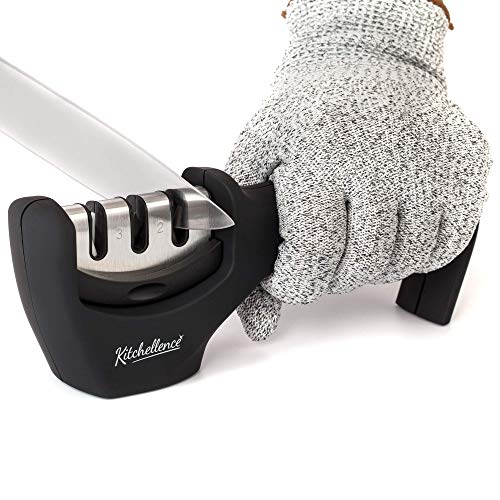
This 4-in-1 sharpener aims to cover the basic jobs that come up around a camp kitchen or cabin. Its three-stage design can help repair a damaged edge, sharpen a dull blade, and polish the cutting edge. The handle gives you a firm place to grip while you work. It also includes a cut-resistant glove, which adds a useful safety layer for new users.
I see this model as a simple grab-and-go tool rather than a precision system. It suits standard kitchen knives, camp blades, and other straight edges that need a quick refresh. The fixed slots make the process easy, but they give you less control than a guided field sharpener. For light outdoor use and home prep, it offers a practical mix of functions at a low entry cost.
Pros:
- Three stages cover repair, sharpening, and polishing
- Comfortable handle supports a steady grip
- Included cut-resistant glove improves hand safety
- Simple slot design helps beginners start quickly
- Useful for camp kitchen and household knives
- Compact size fits in a gear drawer or camp box
Cons:
- Fixed slots offer limited angle control
- May not suit thick outdoor tools or unusual blade shapes
- Less portable than a slim pocket sharpener
AIERLIAN Rolling Knife Sharpener
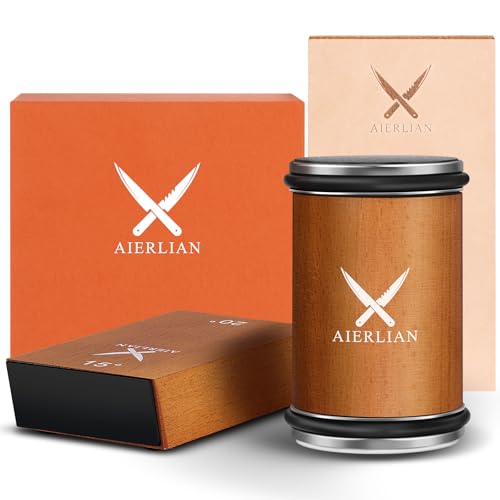
The AIERLIAN rolling sharpener takes a different approach from slot sharpeners. A magnetic guide holds the knife at either a 15- or 20-degree angle, while the rolling tool moves along the edge. The diamond side helps remove metal and reshape a tired edge. The ceramic side helps refine and smooth the finish.
This design can appeal to outdoorsmen who want more control without carrying a full bench system. The magnetic angle guide reduces guesswork, which matters when you sharpen a valuable hunting or pocket knife. It works best on a stable, flat surface, so it is more suited to a truck, cabin, or camp table than a windy trail. I would use light pressure and keep each pass smooth to avoid removing more steel than needed.
Pros:
- Offers two common sharpening angles
- Diamond and ceramic surfaces support repair and honing
- Rolling action feels natural for many users
- Magnetic guide helps maintain a steady angle
- Handles many steel types with the proper technique
- Good choice for users who want visible control
Cons:
- Needs a flat, stable surface for best results
- Not the smallest option for a pocket kit
- Magnetic support may not fit every blade shape
AccuSharp Compact Knife Sharpener

The AccuSharp is built for quick work with a very small learning curve. Its ergonomic handle gives your fingers a place to rest while the sharpening element passes along the blade. The pull-through format can restore a working edge in only a few strokes. It is also designed to work with both straight and serrated knives.
For a fishing box, hiking pack, or truck console, this compact tool makes a lot of sense. I like it for users who value speed more than exact angle tuning. It can refresh a utility knife before cutting cord, opening packages, or preparing food. Still, I would not use any pull-through sharpener aggressively on a fine custom blade, because repeated heavy passes can remove steel quickly.
Pros:
- Very simple pull-through operation
- Compact body stores easily in outdoor gear
- Ergonomic handle supports a secure grip
- Can sharpen straight and serrated edges
- Works well for quick field touch-ups
- Useful for beginners and occasional users
Cons:
- Provides less angle control than guided systems
- Heavy use may remove more metal than necessary
- Not ideal for delicate or highly valuable knives
Work Sharp Precision Adjust Elite

The Precision Adjust Elite is aimed at knife owners who want repeatable results. Its guided system helps keep the blade at a selected angle as you sharpen. Multiple abrasive stages let you work from edge repair to refinement. That control can make a major difference when you sharpen hunting knives, folders, and kitchen blades.
This is not the fastest tool to toss into a pocket, but it is one of the more capable options in this group. I would choose it for a home workshop, hunting cabin, or organized vehicle kit. It rewards patience and careful setup, especially when you need to restore a damaged edge rather than perform a quick touch-up. The system may be more than a casual camper needs, yet serious knife users will appreciate its precision.
Pros:
- Guided angle control improves consistency
- Multiple abrasive stages support full edge work
- Useful for pocket, hunting, and kitchen knives
- Better suited to controlled repair than basic slot tools
- Helps beginners learn proper sharpening technique
- Good choice for users who maintain several knives
Cons:
- Less convenient for rapid trail-side sharpening
- Takes more setup and practice than a pull-through tool
- May feel bulky in a minimalist backpack
Orange Ninja Pocket Field Sharpener

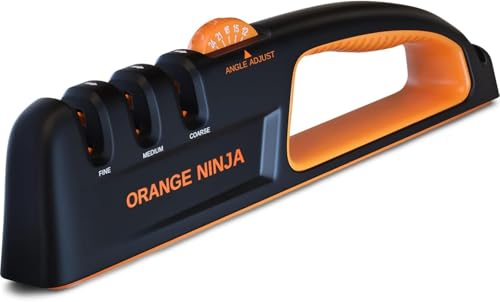
The Orange Ninja Pocket Field Sharpener is designed for people who want several functions in one small kit. Its 6-in-1 layout targets common outdoor needs, such as sharpening, honing, and maintaining different edge styles. The pocket format makes it easy to add to a day pack, tackle box, or hunting pouch. Bright orange coloring may also help you spot it quickly among dark gear.
I would look at this model when versatility matters more than a single refined sharpening surface. It can act as a backup tool on a trip where space is tight and a lost sharp edge would be frustrating. As with any compact multi-tool, each part may be smaller than a dedicated bench accessory. Use controlled strokes and check the edge often instead of trying to force a very dull blade back in one session.
Pros:
- Six functions provide broad field utility
- Pocket-friendly design saves pack space
- Bright color makes the tool easy to find
- Useful for camping, fishing, and hunting kits
- Can support quick maintenance during a trip
- Good backup for users who carry one knife
Cons:
- Small surfaces may require more care and time
- Multi-function tools can feel less specialized
- May not replace a full sharpening system at home
Gerber Edgefield Dual-Grit Sharpener

The Gerber Edgefield uses a dual-grit format for basic field maintenance. One side can handle more active sharpening, while the finer side can refine the edge after the main work. Its camping and portable design fit the needs of hikers, hunters, and anglers. The burnt orange color adds a practical touch for outdoor storage.
This sharpener is best viewed as a focused field tool. It does not try to replace a full guided system, and that can be a benefit when you need fewer parts. I would pack it for a weekend trip when my main goal is to keep a working blade ready. It is especially appealing to Gerber fans and people who prefer a simple tool from a well-known outdoor knife brand.
Pros:
- Dual grit supports sharpening and edge refinement
- Portable design suits camping and travel
- Bright finish improves visibility in a gear bag
- Simple layout keeps field use straightforward
- Good match for general outdoor knives
- Lightweight format adds little pack burden
Cons:
- Does not offer the fine angle control of a guided kit
- May need more passes on a badly damaged edge
- Limited functions compared with larger systems
Work Sharp Guided Field Sharpener

The Work Sharp Guided Field Sharpener is one of the strongest all-around choices for outdoor knife care. It combines guided sharpening surfaces with a compact, folding design. The built-in guides help users keep a repeatable angle, while the abrasive stages support repair, sharpening, and honing. It also includes features for maintaining serrations and other common outdoor edges.
I like this type of sharpener because it bridges the gap between a simple pocket tool and a full workshop system. It fits a pack but still offers enough control for a hunting knife or hard-use folder. The guide helps prevent the most common beginner mistake: changing the angle during each stroke. If I could carry only one dedicated field sharpener on a long trip, this would be near the top of my list.
Pros:
- Guided angles improve sharpening consistency
- Compact folding body travels well
- Multiple surfaces handle repair and honing
- Supports serrated edge maintenance
- Works well for hunting, camping, and fishing knives
- Strong balance of control and portability
Cons:
- Requires more technique than a basic pull-through tool
- Small surfaces may feel slow on large blades
- Users must keep the tool stable while sharpening
Work Sharp Guided Field Sharpener Elite

The Guided Field Sharpener Elite builds on the compact field-sharpener idea and adds a protective case. That case matters when abrasive surfaces share space with food, clothing, and other gear. The guided format helps keep the sharpening angle steady, and the range of surfaces supports more than a quick emergency touch-up. It is a useful choice for people who take knife care seriously but still need a travel-sized tool.
I would carry this model on extended hunts, remote camps, or trips with several knives. The case helps keep the tool organized and reduces the chance of grit spreading through a pack. It still takes a few practice sessions to develop a smooth stroke, but the learning curve is reasonable. Among compact systems, it offers a strong blend of protection, control, and field usefulness.
Pros:
- Protective case improves storage and transport
- Guided angles support repeatable results
- Multiple sharpening surfaces cover several tasks
- Compact size works well for travel
- Useful for straight and serrated outdoor knives
- Good choice for serious backcountry users
Cons:
- Costs more than many basic pocket sharpeners
- Needs careful cleaning after use
- May be more equipment than casual campers need
Work Sharp MK2 Electric Knife Sharpener
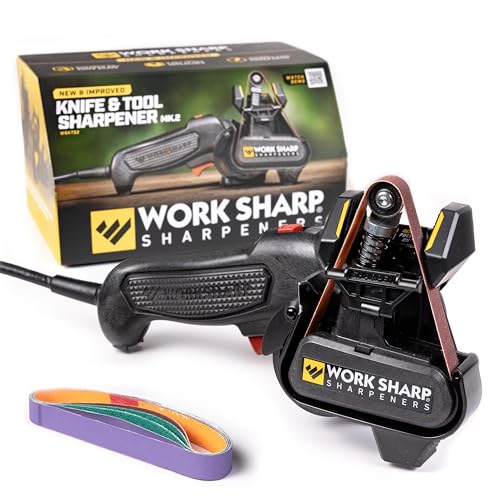
The Work Sharp MK2 is a powered sharpening system for people who maintain more than one kind of cutting tool. Its adjustable two-speed design can work with knives, scissors, axes, and some garden tools when the correct belt and method are used. The belt system removes material quickly and can restore a dull edge with less hand effort. Replacement belts also make it possible to keep the system working over time.
This is not a trail-side sharpener, since it needs power and a stable work area. Instead, I see it as the best preparation tool for a cabin, garage, or base camp with electricity. It can save time when several knives need service before a trip. New users should start slowly and avoid pressing hard, because powered abrasives can change an edge faster than expected.
Pros:
- Electric power speeds up sharpening work
- Two speeds provide more control for different tasks
- Can handle knives, scissors, axes, and garden tools
- Replaceable belts support long-term use
- Useful for preparing a full outdoor tool set
- Reduces hand fatigue during repeated sharpening
Cons:
- Needs electricity and a stable work surface
- Too large for normal backpack carry
- Fast belts can remove metal quickly if misused
5 Precision Adjust 3-Stage Sharpener
This 3-stage precision adjust sharpener targets users who want a guided process without moving to an electric tool. Its stages can help repair, sharpen, and polish an edge. The adjustable format gives the user more control than a fixed slot sharpener. That makes it a practical option for maintaining different knives at home or in a base camp.
I would choose this system for a budget-minded knife owner who wants to learn better sharpening habits. It can help create a repeatable routine, which is more useful than chasing a quick shine on the edge. The setup takes longer than using a compact pull-through tool, but the extra control can protect a favorite blade. Keep the knife secure and use light, even strokes for the best result.
Pros:
- Three stages cover repair, sharpening, and polishing
- Adjustable design gives users more control
- Useful for several common knife types
- Good learning tool for new sharpeners
- Manual operation works without batteries
- Suitable for home, cabin, or base-camp use
Cons:
- Less compact than a basic field sharpener
- Requires setup before sharpening
- May not be ideal for a quick emergency touch-up
How I Choose the Best Knife Sharpener for Outdoorsmen
A good outdoor sharpener must do more than make a blade look bright. It must restore a useful edge without adding needless weight or requiring a long lesson. I first consider portability, because a tool that stays at home cannot help on a trail. I also check whether the sharpener works with the blade types most outdoorsmen carry, including folding knives, fixed blades, serrated knives, and camp kitchen tools.
Angle control is another key point. Many outdoor knives use an edge angle near 15 to 20 degrees per side, but the correct angle depends on the knife design and its intended work. A thin slicing blade needs different care from a thick chopper. Guided systems reduce errors, while pocket tools trade precision for speed and size.
Abrasive choice also matters. Coarse diamond or other aggressive surfaces can repair a damaged edge, but they should not be used with force on every sharpening session. Fine ceramic surfaces and strops are better for light honing and polishing. I always suggest cleaning the blade before and after sharpening, checking the edge often, and wearing eye protection when using powered equipment.
Manual Versus Electric Sharpeners
Manual sharpeners are usually the better fit for hiking, hunting, and remote camping. They need no outlet, make little noise, and often weigh only a few ounces. A guided manual model also gives you useful control in the field. Its main weakness is speed, especially when you need to repair a heavily damaged blade.
Electric sharpeners shine at home or in a workshop. They can refresh several knives in less time and may handle larger tools with the right accessories. However, they need power, create more noise, and can remove metal too quickly for an inexperienced user. For most outdoorsmen, an electric system works best before the trip, while a compact manual tool handles field maintenance.
What to Pack for a Backcountry Trip
For a day hike, I would pack a small sharpener that can refresh a pocket knife or utility blade. For a multi-day hunt, I would choose a guided field model with coarse and fine surfaces. A protective pouch helps keep abrasive dust away from food and clothing. I also pack a small cloth, a cut-resistant glove when available, and a way to wipe the blade clean.
Do not wait until the knife is completely dull. A few gentle maintenance strokes are easier than a full repair session. A sharp blade also needs safe handling. Cut away from your body, keep your fingers behind the edge, and secure the sharpener before applying pressure.
My Recommendation
For most hikers, hunters, anglers, and campers, I recommend the Work Sharp Guided Field Sharpener. It offers the best balance of size, angle guidance, abrasive stages, and field flexibility. The AccuSharp is better for fast, simple touch-ups, while the Precision Adjust Elite is better for careful home sharpening. If you maintain many tools before a trip, the Work Sharp MK2 is the strongest powered choice.
| Best for | Why |
|---|---|
| Best overall field use | Work Sharp Guided Field Sharpener combines guided angles, useful grits, and compact travel size. |
| Fast budget touch-ups | AccuSharp uses a simple pull-through design that is quick to learn and easy to pack. |
| Workshop knife maintenance | Work Sharp MK2 uses adjustable speeds and belts for knives, axes, scissors, and other tools. |
FAQs Of best knife sharpener for outdoorsmen
What is the best knife sharpener for outdoorsmen?
The Work Sharp Guided Field Sharpener is the best all-around choice for many outdoorsmen. It offers guided angles, several abrasive surfaces, and a compact design. It is small enough for travel but capable enough for regular knife care.
Should I choose a diamond or ceramic sharpener?
Diamond surfaces work well for repairing dull or damaged edges. Ceramic surfaces are better for fine honing and light maintenance. A sharpener with both gives you more flexibility during a trip.
Can I sharpen a serrated outdoor knife?
Some field sharpeners include a tapered rod or special surface for serrations. A standard pull-through slot may not reach each serration correctly. Check the sharpener design before using it on a serrated blade.
What angle should I use on a hunting knife?
Many hunting knives work well around 15 to 20 degrees per side. Always follow the knife maker’s guidance when available. A tougher work knife may use a wider angle than a thin slicing blade.
How often should I sharpen a camping knife?
Sharpen the knife when it starts to slip or crush instead of cutting cleanly. Light honing can maintain the edge between full sharpening sessions. Avoid repeated heavy passes, because they remove useful blade steel.
Final Verdict: Which Should You Buy?
The Work Sharp Guided Field Sharpener is my top pick for the best knife sharpener for outdoorsmen. It gives strong control without taking much room, making it a smart choice for hunting, hiking, and camping.
Choose AccuSharp for speed or the Work Sharp MK2 for workshop power. For most trips, a compact guided tool keeps your blade ready and your pack light.