
The best knife sharpener for pocket knives is the Work Sharp Guided Field Sharpener for its size, control, and field-ready design.
A dull pocket knife can turn a quick camp task into a hard chore. It may slip on rope, struggle with food, or fail when you need it most. I looked for sharpeners that are easy to carry, simple to guide, and gentle enough for regular knife care. The picks below cover compact tools, fixed-angle systems, ceramic hones, diamond plates, and multi-use survival designs. Whether you carry a folding knife every day or keep a hunting blade in your truck, there is a practical option here.
Work Sharp Guided Field Sharpener

The Work Sharp Guided Field Sharpener is one of the most balanced choices for pocket knife owners. It combines guided diamond plates, a ceramic rod, and a leather strop in one slim tool. The built-in angle guides help keep each pass steady, which matters when a small blade has a narrow edge. I also like that it gives you more control than a basic pull-through sharpener.
This sharpener works well for touch-ups at home, in a workshop, or beside a campfire. The coarse and fine surfaces let you repair a worn edge and then refine it. The ceramic rod can help with light honing, while the strop removes a small amount of remaining burr. It is not the smallest option in this guide, but it offers an excellent mix of portability and edge control.
Pros:
- Guided angles make sharpening easier for beginners
- Diamond, ceramic, and leather surfaces support full edge care
- Compact shape fits many tool bags and camping kits
- Useful for both repair work and light touch-ups
- Works with many straight-edge pocket knives
- Does not need electricity or batteries
Cons:
- May feel bulky in very small pockets
- Requires several passes and some practice
- Not designed to sharpen the full length of a large kitchen knife quickly
My Recommendation
I recommend this model to campers, hunters, tradespeople, and daily-carry users who want one dependable tool. It is especially useful if you are learning how to sharpen because the guides act like training wheels. For many buyers, it is the best knife sharpener for pocket knives because it combines useful surfaces without becoming a full-size bench system. Its value is strong, and replacement access is usually easy through major retailers.
Precision Adjust 3-Stage Sharpener
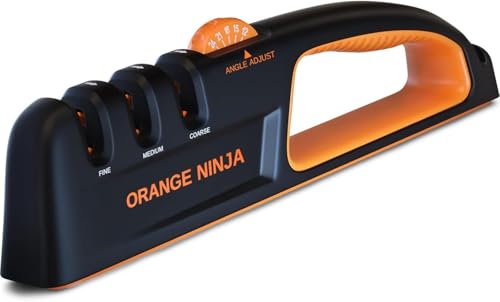
The Precision Adjust 3-Stage sharpener is made for people who want a more controlled setup than a handheld tool can provide. Its guided design helps hold the blade at a repeatable angle during each pass. That repeatability can improve results on small folding knives, especially when the user does not yet have strong freehand skills. The three-stage process also gives you a clear order to follow.
A system like this is best used on a stable table or workbench. Start with the least aggressive abrasive that can solve the problem, then move through the stages as needed. This approach removes less metal than repeated heavy grinding and can help preserve the blade over time. I would choose it for a home user who wants a neat, even edge rather than a fast emergency fix.
Pros:
- Guided design supports a consistent sharpening angle
- Three stages make the process easy to understand
- Good choice for users who lack freehand confidence
- Suitable for many pocket and kitchen knives
- Offers better control than simple pull-through tools
- Useful for routine maintenance at home
Cons:
- Less convenient for hiking or field use
- Takes more setup time than a pocket sharpener
- Very short or unusual blades may need careful positioning
My Recommendation
This sharpener suits home cooks, knife collectors, and new sharpeners who want repeatable results. I would pick it for someone who values an even bevel and has a small work area available. It may be the best knife sharpener for pocket knives if your priority is control rather than pocket carry. Check the current package contents before buying, since included accessories can vary by listing or kit version.
SHARPAL 101N 6-in-1 Sharpener
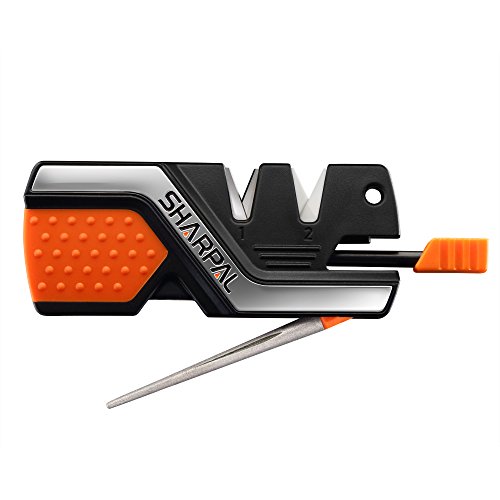
The SHARPAL 101N is more than a simple blade sharpener. It packs several functions into a compact body, including sharpening elements for straight and serrated edges. That makes it attractive to hikers, anglers, hunters, and anyone building a small emergency kit. Its compact design can ride in a glove box, tackle box, or larger pocket.
The preset sharpening areas make quick maintenance simple, but they also limit fine control. I would use it for a practical field touch-up instead of trying to create a perfect polished edge. The tool is most useful when a knife needs help during a trip and you do not want to carry a full sharpening system. As with any carbide sharpener, use light pressure to avoid removing too much steel.
Pros:
- Compact design supports travel and outdoor use
- Multiple functions add value to an emergency kit
- Supports both plain and serrated blade care
- Easy for quick field touch-ups
- Useful for hunting, fishing, and camping gear
- Does not require power or a separate base
Cons:
- Preset angles offer less personal adjustment
- Not ideal for detailed edge polishing
- Small parts may be harder to use with gloves
My Recommendation
I recommend the SHARPAL 101N for outdoors users who want many tools in one small package. It is a strong choice for an emergency bag or day-hike kit, especially when serrated tools are part of your gear. It can be the best knife sharpener for pocket knives for fast field service, but a guided diamond system is better for careful home sharpening. Its multi-use design gives it excellent practical value.
Orange Ninja Pocket Field Sharpener

The Orange Ninja Pocket Field Sharpener focuses on portability and broad outdoor use. Its multi-function layout is designed for people who carry more than one type of cutting tool. A pocket knife, fishing hook, axe, or serrated tool may each need a different surface or method. Having several options in one kit can reduce the need to pack separate tools.
This type of field sharpener works best when you value convenience over a perfect mirror finish. I would keep it in a hunting pack, vehicle, or home emergency drawer. Use slow, light strokes and inspect the edge often rather than forcing the blade through the tool. Its small format is helpful, though users with large hands may need a firm grip while working.
Pros:
- Portable design fits outdoor and emergency kits
- Multiple functions support more than one tool type
- Helpful for campers, anglers, and hunters
- Can handle quick maintenance away from home
- Simple layout reduces the need for extra accessories
- Light enough for travel and daily gear
Cons:
- Small body may feel less comfortable for large hands
- Does not replace a precise bench sharpening system
- New users should practice to avoid excess pressure
My Recommendation
The Orange Ninja is best for active users who want a small, flexible field kit. I would choose it for camping, fishing, hunting, and vehicle storage. It may serve as the best knife sharpener for pocket knives when portability and tool variety matter most. Buyers who want a polished, exact bevel should consider a fixed-angle sharpener instead.
Work Sharp Precision Adjust Knife Sharpener
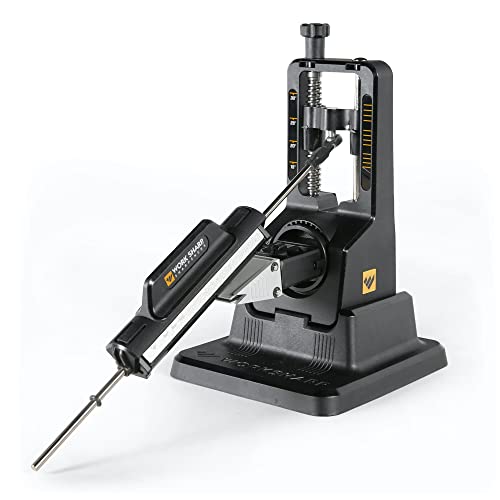
The Work Sharp Precision Adjust is a compact guided system for knife owners who want more accuracy at home. Its adjustable angle design lets you match the edge style of many pocket knives. The clamp helps hold the blade while the abrasive moves across the edge in a controlled way. This can make a big difference for people who struggle to keep both sides even by hand.
I like this system for regular maintenance because it encourages a measured process. You can begin with a suitable abrasive, check your progress, and finish with a finer surface when needed. It is not as fast as a motorized sharpener, but it gives you more control and less risk of overheating the steel. Store it on a shelf or workbench, since it is better suited to home use than backpack carry.
Pros:
- Adjustable angle supports different knife edges
- Guided clamp improves control and repeatability
- Useful for folding knives and many fixed blades
- Manual action avoids heat from powered grinding
- Good learning tool for sharpening beginners
- Compact compared with many full bench systems
Cons:
- Needs a stable surface during use
- Blade clamping can take extra time
- Not the best choice for quick trail-side repairs
My Recommendation
I recommend the standard Precision Adjust to home users who want a repeatable edge without paying for a large professional system. It is especially helpful for pocket knife owners who care about angle consistency. For many people, it is the best knife sharpener for pocket knives when accuracy and value must balance. It is a smart step up from a basic handheld sharpener.
Work Sharp Precision Adjust Elite

The Precision Adjust Elite builds on the guided sharpening idea with a broader set of sharpening stages. It is aimed at users who want more control over repair, refinement, and finishing. The fixed-angle format helps reduce the guesswork that often causes uneven bevels. For a pocket knife collector, that control can make routine edge care feel calm instead of frustrating.
This system is a good fit for people who sharpen several knives at home. It can handle routine work and more involved edge restoration when used with patience. I suggest cleaning the abrasive surfaces as directed and avoiding hard pressure, since aggressive force can shorten abrasive life. The Elite is less portable than a pocket tool, but it offers a more complete sharpening experience.
Pros:
- Expanded sharpening stages support finer edge work
- Fixed-angle format improves repeatable results
- Useful for collectors and frequent knife users
- Manual design keeps heat away from the blade
- Supports repair and finishing in one system
- More versatile than a basic three-stage tool
Cons:
- Costs more than simple pocket sharpeners
- Requires more setup and storage space
- Learning all stages may take some practice
My Recommendation
The Elite is best for serious hobbyists, collectors, and users with several quality knives. I would select it when edge control matters more than speed or pocket size. It can be the best knife sharpener for pocket knives for buyers who want a near-workshop process without buying a large commercial machine. Its higher cost makes the most sense for regular use.
BOGONI Rolling Knife Sharpener

The BOGONI rolling sharpener uses a rolling motion instead of a clamp or pull-through slot. A diamond disc can work on a dull edge, while a ceramic disc can help refine and maintain it. The rolling design feels natural to many users because the tool travels along the blade in one smooth motion. It also takes up little room in a drawer.
This sharpener needs a clean, flat surface and steady movement. It may feel easier than freehand stone sharpening, but the user still controls pressure and travel speed. I would use it for pocket knives with a fairly clear, straight edge and avoid rushing near the tip. It is also a useful option for someone who wants a simple home tool without a large guided frame.
Pros:
- Rolling motion is simple to learn
- Diamond and ceramic discs serve different stages
- Compact design stores easily
- Works without electricity or batteries
- Useful for home touch-ups and routine care
- Often feels more natural than a pull-through tool
Cons:
- Needs a stable, clean surface
- Requires care around the blade tip
- May not suit heavily recurved or unusual edges
My Recommendation
I recommend the BOGONI rolling sharpener to home users who want a simple manual method. It is a good middle ground between a basic slot sharpener and a detailed guided kit. For the right user, it can be the best knife sharpener for pocket knives because it is compact and easy to store. Choose another model if you need field carry or highly precise angle control.
Work Sharp Guided Field Sharpener Elite

The Guided Field Sharpener Elite is made for users who want a more complete portable sharpening kit. Its guided format helps set the blade angle, while multiple abrasive surfaces let you move from repair to refinement. The included case adds a useful layer of protection in a pack or vehicle. That matters when loose tools may collect dust, moisture, or grit.
I see this model as a strong option for people who spend long periods away from a workbench. It can help maintain pocket knives, outdoor blades, and other straight edges with a careful hand. The extra capability also means a slightly larger kit than a tiny pocket tool. Keep the surfaces clean and use light strokes so the edge stays crisp rather than rounded.
Pros:
- Portable guided format offers strong edge control
- Case helps protect the tool during travel
- Several surfaces support repair and honing
- Useful for outdoor and home sharpening
- Good choice for serious campers and hunters
- Manual operation avoids motor heat
Cons:
- May be too large for a small pants pocket
- Costs more than basic field sharpeners
- Extra stages can take longer to learn
My Recommendation
The Elite Field Sharpener is best for serious outdoor users who want portable control instead of a quick slot tool. I would pack it for hunting trips, long camping trips, and work in remote areas. It may be the best knife sharpener for pocket knives if you want field readiness without giving up guided technique. The case and broader feature set help justify its higher price for frequent users.
Smith’s PP1 Pocket Pal Sharpener

Smith’s PP1 Pocket Pal is a small, familiar design built for quick blade maintenance. It combines a preset carbide sharpener, a ceramic hone, and a fold-out diamond-coated rod. The rod can help with serrated edges and small outdoor tools that do not work well in a standard slot. Its compact body is easy to keep in a tackle box, tool pouch, or pocket.
This sharpener favors speed and convenience over detailed edge tuning. The carbide slot can restore a neglected edge, but it should be used with a gentle touch and only when needed. The ceramic side is better for light maintenance after the blade is already in good shape. I like this tool as a backup because it can solve several small sharpening problems without taking up much space.
Pros:
- Very compact and light for daily carry
- Includes carbide, ceramic, and diamond surfaces
- Fold-out rod helps with serrated sections
- Simple choice for quick edge repairs
- Useful for hunting, fishing, and household tools
- Usually costs less than advanced guided systems
Cons:
- Preset slot gives limited angle control
- Carbide can remove more metal than gentle honing
- Small size may be awkward for large hands
My Recommendation
I recommend the Smith’s PP1 to budget shoppers, casual users, and anyone who wants a backup sharpener. It is a practical companion for a pocket knife kept in a truck or work bag. It can be the best knife sharpener for pocket knives when low cost, small size, and basic versatility lead the decision. Choose a guided tool for premium knives that need careful edge preservation.
AccuSharp Ergonomic Knife Sharpener

The AccuSharp knife sharpener is designed for quick, direct use with a comfortable handle. Its handheld format can restore a dull straight edge with a few controlled passes. It is also made to work with some serrated knives, which adds value for homes with mixed cutlery. The bright body is easy to spot in a drawer or workshop.
This model is best for convenience rather than fine sharpening control. I would use it on a working pocket knife that needs a quick edge before a chore, not on a valuable blade that requires a carefully matched bevel. Hold the sharpener securely and keep the knife moving in a controlled path. As with other pull-through tools, avoid repeated hard passes because they may remove unnecessary steel.
Pros:
- Comfortable handle supports a secure grip
- Fast and simple for basic edge restoration
- Works with many straight-edge knives
- Can help maintain some serrated blades
- Easy to store and use without setup
- Good fit for busy homes and work areas
Cons:
- Less precise than a guided angle system
- Not ideal for premium or delicate blades
- Repeated heavy use may remove excess metal
My Recommendation
The AccuSharp is best for users who want a fast, low-effort tool for ordinary knives. I would suggest it for a kitchen drawer, workshop, or utility knife kept around the home. It can be the best knife sharpener for pocket knives for someone who values speed above fine edge tuning. For collectors and premium steels, I would choose a diamond guide instead.
Best Features at a Glance
| Best for | Why |
|---|---|
| Most balanced field use | The Work Sharp Guided Field Sharpener combines angle guides, diamond surfaces, ceramic honing, and stropping in a portable format. |
| Most precise home sharpening | The Work Sharp Precision Adjust Elite offers guided control and several stages for users who want a more refined edge. |
| Smallest emergency backup | The Smith’s PP1 Pocket Pal packs several sharpening surfaces into a compact tool that is easy to carry. |
How I Choose the Best Knife Sharpener for Pocket Knives
A pocket knife sharpener should match the knife, the user, and the place where sharpening will happen. A tiny tool may be perfect on a trail but frustrating at a workbench. A large guided system may create a better edge but stay at home. I look at control, abrasive type, size, safety, and the time needed for normal maintenance.
Angle Control
Angle control is one of the most important features. Pocket knives often use a narrow edge, and small changes can affect how the blade cuts. Guided systems make the angle easier to repeat, while freehand tools require more practice. If you are new to sharpening, a guide can make the process feel less like guesswork.
Abrasive Material
Diamond abrasives cut hard steel and work well for repair or shaping. Ceramic surfaces are better for light honing and finishing. Carbide slots can restore a neglected blade fast, but they may remove more metal than needed. Leather strops help clean up a small burr after sharpening, though they do not replace an abrasive surface.
Portability
Think about where the sharpener will live. A field tool should be compact, tough, and easy to grip. A home tool can be larger if it offers better control. I prefer a field sharpener with a protective case when I plan to carry it with other gear because grit and moisture can damage exposed surfaces.
Plain and Serrated Blades
Many pocket knives have plain edges, but some include a serrated section. A flat stone or pull-through slot may not reach each serration correctly. A narrow ceramic or diamond rod is more useful for those teeth. Check the sharpener design before buying if your knife has a partially serrated blade.
Safety and Technique
Always move the blade in a controlled direction and keep your fingers behind the cutting edge. Use light pressure, especially with diamond and carbide surfaces. Secure a loose sharpener on a stable surface when possible. A sharp knife is safer to use than a dull knife, but the sharpening process still deserves care and attention.
How to Sharpen a Pocket Knife Correctly
First, clean the blade and inspect the edge under a bright light. Look for chips, rolled areas, or a dull strip that reflects light. If the blade only feels slightly dull, begin with a fine ceramic surface. If it has damage or a badly worn bevel, start with a suitable diamond surface and use short, even passes.
Keep the angle steady from the heel to the tip. Do not lift the handle too early as you reach the curved tip, or you may round the point. Alternate sides when the sharpener design allows it, and stop to check your progress. You should not need to remove a large amount of metal for ordinary maintenance.
After sharpening, use a fine hone or strop if the tool includes one. Wipe away metal dust before closing or storing the sharpener. Test the blade on paper or a soft food item rather than your finger. If the edge still feels rough, make a few light finishing passes instead of pressing harder.
Common Pocket Knife Sharpening Mistakes
Using Too Much Pressure
Heavy pressure can make a blade cut poorly and can wear an abrasive surface faster. It may also create an uneven bevel. Let the abrasive do the work. This is especially important with diamond plates and carbide slots.
Sharpening at Different Angles
Changing the angle on every pass can create a wide, uneven edge. It also takes longer to reach the apex of the bevel. A guided sharpener can help new users avoid this issue. With freehand tools, slow movement and a steady wrist matter more than speed.
Starting With a Coarse Surface Every Time
A coarse surface is useful for repair, but it is not needed for every touch-up. Starting too coarse removes steel without a reason. Use the least aggressive stage that can restore the edge. This simple habit helps a pocket knife last longer.
Ignoring the Tip
The tip needs a smooth change in motion. If you keep the handle flat as the edge curves upward, the sharpener may miss the tip. If you raise the handle too much, you can round it. Practice on an inexpensive knife until the movement feels natural.
FAQs Of best knife sharpener for pocket knives
What is the best knife sharpener for pocket knives?
For most users, the Work Sharp Guided Field Sharpener offers the best mix of control, portability, and useful sharpening stages. The Precision Adjust systems are better for detailed home sharpening.
Can I use a kitchen knife sharpener on a pocket knife?
Sometimes, but not always. Check the sharpener’s angle and blade clearance first. A pocket knife may have a smaller, thicker, or partially serrated edge that does not fit a kitchen-focused tool well.
Is a pull-through sharpener safe for a pocket knife?
It can be safe when used correctly, but it may remove more metal than a fine guided system. Use light pressure and only a few passes. Avoid it for expensive knives unless the manufacturer supports that method.
Should I choose diamond or ceramic for a pocket knife?
Diamond is better for repair and harder steel. Ceramic is better for light honing and edge maintenance. A tool with both gives you more flexibility.
How often should I sharpen a pocket knife?
Sharpen it when cutting feels harder or the edge slips on material. Light honing can keep the edge working longer. The right schedule depends on the steel, use, and material you cut.
Final Verdict: Which Should You Buy?
I recommend the Work Sharp Guided Field Sharpener as the best knife sharpener for pocket knives for most people. It offers useful abrasives, angle guidance, and true portability in one tool.
Choose a Precision Adjust model for home accuracy, or the Smith’s PP1 for a low-cost backup. Match the sharpener to your knife, use light pressure, and maintain the edge often.