
The best knife sharpener for Shun knives is a fine whetstone that restores the blade without harming its delicate edge.
A Shun knife can make meal prep feel effortless—until the blade starts to drag through tomatoes, herbs, or meat. Many owners then reach for a pull-through sharpener, only to worry about damaging the thin Japanese edge. I tested the key sharpening styles, from Shun honing steels and water stones to guided systems. This guide will help you choose a safe, simple option for your knife, skill level, and budget.
Shun Premier 9-Inch Combination Honing Steel

The Shun Premier 9-inch Combination Honing Steel is made for routine edge care. It uses two surfaces: a smooth side for gentle alignment and a textured side for light maintenance. That makes it useful when your knife feels dull but still cuts with little effort. It is not a full replacement for a whetstone, but it can help a Shun edge stay sharp between sharpening sessions.
I like this tool for cooks who want a simple habit after each few uses. The long rod gives most chef knives enough room for a steady stroke. Its handle also gives you a firm grip, which matters when you work near a very sharp edge. Use light pressure and keep the blade angle close to Shun’s usual 16-degree edge angle.
Pros:
- Two surfaces support both gentle and stronger honing
- Long 9-inch rod suits many Shun chef knives
- Helps maintain an edge between full sharpening sessions
- Simple design needs no soaking or setup
- Easy to store in a knife block or drawer
- Useful for cooks who prefer a fast care routine
Cons:
- Does not remove much metal from a truly dull blade
- Needs practice to keep a steady angle
- Less suitable for users who want a fully guided system
My Recommendation
This honing steel is best for Shun owners who already have a fairly sharp knife and want to preserve its bite. It is also a good pick for busy home cooks who do not want to use a water stone every week. If your blade has chips, a rounded edge, or serious dullness, choose a whetstone instead. As a daily-care tool, it offers good value and is widely available.
Shun 3-Piece Whetstone Sharpening System

The Shun 3-Piece Whetstone Sharpening System gives you a more complete way to care for Japanese kitchen knives. A whetstone removes a controlled amount of steel and forms a new edge instead of only moving the old edge back into place. This type of sharpener can suit Shun’s thin, hard blades very well. It also gives you more control than most electric or pull-through models.
This system is a strong choice if you want to learn proper sharpening. I recommend starting with slow strokes and using water as directed by the manual. Keep the stone stable, use light pressure, and check your progress often. The learning curve is real, but the reward is a clean edge that feels smooth rather than rough.
Pros:
- Offers precise control over the sharpening process
- Well suited to thin Japanese-style knife edges
- Can restore a dull blade with the correct technique
- Supports long-term knife care at home
- Produces a refined edge when used with care
- Helps users learn a valuable kitchen skill
Cons:
- Requires practice and patience
- Needs setup, water, and cleanup
- Incorrect pressure can remove too much steel
My Recommendation
I recommend this system for serious home cooks, knife fans, and anyone who wants the best knife sharpener for Shun knives through hands-on control. It is especially helpful when you own several Shun blades with different levels of wear. Beginners should practice on an inexpensive knife first. Once learned, this method can deliver excellent results and save repeated sharpening fees.
Shun Sora 9-Inch Combination Honing Steel
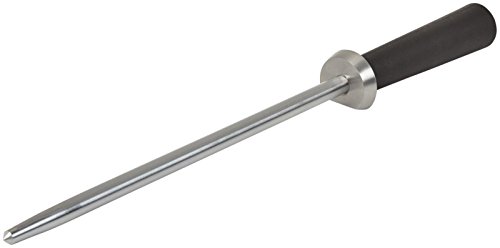
The Shun Sora 9-inch Combination Honing Steel is a practical tool for daily edge upkeep. Its combination surface lets you choose a smoother pass or a more active honing pass. That flexibility helps when your knife needs a small touch-up rather than a complete resharpening. The 9-inch length also works well with many standard kitchen knives.
I see this as a useful middle-ground tool. It is less demanding than a stone and more purposeful than a basic smooth rod. Hold the knife at a steady angle and use very little force. A few controlled passes can make a knife feel more responsive, while hard or fast strokes can work against the thin edge.
Pros:
- Provides two honing textures in one tool
- Good length for chef knives and utility knives
- Fast to use before meal preparation
- Requires no soaking or special accessories
- Helps reduce the need for frequent full sharpening
- Offers a useful price-to-function balance
Cons:
- Cannot repair a chipped or badly worn edge
- Angle control depends on the user
- May feel too basic for advanced sharpening work
My Recommendation
The Sora honing steel suits home cooks who want easy maintenance at a fair price. Choose it when your Shun knife still cuts but feels slightly less crisp. It is not the right tool for rebuilding a damaged edge, so pair it with a whetstone or professional service when needed. For routine care, it is a convenient and sensible option.
Shun 3000 and 6000 Grit Whetstone

The Shun 3000 and 6000 grit combination stone focuses on polishing and refining an existing edge. The 3000 side smooths small marks, while the 6000 side can create a fine finish for clean slicing. This pairing works best when the knife is dull in a light way, not when it has a deep chip or a very rounded edge. It can give a well-maintained Shun blade a refined, silky feel.
I would choose this stone for a cook who already understands basic whetstone technique. It rewards a light touch and a steady angle. Keep the stone flat and follow the care instructions for soaking or wetting. Because both sides are fine, this sharpener is better for finishing than for heavy repair.
Pros:
- Excellent for refining and polishing a usable edge
- Two fine grits cover light maintenance and finishing
- Can produce a smooth, precise cutting feel
- Fits the needs of many Japanese kitchen knives
- Gives experienced users strong control
- Useful for improving the finish after coarse sharpening
Cons:
- Not ideal for major repairs or chips
- Requires correct technique and a stable work area
- Fine stones can take longer on a very dull knife
My Recommendation
This combination stone is best for experienced users who want to polish a Shun edge. It can be the best knife sharpener for Shun knives when your main goal is a clean, fine finish rather than fast repair. New users may need a coarser stone first. If your knife is already in good shape, this set can help maintain a keen edge with careful use.
Shun 1000 and 6000 Grit Whetstone

The Shun 1000 and 6000 grit whetstone is one of the most useful combinations for regular kitchen sharpening. The 1000 side can rebuild a moderately dull edge, while the 6000 side refines it. That makes the pair more versatile than a stone made only for polishing. With correct use, it can restore a Shun knife without the aggressive action of a very coarse stone.
This is the stone I would place near the top for home cooks who want one practical sharpening setup. The 1000 grit offers enough bite for routine work, and the 6000 side leaves a neat finish. I still suggest learning the correct angle before using it on an expensive knife. Slow passes and light pressure make a big difference.
Pros:
- Useful grit range for routine sharpening and finishing
- Can address moderate dullness more effectively than fine stones
- Creates a polished edge after the 1000-grit stage
- Offers strong control over the amount of steel removed
- Suitable for many Shun and other Japanese knives
- Good long-term value for committed home cooks
Cons:
- Needs technique and regular cleaning
- Not the fastest choice for complete beginners
- May need a coarse stone for deep damage
My Recommendation
I recommend this stone for users seeking the best knife sharpener for Shun knives without buying several separate stones. It suits cooks who sharpen their own blades and want both repair and polish in one package. It is less convenient than a guided sharpener, but the edge control is better. For value, range, and finish, this is one of the strongest choices in the group.
Kai PRO Ceramic Diamond Pull Sharpener
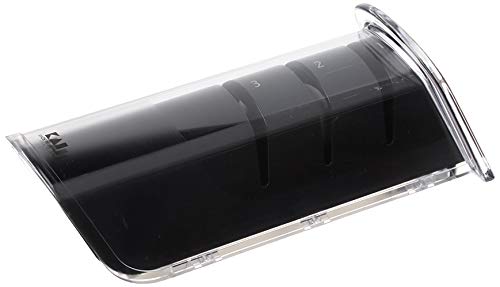
The Kai PRO Ceramic Diamond Pull Sharpening System offers a quick way to maintain kitchen knives. It combines abrasive stages designed to sharpen and refine the edge with a simple pull-through motion. This format can help users who feel unsure about holding a whetstone at the right angle. It also takes little space and can be ready in seconds.
Convenience is the main appeal here. I would use this type of system carefully on a compatible Shun knife and follow the maker’s instructions rather than pulling hard. A pull-through sharpener can remove more metal than a honing rod, so it should not become a daily habit. For occasional touch-ups, it can be easier than learning a full stone method.
Pros:
- Quick and simple for busy home kitchens
- Guided design reduces some angle guesswork
- Compact size makes storage easy
- Combines ceramic and diamond-style abrasive action
- Useful for users who do not want water or soaking
- Can refresh a knife faster than manual stone work
Cons:
- Less precise than a quality whetstone
- Pull-through use may remove more steel than needed
- Not ideal for damaged or specialty Shun blades
My Recommendation
This system is best for convenience-focused cooks who want a fast sharpening routine. It may suit a user who finds whetstones too complex, but careful use remains important. I would not choose it as my first option for a premium Shun blade when maximum edge control matters. It is a practical backup tool, especially for occasional home use.
Shun 300 and 1000 Grit Combination Stone

The Shun 300 and 1000 grit combination stone is built for repair and basic edge shaping. The coarse 300 side can help address a very dull edge or minor damage, while the 1000 side creates a usable working edge. This makes it a useful first stage for a larger sharpening setup. It is not a polishing stone, so the edge may feel more toothy after this process.
I see this stone as a problem solver rather than a finishing tool. Use the 300 side only when the blade needs real correction, since coarse grit removes steel quickly. Move to the 1000 side once the bevel is even. For a smooth slicing finish, follow with a finer stone or another suitable finishing step.
Pros:
- Handles heavy dullness better than fine stones
- Useful for shaping and repairing a working edge
- Two stages provide a practical foundation for sharpening
- Can support long-term maintenance of neglected knives
- Helpful for users building a complete stone collection
- Gives direct control over repair work
Cons:
- 300 grit can remove steel quickly if misused
- Does not provide a fine polished finish alone
- Requires more skill than a guided sharpener
My Recommendation
Choose this stone if your Shun blade is very dull, slightly damaged, or needs a new bevel. It is best for experienced users who understand when coarse grit is necessary. Beginners should practice gently and avoid repeated passes on the 300 side. As part of a larger sharpening kit, it gives excellent repair value, but it is not a complete one-stone solution for every user.
4-in-1 Three-Stage Kitchen Knife Sharpener
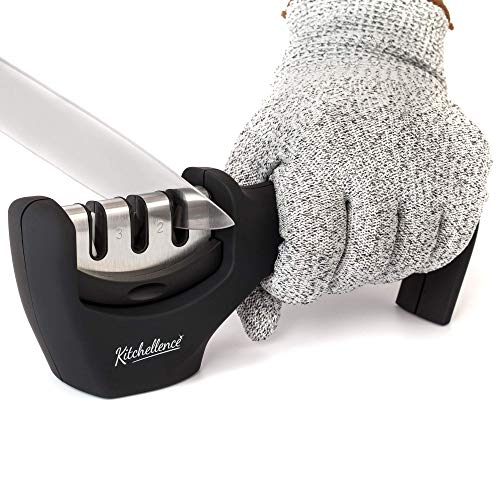
This 4-in-1 kitchen knife accessory uses a three-stage design to help repair, restore, and polish blades. It also includes a cut-resistant glove, which adds a layer of confidence for cautious users. The stages are meant to simplify the sharpening process for everyday kitchen knives. Its broad design may appeal to families who want one low-cost tool for several basic tasks.
Still, I would take extra care before using a generic pull-through system on a premium Shun knife. Japanese blades often have thinner edges than common Western knives, and a fixed sharpener may not match the original geometry. Read the instructions and use minimal passes. For lower-cost knives, this tool can be useful, but a whetstone gives better control for valuable Shun cutlery.
Pros:
- Three stages cover repair, sharpening, and polishing
- Includes a cut-resistant glove for added hand protection
- Simple format works for many casual users
- Compact enough for a small kitchen drawer
- Does not require soaking or setup time
- Usually costs less than a full whetstone system
Cons:
- May not match the ideal angle of every Shun knife
- Can remove more steel than careful stone sharpening
- Generic construction may limit long-term precision
My Recommendation
This sharpener is best for budget-minded cooks who need a general kitchen tool and extra hand protection. I would not rank it as the best knife sharpener for Shun knives, but it may work for basic, occasional maintenance when used with care. Owners of high-end Shun models should favor a compatible whetstone. Its strongest value comes from convenience and its included accessories.
AIERLIAN Rolling Knife Sharpener Kit

The AIERLIAN rolling knife sharpener uses a magnetic angle system with 15- and 20-degree positions. Its diamond and ceramic surfaces are designed to handle sharpening and finishing in a guided format. The rolling motion feels more natural to some users than dragging a blade through a slot. It also keeps the knife supported against a set angle during the process.
This style can offer better control than a basic pull-through sharpener, but it still needs careful setup. Make sure the magnetic guide holds the blade securely and check that the chosen angle suits your Shun model. Use slow, even rolls instead of pressing down. It can be a helpful bridge between a manual stone and a fixed-slot sharpener.
Pros:
- Offers guided 15- and 20-degree angle options
- Rolling action can feel steady and controlled
- Uses diamond and ceramic surfaces for different tasks
- Works without soaking or lengthy preparation
- Suitable for users who want more guidance than a stone
- Compact design is easy to store
Cons:
- Magnetic holding strength may vary by blade shape
- Angle options may not fit every Shun edge perfectly
- Requires care to avoid uneven pressure during rolling
My Recommendation
The AIERLIAN rolling kit is best for users who want guided sharpening with more control than a standard pull-through model. It can be a good option for confident beginners, provided they verify the angle and use gentle pressure. For the most precise care, I still prefer a whetstone. It offers attractive convenience and flexibility at a reasonable price when available.
Shun Kanso 9-Inch Combination Honing Steel

The Shun Kanso 9-inch Combination Honing Steel is designed for quick edge maintenance. Its combination surface gives you a smoother option for light alignment and a more active surface for touch-ups. The long rod makes it easier to work along a chef knife in controlled sections. It is a practical match for cooks who want a tool from the same brand as their Shun knives.
This honing steel works best when you use it before the knife becomes truly dull. I keep the strokes slow and light, with the blade moving from heel to tip. Do not treat it like a file, and do not push hard. Used with care, it can help preserve cutting performance and reduce the need for frequent stone sharpening.
Pros:
- Made to complement Shun knife care routines
- Two surfaces support different maintenance needs
- 9-inch length works well with many kitchen knives
- Fast to use before cooking or after light use
- Needs no water, soaking, or electrical power
- Comfortable choice for routine home maintenance
Cons:
- Cannot replace a stone for serious dullness
- Requires steady angle control by hand
- May not suit cooks who want a fully guided sharpener
My Recommendation
The Kanso steel is best for Shun owners who want simple, brand-matched upkeep. It is a strong choice for a knife that has lost a little bite but still has a sound edge. If you need to repair chips or reshape the bevel, use a suitable whetstone instead. For daily care and easy storage, this tool offers dependable value.
Best For Comparison
| Best for | Why |
|---|---|
| Most precise edge control | The Shun 1000 and 6000 grit whetstone lets skilled users sharpen and polish with care. |
| Fast daily maintenance | The Shun Premier, Sora, or Kanso honing steel helps maintain a sound edge without setup. |
| Beginner-friendly guided sharpening | The AIERLIAN rolling system offers angle guidance and a simple rolling motion. |
How to Choose the Best Knife Sharpener for Shun Knives
Choosing a sharpener starts with the condition of your knife. A blade that feels slightly less crisp needs a different tool than one with a chip or a rounded edge. Honing steels maintain an edge, while whetstones remove steel and create a new bevel. Pull-through systems focus on speed, but they give you less control.
Shun knives commonly use hard Japanese-style steel and a narrow edge angle. That design helps the knife cut with less force, but it also calls for careful sharpening. Always check the care guide for your exact model before choosing an angle. Some Shun knives may use different edge designs, so one setting should not be assumed to fit every blade.
Whetstones Versus Honing Steels
A honing steel does not usually sharpen a completely dull knife in the same way a whetstone does. It mainly realigns or lightly refreshes the edge. A whetstone uses abrasive particles to remove steel and form a fresh cutting edge. For this reason, many Shun owners benefit from owning both tools.
Use a honing steel between full sharpening sessions. Use a whetstone when the knife slips on food, crushes soft produce, or fails the paper-cut test. The best knife sharpener for Shun knives depends on this difference. Buying a fine honing tool for a badly dull blade can lead to frustration.
Why Grit Matters
Low-grit stones remove steel faster. They help repair damage and reshape an edge, but they can also cause harm when used too often. Medium grit, such as 1000, works well for normal sharpening. High grit, such as 3000 or 6000, refines and polishes the edge.
A useful two-stone setup often includes a medium stone and a fine stone. You may add a coarse stone later if you sharpen damaged blades. Start with the least aggressive grit that solves the problem. This simple rule helps protect the life of a Shun knife.
How I Test a Shun Sharpener
I look at five points when judging a sharpener. First, I check whether it supports the knife’s edge angle. Next, I consider how much steel it removes and how easy it is to control. I also review setup time, safety, cleanup, and the final feel of the edge.
I prefer tools that make the process repeatable. A sharpener should not only work once; it should help you maintain the knife for years. I also value clear instructions because a premium blade deserves more care than a cheap kitchen knife. These points separate a useful sharpener from a tool that only feels convenient.
How to Sharpen a Shun Knife on a Whetstone
Start by securing the stone on a stable, flat surface. Wet or soak it only as the instructions require. Place the knife at the correct angle, then move it across the stone from heel to tip with light, even pressure.
Work one side until you raise a small burr along the edge. Then repeat the process on the other side. Move to the finer grit and use lighter pressure. Rinse and dry the knife after sharpening, then store it safely.
How to Use a Honing Steel Safely
Hold the steel upright on a stable surface, or use a position that feels safe and controlled. Place the knife near the top of the rod at the right angle. Draw the blade down and back from heel to tip, then repeat on the other side.
Use a few light passes instead of many hard ones. Do not scrape the knife rapidly against the rod. The goal is gentle maintenance, not force. If the knife remains dull after honing, move to a whetstone rather than increasing pressure.
Common Mistakes to Avoid
- Using a coarse stone when a fine stone would solve the problem
- Pressing too hard during sharpening
- Changing the angle during each stroke
- Using a generic slot sharpener without checking compatibility
- Ignoring chips, bends, or other serious blade damage
- Leaving a water stone uneven or poorly stored
- Testing sharpness with a finger
Never slide a finger along a freshly sharpened edge. Use paper, a soft food item, or careful cutting technique to check performance. Keep children away from the work area and clean abrasive dust from the counter. Good sharpening is part skill and part safe habit.
FAQs Of best knife sharpener for shun knives
What is the best knife sharpener for Shun knives?
For the most control, I recommend a Shun whetstone with a 1000 and 6000 grit combination. It can sharpen and refine the edge while removing steel gradually. A honing steel is better for light maintenance between sharpening sessions.
Can I use a pull-through sharpener on a Shun knife?
You can use a compatible pull-through sharpener, but use it with care. Fixed slots may not match the exact edge angle of every Shun model. A whetstone usually gives better control and is the safer long-term choice for premium blades.
What angle should I use to sharpen a Shun knife?
Many Shun kitchen knives use an edge angle near 16 degrees per side, but the exact design can vary. Check the instructions for your model before sharpening. Do not assume that one angle fits every Shun blade.
How often should I sharpen a Shun knife?
Sharpening needs depend on use, cutting boards, and storage. Many home cooks need a full sharpening only a few times each year. Use a honing steel for light maintenance, and sharpen when the knife starts to drag or crush food.
Is a honing steel the same as a knife sharpener?
No. A honing steel mainly realigns or refreshes an existing edge. A whetstone removes metal to create a new edge. Use the steel for upkeep and the stone for true sharpening.
Final Verdict: Which Should You Buy?
The Shun 1000 and 6000 grit whetstone is my top pick for the best knife sharpener for Shun knives. It offers useful repair power, fine finishing, and strong control for careful home cooks.
Choose a Shun honing steel for quick upkeep, or the AIERLIAN roller for guided use. Match the tool to your skill and blade condition, and your Shun knife can stay sharp, smooth, and enjoyable for years.