
Finding the best knife sharpener roller means choosing steady angles, safe handling, and a finish that lasts.
A dull knife can turn a quick meal into a tiring chore. It slips on tomato skin, crushes herbs, and needs more force than it should. A rolling knife sharpener solves this by guiding the blade at a set angle while you move the roller along the edge. I reviewed the leading options below with focus on angle control, disc design, safety, ease of use, and long-term value. Whether you own basic kitchen knives, Japanese blades, or outdoor knives, this guide can help you find the right match.
AIERLIAN Rolling Knife Sharpener
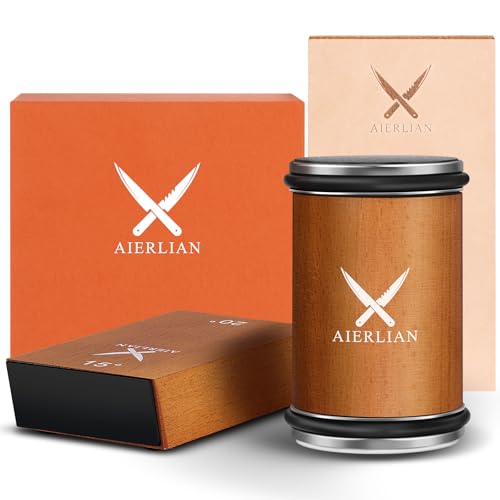
The AIERLIAN rolling knife sharpener is a practical starter kit for cooks who want a clear sharpening routine. Its magnetic base offers 15- and 20-degree settings, which cover many common Western and Asian kitchen knives. The kit uses diamond and ceramic surfaces, so it can handle repair work and final honing in one system. I like this layout because it removes much of the guesswork found with handheld pull-through sharpeners.
The roller design keeps your hand movement smooth and repeatable. The 15-degree side suits thinner edges, while the 20-degree side gives a tougher edge for general kitchen use. The diamond surface can remove more metal when a blade needs real work, and the ceramic surface can refine the edge afterward. It is a strong choice for a home cook seeking the best knife sharpener roller without a steep learning curve.
Pros:
- Two useful sharpening angles for many kitchen knives
- Diamond and ceramic surfaces support repair and finishing
- Magnetic base helps hold the angle steady
- Simple rolling motion feels natural for new users
- Useful for routine home knife care
Cons:
- Angle choices may not suit every specialty blade
- Small parts need careful storage to avoid loss
- Heavy damage may require several slow passes
My Recommendation
I recommend the AIERLIAN to beginners, casual cooks, and families with a mix of standard kitchen knives. The two-angle base gives enough flexibility for everyday blades without making the process confusing. It is also a sensible pick for shoppers who want both a coarse diamond step and a gentler ceramic finish. For many homes, this is a balanced best knife sharpener roller with useful features and approachable operation.
| Best for | Why |
|---|---|
| First-time users | The guided angles make learning easier. |
| Mixed kitchen knives | Fifteen- and 20-degree settings cover common blade styles. |
| Routine maintenance | Diamond and ceramic discs support more than one sharpening stage. |
BOGONI Rolling Knife Sharpener

The BOGONI Classic Kit keeps its design focused on the two parts that matter most: controlled angle and suitable abrasive material. It combines a diamond disc with a ceramic disc for a two-step process. The diamond side is suited to dull edges, while the ceramic side helps smooth the fresh edge. This makes the kit easy to understand even if you have never used a rolling sharpener.
A roller can feel safer than a loose whetstone because the base gives your hand a clear path. Still, you need to keep the blade flat against the magnetic guide and use light pressure. BOGONI should appeal to cooks who want a compact system for regular touch-ups rather than a large electric machine. Among the options reviewed here, it offers a clean balance between simple use and useful sharpening control.
Pros:
- Diamond and ceramic discs create a clear two-step routine
- Rolling format helps reduce angle drift
- Compact design fits easily in a kitchen drawer
- Good match for routine home sharpening
- Simple layout suits users who dislike complex tools
Cons:
- It offers fewer angle options than some advanced kits
- Users must learn how much pressure to apply
- Very chipped edges may take extra time to restore
My Recommendation
The BOGONI is best for apartment cooks, new knife owners, and anyone who wants a neat sharpening kit with little setup. Its two-disc layout keeps the task short and clear. I would choose it for normal chef knives, utility knives, and other everyday blades that need regular care. If you want the best knife sharpener roller for simple maintenance rather than maximum customization, this kit deserves a close look.
| Best for | Why |
|---|---|
| Simple knife care | Two discs make the sharpening steps easy to follow. |
| Small kitchens | The compact roller is easy to store. |
| New users | The guided format feels less demanding than a freehand stone. |
Original Tumbler Rolling Sharpener

The Original Tumbler Rolling Knife Sharpener stands out with its wood finish and gift-ready appearance. It is designed for people who want a sharpener that looks at home beside quality cookware. The tumbler-style roller encourages a steady back-and-forth motion across the blade. That simple movement can feel more natural than guiding a knife through a narrow slot.
Its visual appeal is a real advantage for a wedding, housewarming, or holiday gift. However, appearance should not replace safe technique, so I would still use light pressure and keep fingers away from the edge. The wooden body may also need more care than a fully synthetic tool, especially around water. For shoppers who value design as much as function, this is a stylish contender for the best knife sharpener roller.
Pros:
- Attractive wood construction suits visible kitchen storage
- Tumbler motion is easy for many users to understand
- Strong gift appeal for cooks and new homeowners
- Manual design needs no batteries or power outlet
- Encourages a calm, controlled sharpening pace
Cons:
- Wood may need extra care around moisture
- It may cost more because of its design and finish
- Users seeking many angle choices may want another kit
My Recommendation
I recommend the Original Tumbler to style-conscious cooks and gift buyers. It makes knife care feel less like a chore and more like part of the kitchen ritual. Choose it if you want a manual roller with a warm, premium look and you are willing to store it dry. It offers good overall value for people who care about presentation, simplicity, and everyday blade maintenance.
| Best for | Why |
|---|---|
| Gift giving | The wood finish gives it a polished, thoughtful look. |
| Open-shelf kitchens | It looks better than many plain plastic sharpeners. |
| Manual sharpening fans | The tumbler motion feels direct and controlled. |
ORIVIX Rolling Sharpener Kit

The ORIVIX kit is aimed at users who want more control than a basic two-angle sharpener provides. Its magnetic base offers four angle choices, which can help you match the tool to different blade profiles. This is useful when your drawer includes thin slicing knives, standard chef knives, and tougher utility blades. More angle options also let experienced users fine-tune the feel of an edge.
A four-angle system does require more thought before you begin. I suggest starting with the angle closest to the existing bevel instead of changing it without a reason. The magnetic base can make the process more repeatable, but the sharpener still rewards slow passes and modest pressure. ORIVIX is a strong option for home cooks who want the best knife sharpener roller with room to grow.
Pros:
- Four angle options provide useful flexibility
- Magnetic guidance helps support consistent positioning
- Works well for households with varied knife types
- Offers more control for improving users
- Manual operation keeps the process quiet and simple
Cons:
- Extra angle choices may confuse beginners
- Choosing the wrong angle can remove metal unnecessarily
- It may take practice to find the best setting for each blade
My Recommendation
ORIVIX is best for cooks who own several knife styles and want a more flexible sharpening system. It suits users who have already learned the basics and want to adjust the edge angle with care. I would not pick it solely for speed, but I would pick it for control and versatility. As a best knife sharpener roller for a growing collection, it gives you useful room to improve.
| Best for | Why |
|---|---|
| Mixed knife collections | Four settings can suit different blade profiles. |
| Experienced home cooks | More angle control supports careful edge work. |
| Long-term use | The adjustable design can remain useful as your skills grow. |
Chef Craft 20494 Knife Sharpener

The Chef Craft 20494 is a small, straightforward sharpener for shoppers who want a basic tool at a modest price. Its compact white body takes very little drawer space. This type of sharpener is useful when a knife needs a quick improvement before meal prep. It does not aim to replace a full multi-stage rolling system, and that simple purpose is part of its appeal.
I see this model as a backup tool or a starter choice for a small household. Its compact size makes it easy to keep near a cutting board, but it may offer less control than a magnetic roller with fixed angle options. Use it gently and avoid treating a small sharpener as a repair tool for badly damaged edges. For budget shoppers, it can be a practical alternative when the best knife sharpener roller means the simplest tool that meets a basic need.
Pros:
- Very compact and easy to store
- Simple design needs little setup
- Useful for quick touch-ups
- Budget-friendly choice for basic knife care
- Lightweight body is easy to move around the kitchen
Cons:
- Less versatile than a multi-angle rolling kit
- May not suit high-end or specialty knives
- Not the best choice for repairing major edge damage
My Recommendation
The Chef Craft is best for occasional users, students, renters, and anyone who needs a small backup sharpener. It makes sense for a basic knife drawer where speed and low cost matter more than advanced control. I would choose a rolling kit for valuable Japanese knives or a large collection, but this model can handle simple kitchen needs. Its value comes from convenience and easy storage.
| Best for | Why |
|---|---|
| Budget shoppers | It provides a low-cost way to refresh everyday knives. |
| Small kitchens | The compact body takes little storage space. |
| Backup use | It is easy to keep available for quick touch-ups. |
Rolling Sharpener With Replaceable Discs

This rolling knife sharpener kit focuses on long-term flexibility through replaceable diamond and ceramic discs. Replaceable parts can make sense for cooks who sharpen often, since the working surface will eventually wear. The kit also provides 15- and 20-degree positions for common kitchen use. That combination makes it more than a one-season purchase.
The two-stage process is easy to follow: use the diamond disc when the edge needs more correction, then use ceramic for a smoother finish. I would keep a light touch, since aggressive sharpening removes steel faster than many beginners expect. The replaceable design may appeal to busy families, meal-prep cooks, and anyone who wants to avoid replacing the whole tool. It is a practical candidate for the best knife sharpener roller when value over time matters.
Pros:
- Replaceable discs may extend the useful life of the kit
- Diamond and ceramic stages support different tasks
- Two common angle choices suit many kitchen knives
- Good option for frequent sharpening
- Can reduce waste compared with replacing a complete sharpener
Cons:
- Replacement discs add future cost
- Small components need organized storage
- Users must avoid over-sharpening the blade
My Recommendation
I recommend this kit for active home cooks who sharpen every week or every few weeks. It is also a good fit for people who think about ownership cost instead of only the purchase price. The replaceable-disc design gives it a useful advantage over basic fixed tools, though you should confirm replacement availability before buying. For regular kitchen work, it offers a sensible blend of control, upkeep, and value.
| Best for | Why |
|---|---|
| Frequent users | Replaceable discs support continued use over time. |
| Meal-prep cooks | Two sharpening stages help maintain several knives. |
| Value-minded buyers | You may replace a worn disc instead of the whole tool. |
Patented Rolling Knife Sharpener Kit

This rolling sharpener kit is made for users who want several angle choices in one compact system. Its listed settings include 12, 15, 20, and 25 degrees, giving it a wider range than most basic home sharpeners. A 12-degree setting can suit a very fine edge on an appropriate blade, while 20 or 25 degrees may better suit tougher everyday use. The four replaceable ceramic grinding discs add another layer of practical flexibility.
More options can help, but they also make it important to understand the knife in front of you. I suggest matching the existing bevel first and changing the angle only when you have a clear reason. Ceramic discs are useful for refining an edge, while serious chips may need a more aggressive abrasive or professional repair. This kit is a strong choice for experienced cooks searching for the best knife sharpener roller with broad angle control.
Pros:
- Four angle choices cover a wide range of edge needs
- Replaceable ceramic discs support long-term use
- Can suit fine, standard, and tougher knife edges
- Useful for cooks who enjoy detailed blade care
- Manual design gives the user direct control
Cons:
- Many settings can overwhelm first-time users
- Ceramic discs may not be ideal for heavy damage
- Correct angle selection requires careful attention
My Recommendation
This kit is best for knowledgeable home cooks, knife hobbyists, and people with varied blades. It is not my first pick for someone who wants a quick, no-thought touch-up. Instead, it rewards users who understand edge angles and want to experiment with a more exact setup. If you want the best knife sharpener roller for customization and replaceable ceramic parts, this model is worth considering.
| Best for | Why |
|---|---|
| Knife hobbyists | The broad angle range allows careful edge tuning. |
| Mixed blade types | Four settings can cover thin and durable edges. |
| Long-term maintenance | Replaceable discs can keep the kit useful for years. |
Five-Angle Rolling Knife Sharpener Kit

This five-angle kit is one of the most flexible choices in the group. It includes four diamond and ceramic discs, and it is marketed for kitchen, Japanese, pocket, and hunting knives. That broad target audience makes it attractive to households with more than one type of blade. Included gloves can also add a helpful layer of hand protection during setup and use.
The tradeoff is a bigger learning curve. Before sharpening, identify the blade type, choose a suitable angle, and make sure the knife sits correctly against the guide. Five settings can help an experienced user, but a beginner may do better by starting with one common angle and learning the motion first. For a broad collection, this may be the best knife sharpener roller because it offers flexibility without electricity.
Pros:
- Five angle settings provide wide adjustment
- Four discs support coarse and finishing work
- Designed for kitchen, pocket, and hunting knives
- Included gloves can improve handling confidence
- Useful for households with many blade types
Cons:
- The many options may slow down new users
- It needs more setup than a simple sharpener
- Incorrect angle choice can affect the edge shape
My Recommendation
I recommend this kit for outdoor users, collectors, and cooks who maintain several kinds of knives. The angle range and disc selection give it strong versatility, while the gloves are a thoughtful extra. I would choose a simpler two-angle system for a single chef knife, but this kit makes more sense for a varied collection. It offers strong value when flexibility is your main goal.
| Best for | Why |
|---|---|
| Mixed blade owners | It is designed for kitchen, pocket, Japanese, and hunting knives. |
| Outdoor users | The wider angle range supports different field blades. |
| Advanced home care | Multiple discs and settings allow a more complete routine. |
RollHoner Three-Disc Sharpener

The RollHoner uses three discs and a magnetic sharpening format. That middle-ground design gives it more range than a single-stage sharpener without adding as many decisions as a five-angle system. A three-disc setup can support initial sharpening, refinement, and finishing, depending on the disc materials included. It is a good fit for users who want a fuller routine in a compact package.
Magnetic guidance can make the blade position easier to repeat from one pass to the next. I still recommend checking the edge often instead of making many blind passes. The three-disc format may be especially useful for a cook who maintains several everyday knives but does not need hunting-knife flexibility. RollHoner is a capable candidate for the best knife sharpener roller for balanced home use.
Pros:
- Three discs support a more complete sharpening routine
- Magnetic design helps maintain a steady position
- Offers more range than a basic one-stage tool
- Compact format suits normal kitchen storage
- Good middle ground for new and improving users
Cons:
- Users must learn which disc to use first
- It may provide fewer angle choices than advanced kits
- Extra discs require careful cleaning and storage
My Recommendation
RollHoner is best for home cooks who want more than a quick touch-up but do not need a highly specialized system. It gives you a useful middle path between simplicity and control. I would choose it for a family kitchen with several standard knives and regular meal preparation. Its balanced feature set makes it a good everyday value if the included disc setup matches your needs.
| Best for | Why |
|---|---|
| Everyday home kitchens | Three discs support regular knife maintenance. |
| Growing users | It offers more steps without excessive complexity. |
| Compact storage | The rolling format keeps the kit easy to put away. |
15- and 20-Degree Ceramic Roller

This ceramic rolling sharpener keeps the angle choices simple at 15 and 20 degrees. Those settings suit many common kitchen knives and make the tool easy to understand. Ceramic is often useful for light sharpening and finishing because it removes less material than a very aggressive abrasive. This kit may fit cooks who maintain their knives often and do not let the edges become severely dull.
The key is to use it as a maintenance tool rather than a rescue tool for chips or deep damage. Make several light passes and inspect the edge as you work. The magnetic guide can help with consistency, but it cannot replace good hand control and safe habits. For holiday shoppers or new cooks, this is a friendly option and a credible best knife sharpener roller for routine use.
Pros:
- Simple 15- and 20-degree angle choices
- Ceramic discs suit light maintenance and refinement
- Easy rolling motion for new users
- Magnetic guidance supports repeatable sharpening
- Compact design works well in a home kitchen
Cons:
- Less suited to badly damaged or very dull edges
- Fewer settings limit specialty knife flexibility
- Light pressure and regular use are important for best results
My Recommendation
I recommend this ceramic roller for beginners, gift buyers, and cooks who sharpen before problems become serious. The two settings keep the process clear, and the ceramic focus suits gentle upkeep. Choose another kit if you need heavy repair or several specialty angles. For basic knife care, it provides a friendly and affordable path to a cleaner edge.
| Best for | Why |
|---|---|
| Light maintenance | Ceramic surfaces suit routine edge care. |
| Beginners | Only two angle choices keep the process simple. |
| Gift buyers | The tool is easy to explain and easy to use. |
How to Choose the Best Knife Sharpener Roller
A rolling knife sharpener works by keeping the abrasive disc and the knife edge at a set relationship. That matters because a steady angle creates a more even bevel. If the angle changes every few inches, the edge can become uneven and the knife may feel sharp in one spot but weak in another. The roller does not do every job for you, but it gives your hand a useful guide.
Start with the angle. Many Western kitchen knives use an angle near 20 degrees per side, while thinner Japanese-style blades often use a smaller angle. The correct choice depends on the blade design, steel, intended use, and existing bevel. When unsure, match the current bevel rather than forcing a new one. A smaller angle can feel very sharp, but it may be less durable if the knife sees hard contact or rough cutting.
Next, consider the abrasive. Diamond surfaces usually remove material faster and can help restore a dull edge. Ceramic surfaces are often better for light refinement and finishing. Some kits include both, which lets you use a coarse step only when needed. I advise against pressing hard, since pressure can remove too much steel and may shorten the useful life of the knife.
Magnetic bases are another key feature. A strong, well-placed guide can help hold the blade at a repeatable angle. However, magnets do not make a sharpener foolproof. Keep the knife flat, move at a steady pace, and stop to inspect the edge. A safe work surface also matters, so keep the roller away from the edge of the counter and use a stable cutting board or mat when the design allows it.
Disc replacement can affect long-term value. A fixed disc may be fine for an occasional user, while replaceable discs make more sense for a busy cook. Check how easy the parts are to clean and store. Metal dust and ceramic residue should not remain on the tool, especially if you use it near food. Wipe the sharpener as directed and keep it dry before putting it away.
How I Compare Rolling Knife Sharpeners
I look first at control. A sharpener should help the user repeat the same angle from heel to tip. I then look at the abrasive stages, because a tool that only removes steel may leave an edge that feels rough. The best knife sharpener roller should make the process clear, not turn a simple task into a puzzle.
I also consider who will use the tool. A beginner often benefits from two clear angle choices, while an experienced cook may value four or five settings. A person with one chef knife has different needs from a hunter who maintains outdoor blades. I do not rate a product only by the number of features; I ask whether those features solve a real problem.
Safety and upkeep also matter. A sharp edge can cut skin quickly, and a loose tool can cause a slip. Use slow strokes, keep your free hand behind the edge, and follow the product instructions. Never test sharpness by running a finger along the blade. A safer test is to slice a piece of paper or inspect the edge under good light.
Tips for Better Results
Clean the knife before sharpening. Food oils can make the blade slide and can soil the disc. Dry the blade, place it in the guide, and begin with the least aggressive surface that can solve the problem. If the edge is only slightly dull, a finishing disc may be enough.
Use light, even pressure. Let the abrasive do the work. Move from the heel toward the tip in one smooth path, and repeat the same number of passes on both sides when the design calls for it. Do not rush the tip, since lifting or twisting the roller there can round the point.
Check for a small burr only when the product instructions support that method. A burr can show that the abrasive reached the edge, but it should not become your only test. Wipe the blade clean before preparing food. Then store the knife safely in a block, sheath, or drawer guard.
Remember that sharpness and durability must work together. A very thin edge can slice beautifully but may chip if used on bones, frozen food, glass, or a hard cutting surface. Use a suitable knife for each task. Even the best knife sharpener roller cannot fix damage caused by poor cutting habits.
FAQs Of best knife sharpener roller
Are rolling knife sharpeners easy for beginners?
Yes. The roller guides the motion and can make angle control easier than freehand sharpening. Start with a simple two-angle model, use light pressure, and practice on an ordinary kitchen knife before working on an expensive blade.
What angle should I use on a kitchen knife?
Many everyday kitchen knives work well near 20 degrees per side. Some thinner Japanese-style knives use a smaller angle. Check the manufacturer’s guidance when possible, and match the existing bevel if you are unsure.
Is diamond or ceramic better?
Neither is always better. Diamond is useful when an edge needs faster material removal. Ceramic is often useful for light touch-ups and final refinement. A kit with both gives you more flexibility.
Can a rolling sharpener fix a chipped knife?
It may help with minor edge wear, but deep chips usually need more metal removal and careful work. Large damage may require a coarse stone, professional sharpening, or blade repair. Do not keep grinding without checking the edge.
How often should I use a rolling knife sharpener?
Use it when the knife starts to drag or crush food, not on a strict calendar. Many home cooks need sharpening every few weeks or months, depending on use and storage. Light, regular care is better than waiting until the edge becomes badly dull.
Final Verdict: Which Should You Buy?
The AIERLIAN is my top all-around pick because it combines two useful angles with diamond and ceramic stages. For more flexibility, choose ORIVIX or the five-angle kit. For a simple budget tool, Chef Craft is a practical choice.
The best knife sharpener roller is the one that matches your blades and skill level. Use light pressure, keep a steady angle, and care for your knives often for safer, cleaner cuts.