
The best knife sharpener steel balances safe honing, strong build, smooth use, and a comfortable grip.
A dull knife can turn a quick dinner into a tiring chore. I have found that a good honing steel helps restore a knife’s edge before each use, so the blade glides through food instead of crushing it. The key is choosing the right surface, length, handle, and guard for your knives. This guide reviews popular knife sharpener steel options for home cooks, hunters, and busy kitchens. I focus on practical design, ease of use, blade care, and overall value so you can choose with confidence.
Kota Japan 12-Inch Diamond Honing Rod
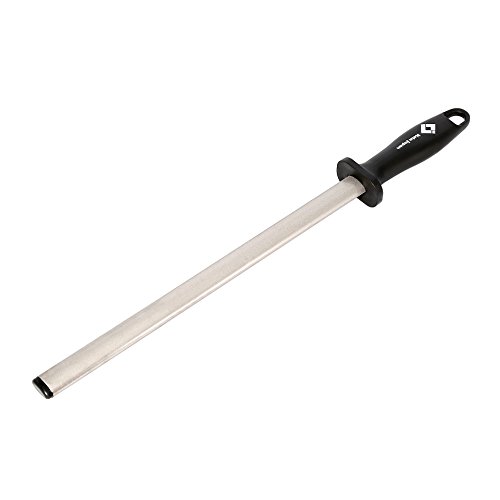
The Kota Japan honing rod uses a diamond-coated carbon steel surface to work on tired knife edges. Its 12-inch length gives me enough room to guide a chef’s knife without crowding my hand. The diamond finish feels more active than a plain smooth steel, so it can refresh an edge with fewer passes. It also suits cooks who want one rod for kitchen, home, or hunting knives.
I like the balance between reach and control on this model. A longer rod helps keep the knife at a steady angle, which matters when you are still learning the honing motion. The surface can remove a small amount of metal, so I use light pressure rather than pushing hard. As a best knife sharpener steel choice, it makes sense for people who want more bite than a basic polishing rod.
Pros:
- 12-inch length suits many chef and slicing knives
- Diamond surface refreshes dull-feeling edges quickly
- Useful for kitchen, home, and hunting knives
- Long rod supports a steadier honing angle
- Strong carbon steel body feels durable
- Good choice for users who want more than light polishing
Cons:
- Diamond coating may feel too aggressive for delicate blades
- Light pressure is important to avoid removing excess metal
- May not replace a full sharpening stone for badly damaged edges
Utopia Kitchen 12-Inch Honing Rod

The Utopia Kitchen 12-inch honing rod is a simple tool for regular knife care. Its classic steel design gives a familiar feel for cooks who already know how to hone by hand. The long rod works well with common chef knives, carving knives, and larger kitchen blades. I see it as a practical choice for daily maintenance rather than a tool for repairing deep chips.
This rod is most helpful when used often and gently. A few controlled strokes can realign an edge that bends during normal cutting, which may help a knife feel sharper at the board. The handle gives the user a clear place to hold, while the guard adds a useful layer of hand protection. For shoppers seeking affordable knife sharpener steel, this model offers a straightforward starting point.
Pros:
- 12-inch rod handles full-size kitchen knives well
- Classic design feels easy to learn
- Useful for routine edge maintenance
- Suitable for home cooks and busy kitchens
- Long working area supports smooth strokes
- Usually costs less than advanced sharpening systems
Cons:
- Hand technique still matters for safe, even results
- Not designed to fix broken or heavily worn edges
- Plain steel may feel less aggressive than diamond models
12-Inch Fine Carbon Honing Steel
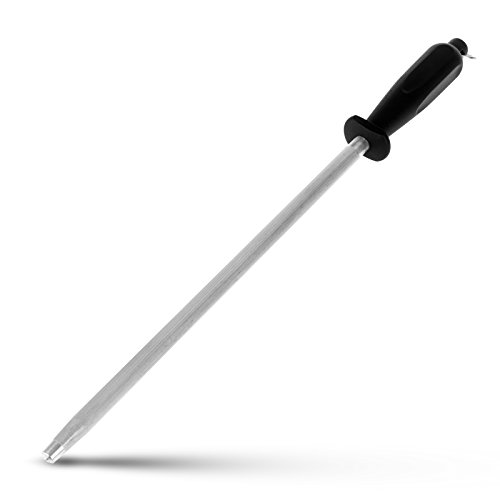
This 12-inch fine carbon honing steel focuses on smooth edge care. The fine surface is suited to knives that still cut but have lost some bite after repeated use. Its black handle gives the rod a clean look and a firm place to grip. I would place this model in the everyday maintenance group, where gentle contact matters more than fast metal removal.
The length gives enough space for a long blade, yet the rod remains manageable in a home kitchen. I recommend starting with a low number of light passes and checking the knife often. That method protects the edge and helps the user learn how much contact the blade needs. This knife sharpener steel is a sensible fit for cooks who prefer a calm, controlled honing tool.
Pros:
- Fine surface supports gentle edge maintenance
- 12-inch size works with many standard kitchen knives
- Black handle offers a clear and secure grip point
- Good fit for routine pre-cooking honing
- Simple design requires no batteries or setup
- Helps users build steady hand-honing habits
Cons:
- Fine steel cannot replace a stone for major dullness
- Users must keep a steady blade angle
- May feel slow on thick or very hard knife edges
13-Inch Carbon Steel Honing Rod

This 13-inch carbon steel honing rod gives the user extra working length for larger blades. That extra inch can make a difference when honing a chef knife, carving knife, or long slicer. The steel rod follows a familiar design, so it does not add complicated steps to normal knife care. I find it especially appealing for cooks who like a broad, open stroke.
A long rod can also help a new user avoid running out of space halfway through a pass. Still, control remains more important than speed, and I would keep the knife stable while moving it from heel to tip. The rod is intended for maintenance and alignment, not deep sharpening. For a larger kitchen or anyone who owns long blades, this may be the best knife sharpener steel size in this group.
Pros:
- 13-inch length offers generous blade coverage
- Works well with long chef and carving knives
- Carbon steel construction supports repeated use
- Familiar rod shape is easy to store
- Useful for home cooks and food preparation work
- Helps reduce the need for short, cramped strokes
Cons:
- Longer size may feel awkward in a small kitchen
- Needs careful storage to protect the rod and user
- Does not repair chips or reshape a damaged bevel
Cutluxe 10-Inch Honing Rod

The Cutluxe 10-inch honing rod is a compact choice for everyday kitchen use. Its shorter length feels easy to control, especially beside a small cutting board or in a tight prep area. The rod is built for honing knives during regular cooking, when the edge needs a quick refresh. It can fit neatly in a knife block, drawer, or utensil area.
I would recommend this size to people who use smaller chef knives, utility knives, and paring knives. A 10-inch rod may also feel less intimidating for a first-time user because it is easier to guide. As with any manual steel, I would use light pressure and keep fingers behind the guard. This knife sharpener steel gives up some reach, but it gains comfort and easy storage.
Pros:
- Compact 10-inch size is easy to control
- Fits small kitchens and crowded prep spaces
- Convenient for routine knife maintenance
- Works well with many home kitchen knives
- Simple to store in a drawer or knife block
- Good option for users new to honing steel
Cons:
- Shorter rod may not suit large carving knives
- Requires more care when working with a long blade
- Manual honing still requires practice and patience
HOSHANHO 12-Inch Professional Honing Rod

The HOSHANHO 12-inch professional honing rod is sized for regular work with standard kitchen knives. Its length gives the user a broad path for heel-to-tip honing, while the handle supports a familiar grip. This type of tool is helpful when a knife feels dull from a bent edge rather than from lost steel. It brings quick maintenance into the normal cooking routine.
I like the idea of keeping a rod like this near the cutting board, because frequent light honing is easier than waiting until a knife performs poorly. It is also a useful choice for cooks who want a traditional tool instead of an electric sharpener. Use slow strokes and avoid pressing the blade into the surface. Among the options reviewed here, this knife sharpener steel offers a balanced mix of size, simplicity, and daily use.
Pros:
- 12-inch length suits common kitchen blades
- Useful for frequent edge alignment
- Traditional design is simple to understand
- Good size for home and professional-style prep
- No power source or replacement cartridge is needed
- Supports quick maintenance before cooking
Cons:
- Cannot replace full sharpening for a very dull knife
- Correct angle takes practice
- May be more length than needed for small blades
4-in-1 Kitchen Knife Sharpener Set
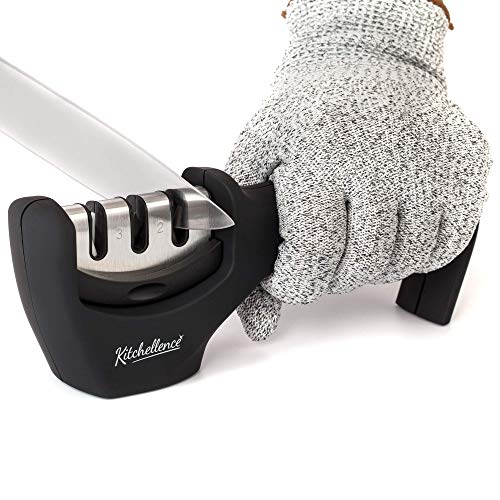
This 4-in-1 kitchen accessory set takes a different path from a single honing steel. It combines stages intended to repair, restore, and polish a knife edge, along with a cut-resistant glove. That design may help people who do not yet own a full sharpening kit. It also gives a user more than one way to care for common kitchen blades.
I see this set as a practical choice for a mixed household where knives may have different levels of wear. A staged sharpener can be easier for some users because each slot has a clear purpose. Even so, I would read the care directions and avoid using a rough stage more often than needed. It is not traditional knife sharpener steel, but it belongs in this guide because it offers a complete alternative for basic home maintenance.
Pros:
- Multiple stages cover repair, sharpening, and polishing
- Cut-resistant glove adds a useful safety feature
- Can help users with limited honing experience
- One set handles several basic knife care tasks
- Useful for households with mixed knife conditions
- May feel easier than learning freehand honing first
Cons:
- Not a honing steel rod for traditional edge alignment
- Rough stages can remove more metal than gentle honing
- May not suit premium or very delicate knife edges
HOSHANHO 10-Inch Honing Rod

The HOSHANHO 10-inch honing rod offers a compact way to maintain everyday knives. Its shorter working area makes it easier to handle for people with limited counter space. I would pair it with small and medium kitchen knives that do not need a very long stroke. The professional-style shape keeps the tool familiar and easy to use.
Compact tools often work best when they stay within reach. I can see this rod fitting well in an apartment kitchen, a meal-prep station, or a knife roll. It will not correct a deeply damaged edge, but it can help maintain a knife between full sharpening sessions. This is a practical knife sharpener steel option for simple storage and steady control.
Pros:
- 10-inch size is easy to manage
- Fits smaller prep areas and compact kitchens
- Useful for routine maintenance on common knives
- Simple manual design needs no power
- Easy to keep in a drawer or knife roll
- Good fit for users who prefer a shorter rod
Cons:
- Limited reach for large chef and carving knives
- Requires careful positioning on long blades
- Does not restore a severely worn cutting edge
Azhou 12-Inch Fine Honing Rod

The Azhou 12-inch fine honing rod is designed for gentle knife maintenance. A fine rod can help smooth and align an edge that has started to feel less clean during cutting. Its 12-inch format gives enough room for many household chef knives. I would consider it a useful companion for cooks who already sharpen their knives properly and want to maintain them between sessions.
This rod rewards a light touch. I would not use it as a forceful fix for a knife with chips, rolls, or a blunt bevel. Instead, I would make a few slow passes and test the knife on food or paper. For anyone comparing the best knife sharpener steel options, the Azhou model stands out as a maintenance-first tool with a useful full-size length.
Pros:
- Fine surface supports gentle edge care
- 12-inch length works with many chef knives
- Useful between more complete sharpening sessions
- Encourages light, controlled honing strokes
- Simple tool is easy to store and clean
- Good match for cooks who value edge maintenance
Cons:
- Not intended for major edge repair
- Fine finish may work slowly on very dull knives
- Users still need to learn a safe honing angle
Henckels Fine Edge Honing Steel

The Henckels fine edge honing steel is made for blade maintenance, not aggressive sharpening. Its fine honing surface is a good match for a knife that still has a sound edge but feels less smooth after repeated use. The design comes from a long-standing knife brand, which may appeal to shoppers who value a familiar name. It is a classic tool for keeping kitchen knives ready between sharpening sessions.
I prefer fine steels for cooks who already understand that honing and sharpening are different jobs. Honing can realign a rolled edge, while sharpening removes material to create a new bevel. This rod is best used with light pressure and consistent movement from heel to tip. If you want the best knife sharpener steel for careful blade upkeep, this is one of the most refined choices in the group.
Pros:
- Fine edge surface suits regular blade maintenance
- Useful for kitchen knives with a sound bevel
- Established knife brand inspires user confidence
- Traditional design fits many knife blocks
- Light honing can help preserve cutting performance
- Good choice for careful and experienced home cooks
Cons:
- Not suitable for chips or badly damaged edges
- May be less useful for someone seeking fast metal removal
- Correct technique remains important for consistent results
My Recommendation
I recommend the Henckels fine edge honing steel for experienced home cooks who want gentle, regular maintenance. Its fine surface is suited to knives that need alignment, not major repair. The Kota Japan rod is a better fit if you want a more active diamond surface, while the Cutluxe and HOSHANHO 10-inch rods are easier to control in small kitchens. The Utopia, Azhou, and other 12-inch rods offer a balanced middle ground for standard chef knives.
If you own long carving knives, the 13-inch carbon steel rod gives you more working space. If your knives are very dull or damaged, the 4-in-1 set may be more useful than traditional knife sharpener steel because it provides several stages. I always suggest checking the blade maker’s care advice before honing a specialty knife. The right tool depends on blade steel, edge angle, knife size, and how often you cook.
| Best for | Why |
|---|---|
| Fine daily maintenance | Henckels and Azhou offer gentle surfaces for sound knife edges. |
| Large kitchen and carving knives | The 13-inch carbon rod gives extra reach and working room. |
| Full basic knife care | The 4-in-1 set includes repair, sharpening, polishing, and hand protection. |
How I Evaluated the Best Knife Sharpener Steel
I looked first at the job each tool is meant to do. A honing rod can realign a slightly rolled edge, but it does not magically rebuild a missing bevel. That difference matters because many buyers call every sharpening tool “steel,” even when the tools work in very different ways. I compared the products by surface type, length, grip, safety features, storage needs, and likely use in a real kitchen.
Length also affects control. A 10-inch rod can feel nimble and compact, while a 12-inch or 13-inch rod gives more room for larger blades. Fine rods suit routine care, and diamond-coated rods can offer more bite. I would never judge a rod by length alone because a short, well-controlled stroke is safer than a long, rushed one.
Honing Steel vs. Knife Sharpener
A honing steel and a knife sharpener do not perform the same task. Honing usually realigns the thin edge after normal use. Sharpening removes some metal to form a fresh edge when the knife has become truly dull.
Think of the knife edge like a row of tiny teeth. Daily cutting can push those teeth out of line without wearing them away. A honing steel gently nudges them back, while a stone, pull-through sharpener, or powered sharpener may grind new metal into shape.
I use a honing rod when a knife still cuts but does not feel smooth. I choose a sharpening system when the knife slips on food, fails a simple paper test, or has a rounded edge. Using an aggressive sharpener too often can shorten the useful life of a blade, so I try the least aggressive method first.
What to Look for Before Buying
Start with the knife length. The rod should give you enough working space to move from the heel toward the tip without forcing the blade off the surface. A 10-inch rod suits many home knives, while 12 inches is a strong all-around size. A 13-inch model can help with long blades but may take more room to store.
Next, check the surface. A smooth or fine steel works well for regular alignment and light polishing. A diamond surface has more cutting action and may help a tired edge feel sharper, but it also calls for a gentle hand. Ceramic rods can offer a fine finish, though they need careful storage because ceramic can chip if dropped.
The handle and guard matter just as much. A secure handle helps you guide the blade without gripping too hard. A guard protects fingers near the heel, which is especially helpful for new users. I also look for a hanging ring or a shape that fits a knife block because a tool used often should stay easy to reach.
How to Use Knife Sharpener Steel Safely
Place the tip of the rod on a stable surface if that feels safer. Hold the handle firmly, then place the knife heel near the top of the rod. Keep the blade at a small, steady angle and move it down and toward the tip. Repeat on the other side with the same light pressure.
Some cooks hold the rod in the air. That method can work, but it gives a new user less support. I suggest starting with the tip on a cutting board until the motion feels natural. Keep your fingers behind the guard, move slowly, and never rush because a knife can slide when pressure changes.
Three to six light passes per side are often enough for routine honing. The exact number depends on the knife and the rod. Wipe the blade after use, and clean the rod as directed by its maker. Do not press hard or saw back and forth, since that can scratch the blade and wear the edge unevenly.
Common Mistakes to Avoid
The most common mistake is using a honing rod on a knife that needs real sharpening. If the edge has a large roll, chips, or no bite at all, a fine steel may not solve the problem. Another mistake is pressing too hard. More force does not always mean better results, and it may remove metal or damage a thin edge.
Many users also change the angle during each pass. That creates an uneven bevel and makes the knife harder to maintain. I try to use the same motion each time, from heel to tip, without stopping in the middle. A steady rhythm works better than speed.
Never treat a honing steel as a toy or leave it loose in a drawer with exposed blades. Store it in a safe place and keep the working surface free of grease and debris. If a rod becomes damaged, bent, or rough in an unusual way, replace it rather than risking the knife edge.
Care Tips for a Honing Rod
Keep the rod dry after cleaning. Many steel models can be wiped with a soft cloth, but the product instructions should always guide washing and storage. Avoid harsh cleaners that may affect the finish or handle. A clean surface gives more predictable contact with the blade.
Do not strike the rod against a counter or store heavy tools on top of it. Diamond and ceramic surfaces can wear or chip when treated roughly. Hang the rod by its ring if it has one, or place it in a protected slot. Good storage keeps the tool ready and helps prevent accidental cuts.
Check the rod from time to time. If the surface looks damaged or the handle feels loose, stop using it. A sharp knife deserves a sound maintenance tool. This small check can protect both the blade and your hands.
Which Surface Is Best for Your Knife?
A fine steel is often best for a standard Western chef knife used each day. It can help realign the edge without acting too aggressively. A diamond rod may suit someone who wants a stronger refresh, but I would use it less often and with less pressure.
Very hard or thin Japanese-style knives need extra care. Some have narrow edge angles and may not respond well to rough honing. Check the knife brand’s instructions before using a steel, especially if the blade has a delicate finish or a specialized edge.
For inexpensive daily knives, a basic carbon steel rod can offer excellent value. For premium knives, I would choose a fine rod or the recommended stone. The best knife sharpener steel is not the most aggressive one. It is the one that matches the blade and the way you use it.
Are Longer Rods Always Better?
No. A longer rod gives more room, but it can feel harder to control in a small kitchen. A shorter rod may be easier for a new user or for smaller knives. The key is matching the rod to the blade length and your comfort level.
For a standard 8-inch chef knife, a 10-inch or 12-inch rod can work well. For a carving knife, the extra reach of a 12-inch or 13-inch model may feel more natural. I would rather see a shopper choose a size they can control than buy the longest option without considering storage or handling.
Are These Tools Good for Professional Kitchens?
Several of these rods can fit a professional-style workflow because they offer quick maintenance between tasks. A cook can make a few light passes before prep instead of stopping for a full sharpening session. Durability, cleaning, and safe storage become even more important in a busy kitchen.
Professional users may prefer a rod that matches the knives used most often. A long rod can help with large blades, while a fine steel can protect a carefully prepared edge. Still, even the best knife sharpener steel cannot replace scheduled sharpening and proper knife care.
FAQs Of best knife sharpener steel
What is the best knife sharpener steel for home cooks?
A 10-inch or 12-inch fine honing steel is a strong choice for most home cooks. It offers enough length for common chef knives and supports gentle daily maintenance. Choose a diamond rod only if you want more cutting action and understand how to use light pressure.
Does honing steel sharpen a dull knife?
Honing can improve a knife with a slightly misaligned edge, but it does not fully sharpen a badly dull blade. A stone, pull-through sharpener, or professional service may be needed when the edge has lost its shape. Use honing for maintenance and sharpening for restoration.
Is diamond knife sharpener steel better than regular steel?
Diamond steel is more aggressive and can refresh an edge faster, but it may remove more metal. Regular or fine steel is usually better for frequent, gentle maintenance. The best choice depends on the knife condition and your honing skill.
How often should I use a honing rod?
Use it when the knife starts to feel less smooth, often every few cooking sessions. A few light passes are usually enough. Avoid repeated heavy honing because too much pressure can wear the edge.
What length honing steel should I buy?
A 10-inch rod suits many smaller and medium knives. A 12-inch rod is a flexible choice for most kitchens, while a 13-inch rod helps with long blades. Pick the length you can control safely and store easily.
Final Verdict: Which Should You Buy?
I recommend the Henckels fine edge honing steel for gentle upkeep and the Kota Japan rod for stronger refresh work. The 12-inch options offer the best balance for most kitchens.
The best knife sharpener steel should match your blade, skill, and routine. Choose a fine rod for maintenance, a diamond model for extra bite, and a staged sharpener for broader repair needs.