
The best knife sharpener restores a dull edge safely, quickly, and with far less guesswork.
A knife that once sliced tomatoes with ease can soon crush them, slip, and make cooking feel like work. A good sharpener brings back that clean bite without forcing you to replace a favorite blade. I compared manual, electric, rolling, and guided systems for ease, control, safety, and value. These picks suit busy home cooks, careful beginners, outdoor users, and serious knife fans. The right choice depends on your knife steel, edge angle, comfort level, and how much control you want during sharpening.
4-in-1 Kitchen Knife Sharpener
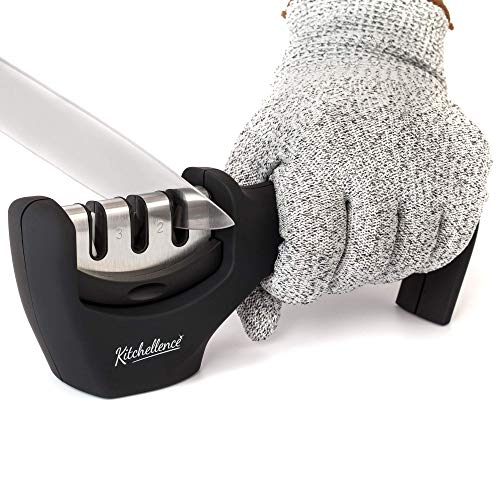
This 4-in-1 kitchen knife sharpener gives home cooks a simple way to repair, sharpen, and polish everyday blades. Its three-stage layout helps move from rough edge repair to finer honing and polishing. The included cut-resistant glove adds a useful layer of hand protection for new users. I see it as a practical starter kit for people who want more than a basic pull-through tool.
The stages are easy to understand, so you do not need years of sharpening practice. Use light, steady pressure and let the abrasive do the work. It fits common kitchen knives and can help revive blades that have lost their bite through normal use. Still, it is best for routine kitchen care rather than expensive, delicate knives that need a fully controlled edge.
Pros:
- Three sharpening stages for repair, sharpening, and polishing
- Includes a cut-resistant glove for added confidence
- Simple design suits beginners
- Useful for common household kitchen knives
- Compact size stores easily in a drawer
- Offers good value for a complete starter set
Cons:
- May remove more metal than a fine ceramic hone
- Less control than a guided angle system
- Not the best choice for highly valuable Japanese knives
5 Precision Adjust Knife Sharpener
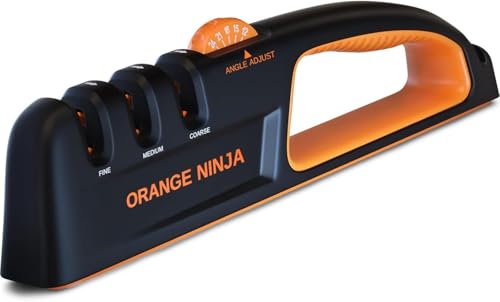
This five-stage precision adjust sharpener is aimed at users who want a more measured process. Its staged design can help repair a damaged edge, create a working bevel, refine the surface, and add a smoother finish. The fixed approach reduces the angle guessing that often causes uneven results. That makes it appealing to cooks who want repeatable sharpening at home.
I like this style for users who enjoy learning how an edge works. You can take your time and use lighter passes as the blade becomes sharper. The system is more deliberate than a quick pull-through sharpener, but that extra control can protect the shape of your knife. Read the instructions first, secure the blade well, and avoid rushing the first sharpening session.
Pros:
- Five stages offer a gradual sharpening process
- Helps users maintain a more consistent edge
- Better control than many basic pull-through sharpeners
- Good fit for cooks who enjoy hands-on sharpening
- Can handle routine edge repair and refinement
- Encourages careful, repeatable technique
Cons:
- Takes longer to learn than a simple manual sharpener
- Requires careful blade placement and steady work
- May feel too involved for users who want instant results
AIERLIAN Rolling Knife Sharpener

The AIERLIAN rolling knife sharpener uses a rolling motion rather than the straight pull of a common handheld sharpener. Its magnetic angle system helps guide the knife at either 15 or 20 degrees. That range covers many modern kitchen blades, from thinner slicing knives to sturdier Western-style chef knives. Diamond and ceramic surfaces support both edge work and finishing.
Rolling sharpeners feel natural because the tool travels along the blade instead of forcing the knife through a narrow slot. The magnetic guide can also make the process less stressful for beginners. I would still check the blade and guide before each use, since a clean contact point helps keep the angle stable. This model is a strong choice for people who want visible control without investing in a large sharpening machine.
Pros:
- Rolling motion feels natural and easy to follow
- 15- and 20-degree angle options cover many kitchen knives
- Diamond and ceramic surfaces support different stages
- Magnetic guide helps reduce angle errors
- Good balance of control and ease of use
- Works well for cooks who prefer manual tools
Cons:
- Needs a flat, stable surface during use
- Not designed for every serrated knife
- Angle choices may not match unusual specialty blades
Chef’sChoice 15XV Electric Sharpener
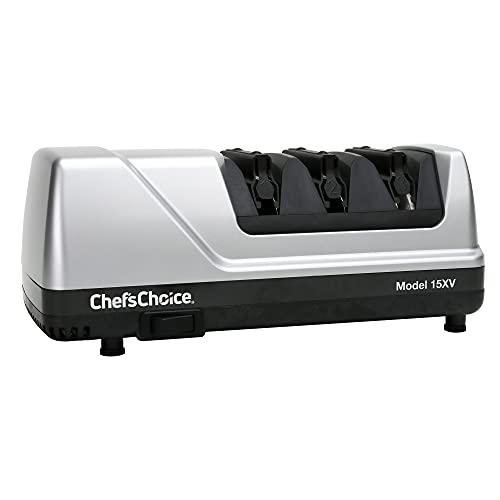
The Chef’sChoice 15XV EdgeSelect is a well-known electric knife sharpener for cooks who want speed and guided angles. It uses a three-stage process with diamond abrasives and precision guides. The 15-degree design suits many thinner modern kitchen knives, while the stages help shape, sharpen, and polish the edge. It also supports straight-edge and compatible serrated knives.
Electric sharpening saves time, but it requires a light hand. I recommend following the manufacturer’s pass count and avoiding extra pressure. The guides help keep the blade aligned, which is useful when several people share the same kitchen. This is a premium option for a busy home, cooking school, or user who wants quick results with less manual effort.
Pros:
- Fast electric sharpening for busy kitchens
- Three-stage system supports repair and polishing
- Diamond abrasives work on many steel types
- Precision guides make angle control easier
- Can work with straight and compatible serrated edges
- Strong choice for frequent household use
Cons:
- Costs more than most manual sharpeners
- Uses electricity and takes counter space
- Can remove excess metal if used too often or with force
RazorSharp Adjustable Knife Sharpener

The RazorSharp sharpener stands out because its angle guide adjusts from 14 to 24 degrees. That flexibility lets you match a wider range of kitchen and pocket knives. It also supports scissor sharpening, which adds value for homes that want one compact tool for several cutting jobs. The adjustable design gives users more say than a fixed-angle slot.
This model suits people who own different blade styles and do not want one angle for every knife. A thinner edge may benefit from a smaller angle, while a tougher utility blade may need a wider one. Use slow strokes and keep the knife steady as you learn the setting. The main appeal is versatility, not speed, so it rewards a patient approach.
Pros:
- Adjustable 14- to 24-degree angle range
- Works with a variety of knife styles
- Can sharpen scissors as well as knives
- Compact design suits small kitchens
- Gives users more control than fixed-angle tools
- Useful for homes with mixed cutting tools
Cons:
- Angle adjustment may confuse complete beginners
- Manual sharpening takes more time than electric models
- Results depend on keeping the blade steady
AccuSharp Ergonomic Knife Sharpener

The AccuSharp is a compact handheld sharpener built for quick, simple edge care. Its ergonomic handle gives the user a firm grip, which matters when working near a blade. The design can restore and hone both straight and serrated knives, making it useful for everyday kitchen tasks. It is also small enough to keep in a drawer, tool box, or camping kit.
This is the kind of sharpener I recommend for someone who values convenience above fine edge control. It does not ask you to set an angle or manage several stones. A few controlled passes can improve a tired household knife, though a very damaged edge may need a more advanced tool. For routine touch-ups, its small size and simple motion are hard to ignore.
Pros:
- Very easy for beginners to use
- Comfortable handle supports a secure grip
- Compact and simple to store
- Works with straight and serrated knives
- Useful for quick kitchen touch-ups
- Often costs less than advanced systems
Cons:
- Offers less angle control than guided systems
- Not ideal for precise premium-knife sharpening
- Repeated use may remove more steel than honing
Electric Diamond Abrasive Sharpener

This electric knife sharpener uses 100 percent diamond abrasives in a three-stage layout. Diamond is a hard abrasive that can work on many common kitchen steels. The three stages are designed to help rebuild a dull edge, sharpen it, and refine the final feel. It gives home cooks a faster path to a usable edge than a traditional stone.
Speed is the main attraction here, especially when several knives need attention before a large meal. I would place the sharpener on a stable counter and guide each blade with smooth, even passes. Electric tools are not magic; too much pressure can wear an edge quickly. Used with care, this model can serve households that prefer simple buttons and repeatable steps.
Pros:
- Three-stage electric sharpening process
- Diamond abrasives suit many blade steels
- Quick option for several dull knives
- Simple format helps reduce technique mistakes
- Useful for regular household maintenance
- Good choice for users who dislike sharpening stones
Cons:
- Needs access to a power outlet
- May take more metal than a fine manual system
- Requires care around thin or delicate edges
The Original Tumbler Rolling Sharpener

The Original Tumbler Rolling Sharpener uses a rolling body and a magnetic knife holder to guide the sharpening angle. Its wood finish gives it a warm look that feels more like a countertop kitchen tool than a workshop device. The rolling motion can make sharpening feel smooth and approachable. It is especially appealing to cooks who want a tidy, modern alternative to a stone.
A rolling sharpener works best when the knife rests flat and the user keeps a steady rhythm. The magnetic support can help beginners hold a repeatable angle, but the user still needs to cover the full blade. I like this format for routine care because it turns sharpening into a calm, visible task. It is not the fastest choice for a pile of badly damaged knives, but it offers a pleasant balance of control and design.
Pros:
- Natural rolling motion is easy to understand
- Magnetic support helps guide the blade
- Attractive wood design looks good in a kitchen
- Manual operation gives useful feedback
- Good fit for home cooks who dislike electric tools
- Encourages careful, measured sharpening
Cons:
- Needs a smooth, stable work surface
- May not suit heavily damaged blades as quickly as electric tools
- Requires practice to sharpen the full edge evenly
Work Sharp Precision Adjust Elite

The Work Sharp Precision Adjust Elite is the most tool-like option in this group. It uses a fixed-angle guided system for kitchen knives, pocket knives, and other suitable blades. Its design helps the user control the bevel instead of relying on freehand movement. That makes it a strong match for people who care about consistent edges and enjoy a more careful process.
This kind of system can shine when you want to repair a chipped or uneven edge over time. It gives you a clear path from coarse work to a finer finish, though setup takes longer than using a pull-through tool. I recommend securing the knife correctly and starting with gentle passes. For knife owners who see sharpening as part of blade care, this is one of the most capable choices in the review.
Pros:
- Fixed-angle design supports consistent bevels
- Useful for kitchen and pocket knives
- Offers strong control over the sharpening process
- Good for users who want to learn proper technique
- Suitable for repair and detailed edge refinement
- Feels more precise than basic handheld sharpeners
Cons:
- Costs more than simple kitchen sharpeners
- Setup and cleanup take extra time
- May feel complex for casual users
Longzon 5-in-1 Knife Sharpener

The Longzon 5-in-1 knife sharpener is made for broad household use. Its four-stage sharpening layout supports dull-edge repair, sharpening, honing, and polishing, while the kit also includes a cut-resistant glove. It can work with many common knives and scissors, which makes it handy for a busy home. The black and silver body has a practical look and does not take much storage room.
I see this as a value-focused choice for families that want several functions in one package. The glove may help a new user feel more secure, but safe technique still matters. Use the stages in order and apply only light pressure to avoid unnecessary wear. It will not offer the fine control of the Work Sharp system, yet it can restore everyday blades without a steep learning curve.
Pros:
- Five-in-one design handles several household tasks
- Four sharpening stages offer useful progression
- Includes a cut-resistant glove
- Can fit many kitchen knives and scissors
- Beginner-friendly manual operation
- Good value for families and shared kitchens
Cons:
- Less precise than a fixed-angle guided system
- May be too aggressive for delicate blades
- Requires careful pressure across each stage
My Recommendation
After comparing these models, I would choose based on how you cook and how much control you want. The Chef’sChoice 15XV is the best knife sharpener for fast, repeatable electric sharpening. The AIERLIAN rolling model is a smart middle ground for beginners who want angle guidance without a motor. For serious users, the Work Sharp Precision Adjust Elite offers the most hands-on control and the best path to learning precise edge work.
For simple maintenance, the AccuSharp is hard to beat for convenience. The Longzon and 4-in-1 kits make sense when safety accessories and several sharpening stages matter. The RazorSharp stands out for adjustable angles, while the Tumbler offers a smooth and attractive rolling format. As of 2026, these options cover most home needs, from quick touch-ups to careful knife restoration.
| Best for | Why |
|---|---|
| Fast electric sharpening | Chef’sChoice 15XV uses guided three-stage sharpening for quick, repeatable results. |
| Beginners who want angle control | AIERLIAN’s rolling design and 15- or 20-degree guide make the process easier to follow. |
| Advanced knife care | Work Sharp Precision Adjust Elite gives users strong control over the bevel and finish. |
How I Evaluated These Knife Sharpeners
A sharp edge is not the only thing that matters. A tool can sharpen well and still be poor if it feels unsafe, removes too much steel, or makes the user guess at every step. I looked at the main traits that affect daily use: angle control, abrasive type, speed, handling, storage, blade range, and learning curve.
I also considered the difference between sharpening and honing. Sharpening removes a small amount of metal to create a new edge. Honing mainly realigns an edge that has bent during use. A honing rod will not fix a truly dull knife, just as a quick sharpener may not repair a deeply damaged blade. Knowing that difference helps you choose the best knife sharpener for the real problem.
Angle Control
Many kitchen knives use an edge angle near 15 to 20 degrees per side, but the ideal angle depends on the blade and its intended work. A thin slicing knife may favor a smaller angle for clean cuts. A heavy utility knife may need a wider angle for extra strength. Fixed guides and rolling systems help users repeat an angle, while freehand methods demand more practice.
Abrasive Type
Diamond abrasives cut hard steel quickly and can repair a dull edge with fewer passes. Ceramic surfaces work well for honing and fine finishing. Carbide elements can restore an edge fast, but they may remove more metal than a careful stone or ceramic hone. I always suggest starting with the finest stage that can solve the problem.
Safety and Stability
Keep the sharpener on a stable counter. Hold the handle as the instructions show. Move the blade away from your body, and never test sharpness with your finger. A cut-resistant glove can add confidence, but it cannot replace careful handling. Wipe away metal filings after use and keep the tool away from children.
Manual vs. Electric Knife Sharpeners
Manual sharpeners are quiet, portable, and easy to store. They give you more feedback, so you can feel how the blade moves through each pass. Rolling and guided systems also let you slow down near the tip, where many users make mistakes. The tradeoff is time and technique.
Electric sharpeners are faster and often easier for a shared kitchen. They guide the blade and keep the process more consistent from one session to the next. However, motors can remove metal quickly, especially when the user presses down. If you choose an electric model, use light pressure and stop as soon as the edge improves.
How to Use the Best Knife Sharpener Safely
Start by cleaning and drying the knife. A dirty blade can carry food bits into the sharpening slots or abrasive surface. Place the sharpener on a firm, level counter. If it has a guide or clamp, confirm that the blade sits straight before making a pass.
Use the coarse stage only when the knife is very dull, chipped, or damaged. For a knife that still cuts but feels less keen, begin with a fine stage. Pull or roll the blade at a steady pace from heel to tip. Do not saw back and forth unless the instructions specifically allow that motion.
After sharpening, wash the knife by hand and dry it. Small metal particles may remain on the blade. Test the edge on paper or a soft food such as a tomato. Never test by sliding a finger across the edge. Store the knife in a block, sheath, or safe drawer instead of leaving it loose.
Common Knife Sharpening Mistakes
Using Too Much Pressure
Heavy pressure feels helpful, but it can bend the edge and wear abrasive parts faster. Let the sharpener do the cutting. Light pressure usually gives a cleaner and more controlled result.
Making Too Many Passes
More passes do not always mean a sharper knife. Once the edge has formed, extra strokes may remove useful steel or create a rough burr. Stop and test the knife after the recommended number of passes.
Ignoring the Tip
The tip often needs a slight change in movement because its shape curves upward. Keep the blade aligned and follow the curve gently. Do not force the tip down into a slot or drag it at an awkward angle.
Using One Tool for Every Blade
A serrated bread knife needs a different approach from a smooth chef’s knife. A pocket knife may also use a different edge angle. Check compatibility before sharpening. When in doubt, choose a guided tool or seek advice from the knife maker.
Knife Sharpener Buying Guide
First, decide how often you sharpen. A casual home cook may prefer the AccuSharp or 4-in-1 model. Someone who cooks every day may appreciate the speed of the Chef’sChoice or another electric diamond sharpener. A hobbyist who enjoys detail may prefer the Work Sharp or a rolling system.
Next, check your knife collection. If you own mostly standard Western chef knives, a 15- or 20-degree guide may suit your needs. If you have Japanese knives, specialty blades, or handmade knives, look for better angle control and confirm the manufacturer’s care advice. Avoid assuming that one setting works for every edge.
Think about storage and cleanup, too. A large guided system can deliver excellent results but may stay in a cabinet between uses. A small handheld tool can live in a drawer and come out in seconds. The best knife sharpener is the one you will use correctly and often enough to keep your blades ready.
How Often Should You Sharpen a Kitchen Knife?
There is no single schedule for every cook. A home chef who cuts each day may need light honing often and sharpening every few months. A person who cooks once a week may sharpen only once or twice each year. Cutting boards, food type, knife steel, storage, and technique all change the timing.
Watch the knife rather than the calendar. If it slides off a tomato skin, crushes herbs, or needs extra force through an onion, the edge likely needs care. Sharpen before the knife becomes frustrating. A small amount of regular maintenance is safer and easier than waiting for a completely blunt blade.
Are Knife Sharpeners Safe for Expensive Knives?
Some are, but compatibility matters. Cheap pull-through tools may not offer enough control for a delicate or costly blade. A guided-angle system lets you match the maker’s recommended edge more closely. Use the lightest abrasive stage that can solve the issue.
Always check the knife’s steel and construction. Some blades have special coatings, single bevels, or unusual profiles. A professional sharpening service may be the safer choice for rare, handmade, or valuable knives. For normal stainless steel kitchen knives, a quality guided sharpener used with care is usually suitable.
FAQs Of best knife sharpener
What is the best knife sharpener for most home cooks?
The Chef’sChoice 15XV is a strong all-around pick for users who want fast, guided electric sharpening. The AIERLIAN rolling sharpener is a good manual choice for those who want more control and a lower-tech process.
Are electric knife sharpeners better than manual models?
Not always. Electric models save time, while manual systems offer more feedback and control. Choose electric for speed and manual for portability, quiet use, and careful edge work.
Can a knife sharpener sharpen serrated knives?
Some models can handle compatible serrated edges, but not every sharpener can. Check the product instructions before use. A serrated blade often needs a specialized abrasive surface or a tool designed for its grooves.
How many passes should I make with a knife sharpener?
Follow the maker’s instructions and begin with fewer passes. Use light pressure, check the edge, and stop when the knife cuts cleanly. Too many passes can remove more metal than needed.
Should I use a honing rod or a knife sharpener?
Use a honing rod for a slightly misaligned edge that still cuts. Use a sharpener when the blade feels dull and honing no longer helps. Both tools can have a place in good knife care.
Final Verdict: Which Should You Buy?
The Chef’sChoice 15XV is my top pick for the best knife sharpener because it combines guided angles, diamond abrasives, and fast three-stage results. Choose the AIERLIAN for simple manual control or Work Sharp for advanced edge work.
The best knife sharpener should match your blade, skill, and routine. Pick a safe, compatible model, use light pressure, and maintain your knives before they become dangerously dull.