
The best meat thermometer for deep frying combines fast readings, a long probe, and a secure pot clip for safer cooking.
You drop chicken, fish, or dough into hot oil, then the bubbles hide what is happening below. A few degrees too low can leave food greasy, while oil that runs too hot can burn the outside fast. I use a deep-fry thermometer as my small safety net because it keeps the oil in the right range without constant guessing. In this guide, I review five practical options and explain which one fits home cooks, batch fryers, and anyone who wants crisp results with less stress.
KT THERMO 12-Inch Deep Fry Thermometer
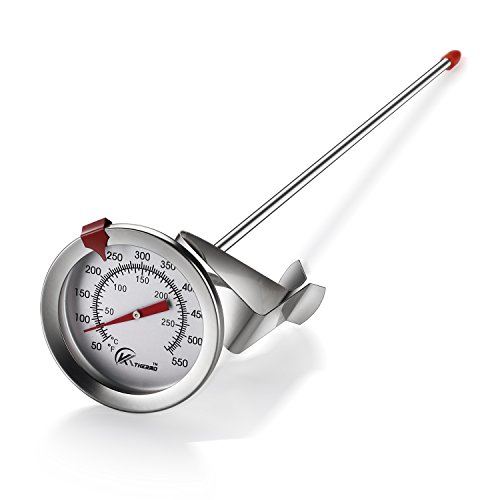
The KT THERMO dial thermometer uses a long, 12-inch stainless steel stem, which gives it useful reach in a deep pot or Dutch oven. Its analog face is simple to read while oil heats, and it does not need batteries. The stem also makes it useful for turkey, barbecue, grilling, candy, and other kitchen tasks. For cooks who prefer a classic tool, this design feels familiar and direct.
I like the extra length because it helps keep my hand farther from hot oil. The attached clip can hold the thermometer near the side of a pot, so I can monitor the oil without holding it in place the whole time. Since a dial takes a moment to settle, I would use it for steady oil checks rather than rapid spot checks. It is a good fit for cooks who value simple operation and broad use over digital speed.
Pros:
- Long 12-inch stem keeps hands farther from hot oil
- Analog dial works without batteries
- Useful for deep frying, candy, grilling, and barbecue
- Easy-to-follow design for new home cooks
- Clip helps keep the probe in a stable position
- Stainless steel stem suits frequent kitchen use
Cons:
- Dial readings are slower than a fast digital thermometer
- Analog numbers may be harder to read in dim light
- The probe needs careful placement to avoid touching the pot
My Recommendation
This KT THERMO model is best for a home cook who wants one affordable thermometer for several jobs. I would choose it for fried chicken, French fries, onion rings, candy, and holiday turkey work. The long stem is its biggest advantage when I use a deep pot, while the battery-free design keeps maintenance simple. It may not be the best meat thermometer for deep frying if you need a near-instant digital reading, but it offers strong everyday value for cooks who prefer a traditional dial.
TempPro TempDip 1-Second Digital Thermometer

The TempPro TempDip is made for cooks who want a quick digital reading and a clear display. Its large LCD screen should be easy to view while oil heats, and the pot clip helps hold the probe at the right depth. The advertised one-second reading is useful when I need to check several spots during a busy fry session. This type of tool can also help with candy, caramel, syrups, and other heat-sensitive recipes.
A digital thermometer removes much of the guesswork from oil temperature. I can check the oil, add food, and check again as the temperature drops or rises. The clip matters because a loose probe can slide into the oil or rest against the pan, giving a misleading reading. I still allow the display to stabilize and keep the sensing tip away from the metal pot before making a cooking decision.
Pros:
- Fast advertised one-second temperature reading
- Large LCD is easy to see at a glance
- Pot clip supports hands-free monitoring
- Useful for frying, candy, syrups, and chocolate work
- Digital format gives clear numbers instead of a dial scale
- Good choice for cooks who adjust heat often
Cons:
- Requires batteries for operation
- Digital parts need careful cleaning and storage
- Very fast readings still need correct probe placement
My Recommendation
I recommend the TempPro TempDip to cooks who want speed and a clear screen. It is especially helpful when frying in batches because oil temperature can change each time food enters the pot. The clip adds control, and the digital display reduces the need to squint at a small dial. For many home kitchens, this is a strong candidate for the best meat thermometer for deep frying because it balances quick readings with steady pot monitoring. Check the current listing for included battery and care details before ordering.
TempPro Candy Thermometer with Pot Clip
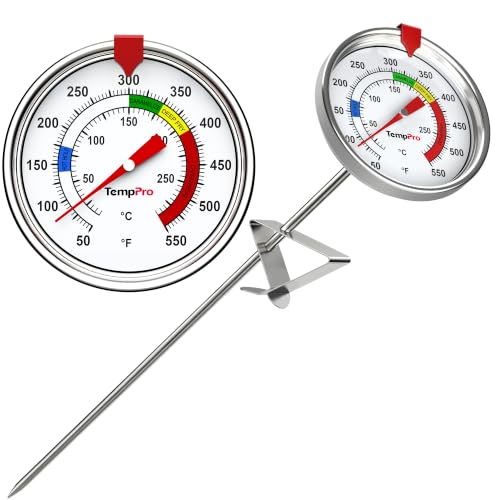
This TempPro thermometer focuses on hot oil and candy work, with a pot clip that helps keep the probe in place. The design suits cooks who want a dedicated tool for frying rather than a small instant-read probe. I find a dedicated deep-fry thermometer useful because it can stay in the oil during preheating and cooking. The clip also keeps the handle away from the hottest part of the pot.
For fried foods, steady monitoring often matters more than chasing a single number. When I fry several batches, I watch the oil recover after each batch before adding more food. A pot clip makes this process easier because I do not have to hold the thermometer over hot oil. As with any probe tool, I keep the tip off the bottom and side of the pan for a more useful reading.
Pros:
- Designed for deep-fry oil and candy temperatures
- Pot clip supports hands-free use
- Dedicated format is convenient for repeated frying
- Helps track oil recovery between batches
- Useful for candy making and other high-heat recipes
- Simple setup suits cooks who dislike complicated controls
Cons:
- May offer fewer uses than a general instant-read thermometer
- Probe placement still affects accuracy
- Users should confirm the temperature scale that fits their recipes
My Recommendation
This TempPro model is best for someone who fries often and wants a thermometer that can remain in the pot. It makes sense for homemade doughnuts, chicken, fish, fries, and candy projects. I would pick it for a small kitchen that needs a focused oil thermometer without extra digital features. It can be the best meat thermometer for deep frying for cooks who value simple, continuous monitoring. Its value is strongest when the pot clip fits your pan securely.
TempPro TempDip Digital Thermometer with 10-Inch Probe
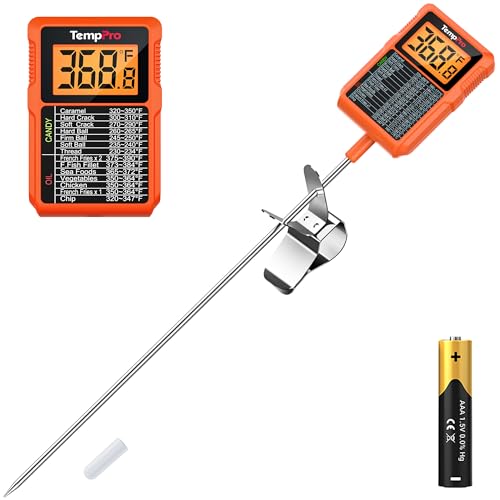
The TempPro TempDip combines a digital display with a 10-inch probe and a pot clip. That length works well for many stockpots, saucepans, and Dutch ovens used for frying. The digital screen gives a direct temperature number, which is useful when a recipe calls for a narrow oil range. The clip helps keep the probe steady while I prepare food or adjust the burner.
I see this model as a middle ground between a handheld instant-read tool and a fixed dial thermometer. It is long enough for many home frying setups, yet it remains more compact than some extra-long models. I would use it for oil, candy, syrup, and other cooking tasks that need close heat control. Before each use, I would check that the sensor sits in the oil and does not touch the cookware.
Pros:
- 10-inch probe reaches into many home frying pots
- Digital display gives an exact-looking number at a glance
- Pot clip allows hands-free temperature checks
- Useful for oil, candy, syrup, and deep-fry recipes
- More compact than many 12-inch or longer probes
- Good fit for cooks who want a versatile digital tool
Cons:
- May be less suitable for very large or very deep pots
- Needs batteries and dry storage
- Users must protect the display from steam, splashes, and oil
My Recommendation
I would suggest this TempPro model to cooks who use medium-size pots and want a digital reading. The 10-inch probe offers a practical balance of reach and storage, while the clip helps during long fry sessions. It is a good choice for apartment kitchens, weekend cooks, and anyone who makes several small batches. If you need the best meat thermometer for deep frying in a compact digital format, this model deserves a close look. Always compare the probe length with your favorite pot before buying.
CRAFT911 Deep Fry Oil Thermometer

The CRAFT911 thermometer uses a pot clip and a traditional thermometer format for deep-fry oil and candle making. Its white finish gives it a clean, easy-to-spot look in a busy kitchen drawer. A dedicated oil thermometer can stay in place while I heat the pot, which is helpful when I need both hands for food prep. It also gives beginners a simple way to learn how heat changes during frying.
I like tools that explain the cooking process without adding extra buttons. With a clip-on thermometer, I can watch the oil climb toward the target range and lower the heat before it goes too far. The same habit helps when I fry a second or third batch because the oil often cools after food enters the pot. I would treat this as a focused kitchen tool rather than a replacement for a small probe used inside cooked meat.
Pros:
- Purpose-built for deep-fry oil and candle work
- Pot clip supports stable placement
- Traditional design is easy for beginners to use
- White body is easy to spot while cooking
- Useful for tracking heat before and during frying
- Does not require a digital setup or menu controls
Cons:
- Traditional reading may take longer than a digital display
- Focused design may not suit cooks who want a meat probe
- Must be kept away from direct contact with the pot bottom
My Recommendation
The CRAFT911 is best for occasional fryers, new cooks, and crafters who also make candles. Its clip-on design makes it easy to monitor oil without holding a hot tool. I would choose it for simple home projects where a steady reading matters more than advanced functions. It may be the best meat thermometer for deep frying for a budget-minded user who wants a straightforward oil monitor. The white design also makes it easy to find when several kitchen tools are stored together.
How I Choose the Best Meat Thermometer for Deep Frying
Choosing a fryer thermometer is not only about picking the highest temperature range. I look at probe length, reading speed, display style, pot attachment, cleaning needs, and ease of use. A thermometer can have a nice face or bright screen, yet still be a poor choice if the probe is too short for the pot. Good design should make hot oil feel less like a wild river and more like a controlled part of the recipe.
Probe Length Matters
Hot oil can cause serious burns, so I prefer a probe that gives my hand safe space from the pot. A 10-inch probe works for many home pots, while a 12-inch stem can provide more reach in a deep Dutch oven or stockpot. The right length depends on the vessel, not just the product label. I measure from the rim to the oil level before buying.
The sensing tip should sit in the oil without touching the bottom or side of the cookware. Metal contact may create a reading that reflects the pan rather than the oil. A clip helps keep the tip at the right depth. I also keep the thermometer away from the burner flame and the pot handle when possible.
Analog or Digital?
An analog thermometer is simple. It has no battery to replace, and many cooks can leave it in the pot while oil heats. Its weakness is that the dial may take longer to settle, and small numbers can be hard to read. I find analog tools useful for steady cooking when I do not need to check several temperatures in quick succession.
Digital models show a clear number and often respond faster. That helps when I add cold food and the oil temperature drops. A digital tool may need more care because the display and electronics should not get wet. For the best meat thermometer for deep frying, I match the display type to my cooking style rather than assuming one type fits everyone.
Why a Pot Clip Helps
A pot clip is one of the most useful features on a deep-fry thermometer. It holds the tool near the side of the pan and leaves my hands free. I can then lower food with tongs, adjust the heat, or move a tray without also holding a probe. The clip can also reduce the chance that the thermometer slips into the oil.
Still, a clip does not guarantee a correct reading. I check that it fits the pot rim and that the sensor sits below the oil surface. I also make sure the tip does not touch the cookware. If the clip feels loose, I stop and reposition the thermometer before heating the oil again.
Temperature Range and Scale
Most deep-frying recipes use oil in a range near 350 to 375 degrees Fahrenheit. The exact target depends on the food, oil, pan, batch size, and recipe. The U.S. Department of Agriculture advises using a food thermometer to check the internal temperature of meat and poultry, but oil temperature and food temperature are two different checks.
A candy or deep-fry thermometer reads the oil. It does not always replace an instant-read meat thermometer for checking the center of chicken or meat after frying. For fried chicken, I check the oil during cooking and then check the thickest part of the meat when it is done. Poultry should reach 165°F internally according to USDA guidance.
Reading Speed Is Helpful, but Placement Comes First
A fast reading sounds great, especially when food enters the oil and heat changes. Yet even the best meat thermometer for deep frying can show a poor result if the tip touches the pan or sits above the oil. I wait for a stable reading when the display changes quickly. This small pause can prevent a large cooking mistake.
For a fixed thermometer, I watch the temperature before adding food. After each batch, I wait for the oil to return to the recipe range. Adding too much food at once may cool the oil and create soggy food. A thermometer helps me see that change instead of guessing from the bubbles.
Safety Features I Value
I prefer a long stem, a secure clip, and a handle that stays cool enough to manage. I also like a clear scale or large display that I can read without leaning over the pot. A thermometer should not force me to place my face near splashing oil. I keep a lid or baking sheet nearby in case I need to cover the pot, and I never pour water onto an oil fire.
I fry on a stable surface with a clear work area. I lower food slowly and avoid dropping wet food into hot oil. Water can flash into steam and cause oil to splatter. A thermometer cannot replace safe habits, but it can help me control one of the most important variables.
Cleaning and Storage
Oil leaves a film on metal, so I clean the probe after each session. I follow the care instructions and avoid soaking any part that contains electronics. For a digital model, I wipe the probe with a damp cloth and keep the display dry unless the product is clearly rated for washing. For an analog model, I clean around the dial and clip without forcing water into the housing.
I store the thermometer where the probe will not bend. A bent stem may no longer sit correctly in the pot. I also avoid tossing it loosely into a drawer with heavy tools. A small sleeve, box, or utensil holder can help protect the probe and make the tool easier to find.
Deep-Frying Tips for Better Results
Choose the Right Pot
I use a heavy pot with enough room for oil and food. The oil should not fill the pot to the top because bubbling food needs space. A tall pot can help reduce splashes, while a wide pot may hold more food but can require a longer probe. I always follow the recipe and keep the oil level within a safe limit.
A stable pot also makes thermometer use easier. If the pot moves when I add food, the clip and probe can shift. I keep the pot on a steady burner and use a long utensil for lowering food. These small steps create a calmer cooking setup.
Do Not Overcrowd the Oil
Food cools oil when it enters. A crowded pot cools it even more and makes pieces stick together. I fry in small batches and give each piece room to move. The thermometer shows when the oil has recovered before I add the next batch.
This is where the best meat thermometer for deep frying earns its place. I do not need to rely on color alone. The oil may look ready while its actual temperature remains low. A quick check helps me keep each batch closer to the same crisp texture.
Dry Food Before Frying
Moisture and hot oil are a risky pair. I pat food dry with paper towels before frying, especially chicken, fish, and vegetables. I also avoid adding food straight from a wet marinade. A dry surface helps limit splatter and may improve browning.
Batter should cling to the food rather than drip in large streams. I let excess batter fall back into the bowl before lowering the piece. This makes the transfer slower and safer. I keep my face and hands away from the top of the pot.
Check Internal Food Temperature
Oil temperature tells me how hot the cooking environment is. It does not tell me whether the center of a thick chicken piece is done. I use a separate clean probe, or a thermometer designed for both tasks, to check the food itself. I place the tip in the thickest area and avoid touching bone.
For poultry, the safe internal temperature is 165°F. For other meats, the safe target varies by type and preparation. I use current USDA guidance and the recipe as my final reference. This two-step system—oil check plus food check—gives me much more confidence than looking at crust color alone.
Let Fried Food Drain
I place cooked food on a rack set over a sheet pan when possible. A rack allows extra oil to drip away and keeps the bottom from turning soft. Paper towels can work, but a rack often protects the crisp coating better. I season the food soon after it comes out of the oil.
I also let the oil settle before moving the pot. Hot oil stays dangerous long after the burner turns off. I never carry or strain it while it is still very hot. Once cool, I follow local guidance for filtering, storing, or disposing of used oil.
Best Uses for These Thermometers
These products are mainly useful for fried chicken, French fries, doughnuts, tempura, hush puppies, fish, and onion rings. They can also help with candy, caramel, sugar syrup, and some candle-making tasks. The long probes suit deep cookware better than short pocket thermometers. I still check the specific temperature range and care instructions for each item.
A clip-on model works well when I want a continuous reading. I can monitor the oil as the burner heats it and as food changes the temperature. A handheld digital tool is better when I want to move around the kitchen or check several pots. The best meat thermometer for deep frying depends on whether I need constant monitoring, quick checks, or both.
Best for Comparison
| Best for | Why |
|---|---|
| Fast digital readings | TempPro TempDip 1 Sec offers a large LCD and quick advertised response. |
| Long reach and battery-free use | KT THERMO has a 12-inch stem and a simple analog design. |
| Simple dedicated oil monitoring | CRAFT911 uses a pot clip and a focused design for frying and candle work. |
How to Use a Deep-Fry Thermometer Correctly
Before Heating the Oil
I attach the thermometer before the oil becomes hot when the design allows it. This reduces the need to reach over a hot pot. I position the clip on the side and place the sensing tip below the expected oil level. I make sure the tip sits away from the pot wall and base.
I then turn on the burner and watch the temperature rise. I stay nearby instead of walking away. Oil can become too hot faster than many people expect, especially in a thin pan or on a strong burner. I reduce the heat when the oil nears the recipe target.
While Frying
I add food slowly and use tongs or a spider strainer. The temperature often falls after food enters the oil. I wait for it to recover before adding more pieces. The thermometer gives me a better guide than the sound of sizzling alone.
I watch for unusual smoke, which can mean the oil is too hot. I turn down the heat and follow safe fire procedures if the oil begins to smoke heavily. I keep children and pets away from the cooking area. A calm setup makes it easier to react if something goes wrong.
After Cooking
I turn off the burner and let the thermometer cool before cleaning it. I do not rinse a hot probe under cold water because sudden temperature changes can damage some tools. I wipe away oil as soon as the probe is safe to touch. Sticky oil is easier to remove before it hardens.
I inspect the clip and stem before storing the thermometer. If the probe bends, the clip loosens, or the display becomes hard to read, I replace the tool. Reliable temperature control matters more than keeping an old thermometer for one more season.
Common Buying Mistakes to Avoid
Buying a Short Probe for a Deep Pot
A short probe may force my hand close to hot oil. It may also leave the sensing tip near the surface, where the reading can change quickly. I compare probe length with the actual depth of my cookware. A little extra reach is often worth the storage space.
Expecting an Oil Thermometer to Check Meat Automatically
Some shoppers search for the best meat thermometer for deep frying but really need two functions. A clip-on oil thermometer tracks the cooking medium. An instant-read probe checks the internal food temperature. Unless one product clearly supports both jobs, I keep both tools available.
Ignoring the Pot Clip
A thermometer without a secure clip may move while I fry. If the sensor touches the pot, the number may not represent the oil. I look for a clip that fits my pan and does not slide under the weight of the thermometer. I also test the placement while the oil is still cool.
Using Only Color as a Guide
Golden food can still be undercooked inside. Dark food can cook too fast on the outside. I use the oil thermometer to control heat and a food thermometer to confirm doneness. This simple habit improves both safety and texture.
Forgetting Temperature Recovery
The oil may start at 365°F and fall sharply after I add a large batch. If I keep adding food without waiting, the crust can become greasy. I monitor the recovery between batches. A thermometer turns this invisible change into something I can act on.
Which Product Offers the Best Value?
The answer depends on the kind of fryer I am. The KT THERMO offers a long stem and battery-free convenience, which can be valuable for traditional cooks. The TempPro TempDip digital models focus on clear readings and quick checks. The CRAFT911 keeps the experience simple for users who want a dedicated clip-on tool.
Price can change on Amazon, so I judge value by features rather than a fixed dollar amount. A low-cost thermometer that I use often may provide more value than a premium tool that stays in a drawer. I also consider replacement batteries, cleaning effort, storage, and whether the product suits my pot. In my view, the best meat thermometer for deep frying is the one that I can place safely, read clearly, and use every time.
FAQs Of best meat thermometer for deep frying
What temperature should oil reach for deep frying?
Many fried-food recipes use oil between 350°F and 375°F. The exact target depends on the recipe and food. I follow the recipe, then watch the thermometer as each batch changes the oil temperature.
Can I use a meat thermometer to measure frying oil?
Some meat thermometers can measure hot oil, but not all are designed for long immersion or high temperatures. A candy or deep-fry thermometer is often better for continuous oil monitoring. Always check the product instructions before placing a digital thermometer in hot oil.
Should the thermometer touch the bottom of the pot?
No. The sensing tip should sit in the oil without touching the bottom or side. Contact with hot metal can produce a misleading reading and may damage some probes.
Is a digital or analog thermometer better for frying?
Digital models usually offer quick, clear readings. Analog models do not need batteries and can stay in the pot for steady monitoring. I choose digital for speed and analog for simple, continuous use.
Do I still need to check the internal temperature of fried meat?
Yes. Oil temperature and food temperature are different. For poultry, check the thickest part and confirm it reaches 165°F, following current food-safety guidance.
Final Verdict: Which Should You Buy?
I would choose the TempPro TempDip 1 Sec as the best meat thermometer for deep frying because its digital display, quick advertised reading, and pot clip suit busy home cooks. The KT THERMO is a strong battery-free alternative.
Use a deep-fry thermometer for steady oil control, then check meat inside before serving. With the right probe length and safe habits, crisp frying becomes simpler and more consistent.