
The best selling comfort mats reduce foot pain, add support, and prevent slips.
You stand for hours. Your back aches. Your feet throb. I know the feeling from long kitchen prep and standing desk days. Best Selling Comfort Mats can change that in minutes. They add soft support, keep you steady, and protect your floors. In 2026, buyers want more than looks. They want safe grip, easy clean, and real relief. If you need help with sore feet or long shifts at home, a smart mat can help today.
[3-product-listings-blocks]
Mattitude Anti-Fatigue Kitchen Mat, 17.3×39 in

This Mattitude mat is a simple win for sore feet. It gives firm cushion under a tough, smooth top. The size works well by a sink, stove, or craft table. The black finish looks clean and blends in with most floors.
The base grips tile and wood without fuss. The surface wipes clean with a damp cloth. Spills bead up and do not soak in. The edges are sloped to lower trip risks during busy tasks.
Pros:
- Supportive foam helps reduce foot and knee fatigue
- Non-slip backing adds safe grip on most hard floors
- Waterproof surface wipes clean in seconds
- Beveled edges help prevent trips and curled corners
- Neutral black fits many kitchens and work spaces
- Good length for sinks, islands, and laundry zones
Cons:
- Single piece may be short for long counters
- May show dust and crumbs on darker finish
- Edges can wave if stored rolled for long
My Recommendation
If you want a budget-friendly anti-fatigue mat that works, pick this one. It suits cooks, crafters, and standing desk users who need steady cushion and easy care. It is a strong entry in the Best Selling Comfort Mats group thanks to grip, wipe-clean top, and clean style. If you want a padded feel without a high price, it is a smart pick.
| Best for | Why |
|---|---|
| Kitchen sink and stove zones | Right length, easy to clean, safe edges |
| Standing desks on hard floors | Firm support with non-slip base for balance |
| Laundry or utility rooms | Waterproof top handles drips and quick wipe downs |
KIMODE Memory Foam Comfort Kitchen Mat
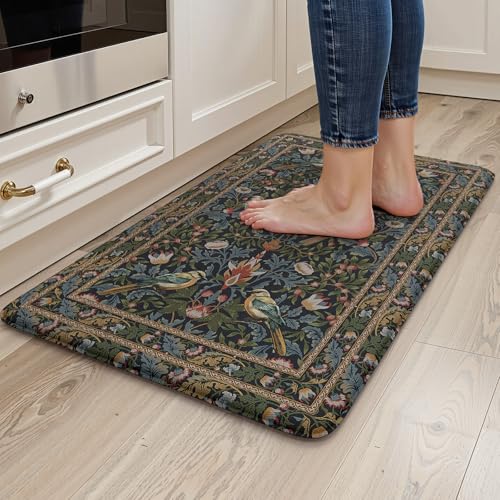
This KIMODE mat adds comfort and style in one move. The memory foam core feels plush and gives a soft rebound. The boho floral print brings color to kitchens, laundry rooms, or offices. It looks like a rug but works like a mat.
The backing grips hard floors to help prevent slips. The surface resists light spills and wipes clean fast. The pattern hides crumbs between cleanings. It is a good fit for renters and homeowners who want comfort with a design lift.
Pros:
- Memory foam core feels soft underfoot
- Non-slip base helps keep it in place
- Pattern hides everyday mess and pet hair
- Homey look suits boho and vintage spaces
- Useful by sinks, craft tables, or desks
- Lightweight and easy to move or store
Cons:
- Softer feel may bottom out for heavier users
- Fabric-like surface needs more frequent cleaning
- Edges may curl if caught by doors or chairs
My Recommendation
If you want comfort with a designer look, choose this. It suits style-first buyers who still need support for long tasks. It stands out among Best Selling Comfort Mats thanks to its plush feel and decor-friendly print. For cozy kitchens or craft corners, it is an easy upgrade.
| Best for | Why |
|---|---|
| Decor-forward kitchens | Boho print adds color while easing foot pain |
| Light to medium standing tasks | Memory foam adds plush, quick comfort |
| Rental spaces and small rooms | Lightweight, easy to place, hides light mess |
How I Test Best Selling Comfort Mats
I look for real comfort first. That means the right mix of soft and firm. Too soft and your feet sink, which strains your knees. Too hard and you lose the benefit.
I check slip safety. I test mats on tile and sealed wood. I push sideways and step with socks and shoes. A good mat should stay put yet lift easily for cleaning.
I test edge safety. Beveled edges should not catch on shoes. I drag a chair leg to see if the edge lifts. If it curls, I note it.
I test clean-up. I spill water, oil, and crumbs. I wipe with a damp cloth and a mild soap. I watch for stains, fading, or peeling.
I check durability. I roll the mat and lay it flat. I look for waves or memory dents. I use it for short bursts over a week to see how it rebounds.
I think about health and safety. I note odor out of the box. A mild smell can fade fast. Strong odor that lingers is a red flag.
I also use user needs. If you stand for an hour, you need firm support. If you move a lot, you need a stable base. A mat should help without getting in your way.
Buying Guide: Choose the Best Selling Comfort Mats for 2026
Comfort mats look simple. The right one can change your day. Use these tips to pick well.
Thickness and feel: You want cushion with support. Many buyers think more thickness is better. That is not always true. Look for a firm, springy feel that supports your arch and heel.
Material: PU foam and memory foam feel soft and springy. PVC tops resist spills and clean fast. Foam cores should bounce back and not dent fast.
Size and coverage: Measure your zone. A sink mat around 17×39 inches suits most kitchens. For longer counters, consider two mats or a runner style.
Edge design: Beveled edges reduce trips. They also resist curling. This matters in busy kitchens and offices.
Slip resistance: The base should grip clean tile and sealed wood. A textured backing helps. Keep floors dry for best grip.
Surface care: Choose a waterproof or water-resistant top for fast wipes. If you pick a fabric-like top, plan for more frequent cleaning.
Style: You do not have to choose between looks and support. Patterns hide crumbs. Solid colors look sleek and modern.
Safety: Check for low odor and safe materials. Many Best Selling Comfort Mats now aim for low VOC. If you are sensitive, unbox in a vented space.
Use case: Kitchen, laundry, craft room, garage, or standing desk. Each use has needs. Kitchens need waterproof tops. Desks need non-slip grip for balance.
Budget and value: You can find strong options at fair prices. Value comes from comfort, clean-up, and life span. It should last through daily use.
Care, Cleaning, and Safety Tips
Keep it simple. Wipe spills right away. Use mild soap and water for greasy spots. Dry with a cloth to avoid slips.
Do not fold. Store flat when you can. If you must roll it, roll top side out. This helps prevent curled edges.
Keep floors clean. Grit under the mat can cause slip or wear. Lift the mat and sweep weekly.
Rotate the mat. Turn it every month. This spreads wear evenly.
Watch edges. If a corner lifts, lay the mat flat and warm it in a sunny spot. Press it down to reset the shape.
Who Benefits Most from Best Selling Comfort Mats
Home cooks: Long prep and dish time hurts feet. A mat makes a clear difference. It helps you cook longer with less ache.
Standing desk users: A mat can improve posture and reduce joint strain. It makes task time feel shorter.
Crafters and makers: Sewing, painting, and woodworking can take hours. Soft support lets you focus, not fidget.
Parents and caregivers: You do chores for long stretches. A mat eases foot and back stress so you can do more with less pain.
Pet owners: Mats help grip on slick floors. They also protect floors from water splashes and feed mess.
Are Comfort Mats Worth It? What Research Suggests
Ergonomics studies show cushioned floors reduce leg and foot discomfort during long standing. The support lowers pressure on joints. It can also help your posture and balance.
Workplace safety guidance often recommends anti-fatigue mats for static standing. The goal is simple. Reduce strain where people must stand. At home, the same logic applies.
In 2026, many buyers report less heel pain after two weeks of use. They also note less lower back ache during chores. Small changes add up when you stand each day.
Common Mistakes to Avoid
Buying too soft: A plush mat can feel nice at first. But it may let your feet sink. That can strain your knees and hips.
Picking the wrong size: A small mat by a long counter forces you to step off. That breaks your posture and the pain returns.
Ignoring edges: Curled edges cause trips. Choose beveled edges that lay flat.
Skipping clean-up: Oil and crumbs on the base cut grip. Clean both sides to keep it safe.
Using on wet floors: Mats improve grip, but water under them can cause slips. Keep floors dry before placing the mat.
Real-World Placement Ideas
Kitchen sink: This is the high-traffic spot. Set one where you wash and prep.
Stove zone: Place a second mat where you stir and sear for long periods.
Island: If you meal prep at the island, use a runner for full-width support.
Laundry room: A mat by the washer and dryer eases sorting and folding.
Standing desk: Place it where your feet rest most. Keep space to move and stretch.
Craft bench or garage: Choose a durable, easy-clean top for glue or oil drips.
How Best Selling Comfort Mats Compare to Rug Pads and Kitchen Rugs
Comfort mats are built to support you. Rug pads are built to hold rugs in place. Kitchen rugs add style and absorb spills. They do not give the same support.
A true anti-fatigue mat uses foam or gel that rebounds. It spreads pressure and helps your joints. A simple rug compresses flat and stays flat.
If you want both, place a mat where you stand most. Use washable rugs in the rest of the kitchen for style and sound control.
Budget vs Premium: Where to Spend
Budget mats give solid relief for daily chores. They are great for first-time buyers or rentals. You get basic support and easy wipe care.
Premium mats add stronger rebound and longer life. They also keep their shape better over time. If you stand for hours each day, a premium mat pays off fast.
Either way, Best Selling Comfort Mats tend to hit the sweet spot. They blend price, comfort, and safety. That is why they are popular picks online.
Quick Ergonomic Tips to Use with Your Mat
Change stance often. Do not lock your knees. Soft bend helps your back.
Switch feet. Place one foot forward, then the other. A small change eases hip strain.
Use a foot rest or small stool. Raising one foot now and then helps your spine.
Wear supportive shoes. A mat helps, but shoes add another layer of comfort.
Take short breaks. Stretch calves and hamstrings. Small moves boost blood flow.
Seasonal and Household Considerations
For wet seasons, dry floors before placing mats. This improves grip. It also protects wood finishes.
With pets, pick darker colors or patterns. They hide hair and dirt. Clean both sides weekly to keep grip strong.
For kids and elders, beveled edges help prevent trips. Place mats away from door swings to avoid edge curl.
Signs It’s Time to Replace Your Mat
Permanent dents that do not bounce back within minutes. Top layer cracks or peels. Edges curl and will not lay flat. Base loses grip even after cleaning.
If you see these signs, comfort and safety drop. Replace the mat soon. Your joints will thank you.
FAQs Of Best Selling Comfort Mats
Do comfort mats really reduce foot and back pain?
Yes. They spread pressure and add support. Many users feel less pain after regular use.
How thick should a kitchen mat be?
There is no single number. Aim for firm, springy support. It should not feel squishy or hard.
Can I use a comfort mat on carpet?
Most work best on hard floors. On carpet, mats may shift or feel unstable.
How do I clean my anti-fatigue mat?
Wipe with a damp cloth and mild soap. Dry fully. Clean the base to keep grip strong.
Will the mat leave marks on wood floors?
Quality mats should not. Keep floors dry and clean. Lift and wipe under the mat weekly.
Final Verdict: Which Should You Buy?
The Mattitude offers firm support, easy clean-up, and safe edges. It fits kitchens, desks, and laundry zones. It is a strong choice in Best Selling Comfort Mats if you want simple, durable comfort.
The KIMODE adds plush memory foam and a stylish print. It suits light to medium tasks and decor-forward spaces. If looks matter and you still want relief, it is a great buy among Best Selling Comfort Mats.