
The best stand mixer for cookie dough combines strong torque, steady speed control, and a bowl size that fits your baking plans.
Have you ever started mixing cookie dough by hand, only to end up with tired arms, a messy counter, and butter stuck to the bowl? A good stand mixer takes that hard work off your hands. It can cream butter and sugar, blend flour, and handle thick dough with far less effort. I compared bowl size, motor control, attachments, ease of use, and value to help you find the best stand mixer for cookie dough. The four models below suit different kitchens, from small apartments to busy family baking spaces.
Kitchen in the Box 3.2-Qt Stand Mixer
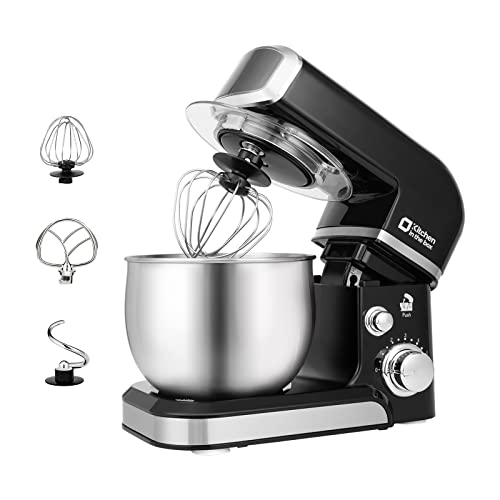
The Kitchen in the Box 3.2-quart stand mixer is made for small kitchens and modest batches. Its compact body takes up less room than many full-size mixers, which helps if you have limited counter space. The six speed settings give you a useful range for creaming butter, mixing cookie dough, and beating eggs. It also includes a dough hook, flat beater, and wire whisk.
I see this model as a practical choice for casual bakers, students, couples, and anyone who does not need a large bowl. The smaller bowl can help prevent a small batch from getting lost under the attachment. Still, very thick dough may require slower mixing and a little help scraping the sides. For everyday cookies, muffins, frosting, and cake batter, this mixer offers a simple and budget-friendly setup.
Pros:
- Compact size suits small counters and apartments
- Six speeds cover common cookie-making tasks
- Includes a flat beater, dough hook, and wire whisk
- Smaller bowl works well for modest batches
- Lightweight design is easier to move and store
- Simple controls are friendly for new bakers
Cons:
- 3.2-quart capacity is limited for large cookie batches
- Lightweight mixers may move during very thick dough mixing
- Small bowls may need more frequent scraping
Martha Stewart 5.3-Qt Tilt-Head Mixer
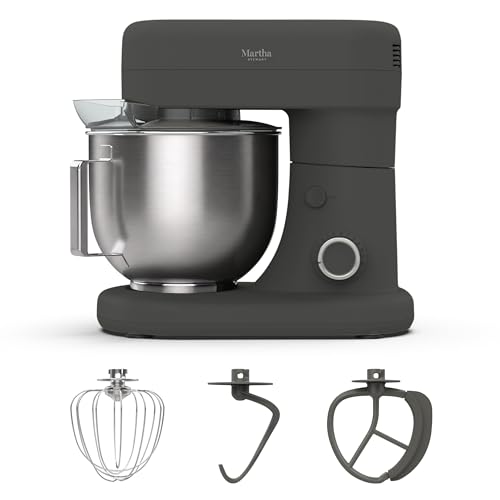
The Martha Stewart 5.3-quart tilt-head stand mixer offers a useful middle ground for home baking. Its larger bowl gives you more room for double batches of cookies, cake batter, and other recipes. With 12 speeds, you can start slowly to reduce flour dust and then increase the speed as the dough comes together. The stainless steel bowl is also easy to inspect while you mix.
The tilt-head design makes it easier to add ingredients and change attachments. That matters when you are making several cookie flavors in one afternoon. A 5.3-quart bowl gives family bakers more freedom without the bulk of a large commercial-style machine. If you want the best stand mixer for cookie dough with a balanced mix of size, control, and appearance, this model deserves a close look.
Pros:
- 5.3-quart bowl supports family-size baking
- 12 speeds offer precise control for different mixtures
- Tilt-head design makes bowl access easier
- Stainless steel bowl is durable and easy to clean
- Good size for cookies, cakes, frosting, and whipped cream
- Slow-speed starting helps limit flour splatter
Cons:
- Larger body needs more storage or counter space
- Heavier than compact personal mixers
- Very stiff dough may still need slower speed and short mixing periods
Kourice 6.5-Qt Heavy-Duty Stand Mixer

The Kourice 6.5-quart stand mixer is the largest option in this group. Its generous bowl is useful for large cookie batches, bread dough, pizza dough, and other heavy mixtures. The 10-speed control lets you mix gently at first and build speed when the ingredients are combined. It includes a dough hook, wire whisk, and flat beater for a broad range of recipes.
The stainless steel cladding and large bowl give this mixer a substantial feel on the counter. I would consider it for a busy household, holiday baking, or anyone who often makes several dozen cookies at once. Its size can be more than a casual baker needs, but that extra room becomes helpful when small batches turn into large ones. For heavy kitchen work, the Kourice is a strong candidate for the best stand mixer for cookie dough.
Pros:
- Large 6.5-quart bowl handles bigger cookie batches
- 10 speeds provide useful mixing control
- Designed for cookie dough, bread dough, and pizza dough
- Includes three core mixing attachments
- Stainless steel bowl and cladding support long-term kitchen use
- Large capacity reduces the need to mix in several rounds
Cons:
- Larger footprint may crowd a small counter
- Heavier body is less convenient to lift and store
- Large bowl may be less efficient for very small batches
OLIXIS 4.2-Qt Tilt-Head Stand Mixer

The OLIXIS 4.2-quart stand mixer is a compact middle-size option for routine baking. It offers 10 speeds, so you can use low power for flour and higher settings for whipping cream or egg whites. The tilt-head design gives quick access to the bowl and makes it easier to remove the beater. Its 4.2-quart capacity should fit many standard cookie recipes without taking up the space of a full-size mixer.
This model may appeal to people who want more room than a small 3.2-quart mixer but do not want a large 6.5-quart machine. It is a sensible fit for weekly cookies, cupcakes, brownies, and frosting. I would still check the recommended load and keep thick dough at a moderate speed. For many homes, the OLIXIS provides a nice balance between footprint and useful bowl space.
Pros:
- 4.2-quart bowl fits many everyday baking recipes
- 10 speeds help match the mixer to the recipe
- Tilt-head design simplifies ingredient access
- Smaller footprint suits many home kitchens
- Useful for cookies, cakes, frosting, and whipped mixtures
- More capacity than many personal-size mixers
Cons:
- Not as spacious as a 5.3- or 6.5-quart mixer
- May need bowl scraping during some mixtures
- Heavy dough should be mixed with care at a low setting
My Recommendation
Choosing the best stand mixer for cookie dough depends on batch size more than speed count alone. I would choose the Kitchen in the Box for a small kitchen and simple cookie recipes. The OLIXIS is a better middle-size pick for regular home baking, while the Martha Stewart model gives families more bowl space and finer speed control. The Kourice stands out when you bake large batches or work with bread and pizza dough.
| Best for | Why |
|---|---|
| Small kitchens and light baking | Kitchen in the Box has a compact body and a 3.2-quart bowl. |
| Weekly family baking | Martha Stewart offers a roomy 5.3-quart bowl and 12 speeds. |
| Large batches and heavy dough | Kourice provides a 6.5-quart bowl and a heavy-duty design. |
The OLIXIS deserves mention for bakers who want a practical middle path. Its 4.2-quart bowl is easier to manage than a very large bowl, yet it gives more working room than a compact model. Before you buy, measure your counter, check overhead cabinet space, and think about how often you make double batches. The best stand mixer for cookie dough should fit your real routine, not just look impressive in a product photo.
How I Chose the Best Stand Mixer for Cookie Dough
Cookie dough looks simple, but it can place real stress on a mixer. Cold butter, brown sugar, flour, chocolate chips, and nuts can create a thick load. A mixer that works well for whipped cream may struggle when the dough becomes dense. I focused on the features that matter most during this stage.
Motor strength and mixing control
Motor power matters, but the number printed on a box does not tell the whole story. Gear design, bowl shape, beater movement, and speed control also affect performance. A good mixer should start gently and keep a steady motion as the dough thickens. This helps protect the mixture from overworking and reduces flour clouds.
For cookie dough, low and medium speeds usually do the best work. High speed is often unnecessary once flour enters the bowl. I look for controls that let the baker slow down, pause, and adjust without sudden jumps. This is one reason the best stand mixer for cookie dough should offer more than one or two speed choices.
Bowl size and batch planning
Bowl capacity should match the recipes you make most often. A 3.2-quart bowl can be a good fit for a single small batch. A 4.2- or 5.3-quart bowl gives more breathing room for common family recipes. A 6.5-quart bowl is useful when you double recipes or bake for parties.
More capacity is not always better. A large bowl may not mix a very small amount as well as a smaller bowl. Ingredients can sit below the beater, which means you may need to stop and scrape. I recommend buying for your normal batch size, not the biggest recipe you might make once a year.
The flat beater is the key attachment
The flat beater does most of the work for cookies. It creams butter and sugar, combines eggs, and blends flour into the wet mixture. A dough hook is useful for yeast dough, but it is not the first attachment I reach for when making chocolate chip cookies. The wire whisk works best for egg whites, cream, and light mixtures.
Attachment height also matters. If the beater sits too high, it may leave ingredients at the bottom of the bowl. If it sits too low, it may scrape the bowl. Many mixers allow small adjustments, but the exact process varies by model. Always follow the included instructions rather than forcing the attachment into a new position.
Stability on the counter
Thick dough can make a light mixer shake or walk. A stable base helps keep the bowl in place and protects your counter from sudden movement. Weight can improve stability, but it also makes the mixer harder to move. This creates a simple trade-off between power, balance, and storage.
Suction feet may help, though they cannot replace good technique. I keep the mixer on a flat, dry surface and use a low speed for dense dough. If the motor sounds strained, I stop the machine and check the mixture. A short pause can prevent a small problem from becoming a costly repair.
Tilt-head versus lift-bowl design
A tilt-head mixer allows you to raise the top and reach the bowl. This design is easy to understand and works well for most home bakers. It also makes it simple to add chocolate chips, nuts, or dry ingredients. The trade-off is that the head may move slightly during very heavy mixing if the machine has a lighter build.
A lift-bowl design often feels more stable for large loads. It can also provide extra clearance for a large bowl. However, the bowl may take a little more effort to remove and clean. The models in this review use a tilt-head style, so they are especially friendly for cooks who value quick access.
Ease of cleaning
Cookie dough leaves butter and sugar on nearly every surface it touches. A removable bowl makes cleanup much easier. Stainless steel is a practical choice because it does not hold odors and can handle regular kitchen use. The beater should also come off without a struggle.
I avoid pushing dough deep into the mixer head or around the speed control. A soft, damp cloth usually works for the body. Always check the care instructions before placing an attachment in a dishwasher. Good cleaning habits extend the life of the mixer and help prevent old butter from affecting a new batch.
Why a Stand Mixer Works So Well for Cookie Dough
A stand mixer gives you both hands free. I can measure flour, line baking sheets, or add ingredients while the mixer handles the creaming step. That small change makes baking feel calmer. It also helps when a recipe calls for several minutes of mixing.
Consistent mixing can improve texture. When butter and sugar blend well, cookies may bake with a more even crumb. The mixer can also combine flour more evenly than a rushed hand mix. Still, the baker must stop at the right time because too much mixing can make cookies firm or tough.
The best stand mixer for cookie dough also helps with repeat results. A hand-held mixer may change position as the dough gets thick. A stand mixer keeps the attachment moving in a set path. This creates a steadier process from one batch to the next.
How to Mix Cookie Dough in a Stand Mixer
Start with softened butter, not melted butter, unless the recipe says otherwise. Add butter and sugar to the bowl, then use the flat beater at a low or medium speed. Scrape the bowl once or twice so the mixture blends evenly. The goal is a smooth, light mixture without leaving large lumps of butter.
Add eggs and vanilla slowly. Keep the mixer at a moderate speed and stop if the mixture climbs the beater. Add flour in small portions at the lowest speed. This step keeps flour from flying across the counter and reduces the risk of overmixing.
Add chocolate chips, oats, dried fruit, or nuts near the end. You can use the lowest mixer speed for a short time, or fold them in by hand. Stop as soon as the dough looks even. A stand mixer makes the work easy, but it cannot judge texture better than your eyes.
If the dough seems too stiff, do not immediately increase the speed. Check whether the butter was too cold or whether you added flour too quickly. A short pause can let the ingredients soften and come together. When the motor sounds strained, stop and review the recipe instead of forcing the machine to continue.
Common Buying Mistakes to Avoid
Choosing by speed count alone
More speeds can be helpful, but they do not guarantee more power. A mixer with six useful settings may handle your needs better than a mixer with many poorly spaced settings. Look at bowl size, attachment quality, stability, and user instructions too. Speed numbers are only one part of the decision.
Buying a bowl that is too large
A large bowl sounds appealing, but it can make small cookie batches harder to mix. The beater may not reach the ingredients well. You may spend more time scraping the bottom and sides. Match the bowl to the recipes you make most often.
Ignoring the mixer’s height
Many kitchens have cabinets above the counter. A stand mixer may fit under the cabinet while lowered but not when the head is raised. Measure the space before you order. This simple step can prevent a frustrating return.
Expecting a home mixer to work like a commercial machine
Home mixers are designed for home use. Even a large model needs reasonable loads and sensible speeds. Very stiff dough should not run for a long time at high speed. Follow the manual and allow the machine to rest when the instructions call for it.
Failing to check replacement parts
Attachments can wear over time. A beater may chip, a bowl may dent, or a whisk may need replacement. Before buying, look for clear product support and available parts. This can matter as much as the initial price.
Care Tips for a Stand Mixer
Unplug the mixer before cleaning around the attachment hub or moving parts. Wipe the body with a soft cloth instead of pouring water near the motor. Remove dough from the beater soon after mixing so it does not dry into a hard shell. Dry the bowl and attachments fully before storage.
Do not overload the bowl. A full bowl can make the motor work harder and may prevent the beater from moving through the dough. If you need to make a large amount, mix it in two batches. That often gives better cookie texture and places less strain on the machine.
Store attachments where they will not bend or knock against heavy tools. A wire whisk can lose its shape if it gets crushed in a drawer. Check the power cord from time to time. Small care steps help your mixer stay ready for the next baking day.
Which Bowl Size Is Best for Cookie Dough?
A 3.2-quart bowl is best for small batches and limited counter space. It can work well for a single dozen or two, depending on the recipe volume. A 4.2-quart bowl gives more flexibility for routine baking. It is often the comfortable middle choice for a small family.
A 5.3-quart bowl is a strong choice for family baking and double batches. It gives the dough room to move without making the mixer as large as a commercial unit. A 6.5-quart bowl suits large batches, holiday baking, and cooks who also make bread. If cookies are your main goal, do not pay for unused capacity unless you expect your baking plans to grow.
What Makes Thick Cookie Dough Difficult?
Thick cookie dough contains less free liquid than cake batter. Flour, oats, chips, and nuts add resistance as the attachment moves. Cold butter can make the dough even harder to blend. This is why a mixer needs steady torque and a stable base.
The final stage is often the hardest. Once the flour absorbs moisture, the dough may pull against the beater. Mixing at a low speed helps the motor and gives you better control. If the recipe includes many add-ins, folding them in by hand may be kinder to the mixer and the dough.
How to Get Better Cookie Results
Use accurate measurements. A kitchen scale can give more reliable results than scooping flour into a cup. Too much flour is a common reason cookies turn dry. Level dry measuring cups if you do not use a scale.
Let the mixer do the creaming work, but do not let it run without a plan. Scrape the bowl after the butter and sugar mix. Add eggs one at a time when the recipe calls for it. Then add flour on low speed and stop early rather than late.
Chill the dough when the recipe recommends it. Chilled dough often spreads less in the oven. It can also be easier to portion. A stand mixer helps create the dough, but oven temperature, pan color, and portion size also affect the final cookie.
FAQs Of best stand mixer for cookie dough
What size stand mixer is best for cookie dough?
A 4.2- to 5.3-quart mixer suits many home bakers. Choose a 3.2-quart model for small batches and limited space. Choose a 6.5-quart model for large batches or frequent heavy mixing.
Which attachment should I use for cookie dough?
Use the flat beater for most cookie dough. It creams butter and sugar and blends flour well. Use the dough hook for yeast dough, not as the first choice for standard cookies.
Can a small stand mixer handle thick cookie dough?
Yes, a small mixer can handle many cookie recipes if you use a moderate load and low speed. Avoid overfilling the bowl. Stop if the motor sounds strained or the mixer begins to move.
Is a tilt-head mixer good for cookies?
Yes. A tilt-head mixer gives easy access for adding ingredients and scraping the bowl. It is a convenient design for most home cookie recipes.
How do I stop flour from making a mess?
Add flour in small portions and start at the lowest speed. Let each portion blend before adding more. You can also place a clean kitchen towel loosely around the top of the bowl during the first few seconds.
Final Verdict: Which Should You Buy?
For most homes, the Martha Stewart 5.3-quart model is the best stand mixer for cookie dough because it balances capacity, speed control, and easy bowl access. Choose Kitchen in the Box for small spaces or Kourice for large, heavy batches.
Compare bowl size with your real baking needs before buying. The best stand mixer for cookie dough should make baking easier, cleaner, and more consistent.