
An electric sharpener is faster and easier, while a manual sharpener offers more control, lower cost, and less risk of overgrinding.
Choosing between an electric vs manual knife sharpener depends on your knives, skill level, budget, and daily cooking habits. After using pull-through sharpeners, whetstones, and electric models, I have found that each tool can work well when matched to the right blade. This guide explains the real differences, common mistakes, safety points, and the best choice for your kitchen.
What Is an Electric Knife Sharpener?
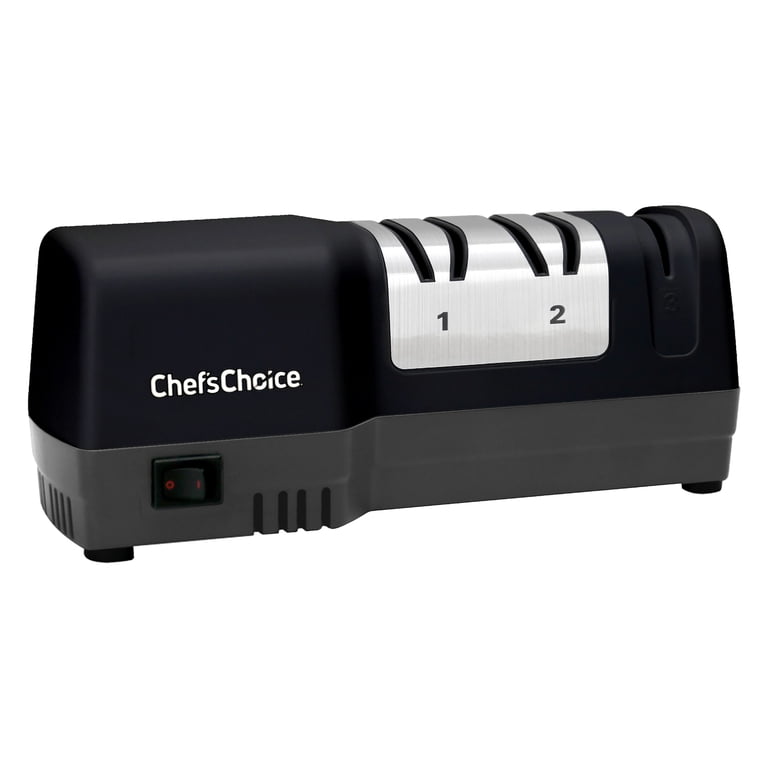
An electric knife sharpener uses a motor to move abrasive wheels or belts across the knife edge. Most models have one or more slots. Each slot may sharpen, refine, or polish the edge.
Many electric sharpeners use diamond, ceramic, or abrasive discs. Higher-end models often have preset guides. These guides help hold the knife at a set angle, such as 15 or 20 degrees per side.
An electric sharpener can restore a dull edge with little effort. You place the blade in the slot, apply light pressure, and draw it through at a steady speed. The motor does most of the work.
Common features include:
- Two or three sharpening stages
- Built-in angle guides
- Diamond abrasives for shaping
- Ceramic abrasives for polishing
- Slots for serrated knives
- Safety feet and a stable base
- Automatic shutoff on some models
The main benefit is ease. You do not need to master hand pressure or angle control. This makes an electric model useful for busy home cooks, small restaurants, and people who need quick results.
Still, an electric model is not magic. It can remove more metal than needed if you press too hard or use it too often. A good electric sharpener should be used as a repair and sharpening tool, not as a daily replacement for honing.

What Is a Manual Knife Sharpener?
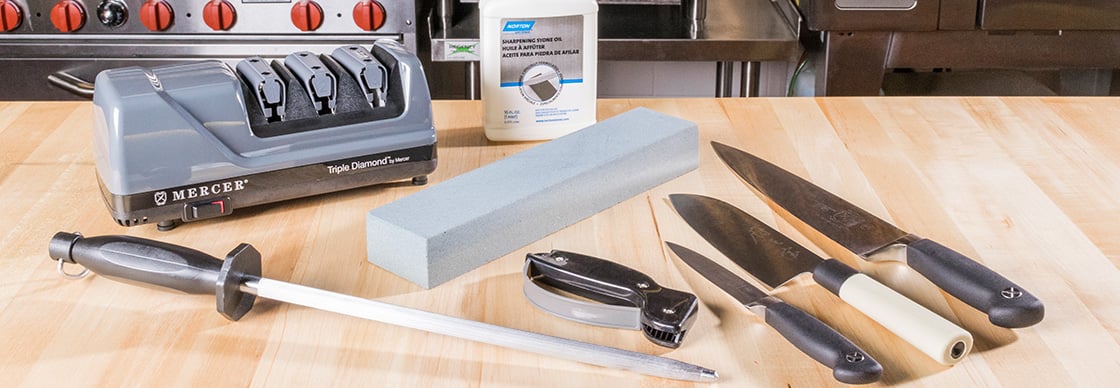
A manual knife sharpener works without a motor. It may use pull-through slots, sharpening rods, a whetstone, or a guided sharpening system.
A simple pull-through sharpener has two abrasive surfaces set at a fixed angle. You pull the knife through the slot several times. It is affordable, compact, and easy to store.
A whetstone gives you the most control. You choose the grit, set the angle, and guide the blade across the stone by hand. This method takes more practice, but it can produce a very clean and refined edge.
Manual knife sharpeners include:
- Pull-through sharpeners
- Whetstones
- Honing rods
- Ceramic rods
- Diamond rods
- Guided angle systems
- Manual belt sharpeners
A manual sharpener removes metal through your own motion and pressure. This can be a major advantage. You can sharpen slowly and stop as soon as the edge returns.
When comparing an electric vs manual knife sharpener, remember that “manual” covers many tools. A basic pull-through model is very different from a professional whetstone. The price, skill level, and final result can vary greatly.
Electric vs Manual Knife Sharpener: Main Differences
The best way to compare an electric vs manual knife sharpener is to look at the factors that matter in real use.
| Feature | Electric sharpener | Manual sharpener |
|---|---|---|
| Speed | Very fast | Slow to moderate |
| Ease of use | Easy for most users | Easy for pull-through models; harder for stones |
| Control | Limited to moderate | Moderate to very high |
| Cost | Usually higher | Often low to moderate |
| Skill needed | Low | Low to high |
| Metal removal | Can be heavy | Usually easier to control |
| Portability | Less portable | Usually very portable |
| Noise | Makes motor noise | Quiet |
| Power | Needs an outlet or battery | No power needed |
| Best use | Fast repair and routine sharpening | Careful sharpening and travel |
An electric model wins on speed and convenience. A manual model wins on control, quiet operation, and price.
Neither tool is always better. A person who cooks once a week may prefer a manual pull-through sharpener. A person who cooks every day may value the speed of an electric model.
The knife also matters. A delicate Japanese knife may need a fine angle and gentle pressure. A thick Western chef’s knife may work well with a stronger edge and a more durable bevel.

Benefits of an Electric Knife Sharpener
An electric sharpener can be a helpful kitchen tool when used with care. Its main strength is consistency. The guide keeps the blade near the same angle during each pass.
Fast sharpening
An electric model can improve a dull kitchen knife in a few minutes. This is useful before a large meal or after a busy week of cooking.
The motor also helps with tough edges. It can reshape a damaged bevel faster than many manual tools.
Simple technique
You do not need to balance the knife by hand. This helps beginners who struggle to keep a steady angle.
A good model gives clear instructions. It may also use separate stages for shaping, sharpening, and polishing.
Useful for many common knives
Some electric sharpeners support:
- Stainless steel chef’s knives
- Utility knives
- Paring knives
- Cleavers
- Serrated bread knives
- Outdoor and hunting knives
Always check the product guide first. Some sharpeners cannot handle thick blades, ceramic knives, or unusual edge shapes.
Helpful for people with limited hand strength
An electric sharpener may be easier for someone who finds whetstone work tiring. The user still needs to control the knife, but the motor handles the abrasive motion.
Better results than a dull, damaged edge
A sharp knife is often safer than a dull one. A dull blade can slip when cutting food. Research on kitchen safety supports careful knife handling, stable cutting boards, and sharp, well-maintained blades.
However, a sharp knife can still cause serious injury. Always keep fingers behind the edge and store the knife safely.

Limitations of an Electric Knife Sharpener
The speed of an electric sharpener can become a weakness. Fast grinding can remove too much steel if the tool is used poorly.
It may remove too much metal
Some electric models use aggressive abrasives. If you make many passes, you may shorten the life of the knife.
A knife does not need to become razor sharp after every use. Often, a few light passes through a fine stage are enough.
It can damage a thin edge
Thin blades need gentle treatment. Too much pressure can create a rough or uneven edge. Heat can also become a concern during long grinding sessions, although most home models remove small amounts of material at a time.
If the blade feels hot, stop and let it cool. Do not rush the process.
It may create a fixed edge angle
Many electric sharpeners use one preset angle. That works for common knives, but it may not suit every blade.
A Japanese gyuto may use a narrower angle than a heavy German chef’s knife. If the angle does not match, the sharpener may reshape the edge more than you expect.
It uses electricity
You need a power outlet or charged battery. This makes an electric model less useful for camping, travel, or a small kitchen with limited counter space.
It can hide technique mistakes
The guide may hold the blade in place, but you still need to use light pressure and steady movement. Pulling too fast or forcing the knife can produce uneven results.

Benefits of a Manual Knife Sharpener
A manual sharpener gives you a direct connection with the knife. You can feel the blade and adjust your technique as you work.
More control
With a whetstone or rod, you decide the angle, pressure, and number of passes. This helps protect expensive knives.
You can focus on one dull area instead of grinding the full blade. That level of control is difficult with many electric models.
Lower cost
Manual tools are often cheaper. A basic ceramic rod or pull-through sharpener may cost much less than a powered unit.
Whetstones also offer strong value. One good stone can sharpen many knives for years if you store and clean it correctly.
Quiet and portable
A manual tool makes little noise. You can use it anywhere without a plug.
This matters in small homes, shared kitchens, workshops, and outdoor settings. A compact manual sharpener can also fit in a travel bag.
Less metal removal
When you use light pressure, a manual sharpener can remove only the metal needed to restore the edge. This may help extend the useful life of a quality knife.
That benefit depends on good technique. A rough pull-through tool can still remove a large amount of steel.
Better for learning knife care
Whetstone sharpening teaches you how an edge works. You learn to feel a burr, maintain an angle, and polish the bevel.
In my experience, this is where many beginners improve most. At first, I used too much pressure and changed angles during each stroke. The knife became sharp in some areas but not others. Slow strokes and a consistent angle solved the problem.
Limitations of a Manual Knife Sharpener
Manual sharpening is not perfect. It takes more time and may require practice.
A whetstone has a learning curve
You must control the blade angle by hand. A common starting angle is about 15 to 20 degrees per side, but the correct angle depends on the knife design and intended use.
A simple angle guide can help. So can marking the bevel with a washable marker. Make a few strokes, then check whether the marker disappears evenly.
Pull-through models can be rough
Some low-cost pull-through sharpeners use hard carbide cutters. These may create a sharp edge quickly, but the edge can feel coarse or uneven.
They may also leave deep scratches on the blade. Use a well-made model with suitable abrasive materials whenever possible.
It takes more time
A whetstone may take 10 to 20 minutes for a careful sharpening session. That is much slower than many electric machines.
The extra time can be worth it for premium knives. It may not feel worthwhile when you simply need a basic work knife ready for dinner.
Results depend on your skill
A manual tool does not correct every mistake. Uneven pressure can create an uneven bevel. Failure to raise a burr can leave dull spots.
Practice on an inexpensive knife first. This is one of the best ways to build confidence without risking a valuable blade.

Electric vs Manual Knife Sharpener for Different Users
The right choice depends on how you cook and what you expect from your tools.
For beginners
A guided electric model or a quality manual pull-through sharpener is usually easiest. Look for clear instructions, stable feet, and a fine finishing stage.
Avoid cheap tools with no angle guidance. They may make learning harder and can damage the edge.
For professional cooks
A professional may prefer a whetstone, honing rod, or commercial electric system. Speed matters during a busy shift, but control also matters for high-quality knives.
Many professionals use more than one tool. They may use a stone for sharpening, a ceramic rod for light maintenance, and a service for major repairs.
For expensive Japanese knives
Manual sharpening is often the safer choice. A whetstone lets you match the knife’s edge angle and control the amount of steel removed.
Check the knife maker’s care instructions. Some Japanese knives have single bevels, very thin edges, or hard steel that needs special treatment.
For everyday Western kitchen knives
Either option can work. A well-designed electric sharpener is convenient, while a manual guided sharpener offers more control.
For a busy family kitchen, convenience may matter more than a highly polished edge.
For camping and travel
A manual sharpener is the clear winner. It needs no electricity and takes little space.
A small diamond plate or compact ceramic rod can maintain an edge during a trip. Use it carefully and keep the blade stable.

How to Use an Electric Knife Sharpener Safely
An electric sharpener is easy to use, but safe habits still matter.
- Read the manufacturer’s instructions.
- Place the sharpener on a stable, dry surface.
- Select the correct slot for the knife.
- Hold the handle firmly.
- Use light pressure.
- Pull the blade at the speed listed in the guide.
- Repeat only as needed.
- Wipe away metal filings with a soft cloth.
- Wash the knife before preparing food.
- Store the sharpener where children cannot reach it.
Do not push the knife down into the slot. The abrasive should do the work.
Do not sharpen a wet knife unless the instructions allow it. Water can affect some electric components and may cause slipping.
Keep your fingers away from the blade path. Also, unplug the machine before cleaning it.

How to Use a Manual Knife Sharpener Safely
Safe manual sharpening starts with stability. A loose stone or moving sharpener can cause slips.
Use these steps:
- Place the stone on a non-slip mat.
- Add water or oil only if the stone requires it.
- Set a steady angle.
- Move the knife away from your body.
- Use light, even pressure.
- Work from heel to tip.
- Check for a small burr along the edge.
- Repeat on the other side.
- Finish with lighter strokes.
- Clean and dry the knife.
Never test sharpness by running a finger across the edge. Instead, slice a piece of paper or a soft food item with care.
A honing rod does not remove much metal. It mainly realigns a slightly bent edge. If the knife stays dull after honing, it needs sharpening with an abrasive tool.
Sharpening, Honing, and Polishing Explained
Many people use the words sharpening and honing as if they mean the same thing. They are different.
Sharpening removes metal to create a new edge. It uses a stone, abrasive wheel, diamond plate, or similar material.
Honing realigns the edge. It works best when the knife is only slightly dull. A steel honing rod is not a substitute for regular sharpening.
Polishing refines the edge after sharpening. Fine ceramic abrasives and high-grit stones can make the edge smoother.
A simple care plan may look like this:
- Hone the knife when it feels less smooth during cutting.
- Sharpen it when honing no longer restores performance.
- Polish it when you want a finer, cleaner edge.
- Repair chips or deep damage with a skilled professional if needed.
Understanding this difference helps you avoid overusing an electric vs manual knife sharpener. Most knives need maintenance, not aggressive grinding, every time they feel less sharp.
Common Mistakes to Avoid
Small errors can reduce sharpness or damage a knife. These mistakes are common with both types of sharpeners.
Using too much pressure
Pressure can bend the edge and remove excess metal. Let the abrasive work.
Using the wrong angle
A large angle change can reshape the blade. Follow the knife maker’s advice when available.
Making too many passes
More passes do not always mean a sharper knife. Stop when the edge cuts cleanly.
Sharpening serrated knives in a regular slot
Serrated edges have teeth and grooves. Use a sharpener made for serrated blades or ask a professional for help.
Ignoring the burr
A burr is a tiny fold of metal that forms during sharpening. It shows that you reached the edge. If you skip this step, parts of the blade may remain dull.
Using a damaged stone
A hollow or uneven stone can create an uneven bevel. Flatten waterstones when needed.
Putting a sharp knife in a drawer
Loose storage can dull the edge and create a safety risk. Use a blade guard, knife block, magnetic strip, or drawer insert.
How to Choose the Best Sharpener
Before buying, think about your knives and your routine. The right electric vs manual knife sharpener should fit both.
Consider these points:
- Knife type: Check whether the tool supports stainless steel, high-carbon steel, ceramic, or serrated blades.
- Edge angle: Confirm that the sharpener matches your knife’s angle.
- Abrasive type: Diamond cuts fast, ceramic refines well, and whetstones offer broad control.
- Skill level: Beginners may prefer guides, while experienced users may want freedom.
- Frequency of use: Daily cooks may value speed.
- Knife value: Premium knives often deserve a gentler tool.
- Storage: Measure your counter and cabinet space.
- Cleaning: Look for removable trays or easy-to-clean surfaces.
- Warranty: A clear warranty can show that the maker stands behind the product.
- Reviews: Look for comments about edge quality, not only speed.
Do not choose a sharpener only because it promises a “razor edge.” A durable edge that cuts well is more useful than an overly thin edge that chips easily.
Electric vs Manual Knife Sharpener: Which Is Better?
For most households, the answer is based on priorities.
Choose an electric model if you want:
- Fast results
- Simple operation
- A guided sharpening angle
- Help with very dull knives
- Less time spent learning technique
Choose a manual model if you want:
- Lower cost
- Quiet operation
- Portable use
- Precise control
- Gentle care for expensive knives
- No need for electricity
In a direct electric vs manual knife sharpener comparison, electric wins for speed and convenience. Manual wins for control, portability, and long-term flexibility.
A useful middle path is to own a manual honing rod and use professional sharpening or an electric tool only when the knife becomes truly dull. This reduces unnecessary grinding and keeps routine care simple.
My Practical Experience With Both Types
When I first tested an electric sharpener, I expected the fastest setting to give the best result. That was a mistake. The blade became sharp, but the edge was rough because I used too much pressure and made too many passes.
With a manual stone, my first problem was different. I changed the angle near the tip and created a rounded section. Slowing down helped more than buying a better stone.
These lessons shaped my current routine. I use light honing for regular care, a manual stone for careful sharpening, and an electric tool only when a knife needs quick attention. I also check the edge after every few passes instead of following a fixed number.
The best lesson is simple: treat sharpening as maintenance, not force. A knife edge is small and delicate. Gentle, steady work usually gives a better result than speed.
Frequently Asked Questions About Electric vs Manual Knife Sharpener
Is an electric knife sharpener better than a manual sharpener?
An electric knife sharpener is better for speed and ease. A manual sharpener is better for control, portability, and careful work on valuable knives.
Do electric sharpeners damage knives?
They can damage knives if used with too much pressure, the wrong slot, or too many passes. Follow the instructions and stop once the edge is sharp.
Can a beginner use a manual knife sharpener?
Yes, especially a guided pull-through model. Whetstones need more practice, but beginners can learn with light pressure and a simple angle guide.
How often should I sharpen a kitchen knife?
The schedule depends on use, steel, and cutting surfaces. Many home cooks need true sharpening only a few times each year, while light honing may help more often.
Can I use an electric sharpener on a Japanese knife?
Some electric sharpeners support Japanese knives, but not all do. Check the required angle and make sure the tool is designed for thin or high-hardness blades.
Is a honing rod the same as a knife sharpener?
No. A honing rod mainly realigns a slightly bent edge, while a sharpener removes metal to create a new edge.
Which sharpener is best for serrated knives?
Use a tool designed for serrated blades. A standard flat or pull-through slot may damage the teeth and fail to reach the grooves.
Should I sharpen an expensive knife at home?
You can, but use a controlled manual system or a suitable whetstone. If the knife has chips, a single bevel, or high value, professional service may be safer.
Conclusion
The electric vs manual knife sharpener choice comes down to speed, control, cost, and knife type. Electric sharpeners are quick and simple. Manual sharpeners are quiet, portable, and more precise.
Use light pressure, follow the correct angle, and avoid sharpening more than needed. For everyday convenience, choose electric. For careful blade care and greater control, choose manual.
Start with the tool that matches your cooking style, then practice on a less valuable knife. A well-maintained edge makes food preparation smoother and safer. Explore trusted knife-care resources, share your sharpening experience, and choose the method that helps you cook with confidence.