
Clean your GE Profile ice maker by removing ice, washing parts, running the cleaning cycle, and rinsing well.
A clean ice maker makes better-tasting ice, prevents odors, and helps the unit work well. These GE Profile ice maker cleaning instructions cover both the popular Opal nugget ice makers and GE Profile refrigerator ice makers. You will also learn which cleaners to use, which mistakes to avoid, and when a deep clean or service call is needed.
Why regular GE Profile ice maker cleaning matters
Ice makers use water, air, and many small parts. Over time, mineral scale, dust, slime, and food odors can build up. Even though ice looks clean, the machine may still have residue inside the water path or storage bin.
Regular GE Profile ice maker cleaning can help:
• Reduce stale or strange-tasting ice
• Limit mineral buildup from hard water
• Keep the water reservoir and lines fresher
• Protect the ice chute and storage bin from grime
• Reduce the chance of clogs and slow ice production
• Make problems easier to spot before they become costly
GE Profile Opal ice makers need special care because they recirculate water during ice making. Refrigerator ice makers have a different design, but both types need clean water and clean surfaces.
For most homes, clean the ice maker at least once a month. Clean it sooner if you notice a smell, cloudy ice, slimy residue, or visible scale. Homes with hard water may need a more frequent schedule.
Before you start: identify your GE Profile ice maker
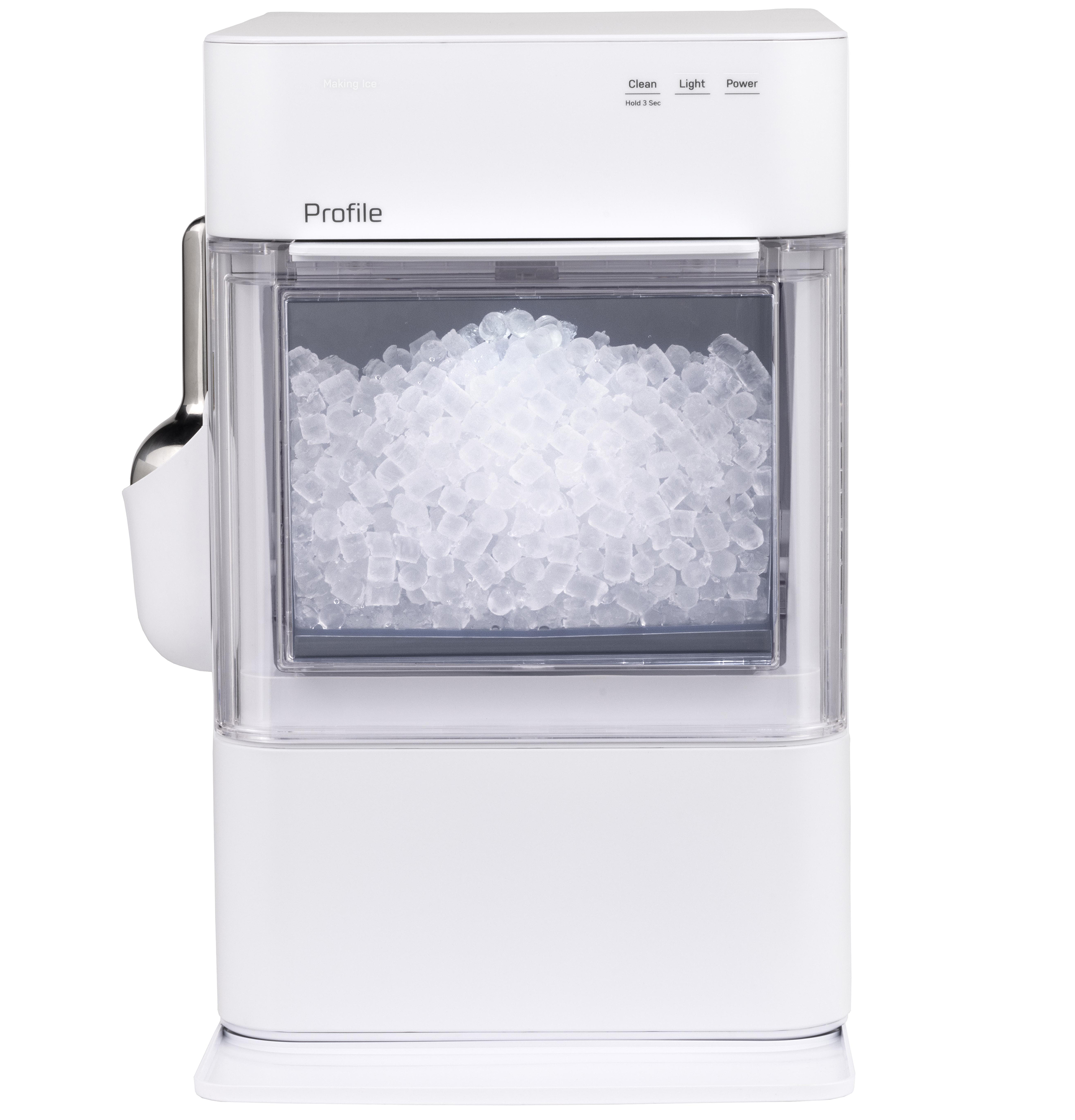
The right GE Profile ice maker cleaning instructions depend on the model. GE Profile products include countertop Opal nugget ice makers, refrigerator ice makers, and some models with a built-in water dispenser and ice bin.
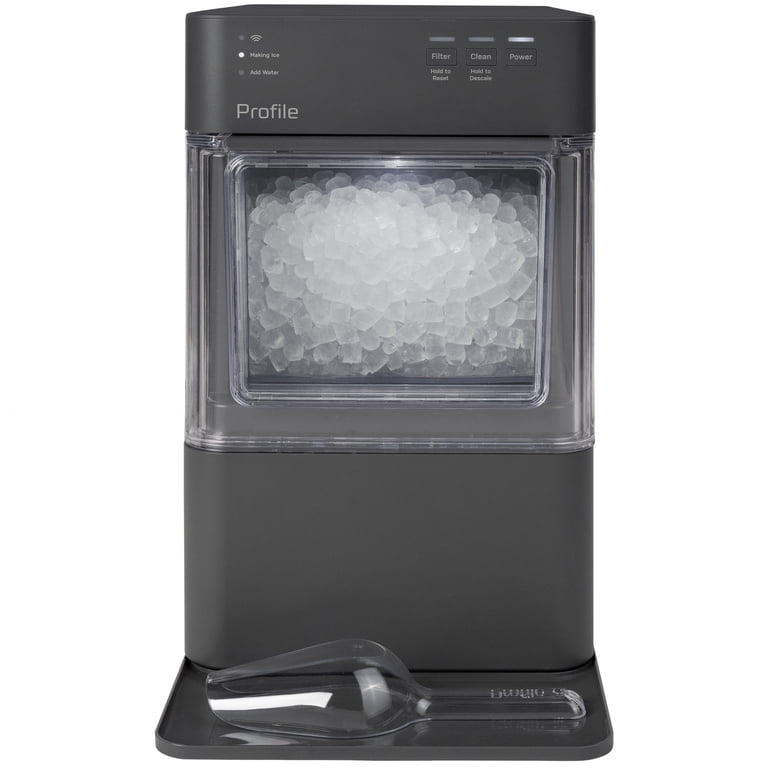
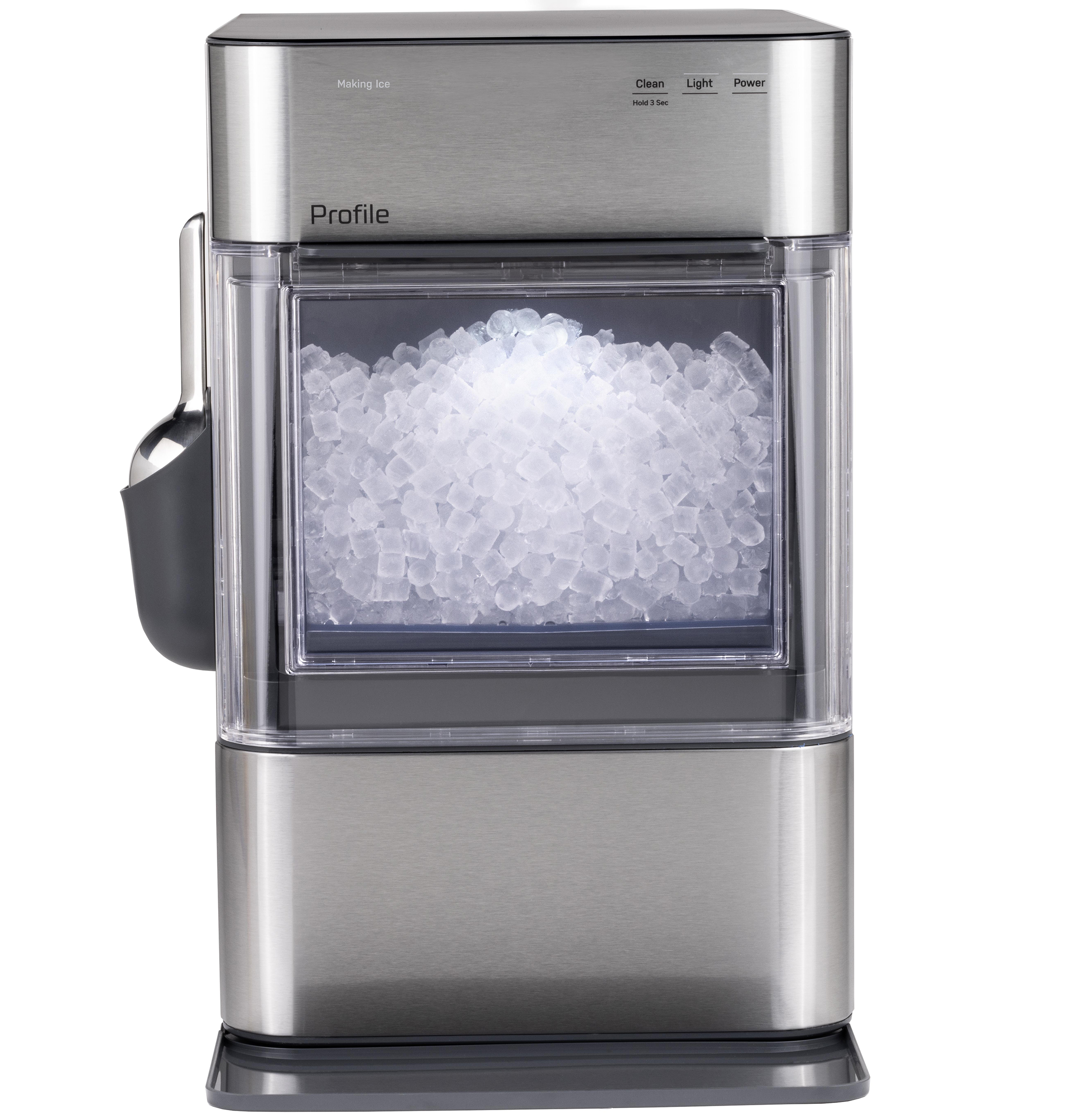
GE Profile Opal nugget ice maker
An Opal ice maker usually has:
• A removable ice bin
• A water reservoir
• A front control button or touch control
• A drain tube or drain plug
• A cleaning cycle
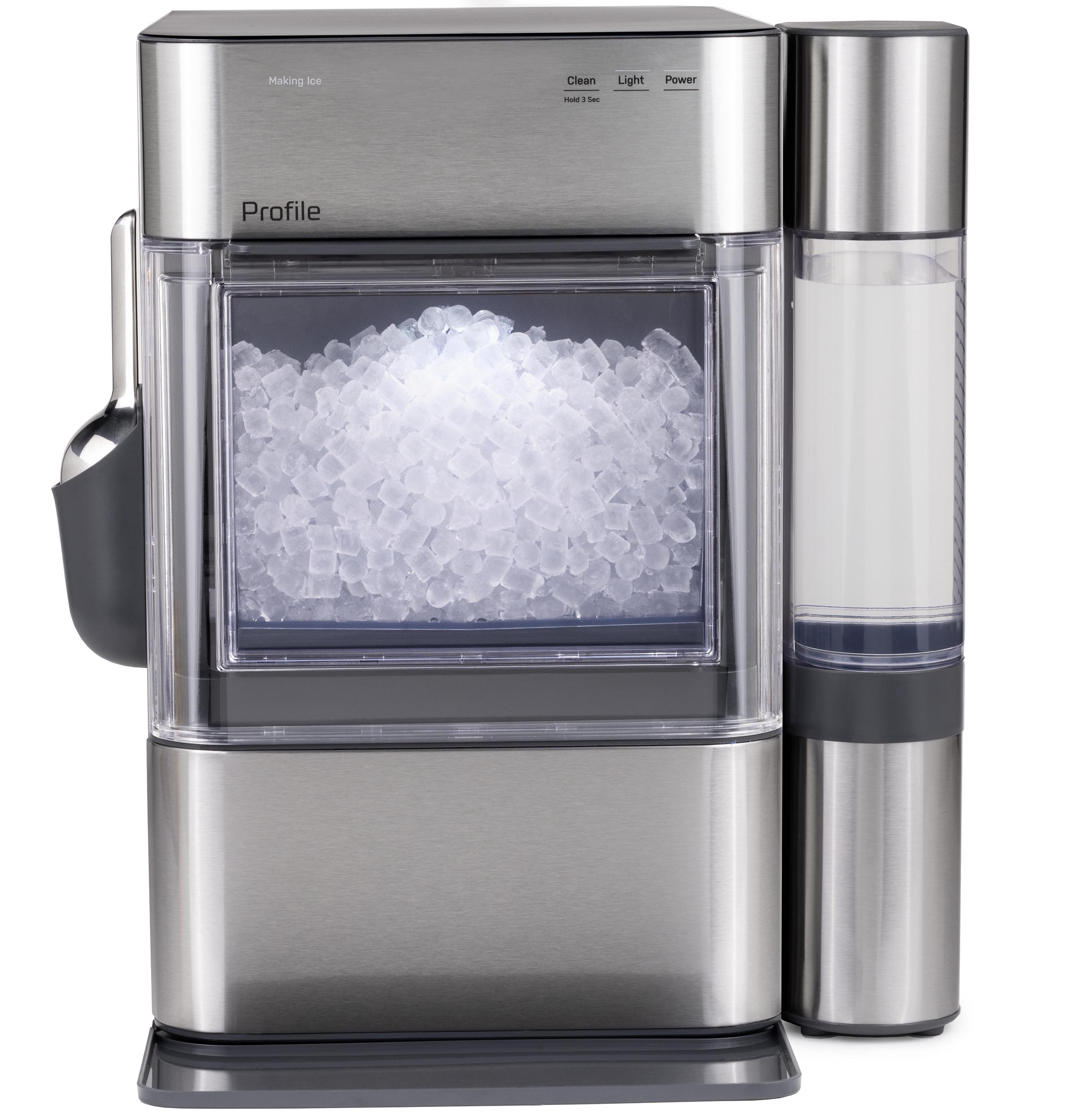
Some newer Opal models connect to an app or include a side tank. The exact controls can vary by model and production year.
GE Profile refrigerator ice maker
A refrigerator ice maker is usually inside the freezer or fresh-food compartment. It may have a removable ice bin, a shutoff arm, or an electronic control. Most refrigerator models do not use the same automatic cleaning cycle as an Opal machine.
Check the model number first
Look for the model number on the product label, owner’s manual, or inside the refrigerator compartment. GE Profile ice maker cleaning instructions can differ slightly between models. Always follow the manual if it gives a different amount of cleaner, water, or cycle time.
What you need for GE Profile ice maker cleaning
Gather your supplies before you begin. This makes the process easier and helps prevent the machine from sitting open for too long.
You may need:
• Clean, soft cloths
• A soft bottle brush or soft toothbrush
• Mild dish soap
• Clean water
• A measuring cup
• A clean bowl or bucket
• A towel for spills
• Manufacturer-approved ice maker cleaner
• Unscented household bleach, only when your model’s instructions permit it
Avoid abrasive pads, steel wool, powdered cleaners, and strong bathroom cleaners. These products can scratch plastic parts or leave unsafe residue.
Do not mix bleach with vinegar, ammonia, or any other cleaner. Mixing cleaning products can create dangerous fumes.
Before cleaning, wash your hands. Unplug the unit when cleaning removable parts or when the owner’s manual tells you to do so. Never place electrical parts, the main machine, or a refrigerator control panel under running water.
GE Profile Opal ice maker cleaning instructions
The following process fits many GE Profile Opal models. However, controls and cleaner amounts may vary. Check your manual before starting, especially if you own an Opal 2.0 or a model with a side water tank.
1. Turn off the ice maker
Stop ice production and unplug the unit if the manual recommends it. Allow any moving parts to stop.
Remove all ice from the bin. Do not keep old ice for later use. Ice can absorb odors from the bin and nearby food.
2. Remove and wash the ice bin
Take out the ice bin and wash it with warm water and mild dish soap. Use a soft cloth or sponge.
Rinse the bin well. Soap left behind can affect the taste of new ice. Let the bin air-dry or dry it with a clean towel.
Do not use boiling water. Sudden heat can damage or warp plastic.
3. Clean the water reservoir
Empty the reservoir and wipe away any loose scale or residue. Use a soft cloth around the water inlet and reservoir walls.
Do not push objects into small openings. A sharp tool may damage a sensor, seal, or water channel.
If you see thick scale, use the cleaner approved for your model. Some manufacturers recommend a specific cleaning solution, while others allow a dilute bleach solution during the cleaning cycle.
4. Run the cleaning cycle
Many GE Profile Opal ice makers use a cleaning cycle activated by pressing and holding the Clean button for about three seconds. The button may be labeled differently on some models.
For models that specify bleach cleaning, the owner’s instructions commonly call for a measured amount of unscented household bleach mixed with water. A frequently listed mixture is about 5 cups of water and 1 teaspoon of bleach, but do not use this amount unless it matches your model’s manual.
Add the cleaning solution to the reservoir. Start the cleaning cycle and let it finish. The cycle helps move the solution through areas that are difficult to reach by hand.
Do not make extra-strong bleach. More cleaner does not mean better cleaning. A strong mixture may damage parts or leave a chemical taste.
5. Drain the solution
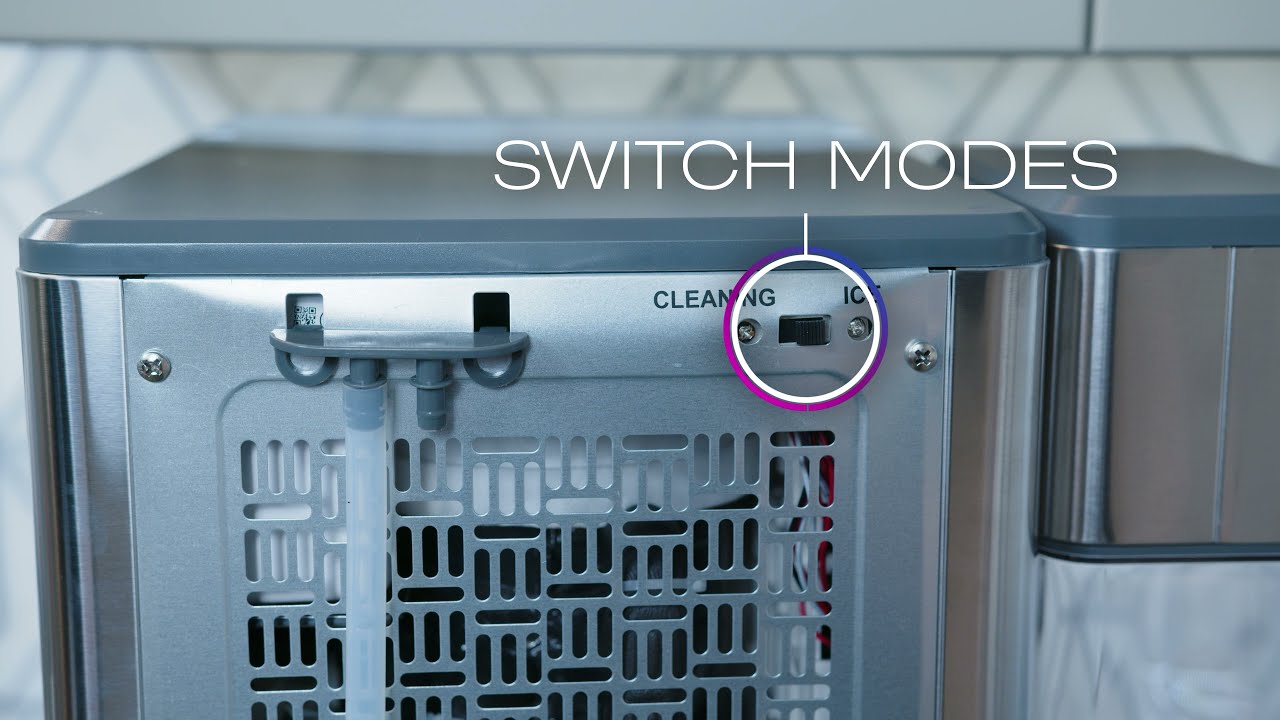
When the cycle ends, drain the solution according to the manual. Some Opal models have a drain tube or plug near the back.
Keep the drain tube over a sink or bucket. Use a towel under the unit in case water splashes.
6. Rinse the machine several times
Fill the reservoir with clean water and run the rinse cycle or cleaning cycle as directed. Drain the water after each rinse.
Run enough rinse cycles to remove all cleaner. Many instructions call for multiple rinses, often three or more. Continue until there is no chemical odor and the water looks clear.
This step is one of the most important GE Profile ice maker cleaning instructions. A machine can look clean but still hold cleaner in its water path.
7. Clean the ice chute and exterior
Wipe the ice chute, drip tray, lid, and exterior with a clean, damp cloth. Use mild dish soap on removable, non-electrical parts when needed.
Dry the outside before reconnecting the machine. Keep the control panel dry.
8. Reassemble and make fresh ice
Replace the dry ice bin and reconnect the machine. Make one batch of ice and discard it.
The first batch may contain a mild cleaner taste or loosened residue. Make another batch if needed before serving the ice.

How to clean a GE Profile refrigerator ice maker
A refrigerator ice maker needs a more hands-on cleaning method. It usually does not have the same cleaning cycle as an Opal unit.
1. Turn off the ice maker
Use the shutoff arm, control button, or refrigerator setting to stop ice production. If the manual requires it, unplug the refrigerator before removing parts.
Remove the ice bin and discard the ice inside it. Do not rinse old ice and put it back.
2. Wash the ice bin
Wash the bin with warm water and mild dish soap. Pay close attention to corners, the bottom, and the area around the ice chute.
Rinse it well and dry it fully. Moisture left in the bin can freeze into clumps.
If the bin has a motor, auger, or electrical connection, do not soak that part. Wipe it with a damp cloth instead.
3. Wipe the ice maker compartment
Use a clean cloth dampened with warm water. Wipe the ice maker housing, nearby walls, shelf, and chute.
For sticky residue, use a small amount of mild dish soap. Wipe again with clean water to remove soap.
Do not spray cleaner directly into the ice maker. Liquid can enter electrical parts and cause damage.
4. Inspect the fill tube and ice chute
Look for frozen water, mineral scale, or a blockage in the fill tube. Never chip ice with a knife or screwdriver.
If the fill tube is frozen, follow the refrigerator manual for safe thawing. Some blockages point to a water valve, temperature, or pressure problem rather than a simple cleaning issue.
5. Replace the bin and restart production
Put the clean, dry bin back in place. Turn the ice maker on and allow it to make a new batch.
Discard the first batch if the bin was very dirty or if you used any cleaner. This helps remove loose particles and any remaining odor.
These GE Profile ice maker cleaning instructions help with routine care, but they do not repair a failed water valve, clogged filter, broken fan, or damaged ice maker motor.
How to remove mineral scale and hard-water buildup
Hard water leaves calcium and magnesium deposits. These deposits may look white, chalky, or cloudy. They can collect in the reservoir, water channels, and ice-making surfaces.
Use only a cleaner approved for your GE Profile model. Some ice maker cleaners use citric acid or another food-contact-safe descaler. Follow the label and the GE instructions for the correct amount and contact time.
Do not assume that vinegar is safe for every GE Profile ice maker. Vinegar may help with some household deposits, but it can affect seals, leave a smell, or conflict with the manufacturer’s instructions. Bleach and vinegar also must never be mixed.
A water filter can help reduce some minerals, but it does not replace cleaning. Replace the refrigerator filter or Opal filter on the schedule stated in the manual.
Common mistakes to avoid
Even careful owners can make cleaning harder than it needs to be. These mistakes are especially common.
• Leaving old ice in the bin during cleaning
• Using too much bleach or descaler
• Failing to rinse the water path several times
• Spraying cleaner into vents, buttons, or electrical parts
• Scrubbing plastic with abrasive pads
• Using a knife to remove frozen ice
• Putting a wet bin back into the machine
• Cleaning only the visible bin and ignoring the reservoir
• Mixing cleaning products
• Forgetting to discard the first fresh batch of ice
One practical lesson is simple: rinsing matters as much as cleaning. A strong cleaner with a weak rinse can create a new taste problem instead of solving the old one.
How often should you clean a GE Profile ice maker?
A monthly cleaning is a useful starting point for a frequently used Opal ice maker. A refrigerator ice maker may need a deep clean every few months, with quick wipe-downs whenever the bin is empty.
Clean sooner when:
• Ice tastes or smells unusual
• Ice becomes cloudy or slimy
• The water reservoir feels slippery
• White scale is visible
• The machine makes less ice than usual
• The ice bin has sticky residue
• The unit has been unused for several weeks
• Someone in the home has noticed a stomach illness or contamination concern
If the ice maker is unused for a long period, empty and dry it before storage. When you start it again, clean the water path and discard the first batches.
Troubleshooting after cleaning
Cleaning may improve taste and flow, but it cannot fix every issue. Use these checks after completing the GE Profile ice maker cleaning instructions.
Ice still smells bad
Make sure the bin, lid, reservoir, and drip area are clean. Nearby foods can also transfer odors, especially onions, fish, and strong leftovers.
Run another clean-water rinse and discard the next batch. If the smell returns, inspect the water filter and water supply.
Ice tastes like bleach or cleaner
Stop using the ice. Drain the machine and run several clean-water rinse cycles.
Check that you used the correct cleaner and amount. If the taste remains after thorough rinsing, contact GE support or an authorized technician.
The ice maker makes less ice
Check the room temperature, water level, airflow, and filter. A dirty condenser area, blocked vent, low water pressure, or heavy scale may reduce production.
Do not keep restarting the machine if it makes unusual sounds or repeatedly stops. Continued use may worsen a mechanical problem.
Water leaks after cleaning
Check that the drain plug, drain tube, reservoir, and bin are seated correctly. A loose seal can allow water to escape.
Unplug the unit if water reaches electrical parts. Arrange service if the leak continues.
The cleaning light will not turn off
The reset process varies by model. Some units clear the light after a full cleaning cycle, while others need a button reset.
Use the model-specific manual rather than repeatedly pressing buttons. If the indicator stays on after correct cleaning, the sensor or control may need service.
When to call for professional service
Routine cleaning is safe for most owners, but some problems need a technician. Contact GE support or a qualified appliance professional when:
• The machine leaks after you check all connections
• The ice maker repeatedly freezes or jams
• The water does not enter the unit
• The motor makes grinding or burning sounds
• Electrical parts become wet
• The unit shows an error code
• Ice production stays low after cleaning and filter replacement
• The cleaner taste remains after repeated rinsing
• A refrigerator ice maker has a damaged fill tube or valve
Do not remove sealed refrigerator panels or attempt electrical repairs unless you are trained to do so. Cleaning should improve hygiene, not create a safety risk.
Frequently Asked Questions About GE Profile Ice Maker Cleaning Instructions
How often should I clean my GE Profile ice maker?
Clean a frequently used GE Profile Opal ice maker about once a month. Clean a refrigerator ice maker every few months or sooner if you notice odors, scale, cloudy ice, or residue.
Can I use vinegar to clean a GE Profile ice maker?
Use vinegar only if your specific model manual allows it. Many models call for an approved cleaner or a measured bleach solution instead, so check the instructions before using vinegar.
Can I use bleach in a GE Profile Opal ice maker?
Some Opal cleaning instructions allow a small, measured amount of unscented household bleach in water. Use bleach only when your model’s manual approves it, and rinse the machine several times afterward.
Why should I throw away the first batch of ice?
The first batch may contain loosened scale, cleaner traces, or odors from the cleaning process. Discarding it helps ensure the ice you serve is fresh and clean.
How do I clean a GE Profile refrigerator ice maker?
Turn off the ice maker, remove and wash the ice bin, wipe the ice maker compartment with mild soapy water, rinse removable parts, and dry everything before restarting. Do not spray liquid into electrical parts.
Can I wash the ice bin in a dishwasher?
Do not assume the bin is dishwasher-safe. Check the owner’s manual first, because high heat can warp some plastic bins or damage attached components.
Why does my GE Profile ice maker still smell after cleaning?
The odor may come from the bin, water filter, reservoir, nearby food, or an incompletely rinsed water path. Clean the surrounding area, replace the filter if needed, and run more clean-water rinse cycles.
Conclusion
Good GE Profile ice maker cleaning instructions are simple: remove old ice, wash removable parts, clean the water path with an approved solution, rinse thoroughly, and discard the first new batch. Clean more often when you have hard water or use the machine every day.
Avoid harsh products, sharp tools, and guessed cleaner amounts. Use your exact model manual for special cycles and measurements. Start your next cleaning today, and share these tips with anyone who relies on fresh ice at home.